Entangled Threads
Kapwani Kiwanga, Šejla Kamerić, Grit Richter
Nov 23, 2024 – Feb 07
Installation Views

Works

Blanket (Keep Away From Fire) (white), 2019

Blanket (Keep Away From Fire) (white), 2019
BURN BY STAYING COOL, 2022 – 2024
BURN BY STAYING COOL, 2022 – 2024
BURN BY STAYING COOL, 2022 – 2024

Tbt (Das kleine Glück 01, Variation 01), 2024

Tbt (Das kleine Glück 02, Variation 01), 2024
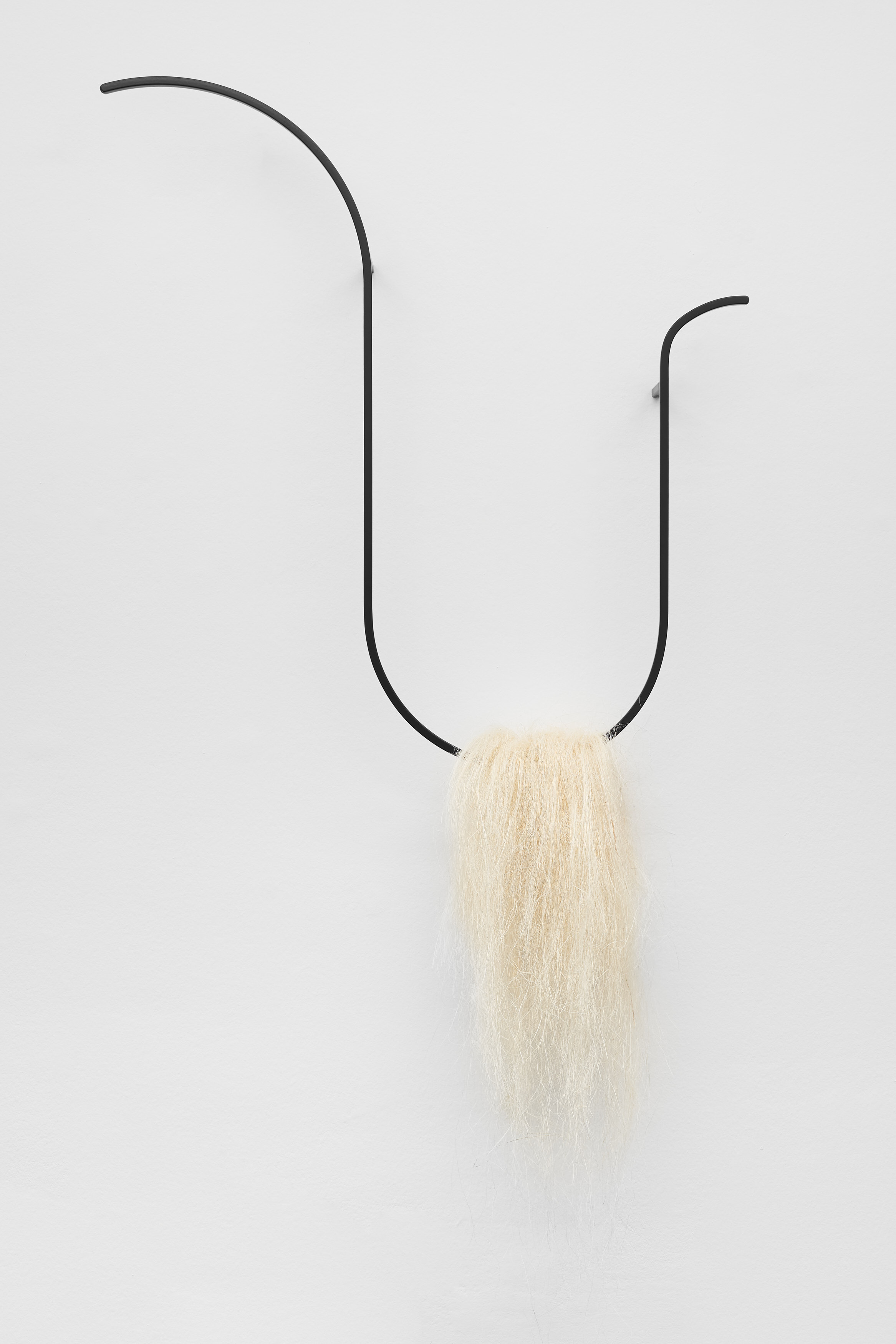
Sisal #18, 2024
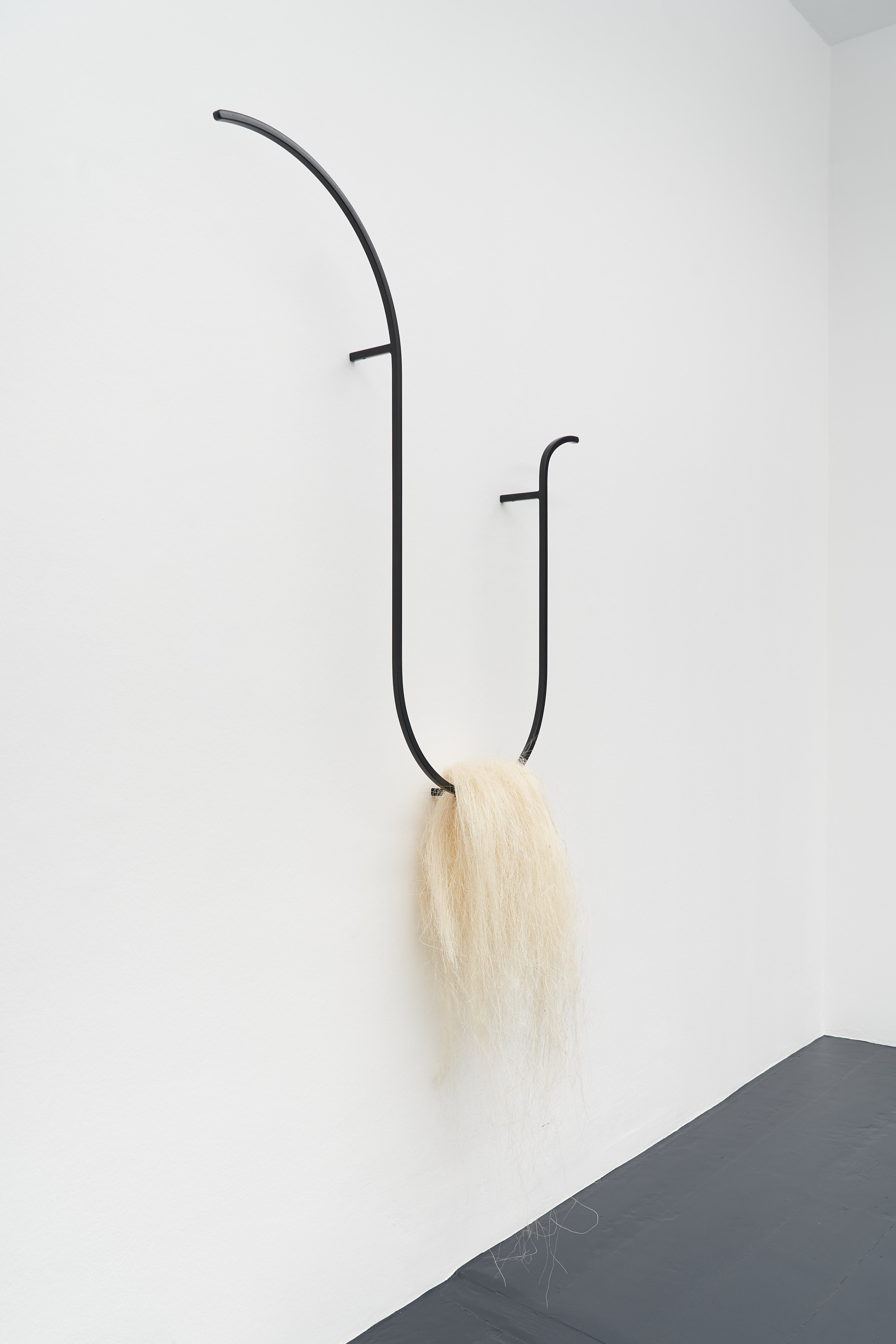
Sisal #18, 2024
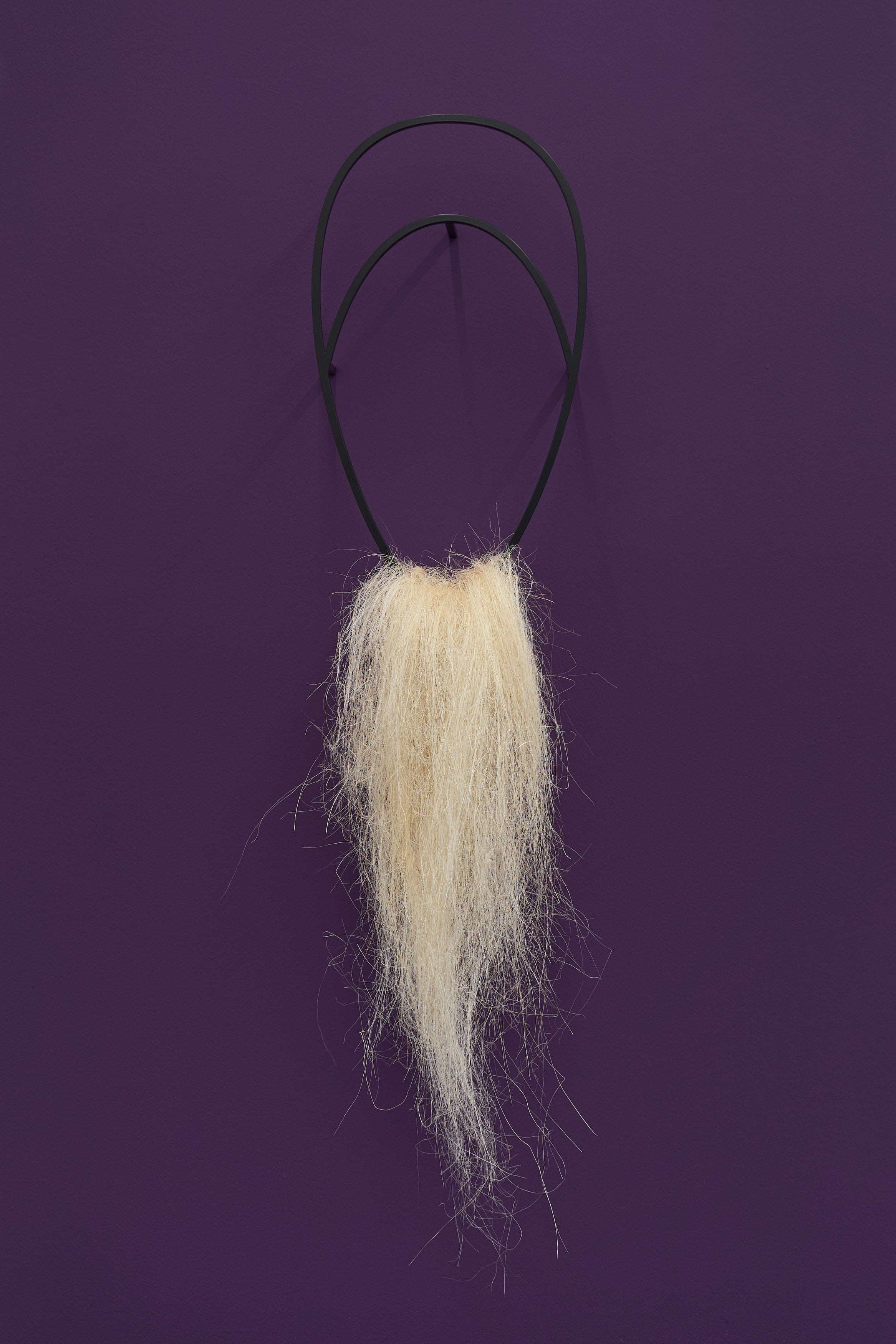
Sisal #17, 2024
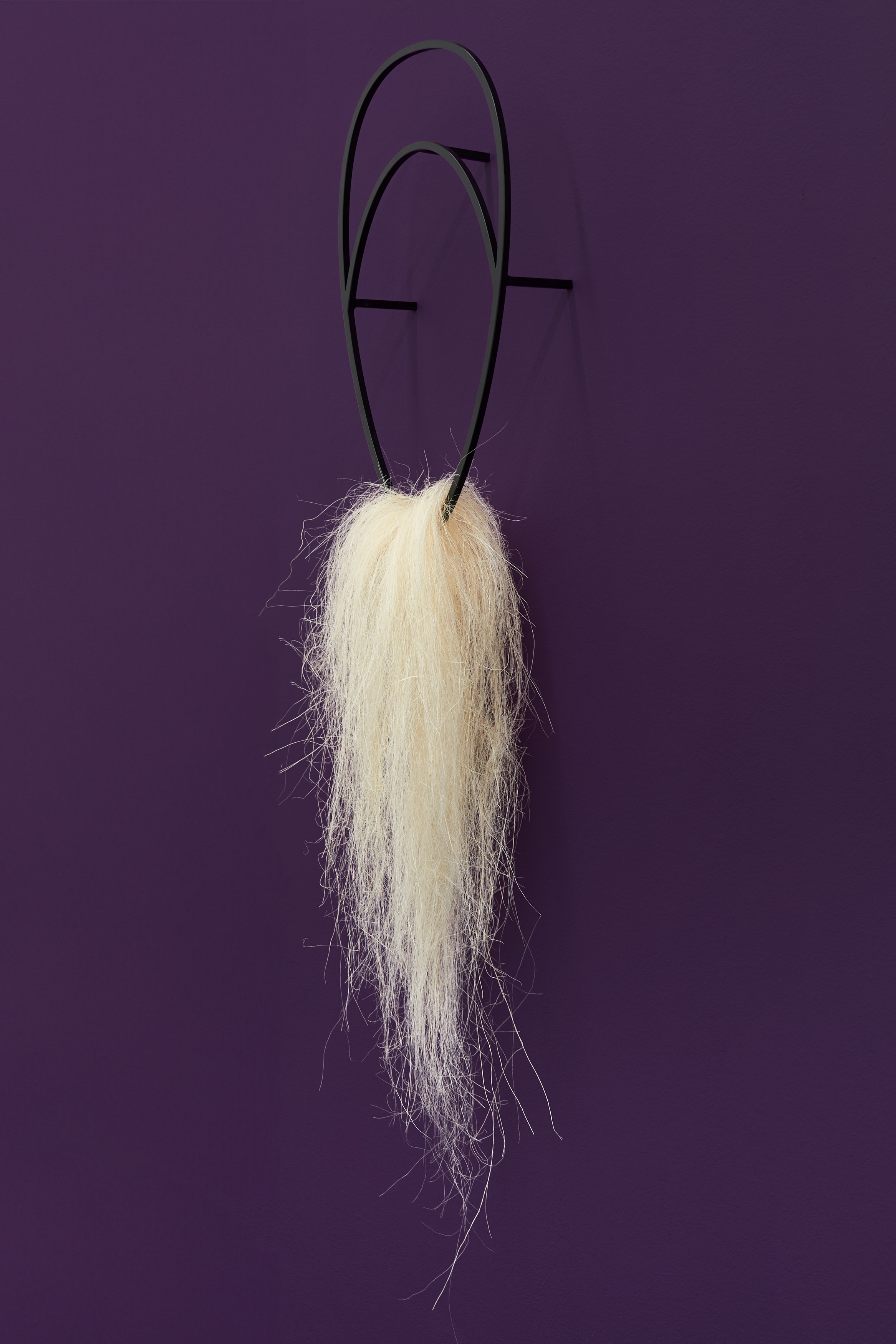
Sisal #17, 2024
Press Release
Galerie Tanja Wagner is pleased to present Entangled Threads, a group exhibition featuring works by Šejla Kamerić, Kapwani Kiwanga, and Grit Richter.
The exhibition brings together three distinct practices that explore the intricate entanglements shaping contemporary life. Through varied materials and visual languages, the works probe networks of production, history, and social relations.
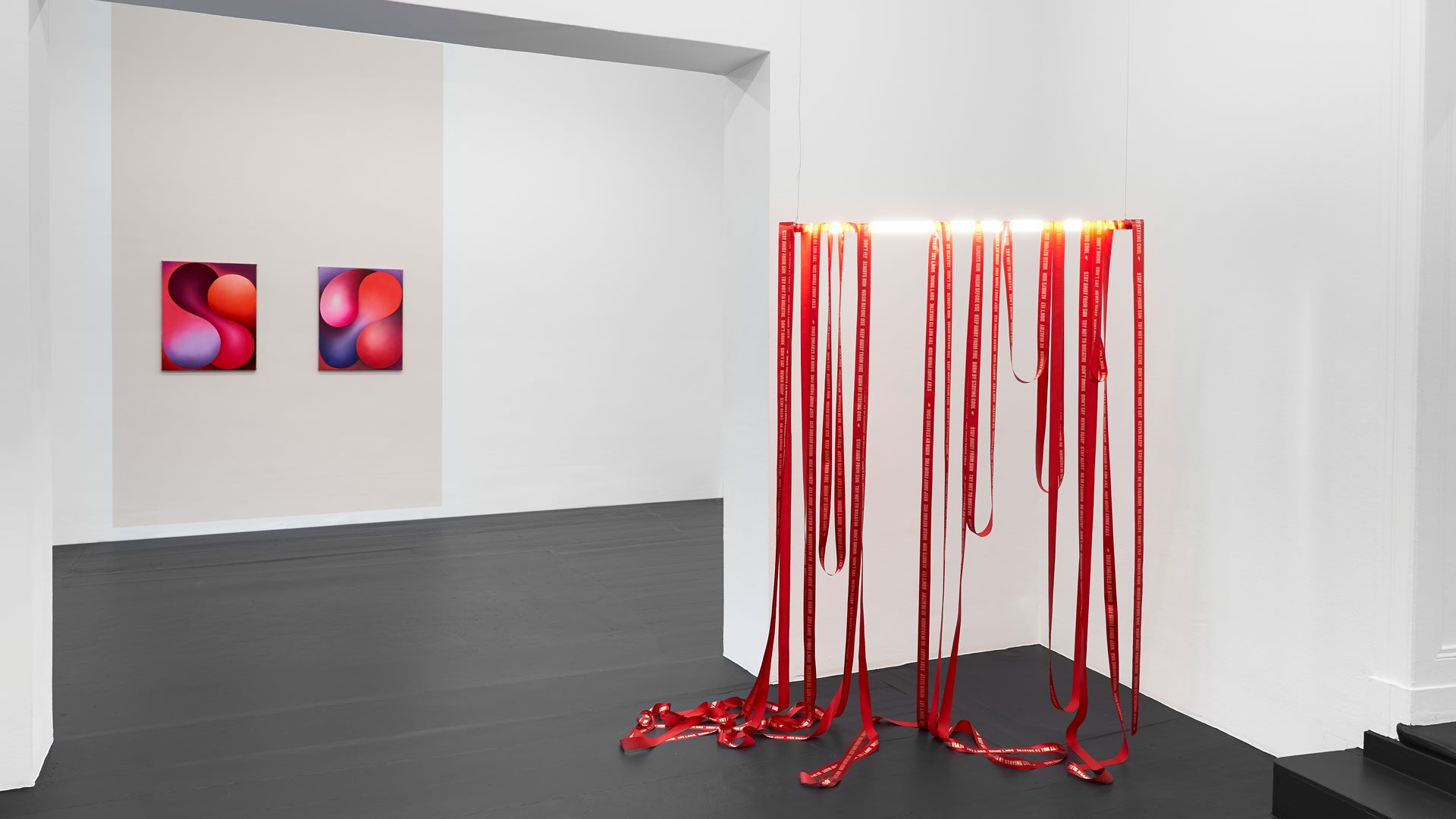
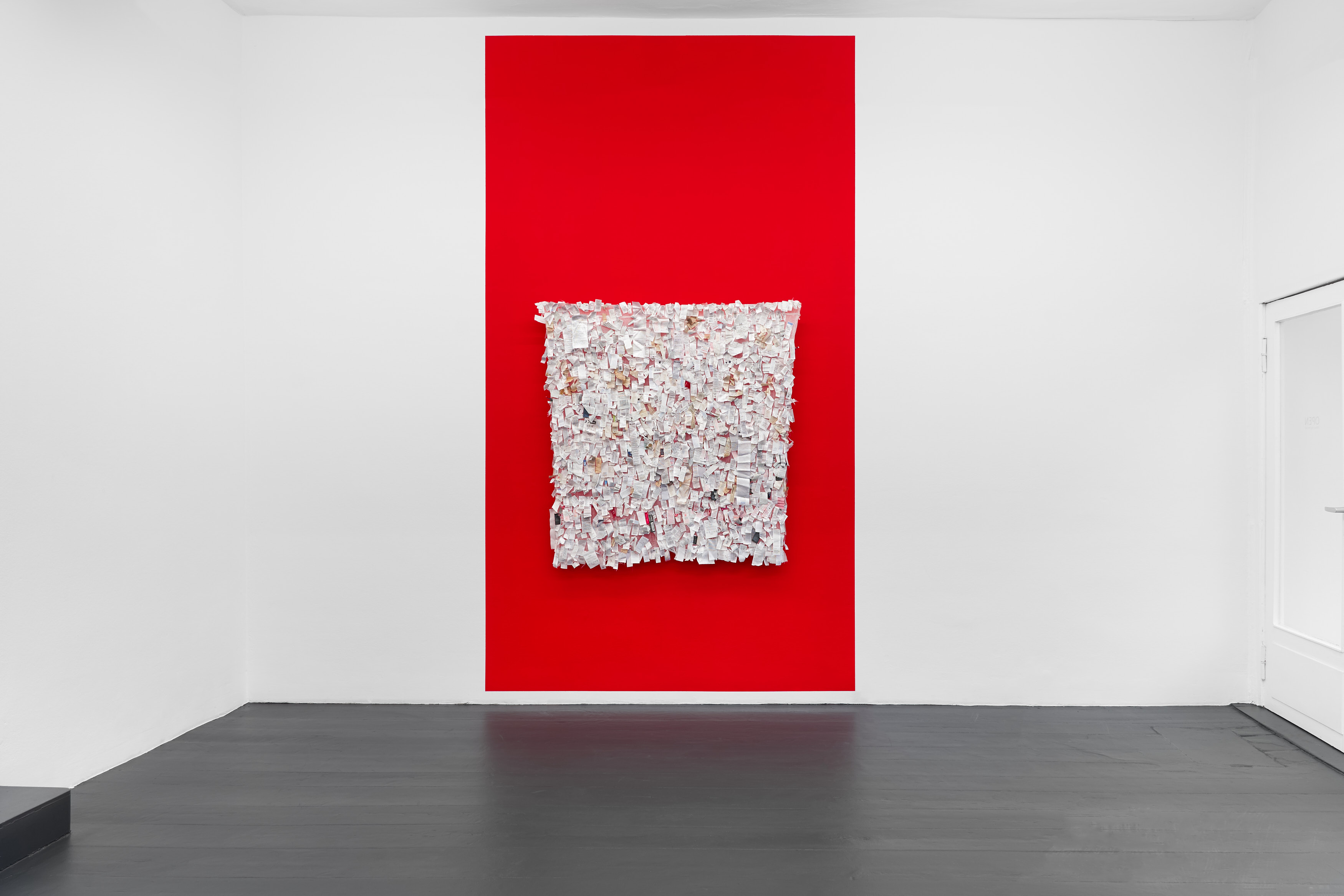
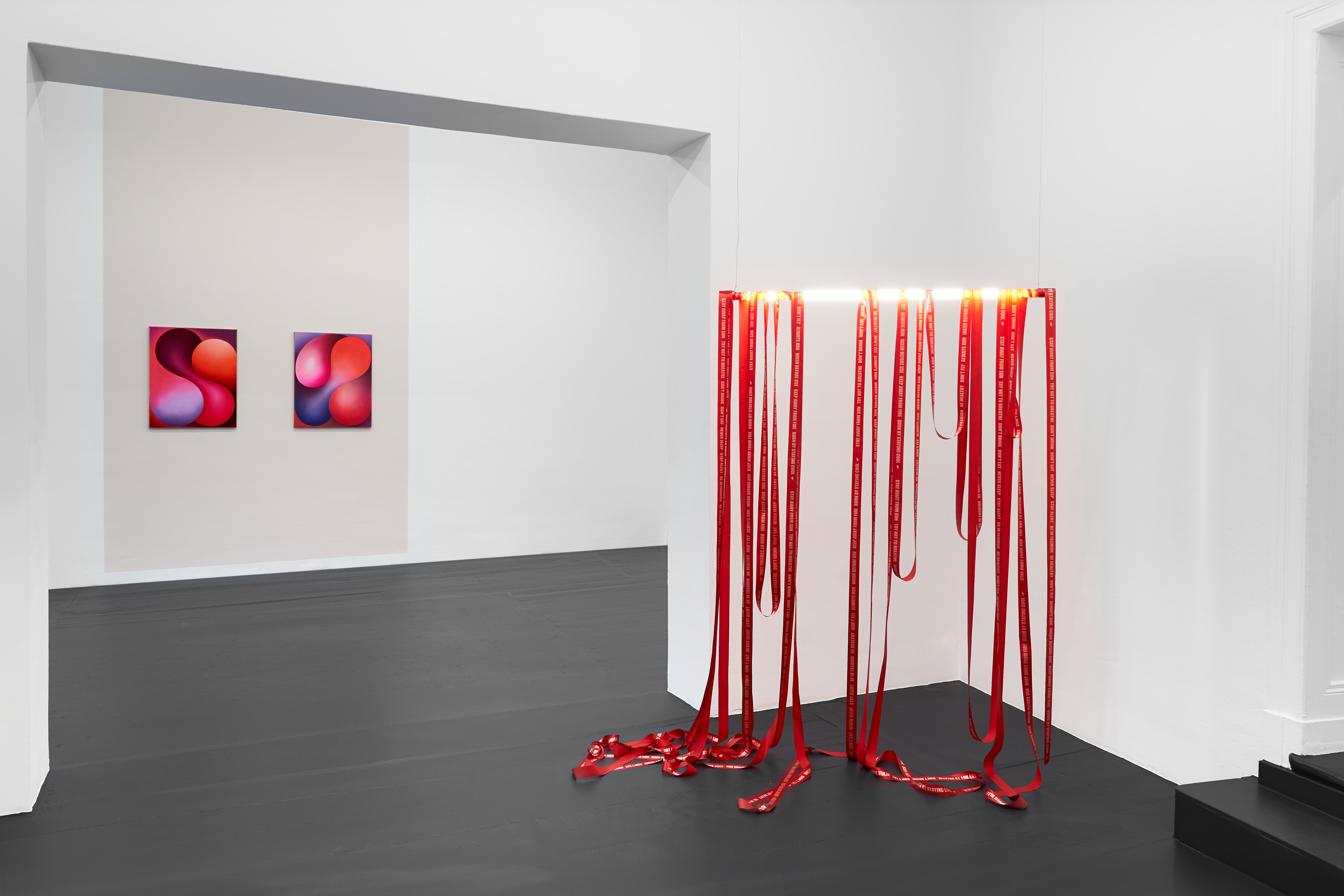
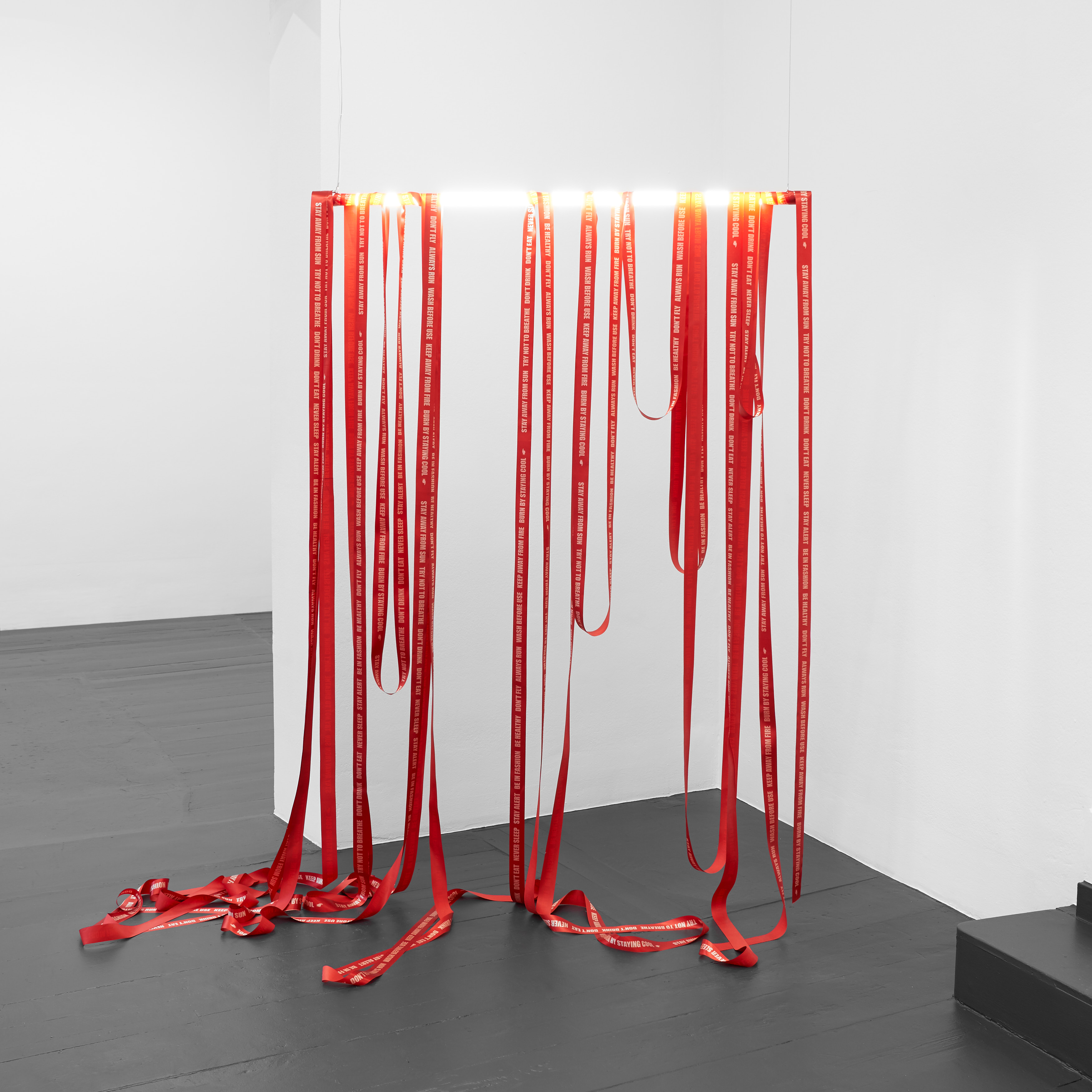
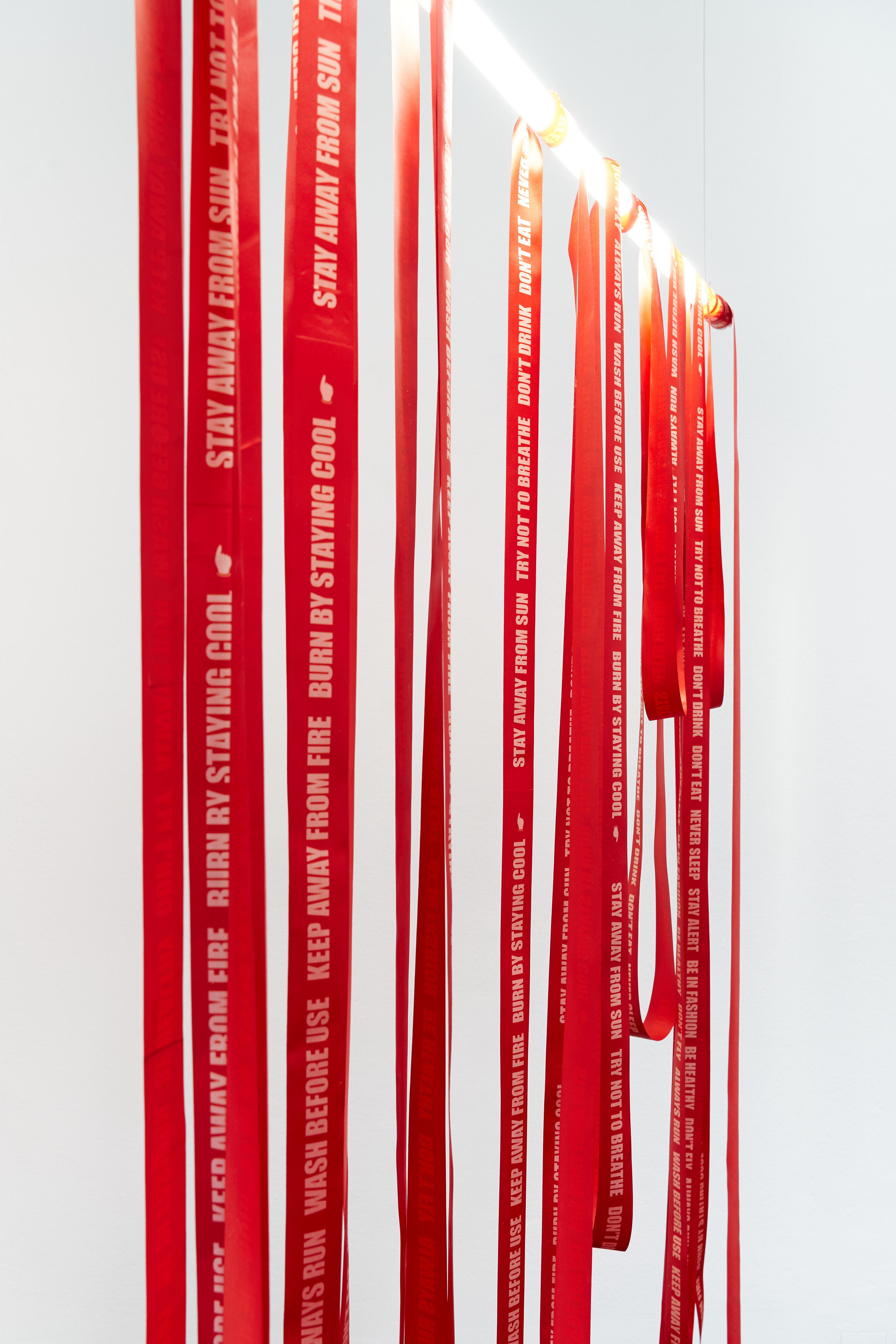
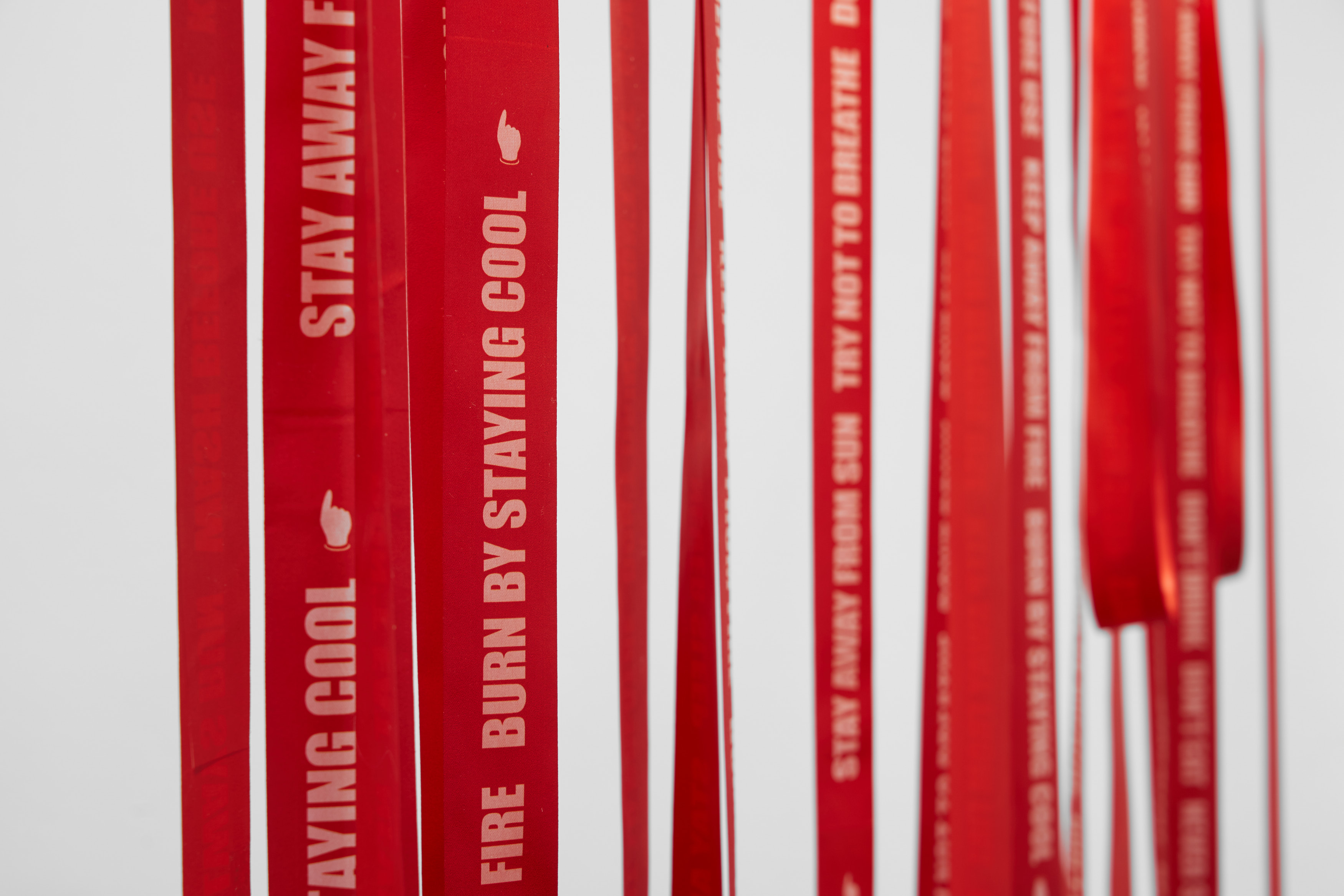
Šejla Kamerić’s Keep Away from Fire takes its title from the labels sewn into cheaply made, flammable clothing. The work is composed of garment care labels stitched into a delicate, translucent gauze which hovers just centimetres away from the wall. Up close, instructions like “WASH IN COLD WATER” emerge, revealing the contradictions of fast fashion, where promises of “care” conceal the industry’s environmental harm and exploitation of workers. Continuing this thread, Burn by Staying Cool features a red ribbon with care instructions transformed into warnings — “STAY AWAY FROM THE SUN,” “TRY NOT TO BREATHE”. The piece is tangled around an LED lamp that mimics the sun in a dystopian tableau. Through familiar materials and a layered use of language, Kamerić’s works highlight the impossible demands placed on workers and the environment. The works float in space like spectres of consumption, compelling viewers to reflect on their entanglement in these systems.
Kapwani Kiwanga presents two new sculptures made out of yards of white-golden sisal and steel. Originating from the agave cactus of southern Mexico, sisal was introduced to Tanzania by German plantation owners in the 19th century. Initially cultivated on a large scale through colonial exploitation, the plant later became a cornerstone of Tanzanian agriculture. Following independence, sisal was nationalized as part of the Ujamaa socialist movement, transforming it into a vital driver of the country’s economic self-sufficiency and a symbol of its emerging independence. Kiwanga’s sculptures reflect her anthropological insights into the material's historical layers, presenting sisal not only as a resilient fiber but as a silent witness to colonialism, economic empowerment, and the lingering effects of global capitalism. Suspended and meticulously draped, Kiwanga’s sculptures recall ancestral links across continents, inviting reflection on how these past entanglements shape present-day cultural and economic landscapes.
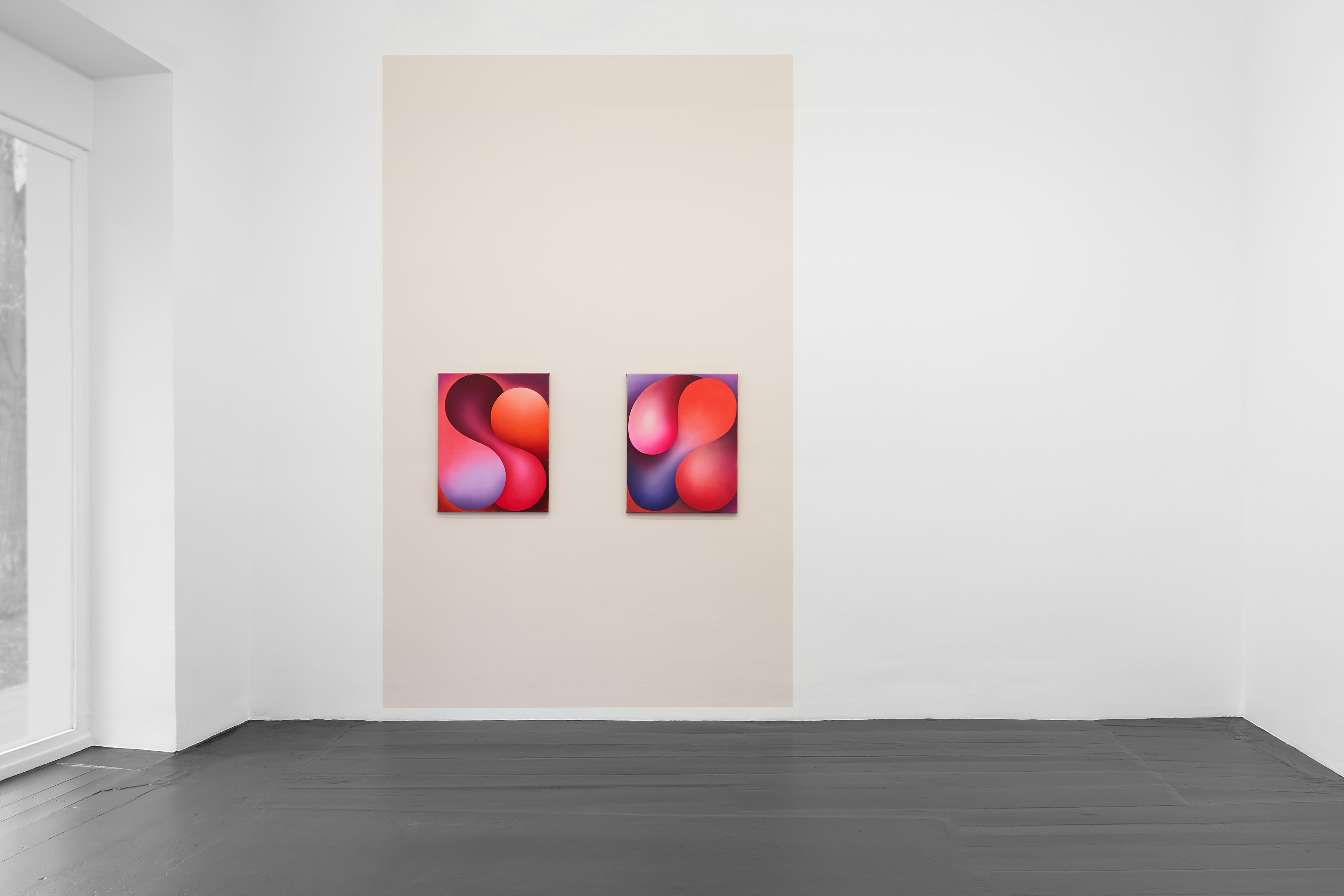
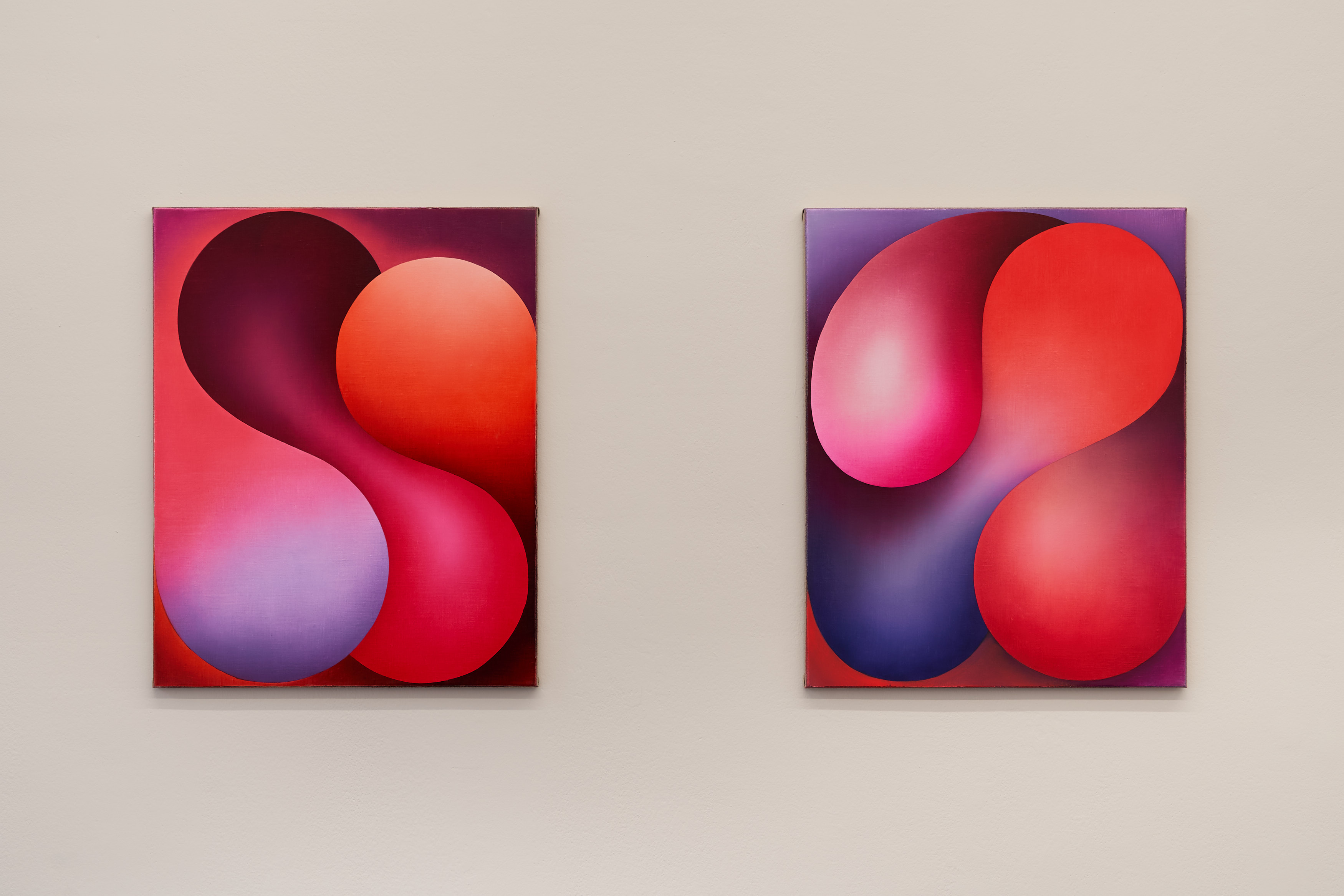
In Grit Richter’s paintings, entanglements take on a deeply personal dimension. Soft, rounded forms in hues of pink, red, and purple interweave across the canvas, appearing to simultaneously embrace and constrict one another. These tensions invite the viewer to question whether the forms are locked in harmonious connection or trapped within a mutual grasp.This motif recurs throughout Richter’s oeuvre, notably in her Lovers series, where the entangled shapes evoke the complexities of human relationships — moments of intimacy and struggle in the ongoing pursuit of connection. Richter extends this exploration to broader themes of self-care, work-life balance, and the challenges of navigating an increasingly fragmented world. Her works suggest the delicate act of finding equilibrium amid the forces and dualities that pull us in opposing directions, offering a space to contemplate these entanglements.
Through diverse materials and narratives, Kamerić, Kiwanga, and Richter invite us to examine the forces that bind us to one another — and to the world around us — in all their complexity.
Šejla Kamerić was born in 1976 in Sarajevo. She lives and works between Berlin, Istria and Sarajevo. A selection of her recent solo exhibitions includes: 2024: Museum of Contemporary Arts of Montenegro, Podgorica; Cukrarna Gallery, Ljubljana; Campo Santo Stefano, Venice. 2023: Contemporary Art Gallery, Subotica. 2022: Kunsthaus Dresden Robotron Kantine, Dresden; TATE Modern; 2021:KRA Center for Contemporary Culture, Bihać; Realstage Association, Sarajevo; 2018: Fondazione Adolfo Pini, Milan; Kibla, Maribor and GAK Gesellschaft für Aktuelle Kunst, Bremen; 2015: ARTER Space for Art, Istanbul; National Gallery of Kosovo, Prishtina.
Kapwani Kiwanga was born in 1978 in Hamilton, Canada. She currently lives and works in Paris. A selection of her recent solo exhibitions includes: 2024: 60th International Art Exhibition – La Biennale di Venezia, Venice; Copenhagen Contemporary, 2023: Serralves Museum, Porto; Remai Modern, Saskatoon; Kunstmuseum Wolfsburg; Gropius Bau, Berlin; CAPC, Bordeaux; Museum Ostwall, Dortmund; Galerie Tanja Wagner, Berlin; MOCA, Toronto. 2022: New Museum, New York; Museum Haus Konstruktiv, Zurich. 2021: Centre d'art contemporain d'Ivry - le Crédac, Ivry-sur-Seine; State of Concept, Athens. 2020: Haus der Kunst, Munich; Kunstinstituut Melly, Rotterdam; Pasquart Kunsthaus Centre d’art, Biel. 2019: MIT List Visual Arts Center, Cambridge. 2018: Centre d'Art Contemporain, Ibo; Museé d'art de Joliette, Joliette; Artpace, San Antonio; Esker Foundation, Calgary; CLARK, Centre d'art et de diffusion, Montréal.
Grit Richter was born in 1977 in Dresden and lives and works in Hamburg. A selection of her recent exhibitions includes: 2024: Städtische Galerie Dresden, National Museum Bucharest; Stadtgalerie Kiel; 2023: Overbeck-Gesellschaft, Lübeck; 2022: Hamburger Kunsthalle, Hamburg, Künstlerhaus Bethanien, Berlin, 2021: Museum im Prediger, Schwäbisch Gmünd; 2019: C. Rockefeller Center for the Contemporary Arts, Dresden; Museum Gunzenhauser, 2018: Kunstsammlungen Chemnitz; Vanha Paukku Cultural Center, Lapua, Finland; Deichtorhallen Hamburg / Sammlung Falckenberg, Hamburg.
Die Galerie Tanja Wagner präsentiert Entangled Threads, eine Gruppenausstellung mit Arbeiten von Šejla Kamerić, Kapwani Kiwanga und Grit Richter.
Die Ausstellung bringt drei unterschiedliche Praktiken zusammen, die die komplexen Verflechtungen untersuchen, die das zeitgenössische Leben prägen. Mit unterschiedlichen Materialien und Bildsprachen untersuchen die Arbeiten Netzwerke der Produktion, der Geschichte und der sozialen Beziehungen.
Šejla Kamerićs Keep Away from Fire bezieht seinen Titel von den Etiketten, die in billige, leicht entflammbare Kleidung eingenäht sind. Die Arbeit besteht aus Kleidungspflegeetiketten, die in einen zarten, durchscheinenden Stoff eingenäht sind und nur wenige Zentimeter von der Wand entfernt schweben. Aus der Nähe betrachtet werden Anweisungen wie "WASH IN COLD WATER" sichtbar, die die Widersprüchlichkeit von Fast Fashion aufzeigen, in der das Versprechen von "care" die Umweltzerstörung und die Ausbeutung der Arbeiter:innen verschleiert. Daran anknüpfend zeigt Burn by Staying Cool ein rotes Band mit Pflegehinweisen, die zu Warnhinweisen geworden sind - “STAY AWAY FROM THE SUN”, “TRY NOT TO BREATHE”. Das Band ist um eine LED-Lampe gewickelt, die die Sonne in einem dystopischen Tableau imitiert. Durch vertraute Materialien und eine vielschichtige Verwendung von Sprache unterstreichen Kamerićs Arbeiten die unmöglichen Anforderungen, die an Arbeiter:innen und die Umwelt gestellt werden. Die Arbeiten schweben im Raum wie Spektren des Konsums und fordern die Betrachter:innen auf, über seine eigene Verstrickung in diesem Systeme nachzudenken.
Kapwani Kiwanga präsentiert zwei neue Skulpturen aus weiß-goldenem Sisal und Stahl. Ursprünglich aus der südmexikanischen Agavenpflanze stammend, wurde Sisal im 19. Jahrhundert von deutschen Plantagenbesitzern nach Tansania eingeführt. Anfangs durch koloniale Ausbeutung in großem Maßstab angebaut, wurde die Pflanze später zu einem Grundstein der tansanischen Landwirtschaft. Nach der Unabhängigkeit wurde Sisal im Rahmen der sozialistischen Ujamaa-Bewegung verstaatlicht, wodurch es zu einem wichtigen Träger der wirtschaftlichen Eigenständigkeit des Landes und zu einem Symbol seiner aufstrebenden Unabhängigkeit wurde. Kiwangas Skulpturen spiegeln ihr anthropologisches Verständnis der historischen Schichten des Materials wider und zeigen Sisal nicht nur als widerstandsfähige Faser, sondern auch als stillen Zeugen von Kolonialismus, ökonomischer Emanzipation und den anhaltenden Auswirkungen des Weltkapitalismus. Die Skulpturen von Kiwanga, die in der Luft schweben und kunstvoll drapiert sind, erinnern an historische Verbindungen über Kontinente hinweg und laden zum Nachdenken darüber ein, wie diese vergangenen Verflechtungen heutige kulturelle und wirtschaftliche Landschaften prägen.
In Grit Richters Bildern nehmen Verstrickungen eine zutiefst persönliche Dimension an. Weiche, geschwungene Formen in den Farben Pink, Rot und Purpur verweben sich über die Leinwand und scheinen sich gleichzeitig zu umarmen und einzuengen. Diese Spannungen laden die Betrachter:innen dazu ein, sich zu fragen, ob die Formen in harmonischer Verbindung stehen oder in einem gegenseitigen Griff gefangen sind. Diese Thematik zieht sich durch Richters gesamtes Oeuvre, insbesondere durch ihre Lovers-Serie, in der die ineinander verschlungenen Formen die Komplexität menschlicher Beziehungen evozieren - Momente der Intimität und des Kampfes in der fortwährenden Suche nach Verbindung. Richter erweitert diese Erkundung um die Themen Selbstfürsorge, Work-Life-Balance und die Herausforderungen, eine zunehmend fragmentierte Welt zu navigieren. Ihre Arbeit thematisiert den subtilen Akt, ein Gleichgewicht zwischen den Kräften und Dualitäten zu finden, die uns in entgegengesetzte Richtungen ziehen, und bietet einen Raum, um diese Verstrickungen zu betrachten.
Related News
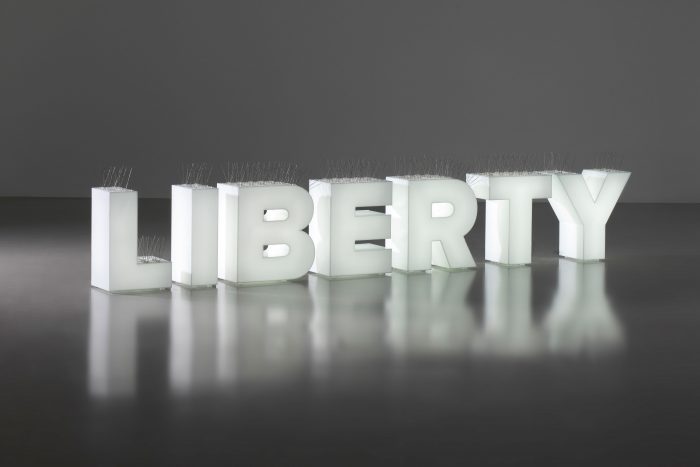
Šejla Kamerić
Echoes of Power – Selbstbild, Erinnerung, Entwurf
Städtische Galerie Villingen-Schwenningen
Oct 24, 2026 – Jan 24, 2027
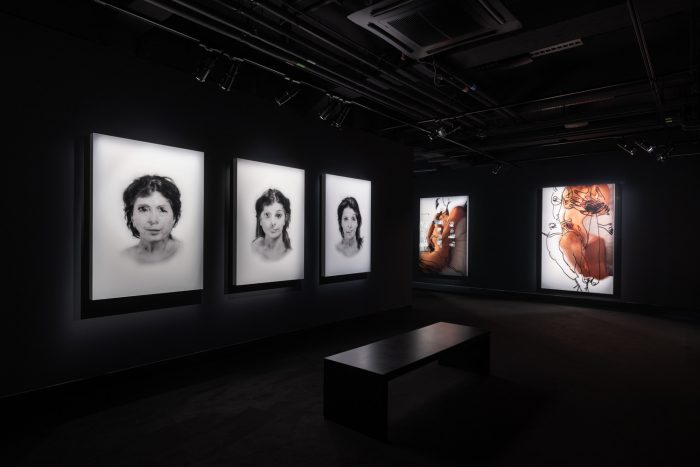
Šejla Kamerić
EX YOU
Fotografiska Tallinn
Oct 9, 2026 – Mar 7, 2027
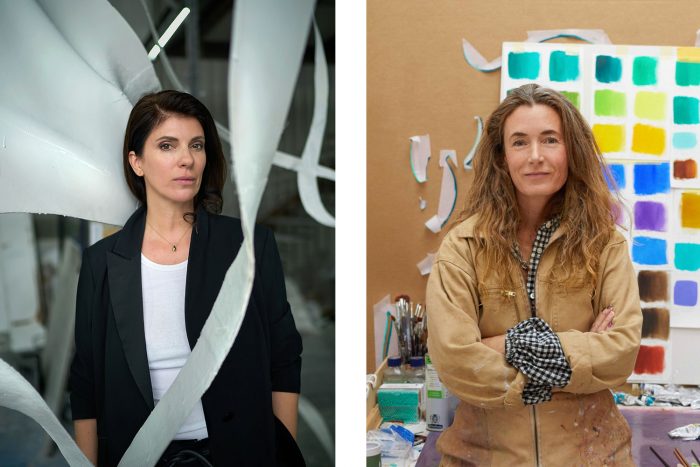
Šejla Kamerić & Grit Richter
Tell Me Where Home Is
Group exhibition curated by Uta Ruhrkamp
Kunstmuseum Wolfsburg
Sep 19, 2026 – Jan 17, 2027

Šejla Kamerić
Technologies of Peace Art and Transition in Contemporary Europe (1989 - 2026)
Group exhibition
Irish Museum of Modern Art, Dublin
Sep 12, 2026 – May 9, 2027