Paper & Sound
Angelika J. Trojnarski, Annabel Daou, Anna Steinert, Anna Witt, Elisa Giardina Papa, Grit Richter, Ulf Aminde
Mar 01 – April 17, 2025
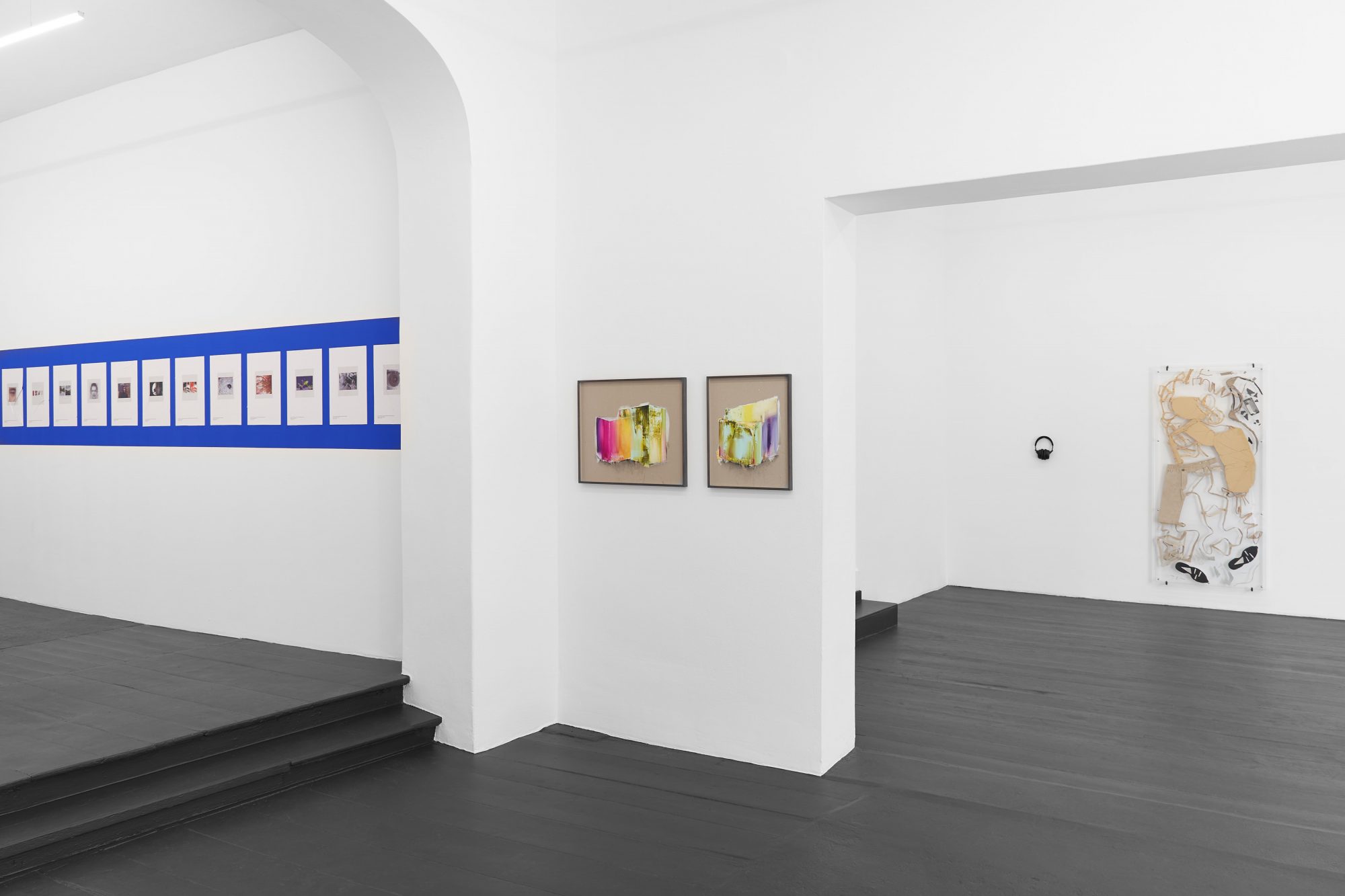
Installation Views
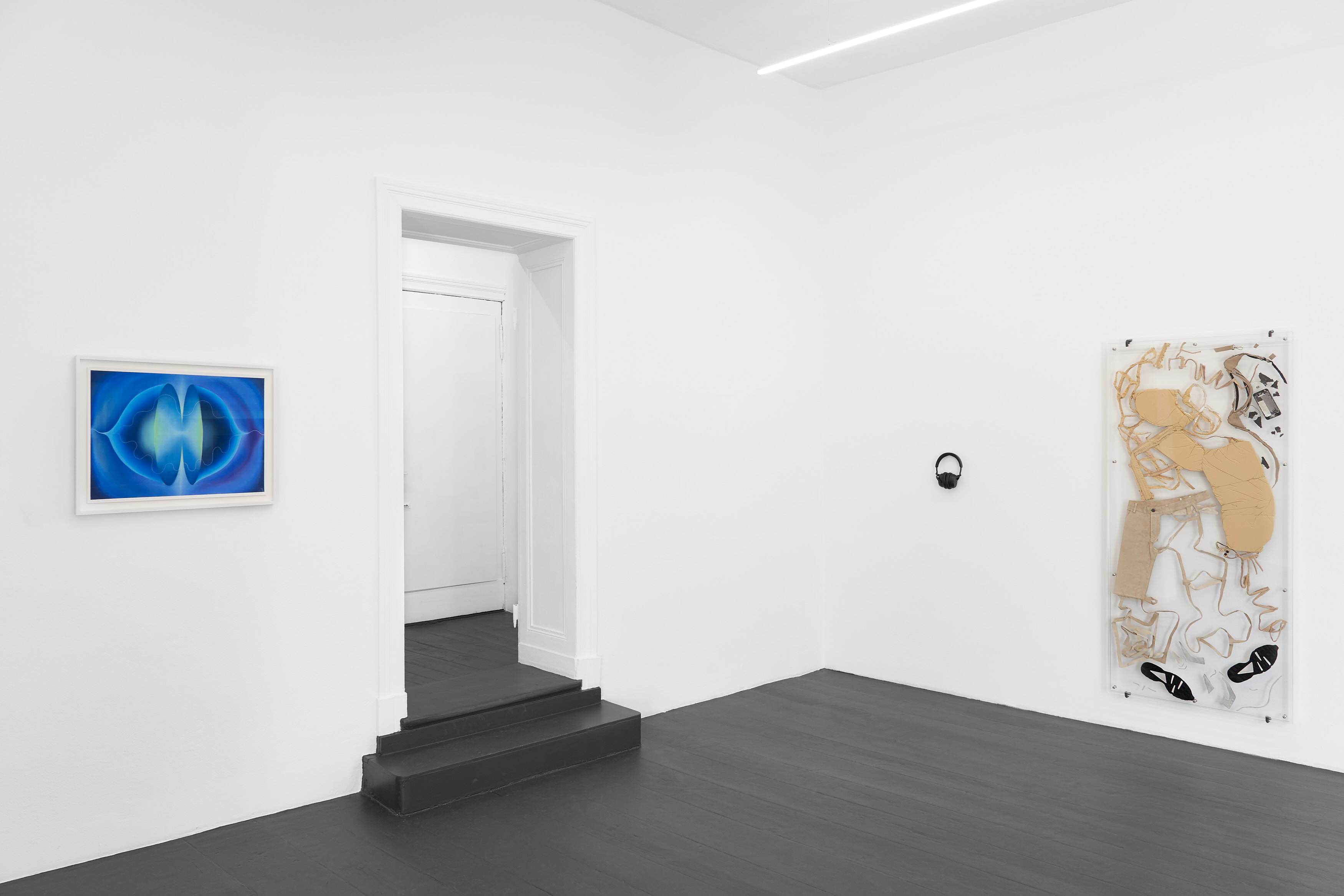
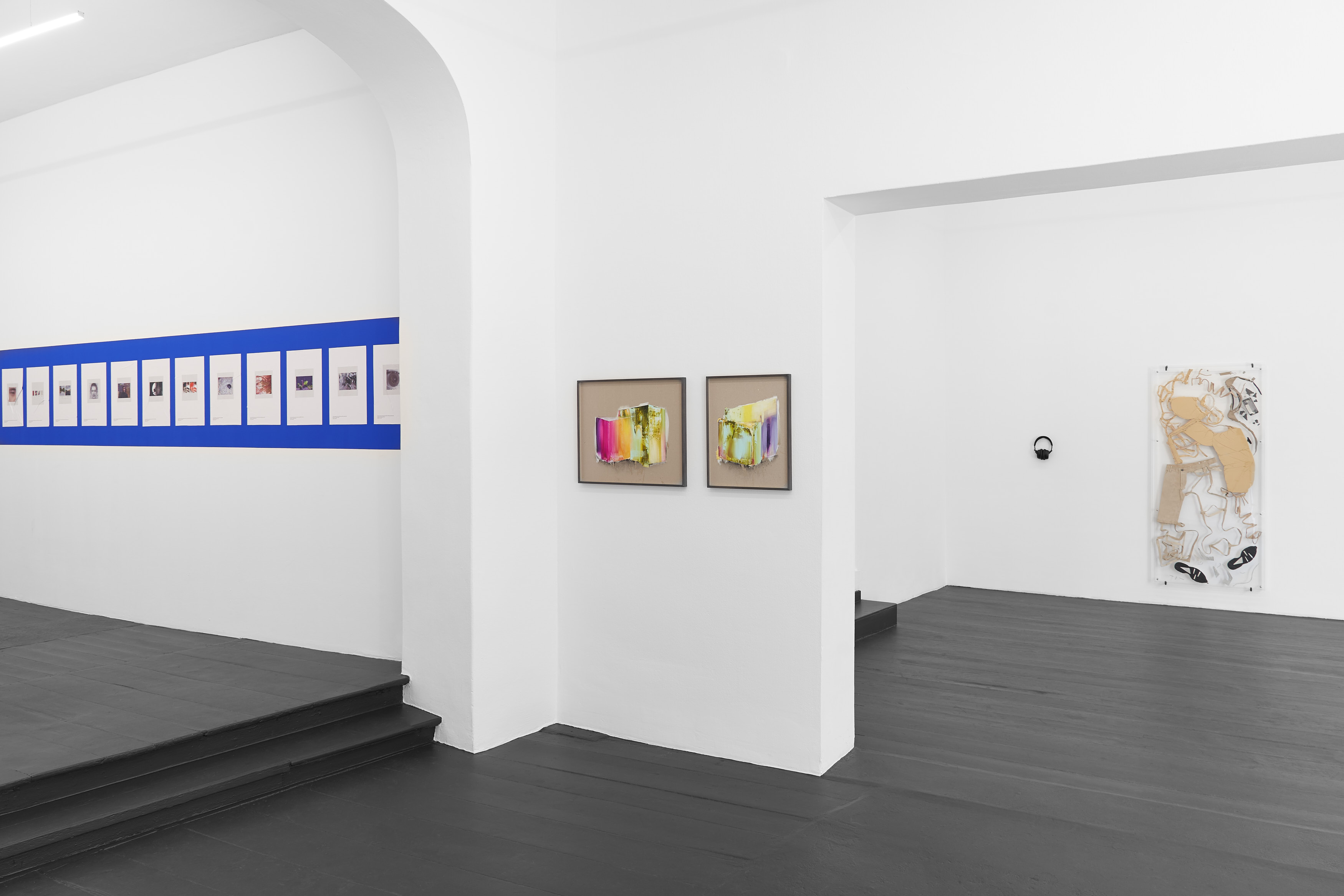
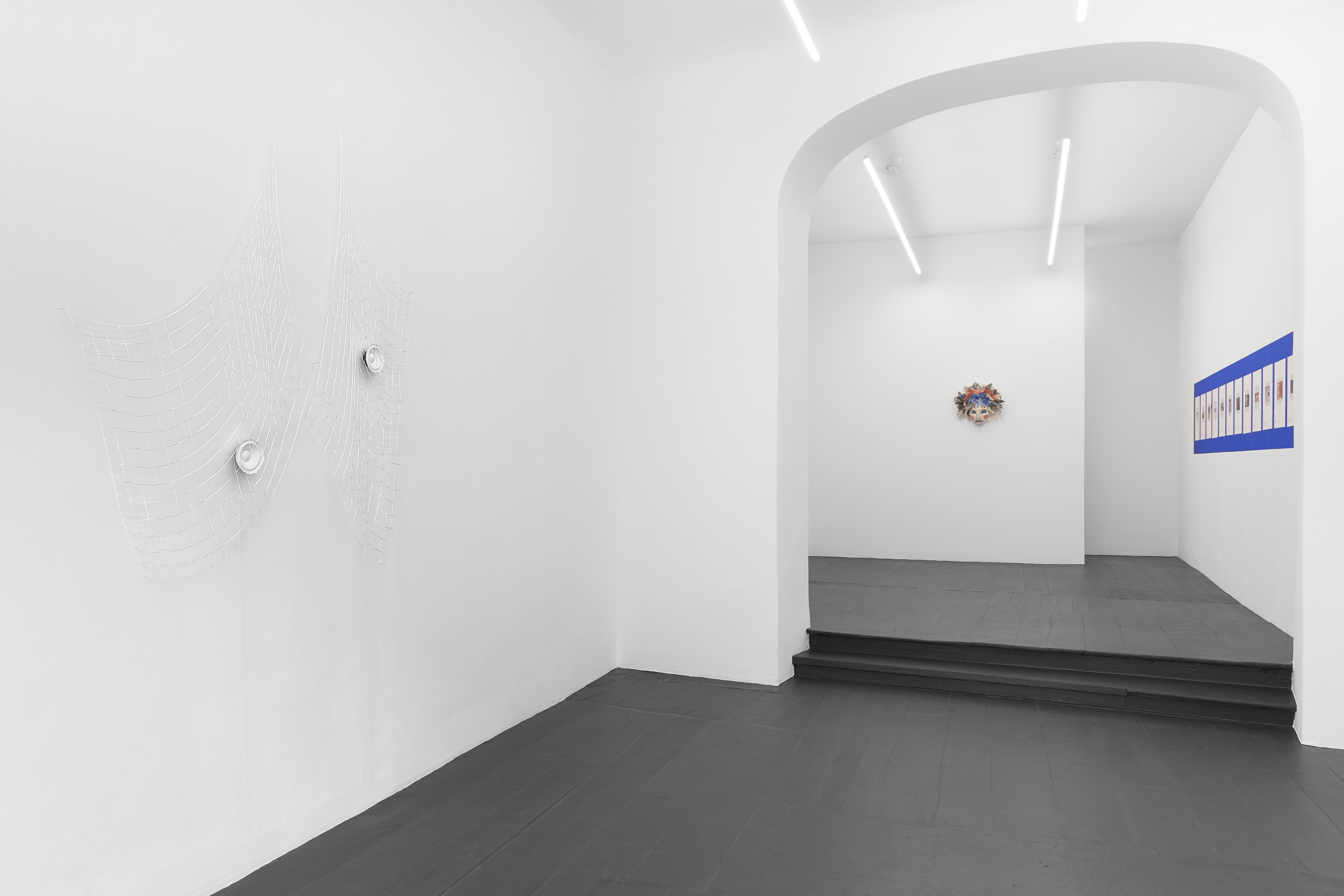
Works
Crushed and Melted, 2025

The Mother Series, Variation Small Blue (This Is Only The Beginning, Pt.03), 2025
What’s left of us?, 2024
Lumière Libérée VI, 2025
Lumière Libérée V, 2025

Leaking Subjects and Bounding Boxes: On Training AI, 2024
Scribble Mask, 2025
Ohne Titel, 2025
Press Release
Fundamental to human communication, paper and sound are intertwined with the ways in which we record, consume, and interpret our world. The group exhibition Paper & Sound explores these two ubiquitous, but often overlooked materials. Sound precedes and shapes language, forming the foundation of oral traditions, music, and speech. Paper, though seemingly modest, carries histories that range from the mundane to the sacred. Its versatility allows it to serve countless functions, from the most ephemeral (a napkin) to the most enduring (books, currency). Eight artists present works that explore paper and sound as starting points, inviting viewers to consider their role in shaping and transmitting memory, knowledge, and history—or simply to engage with these materials on a sensory level. The exhibition extends beyond the visual, drawing attention to the oral, verbal, tactile, and auditory, urging close listening, keen observation, and full sensory engagement.
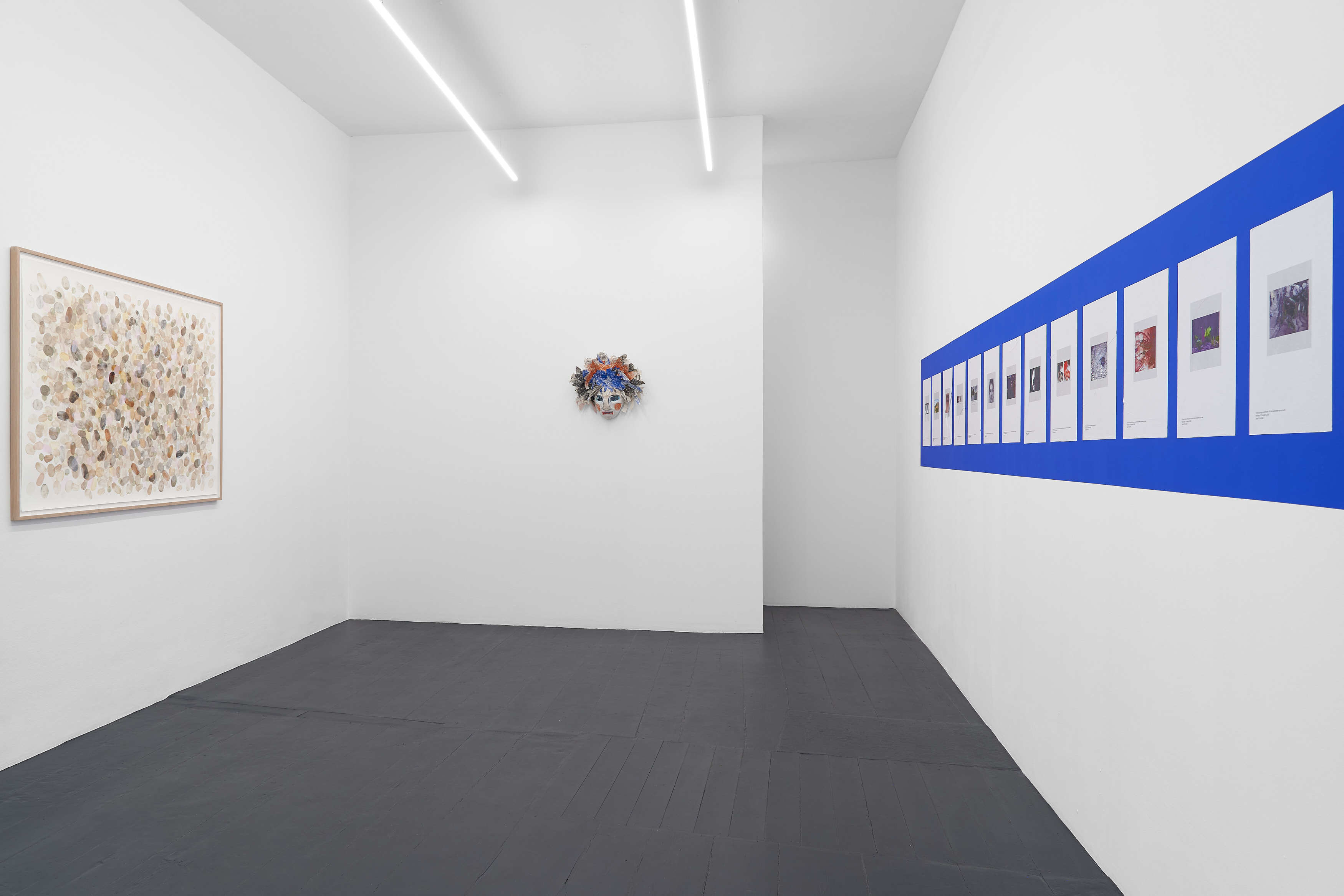
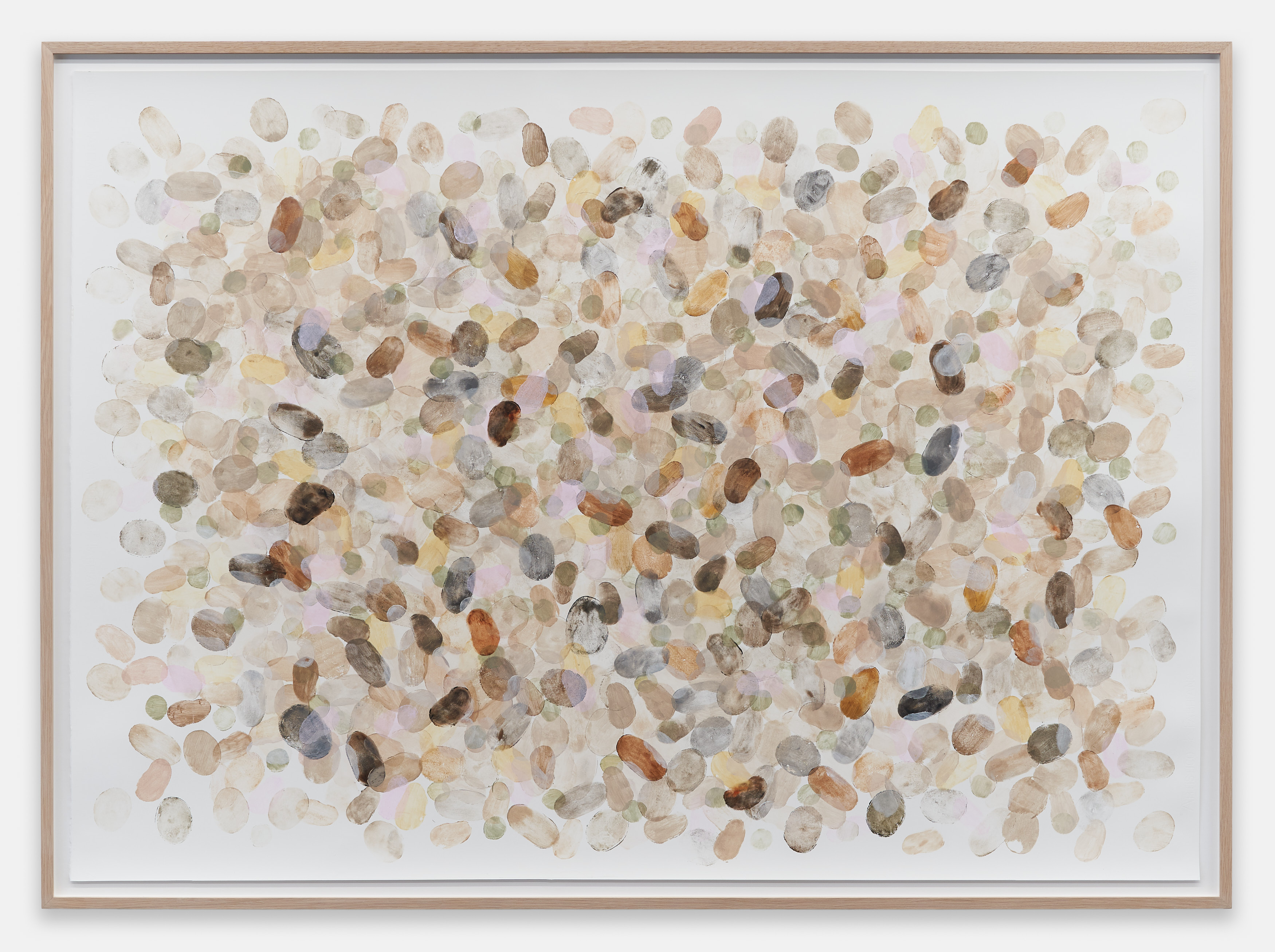
Ulf Aminde’s work is created by repetitively stamping cut potatoes onto a large paper surface, drawing on a symbol deeply embedded in German history. Native to the Americas, the potato became a cornerstone of German agriculture and diet after Frederick the Great famously promoted it in the 18th century to prevent famine, cementing its status as a lasting cultural emblem. From a distance, the piece appears as a hypnotic, abstract, colorful pattern, but up close, the texture and translucence of the stamped impressions resemble fingerprint marks found on official documents. This evokes another symbol of German identity: bureaucracy. Though sound is not explicitly present in this piece, the act of stamping evokes an auditory presence, suggesting the monotonous sound of rubber stamps in public offices and reflecting the tedium of administrative processes. In this context, stamps acquire significance beyond their mechanical function, symbolizing the critical, often painful role of official documentation. For many, particularly immigrants in Germany, a stamp can determine the difference between safety and exclusion. Aminde frequently explores how bureaucratic systems shape and constrain lives through video and collaborative artworks. In this piece, however, he works from the solitude of his studio.
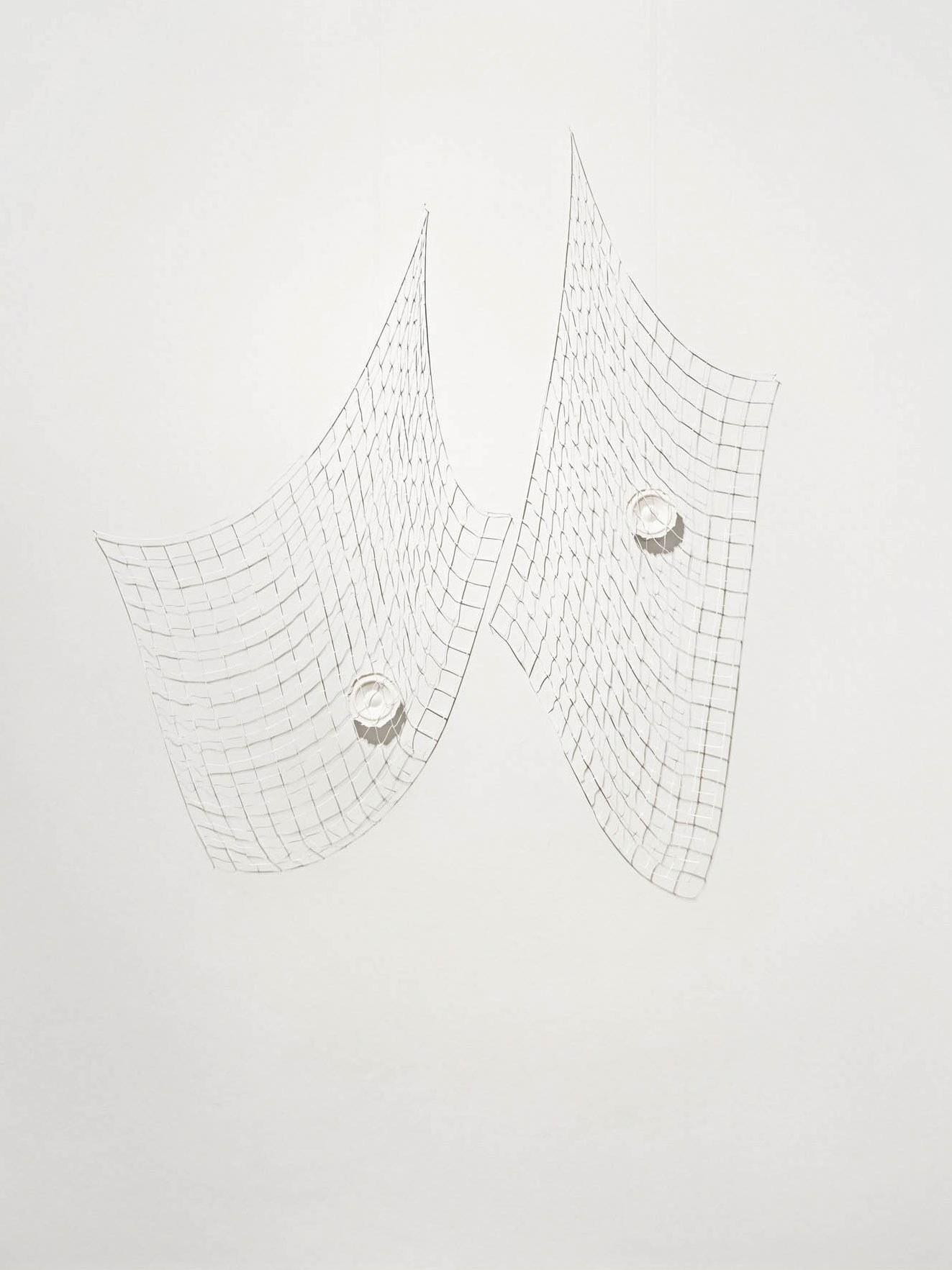
What’s Left of Us? is a collaborative installation by Annabel Daou and Fritjof Mangerich, comprising two paper speakers—crafted from shredded paper and cast from real speakers—suspended in delicate paper nets made of microfiber paper. The speakers emit recordings of Daou’s voice, reading fragments of responses gathered from interviews with friends, acquaintances, and strangers in response to the question, “What’s left of us?” The entire white composition, set against a white background, becomes nearly invisible, evoking the intangible nature of sound itself. Daou and Mangerich’s work is united by a shared commitment to meticulous, labor-intensive processes. In What’s Left of Us?, the combination of sound and paper is uniquely explicit within the exhibition. Suspended in the delicate nets, the paper speakers embody a palpable sense of fragility. This fragility reflects the impermanence of both language and memory. Through the question “What’s left of us?” the work prompts contemplation of identity, loss, and what endures over time.
Elisa Giardina Papa’s Leaking Subjects and Bounding Boxes: On Training AI is a paper installation based on images featured in her book of the same title. These images were collected during her time as a human trainer for AI vision systems, where she processed thousands of images for machine learning algorithms. As a "data cleaner," she began collecting images that resisted AI’s impulse to categorize and classify—capturing moments that defied any clear, definable order. A selection of these images is glued to a blue wall, with visible bubbles and uneven textures emphasizing the materiality of the paper itself. The installation highlights paper’s dual function: both as a vessel of knowledge preservation (as in books) and as a medium that exposes the limitations of classificatory systems. Through this work, the artist draws attention to the unruly and elusive nature of that which refuses to be neatly defined or contained.
Grit Richter’s soft pastel on paper works, while retaining the glowing luminosity and precision of line characteristic of her oil paintings, invite a more intimate engagement. In The Mother Series, Variation Small Blue (This Is Only the Beginning Pt.03) Richter uses shades of indigo, blues, purples, and touches of lime yellow to create an evocative and mysterious abstraction. The central divided form carries a surreal quality, while also evoking scientific or biological illustrations. The division suggests duality. Is this division productive, reproductive, or destructive? Anything is possible. The surrounding undulating waves allude to sound waves or the ripple of something falling in liquid, linking the materiality of paper with the intangible nature of sound.
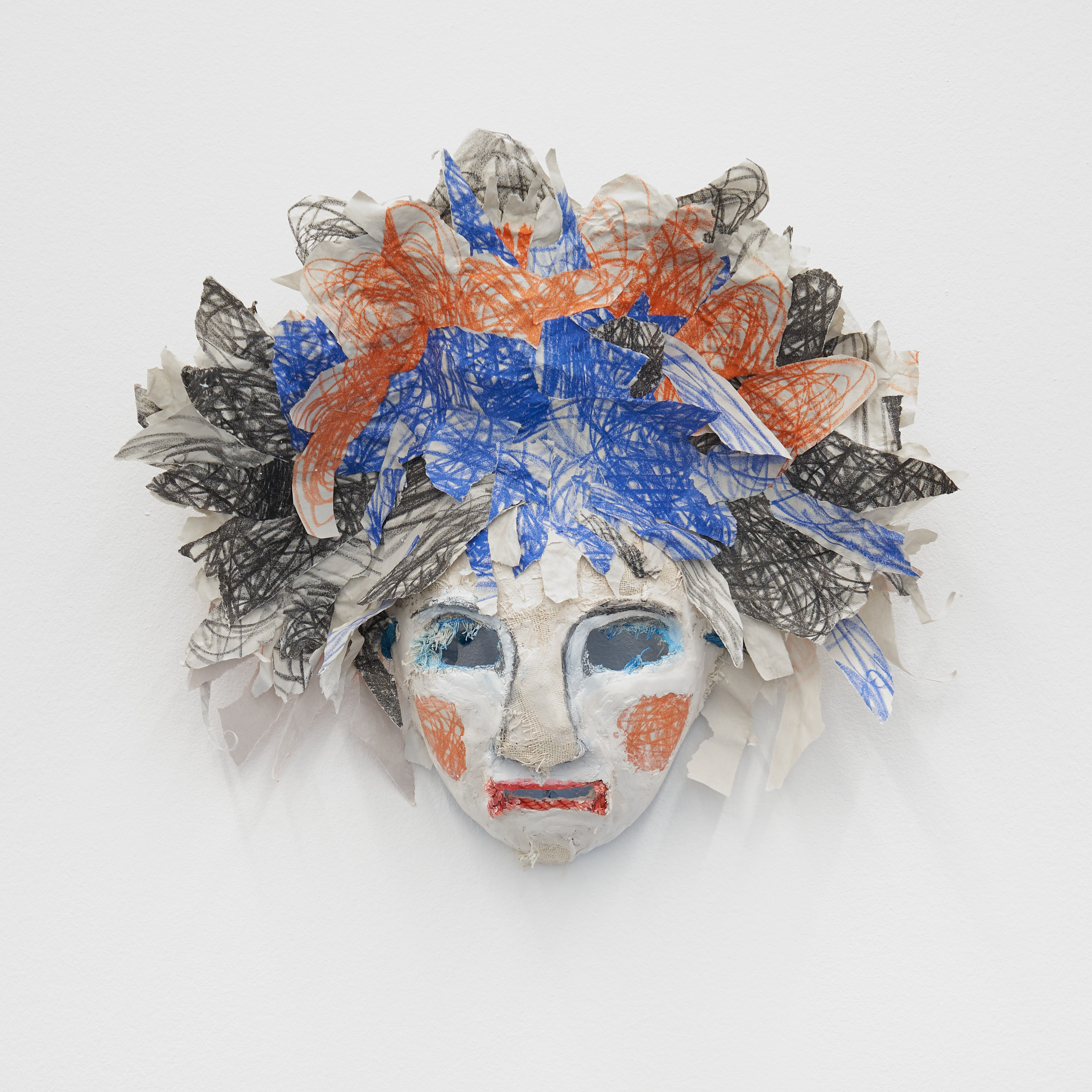
Anna Steinert’s mask integrates paper elements, derived from lithographs in cobalt blue, orange, and black from her time in Sweden, with plaster and fabric to form the mask’s structure. The lithographs are marked with gestural scribbles, reflecting the immediacy of Steinert’s painterly approach, and creating a bridge between her drawing and painting practice and her sculptural work. For Steinert, masks are intrinsically linked to performance, theater, and ritual. Through this medium, she invites viewers to see the mask as a vessel for sound, communication, and transformation. Echoing the concept of persona from ancient theater, the mask does not conceal but amplifies—it is the channel through which the character’s voice resonates. The question remains: What ritual would this mask accompany? What voice or sound might emerge from its mouth made of rope?
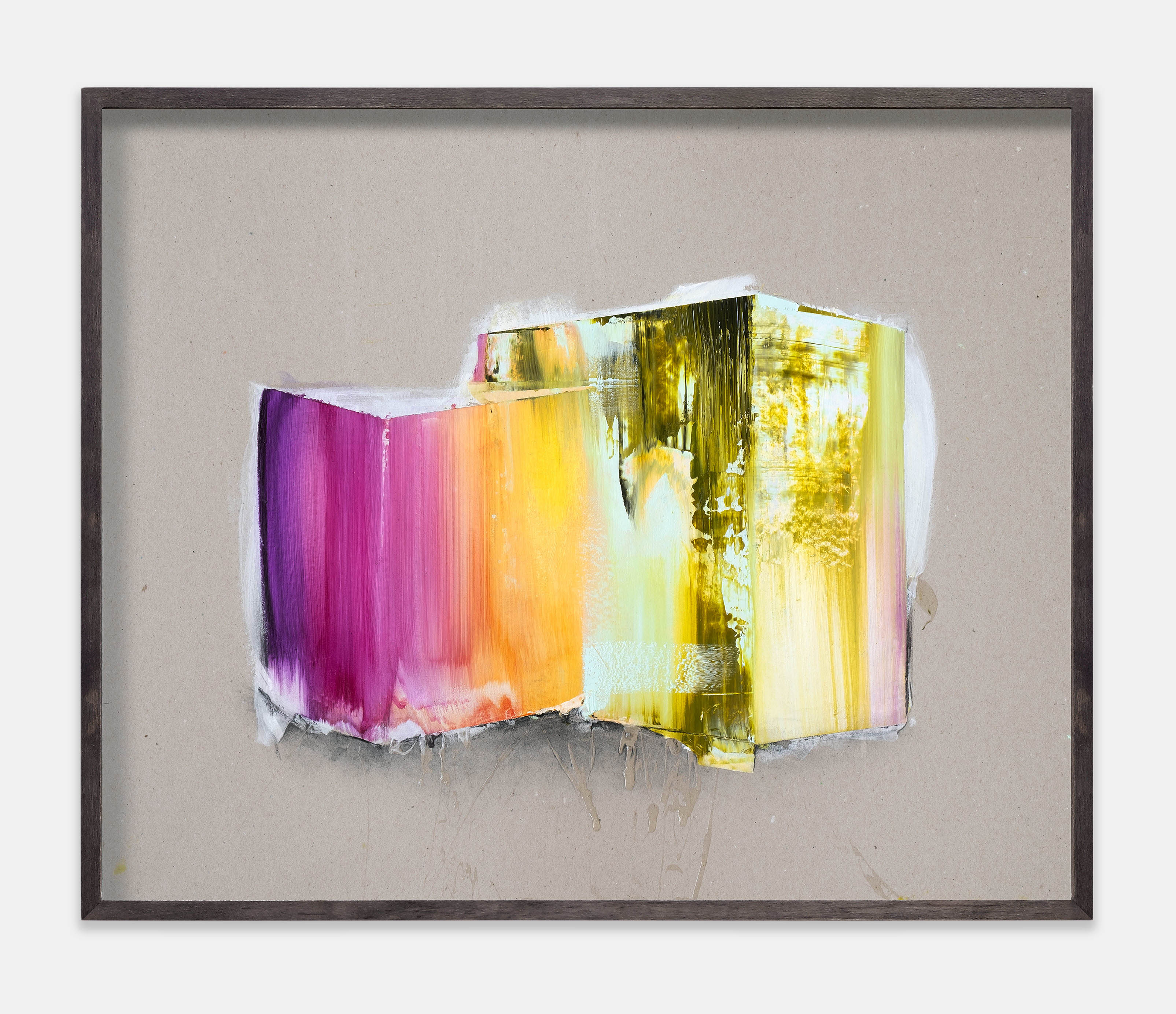
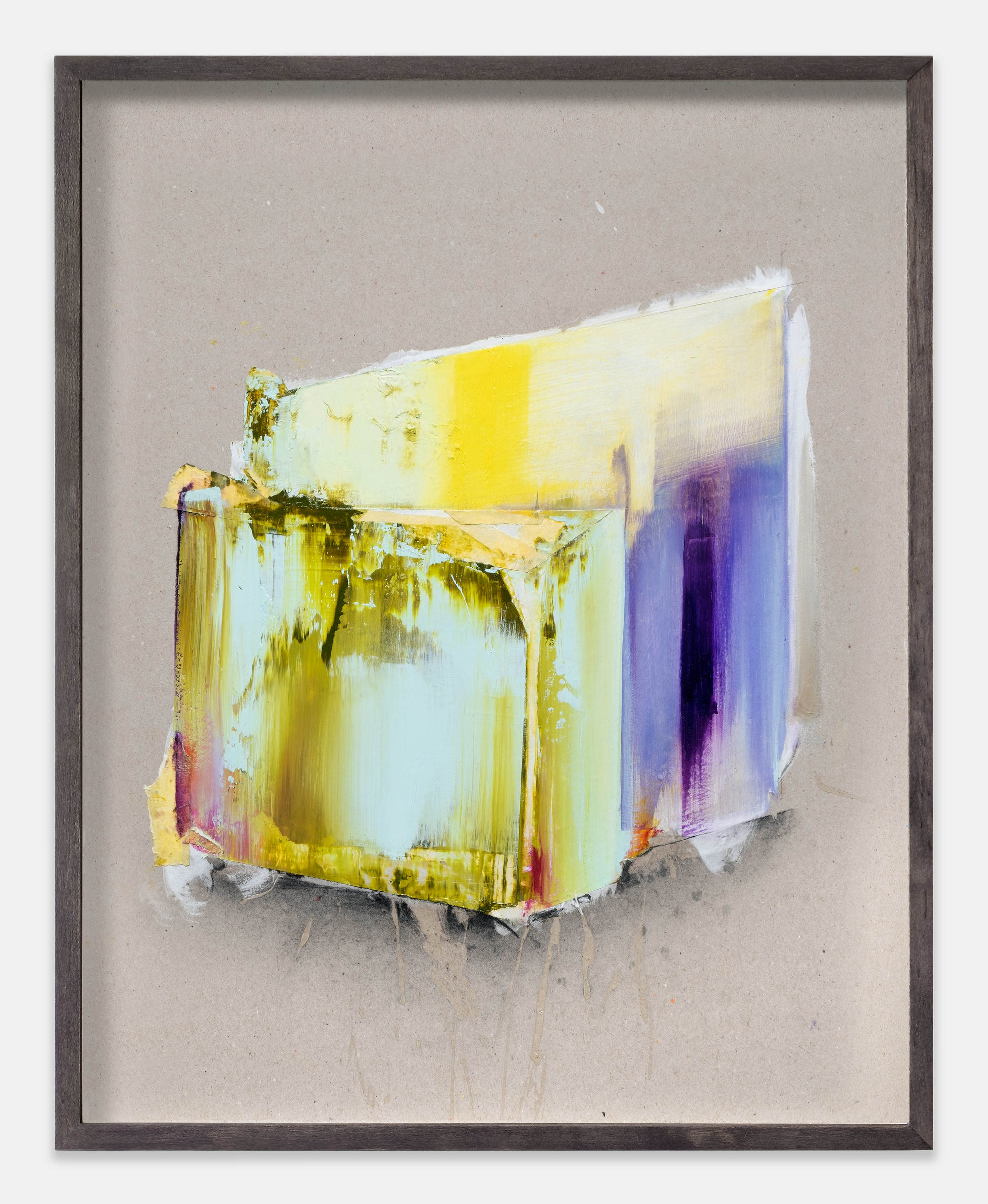
Angelika J. Trojnarski’s Lumière Libérée series is inspired by her own experiments with prisms, alongside the color theories of Isaac Newton and Johann Wolfgang von Goethe. The prisms, painted in vibrant hues on thick gray cardboard, represent the dispersion of white light into its component colors. Newton’s scientific approach examines light’s spectrum objectively, while Goethe’s more emotional perspective links colors to psychological qualities. This contrast between rational science and subjective experience forms the core of Trojnarski’s work. The gray background amplifies the colors, enhancing their vibrancy and altering their perception, connecting the material of paper with the perception of light.
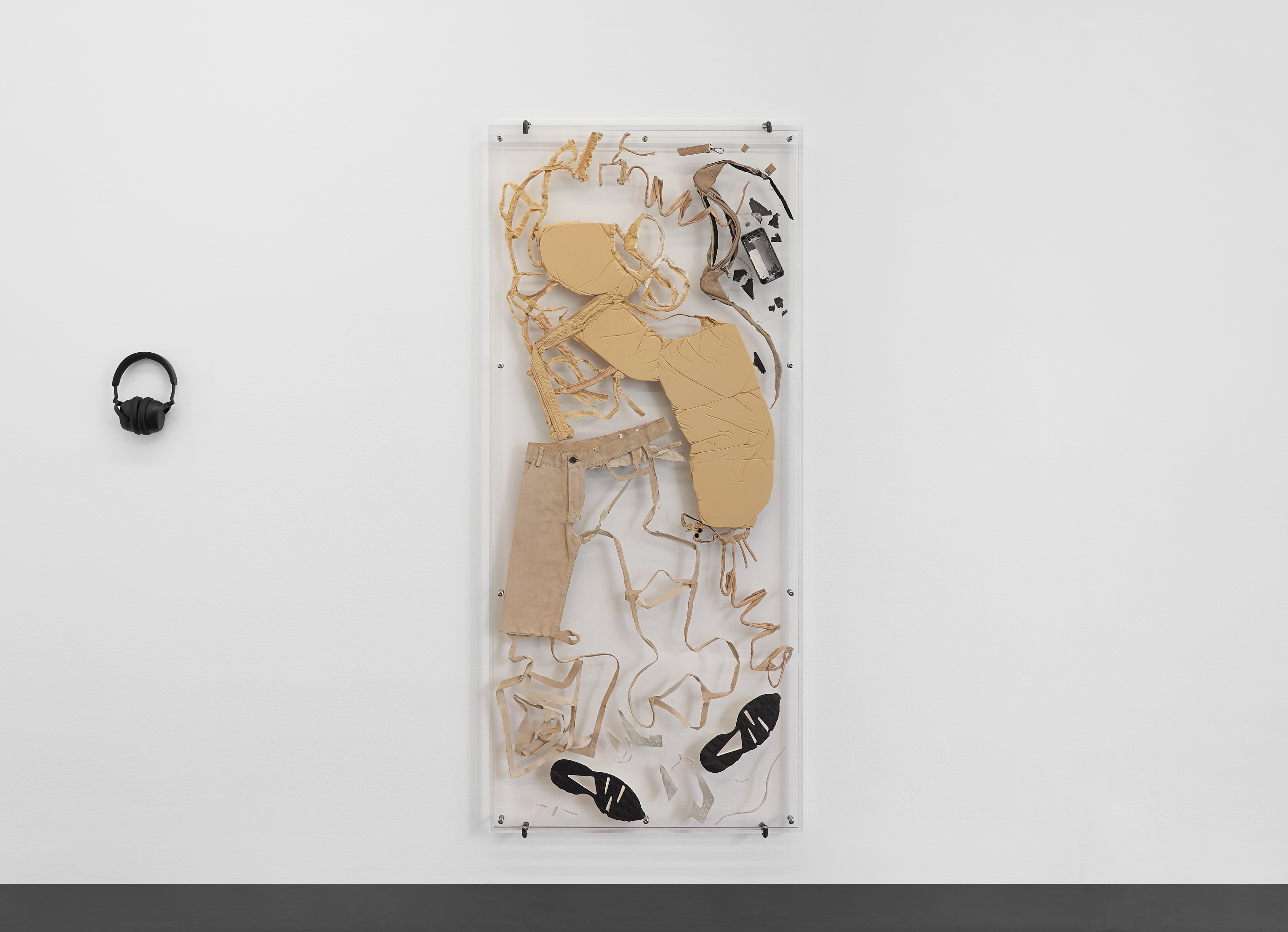
Anna Witt’s Crushed and Melted is a collage that blends visual and auditory elements to explore the dissolution of the human form. The piece is composed of the remnants of a preceding ASMR performance, in which the artist methodically destroyed everyday objects such as clothing, phones, books, and bags. These fragmented materials are then reassembled into loose, human-shaped forms, sandwiched between two sheets of plexiglass. This work builds on her earlier performative installation Soft Destructions, shifting the focus from the room to the body and the objects it interacts with. The sculptures are paired with recorded ASMR sounds from the destruction process, immersing viewers in an intimate sensory experience. Through these pieces, Witt examines the complex relationship between destruction and care, reflecting on how emotional closeness can emerge from seemingly destructive actions, while also engaging with themes of media, intimacy, and distance in the digital age.
Als grundlegende Elemente menschlicher Kommunikation sind Papier und Klang untrennbar damit verbunden, wie wir unsere Welt wahrnehmen. Die Gruppenausstellung Paper & Sound widmet sich diesen beiden allgegenwärtigen, aber oft unbeachteten Materialien. Klang geht der Sprache voraus und formt sie, er bildet die Grundlage für mündliche Überlieferung, Musik und Sprache. Das unscheinbare Papier ist Träger von Geschichten, die vom Profanen bis zum Sakralen reichen. Dank seiner Vielseitigkeit kann es unzählige Funktionen erfüllen, von den vergänglichsten (eine Serviette) bis zu den dauerhaftesten (Bücher, Geldscheine). Die acht Künstler*innen der Ausstellung zeigen Arbeiten, die Papier und Klang als Ausgangspunkte nutzen, um deren Rolle bei der Formung und Vermittlung von Erinnerung, Wissen und Geschichte zu reflektieren – oder sich auf eine rein sinnliche Ebene einzulassen. Paper & Sound geht über visuelle Aspekte hinaus und lenkt unsere Aufmerksamkeit auf das Mündliche, das Berührbare und das Hörbare, und lädt ein zu genauem Hinhören, aufmerksamen Beobachten und sinnlichem Erfahren.
Die Arbeit von Ulf Aminde, die durch wiederholtes Stempeln von Kartoffelhälften auf einer großen Papierfläche entstanden ist, greift auf ein Symbol zurück, das tief in der deutschen Geschichte verwurzelt ist. Die aus Südamerika stammende Kartoffel wurde zu einem Grundstein der deutschen Landwirtschaft und Ernährung. Friedrich der Große hat sie im 18. Jahrhundert gegen Hungersnöte beworben und damit ihren Status als dauerhaftes kulturelles Markenzeichen gefestigt. Aus der Ferne erscheint das Werk wie ein hypnotisches, abstraktes und farbiges Muster. Bei näherer Betrachtung erinnert die Textur an Fingerabdrücke auf behördlichen Dokumenten. Ein weiteres Merkmal deutscher Identität: Bürokratie. Auch wenn der Klang in dieser Arbeit nicht explizit präsent ist, erzeugt der Akt des Stempelns eine hörbare Präsenz, die an das monotone Geräusch von Stempelkissen in öffentlichen Ämtern erinnert und die Langwierigkeit von Verwaltungsprozessen reflektiert. In diesem Kontext erhalten die Stempel eine Bedeutung, die über ihre mechanische Funktion hinausgeht und die oft mühsame und kritische Rolle der behördlichen Dokumentation widerspiegelt. Ein Stempel kann über das Schicksal, insbesondere von Migrant*innen, entscheiden und den entscheidenden Unterschied zwischen Sicherheit und Ausgrenzung machen. In seinen Videoarbeiten und kollaborativen Kunstwerken untersucht Aminde häufig wie bürokratische Systeme die Existenzen von Menschen formen und einschränken. In diesem Stück arbeitet er jedoch aus der Isolation seines Ateliers heraus.
What’s Left of Us? ist eine kollaborative Installation von Annabel Daou und Fritjof Mangerich. Bestehend aus zwei Papierlautsprechern – hergestellt aus geschreddertem Papier und von echten Lautsprechern abgeformt – die hinter zarten Netzen aus Mikrofaserpapier aufgehängt sind. Die Lautsprecher geben Aufnahmen von Daous Stimme wieder, die Bruchstücke von Antworten vorspricht, welche sie und Mangerich in Interviews mit Freunden, Bekannten und Fremden auf die Frage "What’s left of us?" gesammelt haben. Die gesamte Komposition ist gegen einen weißen Hintergrund gesetzt und wirkt nahezu unsichtbar, wodurch die nicht sichtbare Natur des Klangs selbst angedeutet wird. Daou und Mangerich verbindet ein gemeinsames Verständnis von sorgfältigen und aufwändigen Prozessen. In What’s Left of Us? wird die Kombination von Klang und Papier besonders erfahrbar gemacht. In zarten Netzen aufgehängt, vermitteln die Papierlautsprecher eine spürbare Zerbrechlichkeit. Diese Zerbrechlichkeit spiegelt die Vergänglichkeit von Sprache und Erinnerung wider. Durch die Frage “What’s left of us?” regt die Arbeit zum Nachdenken an über Identität, Verlust und das, was die Zeit überdauert.
Elisa Giardina Papa’s Leaking Subjects and Bounding Boxes: On Training AI ist eine Papierinstallation, die auf Bildern ihres gleichnamigen Buches basiert. Diese Bilder sammelte sie während ihrer Zeit als menschliche Trainerin für künstliche Intelligenz-Vision-Systeme, wo sie tausende von Bildern für maschinelle Lernalgorithmen verarbeitete. Die Bilder sind auf einen blauen Hintergrund geklebt, mit sichtbaren Texturen, sodass die Materialität des Papiers sichtbar ist. Die Arbeit zeigt die Dualität von Papier: als Werkzeug zur Bewahrung von Wissen (wie in Büchern) und als Medium, das die Vergänglichkeit und Grenzen unseres allgegenwärtigen Kategorisierungsdrangs offenbart. Giardina Papa zelebriert in Leaking Subjects and Bounding Boxes: On Training AI die anarchische und elusive Natur von alldem, was sich einer klaren Definition entzieht.
Grit Richters zarte Pastellarbeit auf Papier, die die Leuchtkraft ihrer Ölgemälde beibehält, lädt zu einer intimen Auseinandersetzung ein. In The Mother Series, Variation Small Blue (This Is Only the Beginning Pt.03) verwendet Richter Schattierungen von Indigo, Blau, Purpur und Nuancen von Zitronengelb, um eine eindrucksvolle und geheimnisvolle Abstraktion zu erschaffen. Die zentrale gespaltene Form hat eine surreale Qualität und erinnert auch an wissenschaftliche oder biologische Illustrationen. Die Teilung impliziert Dualität – ist sie produktiv, reproduktiv oder destruktiv? Alles ist denkbar. Durch wellenartige Formen, die an Schallwellen oder Wasserkreise erinnern, verbindet sich die Materialität des Papiers mit der immateriellen Natur des Klangs.
In Anna Steinerts Maske werden Papierelemente, die aus Lithografien in Kobaltblau, Orange und Schwarz aus Steinerts Zeit in Schweden stammen, mit Gips und Stoff zu einer Maskenstruktur verbunden. Die Lithographien sind mit gestenreichen Kritzeleien versehen, die die Unmittelbarkeit von Steinerts malerischer Herangehensweise reflektieren und eine Brücke zwischen ihrer zeichnerischen und malerischen Praxis und ihrer skulpturalen Arbeit schlagen. Masken sind für Steinert unmittelbar mit Performance, Theater und Ritualen verbunden. Durch dieses Medium fordert Steinert die Betrachter*innen auf, sich mit der Maske als potenzielles Vehikel für Klang, Kommunikation und Ausdruck auseinanderzusetzen. In Anlehnung an die Persona des antiken Theaters verbirgt die Maske nicht, sondern verstärkt sie – sie ist der Kanal, durch den die Stimme der Figur erklingt. Die Frage bleibt: Welches Ritual würde diese Maske begleiten? Welche Stimme oder welcher Klang könnte aus ihrem Mund aus Seil kommen?
Die Serie Lumière Libérée von Angelika J. Trojnarski ist inspiriert von ihren Experimenten mit Prismen. Die Farbenlehren von Isaac Newton und Johann Wolfgang von Goethe dienen ihr als Referenz. Die Prismen – in kräftigen Farben auf dicken grauen Karton gemalt – stellen die Aufspaltung von weißem Licht in seine Bestandteile dar. In Newtons naturwissenschaftlichem Ansatz wird das Spektrum des Lichts objektiv untersucht, Goethe's emotionalere Perspektive verbindet Farben mit psychologischen Qualitäten. Dieser Kontrast zwischen rationaler Wissenschaft und subjektiver Erfahrung bildet den Kern von Trojnarskis Arbeit. Der graue Hintergrund, der die Farbenwahrnehmung verstärkt und ihre Leuchtkraft steigert, stellt eine Verbindung zwischen der Materialität des Papiers und der Wahrnehmung des Lichts her.
Anna Witts Crushed and Melted von Anna Witt ist eine Collage, die visuelle und auditive Elemente verbindet, um die Auflösung der menschlichen Gestalt zu veranschaulichen. Das Stück besteht aus den Überresten einer früheren ASMR-Performance, in der die Künstlerin systematisch Alltagsgegenstände wie Kleidung, Telefone und Taschen zerstörte. Diese deformierten Materialien werden dann zwischen zwei Plexiglasscheiben zu einer losen, menschenähnlichen Form zusammengesetzt. Die Arbeit baut auf ihrer früheren performativen Installation Soft Destructions auf und verlagert den Fokus nun auf den menschlichen Körper und diejenigen Objekte, mit denen er interagiert. Gepaart mit subtilen ASMR-ähnlichen Klängen, die entstehen während die Objekte zerstört wurden, entwickelt sich eine sinnliche und intime Erfahrung. Witt untersucht die komplexe Beziehung zwischen Zerstörung und Fürsorge und zeigt auf, wie aus scheinbar destruktiven Handlungen emotionale Nähe entstehen kann, während sie sich gleichzeitig mit Themen wie Medien, Intimität und Distanz im digitalen Zeitalter auseinandersetzt.
Related News
Elisa Giardina Papa
Blu a occhiu nuru
MACTE, Termoli
Oct 23, 2026 – Jan 30, 2027
Šejla Kamerić & Grit Richter
Tell Me Where Home Is
Group exhibition curated by Uta Ruhrkamp
Kunstmuseum Wolfsburg
Sep 19, 2026 – Jan 17, 2027

Elisa Giardina Papa
She Flickered In and Out of History
Solo exhibition
ICA Milano
Sep 18, 2026
Angelika J. Trojnarski
Natur und Geister
Group exhibition
Goethe-Museum Düsseldorf
Aug 28 – Oct 11, 2026