Kapwani Kiwanga
Carry Me / Carry On
Nov 20, 2026 – Jan 30, 2027
Installation Views

Carry Me / Carry On, 2026

Carry Me / Carry On, 2026

Carry Me / Carry On, 2026

Carry Me / Carry On, 2026

Carry Me / Carry On, 2026

Carry Me / Carry On, 2026
Works
Carry Capacity: mulberry loden wool, 2026
Stick Figure (amber), 2026

Carry Capacity: metal grey cotton and silk, 2026
Carry Capacity: blue plaid, 2026

Carry Capacity: coral gabardine, 2026
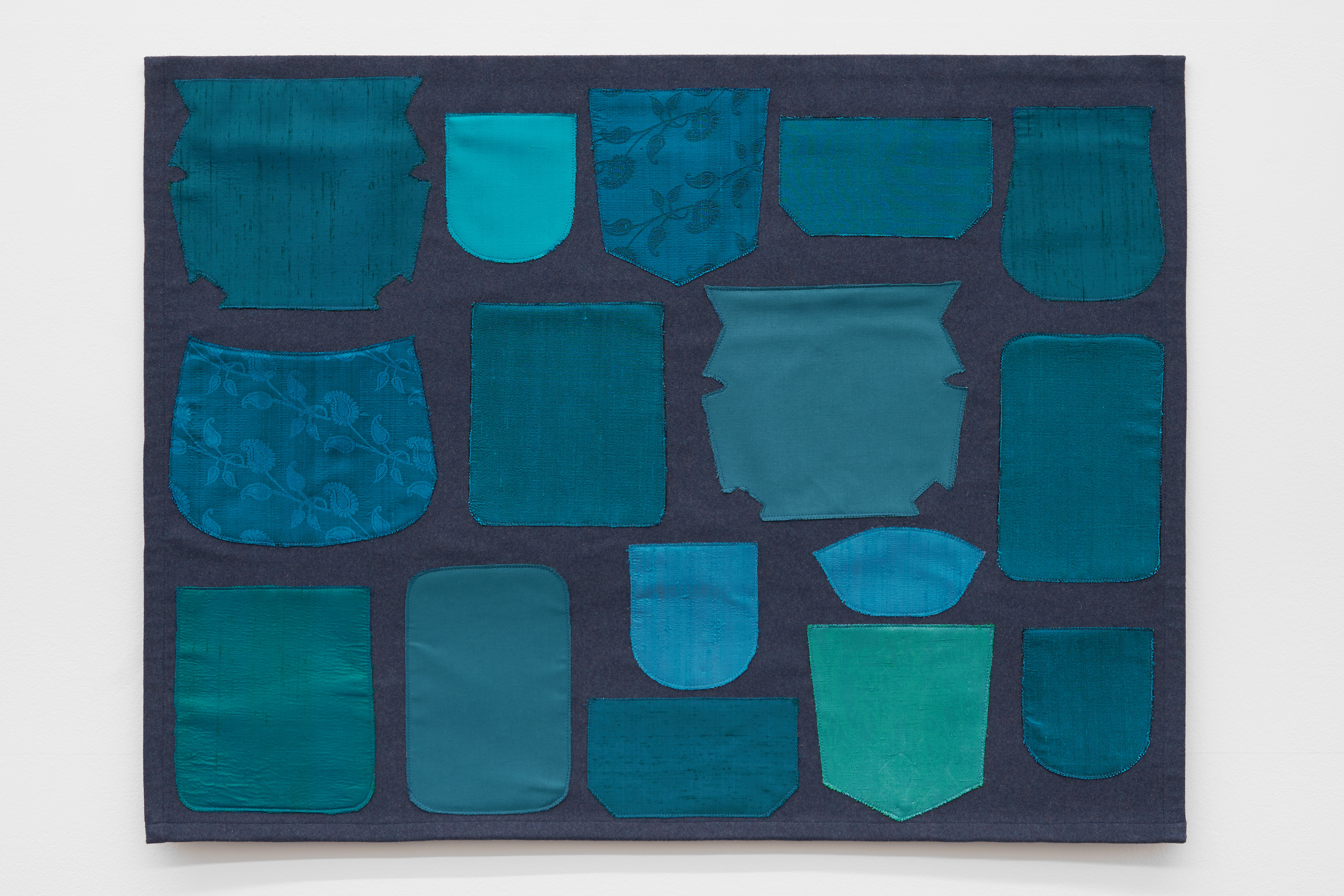
Carry Capacity: peacock cotton and silk, 2026
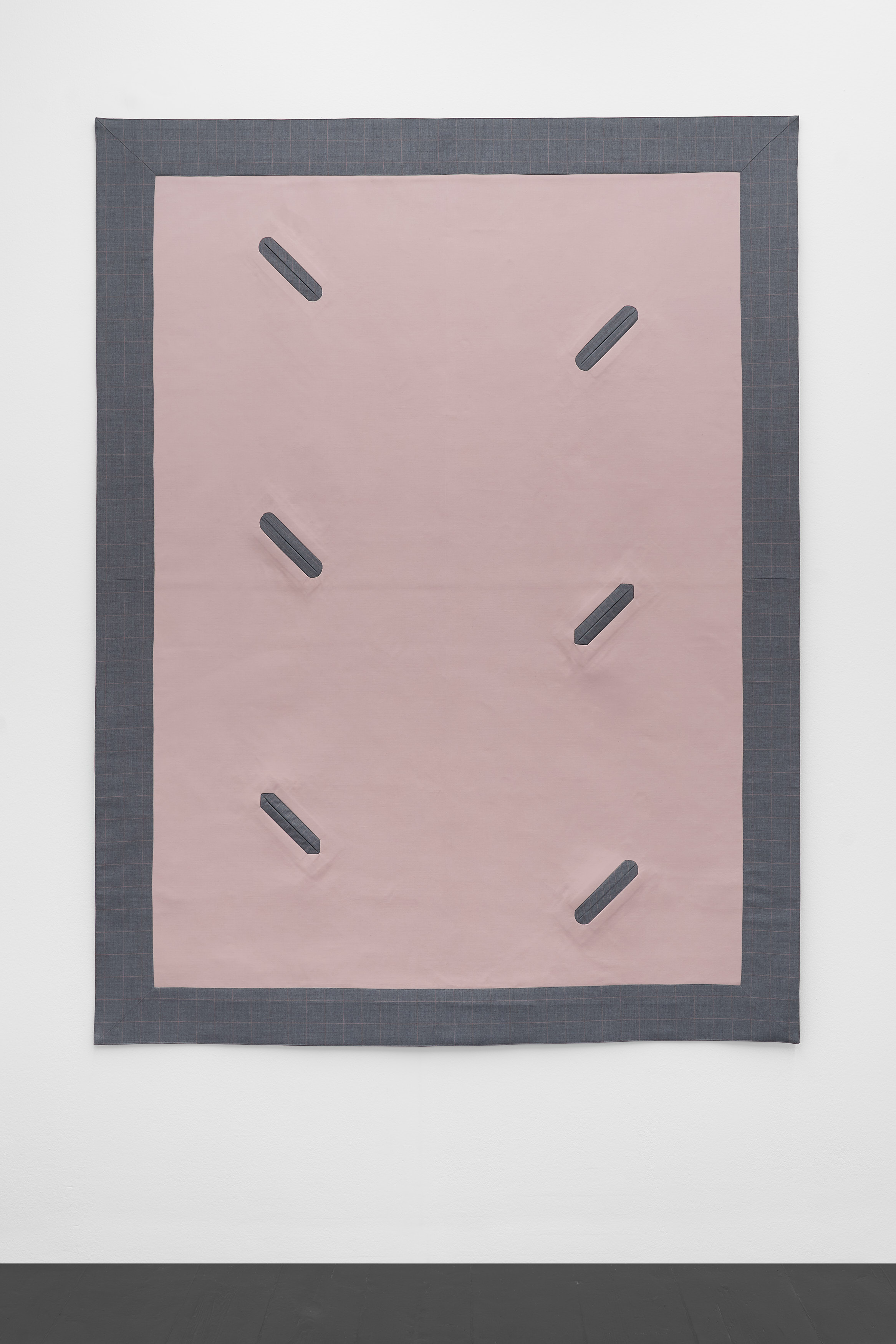
Carry Capacity: pink windowpane and pinstripes, 2026
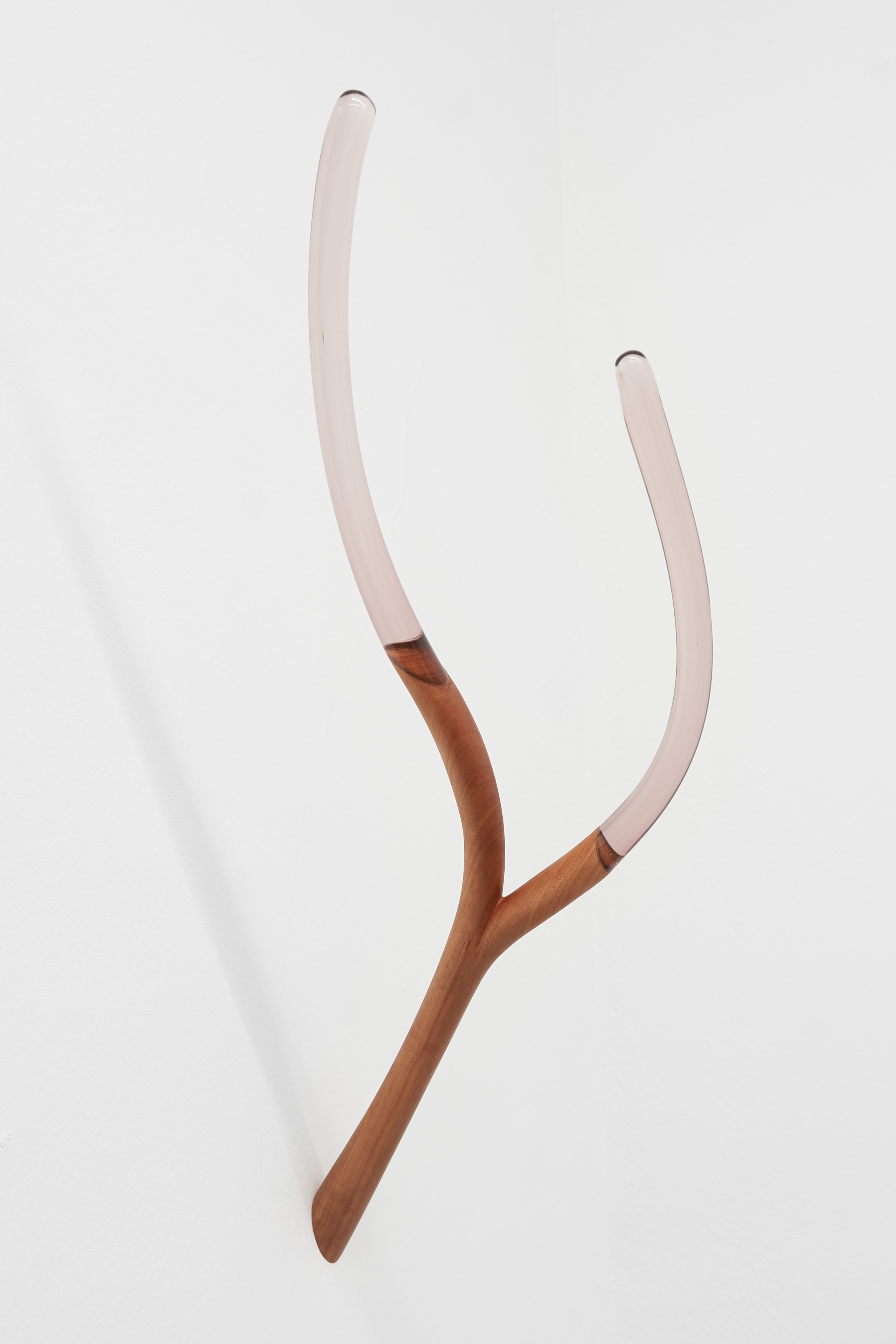
Stick Figure (rose), 2026
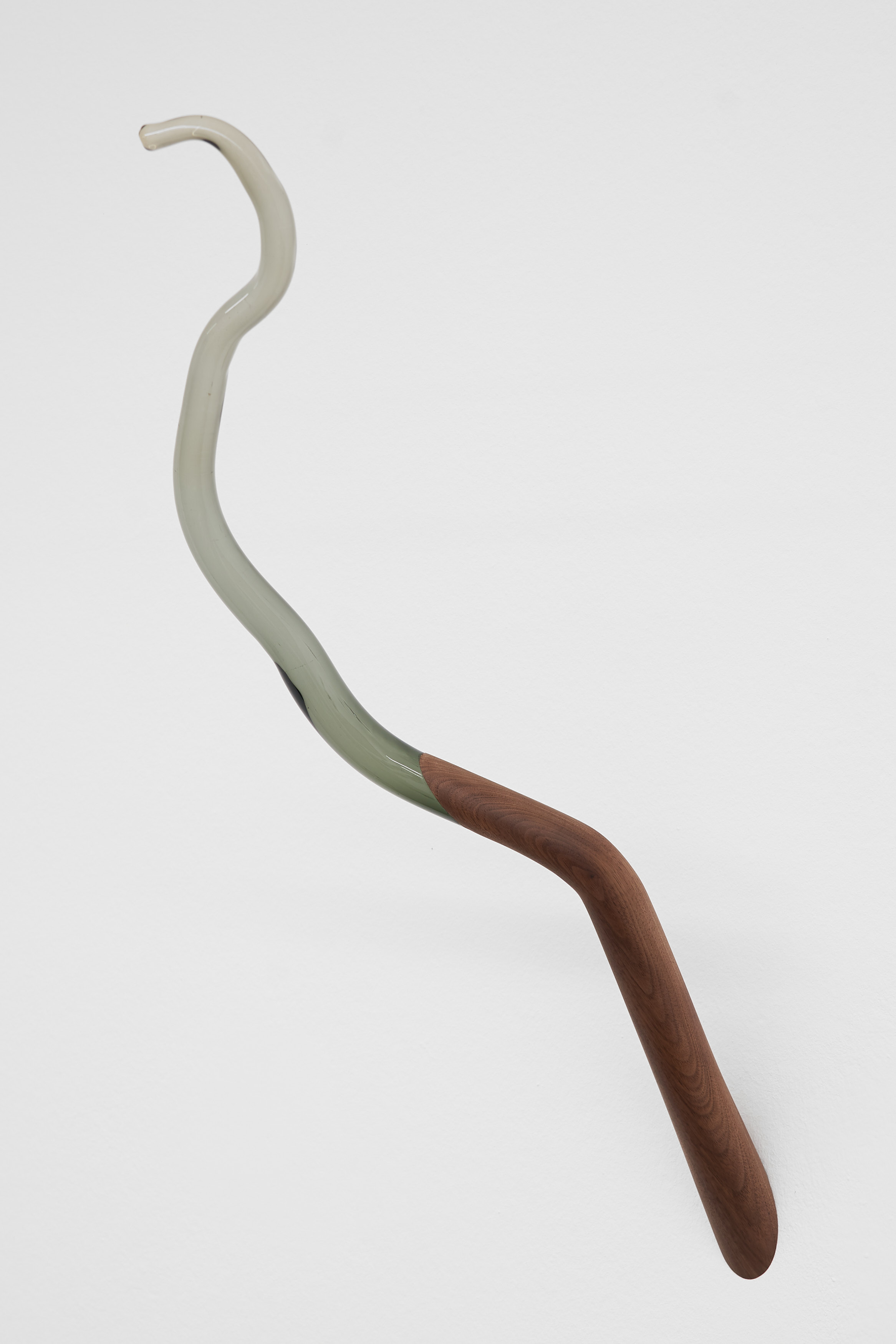
Stick Figure (green), 2026
Press Release
Galerie Tanja Wagner is pleased to present Carry Me / Carry On, Kapwani Kiwanga’s fifth solo exhibition at the gallery. The exhibition builds on works developed for Changing States, the artist’s first national survey in Spain at the Fundació Joan Miró in Barcelona earlier this year, which followed her receipt of the Joan Miró Prize in 2025. Bringing together five textile works from the series Carry Capacity and Stick Figure, a new work group of sculptures in hand carved wood and hot sculpted glass, the exhibition explores themes of shelter and protection: architecture, clothing, belief and the body itself as what mediates between us and the world beyond.
Across her practice, Kiwanga examines the lasting effects of unequal power relations, placing historical narratives in dialogue with the present and with possible futures. Her research-based work often begins with histories that have been marginalised, and takes shape across sculpture, installation, photography, video and performance. Through conceptual and formal abstraction, Kiwanga invites viewers to look at existing structures from multiple perspectives and to imagine ways to navigate the future.
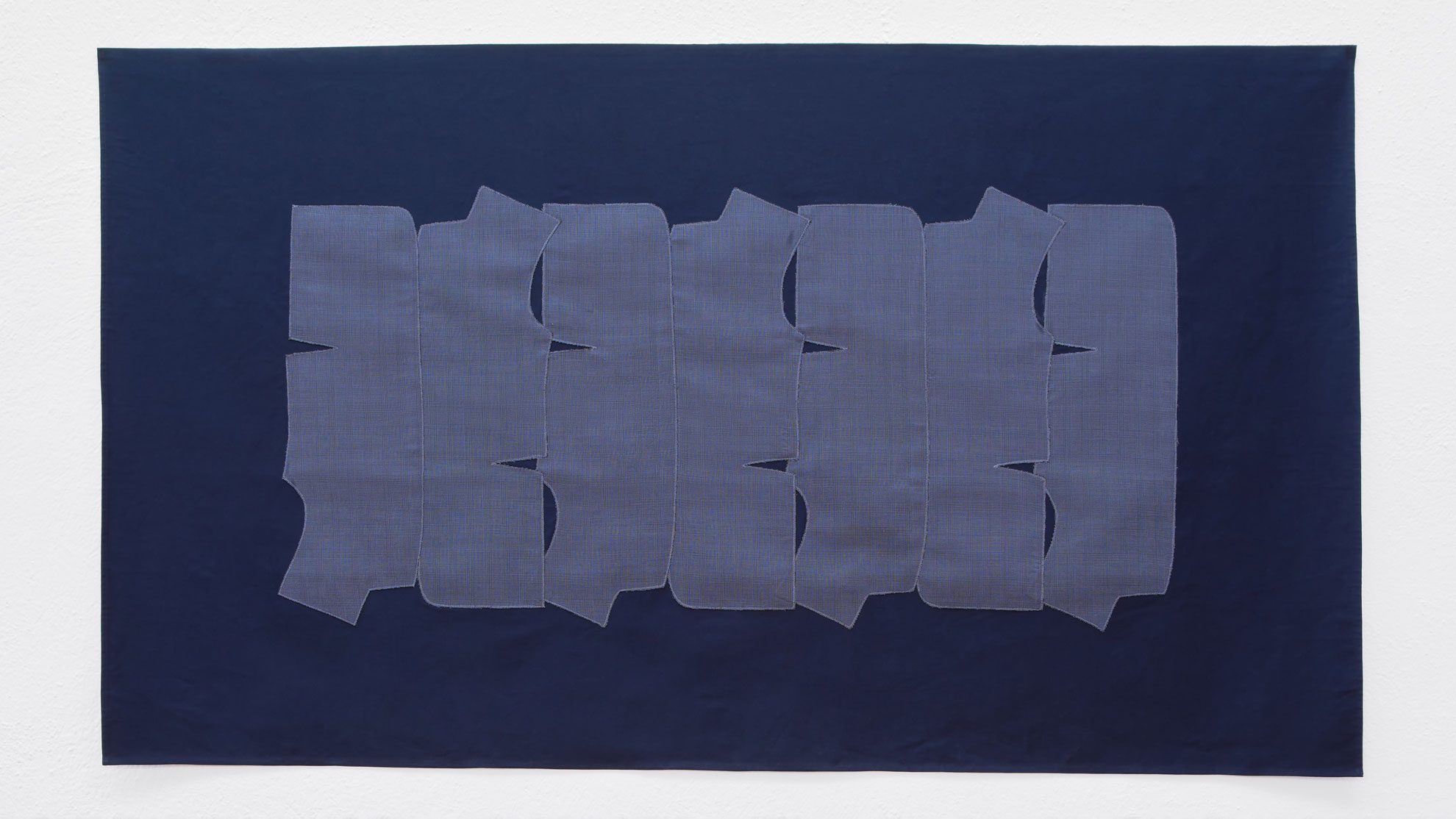
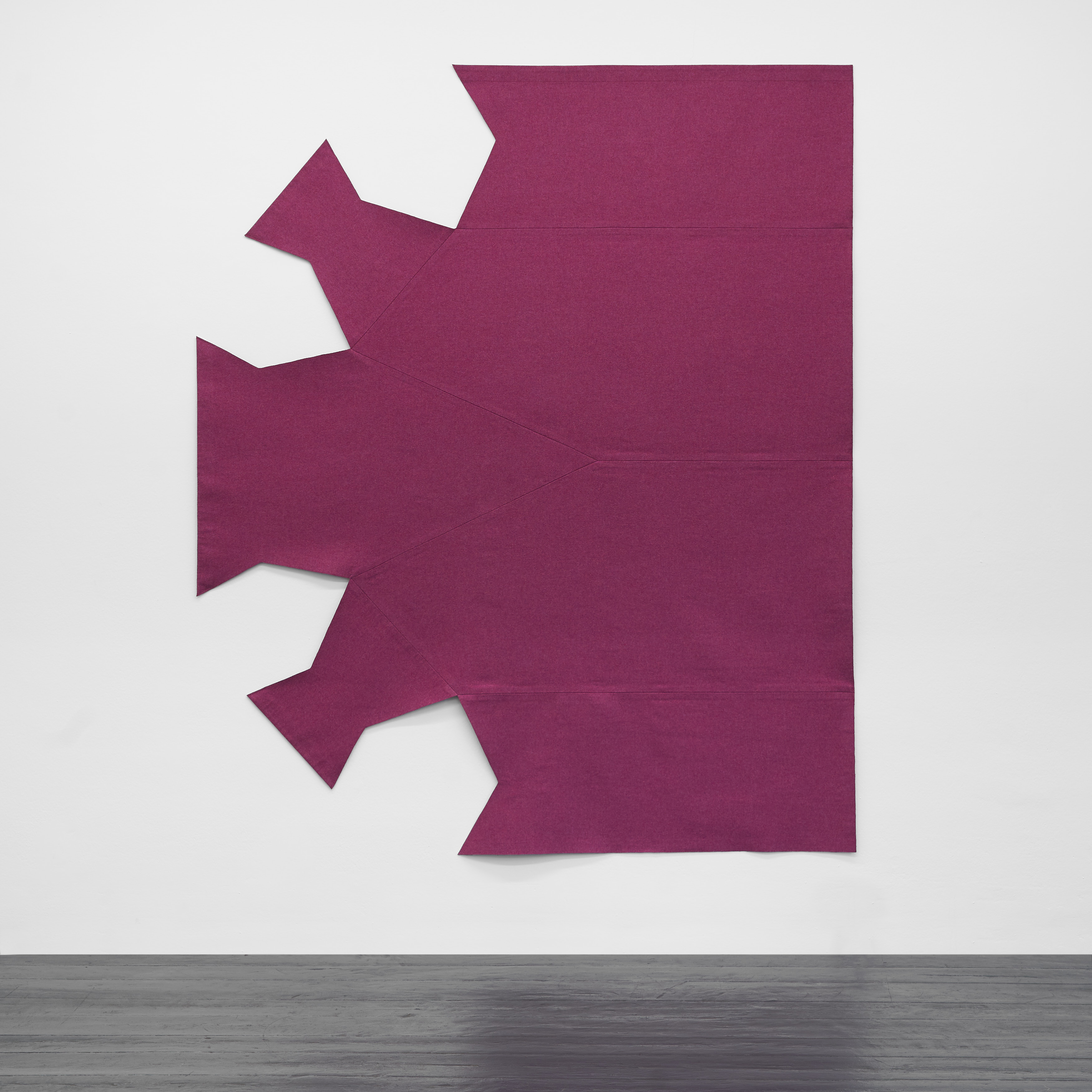
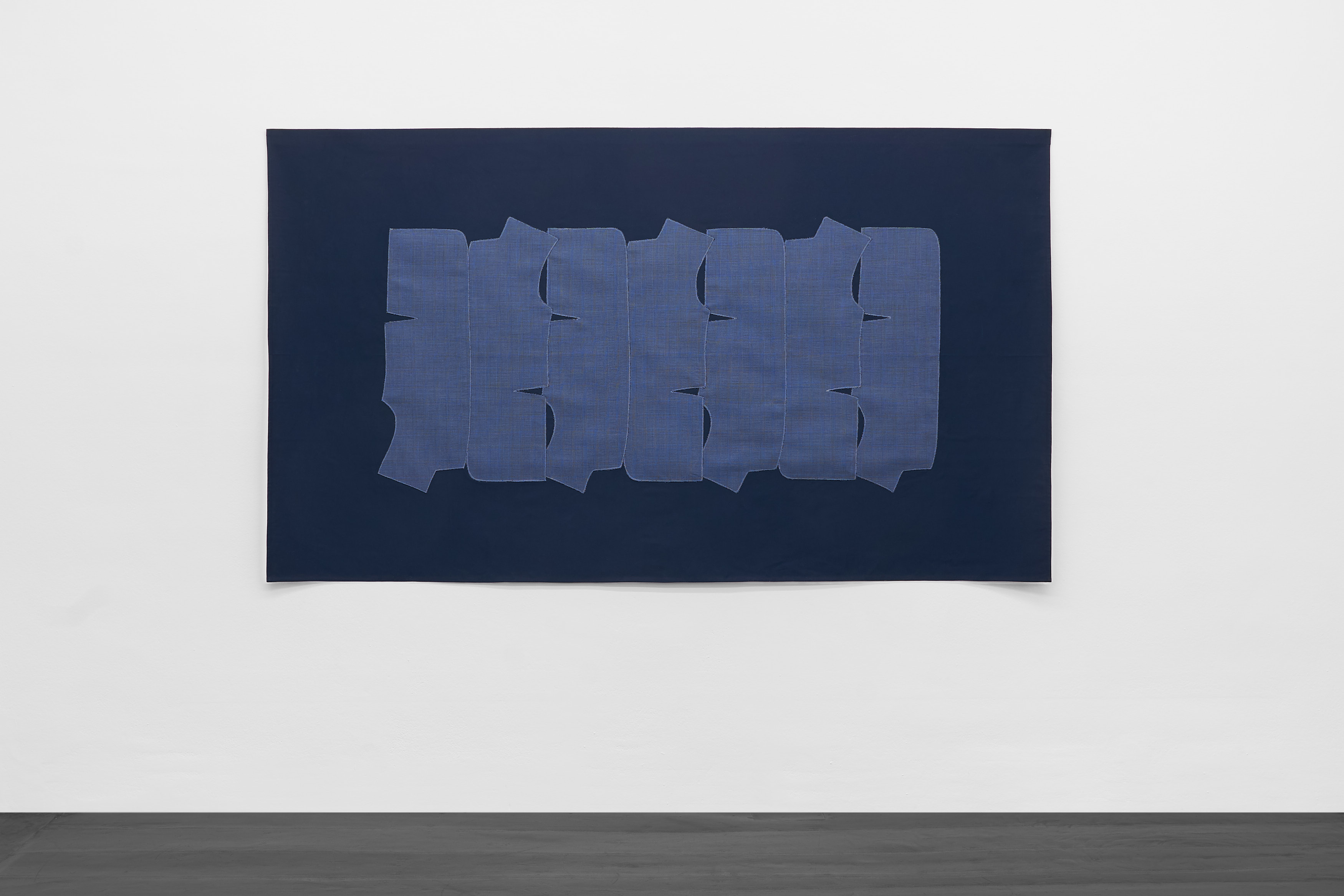
The series of Carry Capacity consists of textile works that approach the garment as an intimate marker of home. Its starting point is a story about Joan Miró, who carried a carob pod in a specially tailored pocket as a sensory connection to his home. Working from the patterns of blazers, and pockets, Kiwanga creates fabric compositions in which the body becomes a portable dwelling. The pocket distills this idea into its most concentrated form: a small, hidden space in which home can be carried and kept close. The exhibition includes works first shown at Fundació Joan Miró alongside new works from the series.
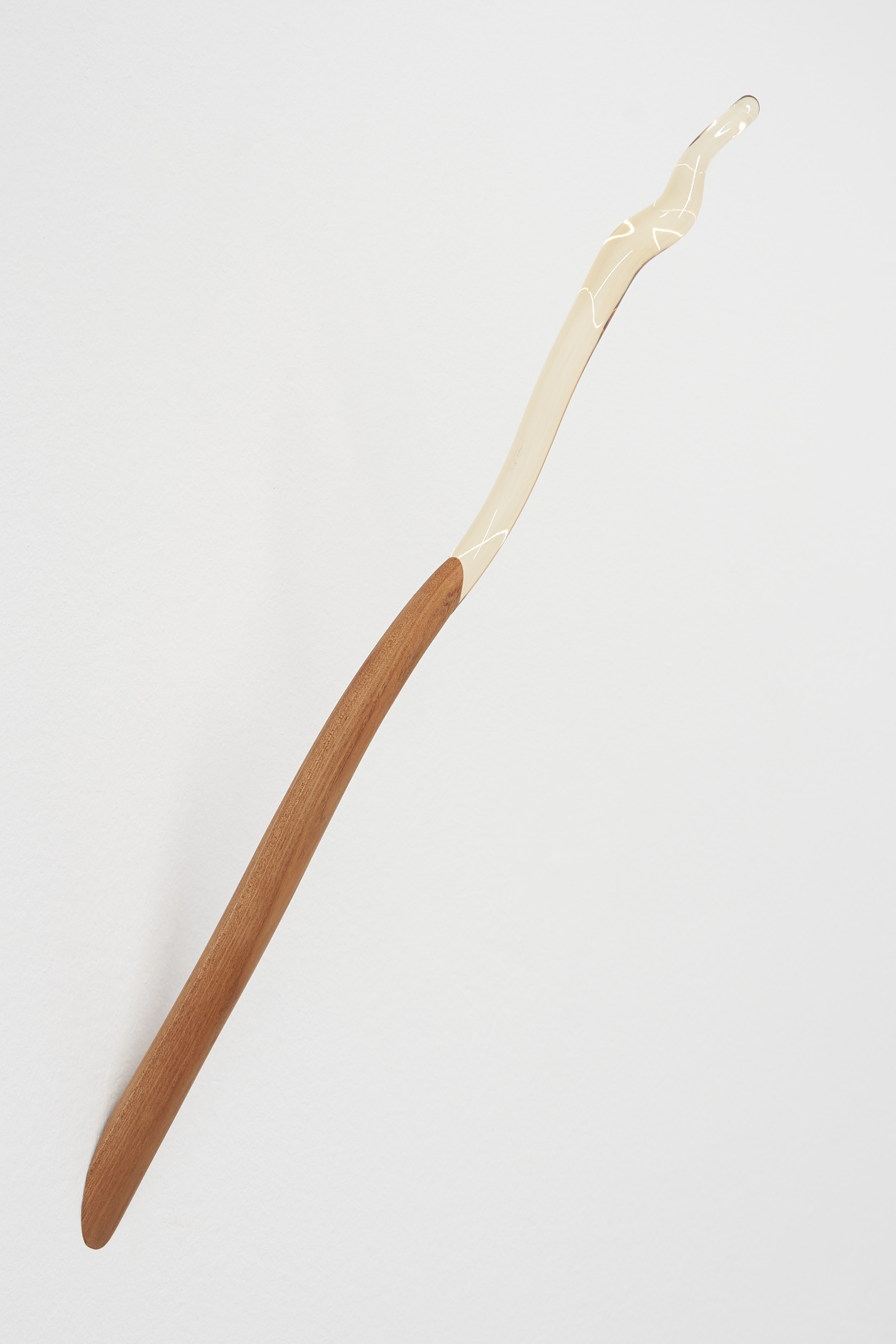
Stick Figure is a series of unique works in hand carved wood and hot sculpted glass, shown for the first time. The sculptures take their cue from the bottle trees where bottles are placed on the branches of trees. This African diasporic practice appears across the United States particularly its Southern geographies and is thought to be an adaptation of traditions from the Kongo cultural group. The bottles were believed to trap spirits at night, which the morning light would then destroy, protecting those living nearby. Luminous yet firmly rooted, Kiwanga’s sculptures reflect on the mutability and safeguarding of precedent knowledge systems, transforming a vernacular gesture of protection into an emblem of cultural continuity.
Together, the works in Carry Me / Carry On consider how home can be carried and safeguarded through rootedness in materials, a question of particular pertinence at a moment when lives are increasingly structured by movement, whether chosen or imposed.
Kapwani Kiwanga (b. Hamilton, Canada) is a French and Canadian artist. In 2024 she represented Canada at the 60th Venice Biennale with Trinket. Recent solo exhibitions include Fundació Joan Miró, Barcelona (2026), Copenhagen Contemporary (2024) and Serralves Foundation, Porto (2023). Biennial participations include the 25th Biennale of Sydney (2026), the 35th Bienal de São Paulo (2023) and the 59th Venice Biennale (2022). Upcoming participations include the 2nd Public Art Abu Dhabi Biennial (November 2026), the 17th Sharjah Biennial (January 2027) and the Bruges Triennial (April 2027) and Skulptur Projekte Münster (June 2027). Her awards include the Joan Miró Prize (2025), the Marcel Duchamp Prize (2020) and the Sobey Art Award (2018).
Text: Miriam Schwarz
Galerie Tanja Wagner freut sich, Carry Me / Carry On zu präsentieren, Kapwani Kiwangas fünfte Einzelausstellung in der Galerie. Ausgangspunkt sind Arbeiten, die für Changing States entstanden sind, Kiwangas erste umfassende Einzelausstellung in Spanien, die die Fundació Joan Miró in Barcelona in diesem Jahr im Anschluss an den Joan-Miró-Preis 2025 zeigte. Die Ausstellung vereint fünf textile Arbeiten aus der Serie Carry Capacity und Stick Figure, einer neuen Werkgruppe von Skulpturen aus handgeschnitztem Holz und heiß modelliertem Glas. Im Zentrum stehen Fragen von Zuflucht und Schutz: Architektur, Kleidung, Glaube und der Körper selbst als das, was zwischen uns und der Welt vermittelt.
In ihrer künstlerischen Praxis untersucht Kiwanga die anhaltenden Auswirkungen ungleicher Machtverhältnisse und setzt historische Erzählungen in Beziehung zur Gegenwart und zu möglichen Zukünften. Ihre forschungsbasierte Arbeit nimmt häufig marginalisierte Geschichten zum Ausgangspunkt und entfaltet sich in Skulptur, Installation, Fotografie, Video und Performance. Durch konzeptuelle und formale Abstraktion lädt Kiwanga dazu ein, bestehende Strukturen aus mehreren Perspektiven zu betrachten und Wege zu entwerfen, sich in der Zukunft zurechtzufinden.
Die Serie Carry Capacity umfasst textile Arbeiten, die sich dem Kleidungsstück als intimem Zeichen von Zuhause nähern. Ausgangspunkt ist eine Geschichte über Joan Miró, der eine Johannisbrotschote in einer eigens dafür geschneiderten Tasche bei sich trug, als sinnliche Verbindung zu seiner Heimat. Auf Grundlage der Schnittmuster von Sakkos und Taschen schafft Kiwanga Stoffkompositionen, in denen der Körper zur tragbaren Behausung wird. In der Tasche verdichtet sich diese Idee am stärksten: ein kleiner, verborgener Raum, in dem sich das Zuhause mitnehmen und nah am Körper tragen lässt. Die Ausstellung zeigt Arbeiten, die erstmals in der Fundació Joan Miró zu sehen waren, gemeinsam mit neuen Werken der Serie.
Stick Figure ist eine Serie von Unikaten aus handgeschnitztem Holz und heiß modelliertem Glas, die hier zum ersten Mal gezeigt wird. Die Skulpturen beziehen sich auf sogenannte Bottle Trees, Bäume, auf deren Äste Flaschen gesteckt werden. Diese Praxis der afrikanischen Diaspora ist in den gesamten Vereinigten Staaten verbreitet, besonders in den Südstaaten, und gilt als Adaption von Traditionen der kulturellen Gruppe der Kongo. Man glaubte, die Flaschen würden nachts Geister einfangen, die dann vom Morgenlicht zerstört würden und so die Menschen in der Umgebung schützen. Leuchtend und zugleich fest verwurzelt, reflektieren Kiwangas Skulpturen die Wandelbarkeit und Bewahrung überlieferter Wissenssysteme und überführen eine vernakuläre Geste des Schutzes in ein Sinnbild kultureller Kontinuität.
Gemeinsam gehen die Arbeiten in Carry Me / Carry On der Frage nach, wie sich ein Zuhause durch Materialien mittragen und bewahren lässt. Diese Frage stellt sich heute besonders drängend, da immer mehr Lebenswege von Bewegung geprägt sind, ob freiwillig oder erzwungen.
Kapwani Kiwanga (geb. in Hamilton, Kanada) ist eine französische und kanadische Künstlerin. 2024 vertrat sie Kanada auf der 60. Biennale di Venezia mit Trinket. Zu ihren jüngsten Einzelausstellungen zählen Fundació Joan Miró, Barcelona (2026), Copenhagen Contemporary (2024) und Fundação de Serralves, Porto (2023). Sie nahm unter anderem an der 25. Biennale of Sydney (2026), der 35. Bienal de São Paulo (2023) und der 59. Biennale di Venezia (2022) teil. Demnächst ist sie auf der 2. Public Art Abu Dhabi Biennial (November 2026), der 17. Sharjah Biennial (Januar 2027), der Triennale Brügge (April 2027) und bei Skulptur Projekte Münster (Juni 2027) vertreten. Zu ihren Auszeichnungen zählen der Joan-Miró-Preis (2025), der Prix Marcel Duchamp (2020) und der Sobey Art Award (2018).
Related News
Kapwani Kiwanga
10th Biennial of Painting
Group exhibition curated by Anne Pontegenie
Mudel and Roger Raveel Museum , 9831 Sint-Martens Latem
Jun 28 – Oct 18, 2026

Kapwani Kiwanga
The New Vision: Monet and the Contemporary Gaze
Group exhibition curated by Yoko Iwasaki, Kota Suzuki, Katsura Kunieda, Takuto Izawa
Pola Art Museum, Hakone
Jun 17, 2026 – Apr 7, 2027
Kapwani Kiwanga
1,2,3: Me, We
Group exhibition curated by Daniel Malan & Dada Khanyisa
A4 Arts Foundation, Cape Town
May 30 – Aug 15, 2026
Kapwani Kiwanga
7th Mulhouse Photography Biennal SEDIMENTATION(S): Settled
Group exhibition curated by Ange-Frédéric Koffi
La Filature – Scène Nationale de Mulhouse
May 14 – Jul 12, 2026