About
Kapwani Kiwanga’s work often manifests as installations, sound, video, and performance. She intentionally confuses truth and fiction in order to unsettle hegemonic narratives and create spaces in which marginal discourse can flourish. As a trained anthropologist and social scientist, she occupies the role of a researcher in her projects.
Her methodology includes fashioning systems and establishing protocols as in scientific experimentation to delineate lenses through which one can observe culture and it’s characteristic propensity toward mutation.
Selected Works
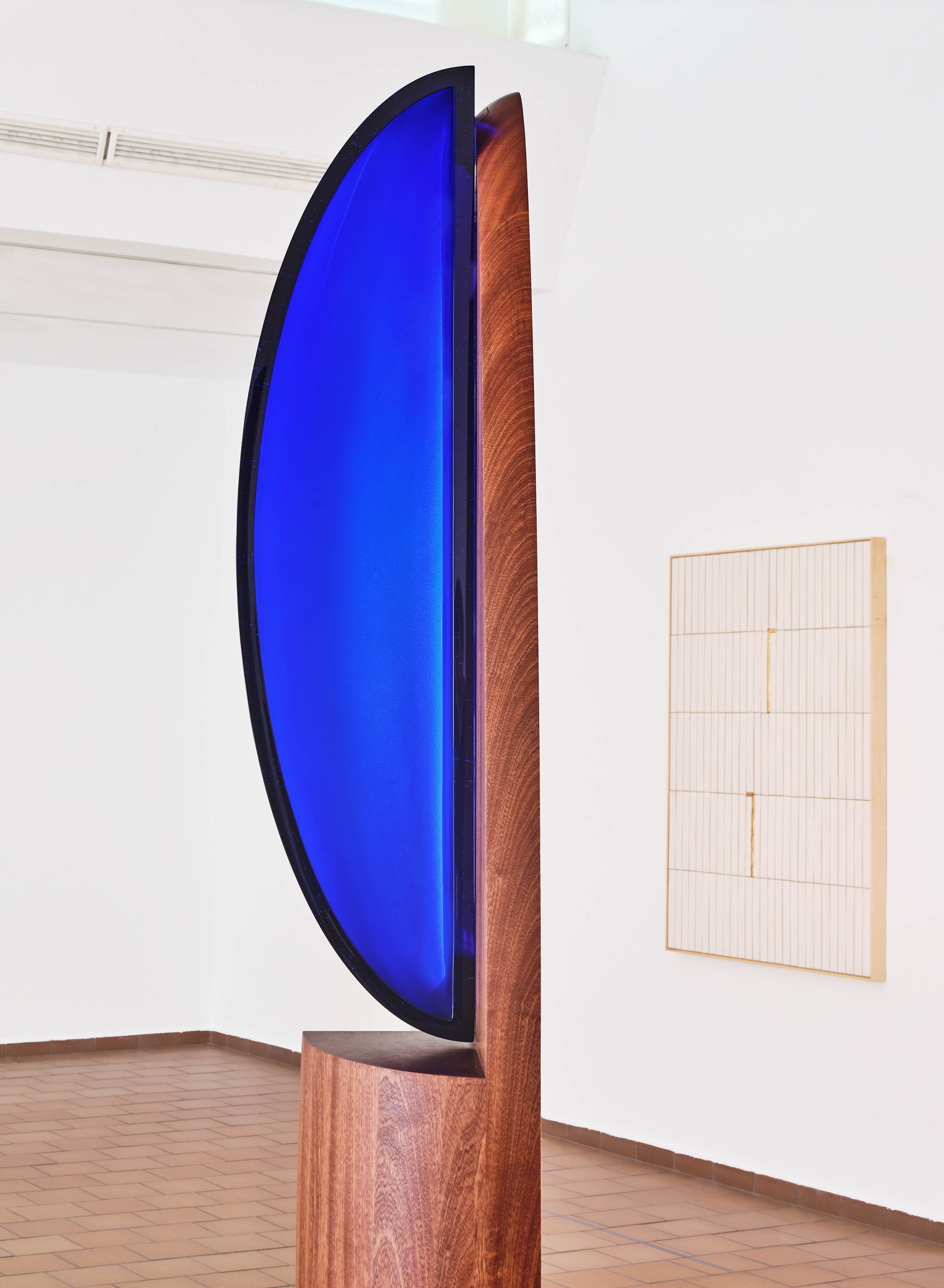
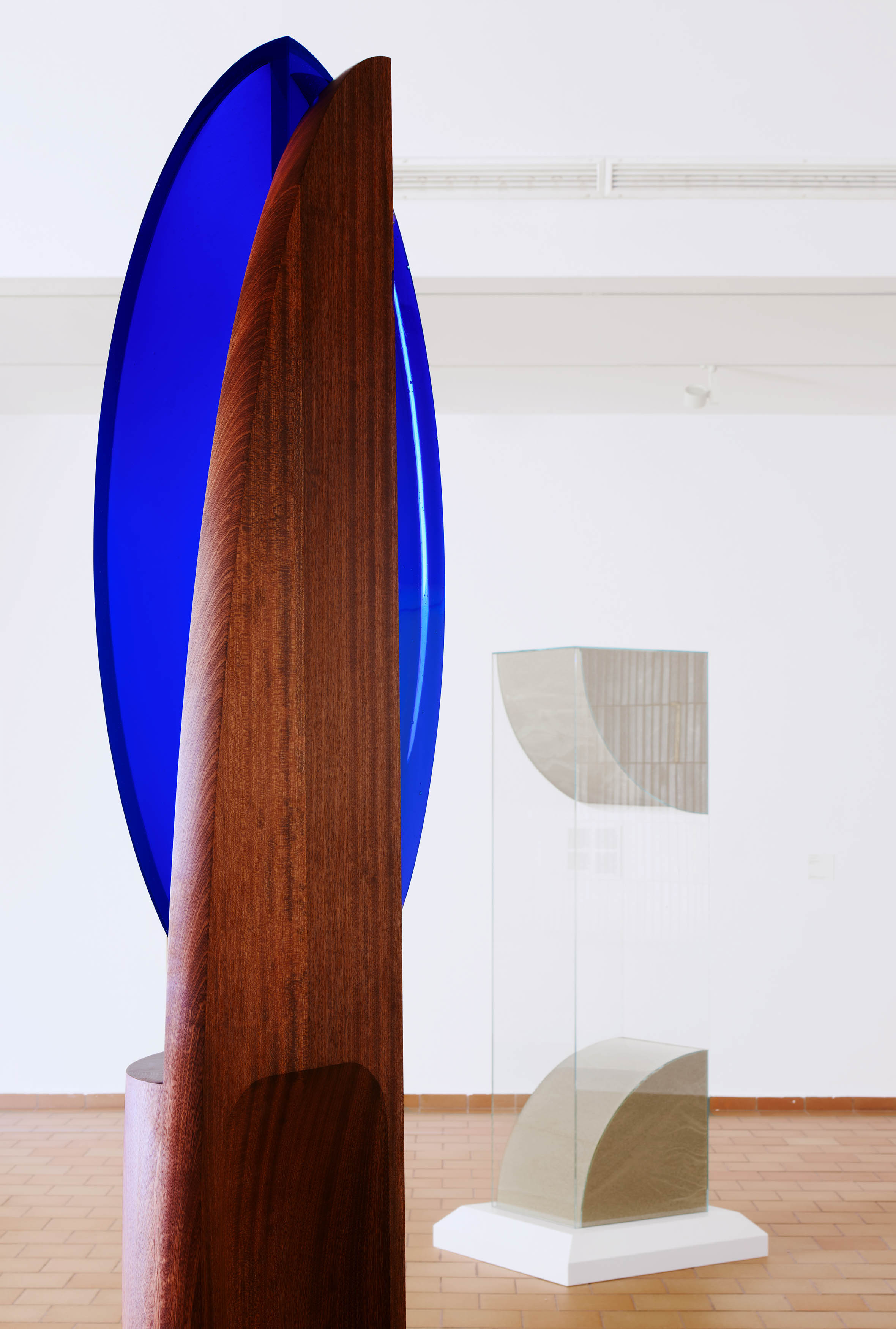
Sentinel, 2026
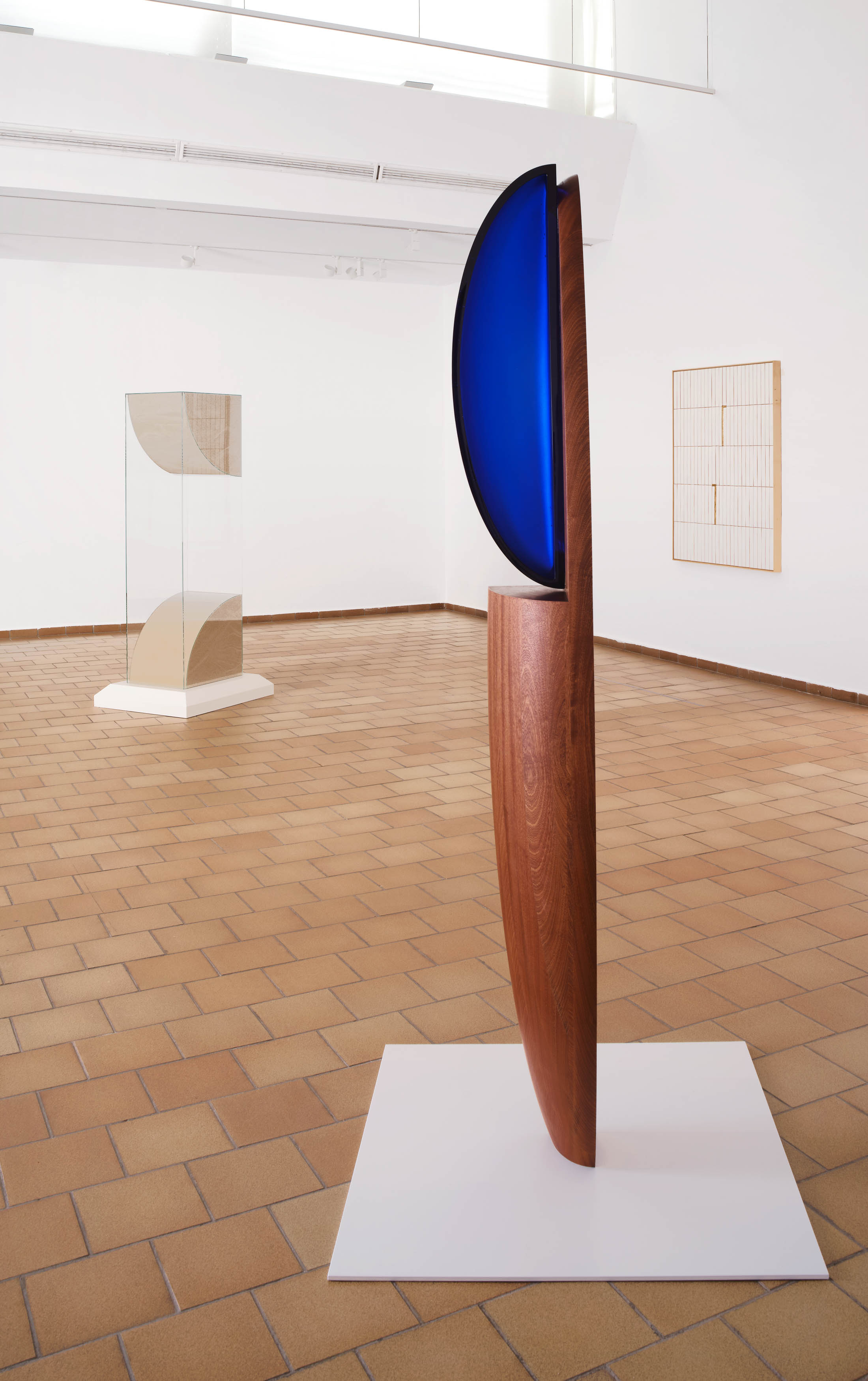
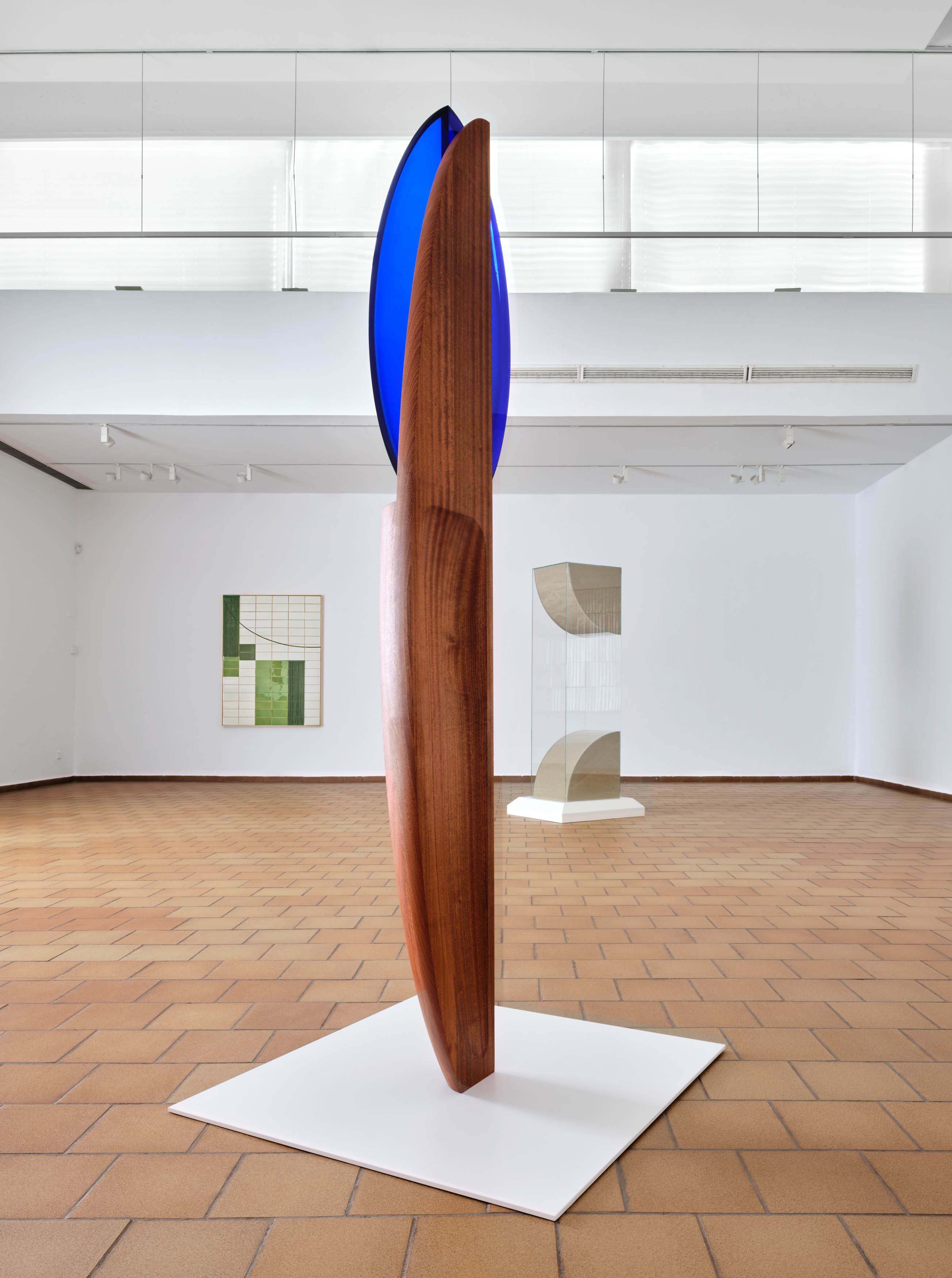
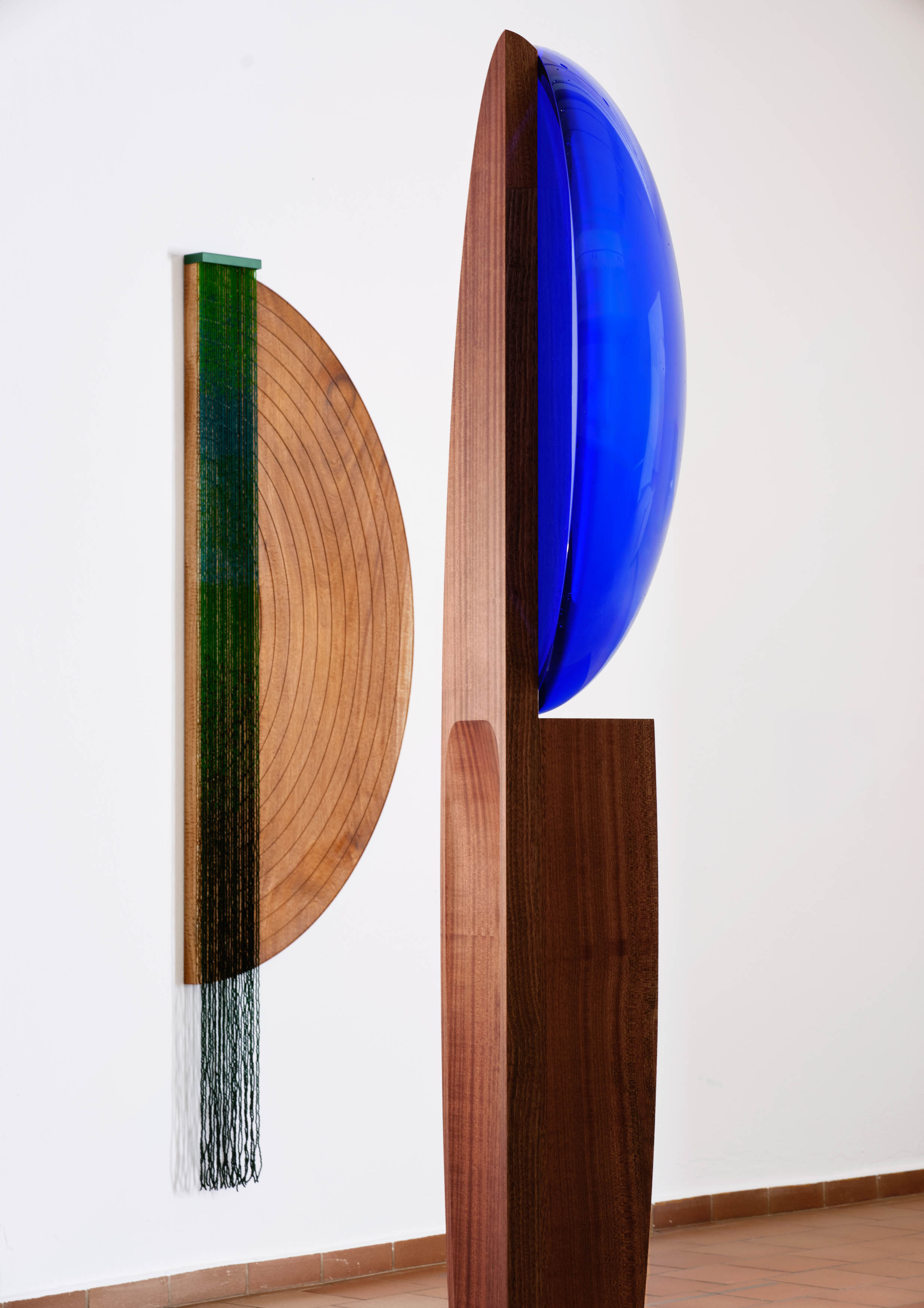
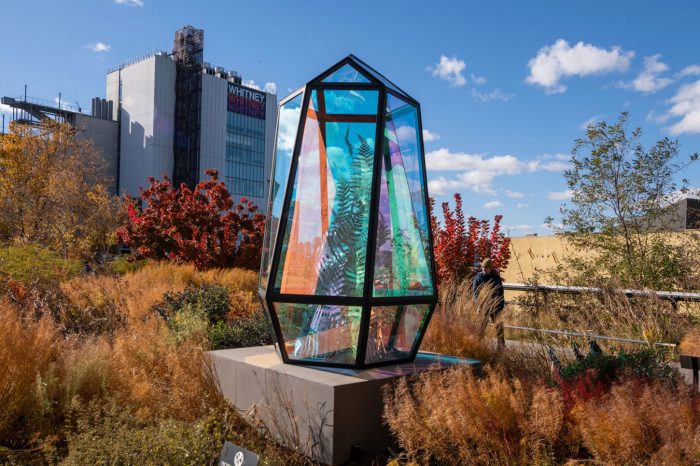
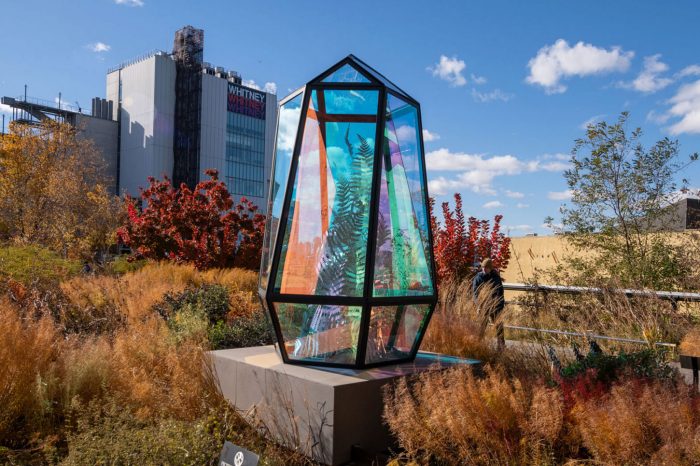
Kiwanga’s Sentinel (2026) is a tall, free-standing sculpture of cast blue glass and wood that evokes the bottle trees of the African diaspora in the southern United States. In this tradition, bottles are placed over branches to trap malevolent spirits during the night, which the morning light then dispels, offering protection. Rooted in Kongo spiritual practices adapted to North America, Kiwanga’s work references the practices of adaptation and safeguarding ancestral knowledge. Through its luminous glass and grounded form, Sentinel transforms a gesture of folk protection into a radiant emblem of cultural continuity.
Text: Kathleen Ritter. Published in: Kapwani Kiwanga: Changing States, ed. by Fundació Joan Miró 2026, p. 104.
Sentinel, 2026
Sentinel, 2026
Sentinel, 2026
Sentinel, 2026

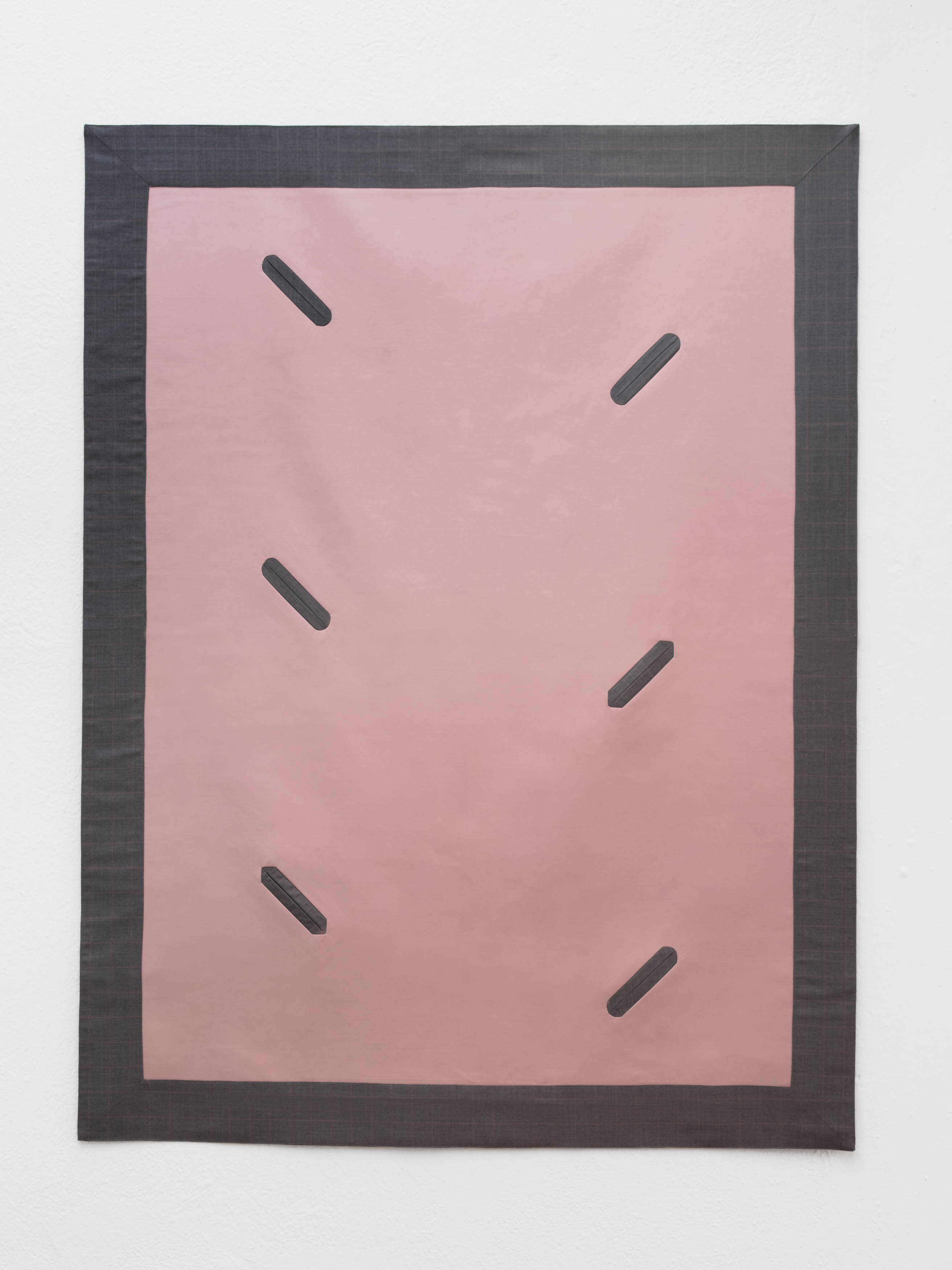
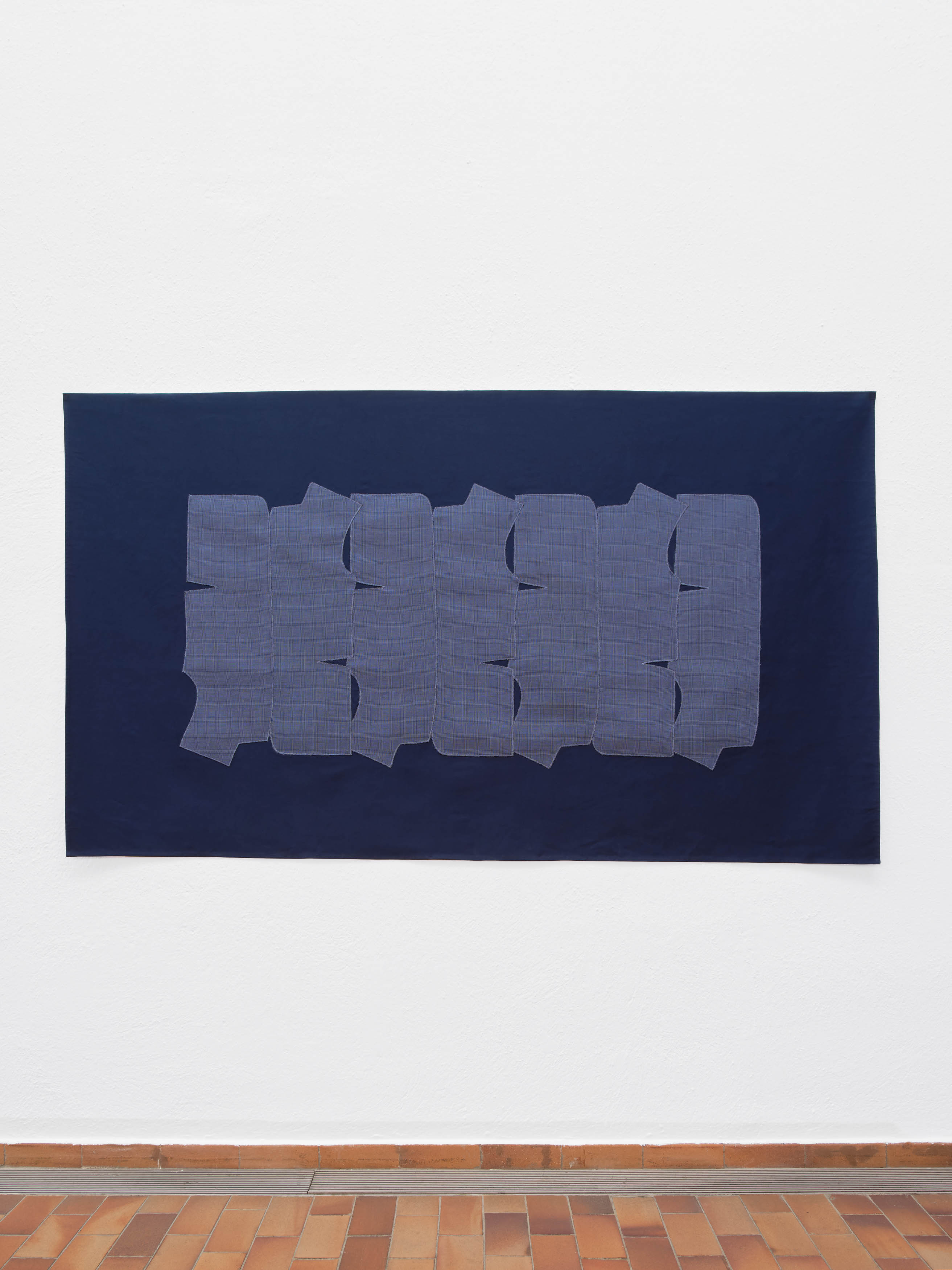
Carry Capacity, 2026
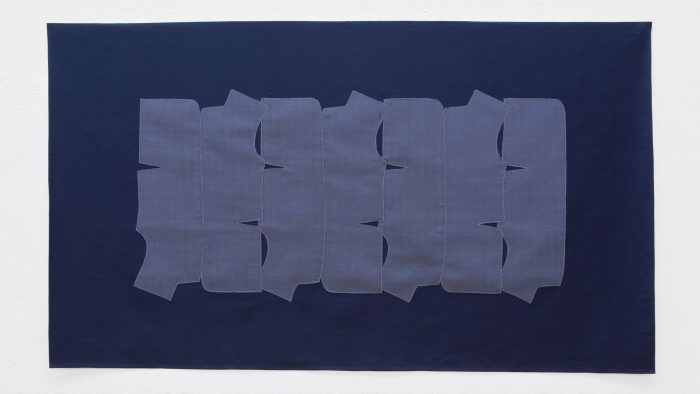
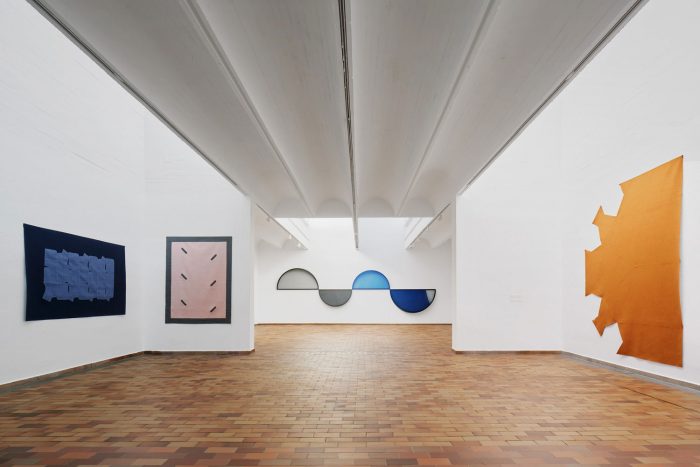
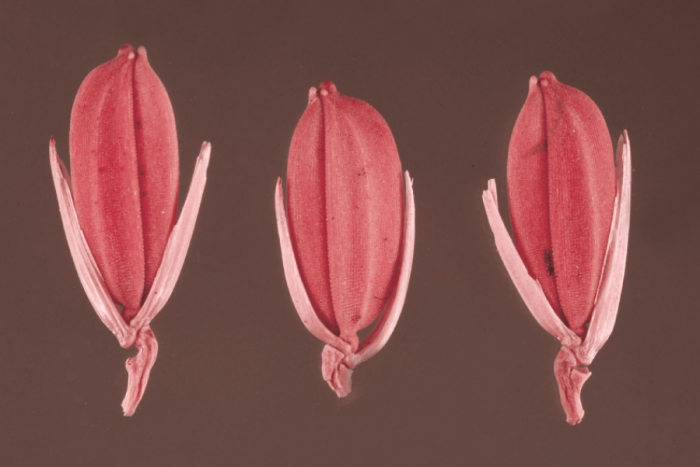
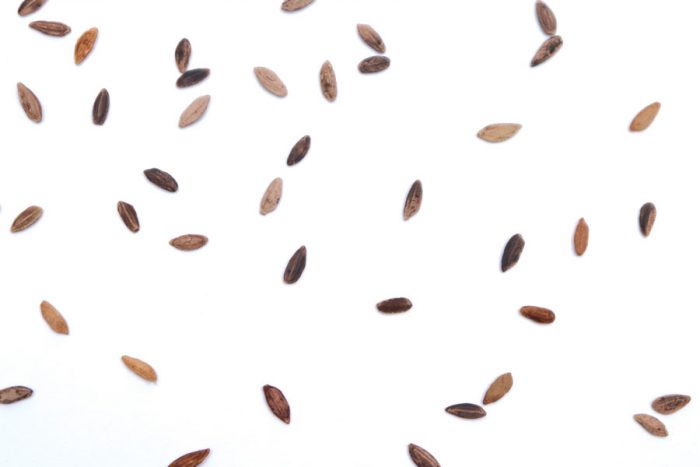
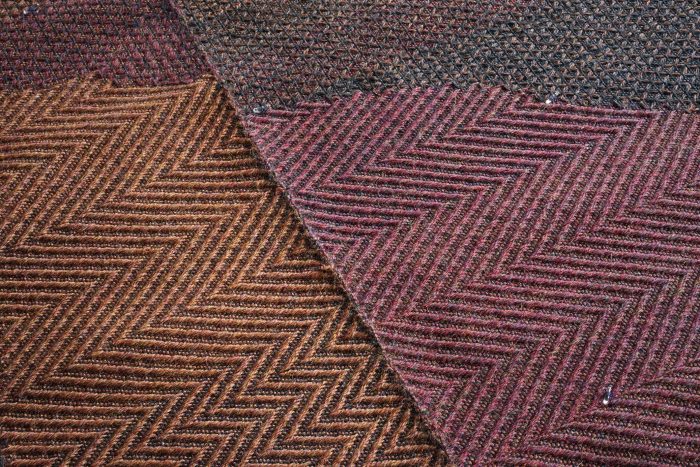
This series of textile works reimagines garments as intimate markers of home. Inspired by a story about Joan Miró, who carried a carob pod in a specially tailored pocket as a sensory link to home, Kiwanga creates fabric compositions based on patterns for blazers, linings and pockets. Each flattened textile form evokes the body as a site of portable dwelling. Kiwanga’s series reflects on how home can be carried and concealed through material rootedness. Text: Kathleen Ritter. Published in: Kapwani Kiwanga: Changing States, ed. by Fundació Joan Miró 2026, p. 106.
Carry Capacity, 2026

Carry Capacity, 2026
Carry Capacity, 2026
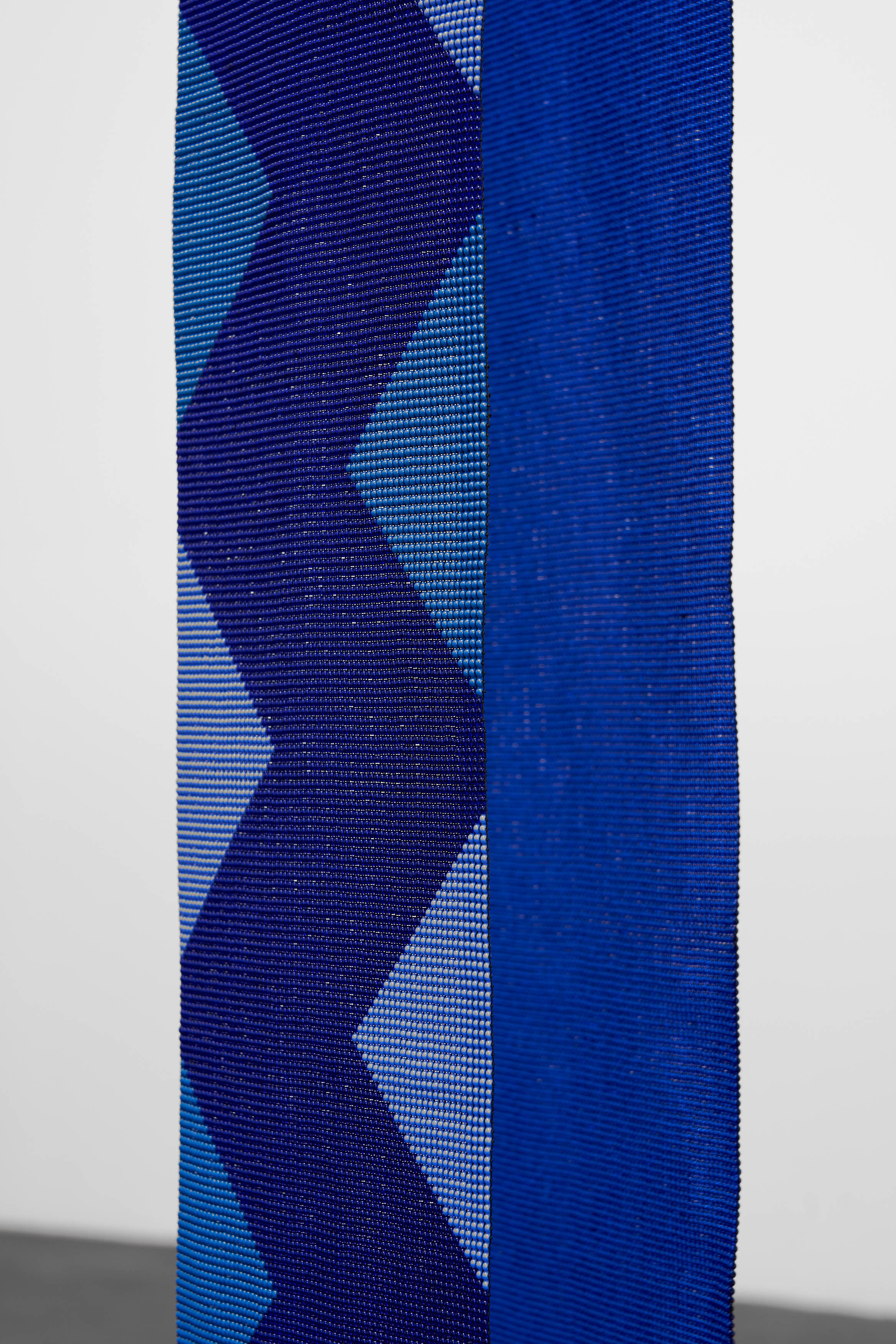
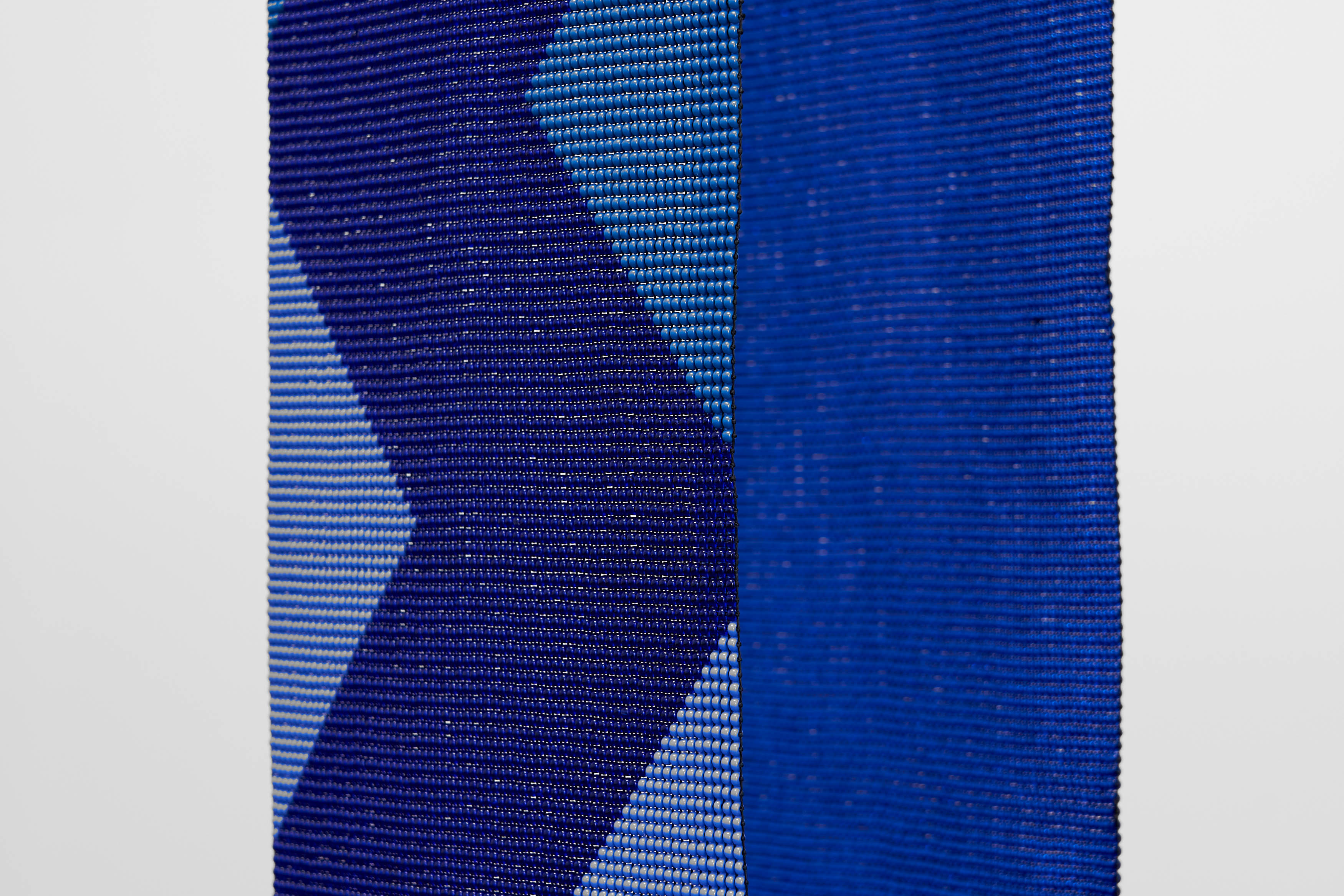
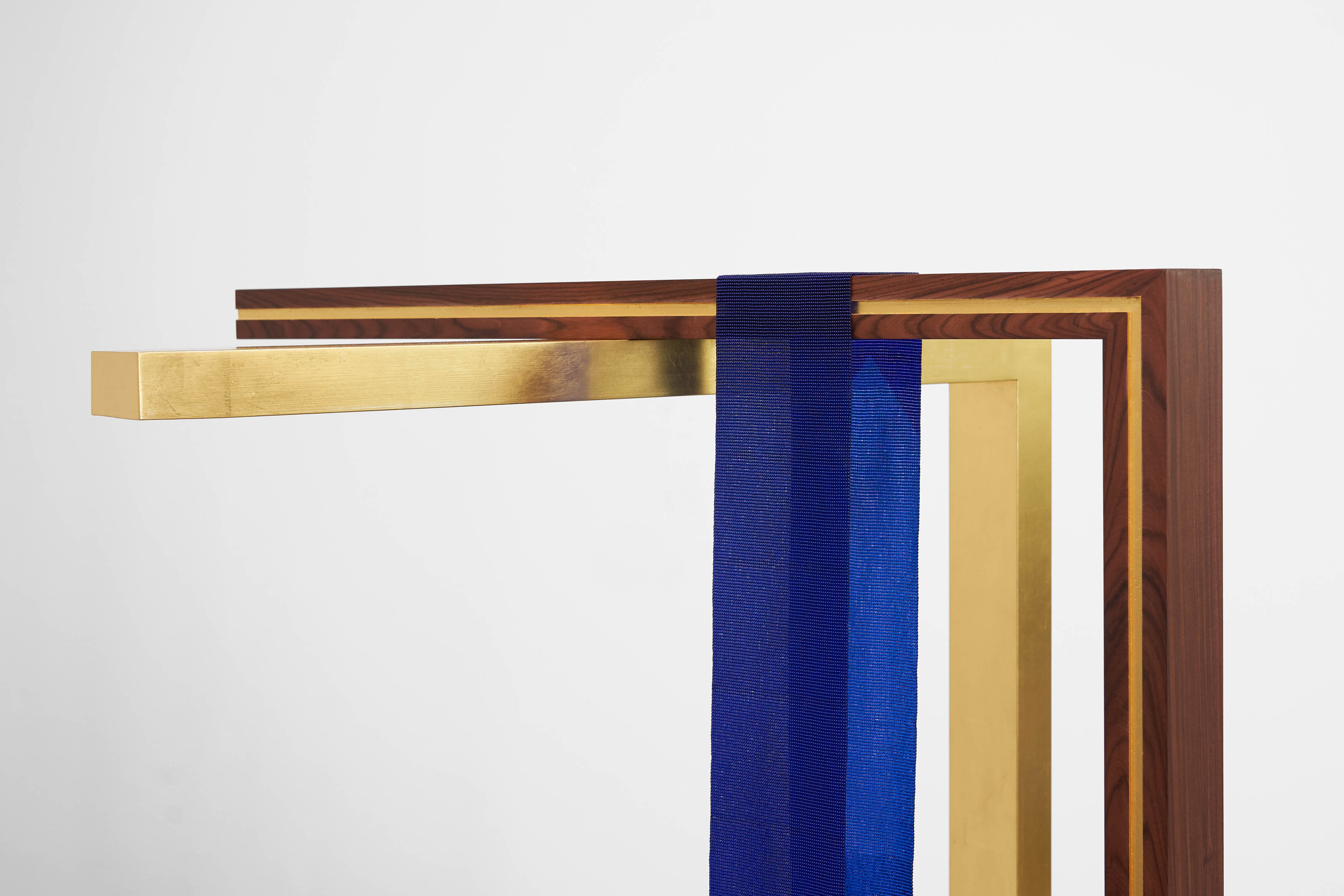
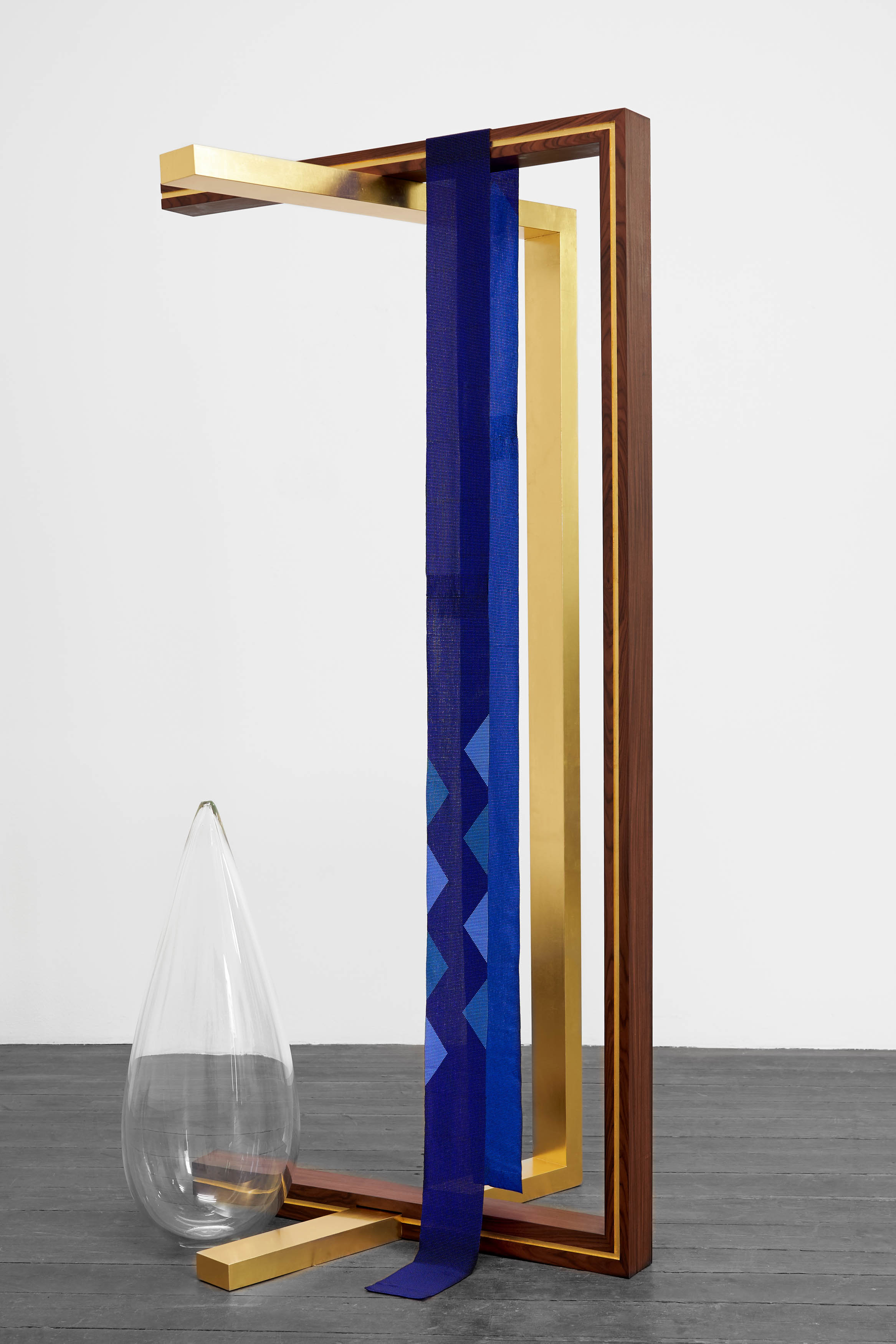
Transfer V (Metal, breath, beads), 2024
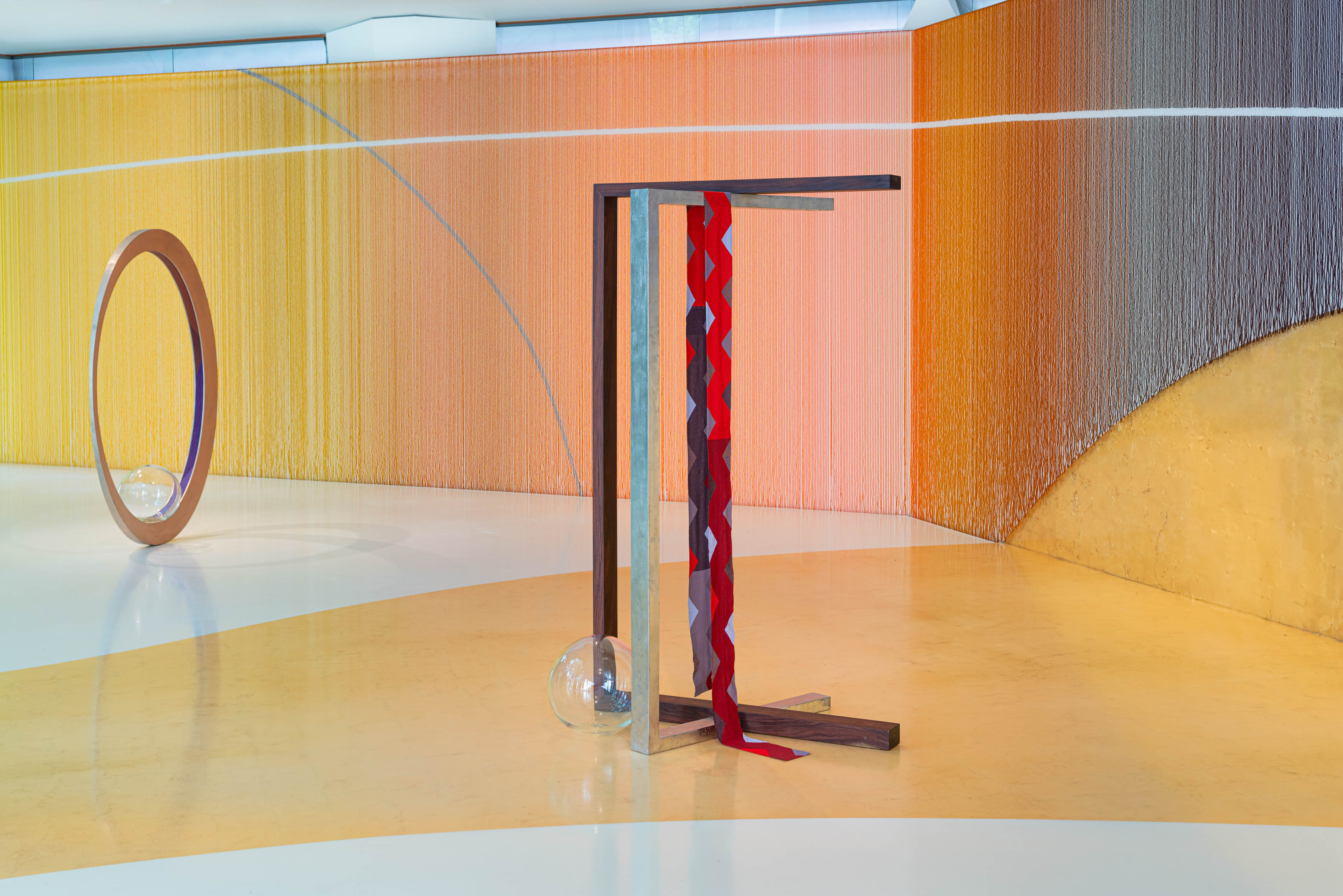
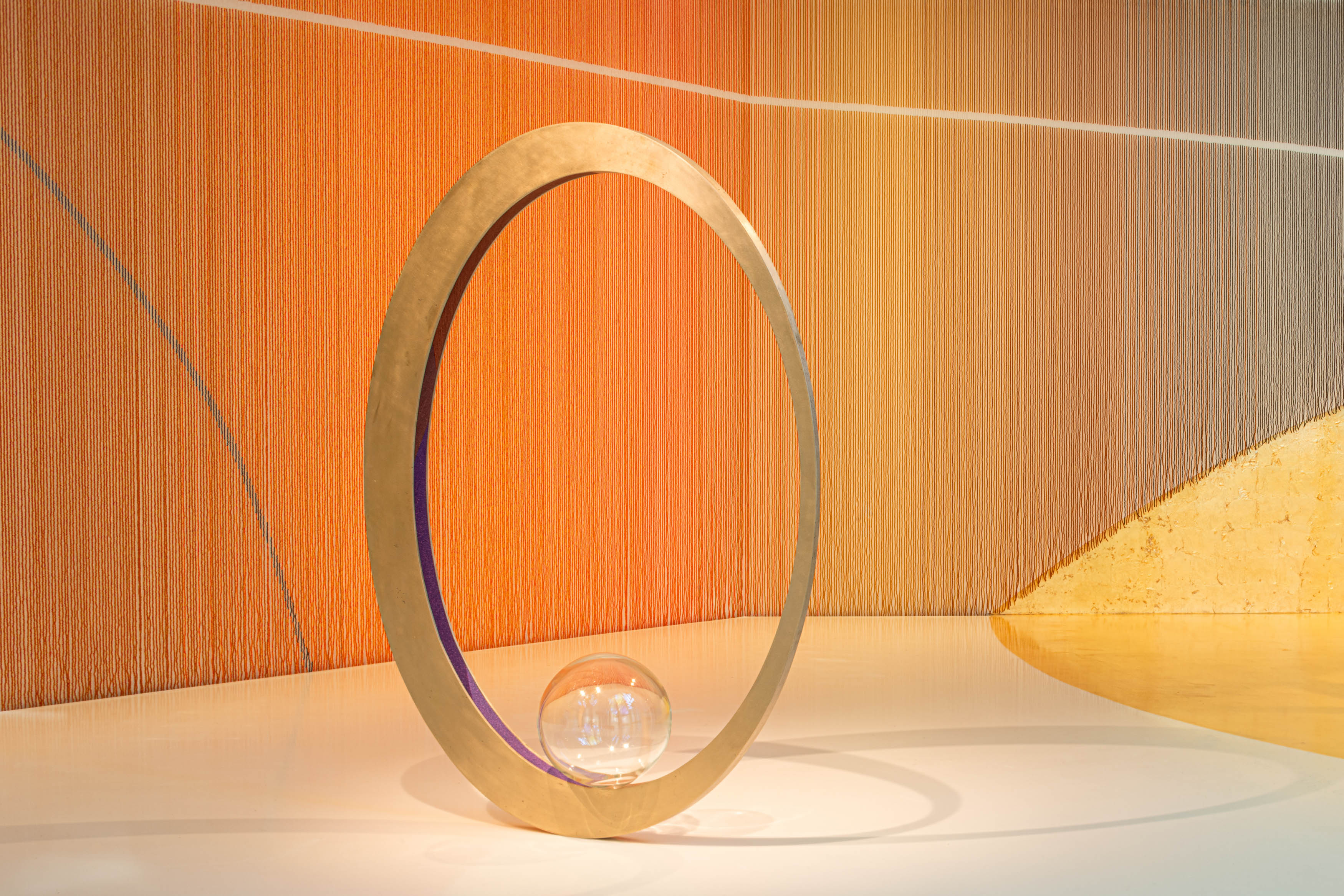
In Kapwani Kiwanga’s Transfer V, the multiple meanings of "value"— as a cultural, political, and economic phenomenon — intersect. This sculpture emerged from her research into the history of commerce in Murano, specifically glass beads, which were part of her solo exhibition Trinket at the Canada Pavilion during the 60th Venice Biennale. Also known as coterie—the Portuguese word for "to count" — these beads were made in Venice from the 16th century and were used by European settlers to trade with Indigenous communities. The movement of materials along trade routes is reflected in the composition of this piece, which incorporates wood, blown glass, and bronze. The sculpture is draped with meticulously handwoven blue beads. With a background in anthropology that informs her research-based approach, Kiwanga explores how materials can document human, social, and political relations. The sculpture’s interlocking pieces call into question how we understand the exchange of seemingly small objects and their pivotal role in shaping contemporary societies.
Transfer V (Metal, breath, beads), 2024

Transfer V (Metal, breath, beads), 2024
Transfer V (Metal, breath, beads), 2024
Transfer V (Metal, breath, beads), 2024
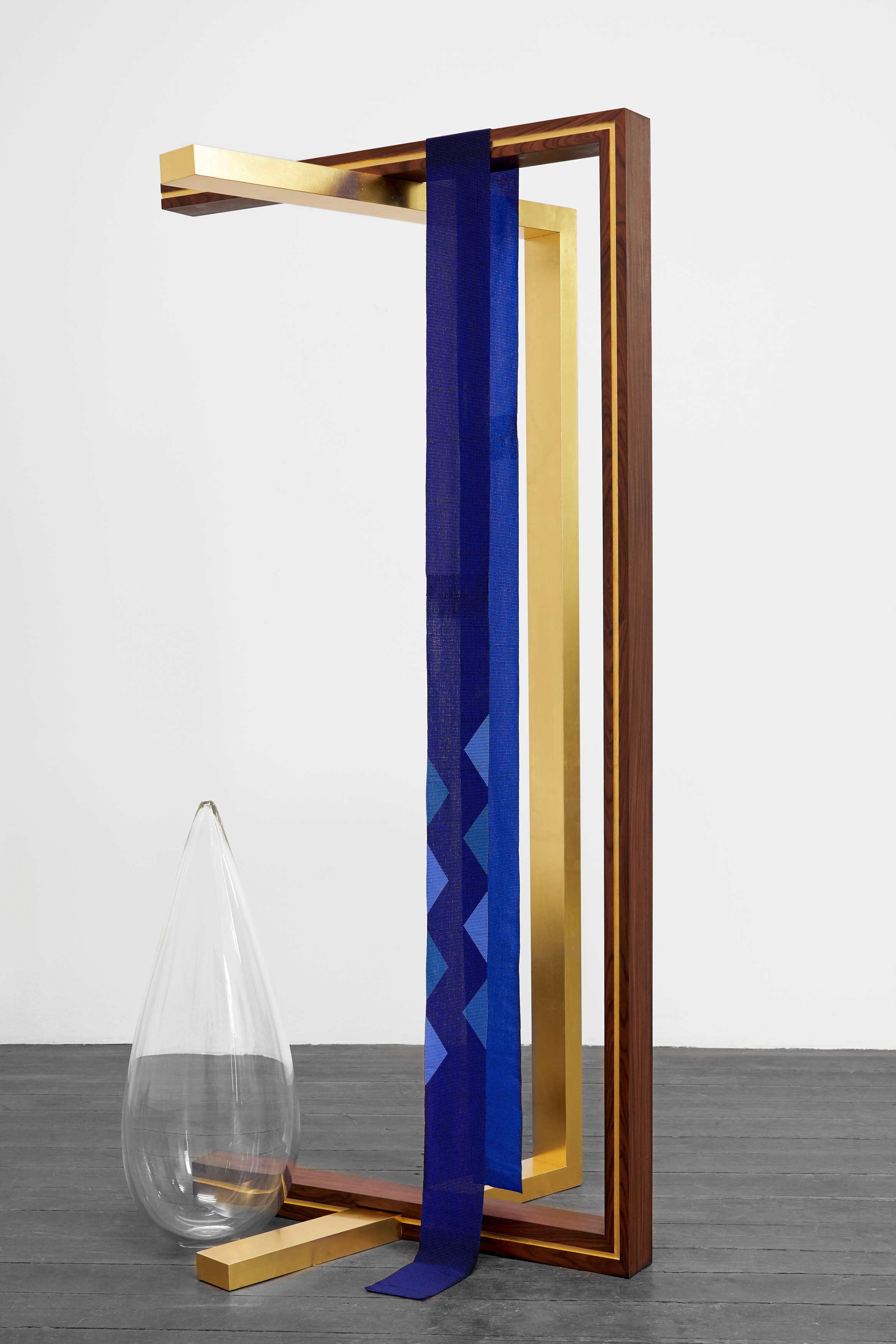
Transfer V (Metal, breath, beads), 2024
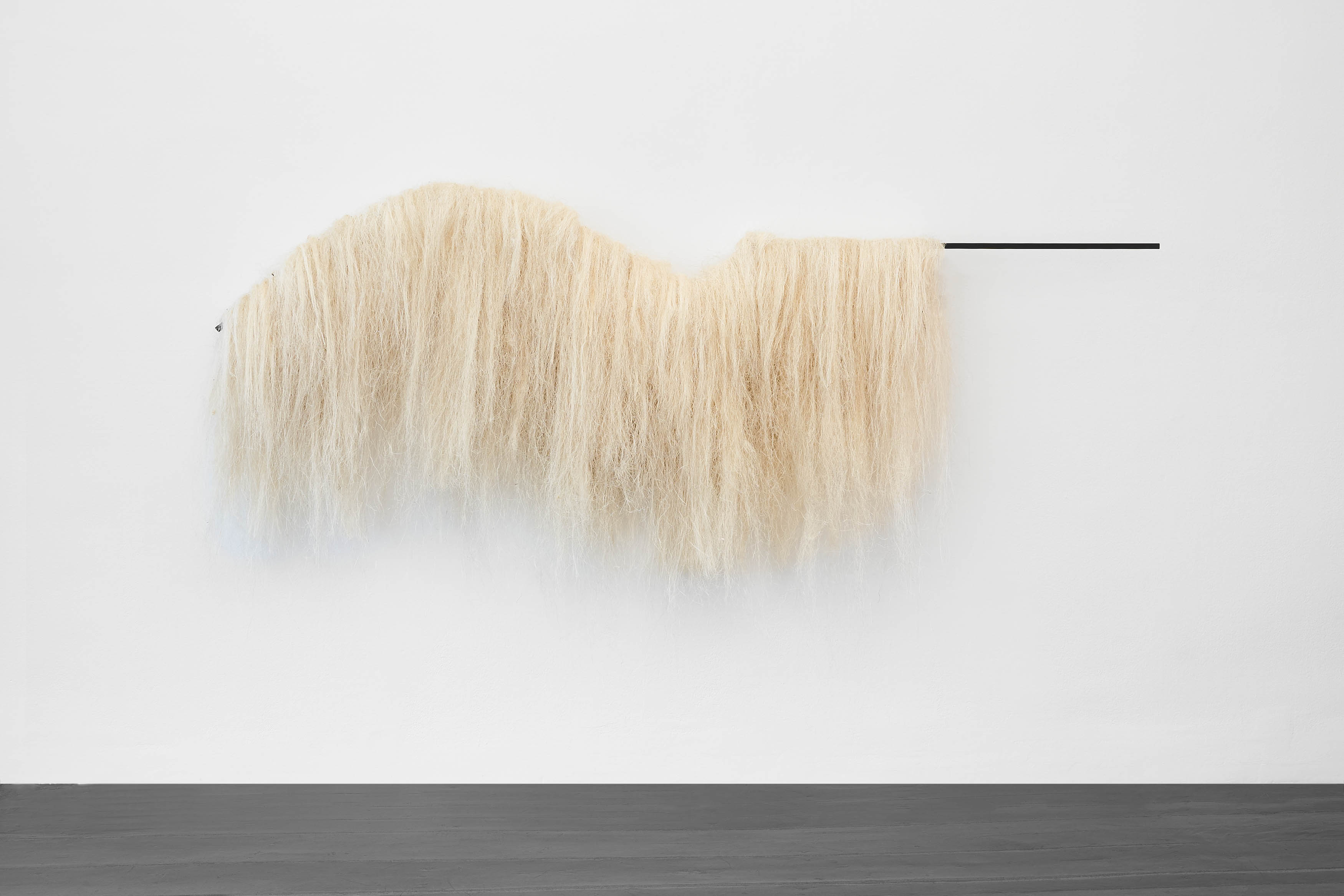
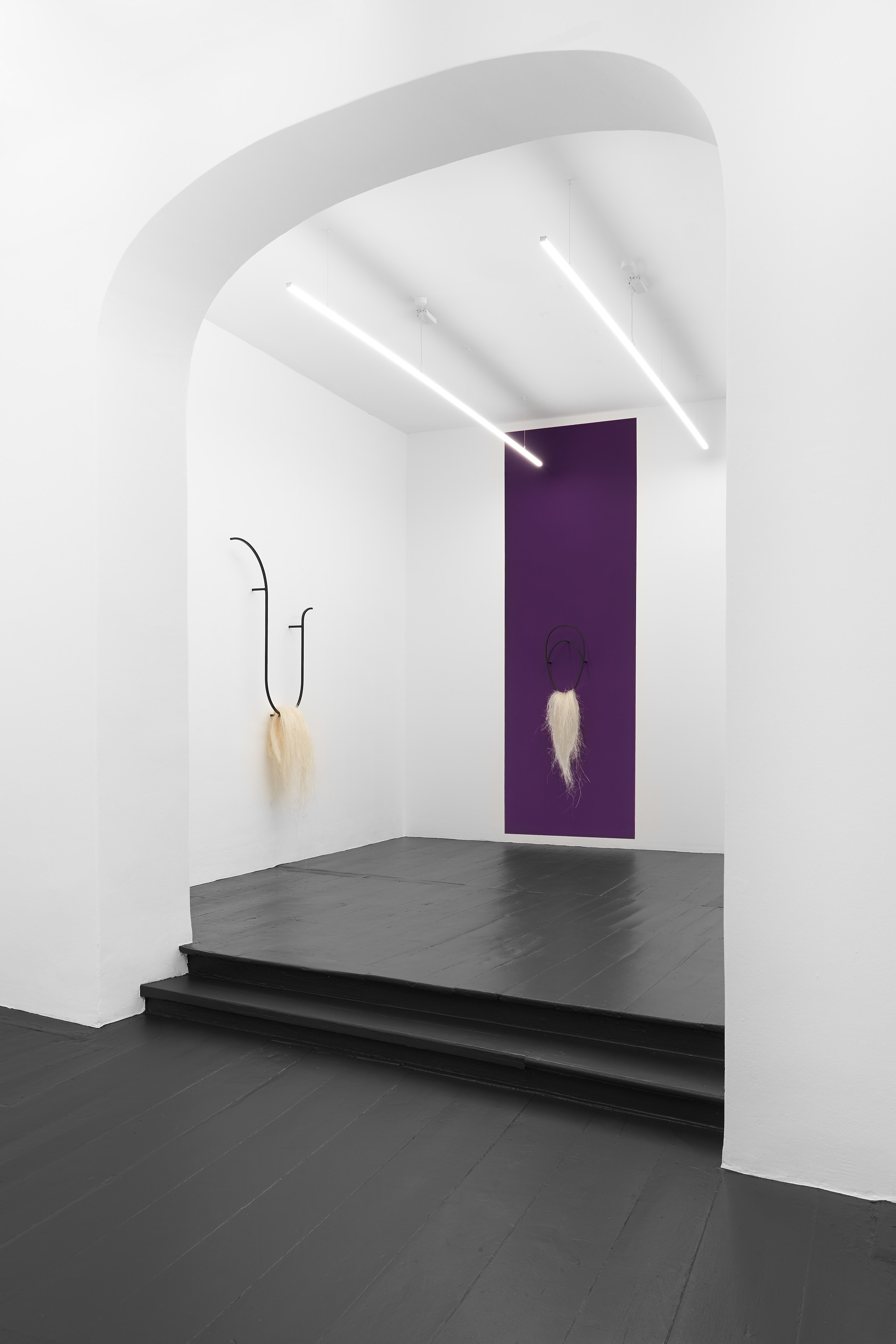
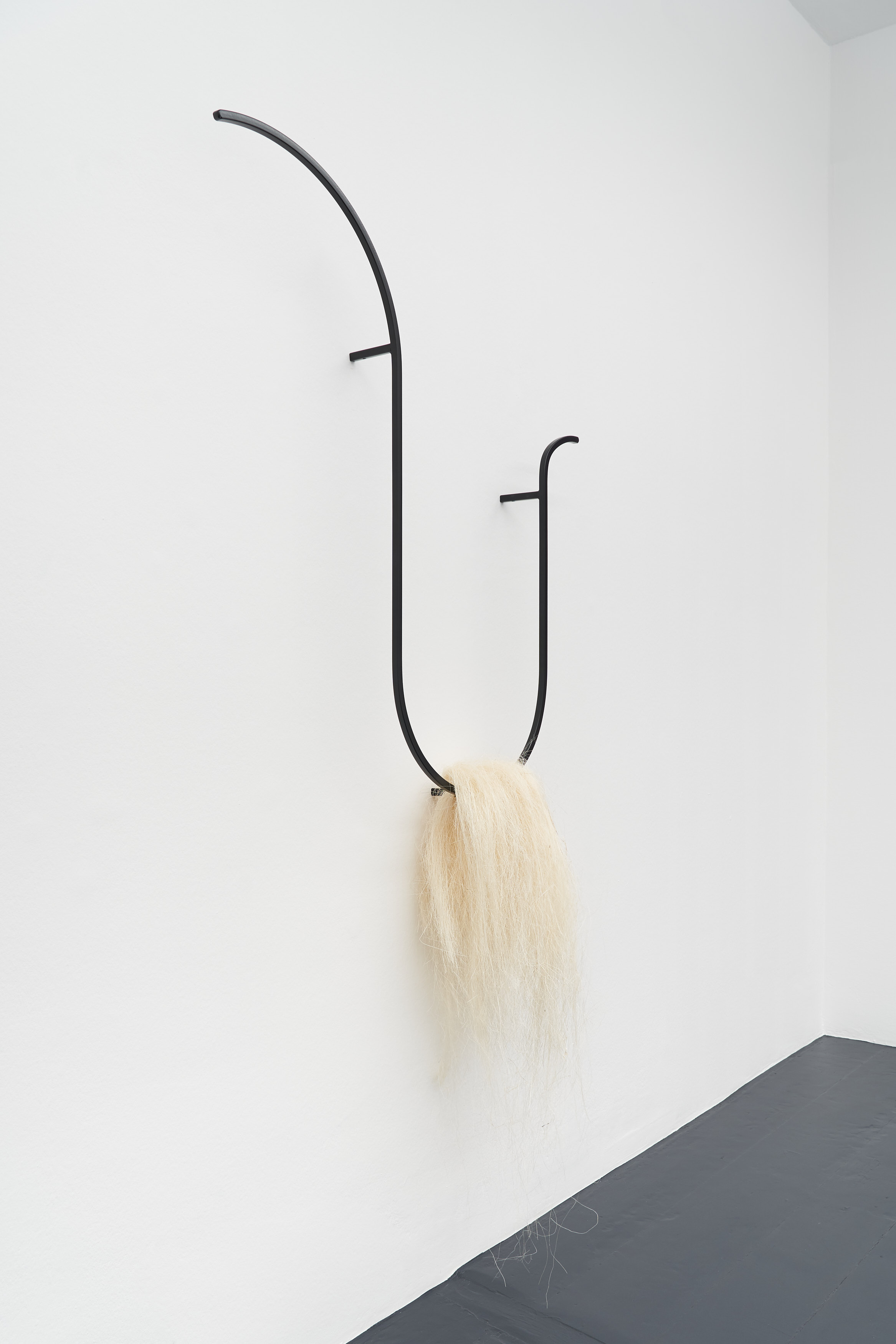
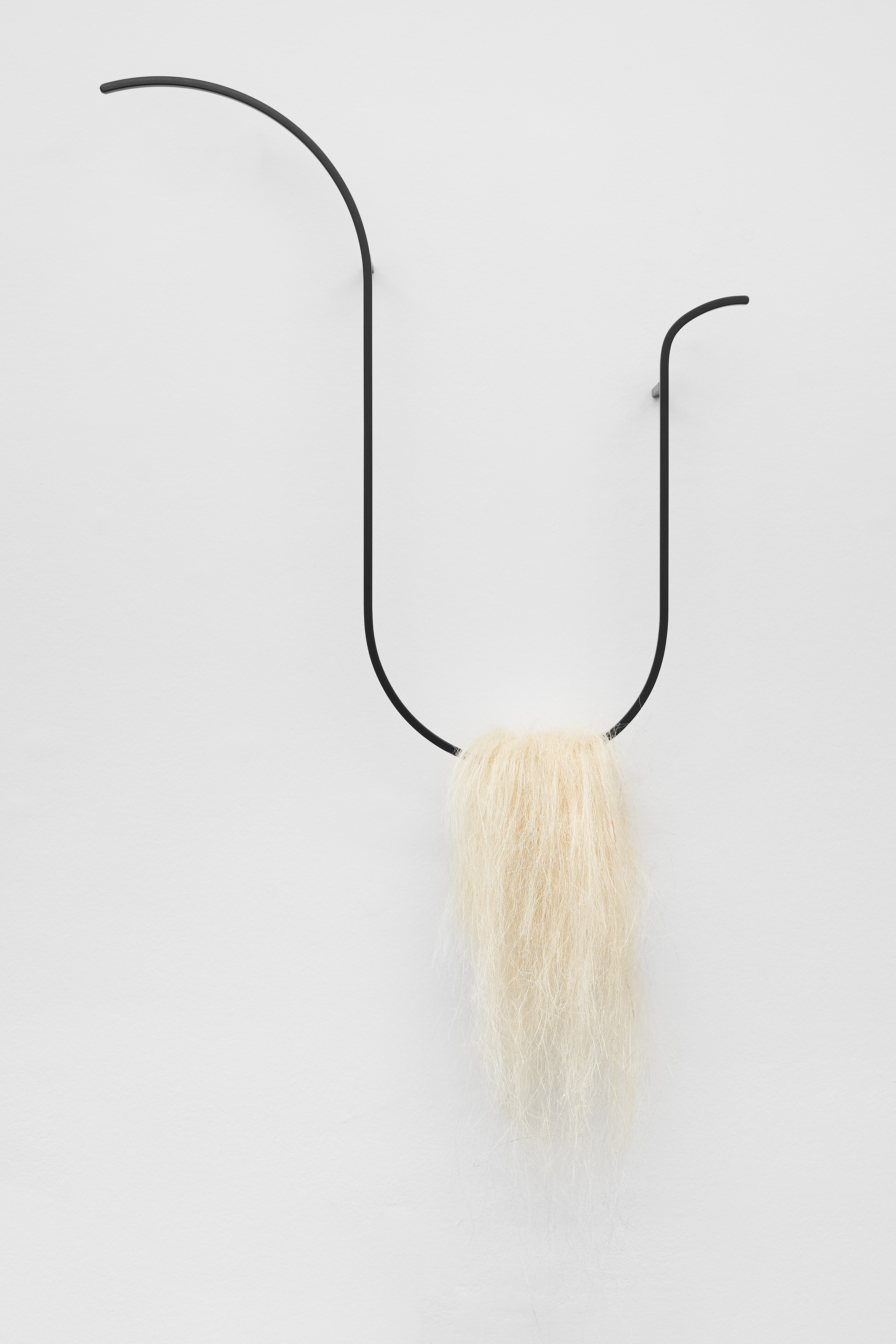
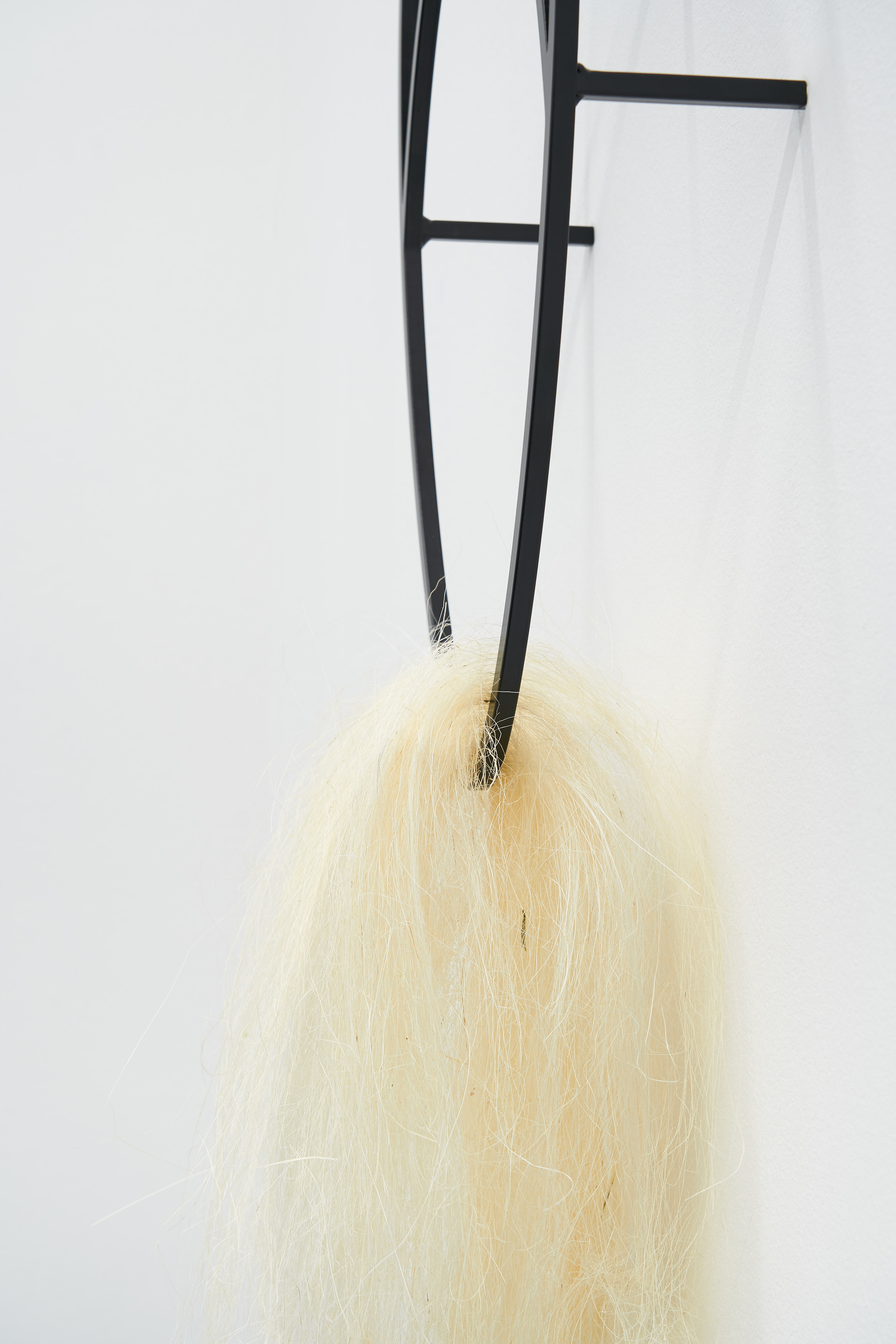
Sisal Sculptures, 2023 – 2024
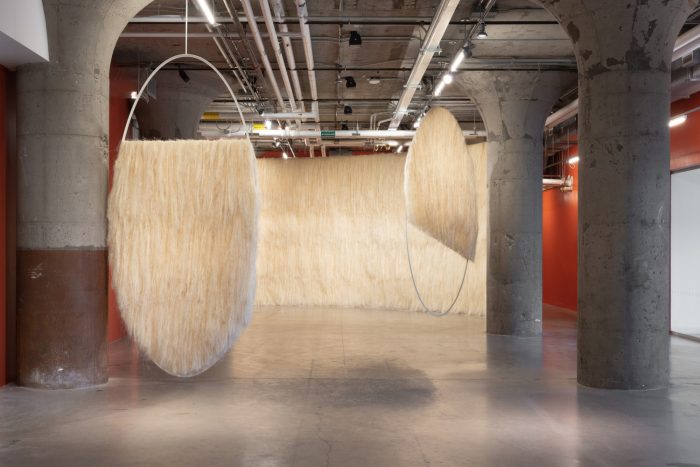
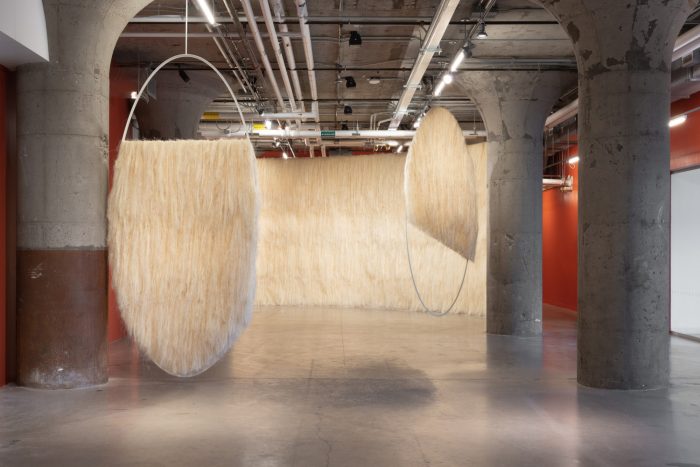
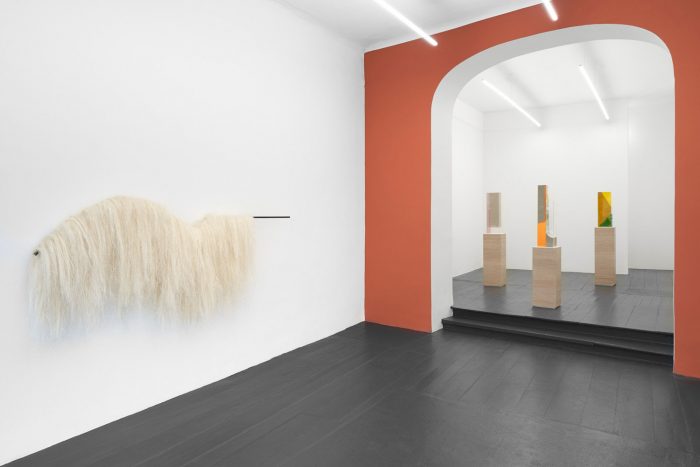
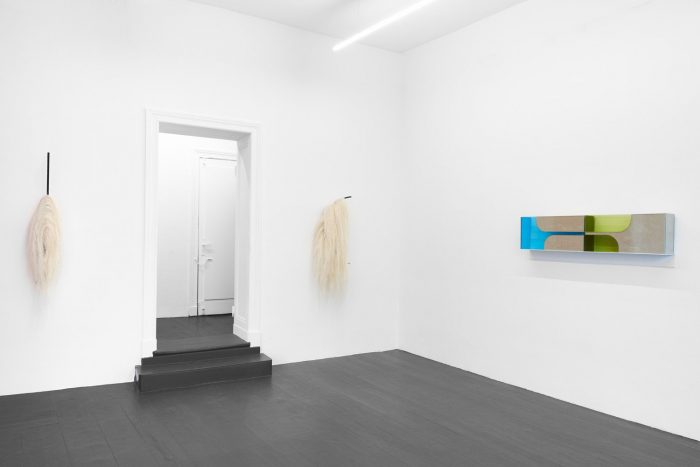
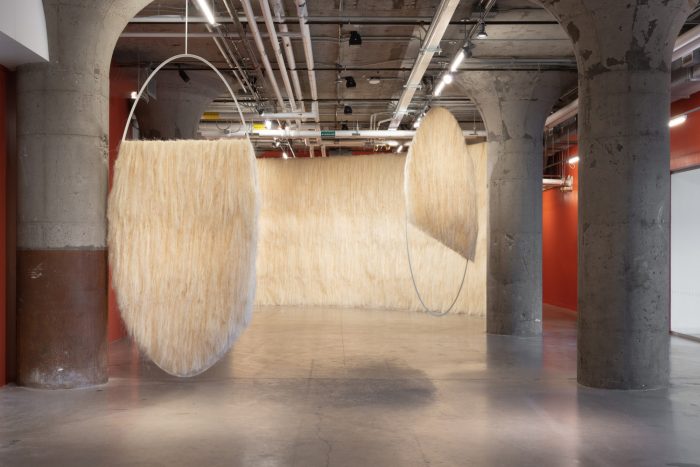
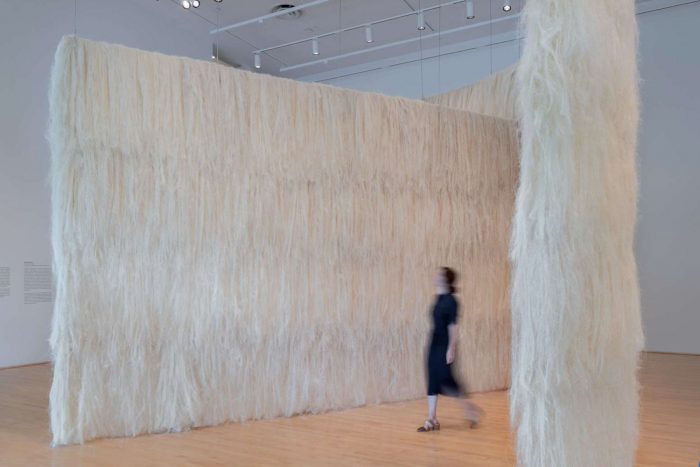
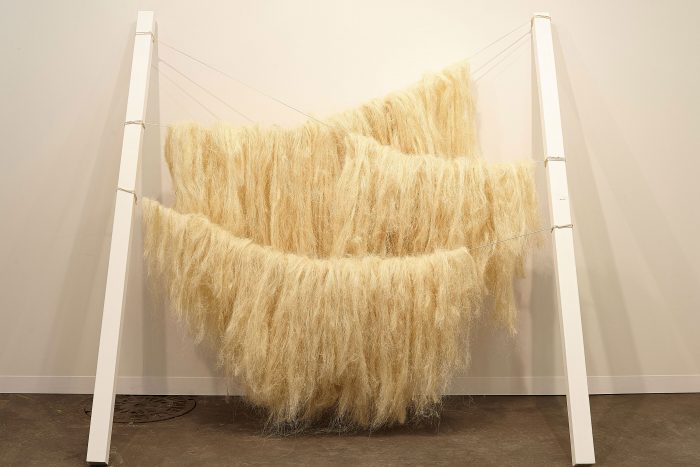
Kapwani Kiwanga's Sisal sculptures are crafted from thin white-gold sisal threads that hang and drape over metal rods. Originating from the agave cactus of southern Mexico, sisal was introduced to Tanzania by German plantation owners in the 19th century. Initially cultivated on a large scale through colonial exploitation, the plant later became a cornerstone of Tanzanian agriculture. Following independence, sisal was nationalised as part of the Ujamaa socialist movement, transforming it into a vital driver of the country’s economic self-sufficiency and a symbol of its emerging independence.
Kiwanga’s series of sculptures reflects her sociological and economic insights into the material’s historical layers, presenting sisal not only as a resilient fibre but as a silent witness to colonialism, economic empowerment, and the enduring impact of global capitalism. Suspended and meticulously arranged, these works recall how past entanglements continue to shape present-day cultural and economic landscapes.
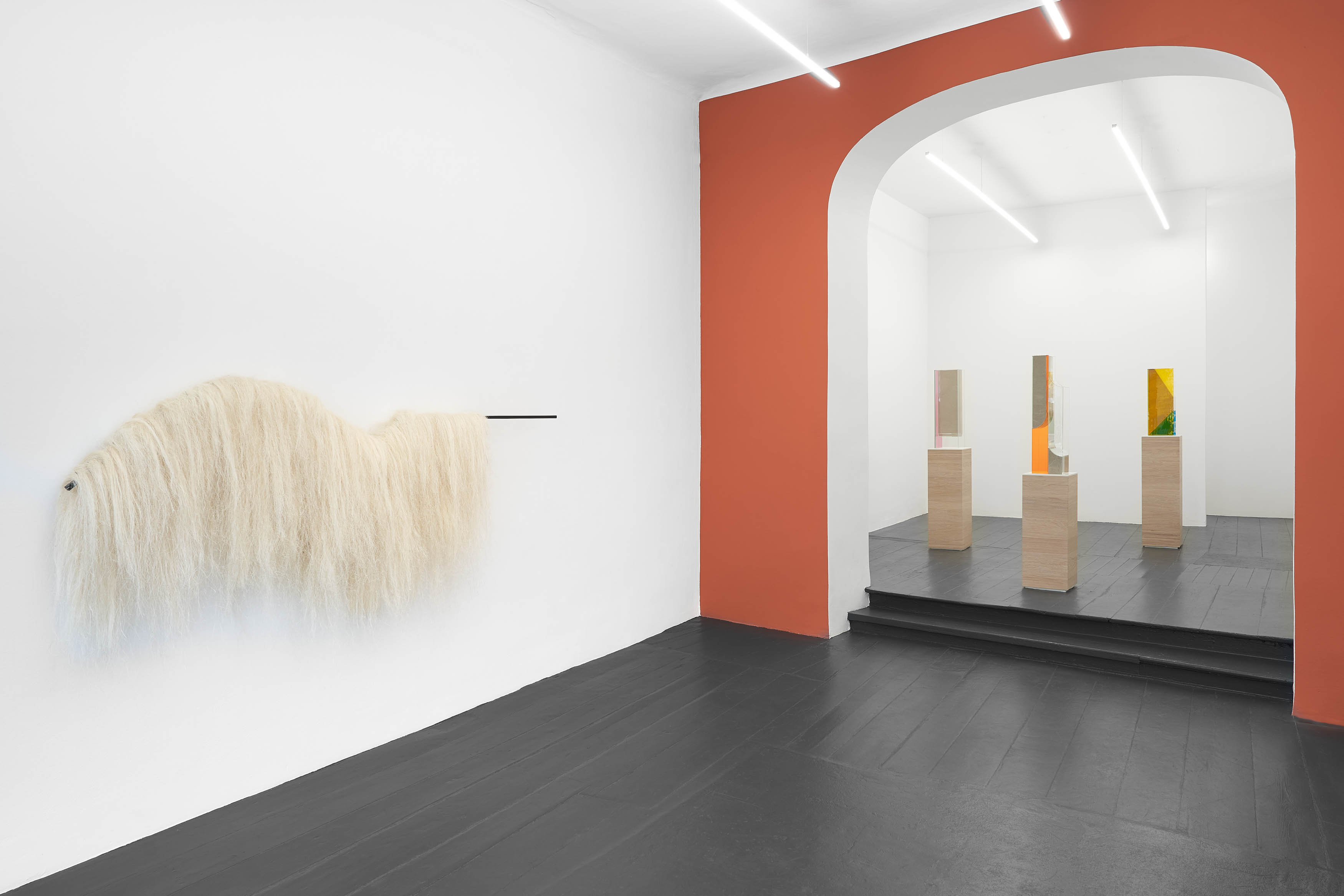
Sisal Sculptures, 2023 – 2024
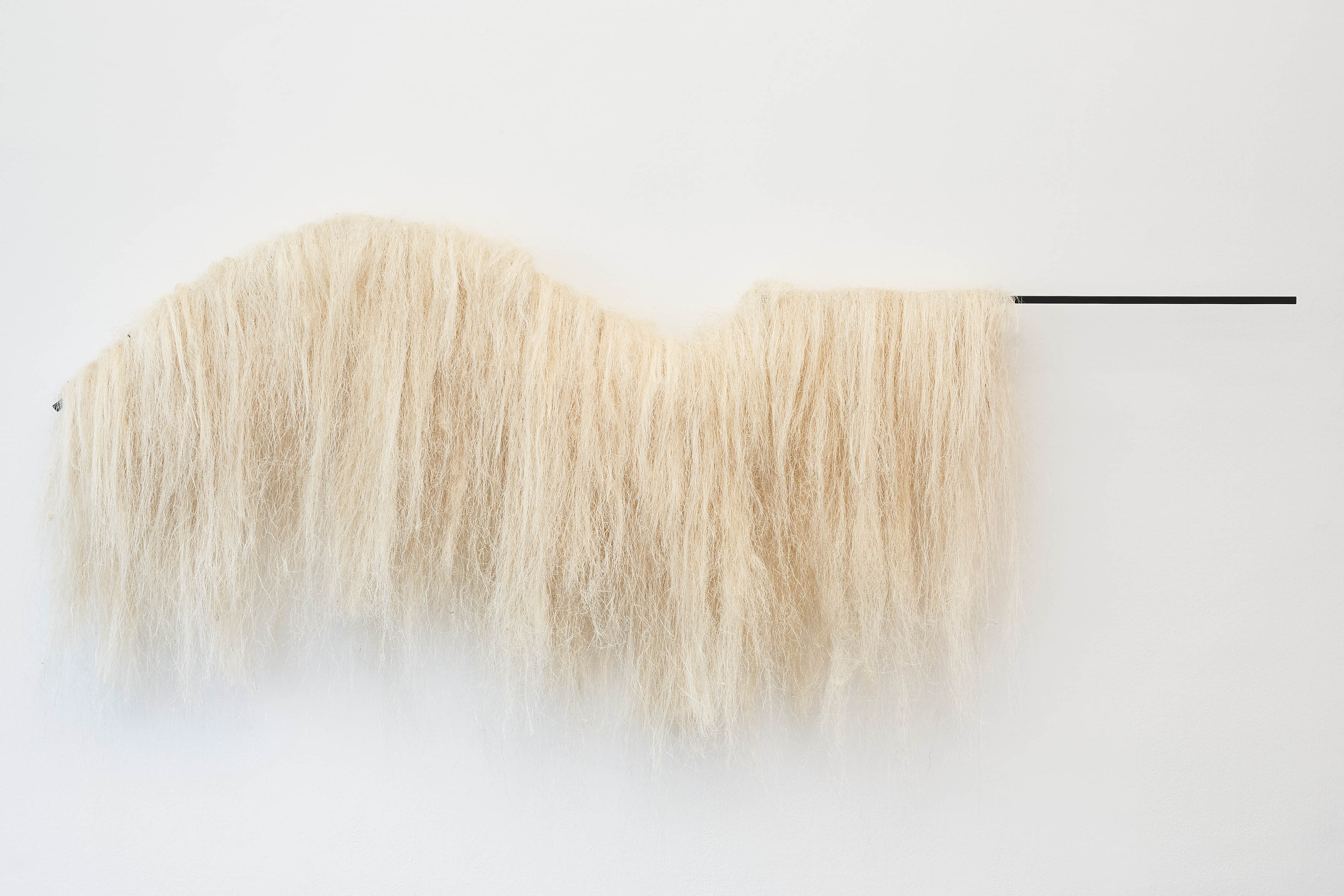
Sisal Sculptures, 2023 – 2024
Sisal Sculptures, 2023 – 2024
Sisal Sculptures, 2023 – 2024
Sisal Sculptures, 2023 – 2024
Sisal Sculptures, 2023 – 2024
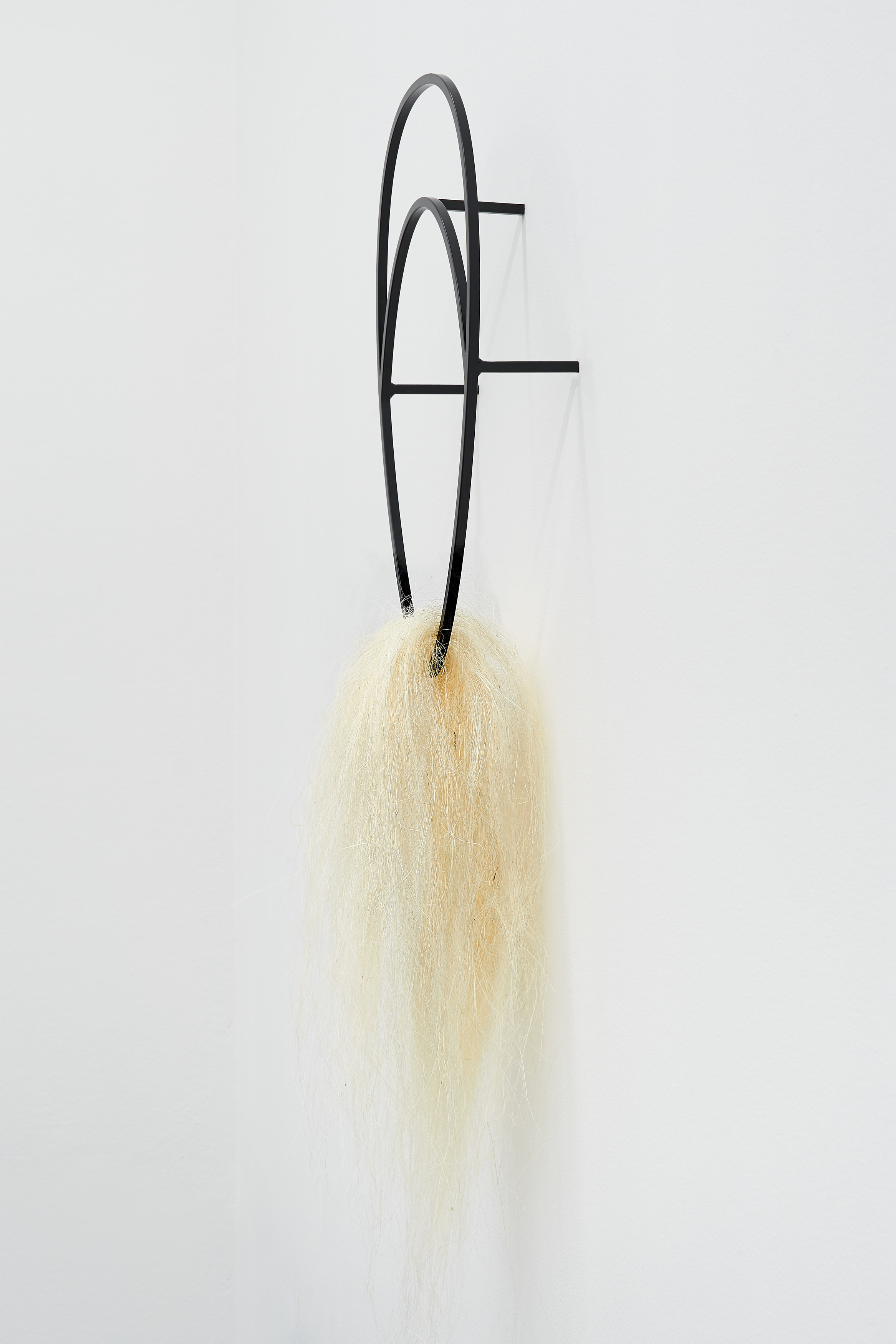
Sisal Sculptures, 2023 – 2024
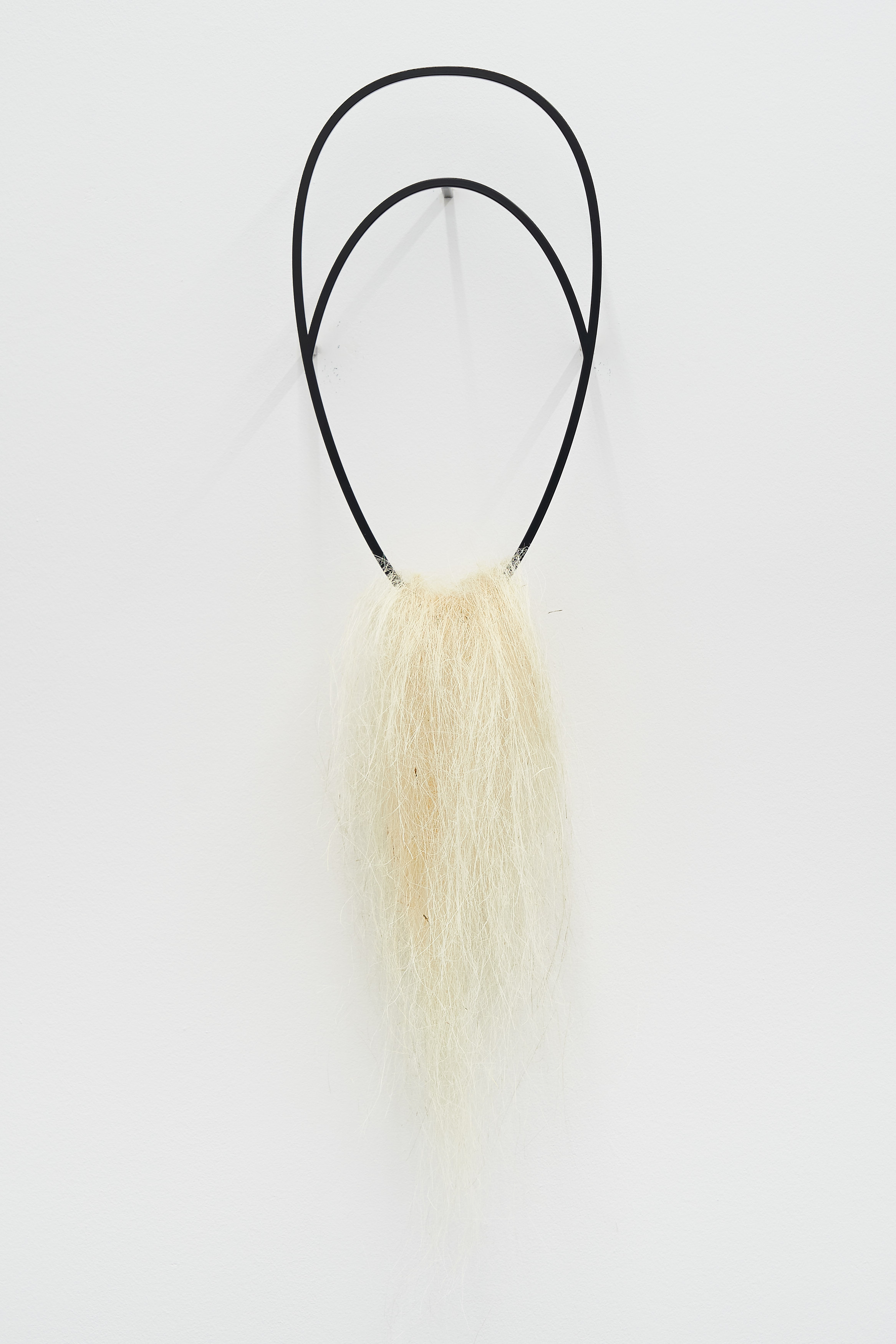
Sisal Sculptures, 2023 – 2024

Sisal Sculptures, 2023 – 2024
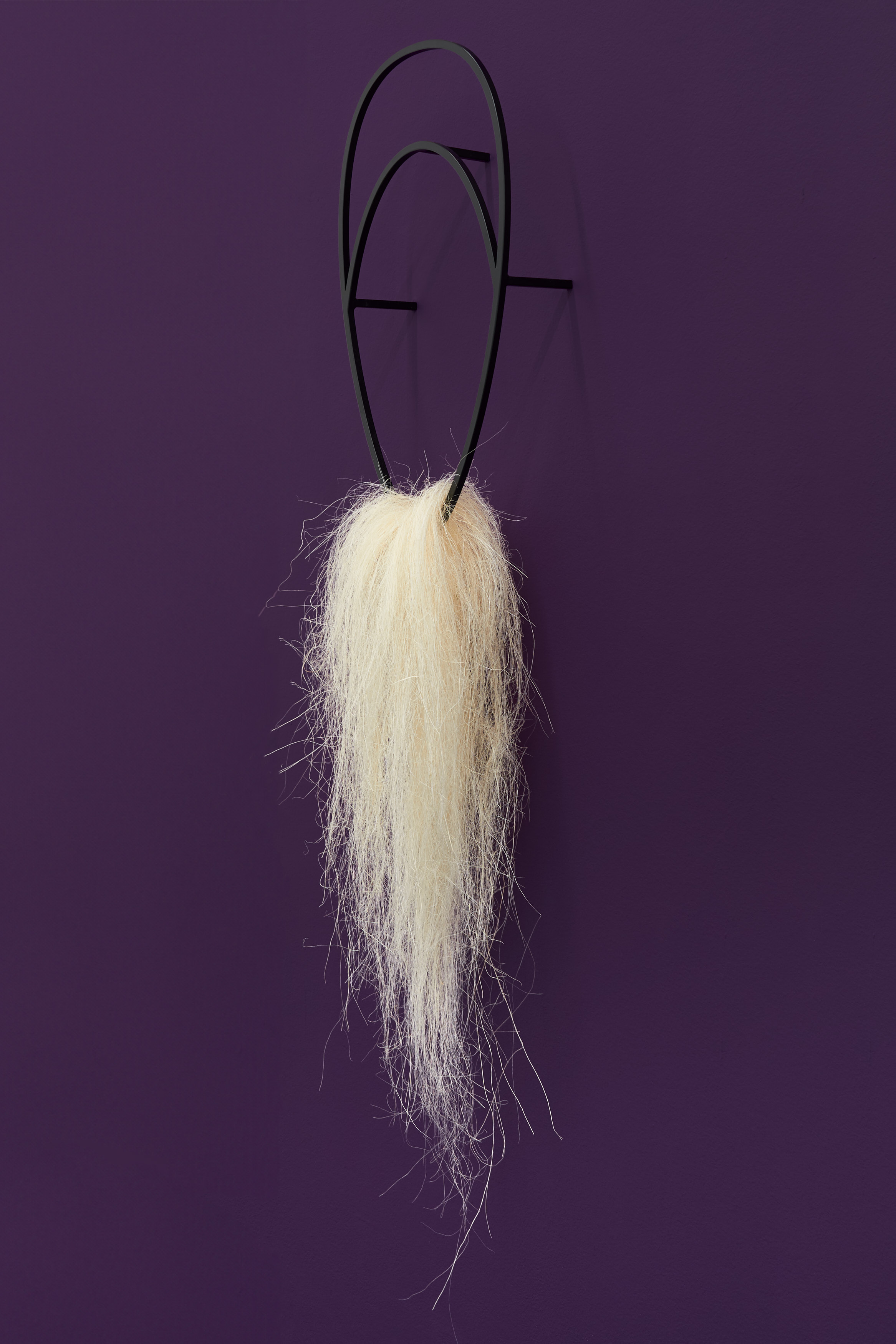
Sisal Sculptures, 2023 – 2024
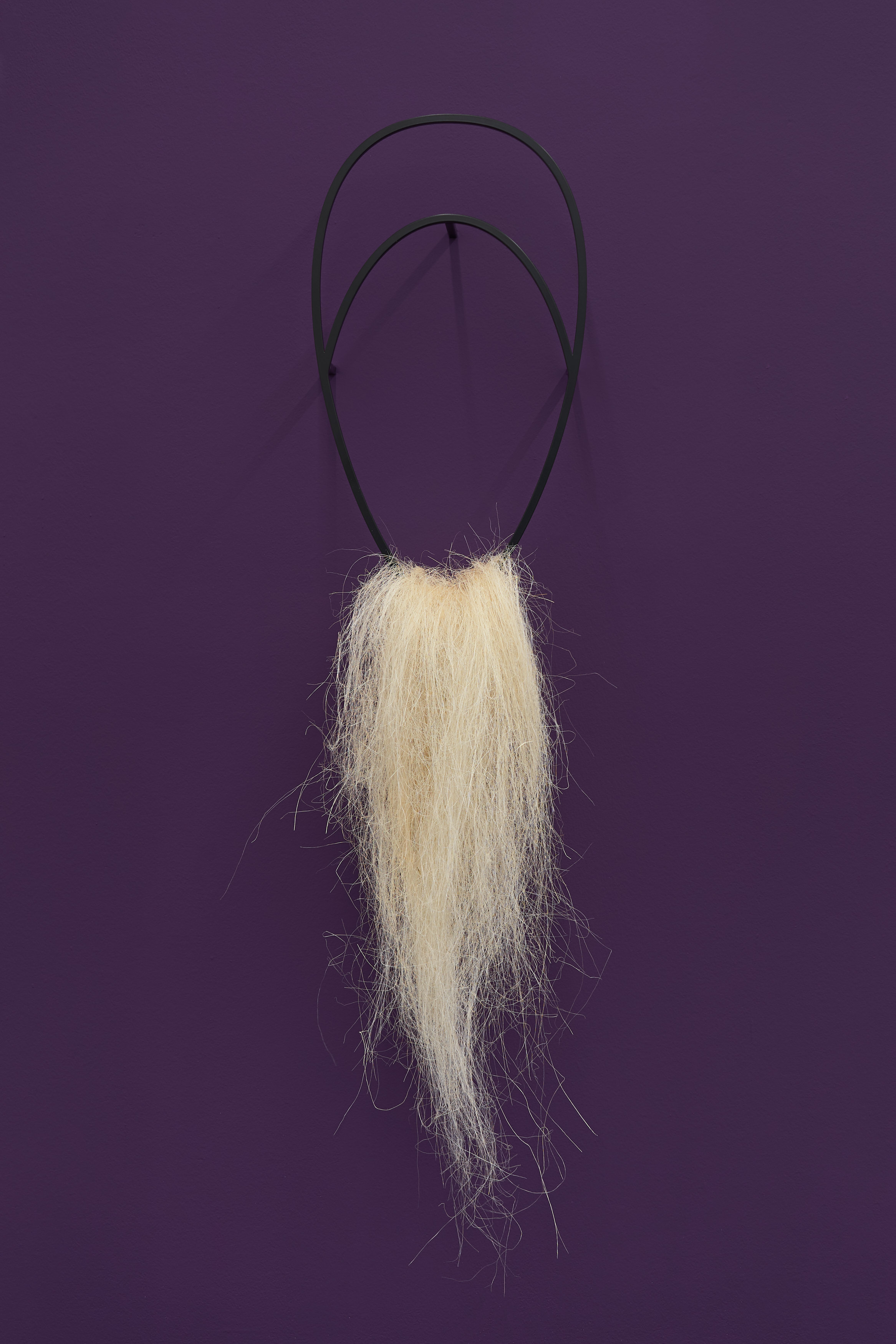
Sisal Sculptures, 2023 – 2024
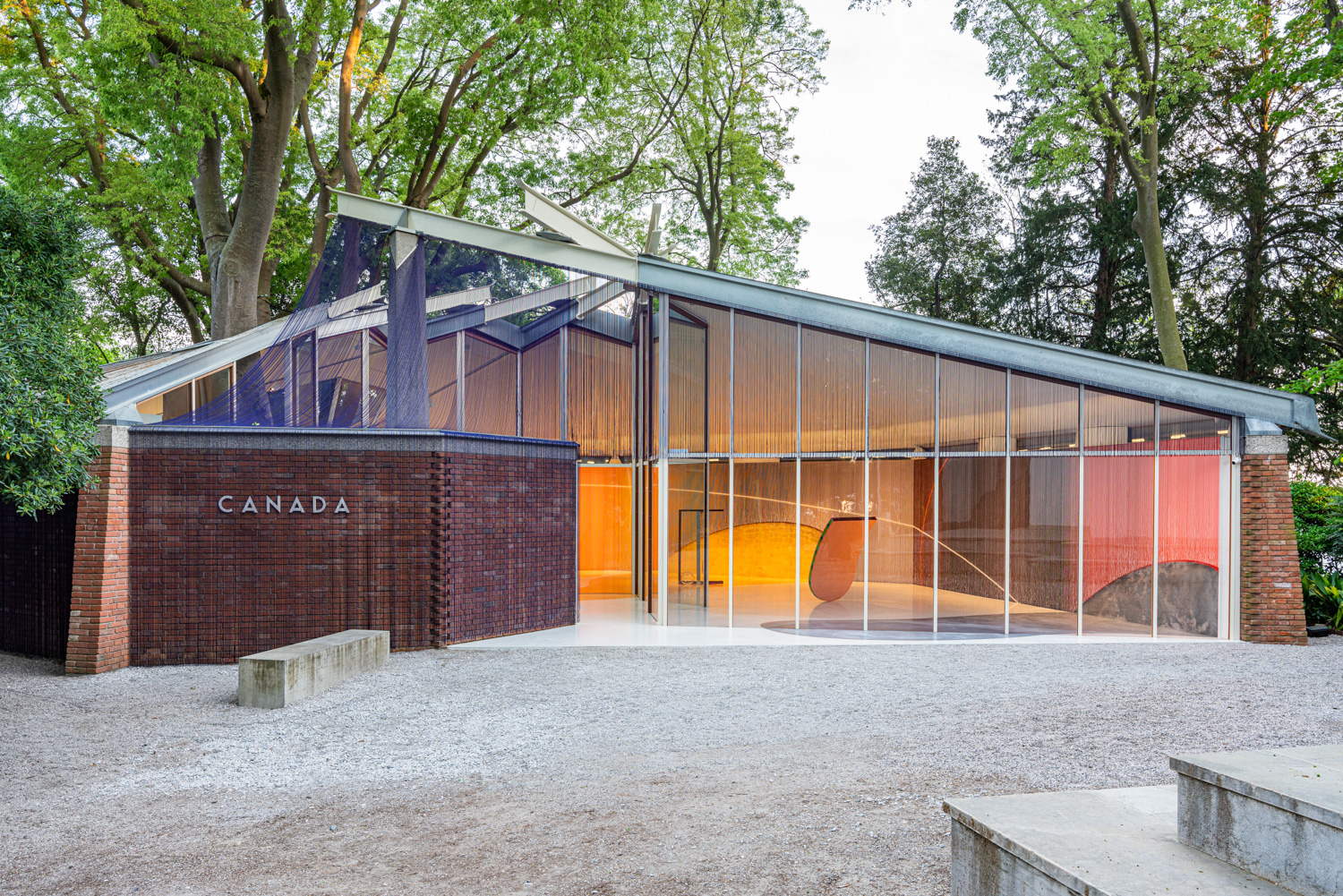
Trinket, 2024
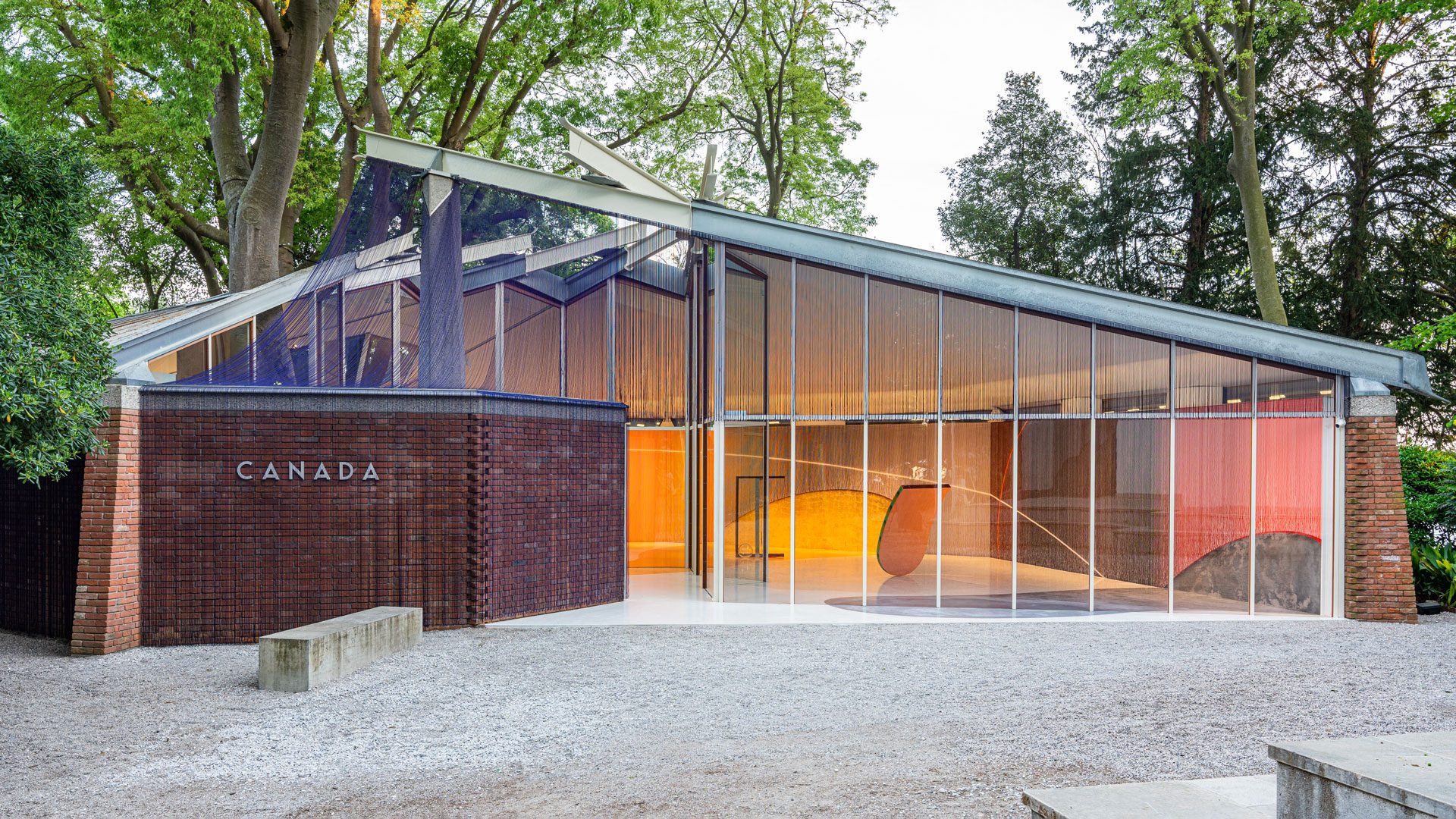
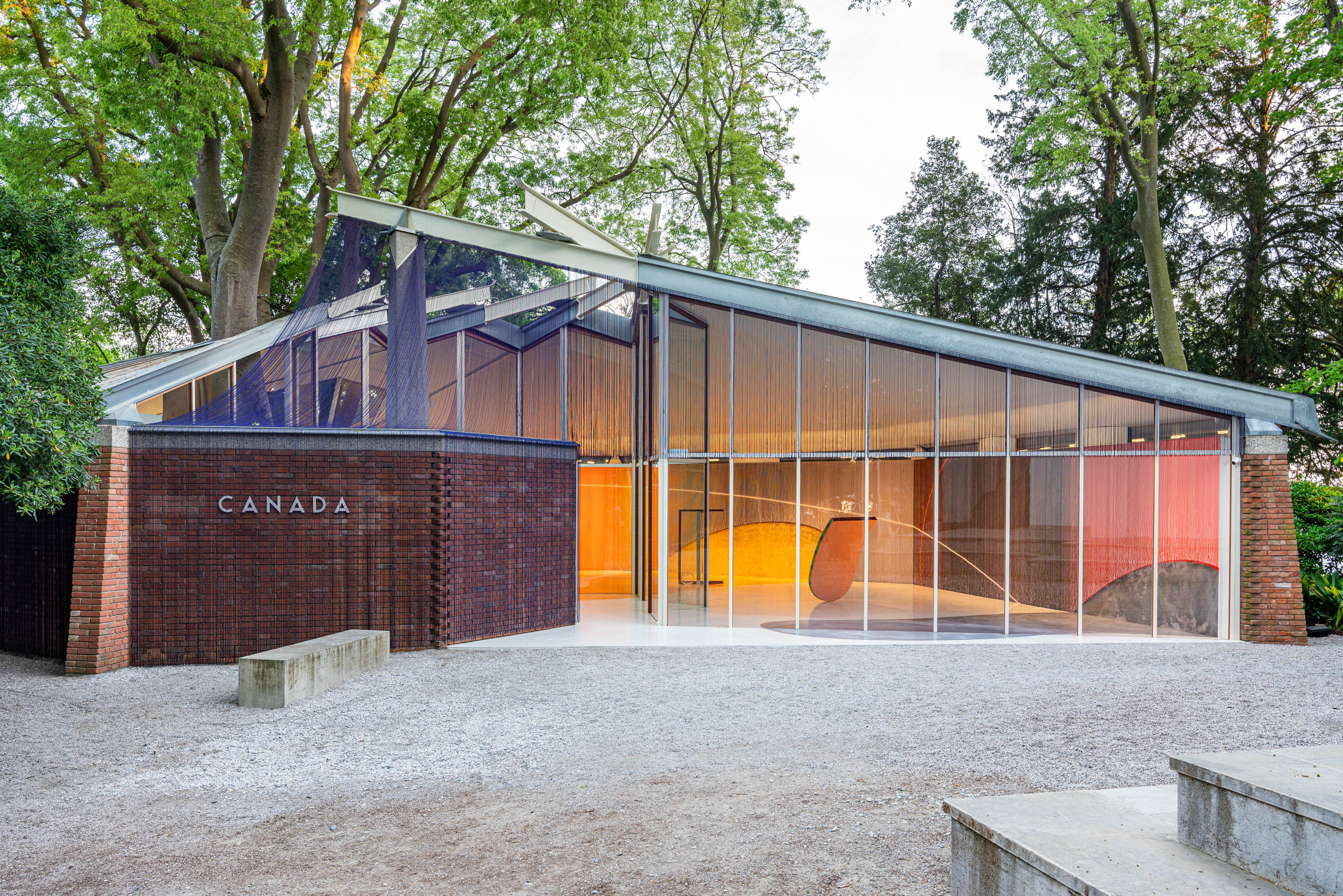
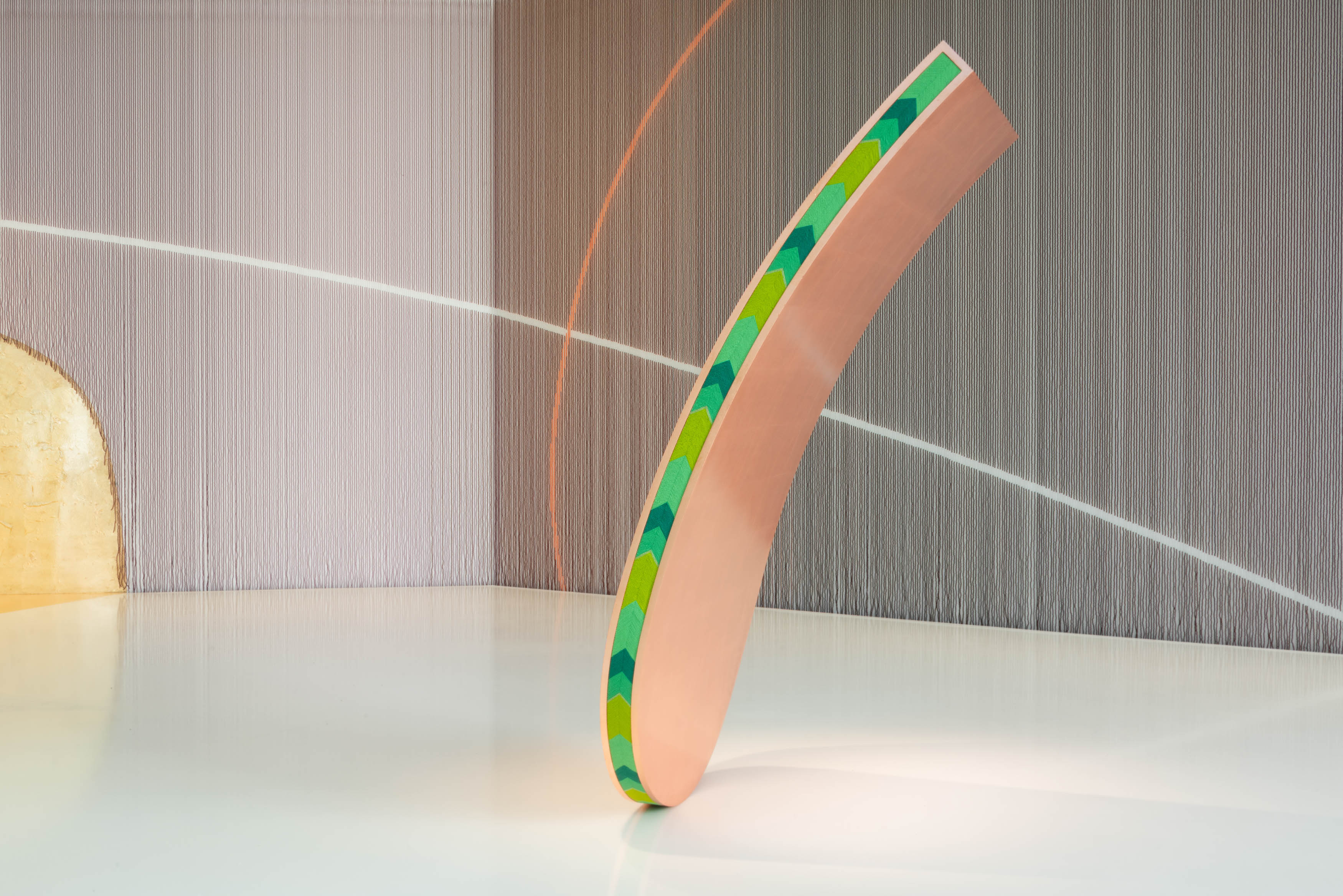
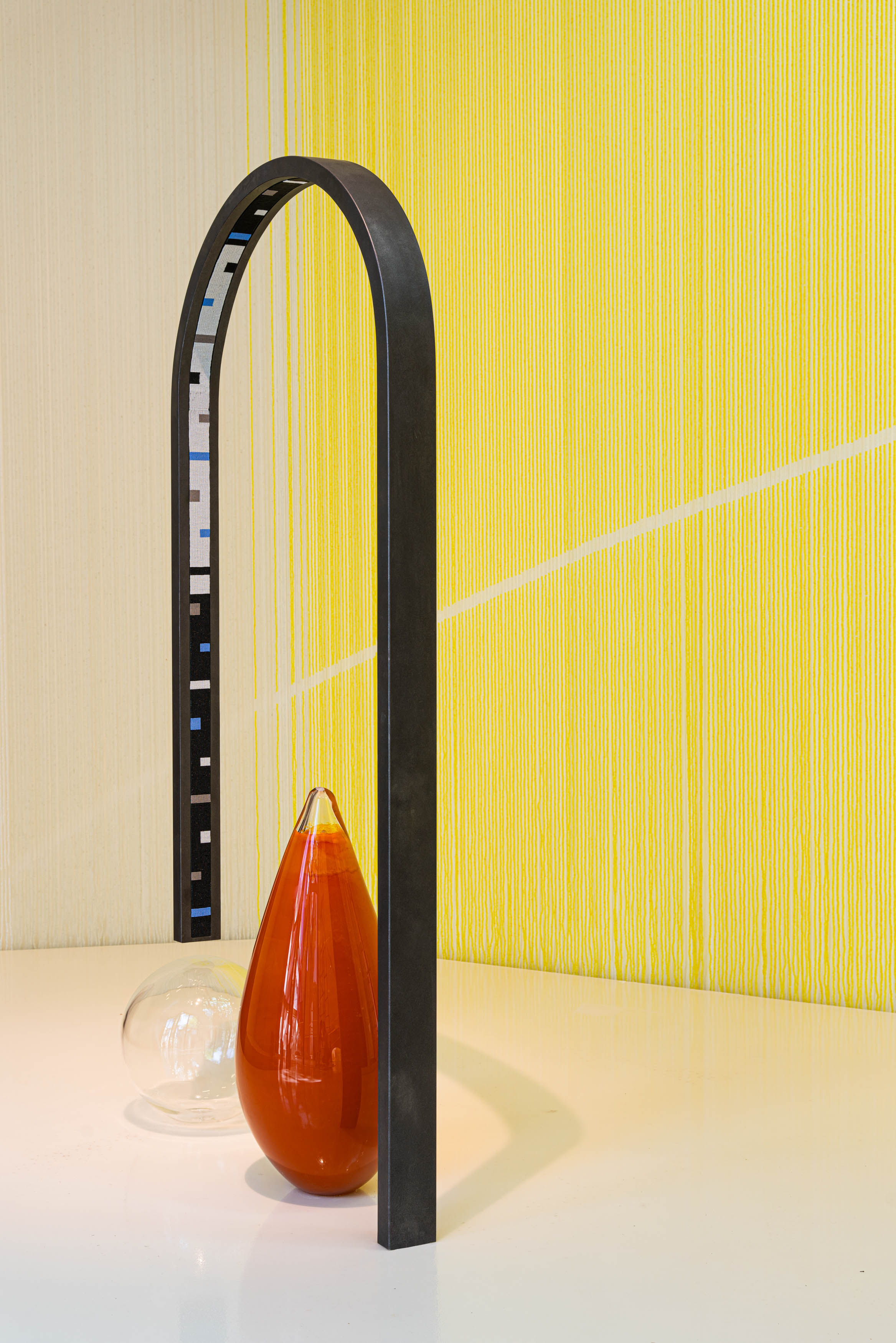
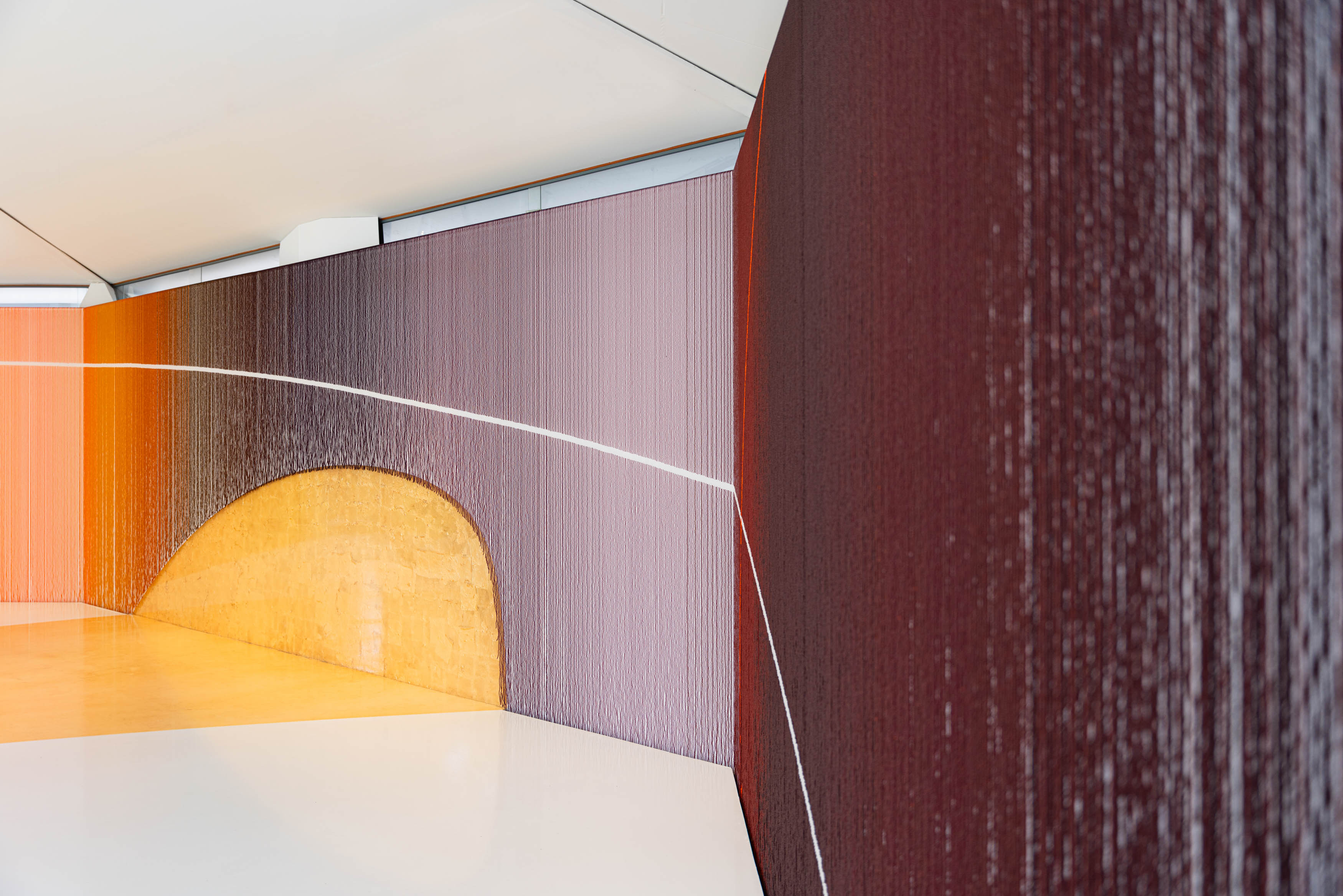
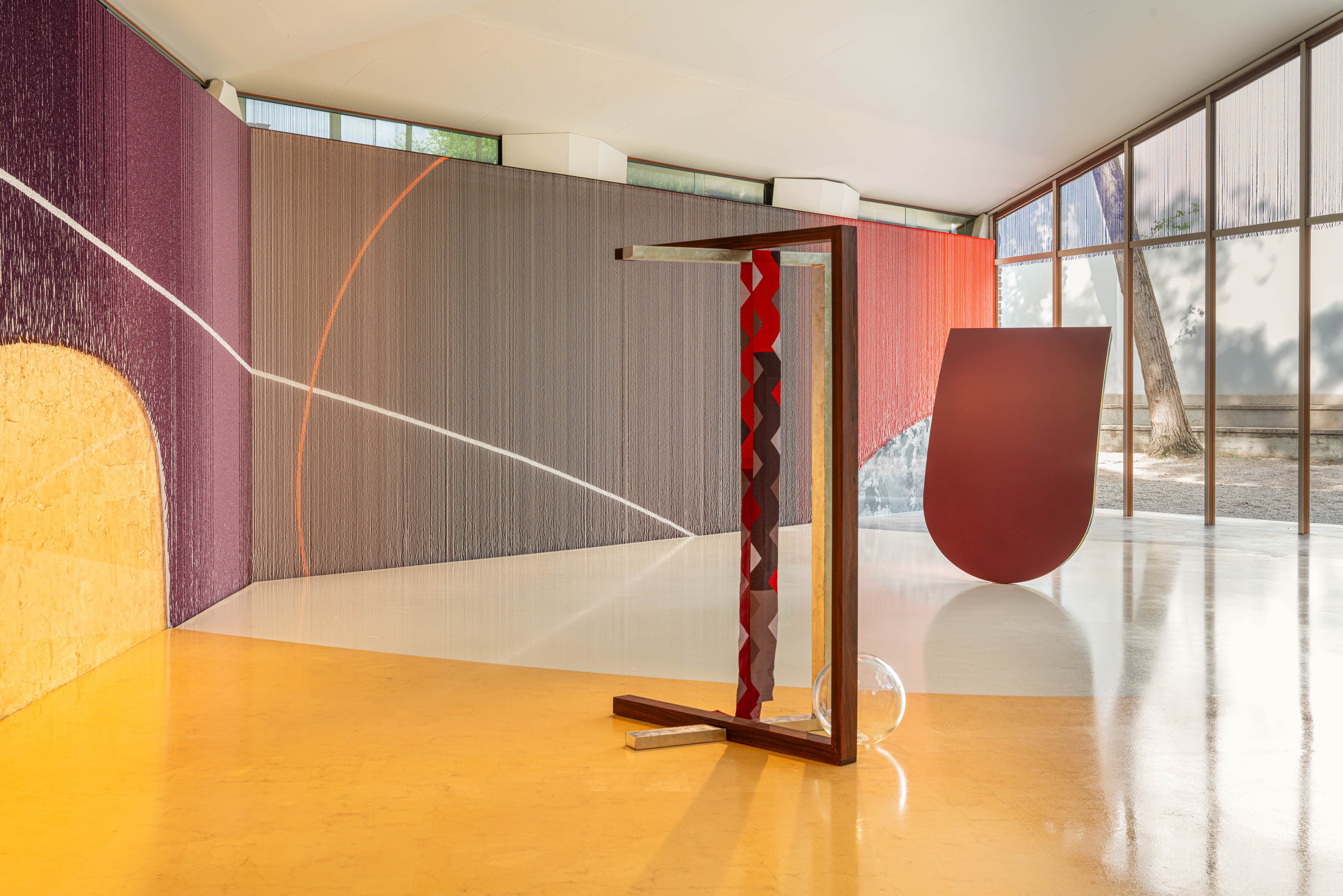
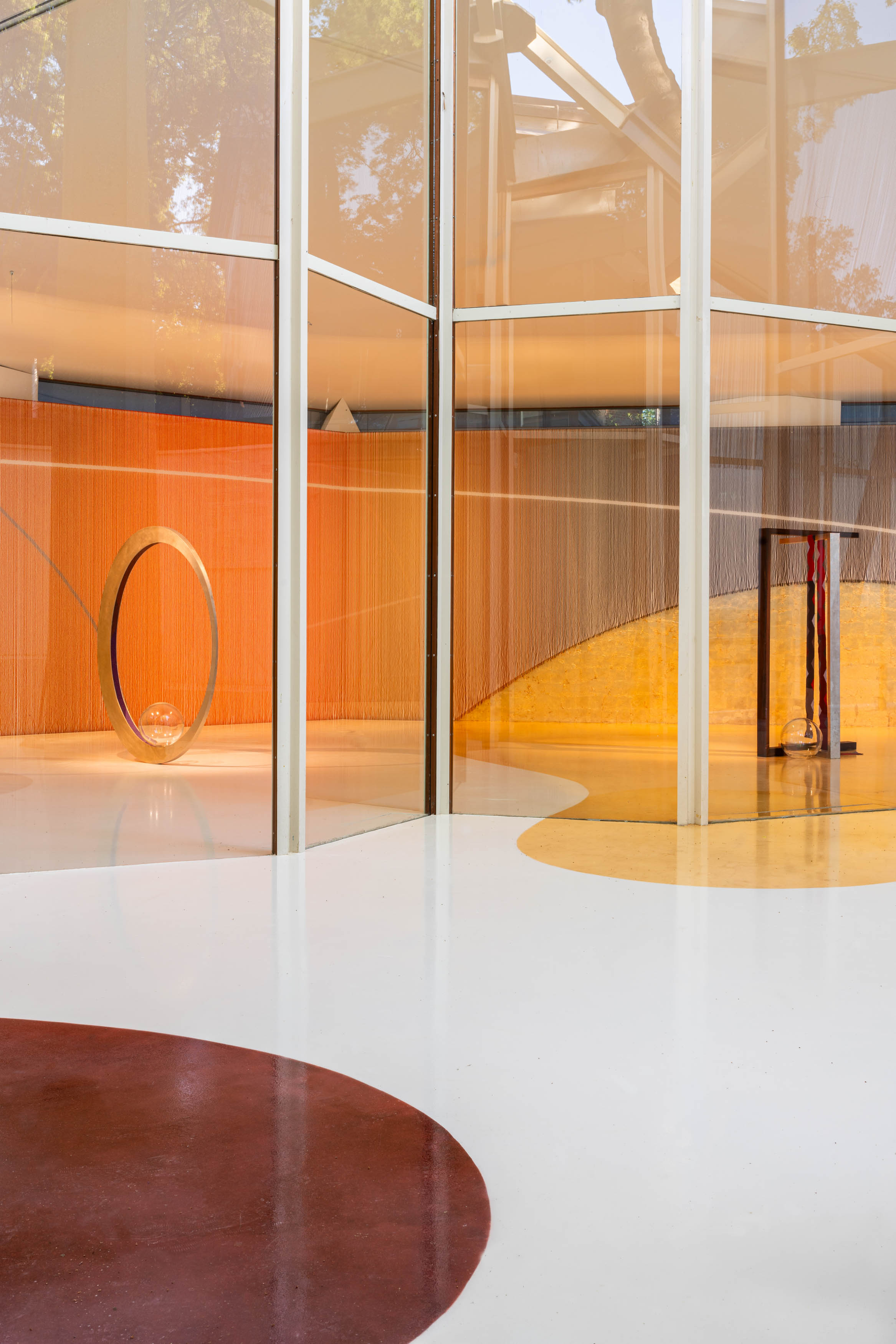
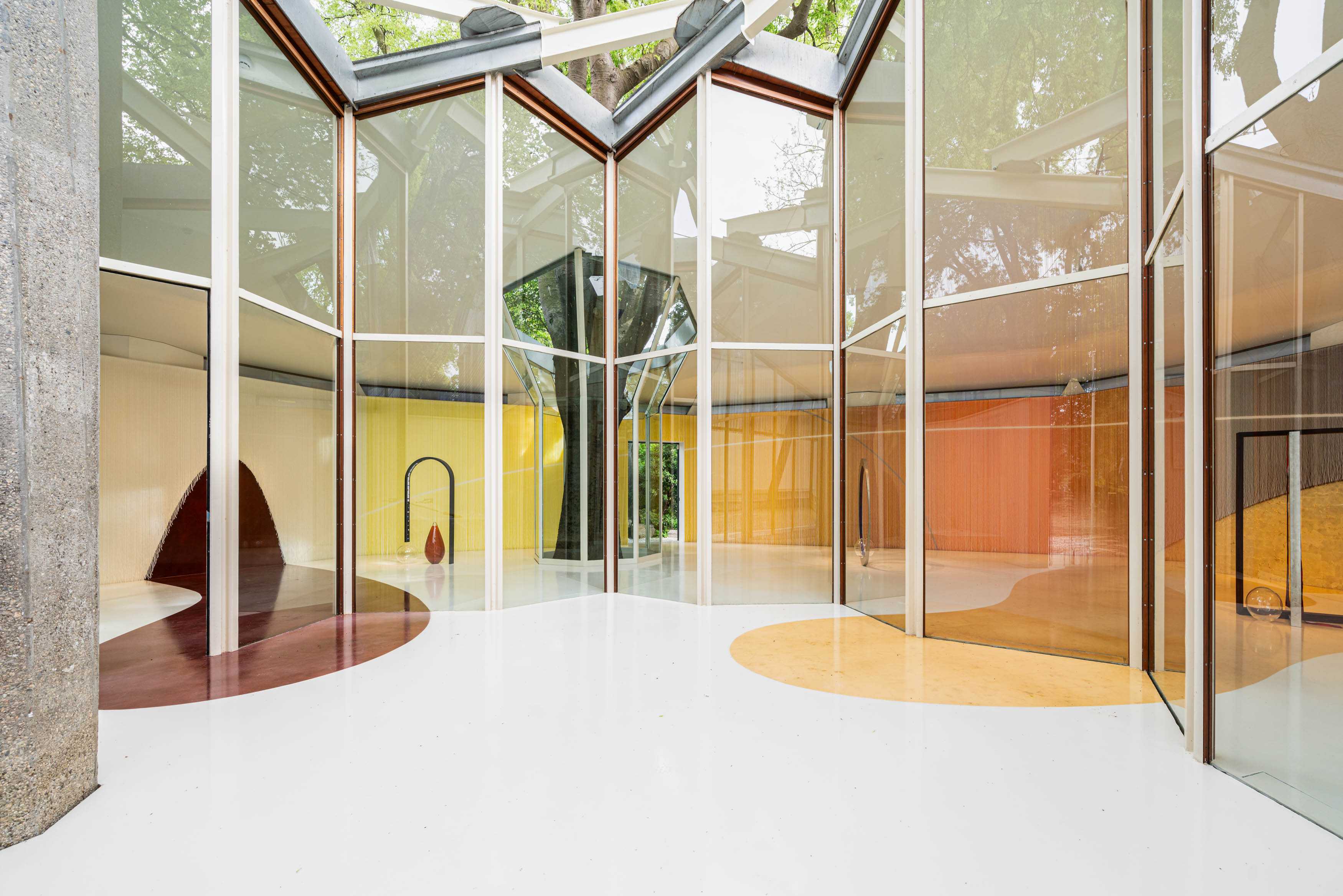
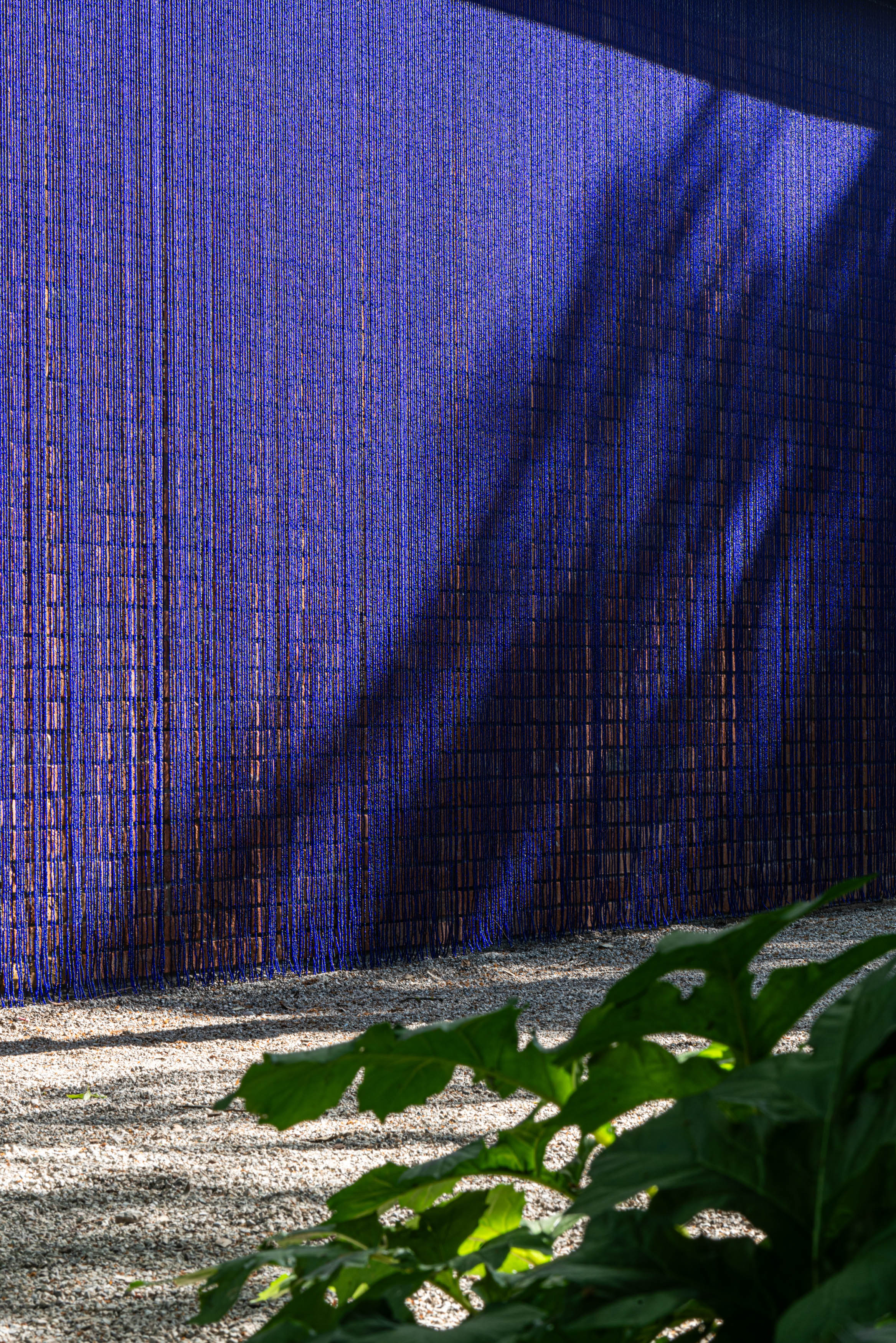
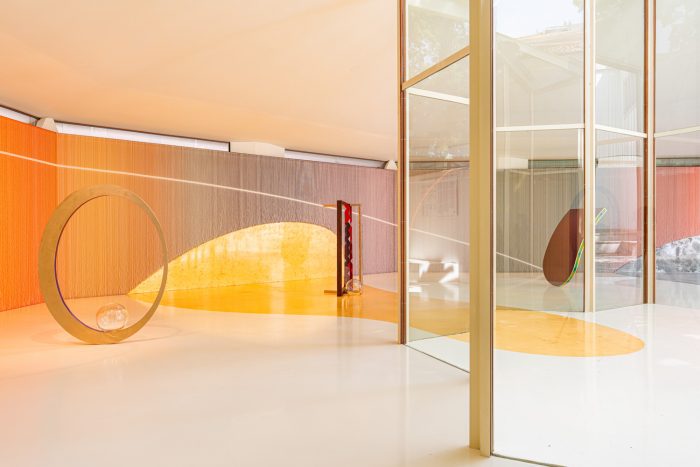
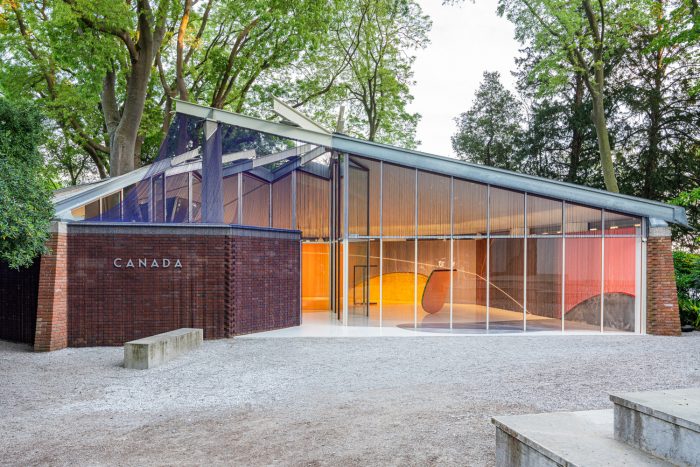
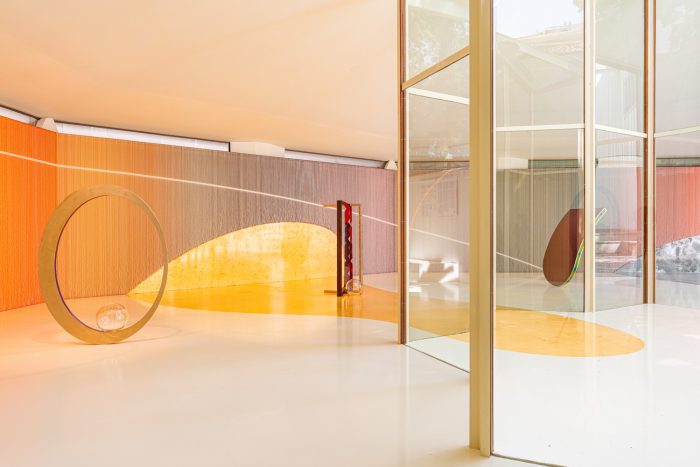
Trinket is a site-specific, immersive sculptural installation by Kapwani Kiwanga for the Canada Pavilion at the 60th International Art Exhibition of La Biennale di Venezia. The artist used more than seven million glass beads to transform the entire surface — both inner and outer — of the pavilion. Glass beads, known as conteria, were commonly used by European traders in exchanges with Indigenous communities. Kiwanga's work combines beads of various colors with the raw materials that would have been exchanged for them. These interlocking environments reflect on the aesthetic value of objects, shaped by a complex web of global relations. Kiwanga emphasizes the significance of these seemingly minute glass units. The installation invites visitors to engage with questions of value — how something can hold economic worth in one context while embodying a deeper cultural, social, or spiritual significance in another. Trinket challenges us to reconsider our understanding of value in relation to our colonial past and globalized society.
Trinket, 2024

Trinket, 2024
Trinket, 2024
Trinket, 2024
Trinket, 2024
Trinket, 2024
Trinket, 2024
Trinket, 2024
Trinket, 2024
Trinket, 2024

Trinket, 2024
Trinket, 2024
Shifting Sands, 2023
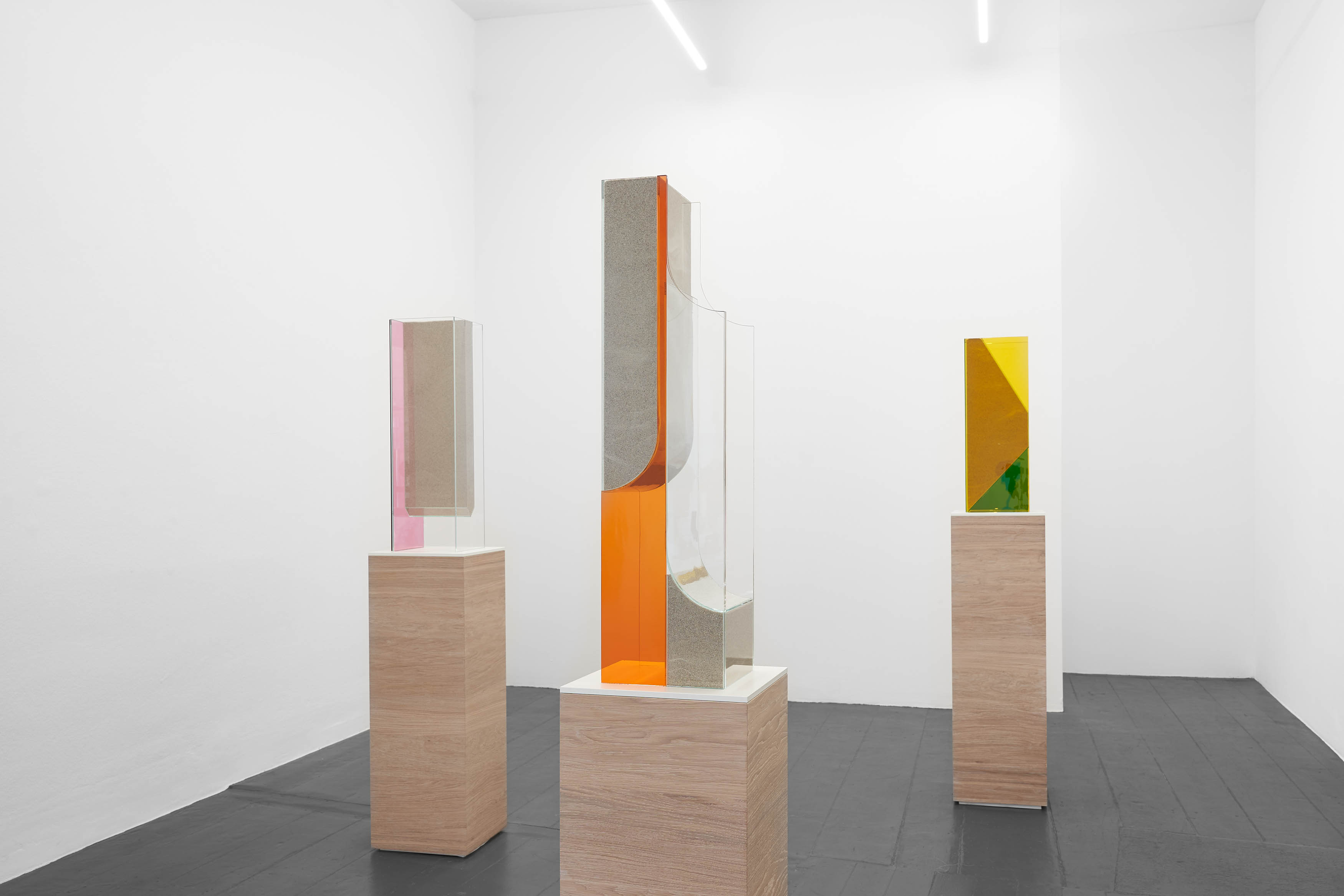
Kiwanga’s work, Shifting Sands, mimics an hourglass compressed into abstraction. Kiwanga observes how raw materials, in this case sand, remind us of perpetual states of flux. The piece is made with artisanally hand-blown glass and fracking sand. The sculptures are a continuation of her Hour Glass series, presented at the 59th Venice Biennale. These works explore temporality and the politics of material extraction. The hourglass form alludes to the passage of time as well as the delicate quest for balance, while the use of fracking sand for oil extraction—itself a finite resource—highlights the environmental impact of industrial processes.
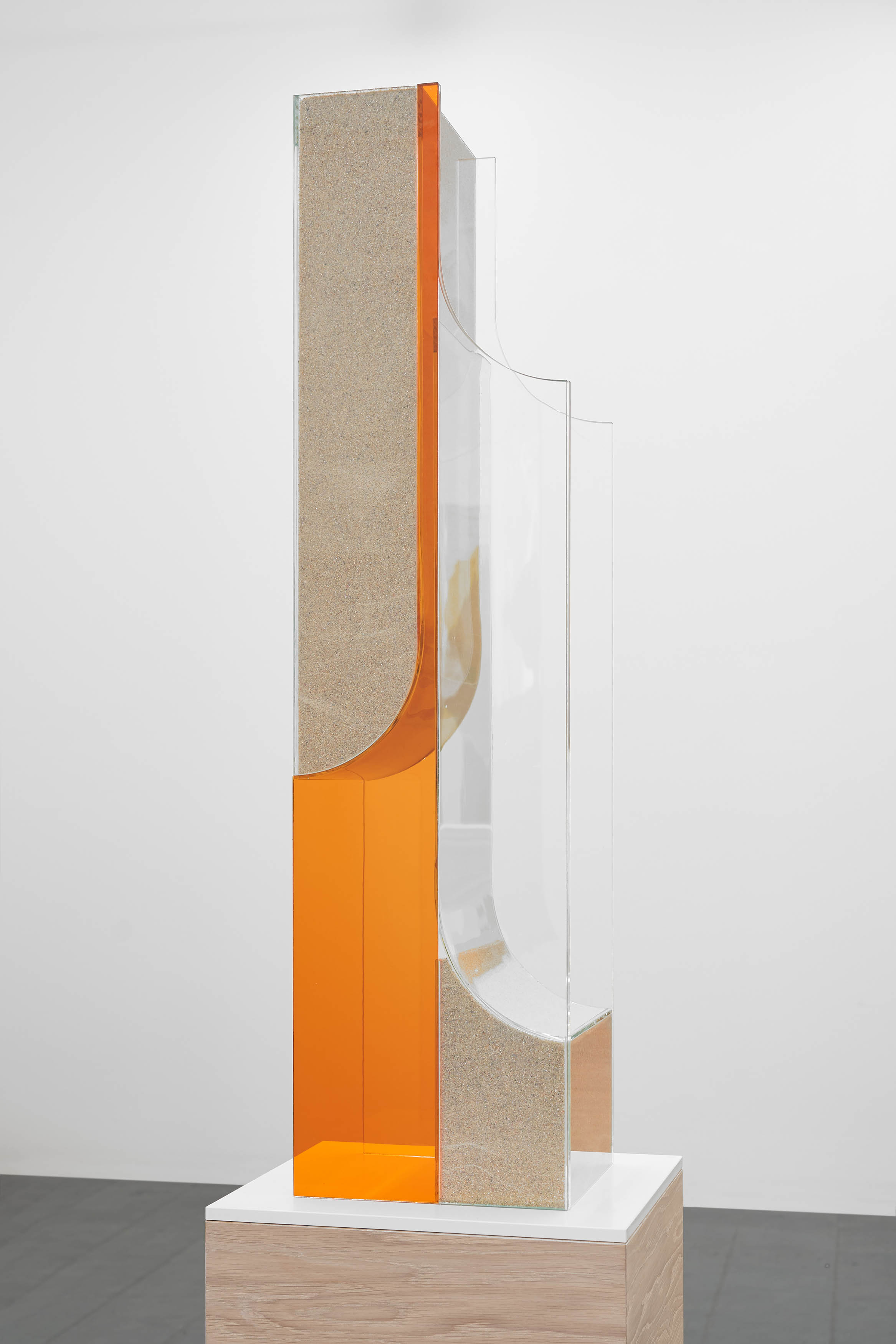
Shifting Sands, 2023
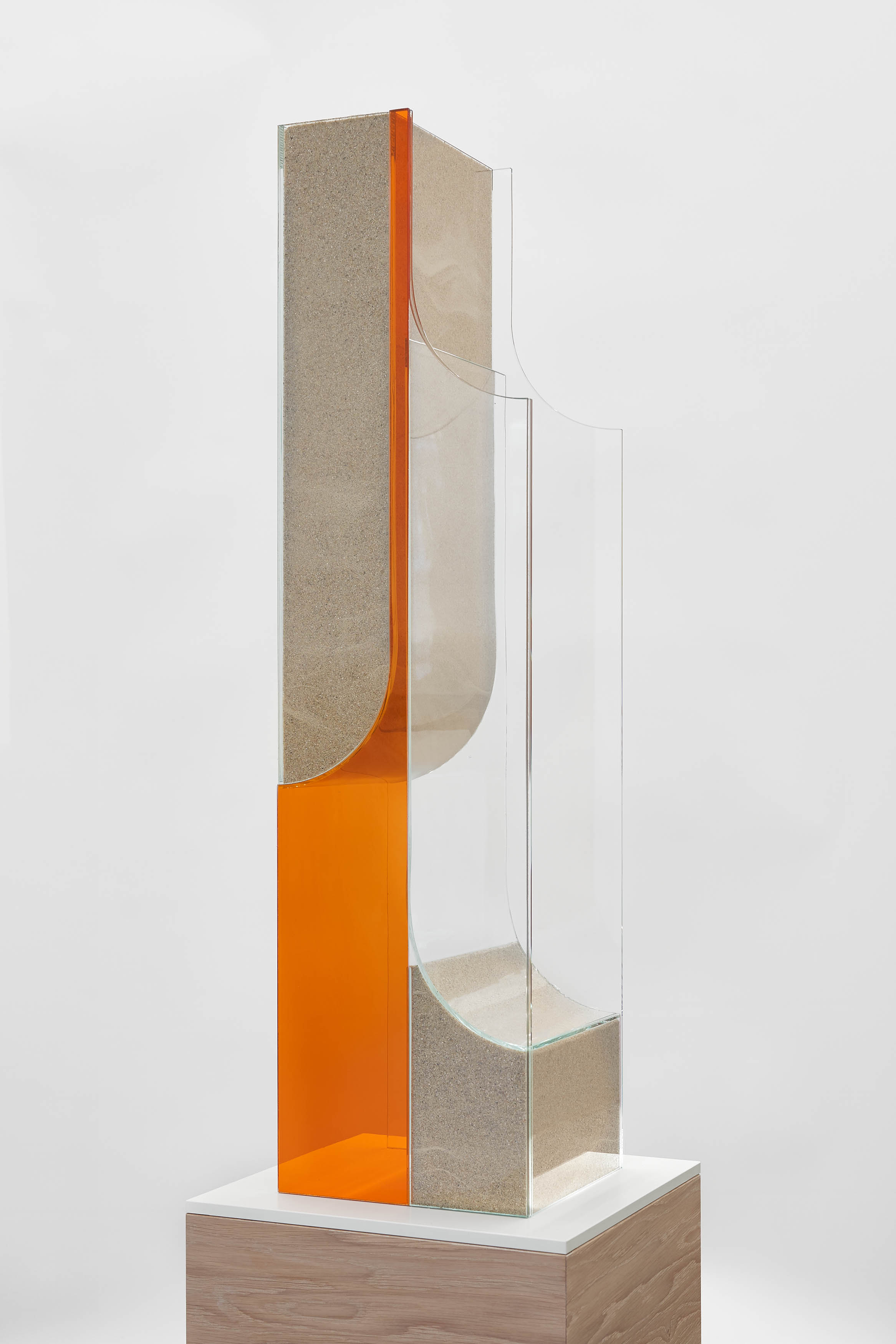
Shifting Sands, 2023
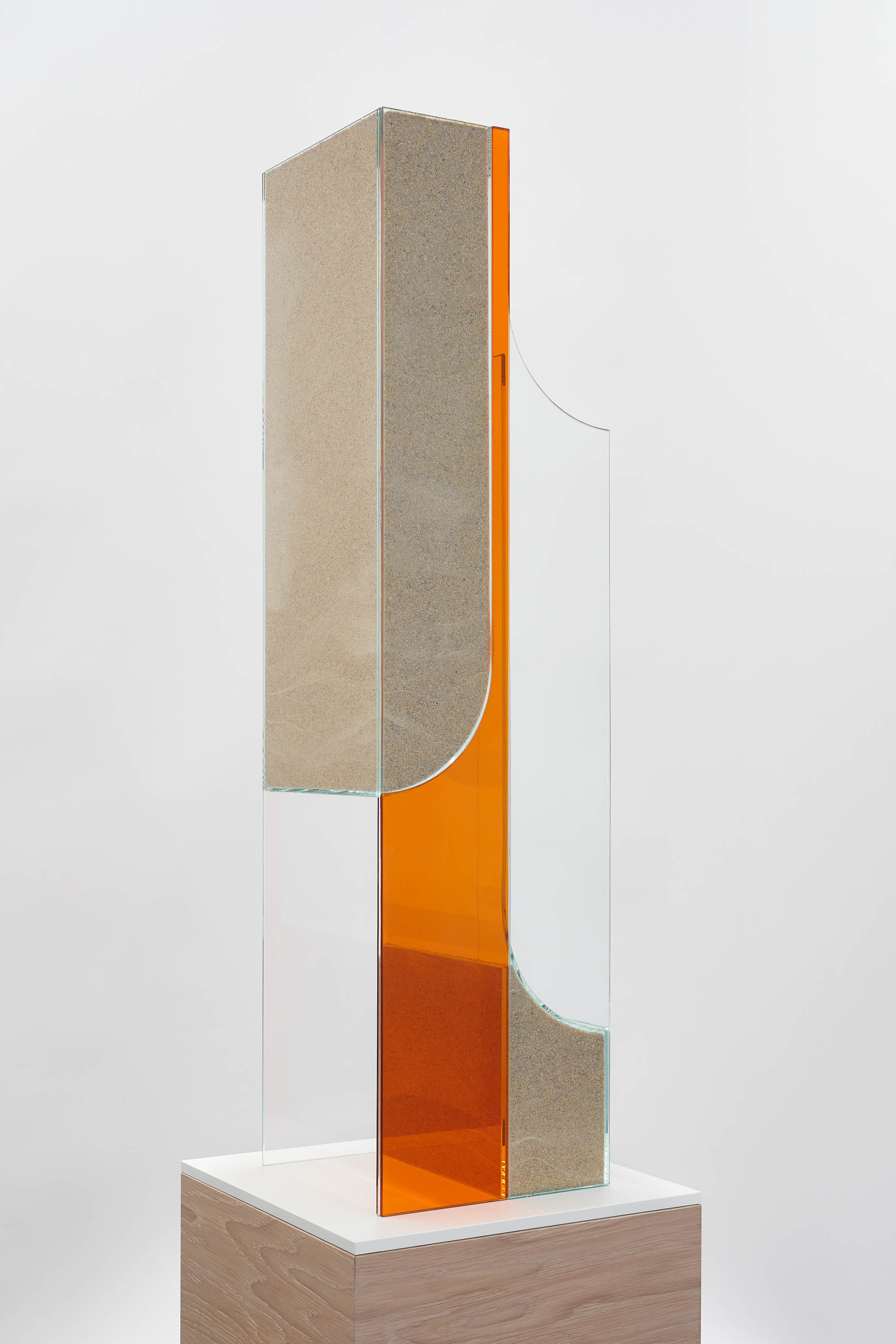
Shifting Sands, 2023
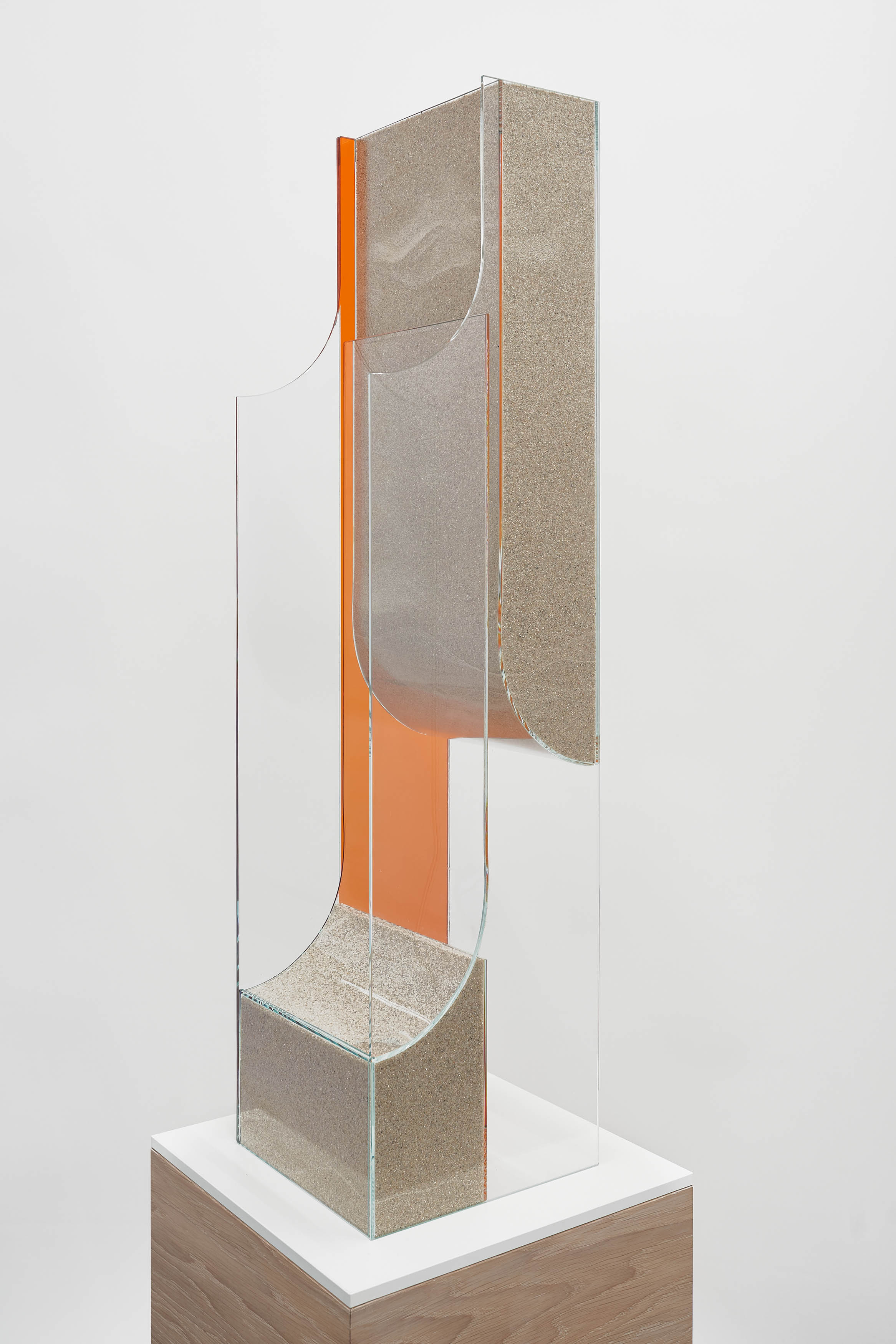
Shifting Sands, 2023
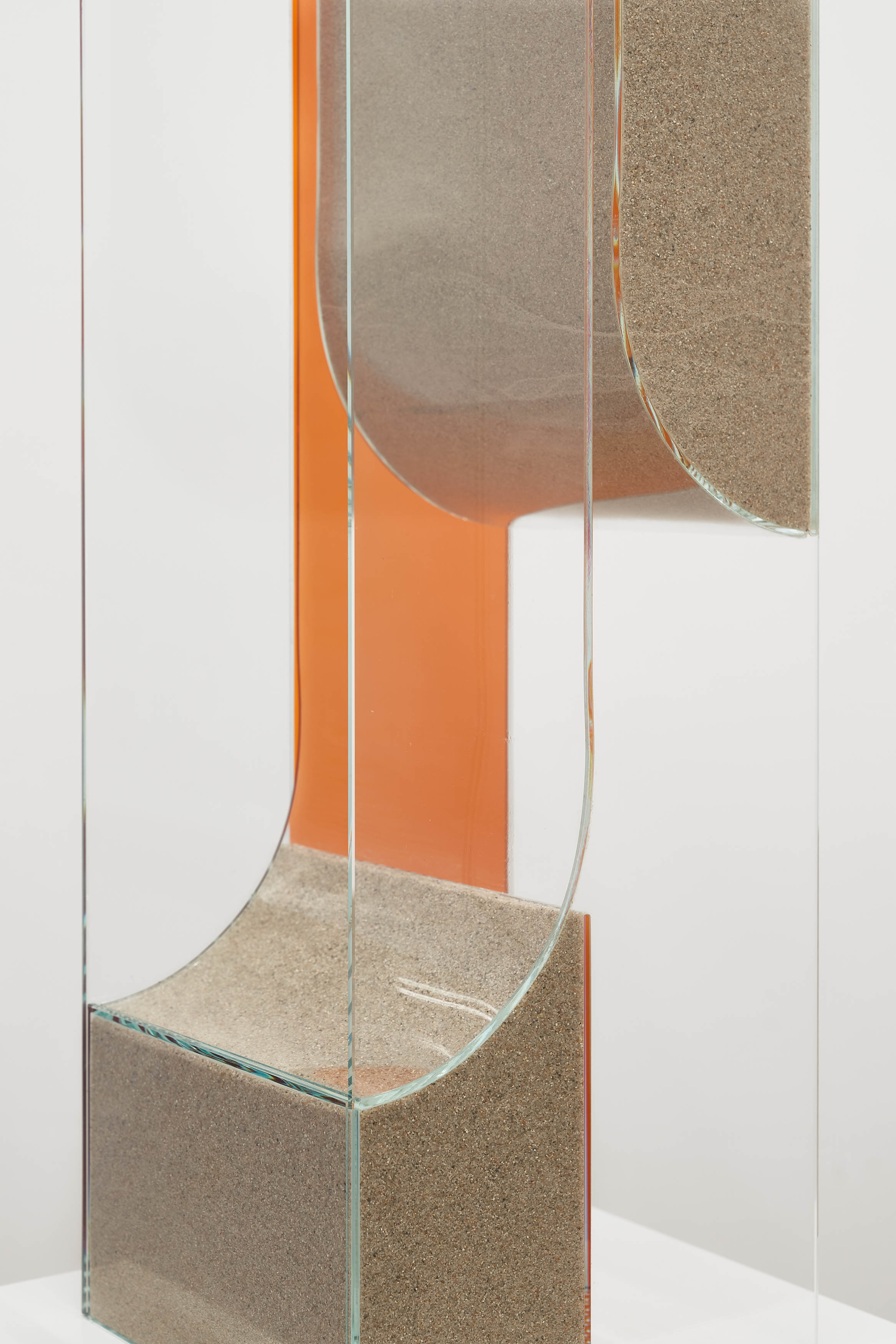
Shifting Sands, 2023
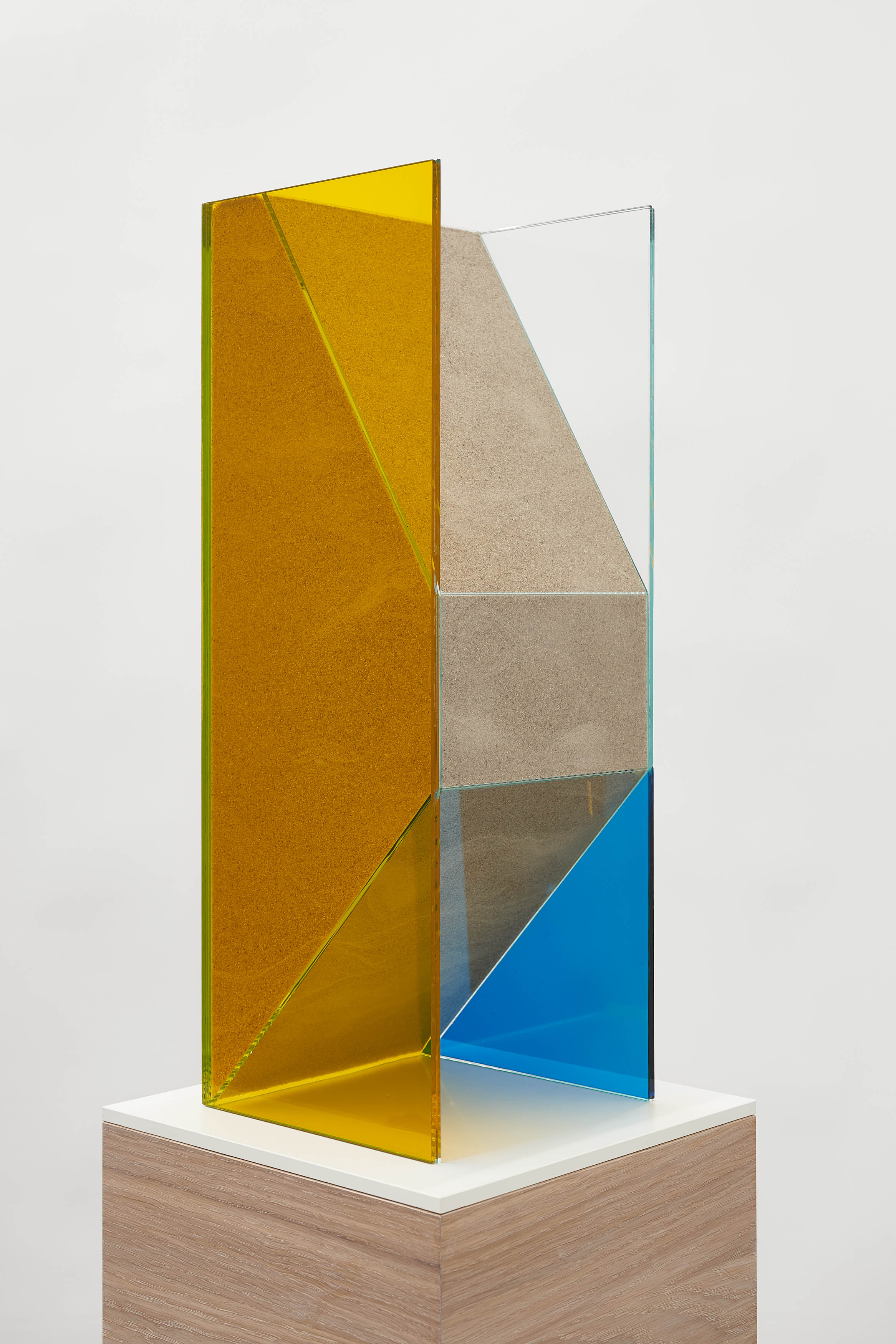
Shifting Sands, 2023
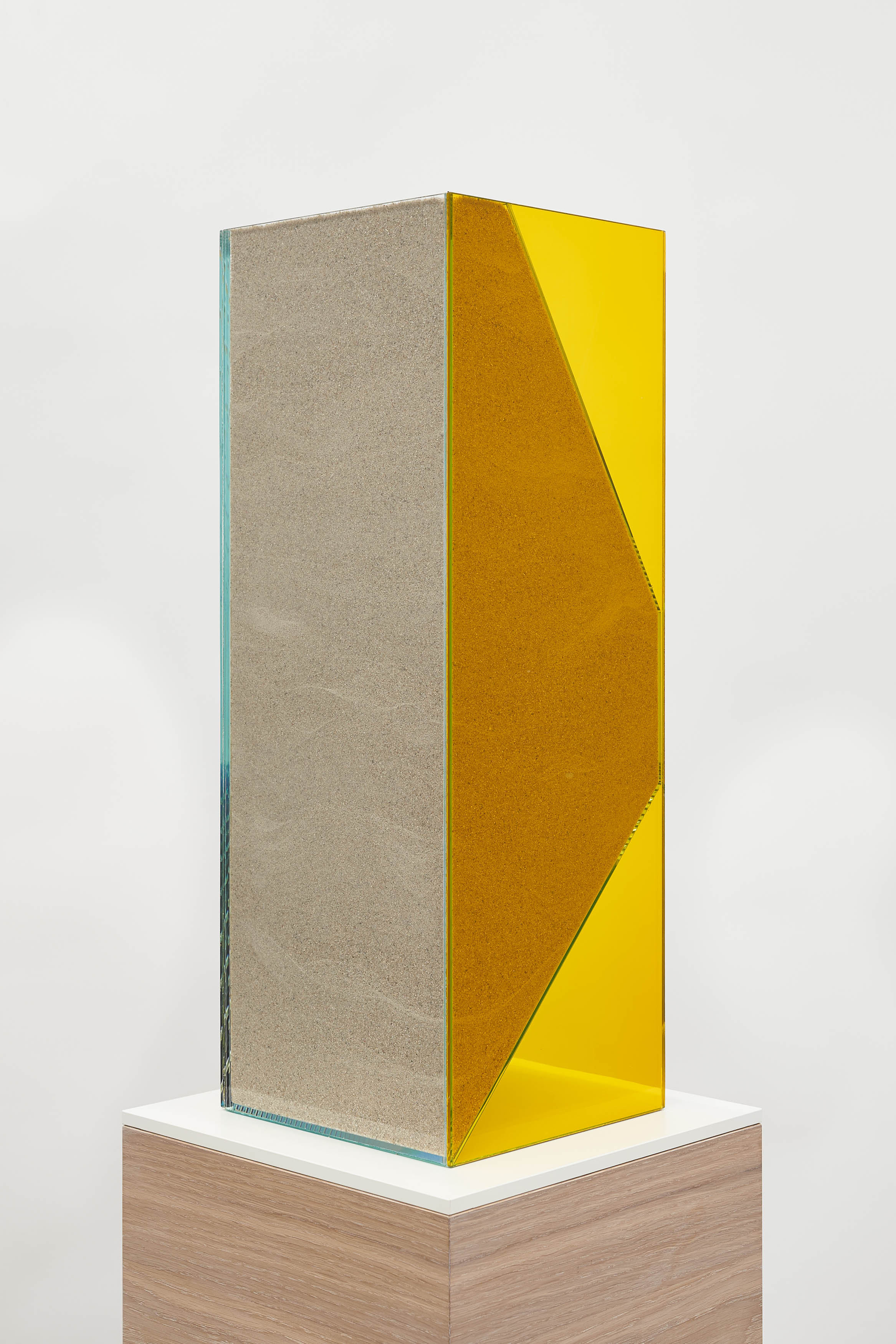
Shifting Sands, 2023
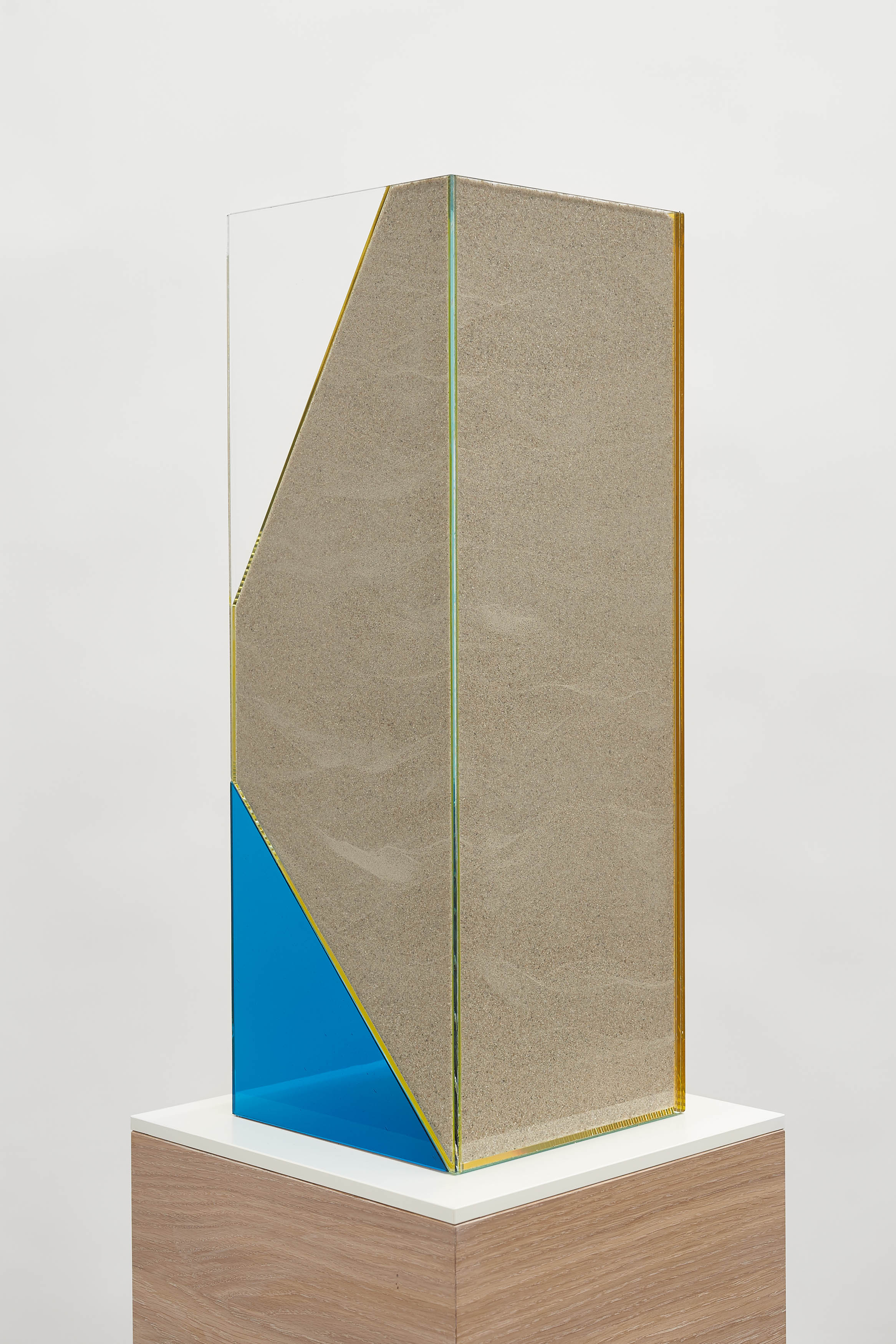
Shifting Sands, 2023
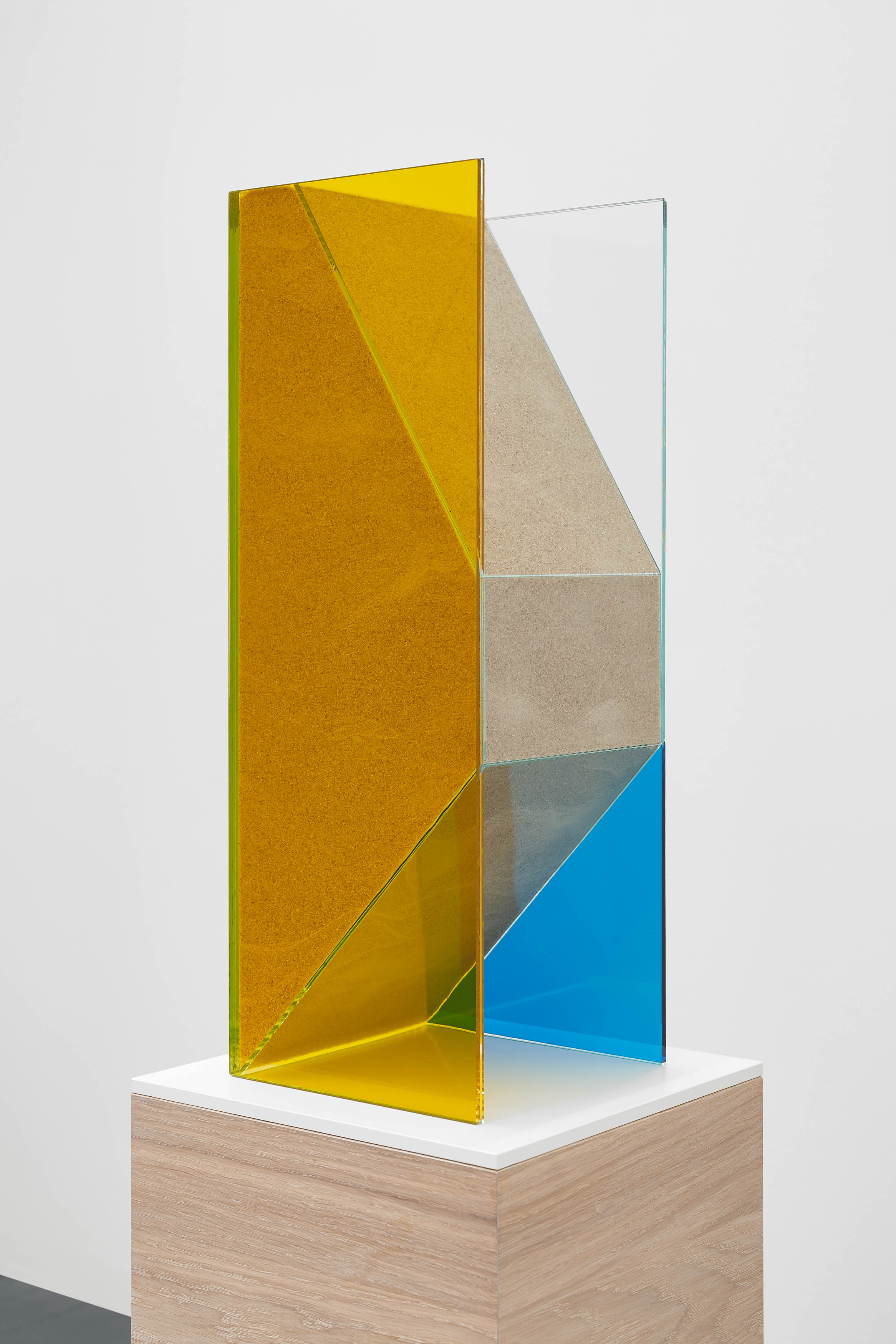
Shifting Sands, 2023
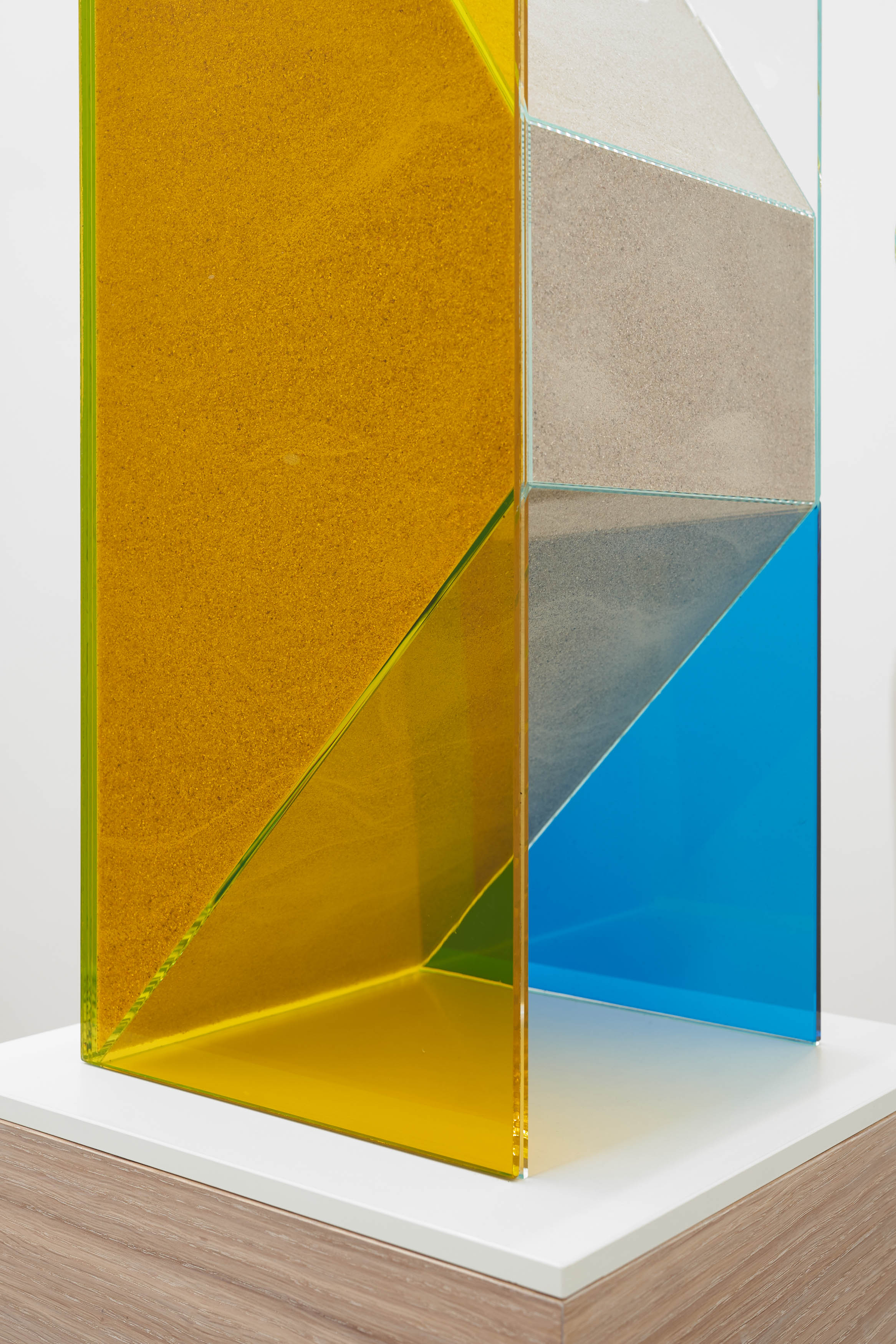
Shifting Sands, 2023
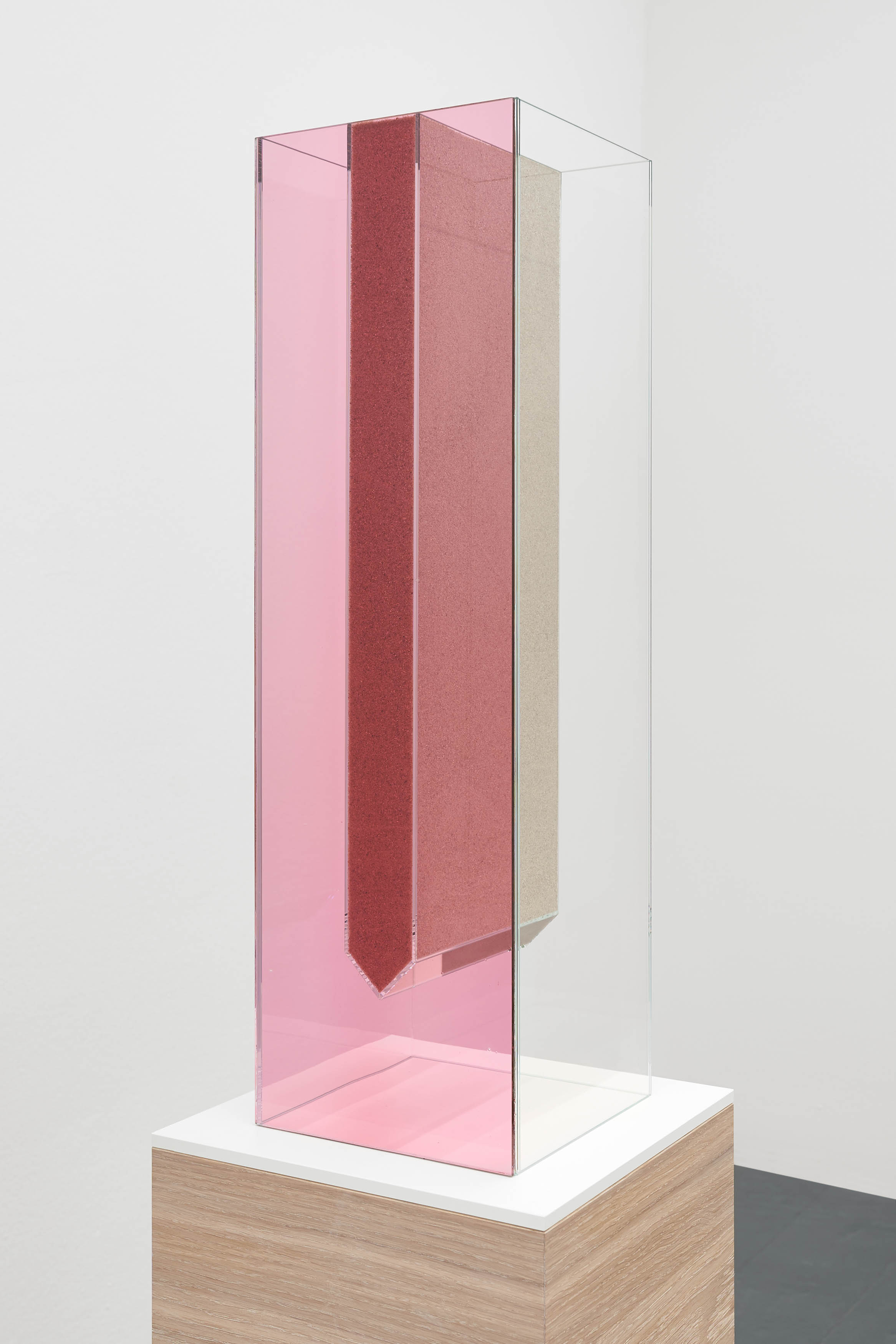
Shifting Sands, 2023
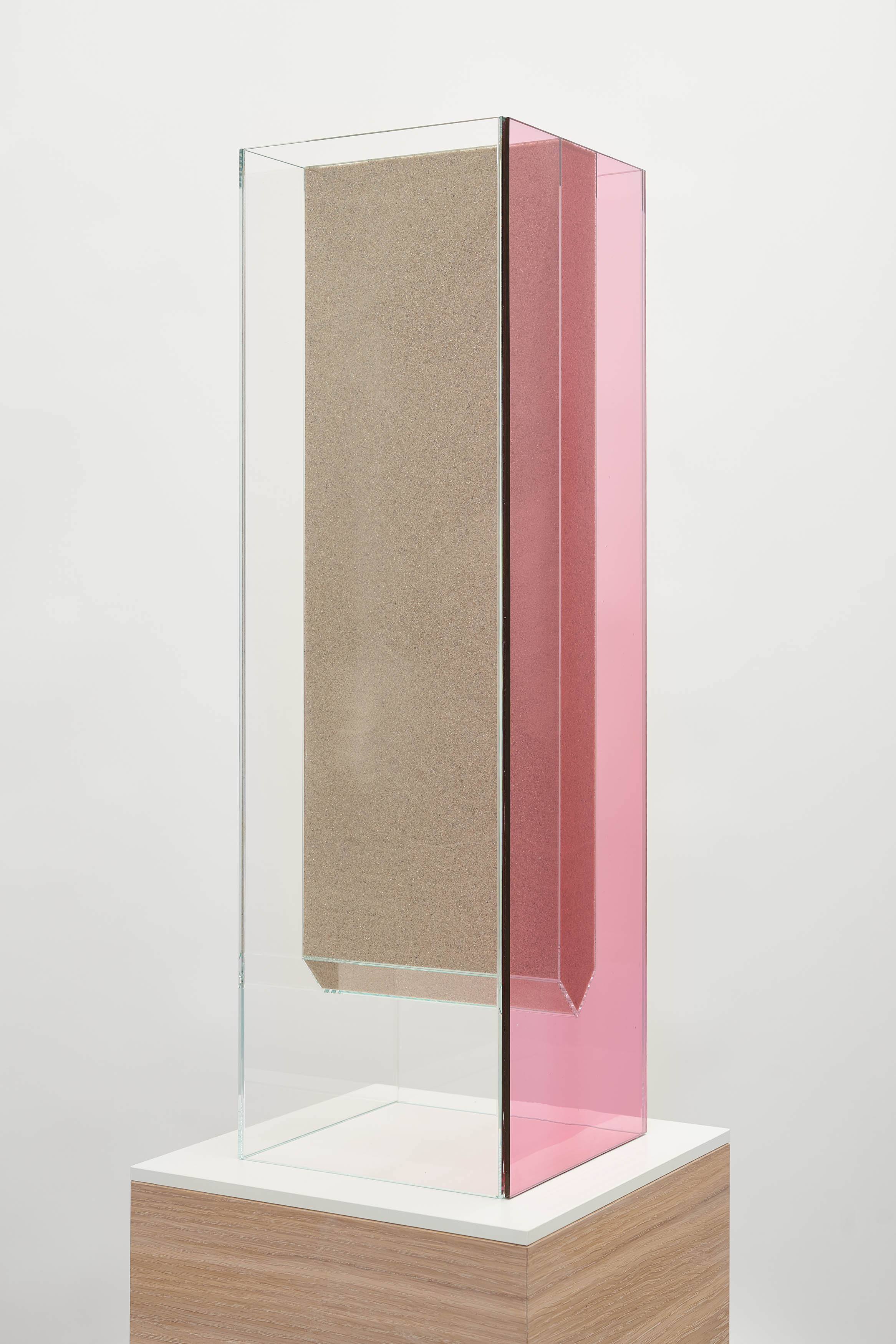
Shifting Sands, 2023
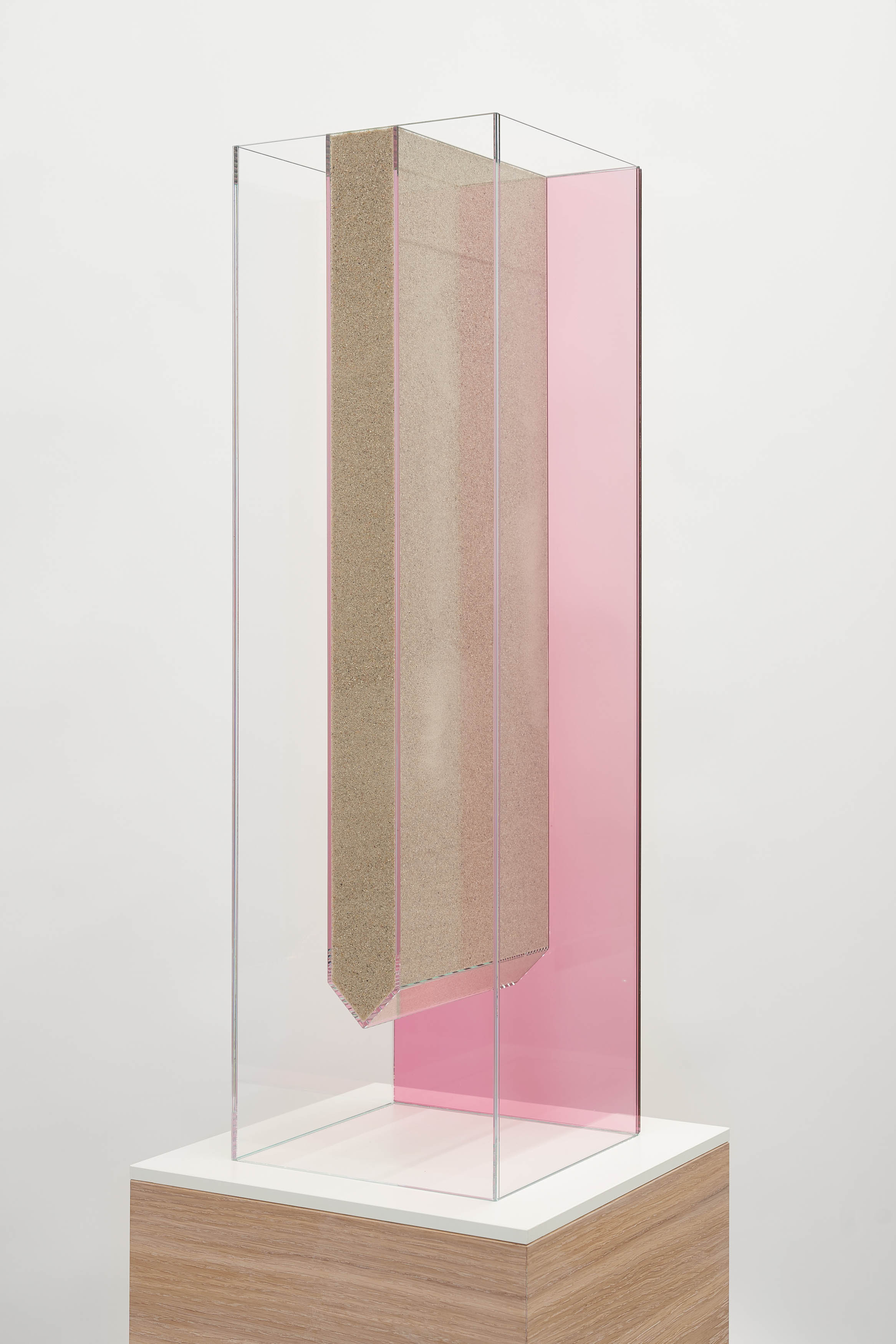
Shifting Sands, 2023
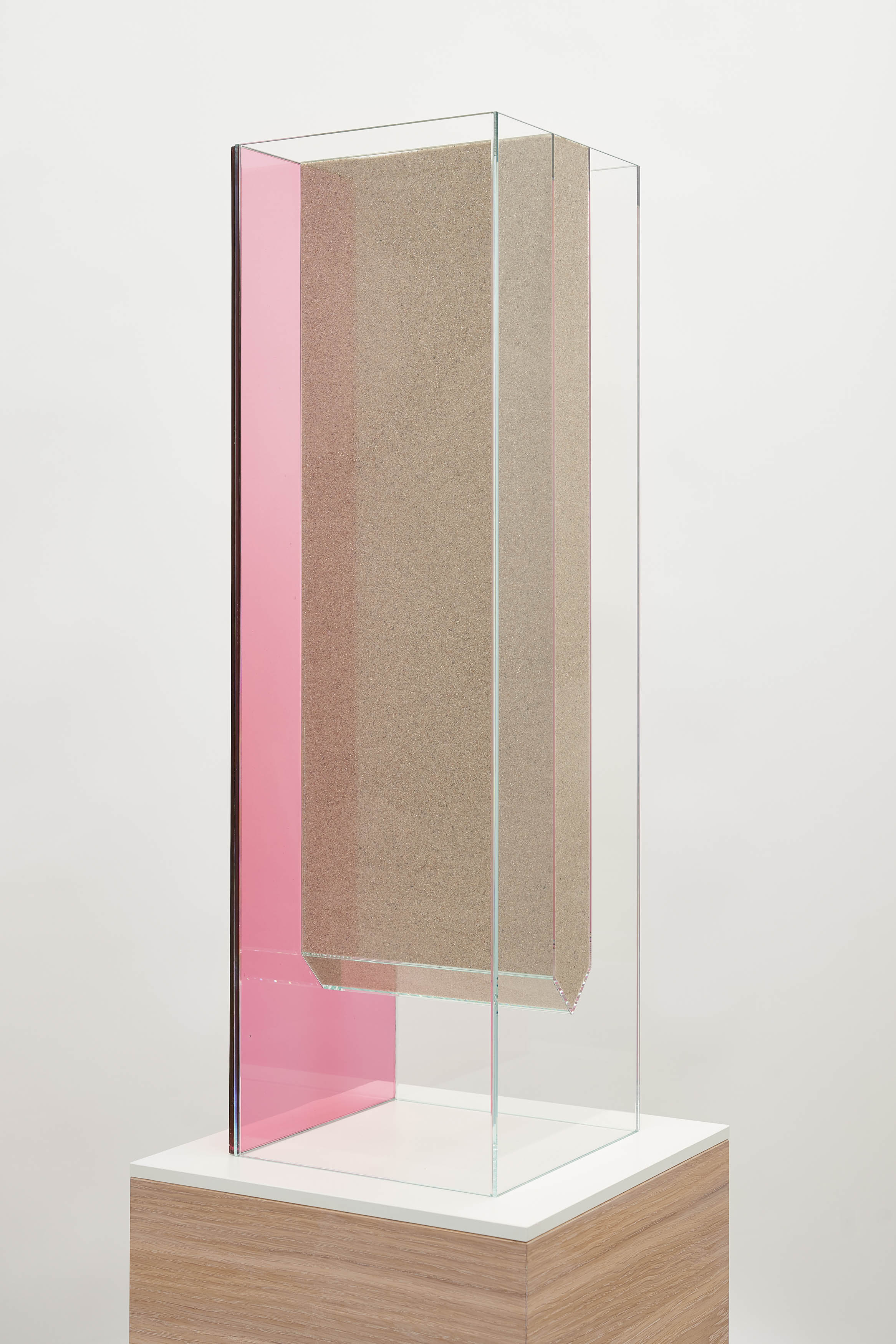
Shifting Sands, 2023
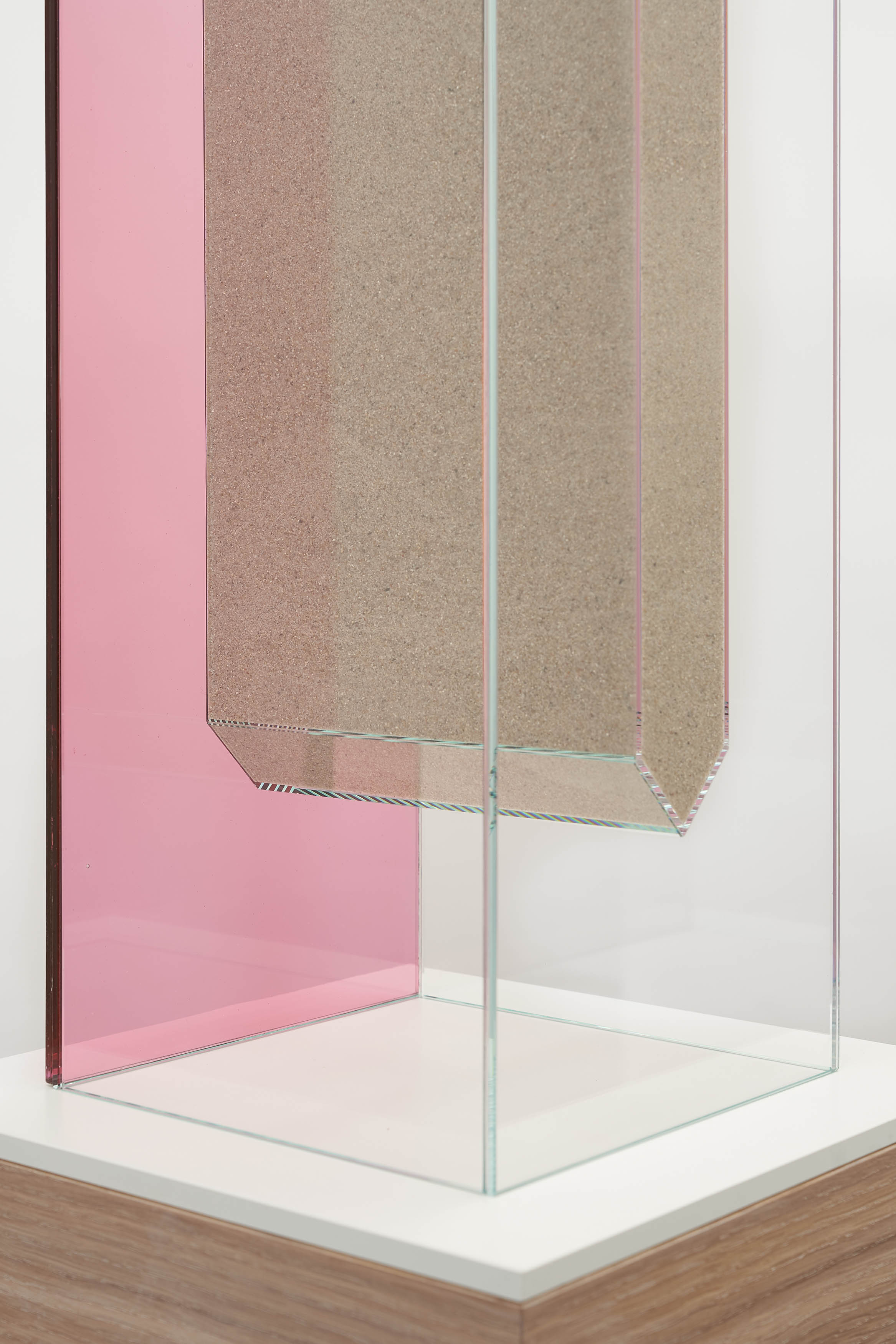
Shifting Sands, 2023
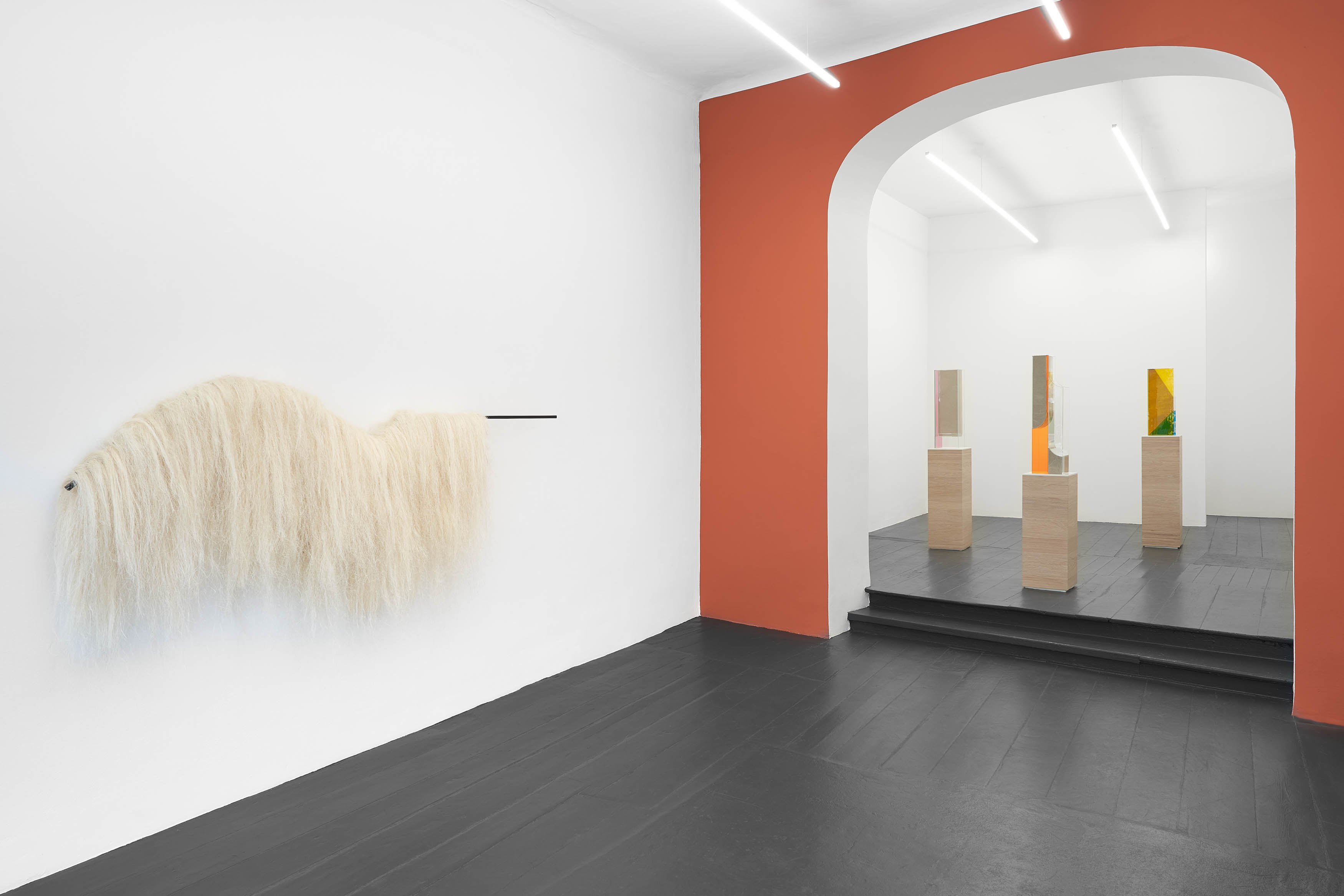
Shifting Sands, 2023
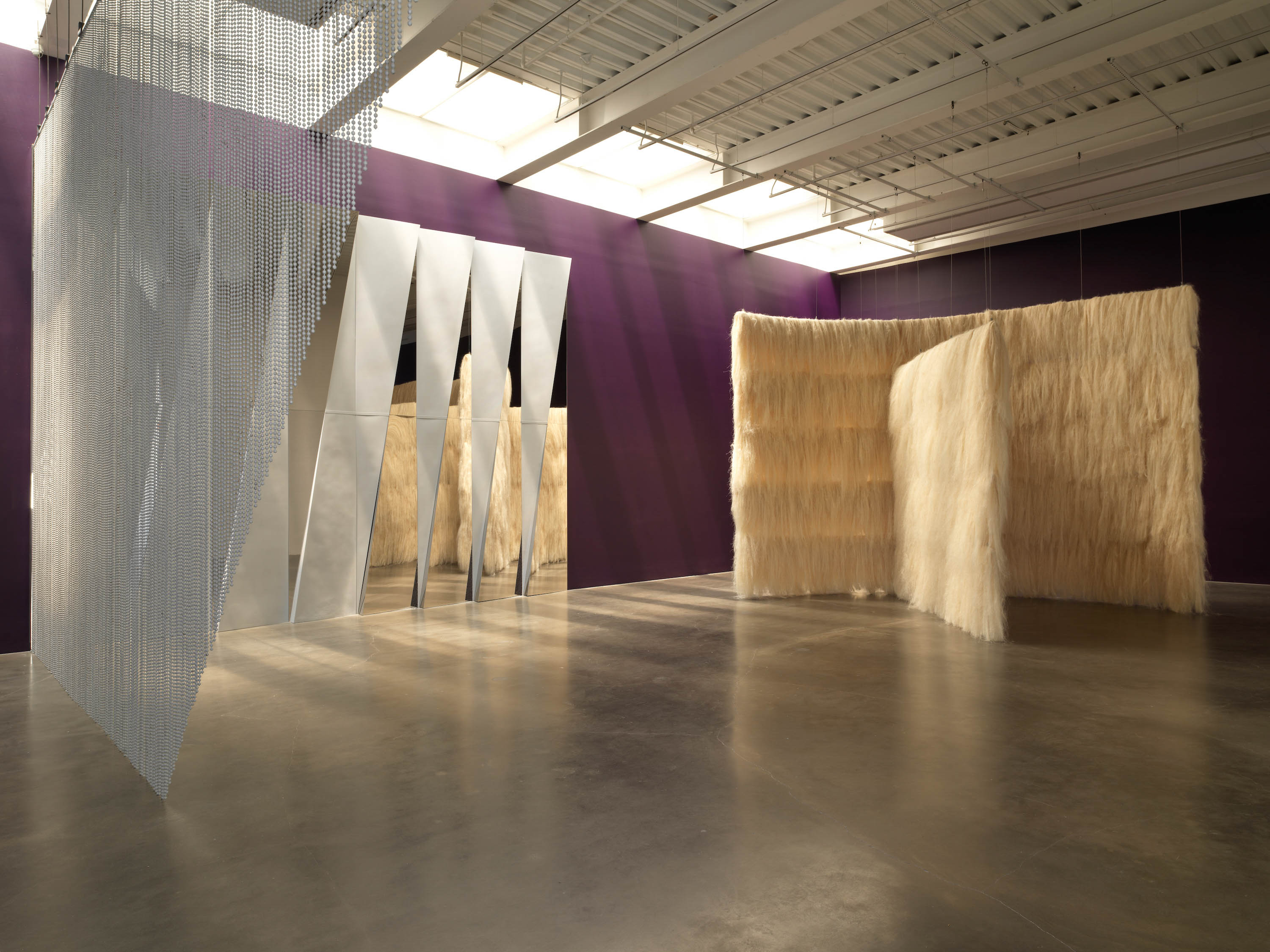
Off-Grid, 2022
Installed in the New Museum’s Fourth Floor gallery, the exhibition debuts a new body of work that bridges historical research with a site-specific spatial intervention. Invoking both the use of police floodlights in targeted urban areas and the early eighteenth-century New York legal codes known as “lantern laws”—ordinances that required all enslaved individuals over the age of fourteen to carry lanterns or lit candles after dark—Kiwanga’s installation continues the artist’s investigation into disciplinary architectures and complex regimes of visibility. Weaving together different layers of opacity and transparency through textile and sculpture, Off-Grid subverts the application of artificial light as a means of control. Instead, the installation is solely illuminated with shifting patterns of natural light.
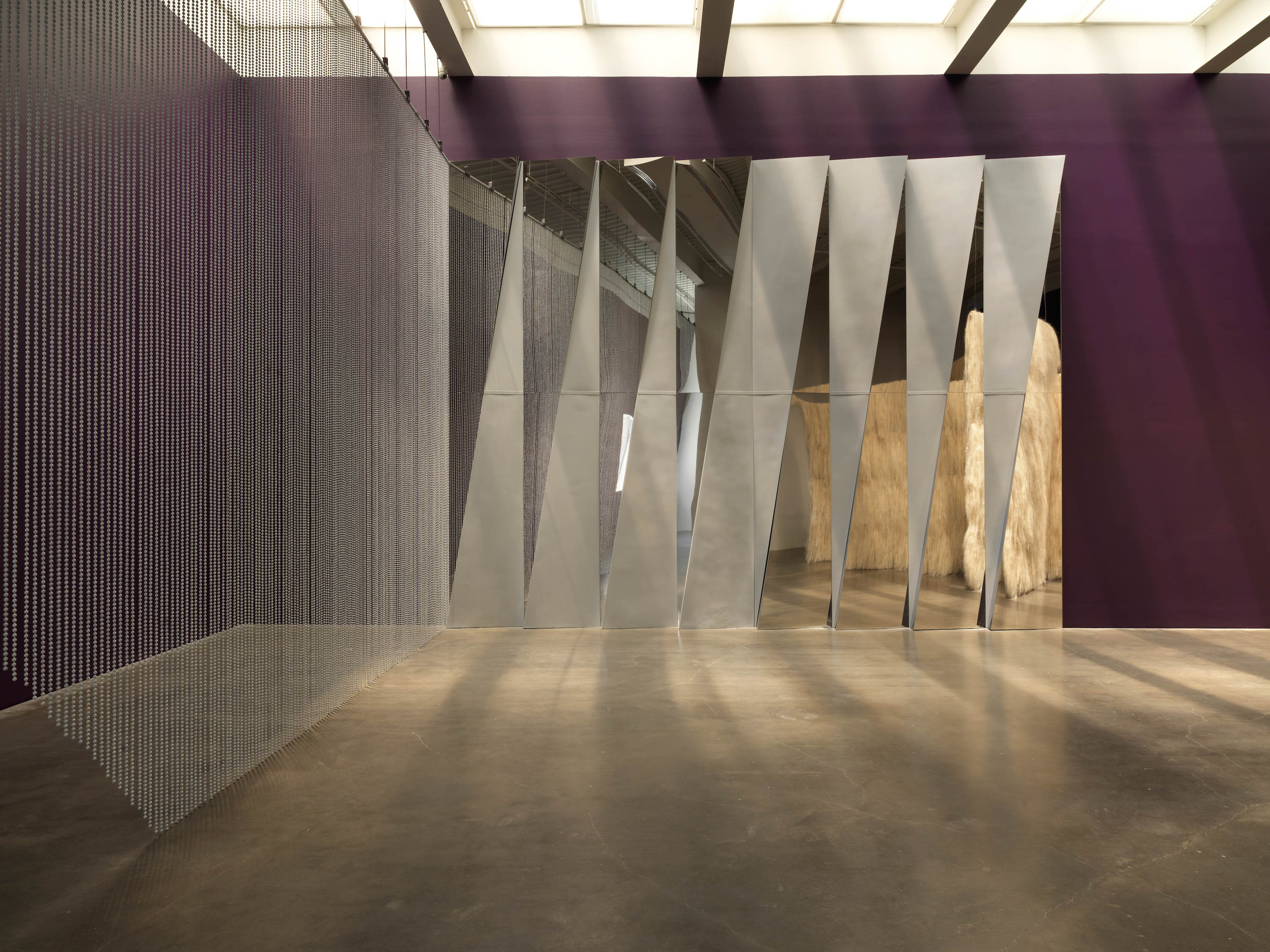
Off-Grid, 2022
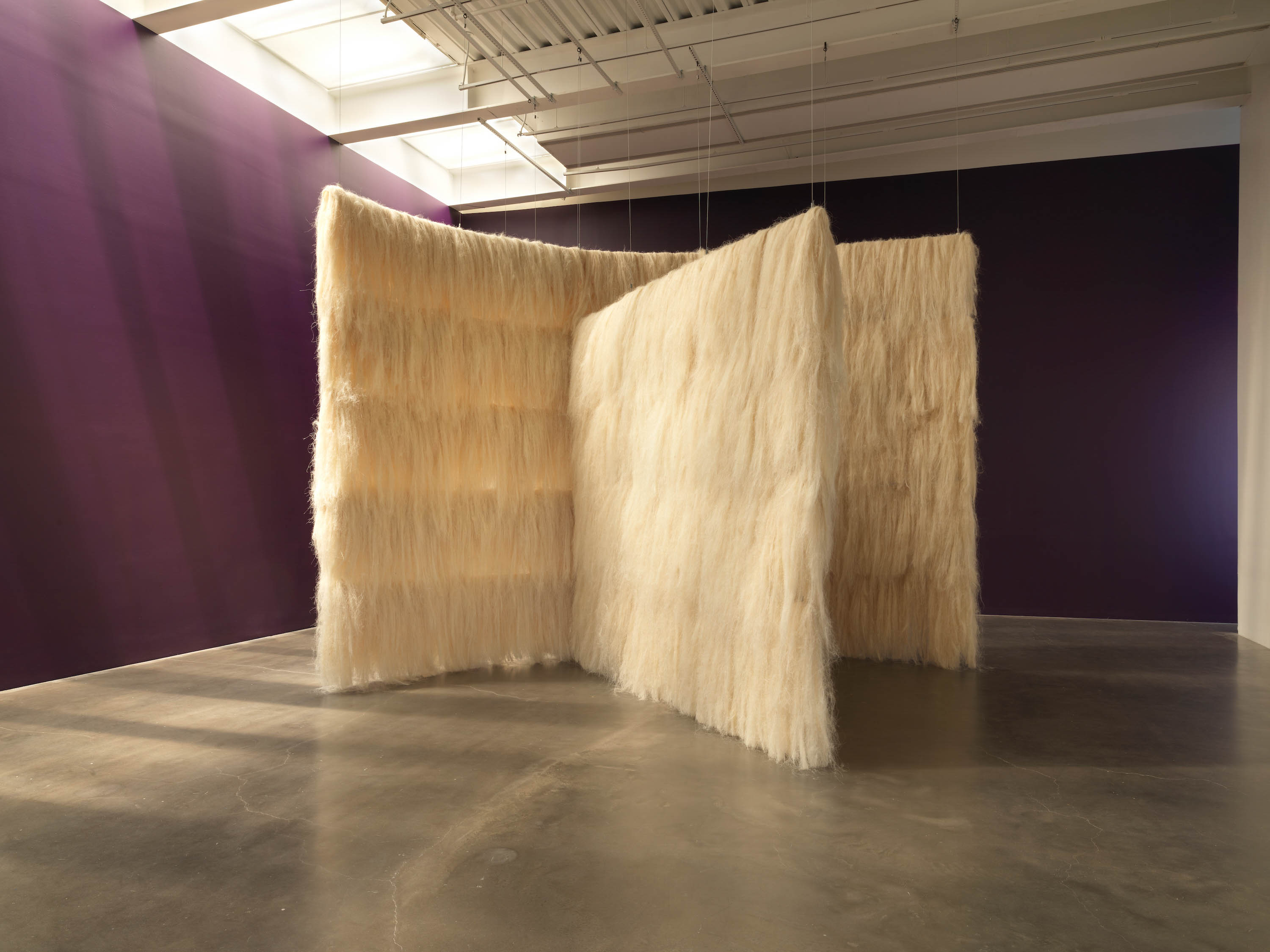
Off-Grid, 2022

Off-Grid, 2022
Off-Grid, 2022
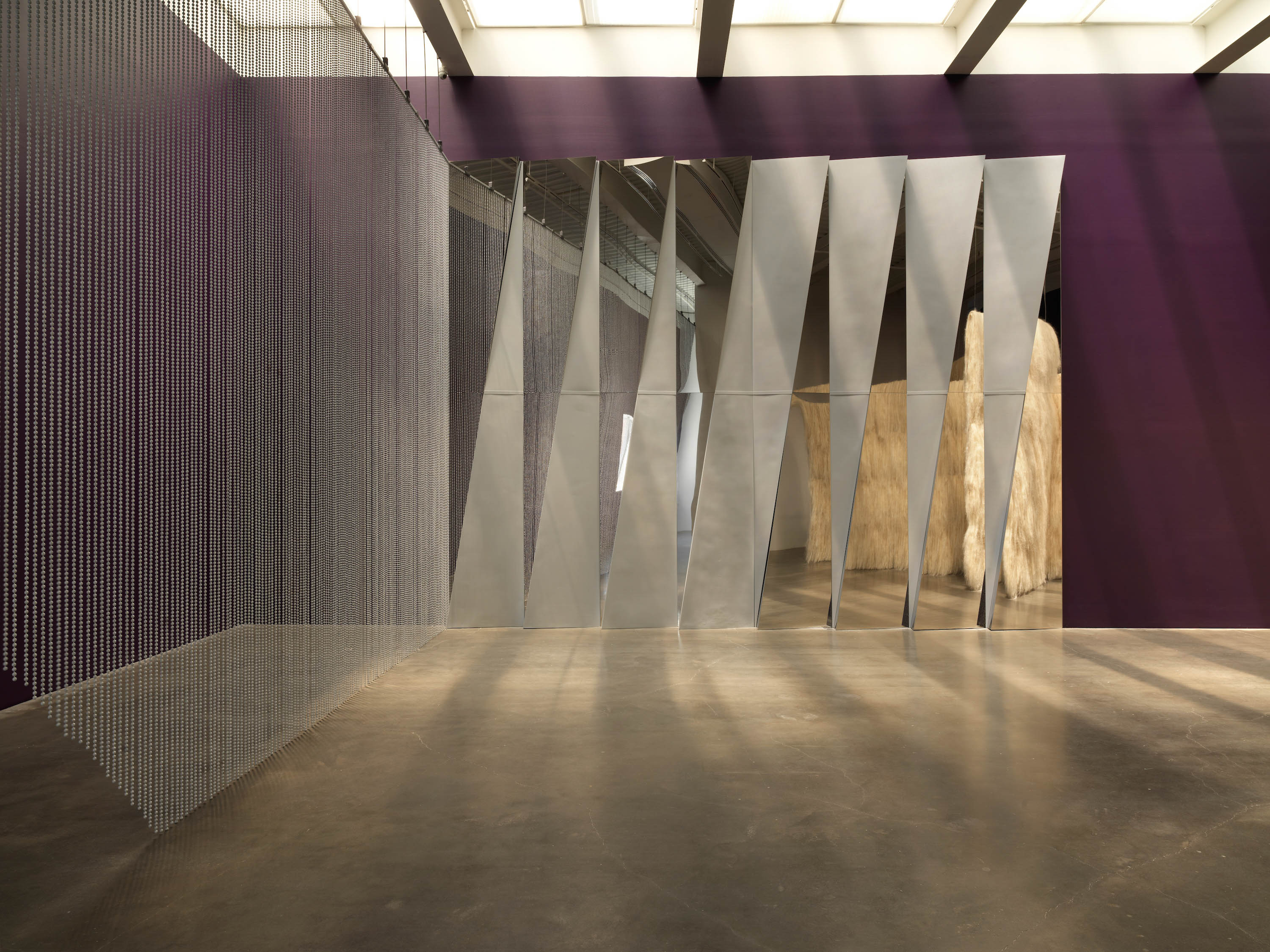
Off-Grid, 2022
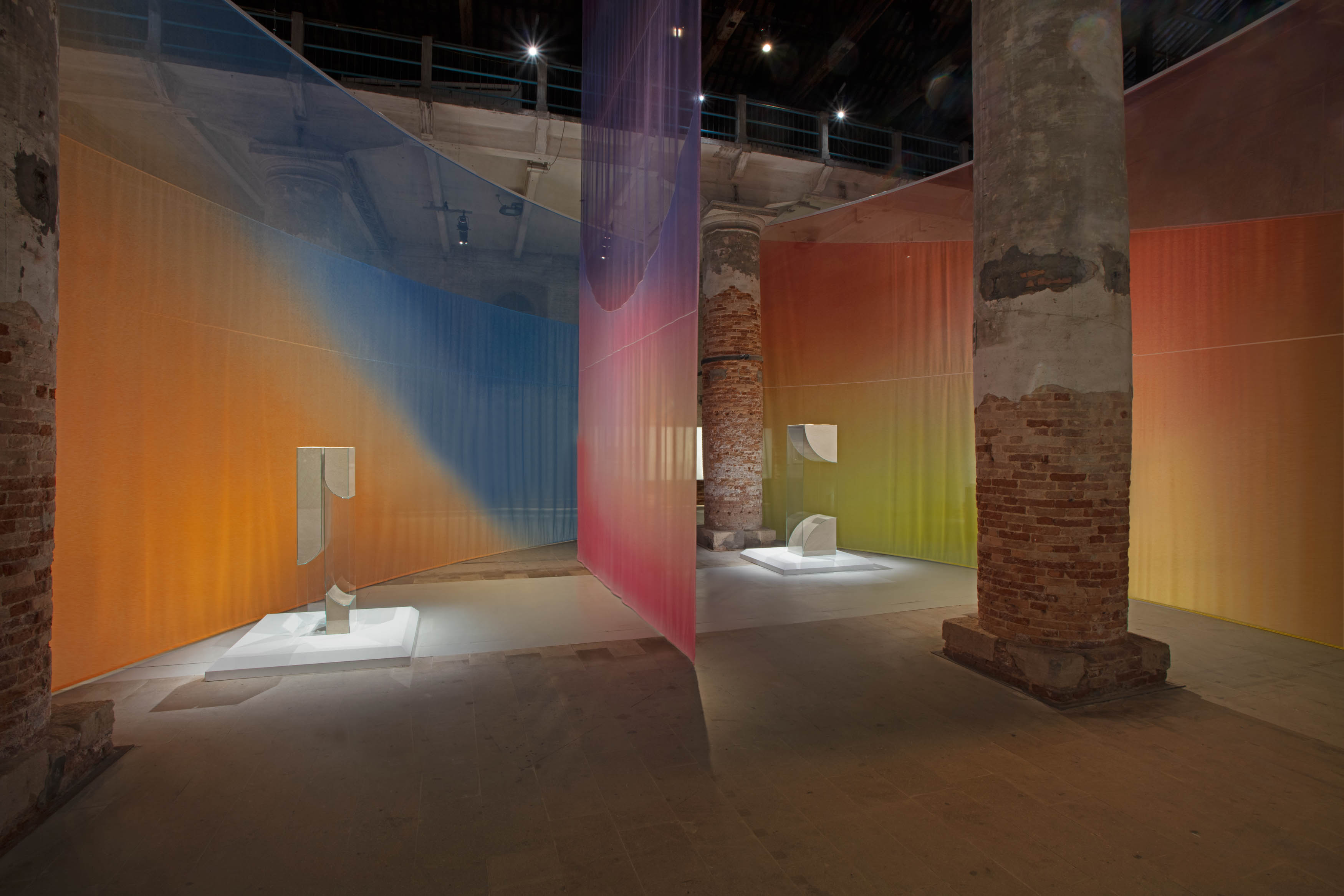
Terrarium, 2022
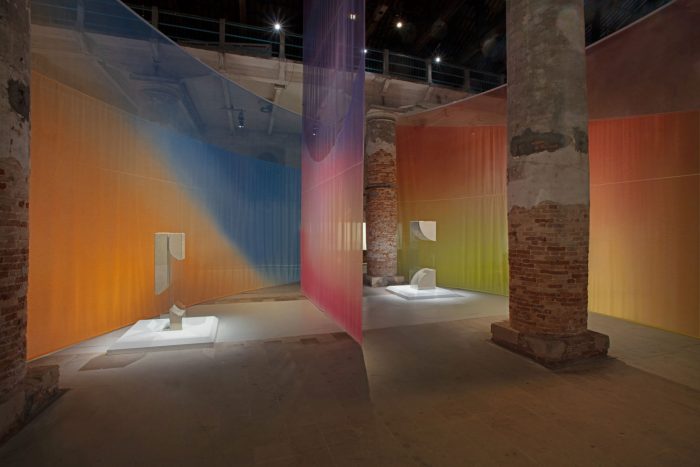
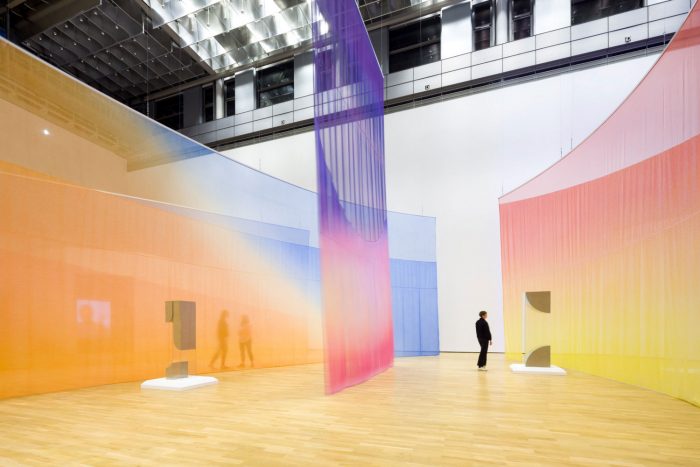
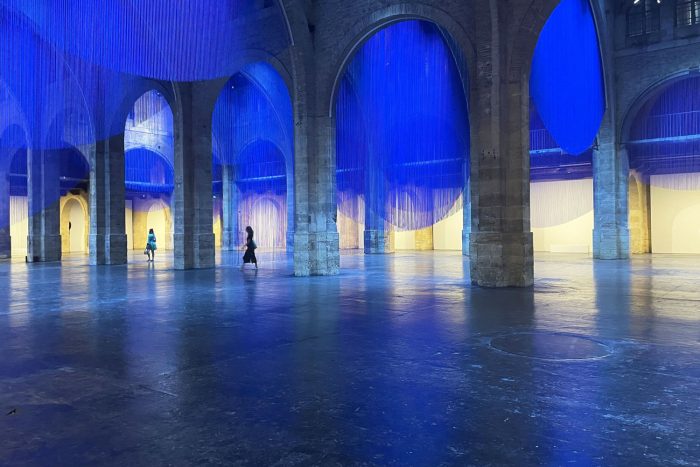
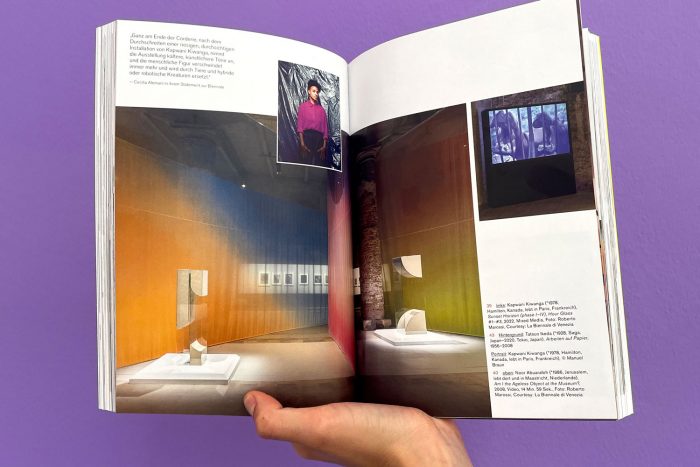
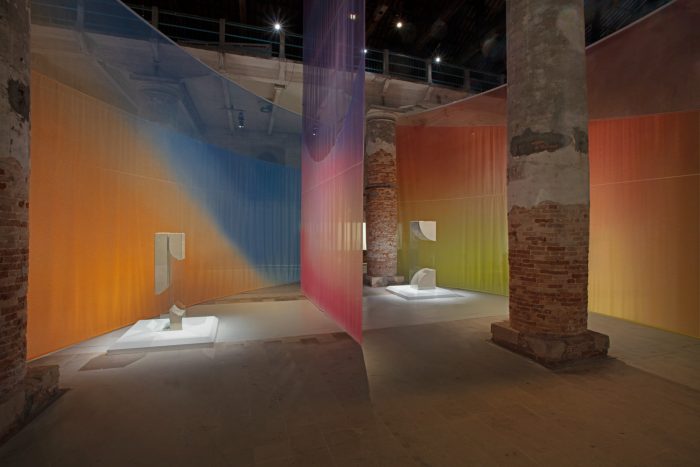
Terrarium was realized for The Milk of Dreams at the 59th International Art Exhibition of La Biennale di Venezia. The installation creates a maze-like environment with large scale fabric paintings populated by Kiwanga's sand-filled glass sculptures. The vast paintings intended to introduce variability and fluidity into the architecture of the Corderie and to bring the luminous color of an exterior landscape into the building's interior. The Hour Glass sculptures, made handblown in collaboration with an artisan glass maker based in Berlin, are filled with silica sand. The installation imagines sand as a political material: a harmful product of the oil industry commonly used for fracking, the raw material for glass, and a reminder of an increasingly arid planet.
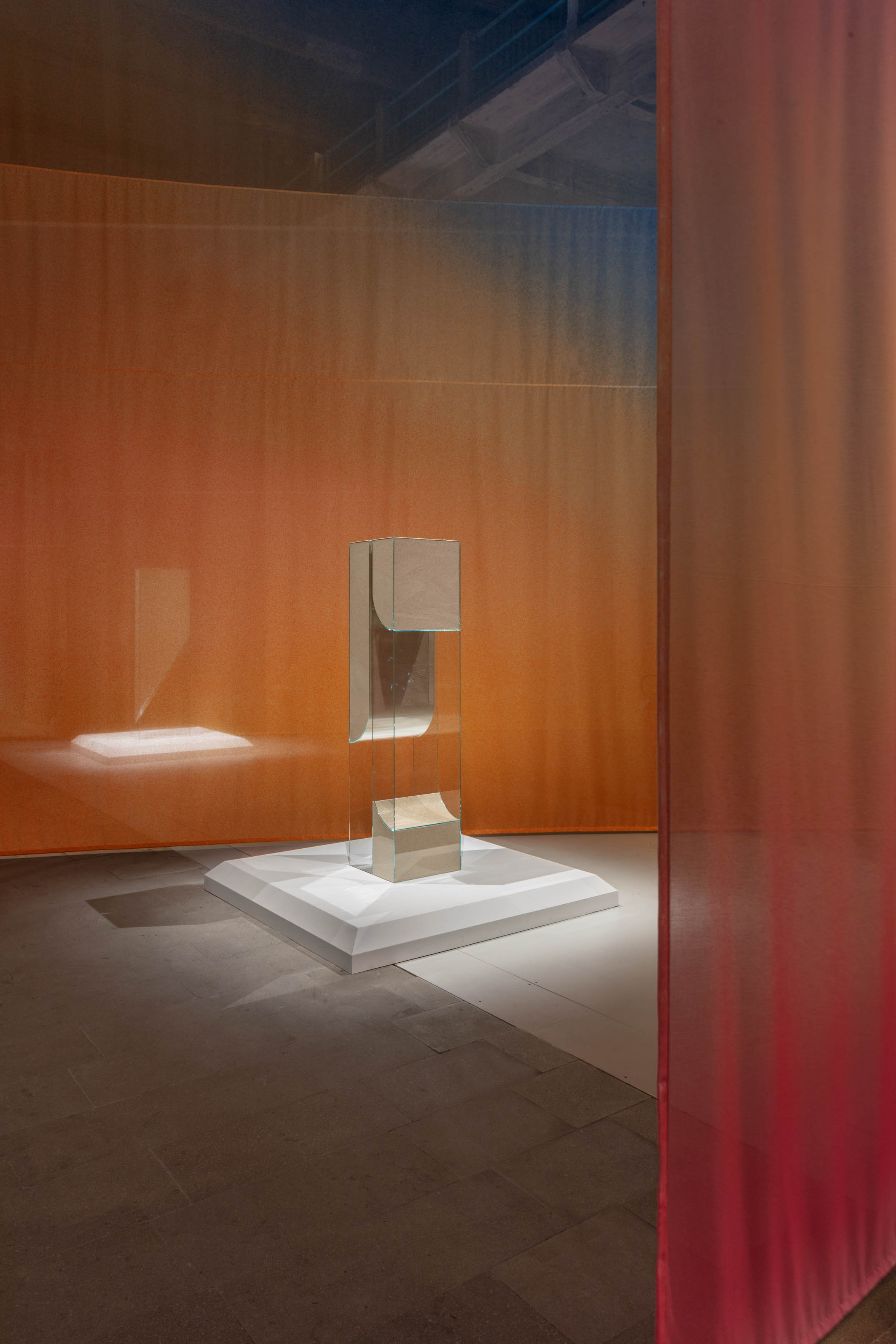
Terrarium, 2022
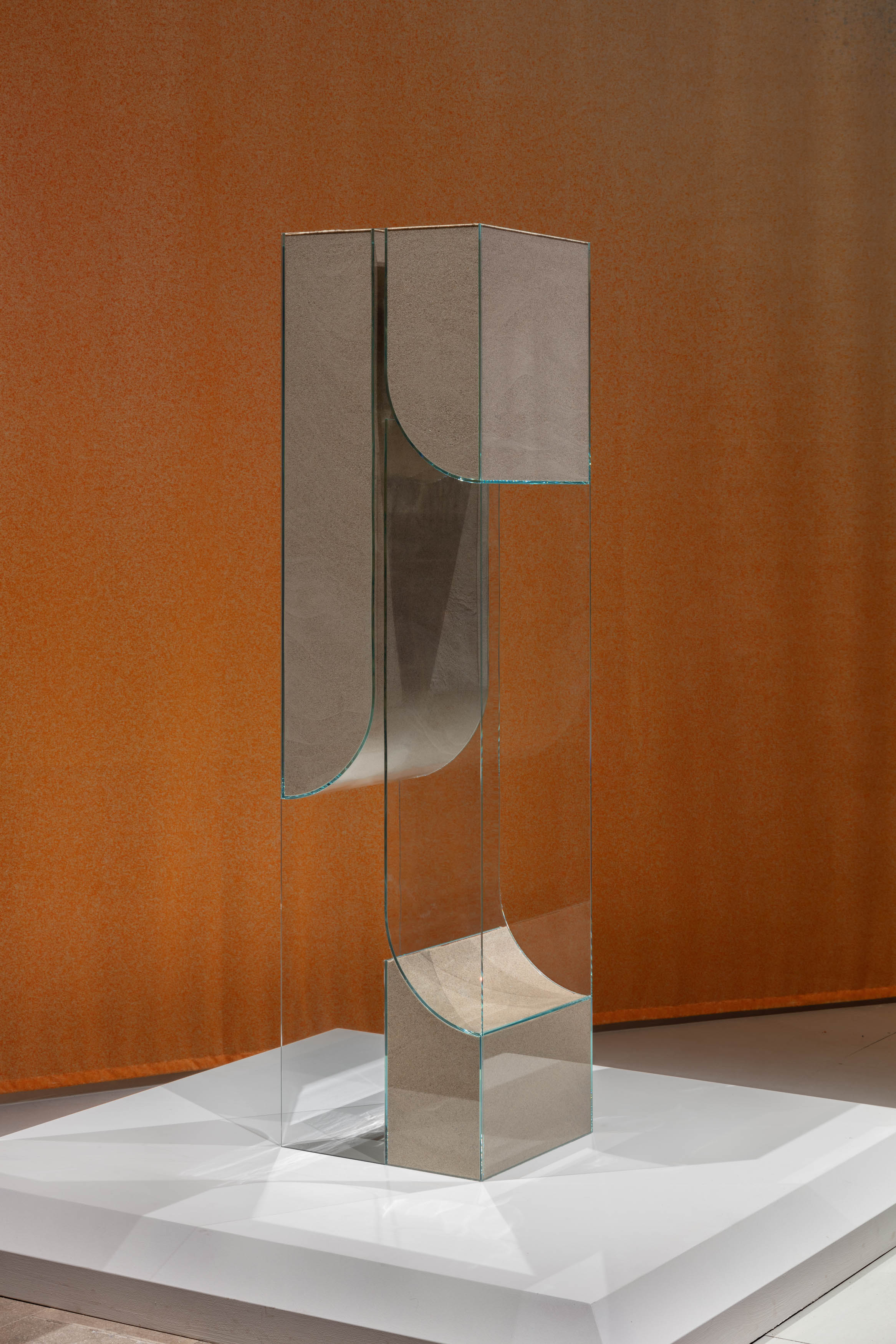
Terrarium, 2022
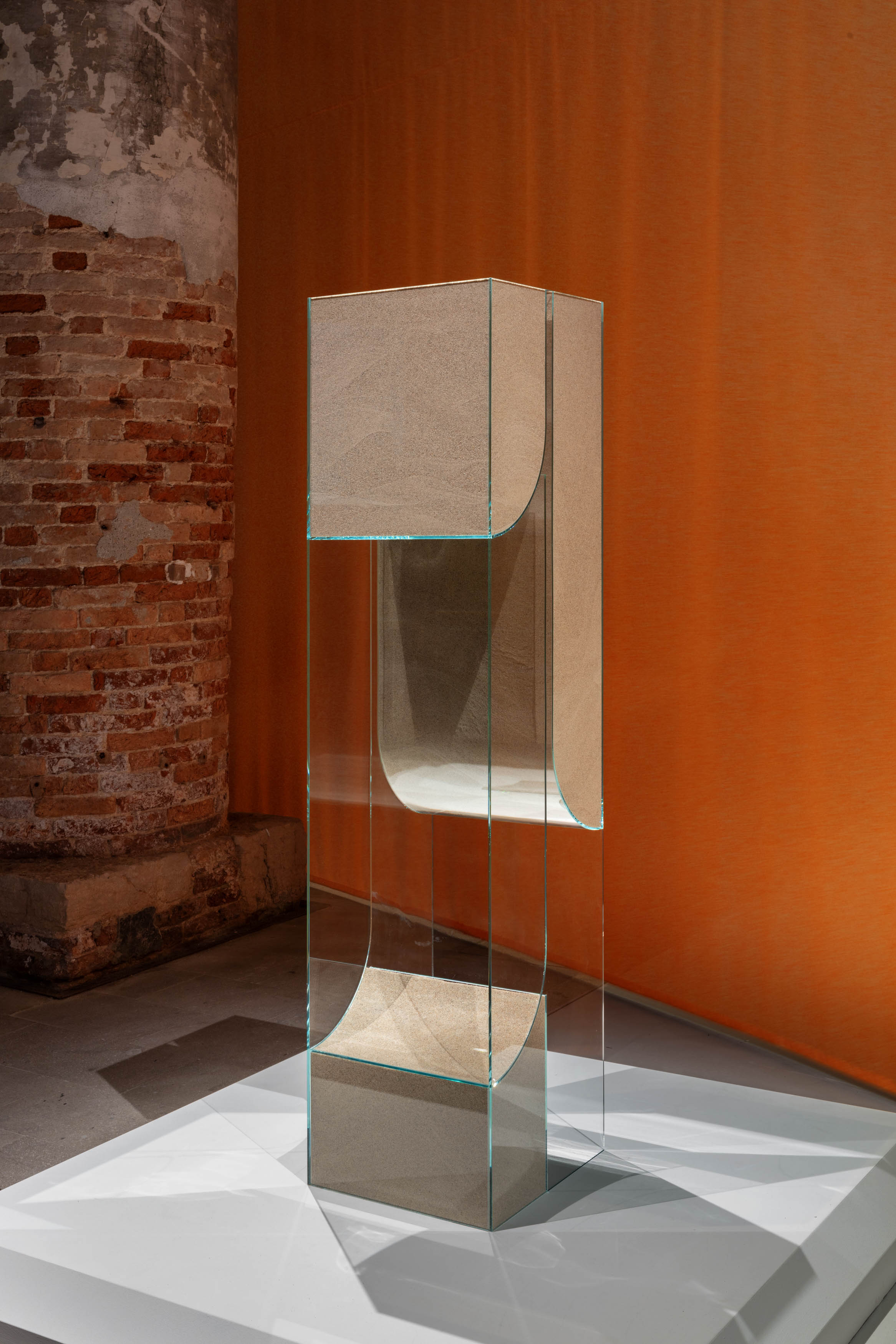
Terrarium, 2022
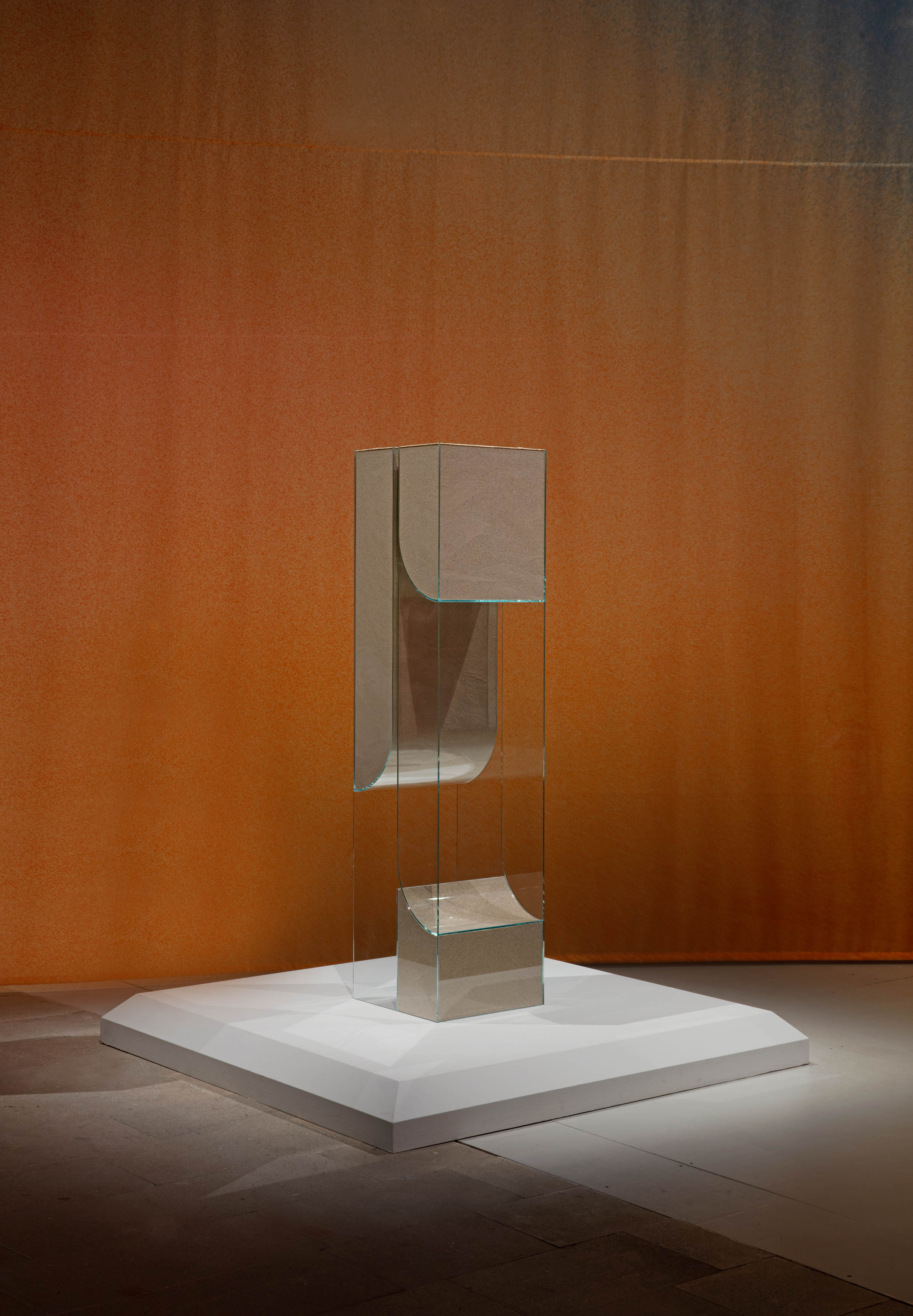
Terrarium, 2022
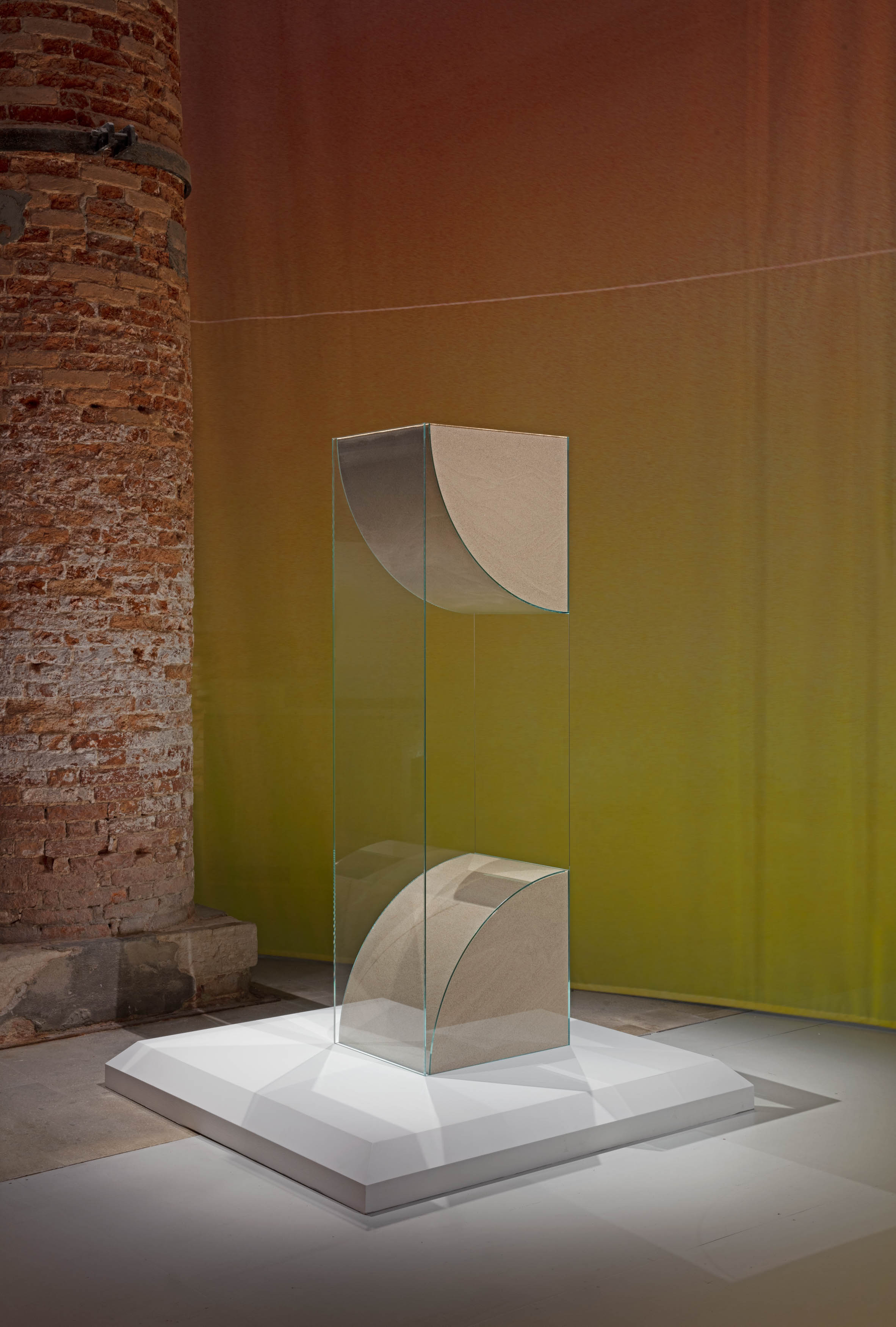
Terrarium, 2022
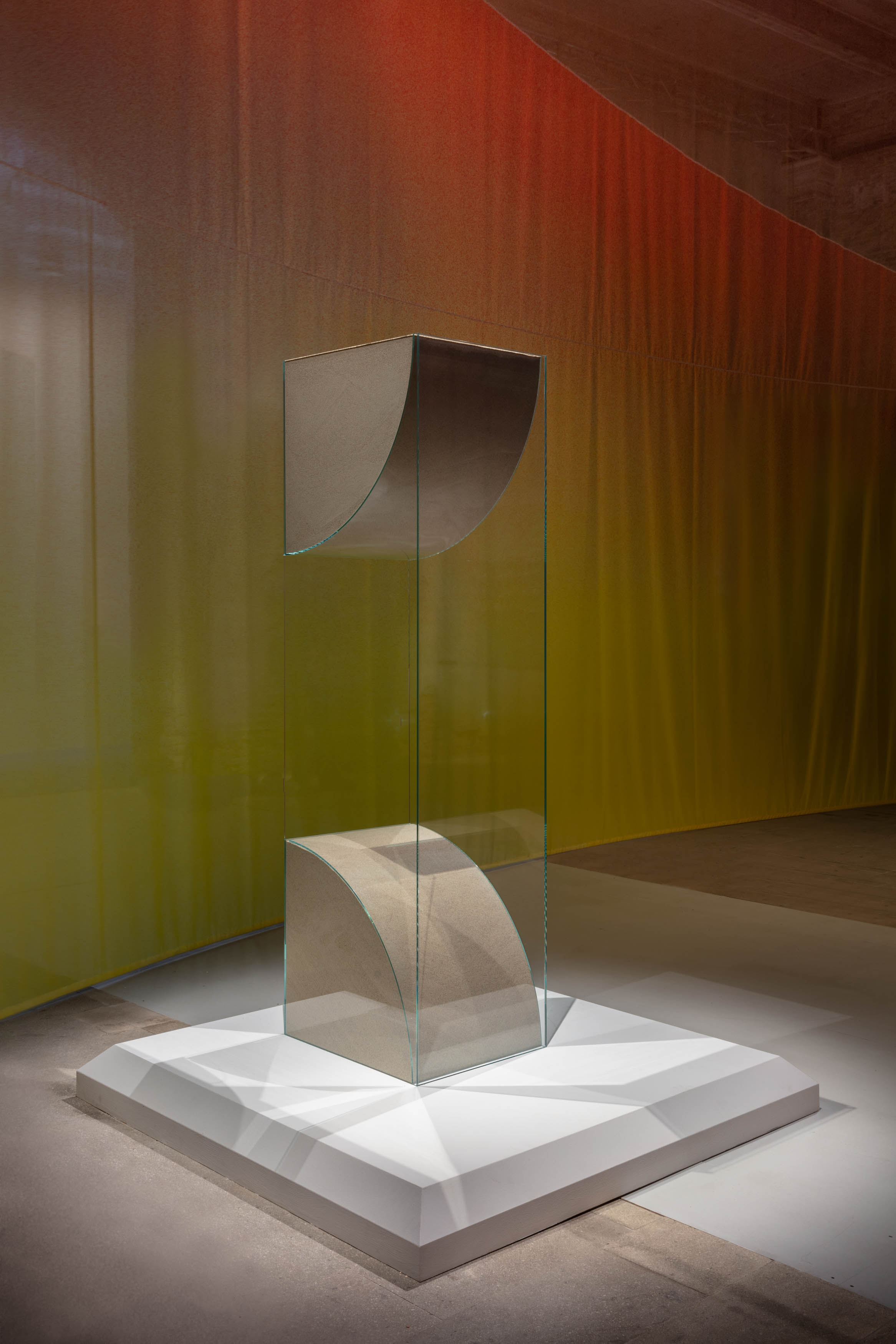
Terrarium, 2022
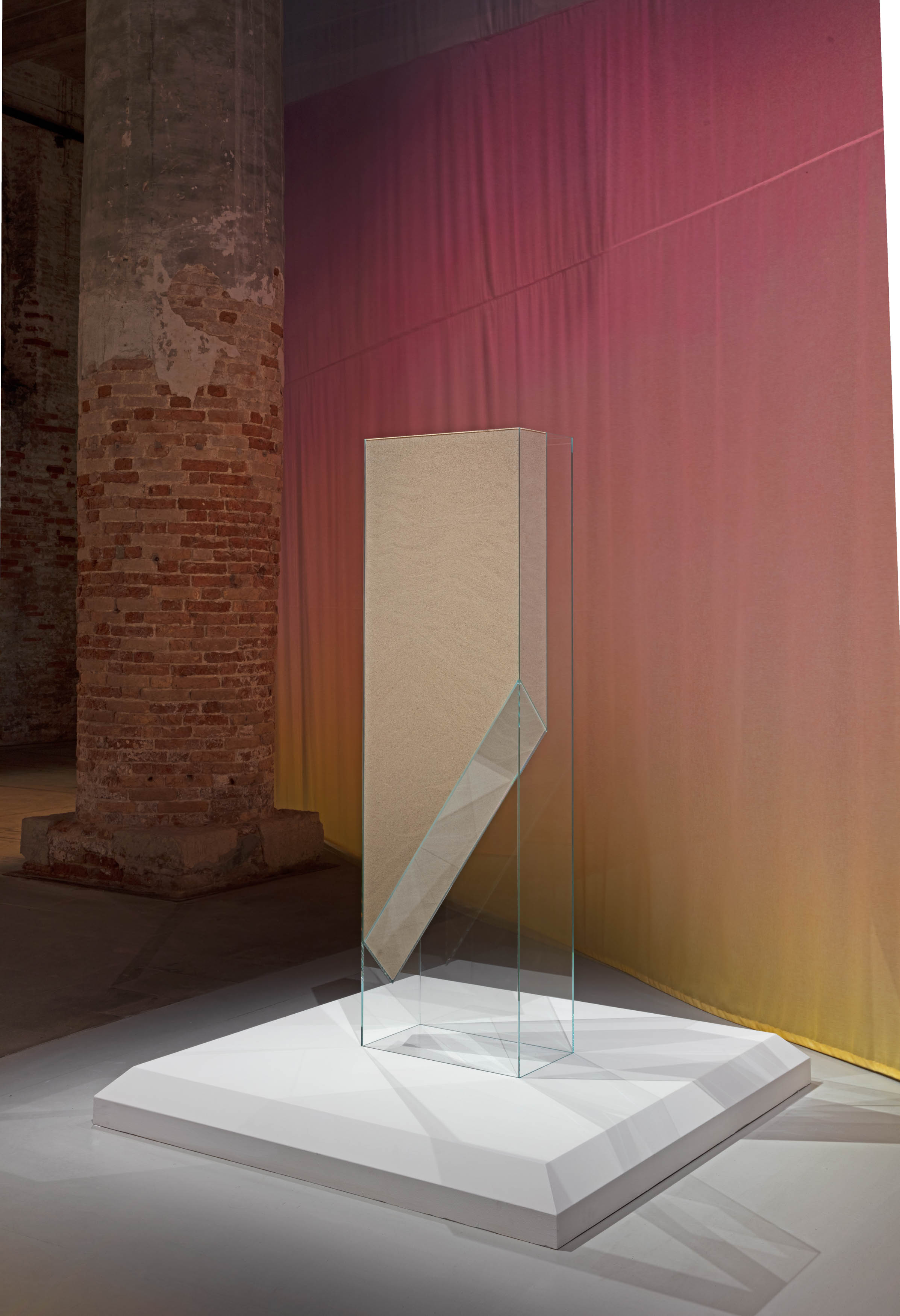
Terrarium, 2022
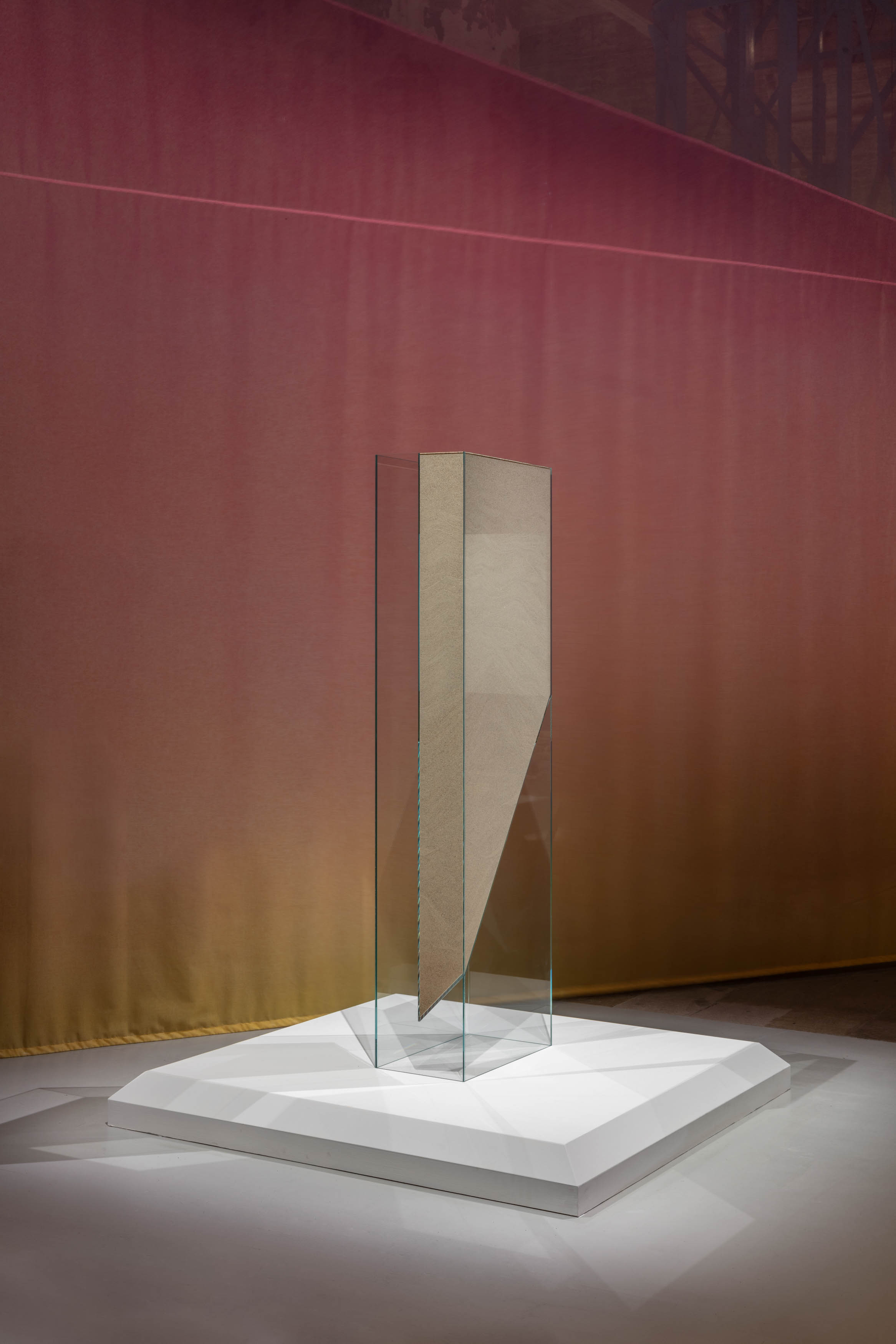
Terrarium, 2022
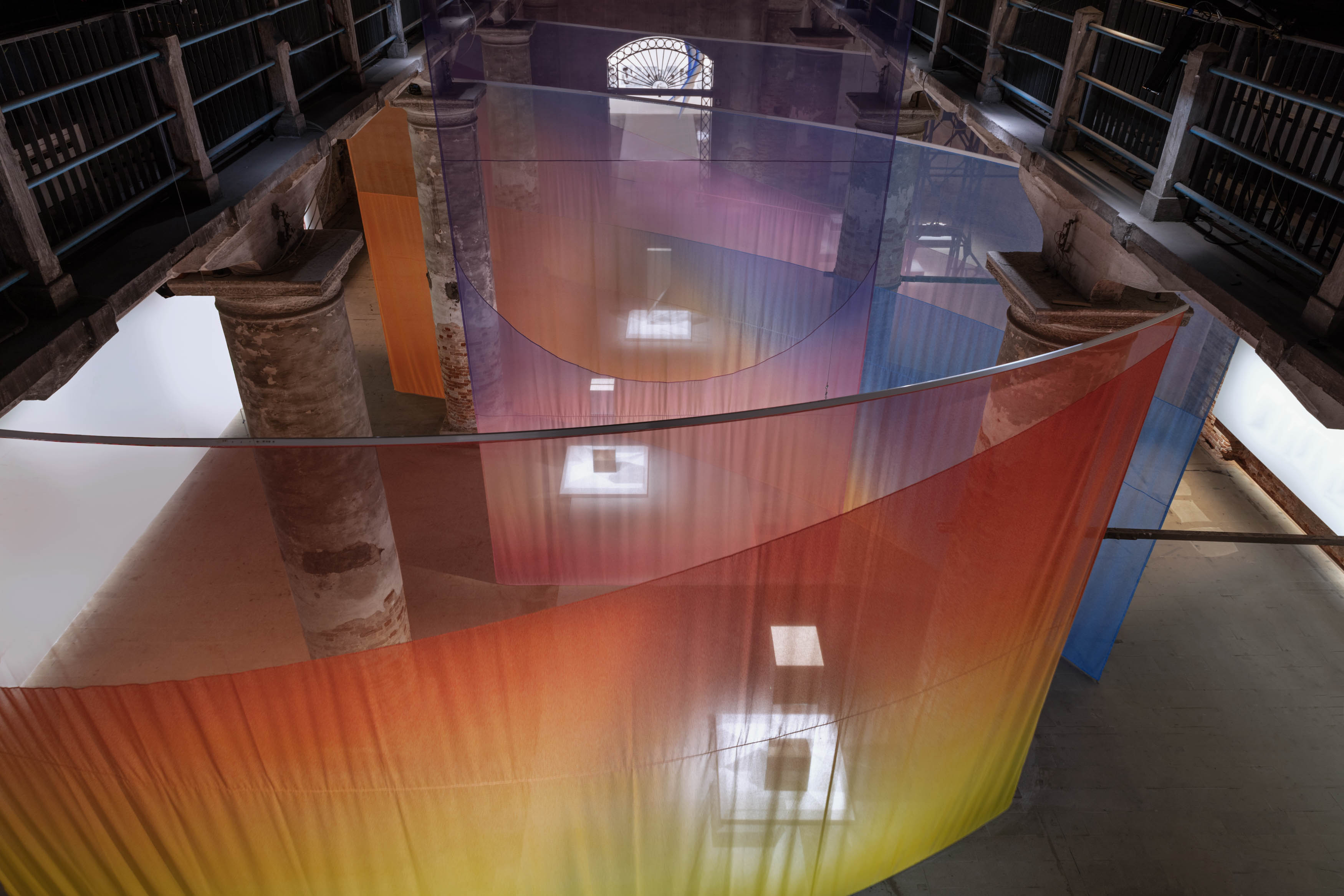
Terrarium, 2022
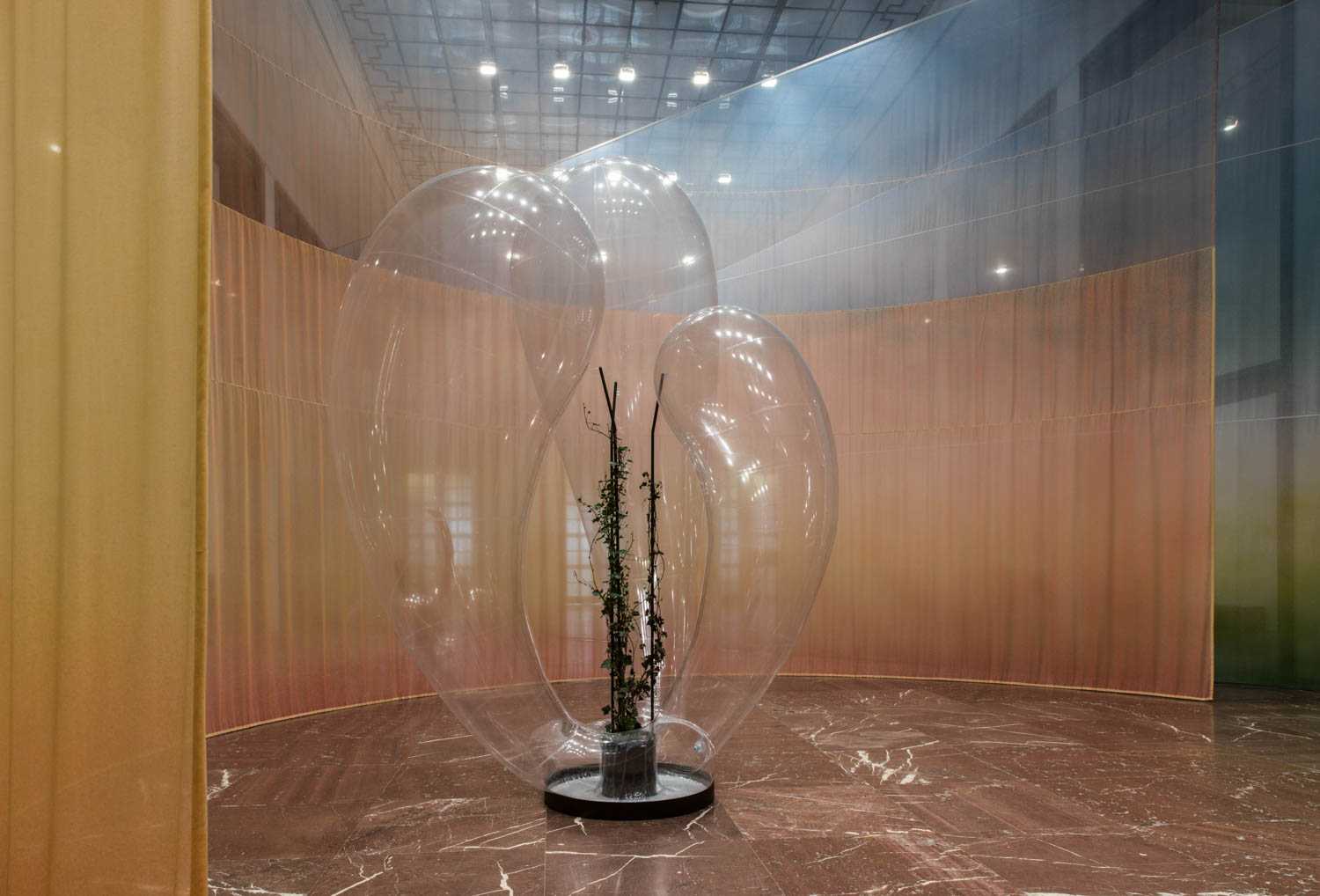
Plot, 2020
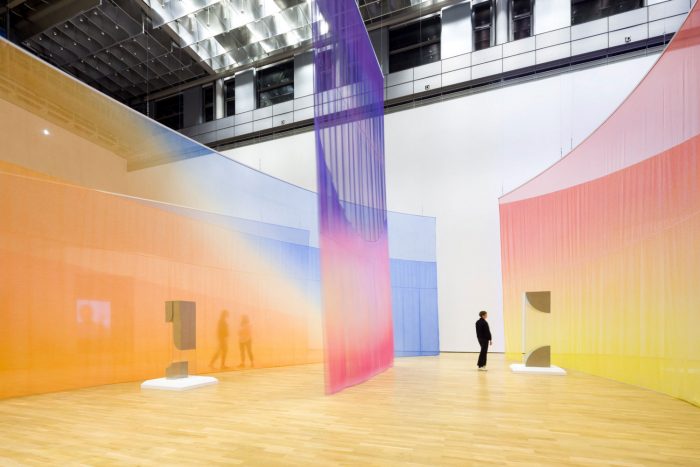
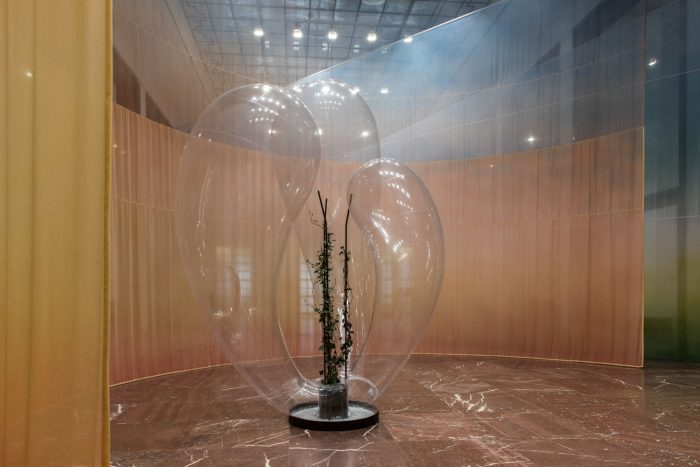
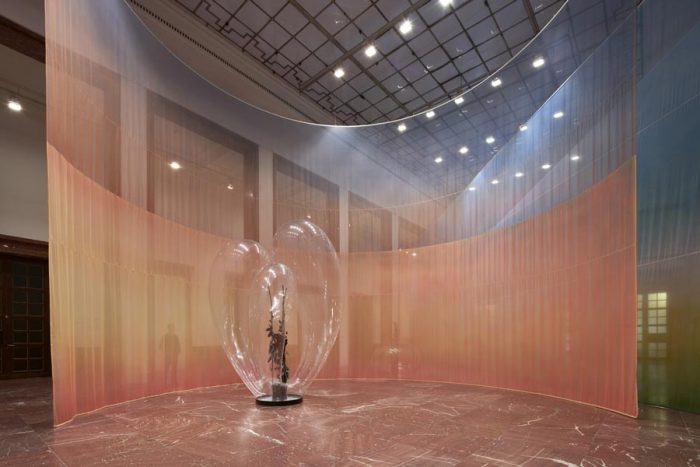
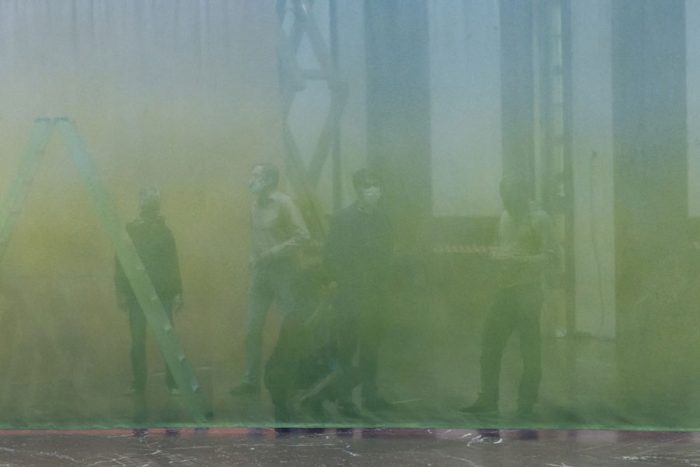
Plot comprises a number of large-scale translucent paintings suspended from the ceiling to the floor. Soft gradients of color are airbrushed onto the fabric, referencing chromatic combinations found in the garden close to Haus der Kunst. These paintings create a series of delineations in the space while appearing fluid, unfixed, and porous. Placed among the paintings are a series of inflatable sculptures housing metal structures and plants that reference the history of 19th-century portable terrariums that were crafted in glass, and designed to transport plants from one part of the world to another in an artificial hermetic environment.
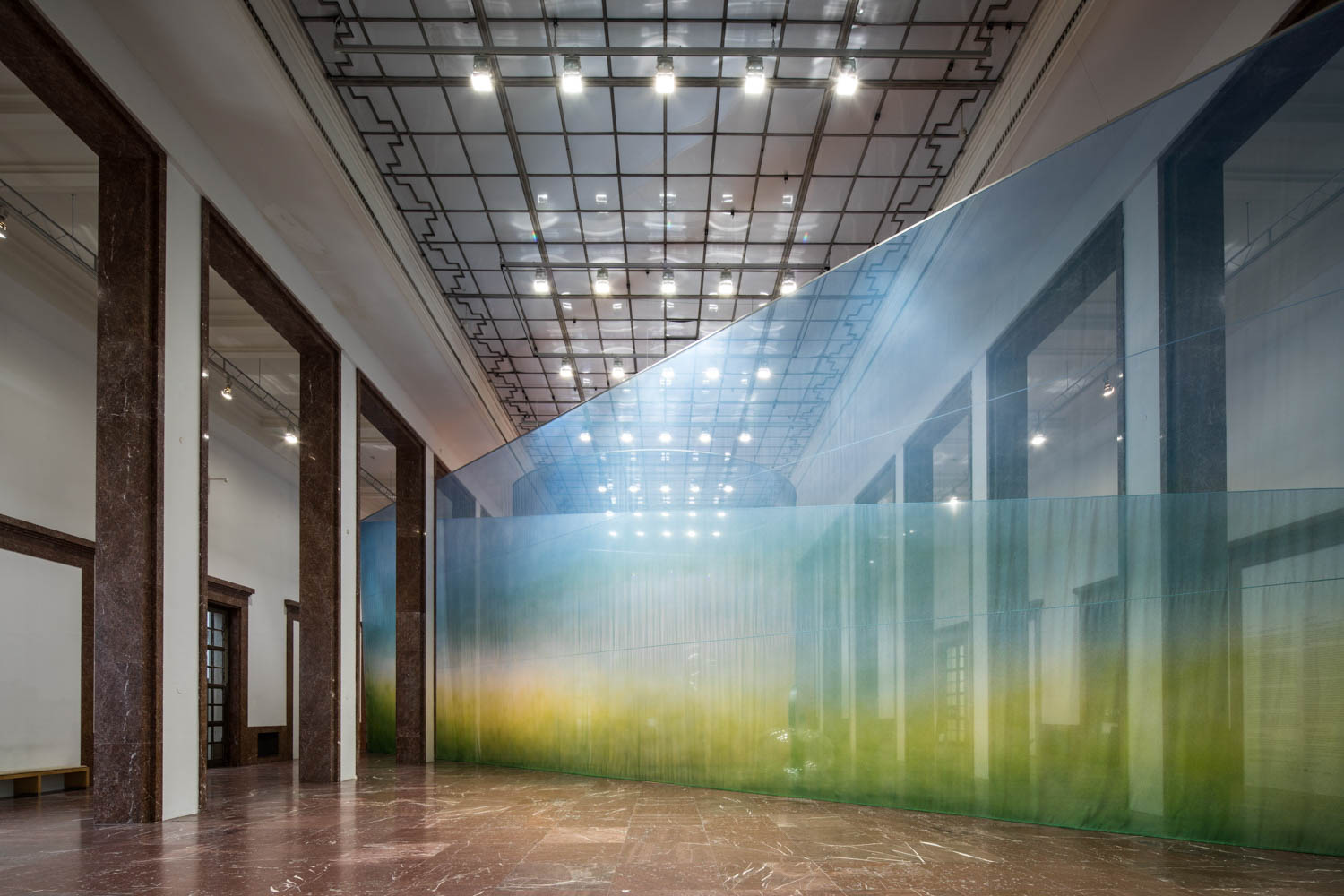
Plot, 2020
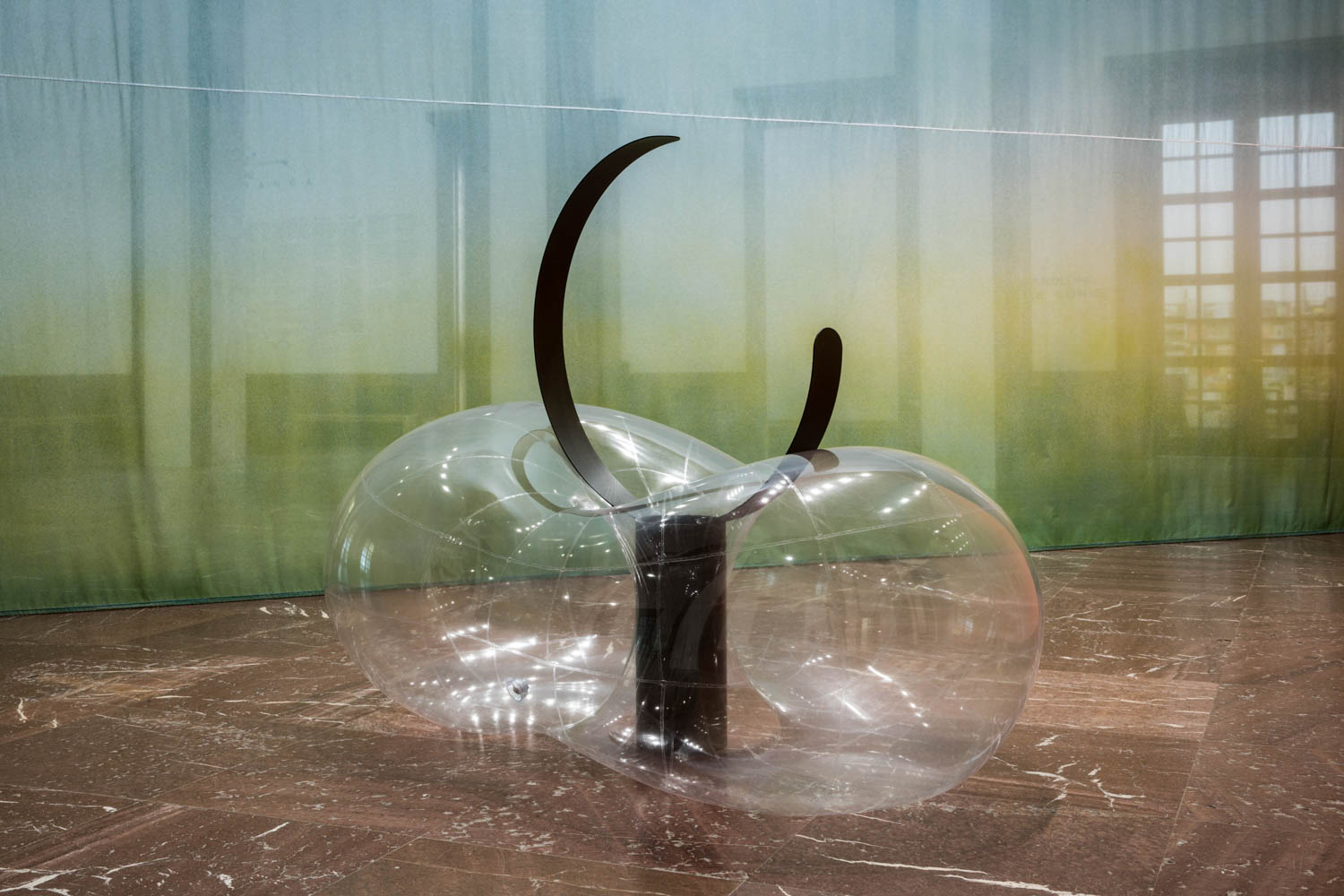
Plot, 2020
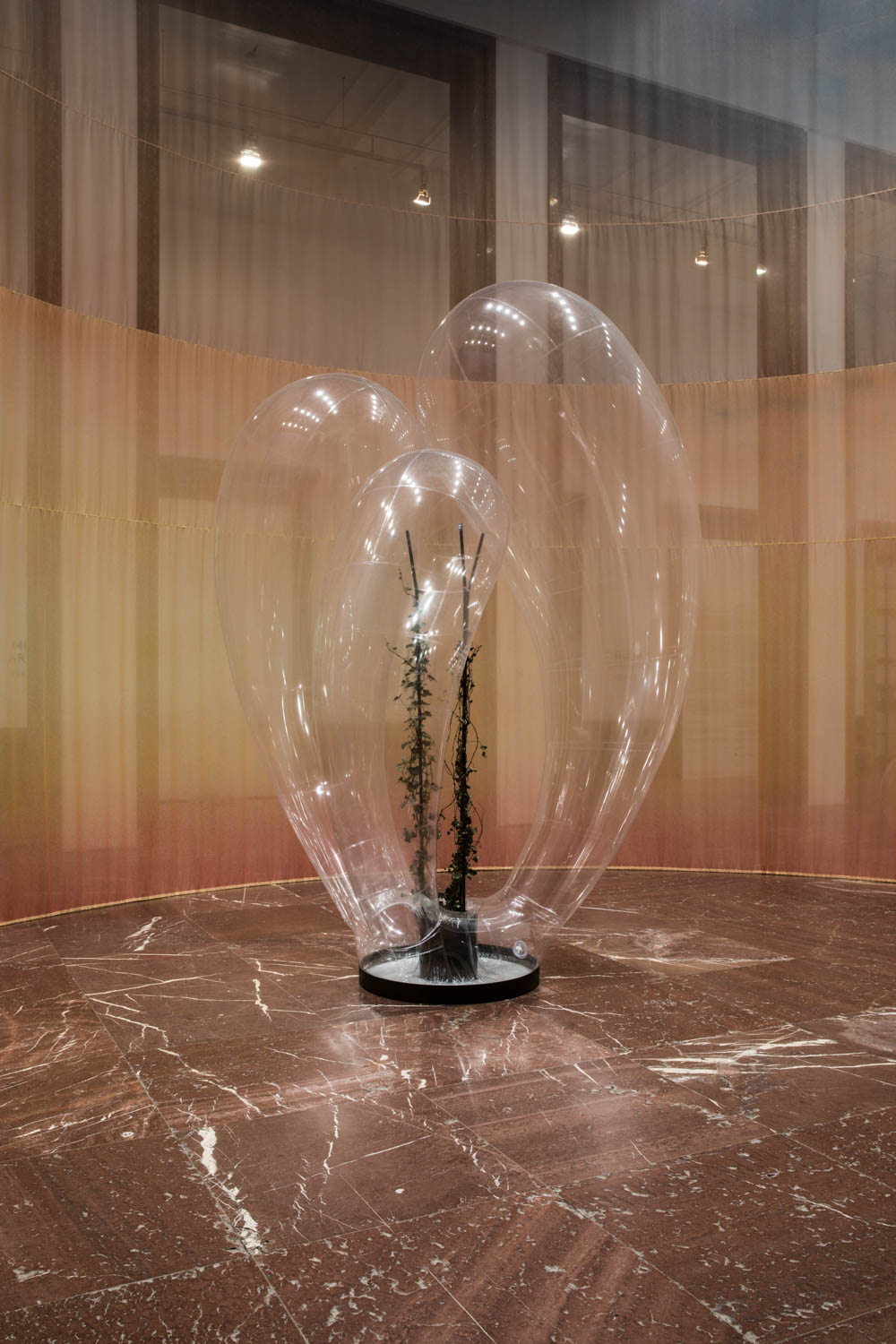
Plot, 2020
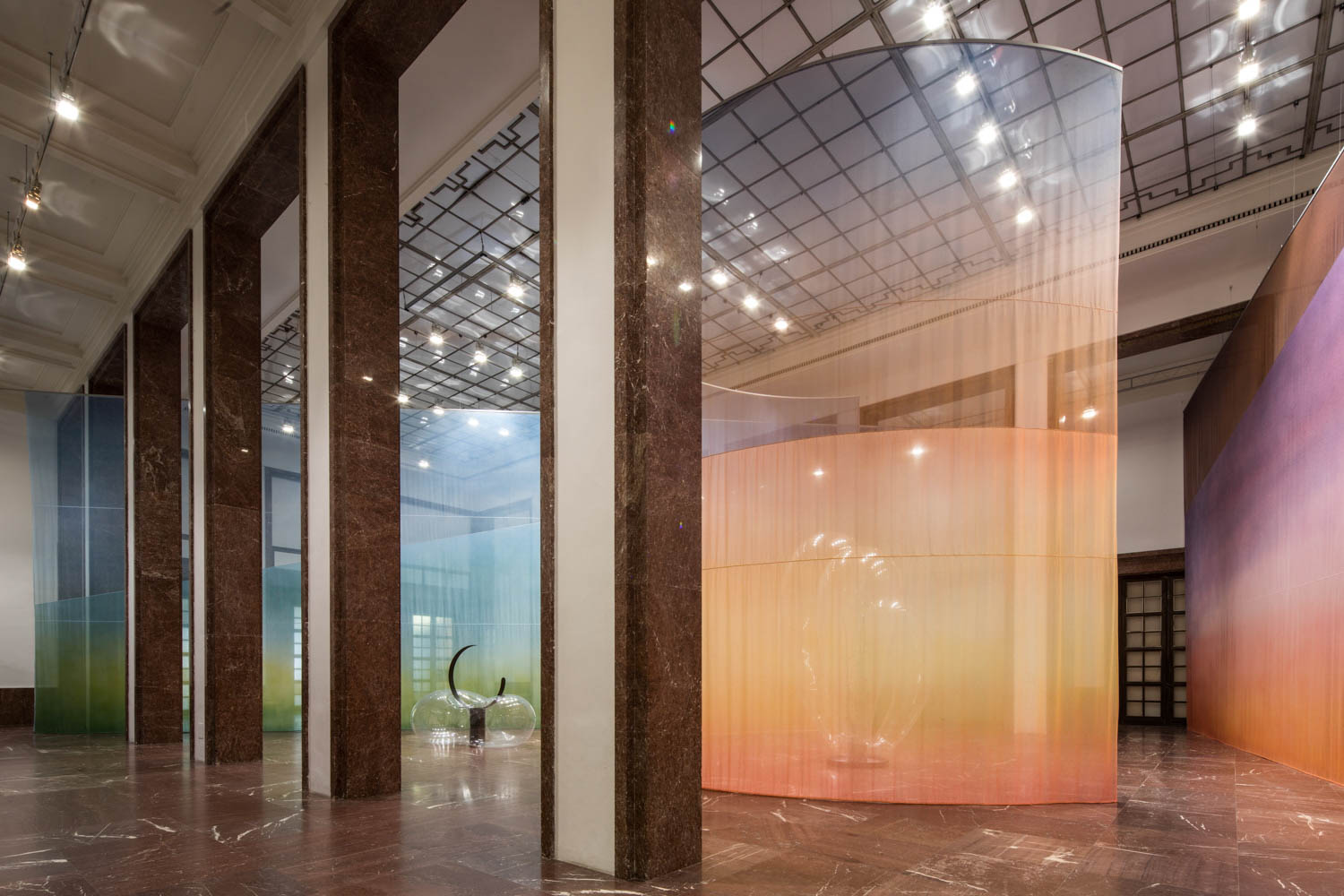
Plot, 2020
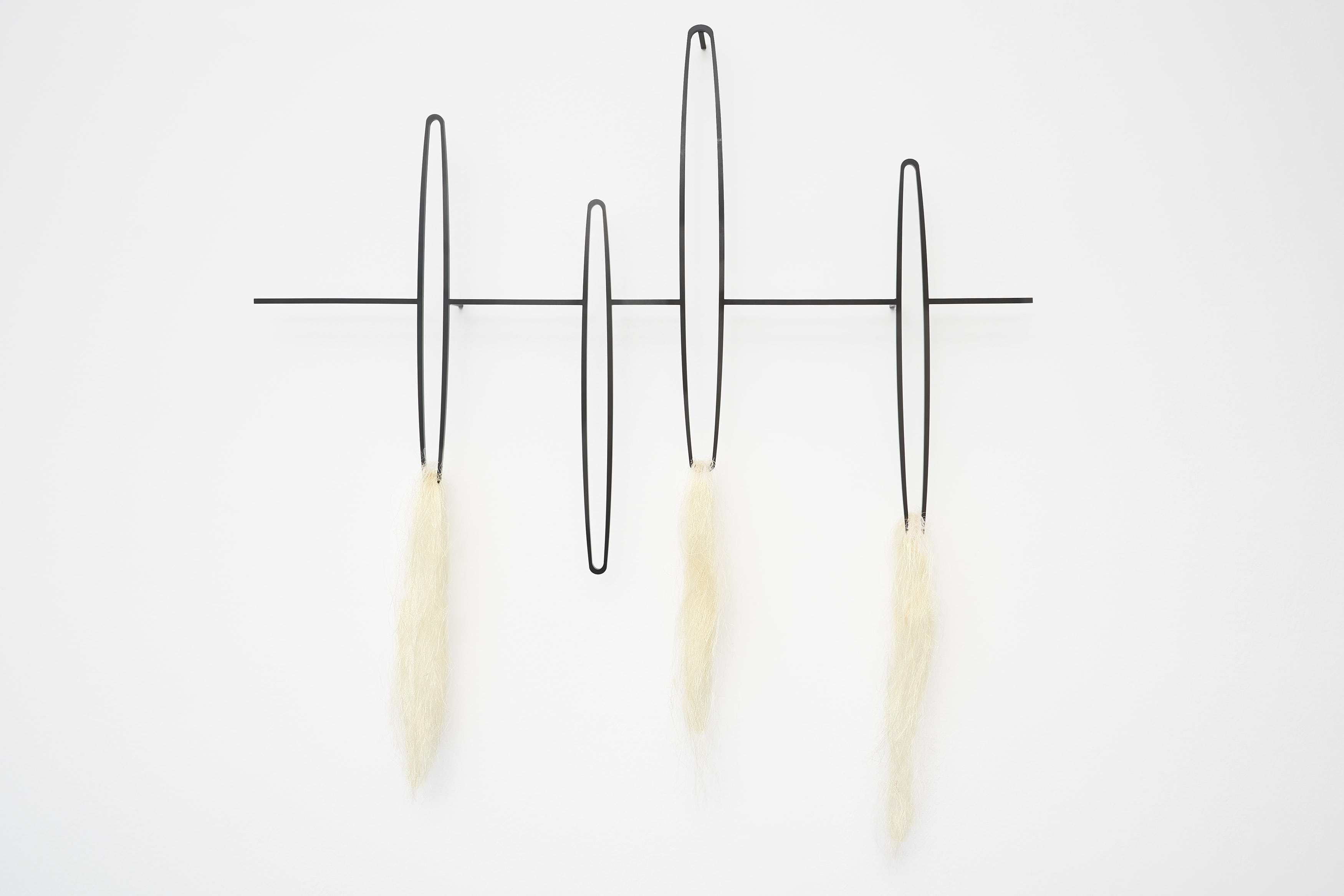
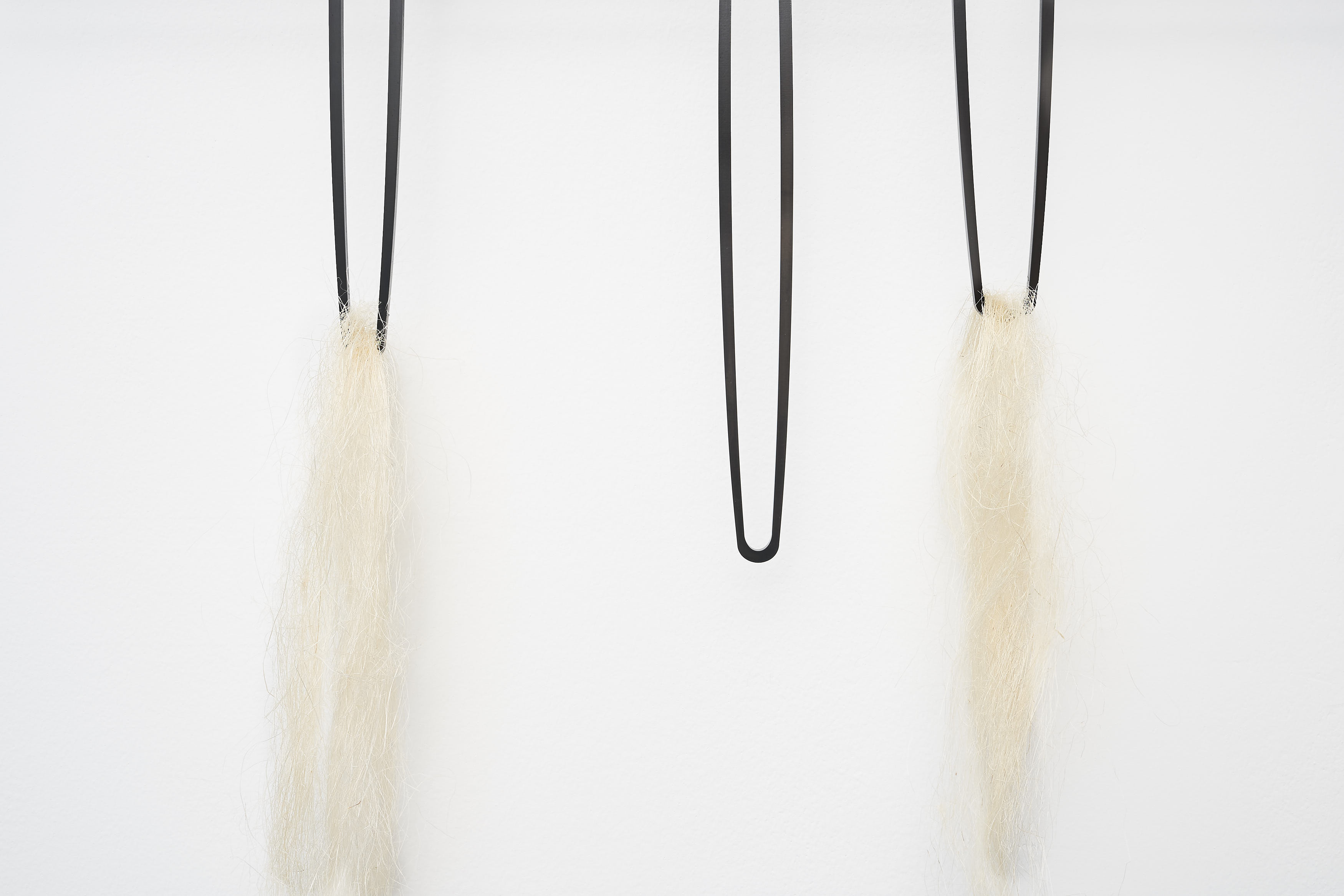
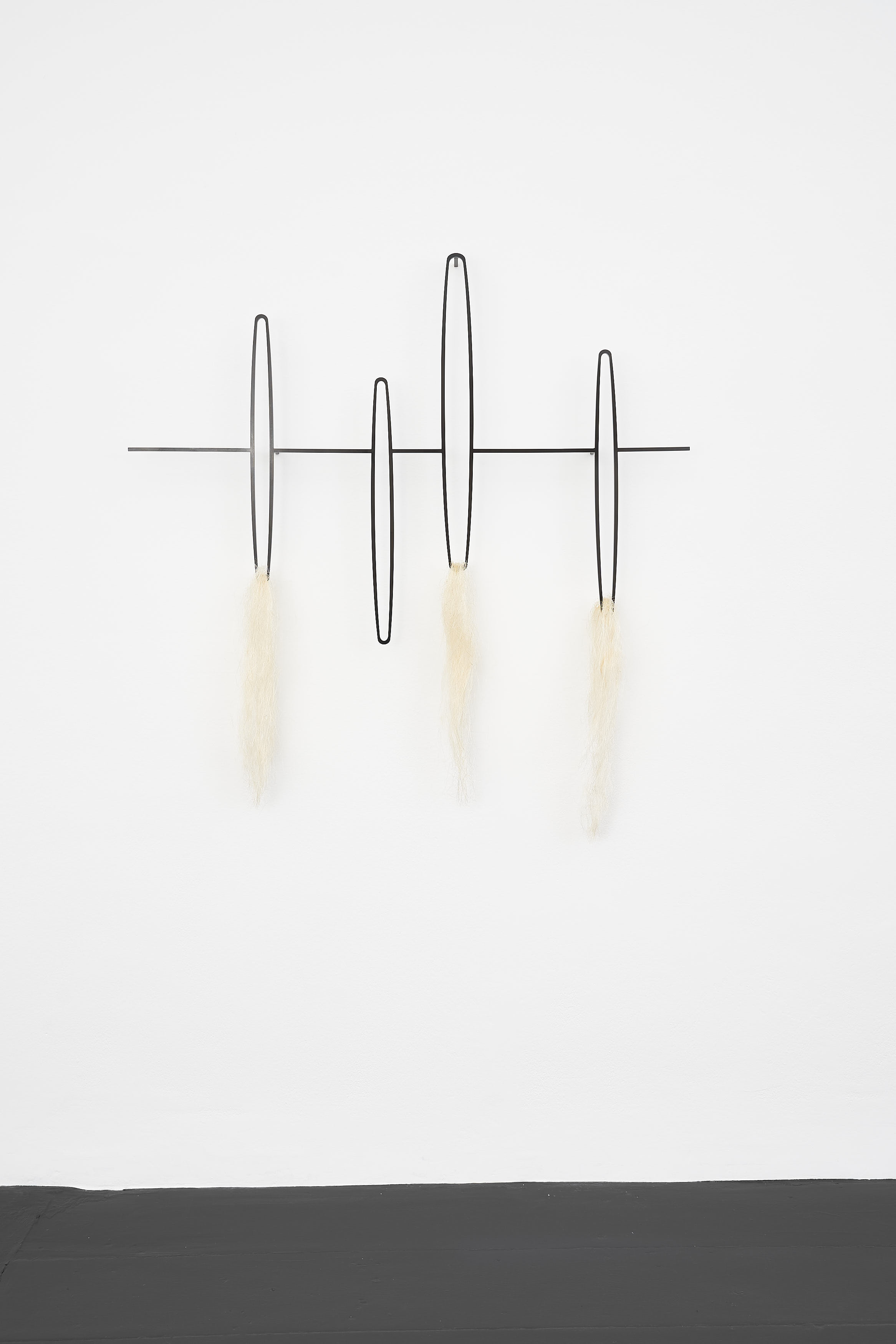
Ficelle, 2020
“Sisal originates from southern Mexico and was exported globally in the 19th century. Sisal produces the longest and strongest natural plant fibres, hence the longest and strongest ropes, everything from the largest ropes to tie battleships to docks to twine for boxes. After traveling through Tanzania Kapwani Kiwanga was fascinated by the natural plant fibres and its symbolistic political, economic and social history. The agave cactus was first brought illegally to Tanzania by German plantation owners who began to develop the crop on a large scale. When Tanzania became an independent nation state, plantations that had once been privately owned became nationalized, in an attempt to assure Tanzania would be economically self-sufficient. Sisal was meant to play an economic role in the country becoming an independent socialist state. Ujamaa socialism failed, for many different reasons, but when the price of sisal plummeted on the world markets it contributed to this as it adversely affected prospects of financial resilience.”
Ficelle, 2020
Ficelle, 2020
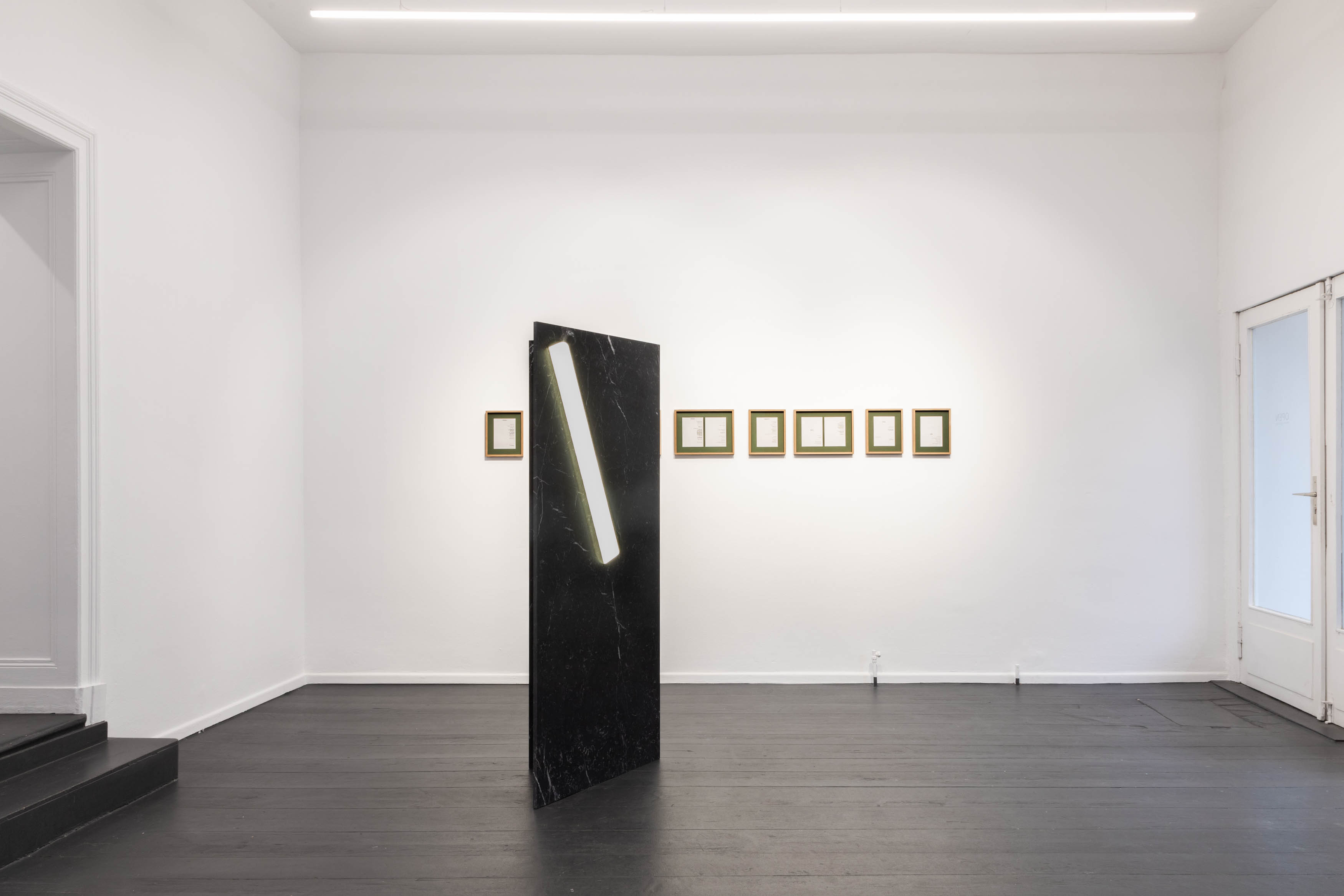
Glow, 2019
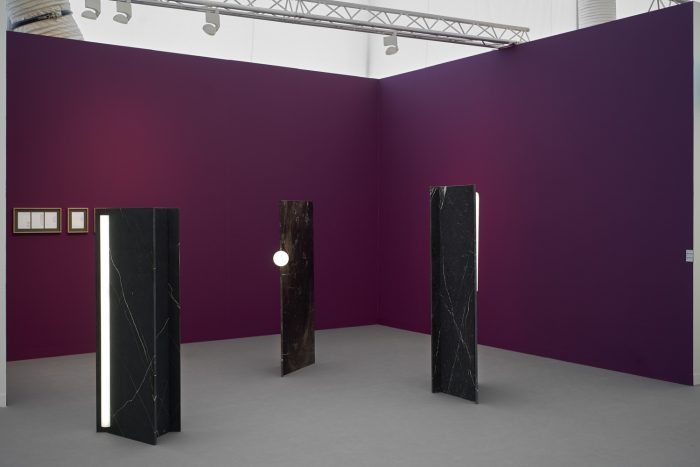
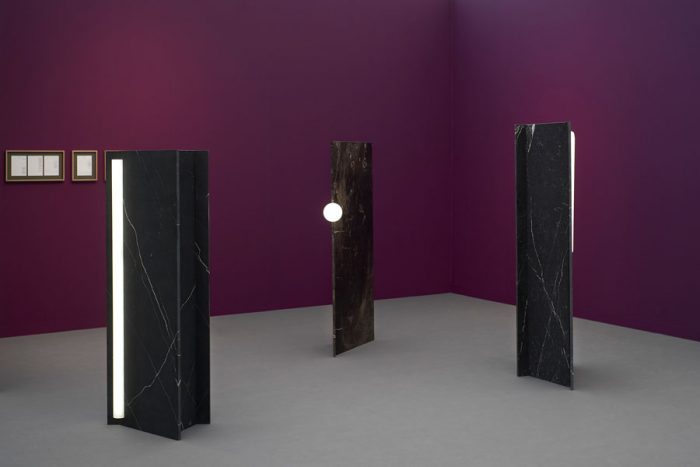
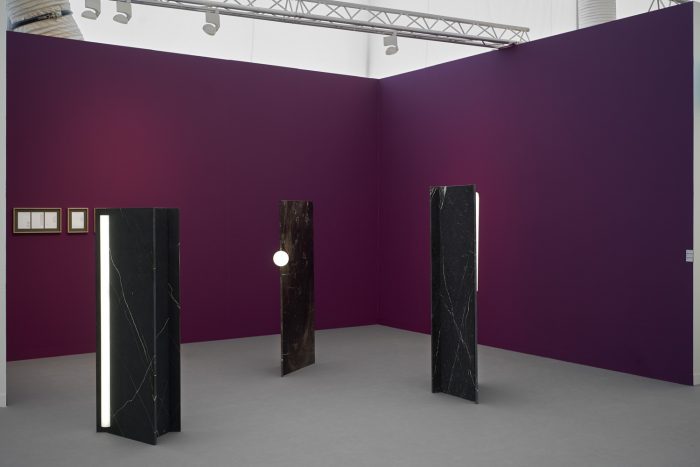
Kapwani Kiwanga’s Glow sculpture series interprets “A Law for Regulating Negro and Indian Slaves in the Night Time,” approved in March 1713 in New York City. This law obliged Black and Indigenous people to carry a lit candle after dark if not accompanied by a White person. Those who did not carry a lit candle could be stopped and seized by anyone. In this manner the policing of people of colour became an activity all were encouraged to undertake.
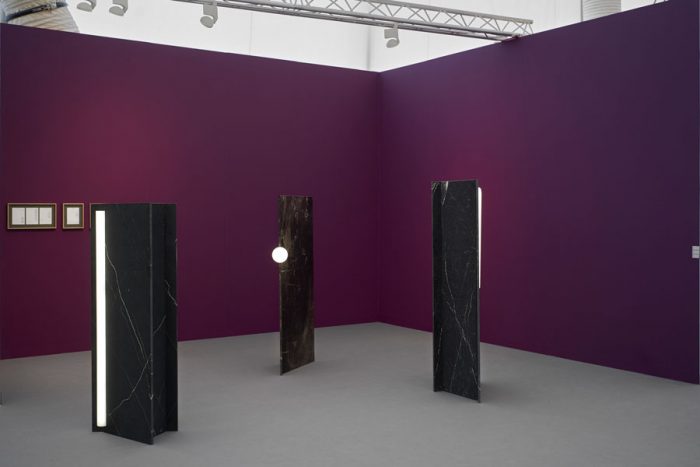
The placement of marble slabs with light introduces an important layer to Kiwanga’s proposition. She asks us to consider how historical Lantern Laws reflect our current state of surveillance and exclusion, and how a reading of the past and present from the perspective of people of colour is essential for a complete understanding of a common past.
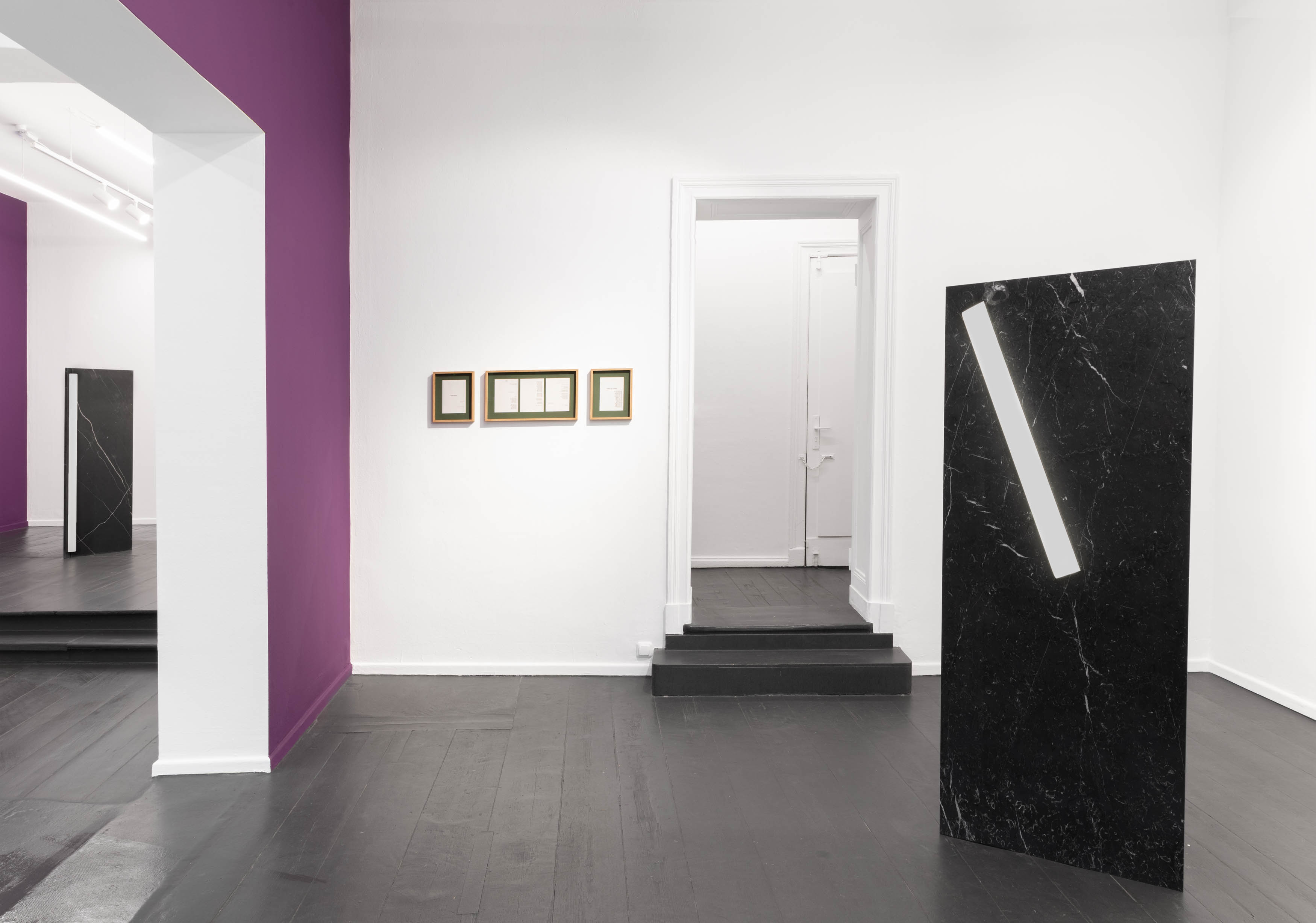
Glow, 2019
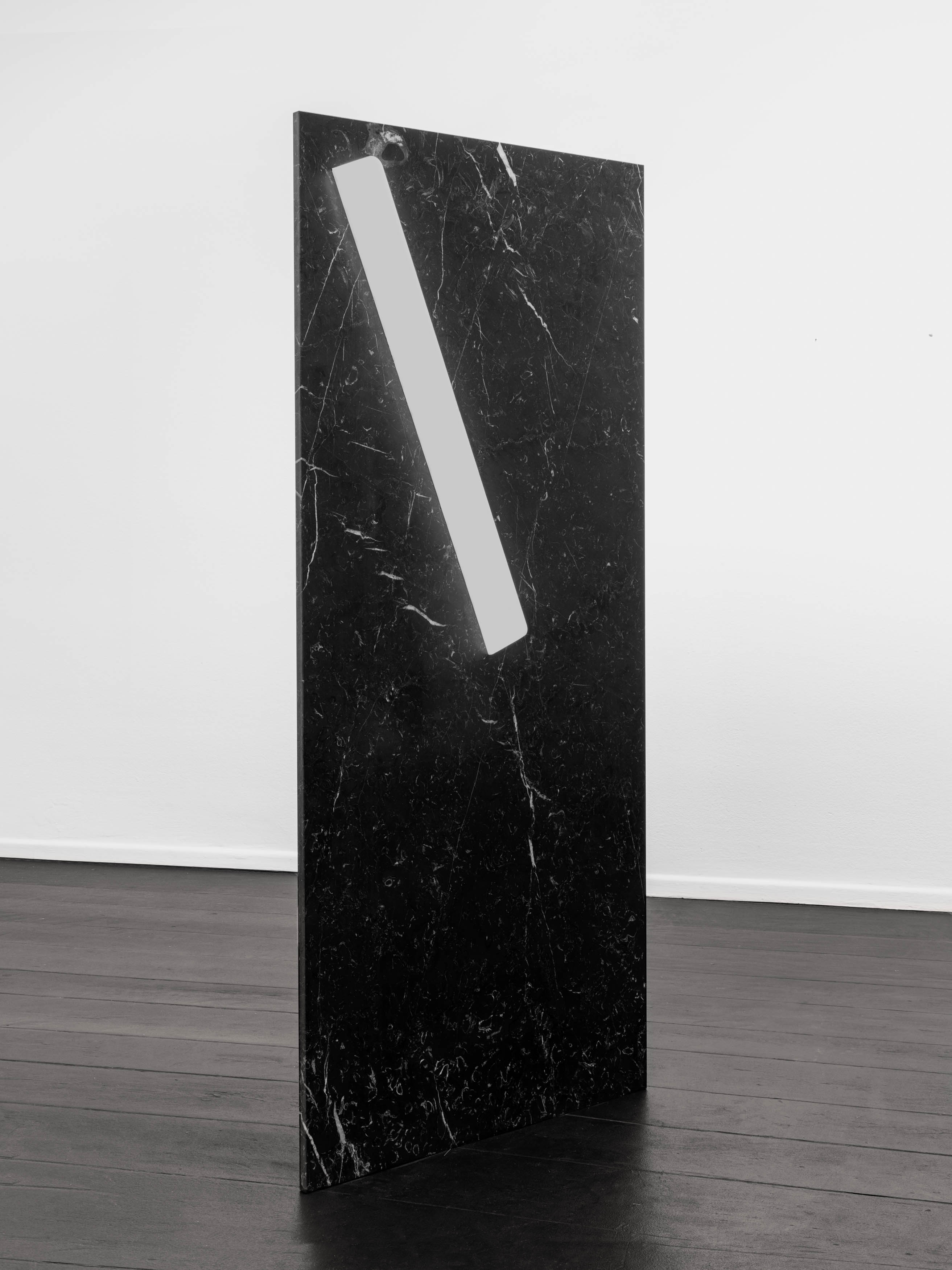
Glow, 2019
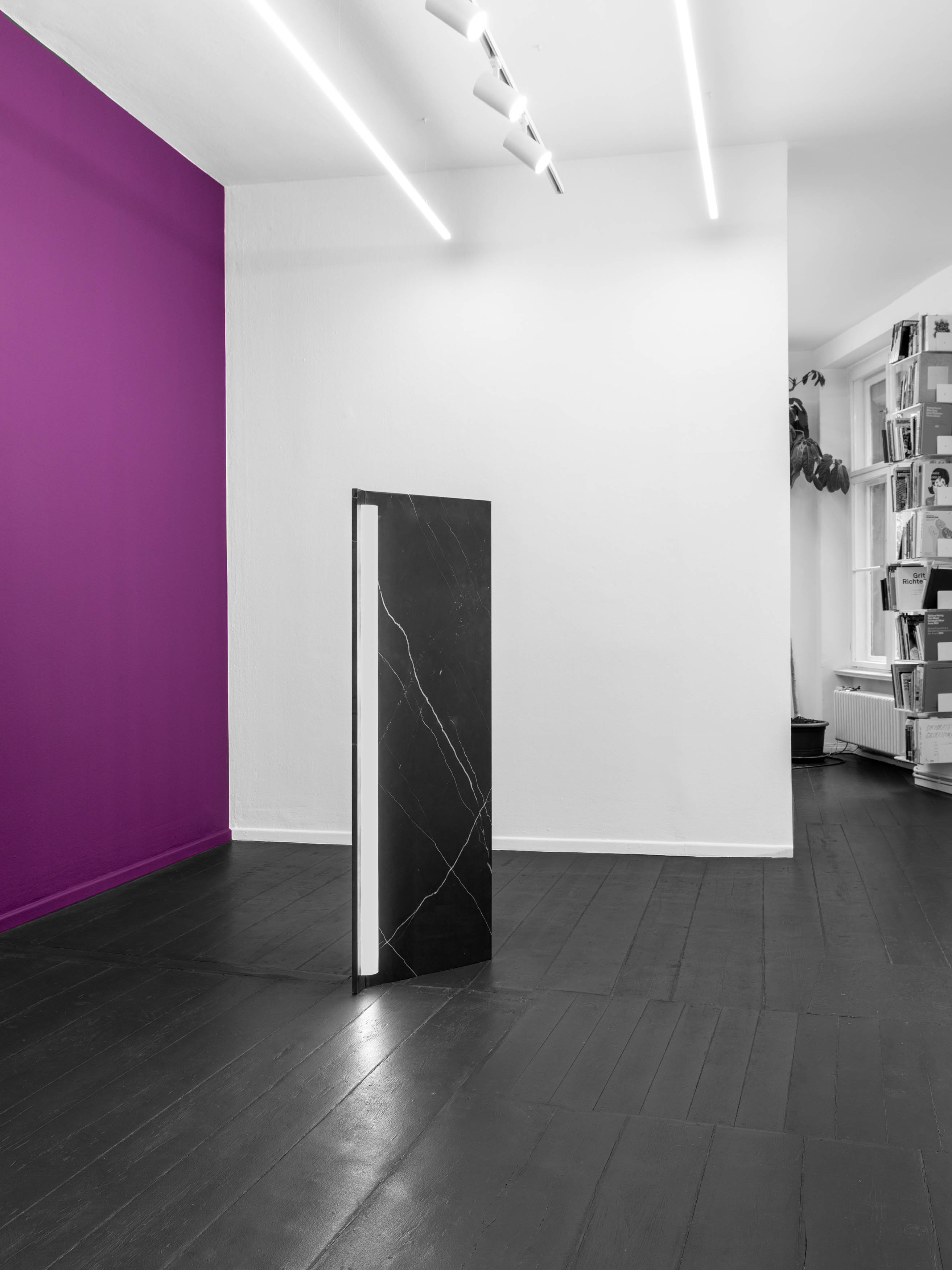
Glow, 2019
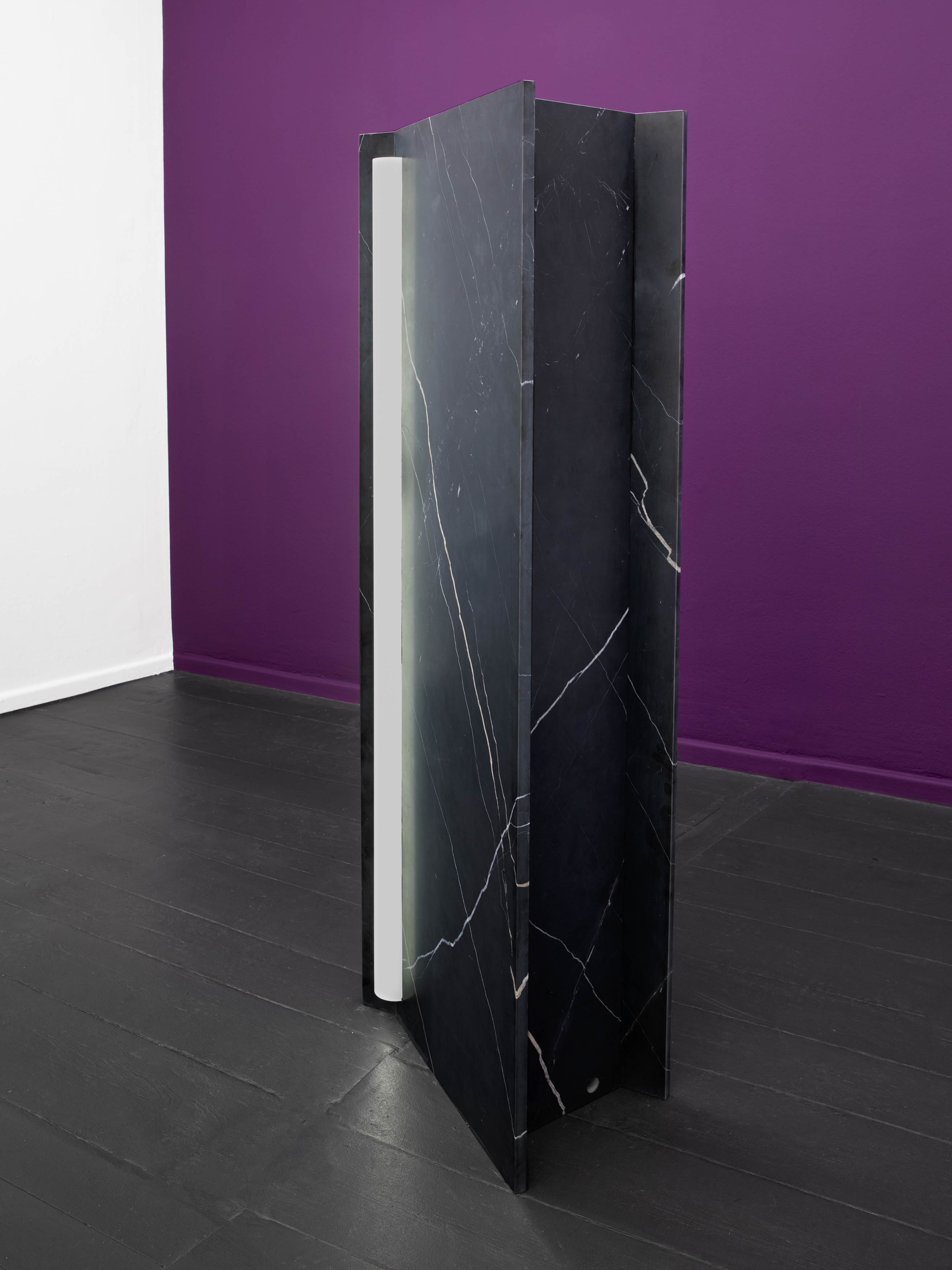
Glow, 2019

Glow, 2019

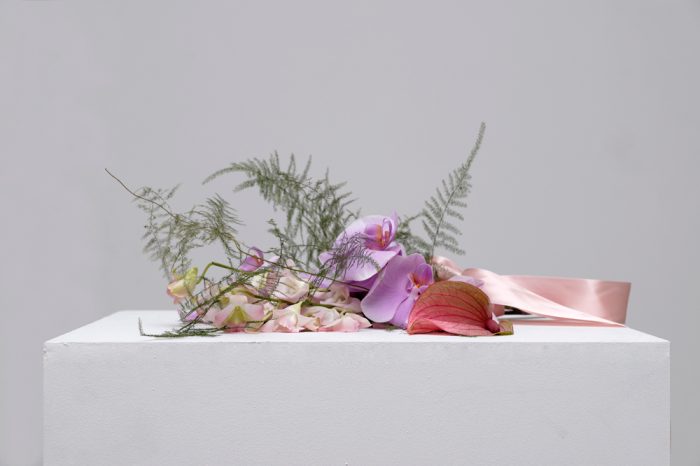
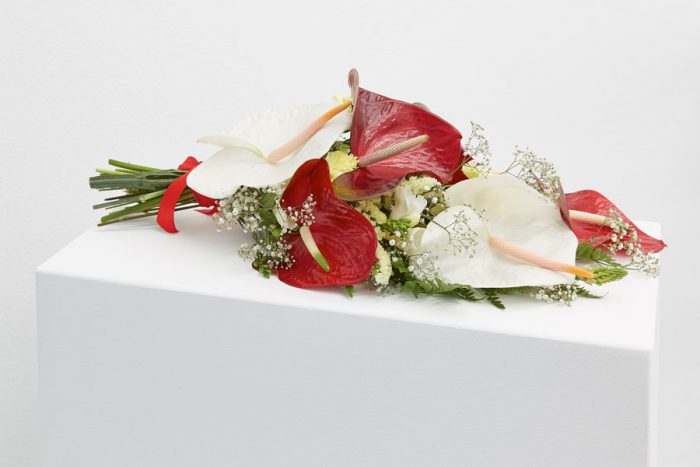
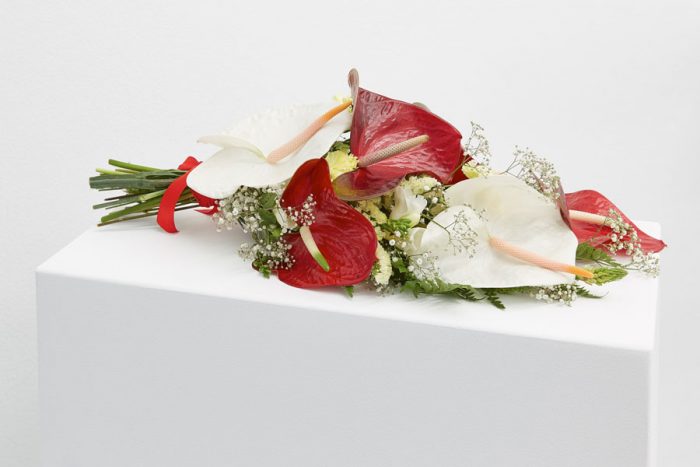
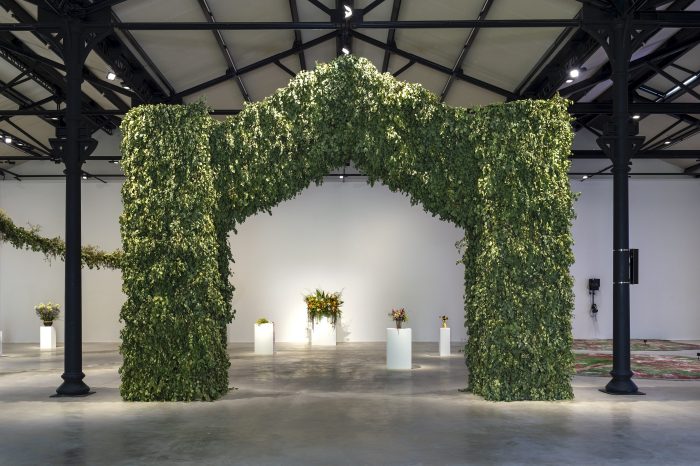
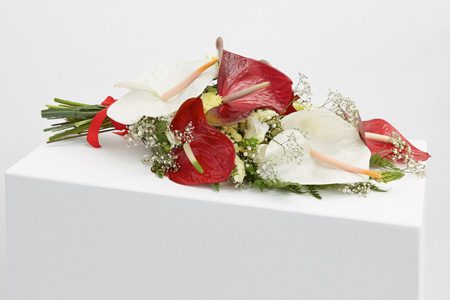
Flowers for Africa, Rwanda, 2019
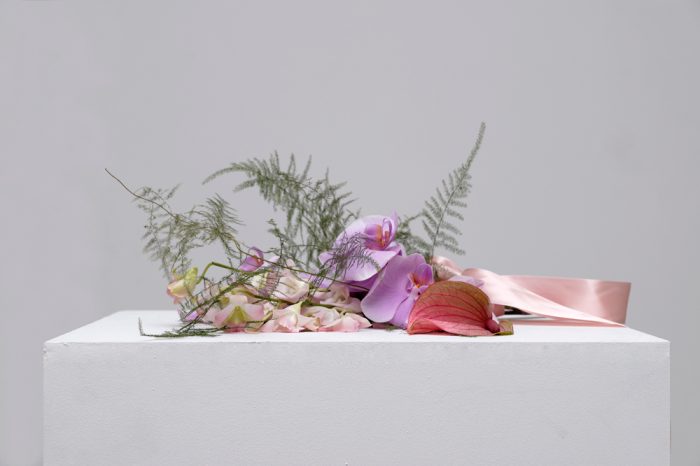
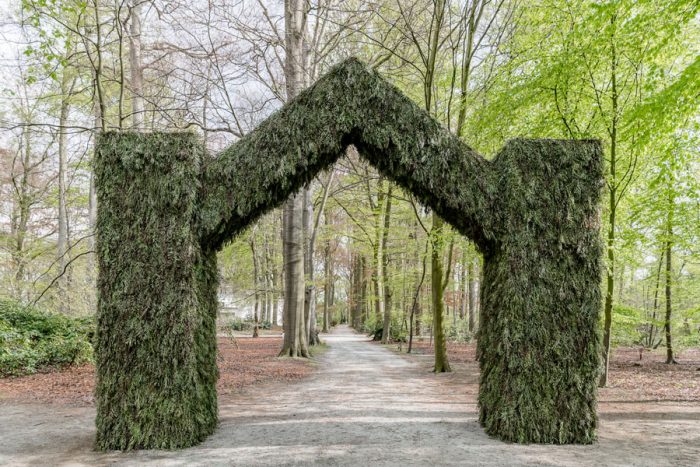
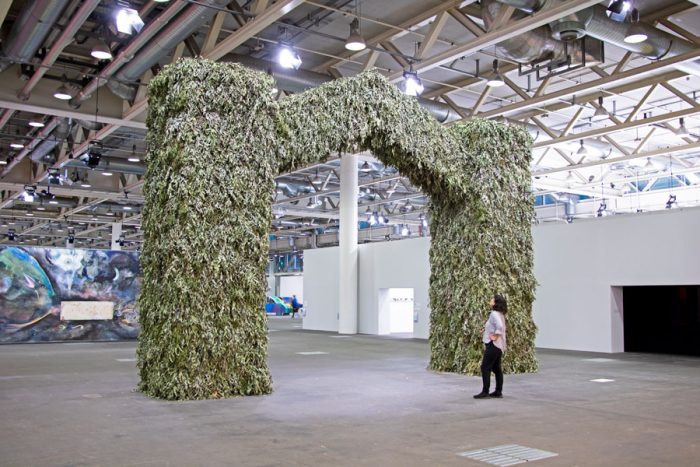
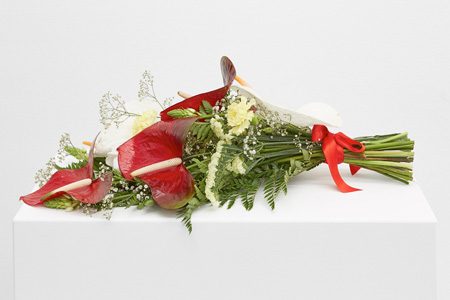
In the series Flowers for Africa, Kapwani Kiwanga collects images that officiate the independence of African States and the floral arrangements that were present. For this conceptual piece, Kiwanga recreates the floral compositions as ephemeral sculptures. For each exhibition the flowers are left to wilt throughout the entire duration of the show. For Flowers for Africa: Rwanda a freestanding arch covered with cut vegetation is reconstructed, a celebration of Rwanda’s independence from Belgium.

Flowers for Africa, Rwanda, 2019
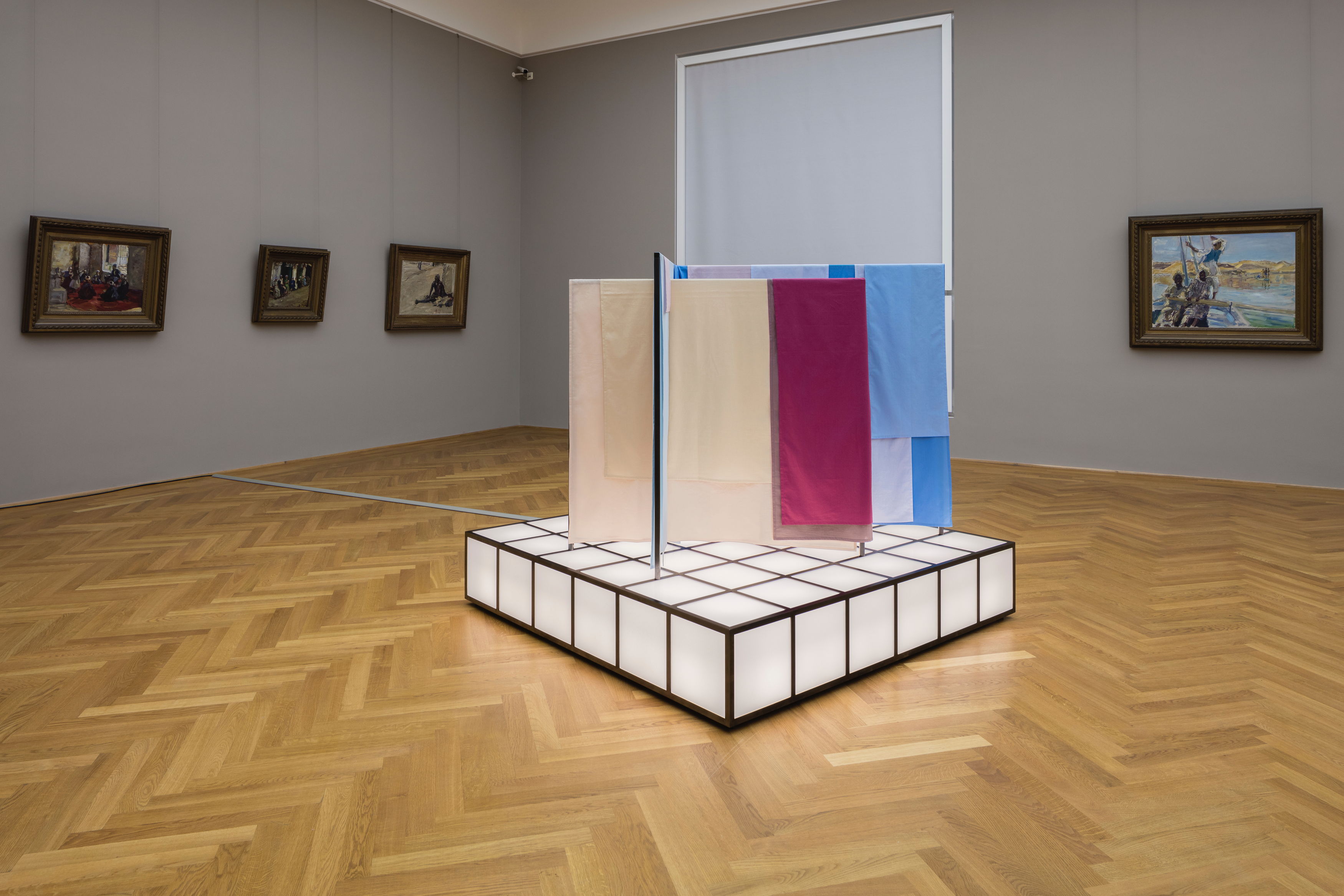
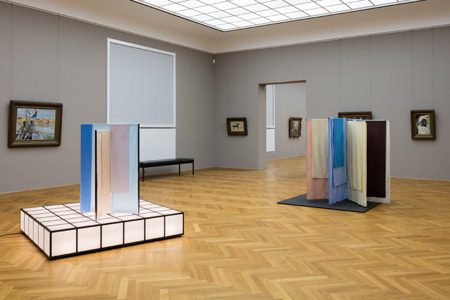
Oriental Studies, 2019
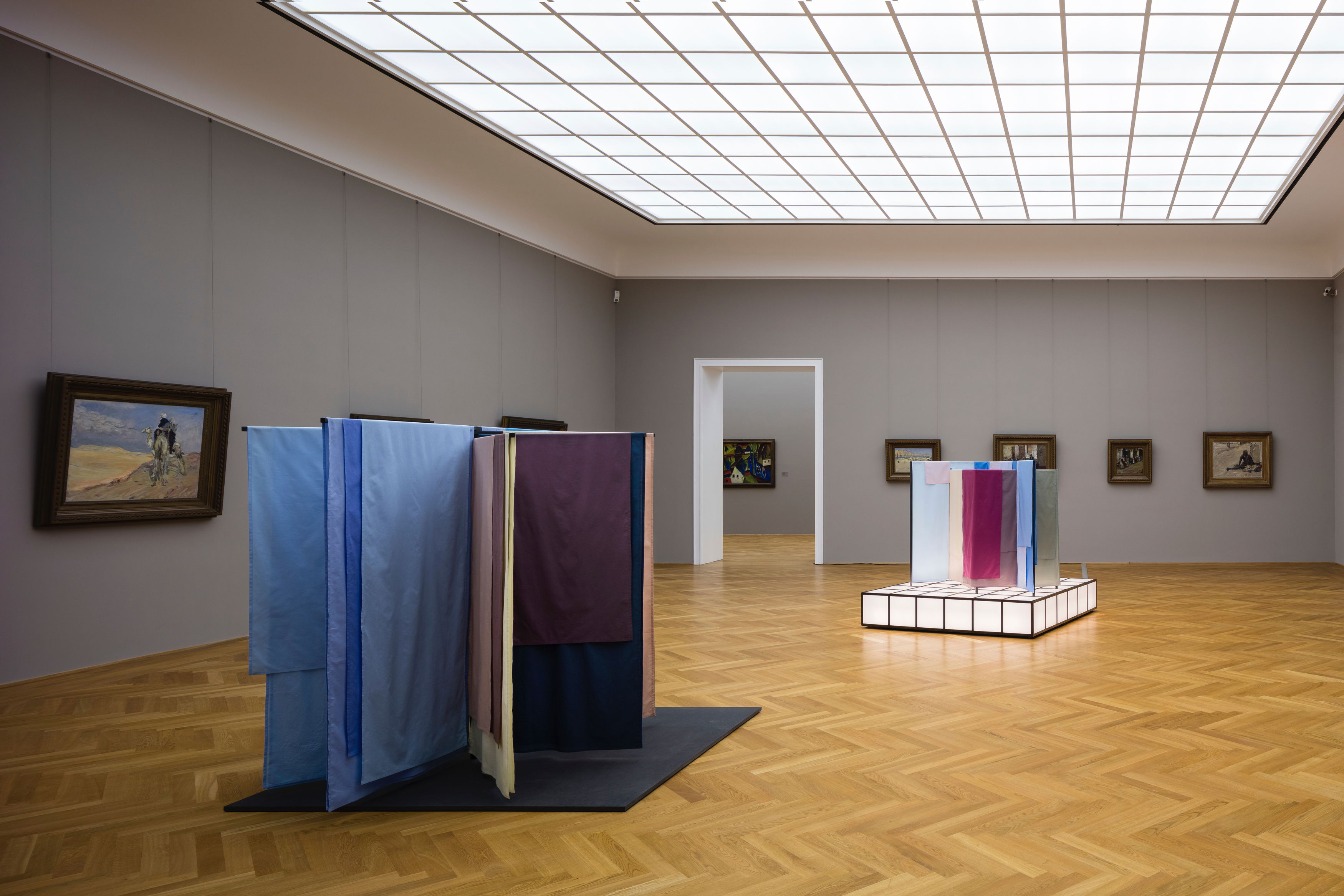
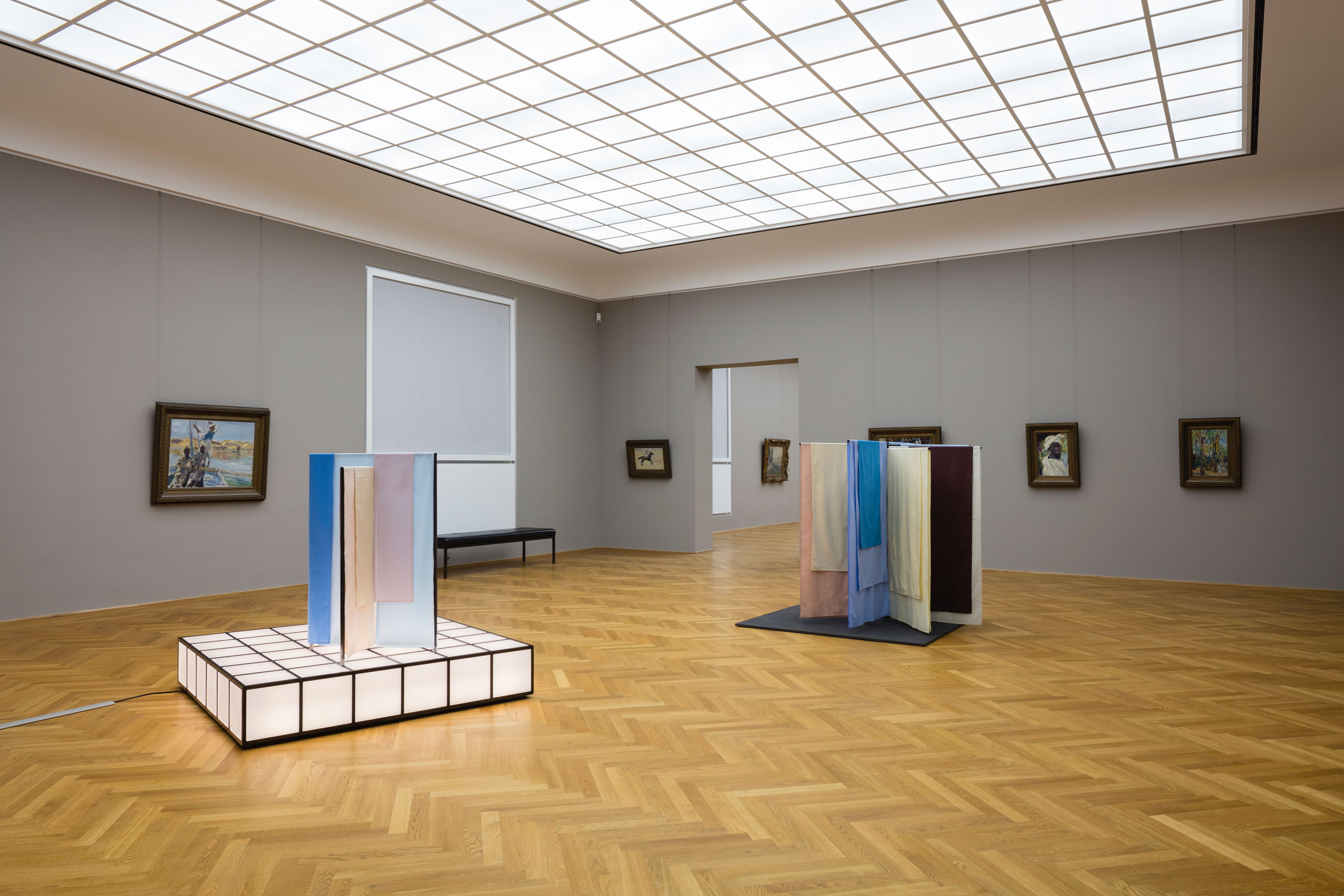
Kapwani Kiwanga’s installation cited the gridded skylight of the exhibition room on the second floor the Albertinum, in which a series of paintings by the artist Max Slevogt is exhibited. This was created in 1914 on a trip to Egypt and depicts light-flooded scenes and landscapes in brilliant colors.
Kiwanga positions an illuminated, gridded cuboid centrally in the space. The intensity of the light is based on whether data from Egypt and illuminates an arrangement of differently colored, large panels, that borrow the colors from two paintings from Slevogt’s series (“Sudanese Women” and “Morning near Luxor”).
The range from facets of the bright blue of the sky, to ochre colored, sandy earth tones up until those colors used to define the skin of two Sudanese women. From a decolonial perspective, Kiwanga focuses on the relationship of a distant real space to an image space defined by colors and the exhibition space as well as related questions of perception.
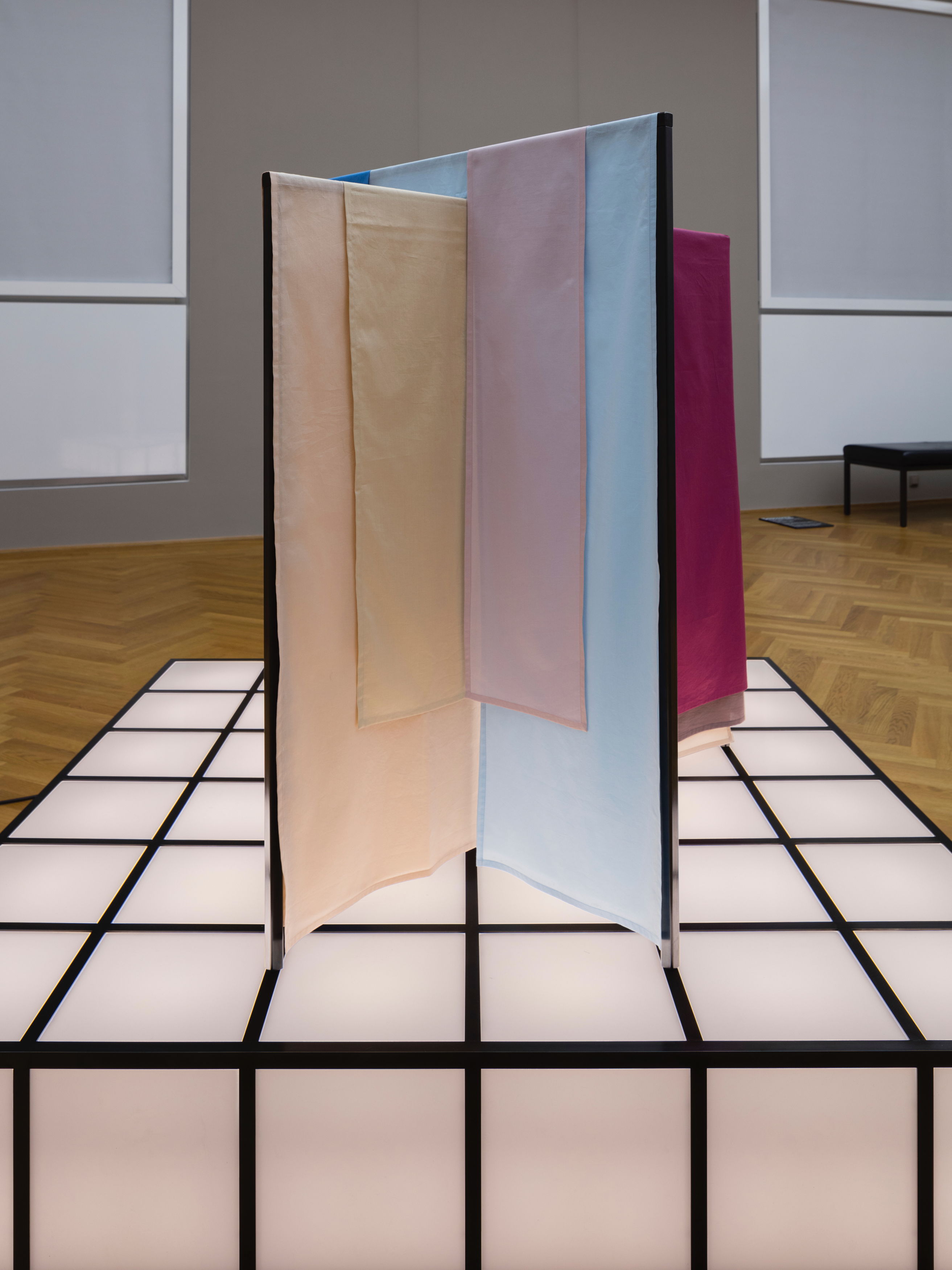
Oriental Studies, 2019
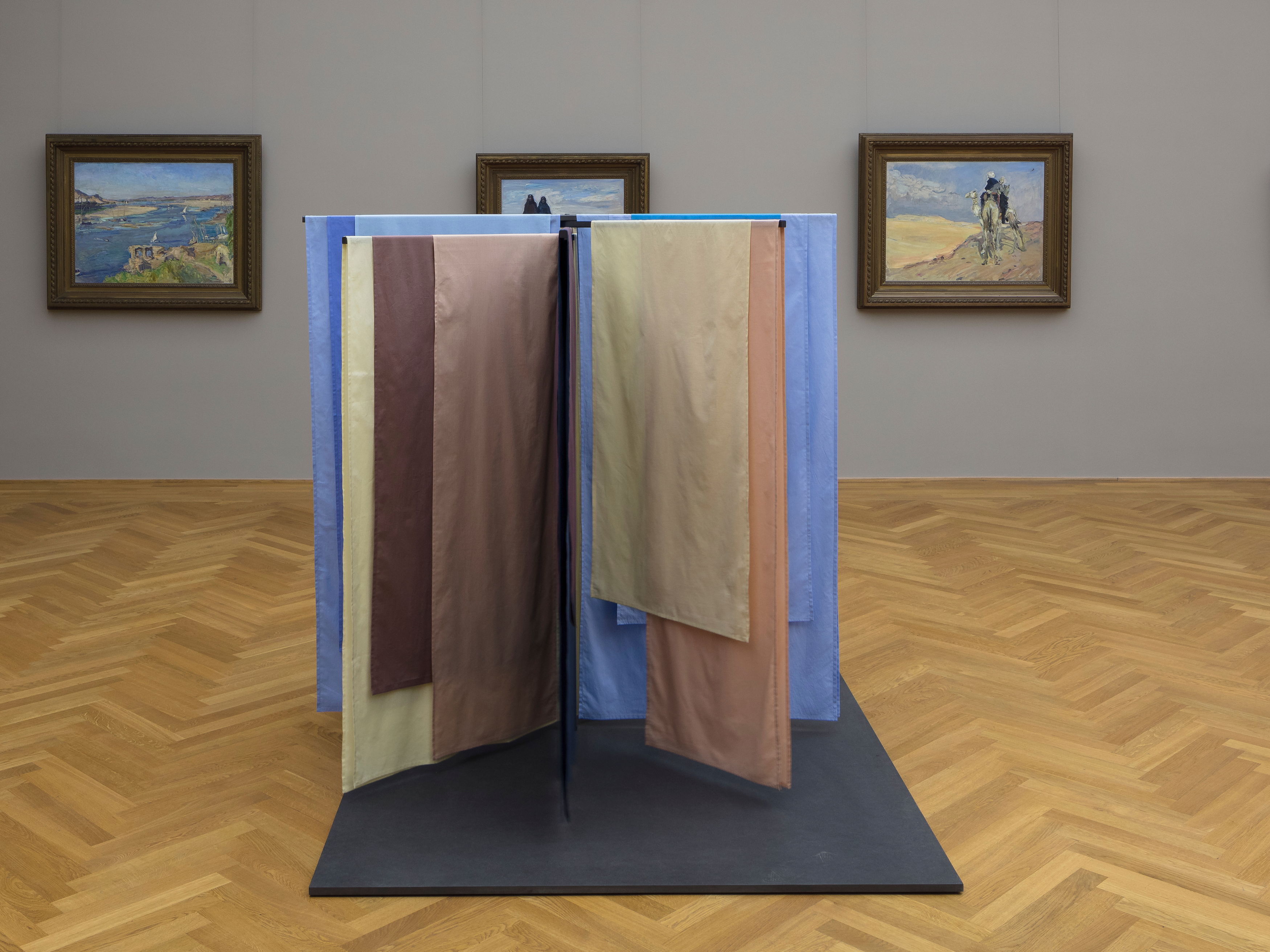
Oriental Studies, 2019
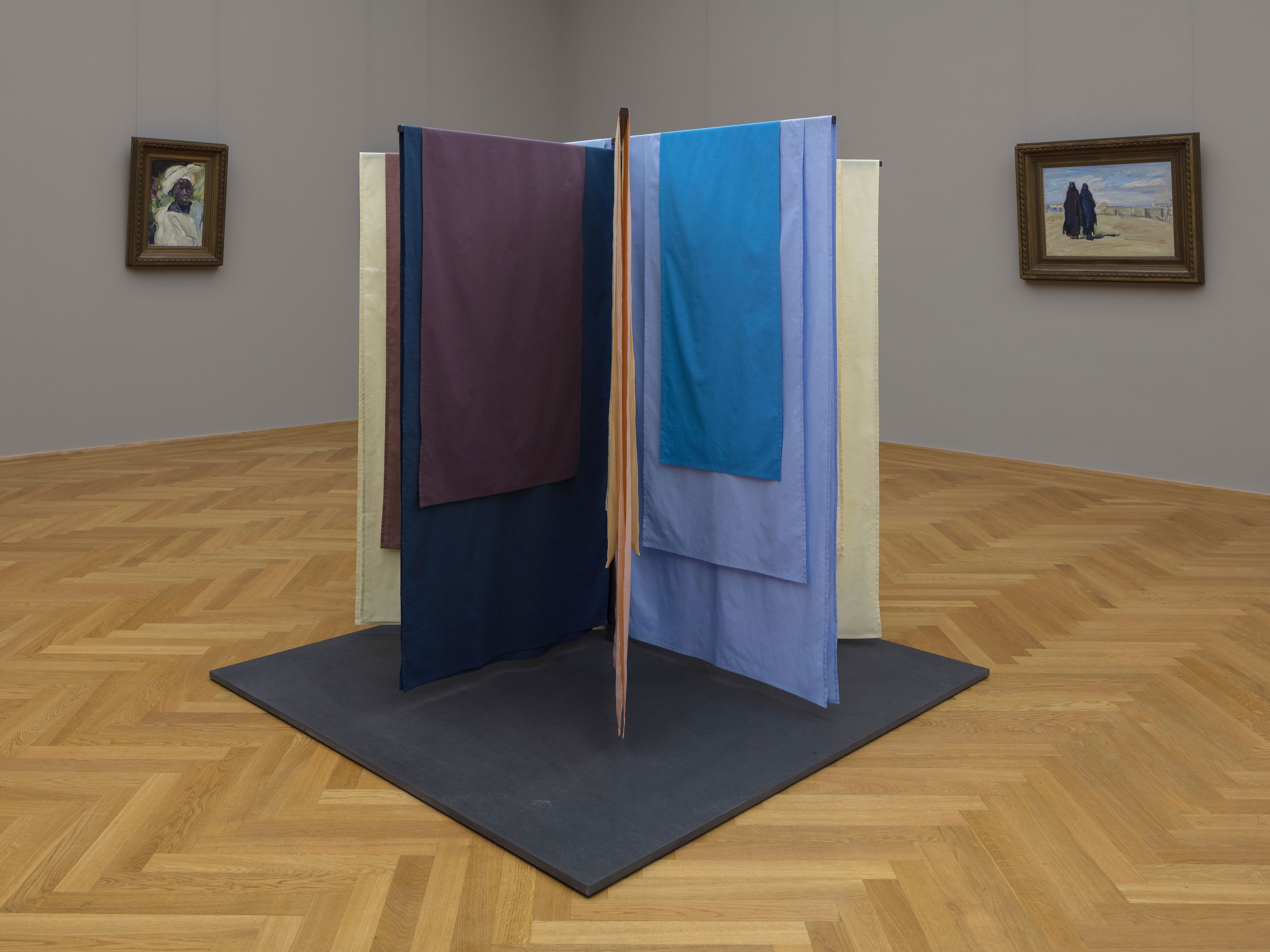
Oriental Studies, 2019
Oriental Studies, 2019
Oriental Studies, 2019
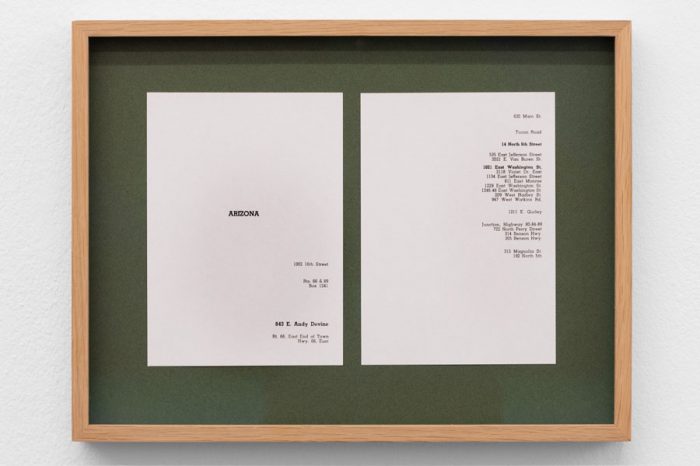
Greenbook, 2019
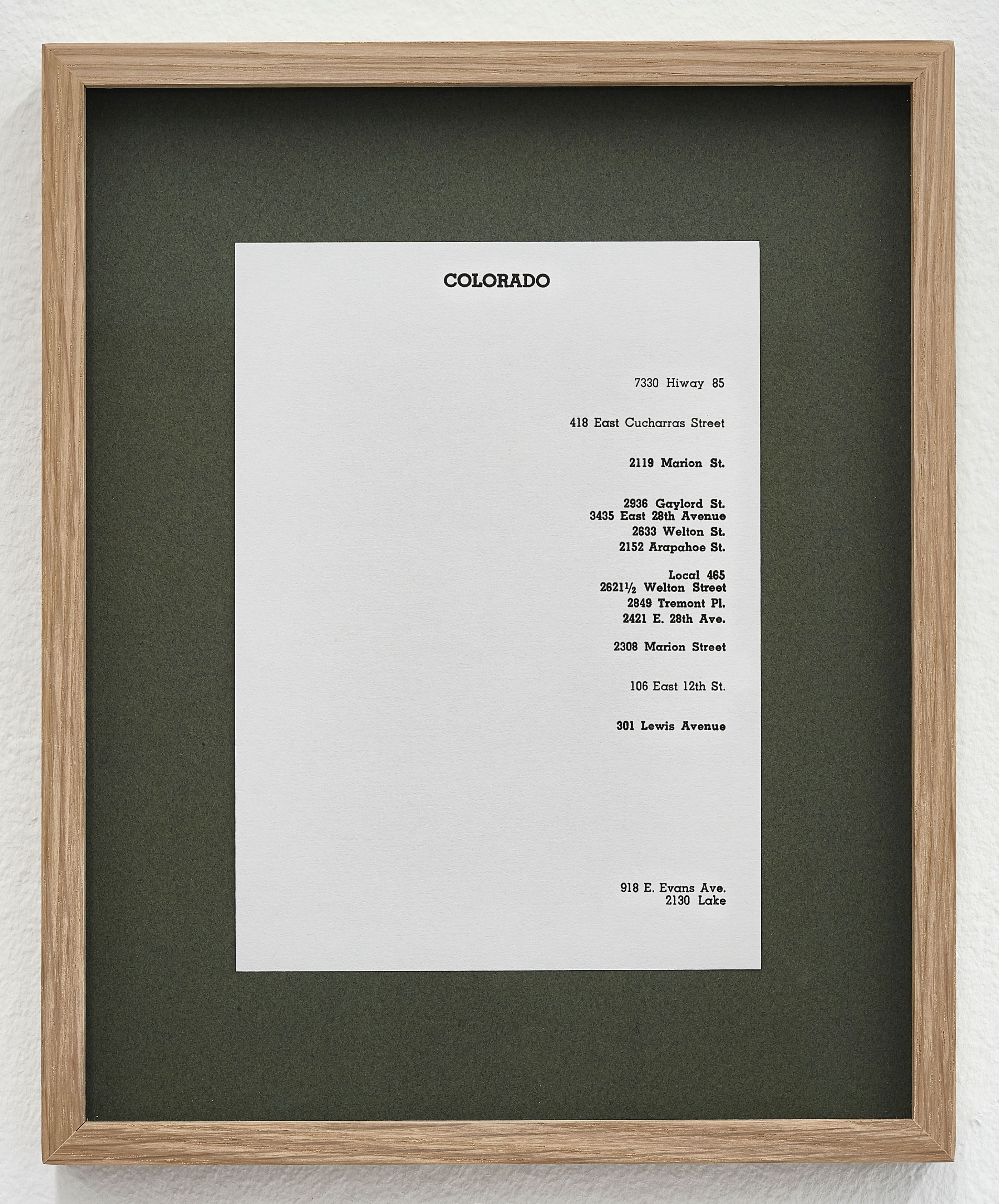
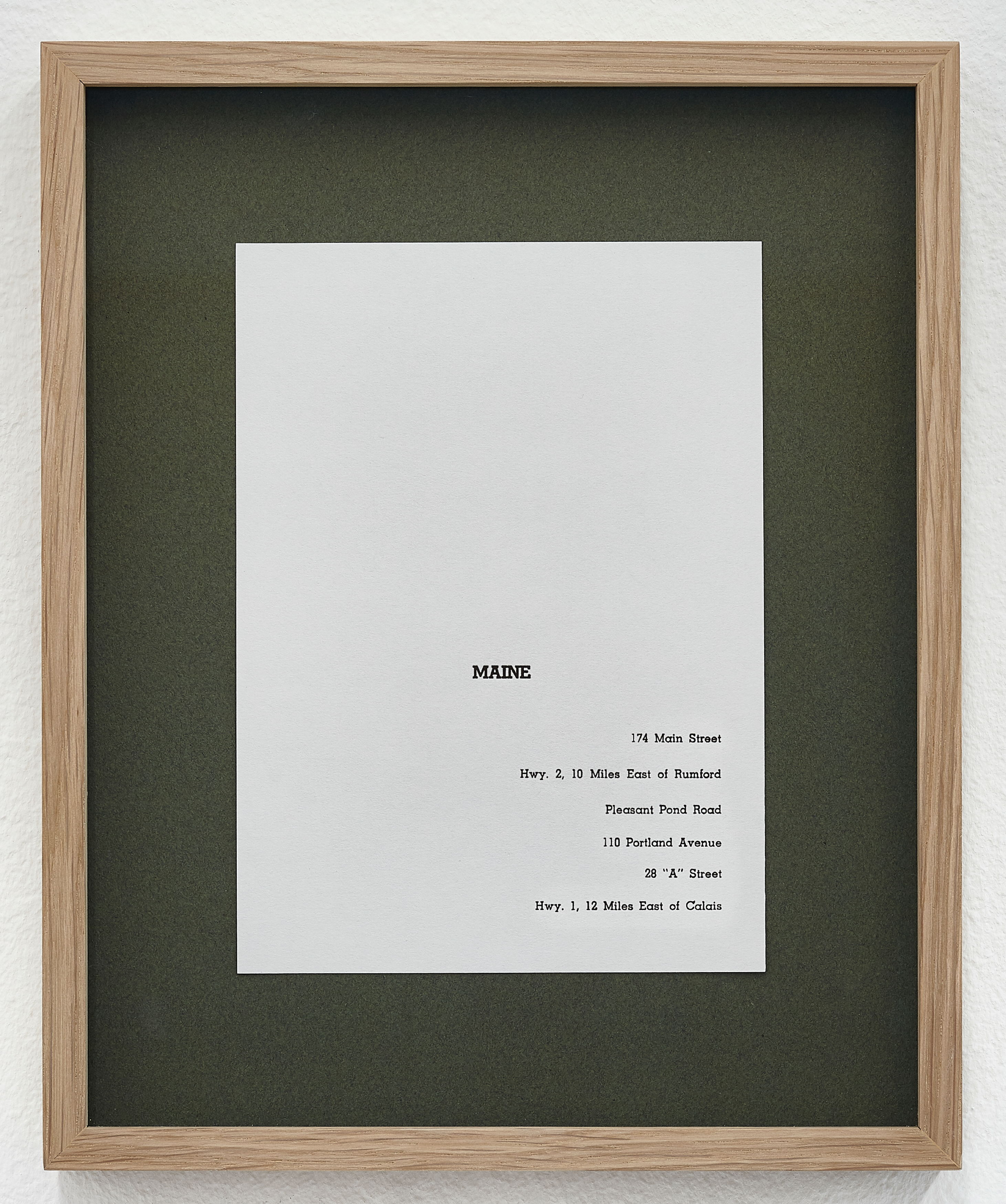
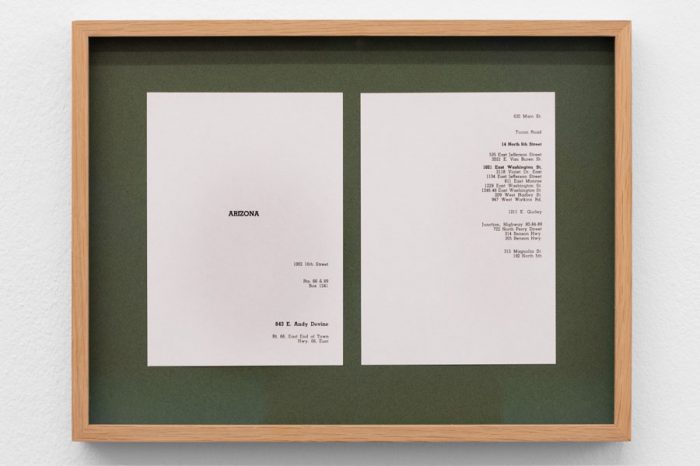
Kapwani Kiwanga's Greenbook (1961) series includes 52 works, each of which allude to the 1961 edition of the Negro Motorist Green Book. These books, which were printed annually from 1933 to 1966, served as a guidebook for African American roadtrippers, listing restaurants, service stations, and lodging throughout the United States that were known to be safe for travelers of color during the Jim Crow era. Kiwanga chose the 1961 edition, as it was that year that a group of civil rights activists, known as the Freedom Riders, rode interstate buses into the South to challenge the Southern standard of keeping public buses segregated after it had been ruled unconstitutional by the US Supreme Court. Police stood by while activists were viciously attacked by white mobs, then arrested and charged them with unlawful assembly and violation of state and local Jim Crow laws. Through this work the artist aims to illustrate the prevalent nature of discrimination in a simple yet powerful manner and to remind us of the racism and injustice that have been deep-rooted in American life. The aesthetics of this presentation, black and white lists in plain wooden frames, are deliberately subdued to let the content speak. Kiwanga movingly reminds us of that hateful climate, emphasizing that islands of decency were few and far between.
Greenbook, 2019
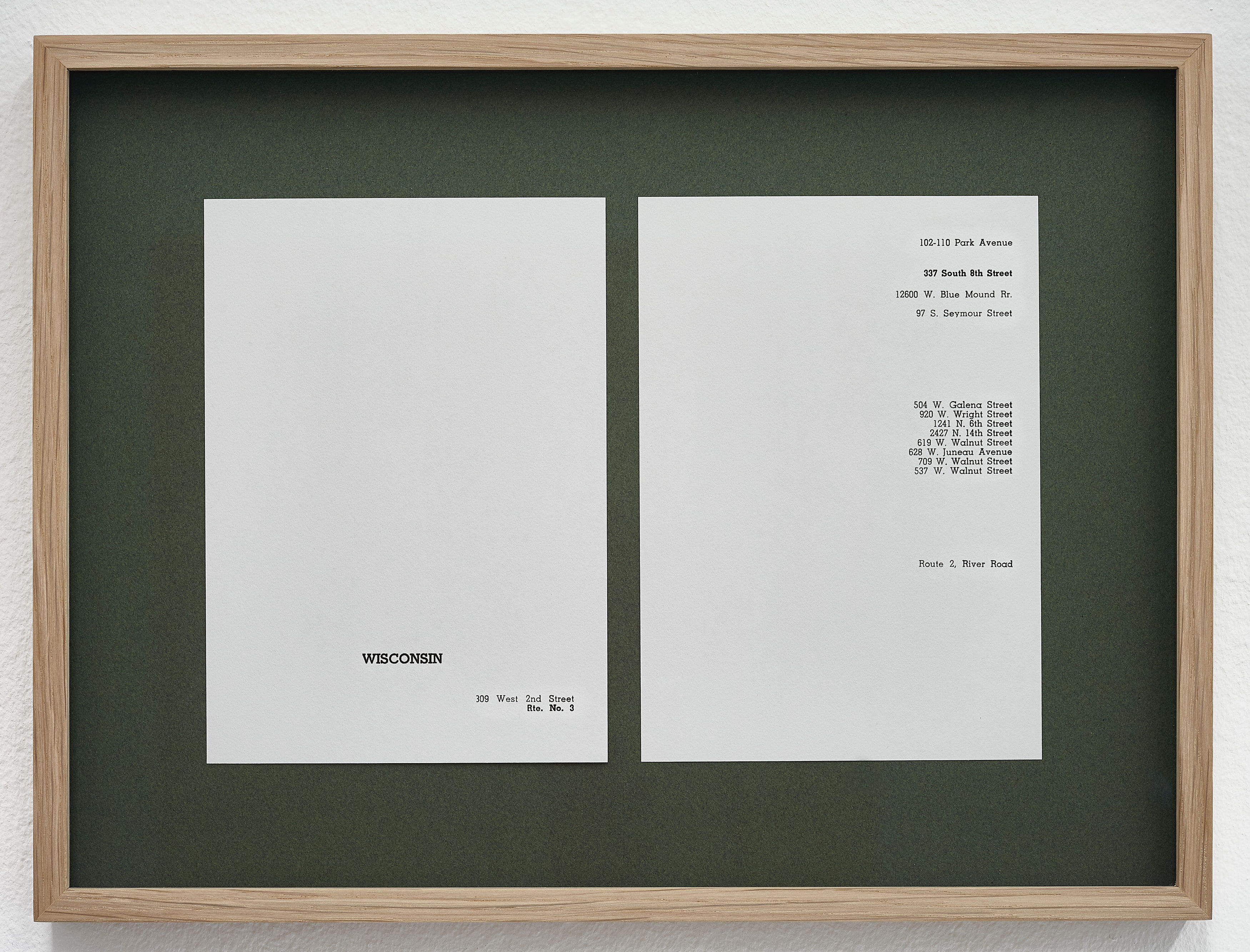
Greenbook, 2019
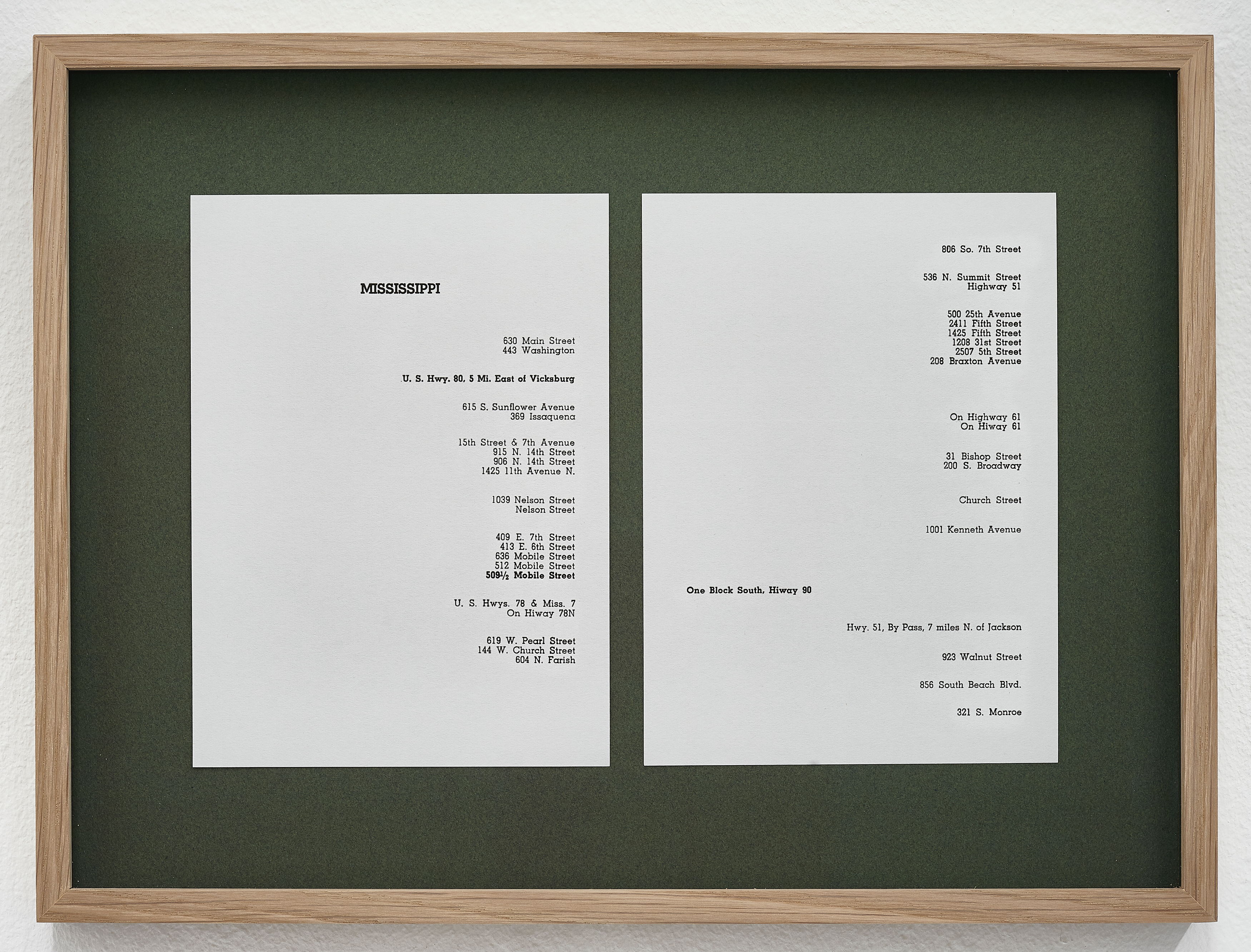
Greenbook, 2019
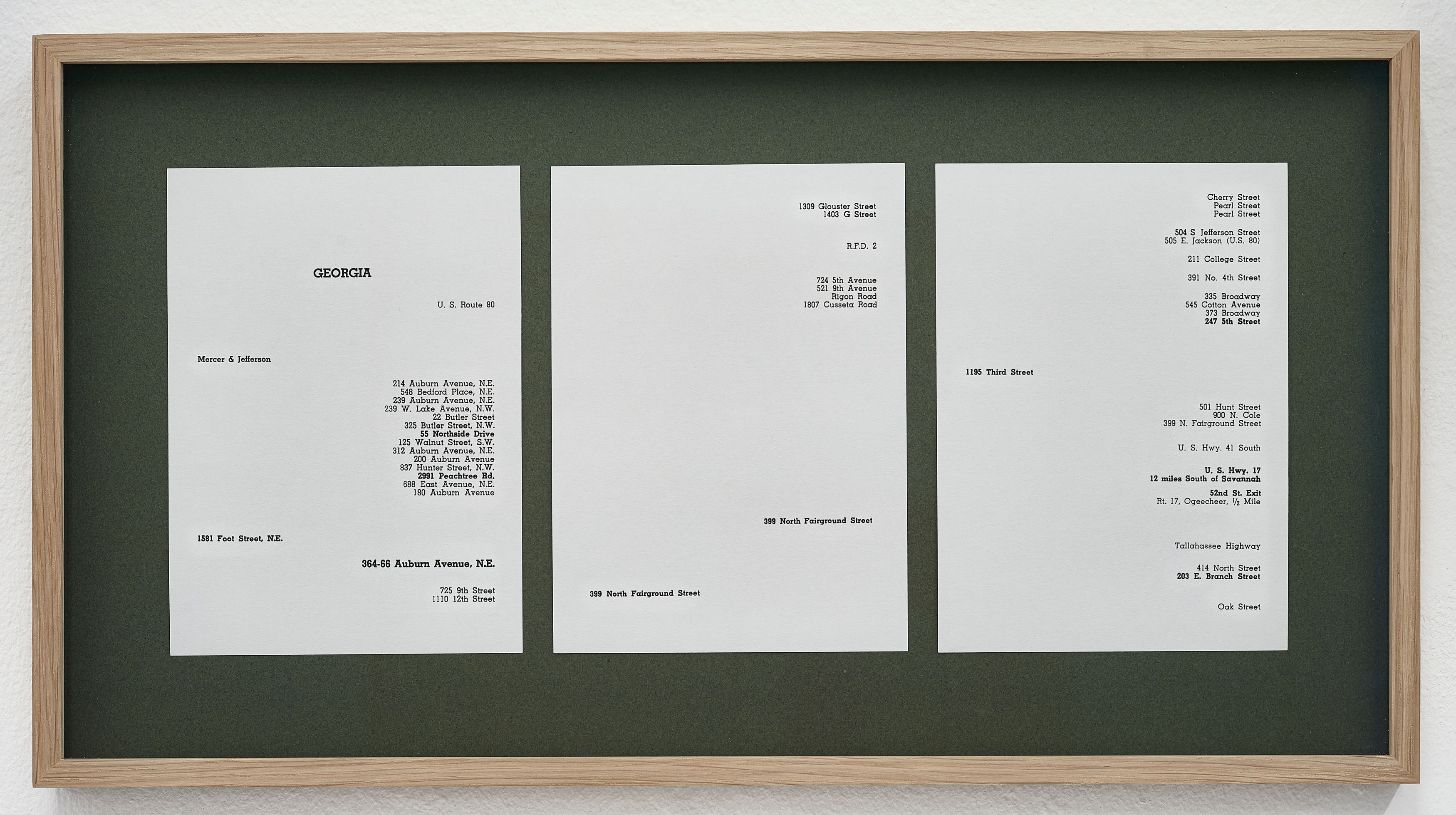
Greenbook, 2019
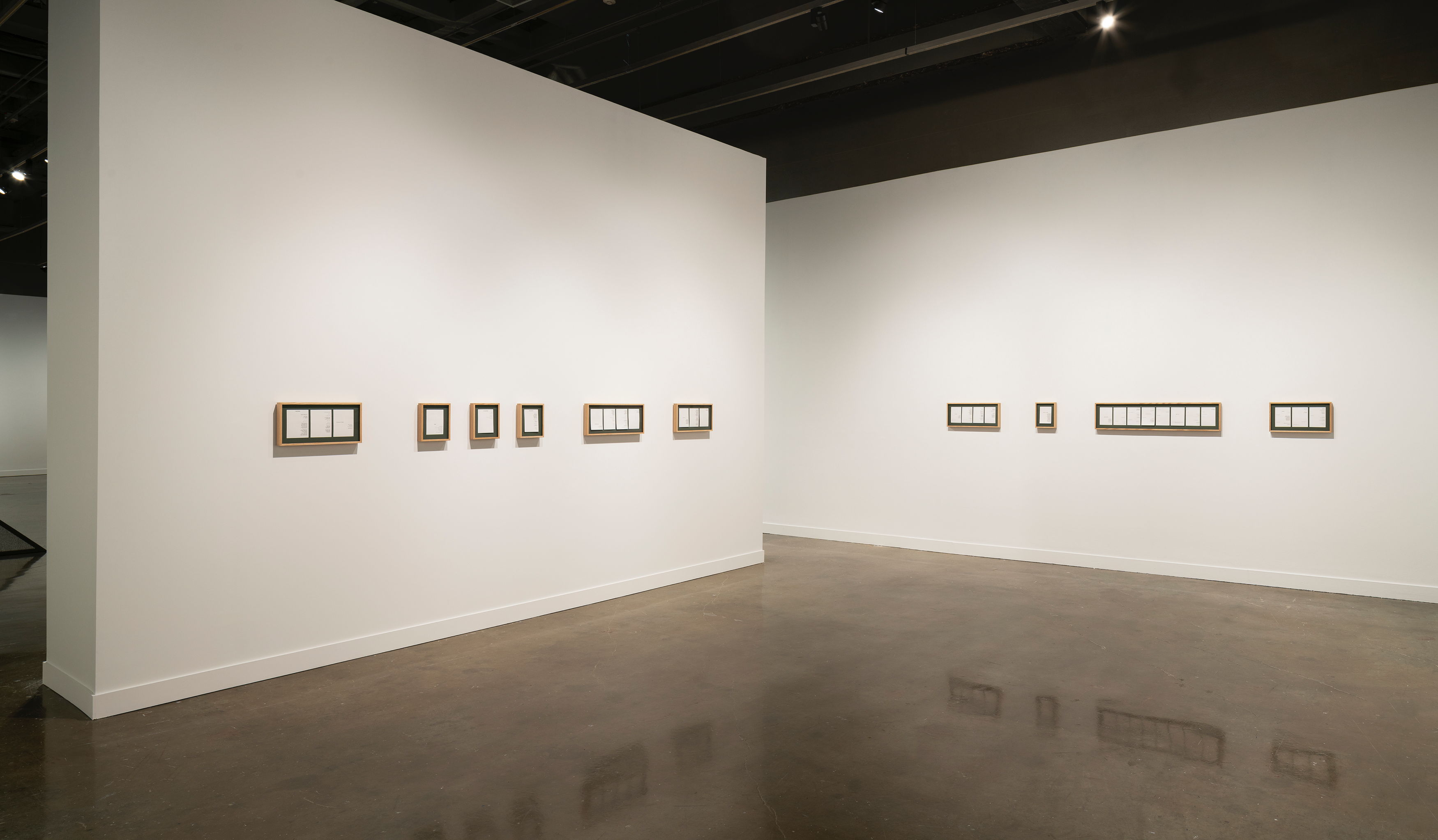
Greenbook, 2019

Greenbook, 2019
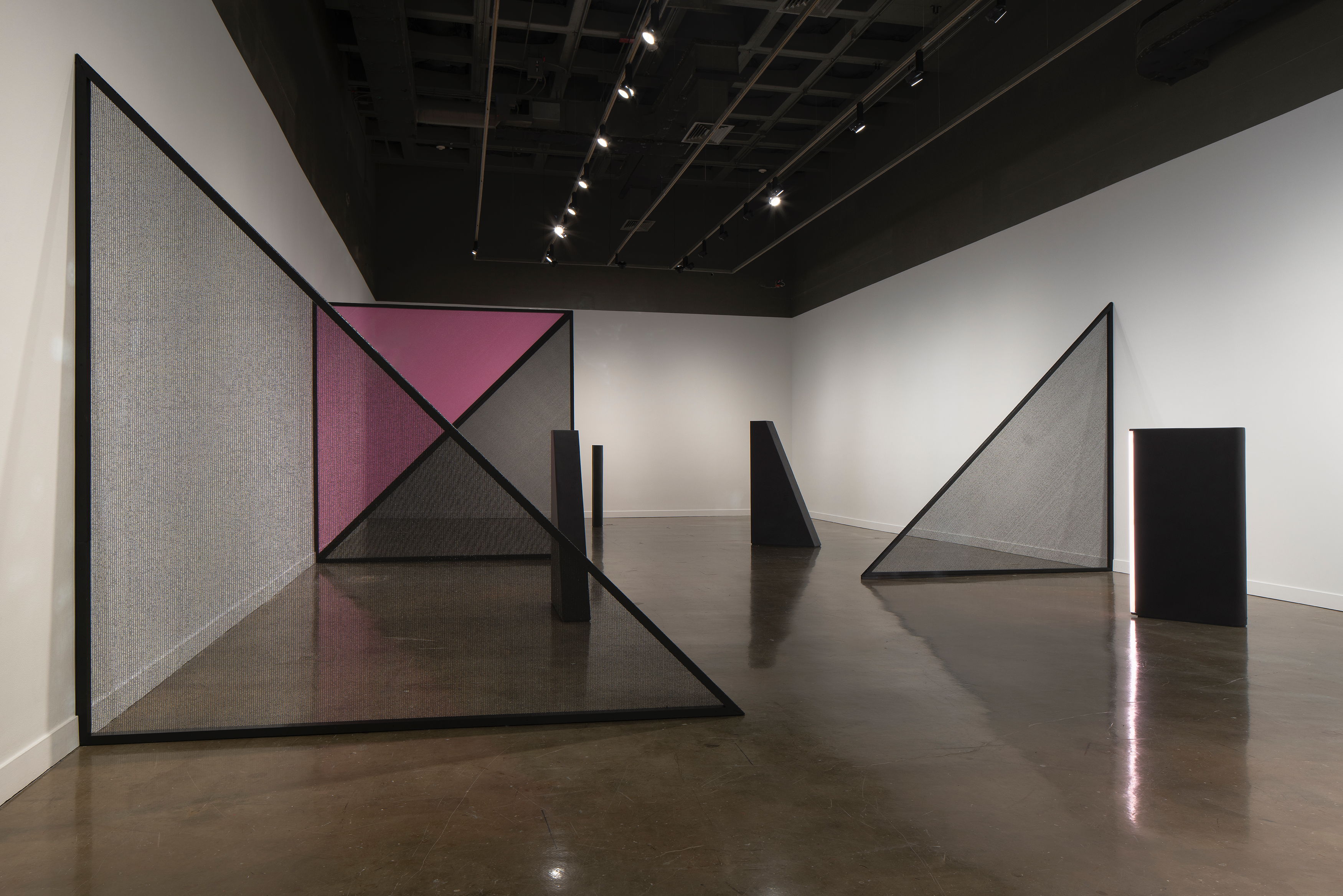
Safe passage, 2019
Kapwani Kiwanga’s Safe Passage (2019) explores the tension between visibility and invisibility, reflecting on the historical surveillance of racialized bodies. Using sleek sculptural shapes that incorporate LED lights, Kiwanga creates pieces approximately the height of an average adult, immersing viewers in the themes of her work (Pyper, 2019). Safe Passage references Boston's "lantern laws" of the 1700s, which required people in the condition of slavery to carry lanterns to ensure they were visible and thus identifiable at night. This powerful aesthetic critique addresses systems of surveillance and control, underscoring the urgency of examining how these issues continue to shape contemporary society.
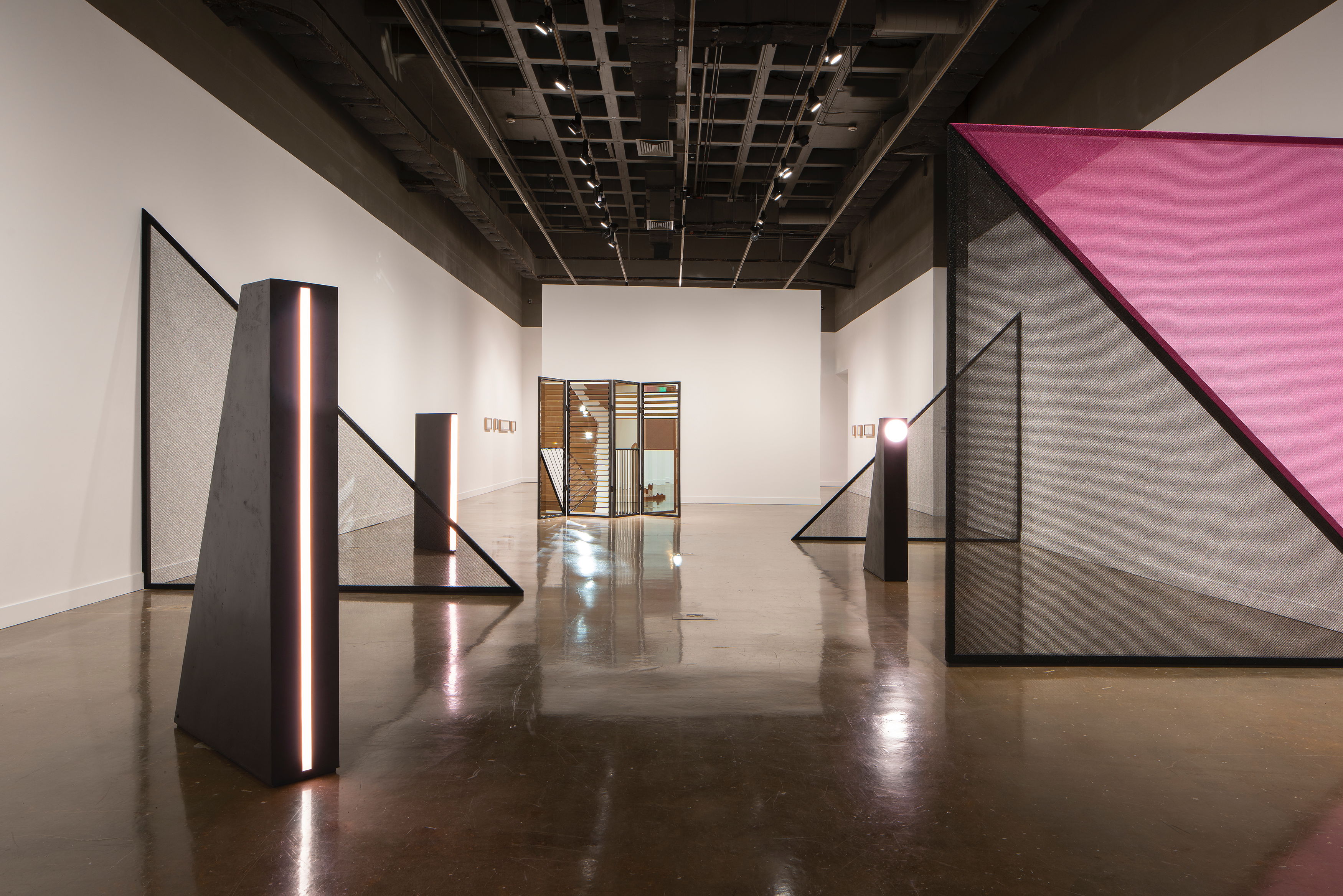
Safe passage, 2019
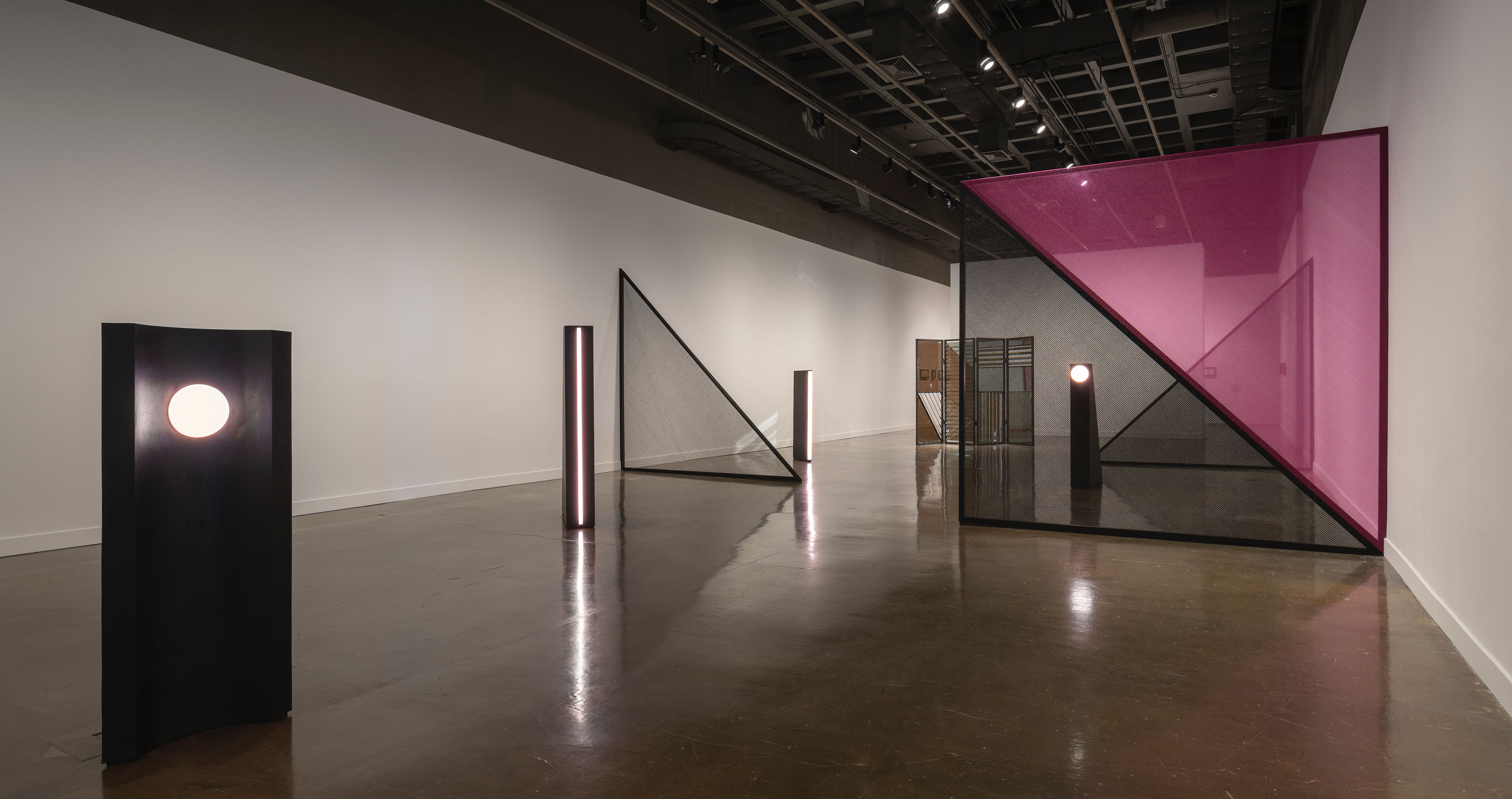
Safe passage, 2019
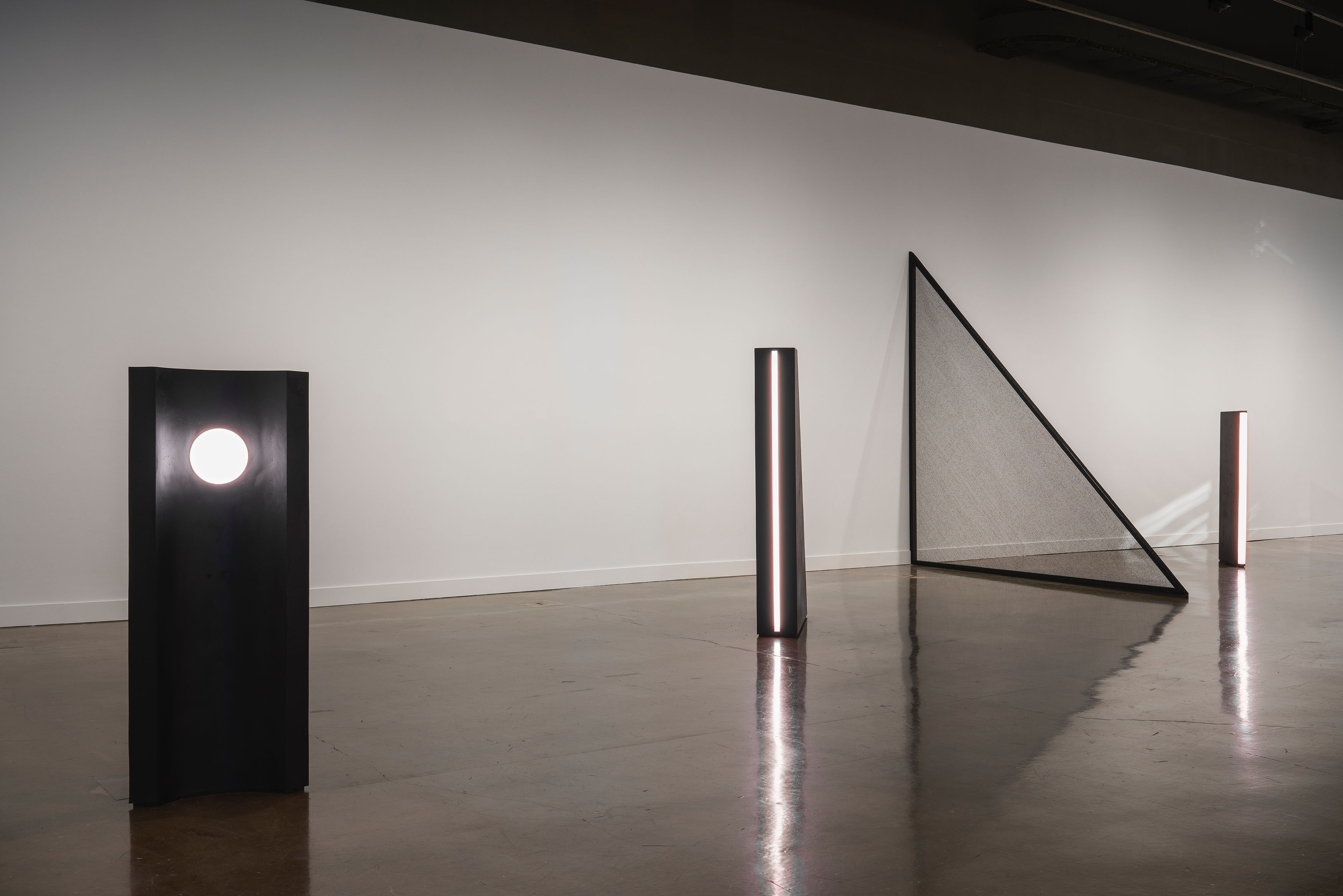
Safe passage, 2019
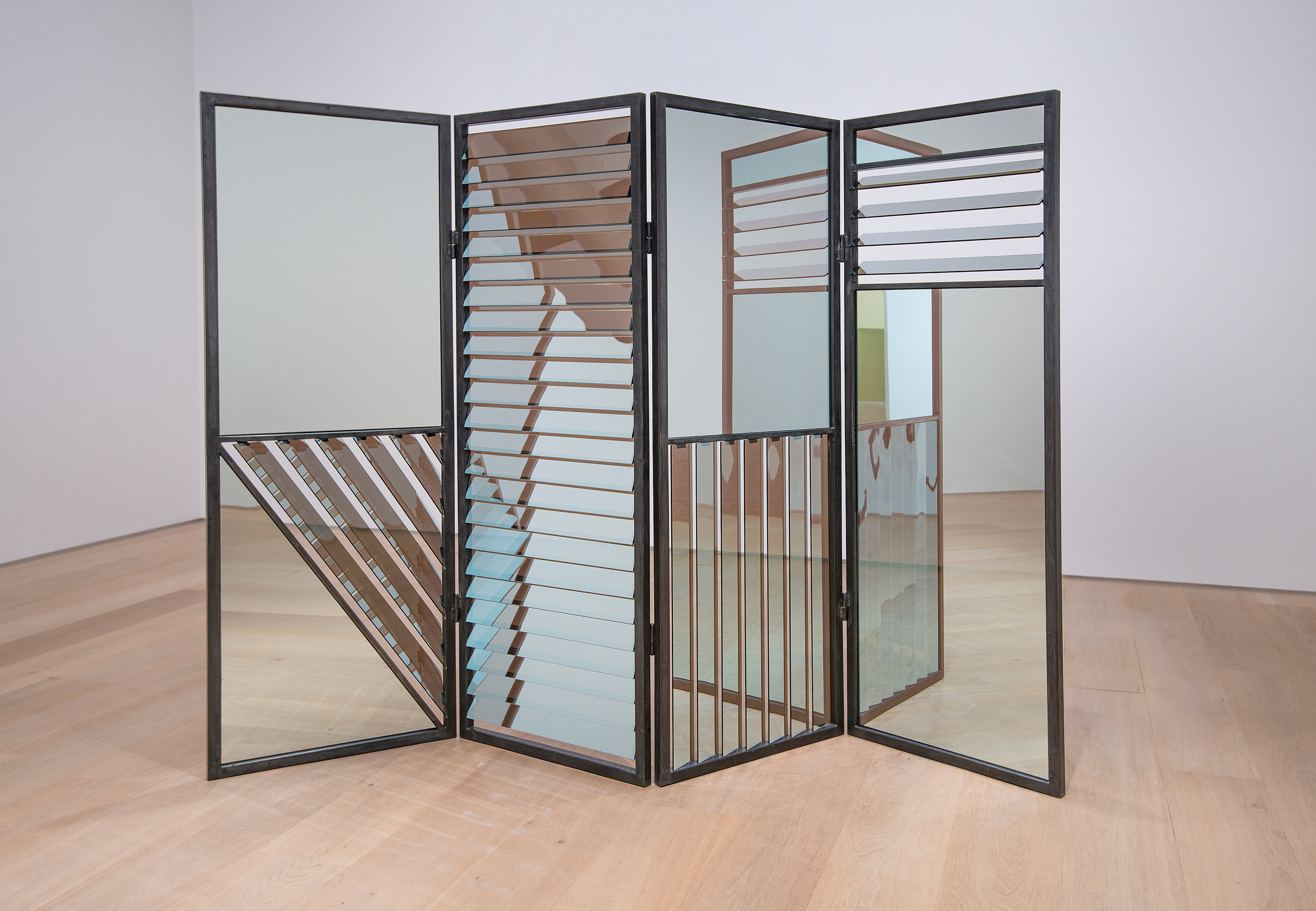
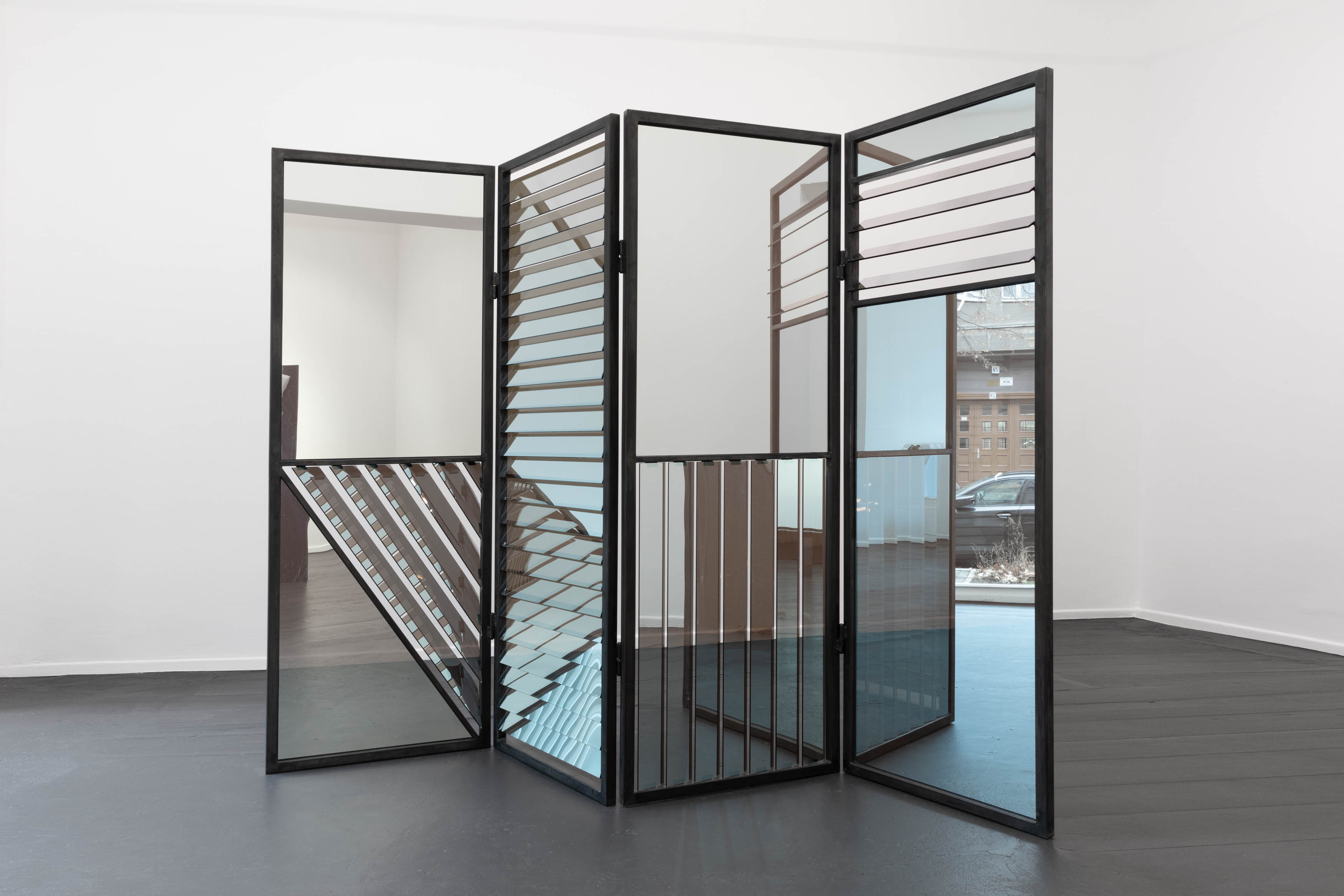
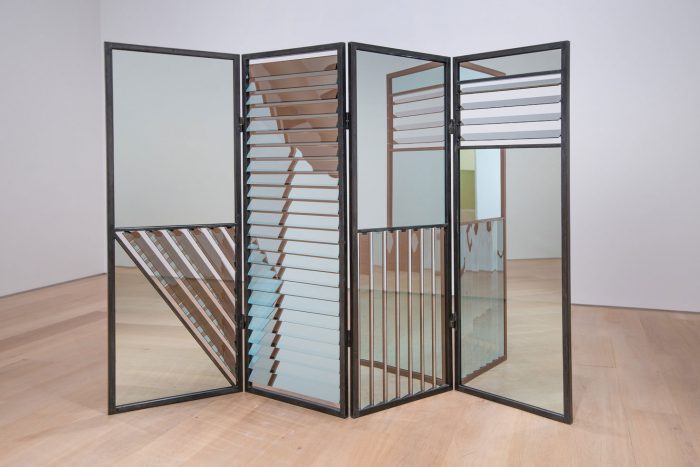
Jalousie, 2018
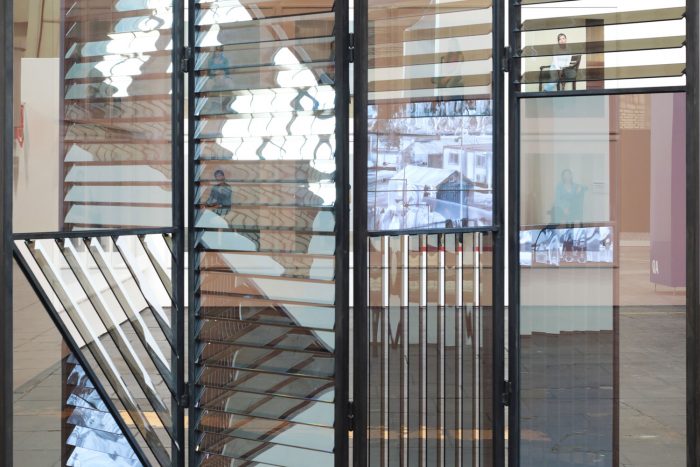
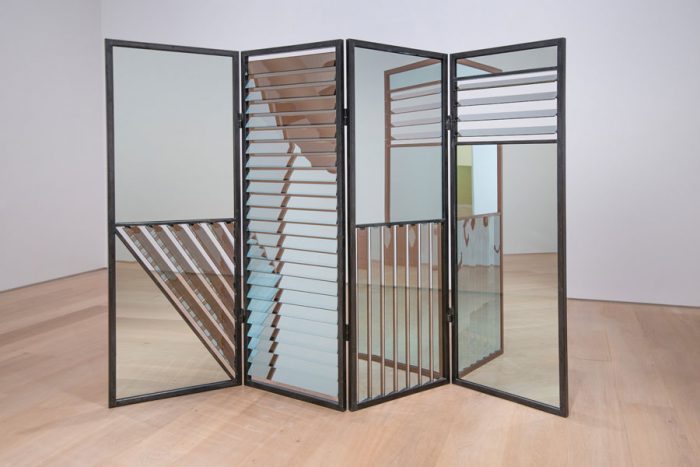
The Jalousie is a structure comprised of angled slats with window treatment. These architectural elements create a unidirectional gaze, both allow one to see out while remaining unseen. The work reflects the dynamics of control and surveillance of disciplinary architecture. Similar architectural elements are used for discrete observation in interrogation rooms, or protecting workers in an office building from the gaze of street-level passersby.
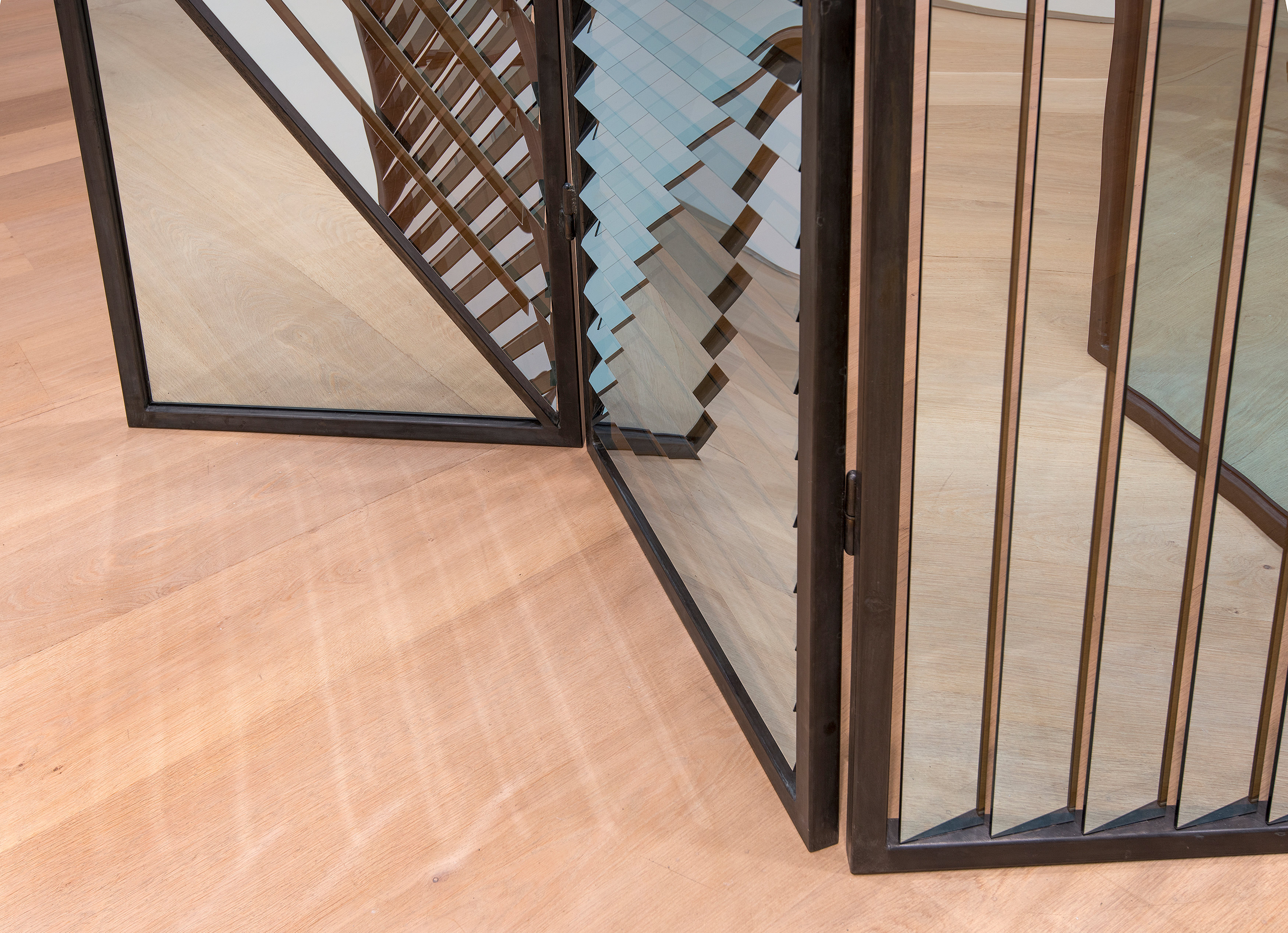
Jalousie, 2018
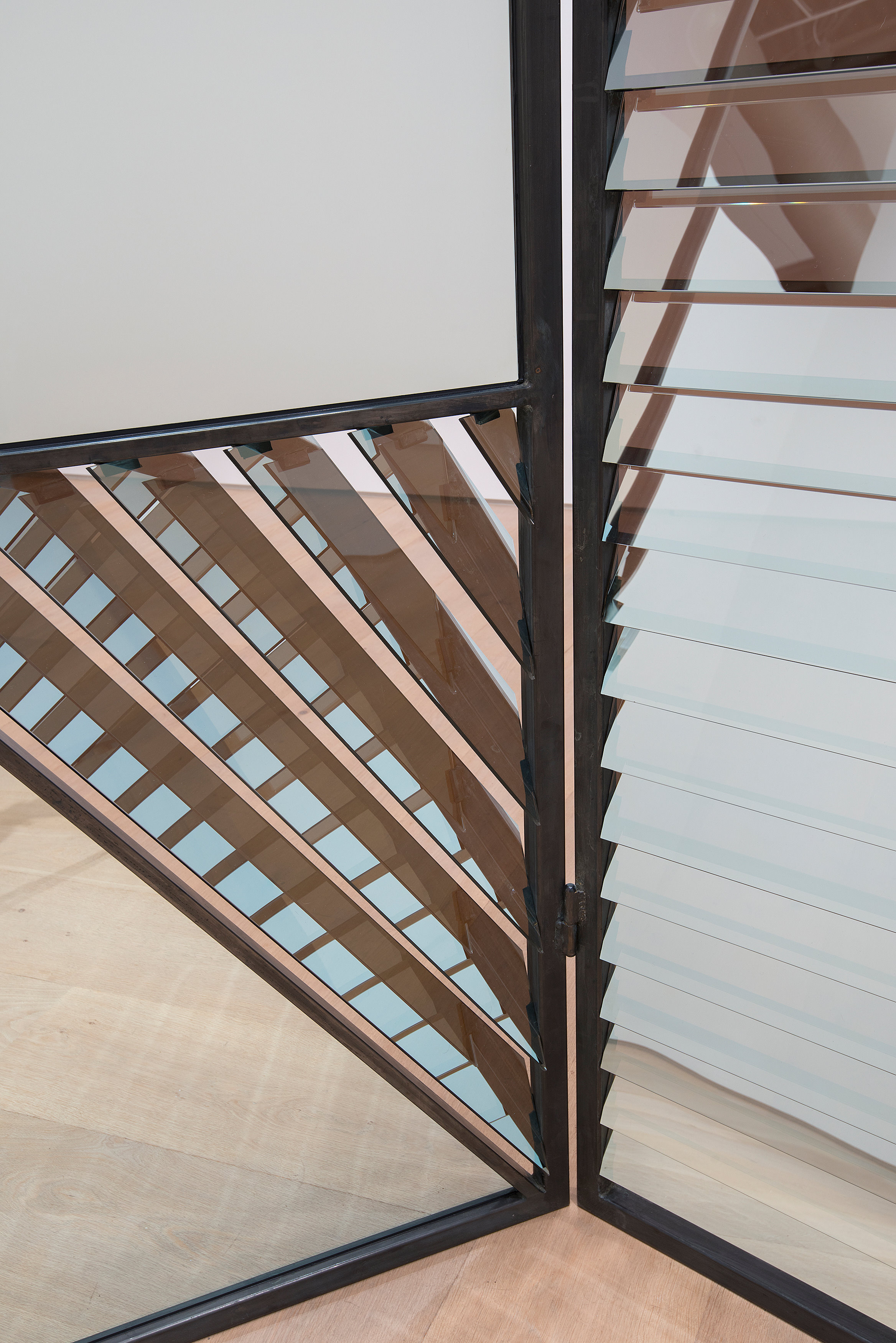
Jalousie, 2018
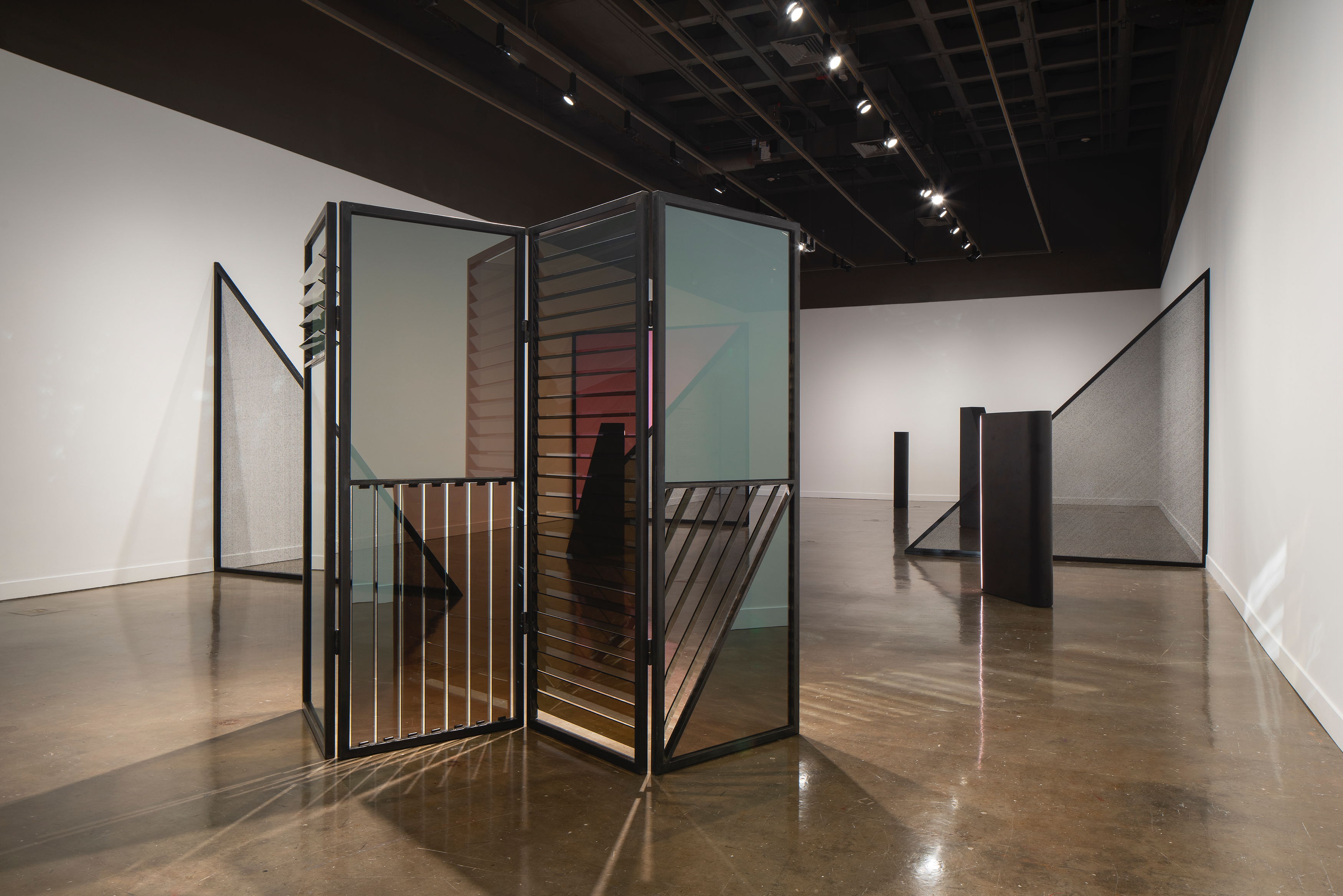
Jalousie, 2018
Jalousie, 2018
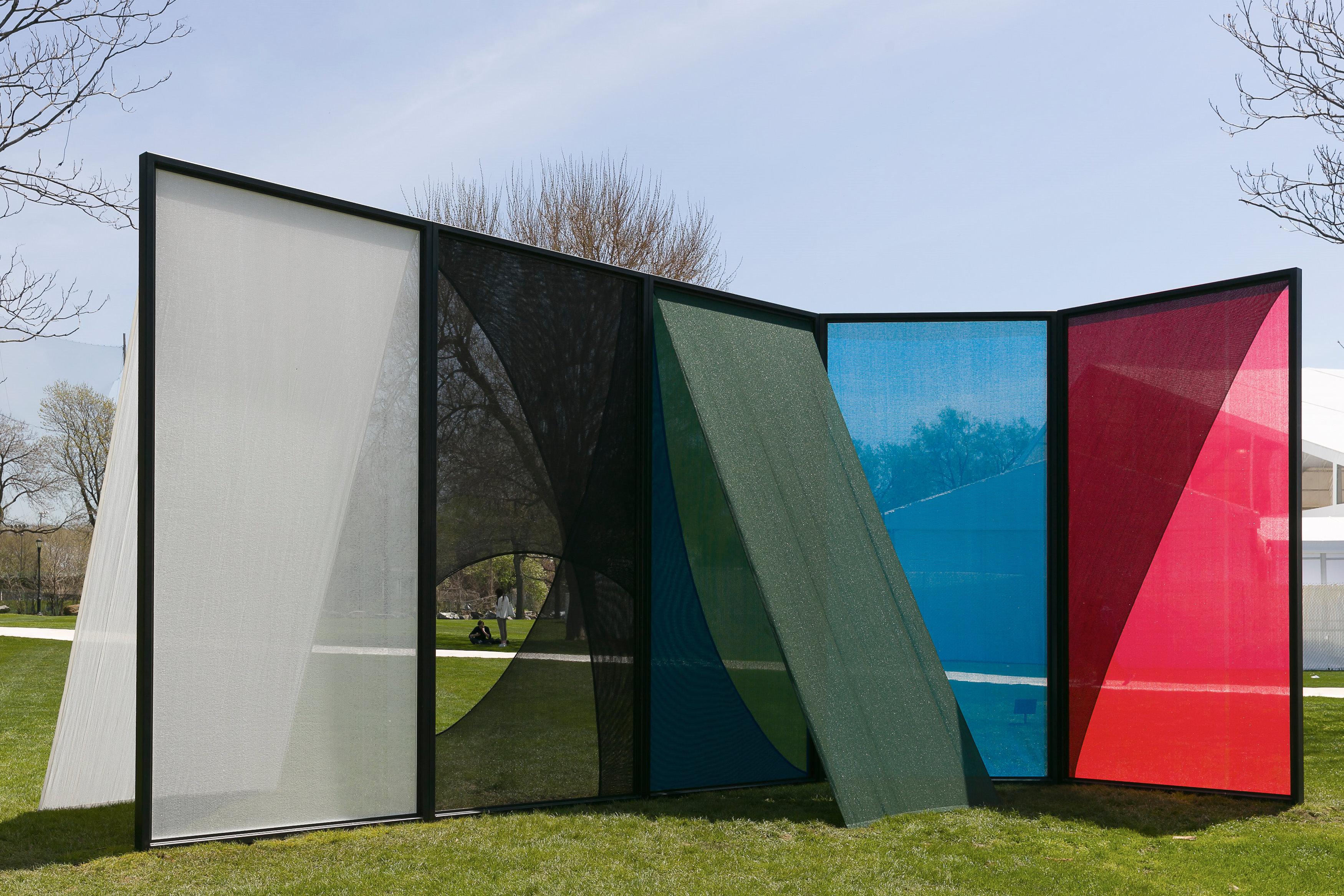
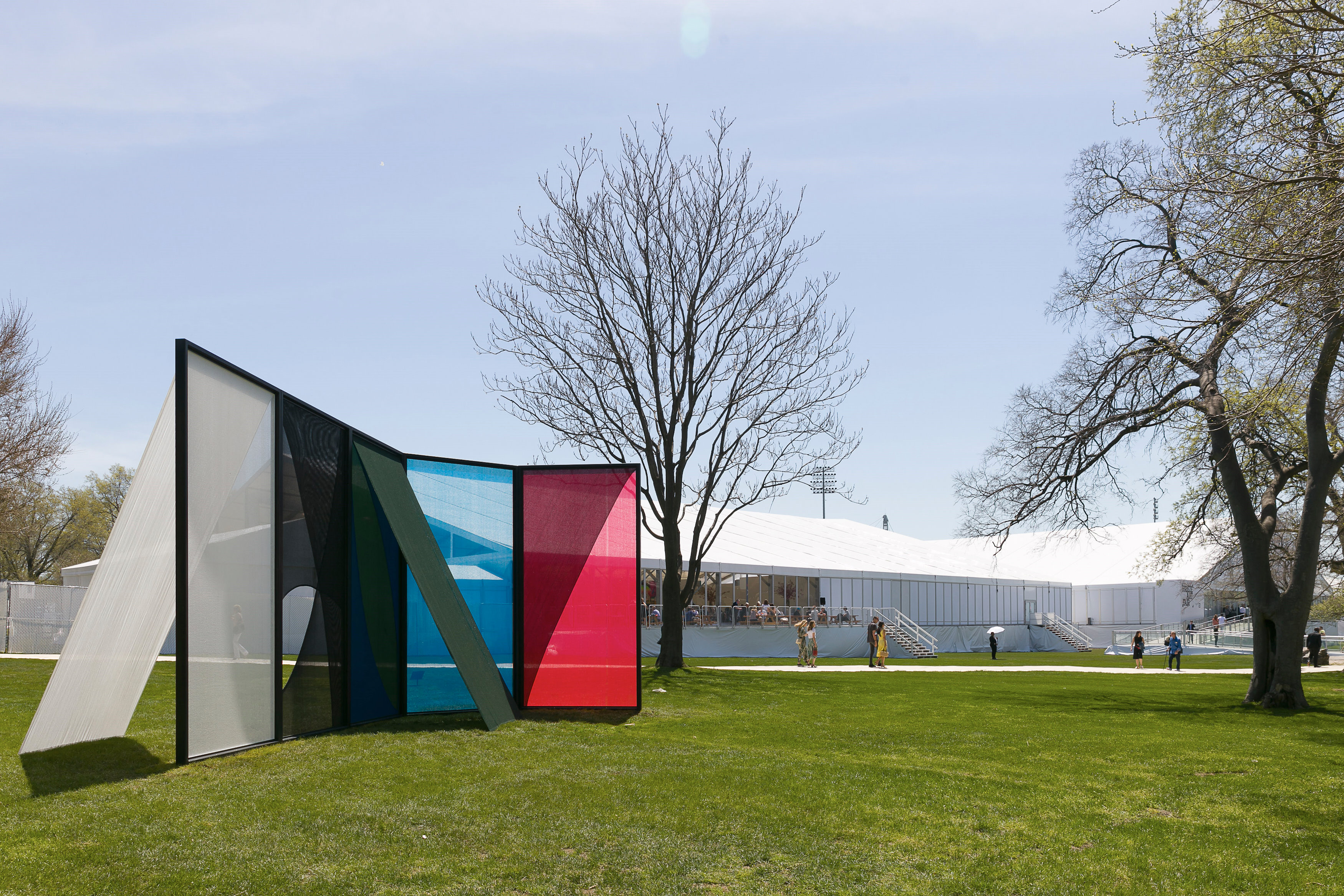
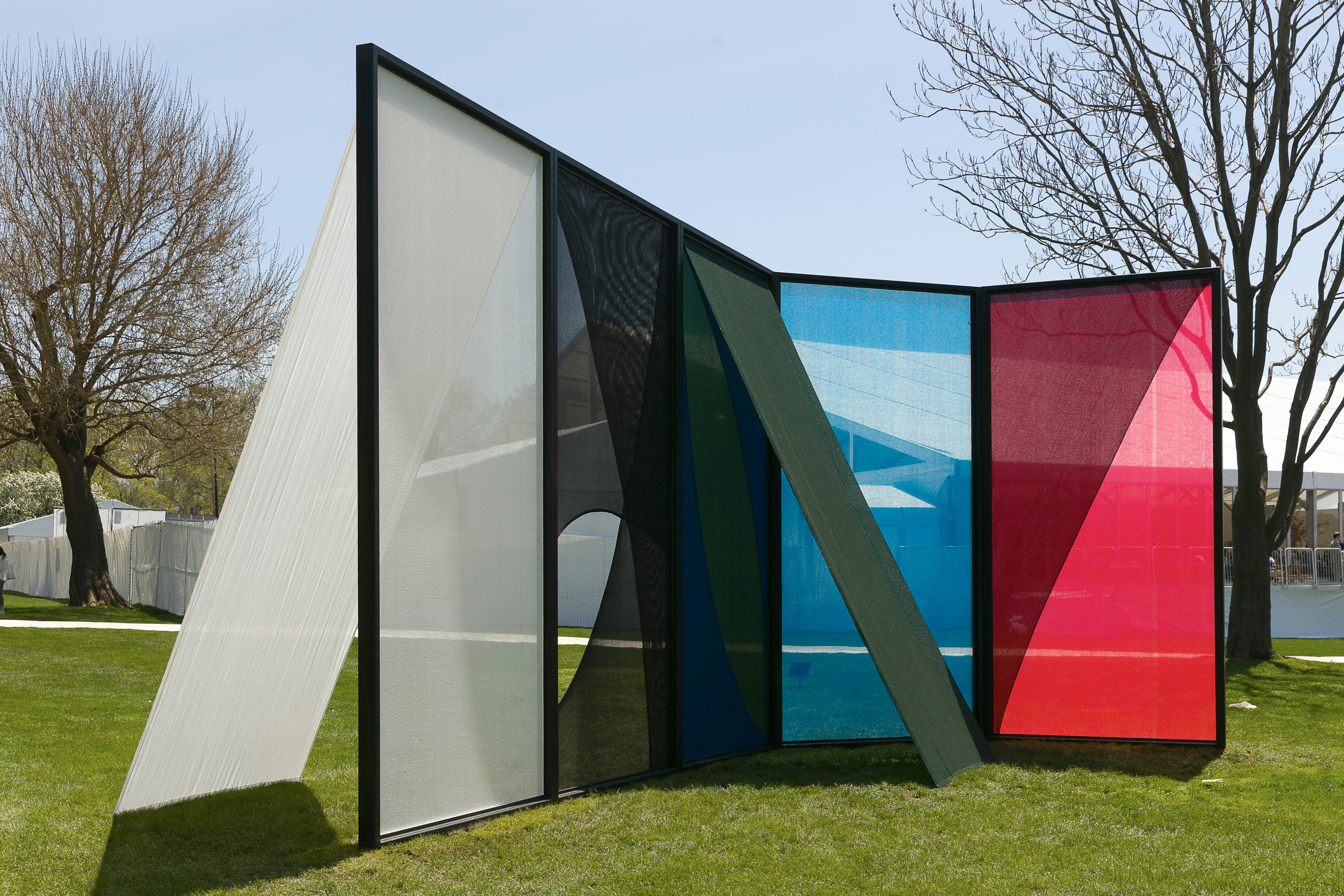
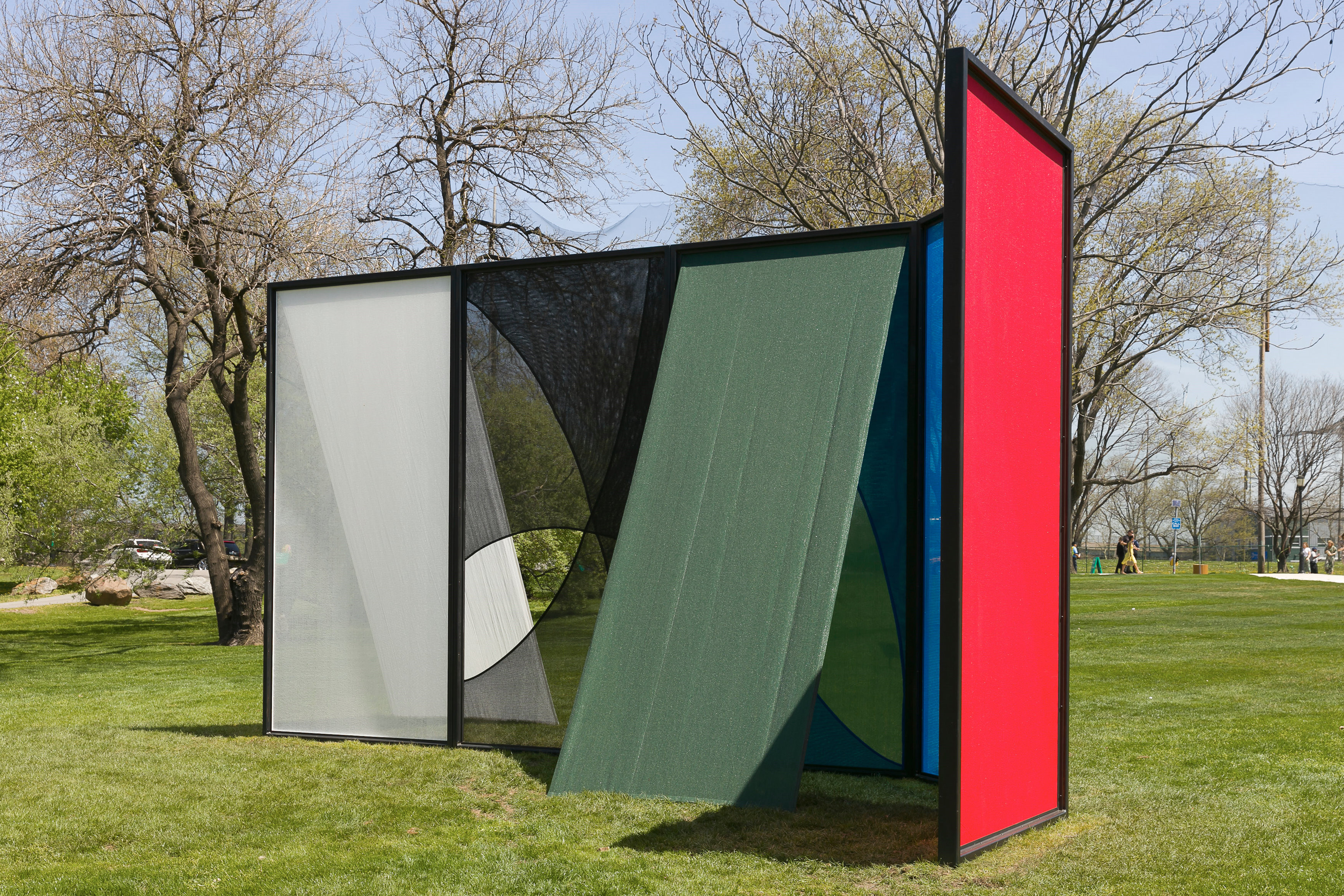
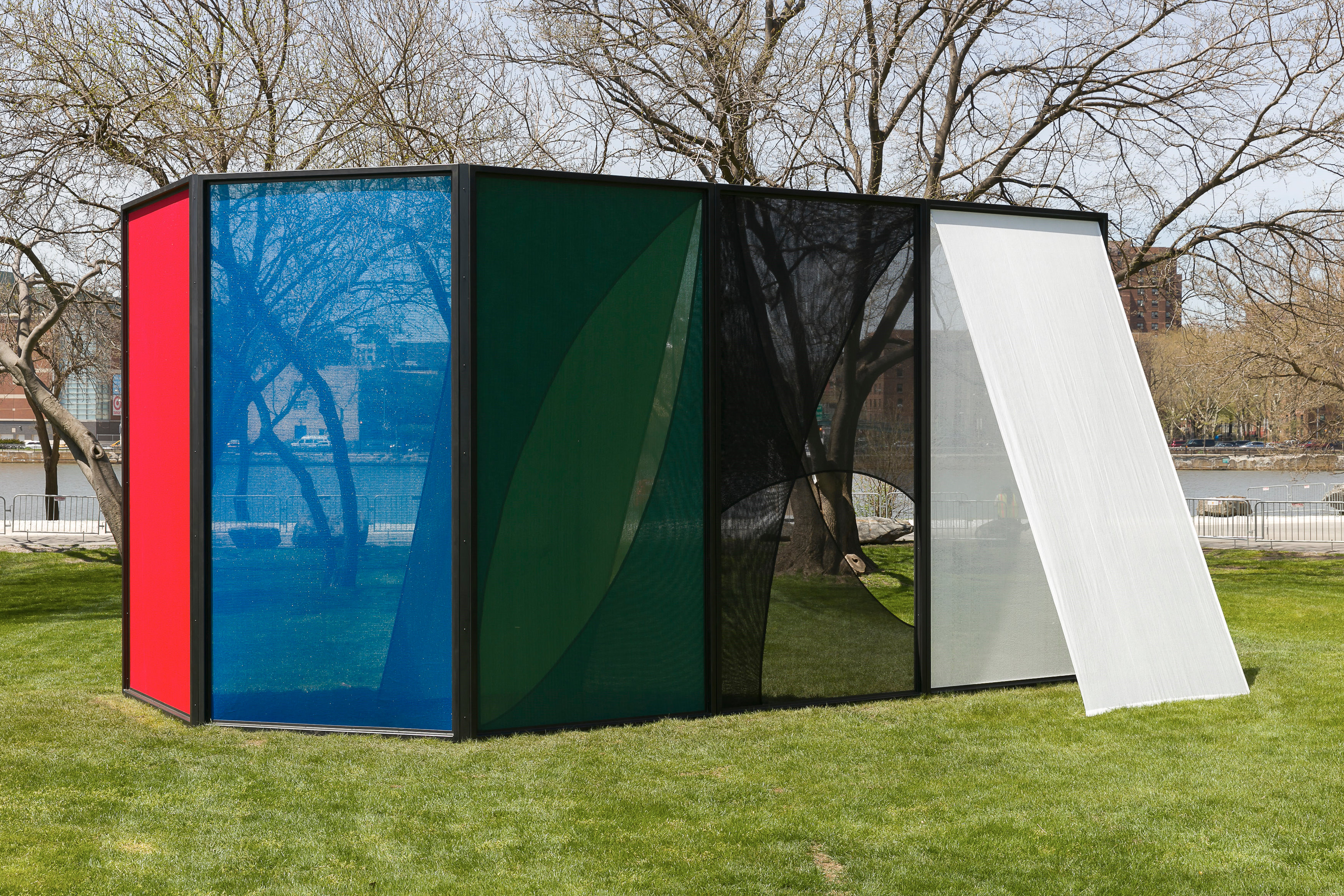
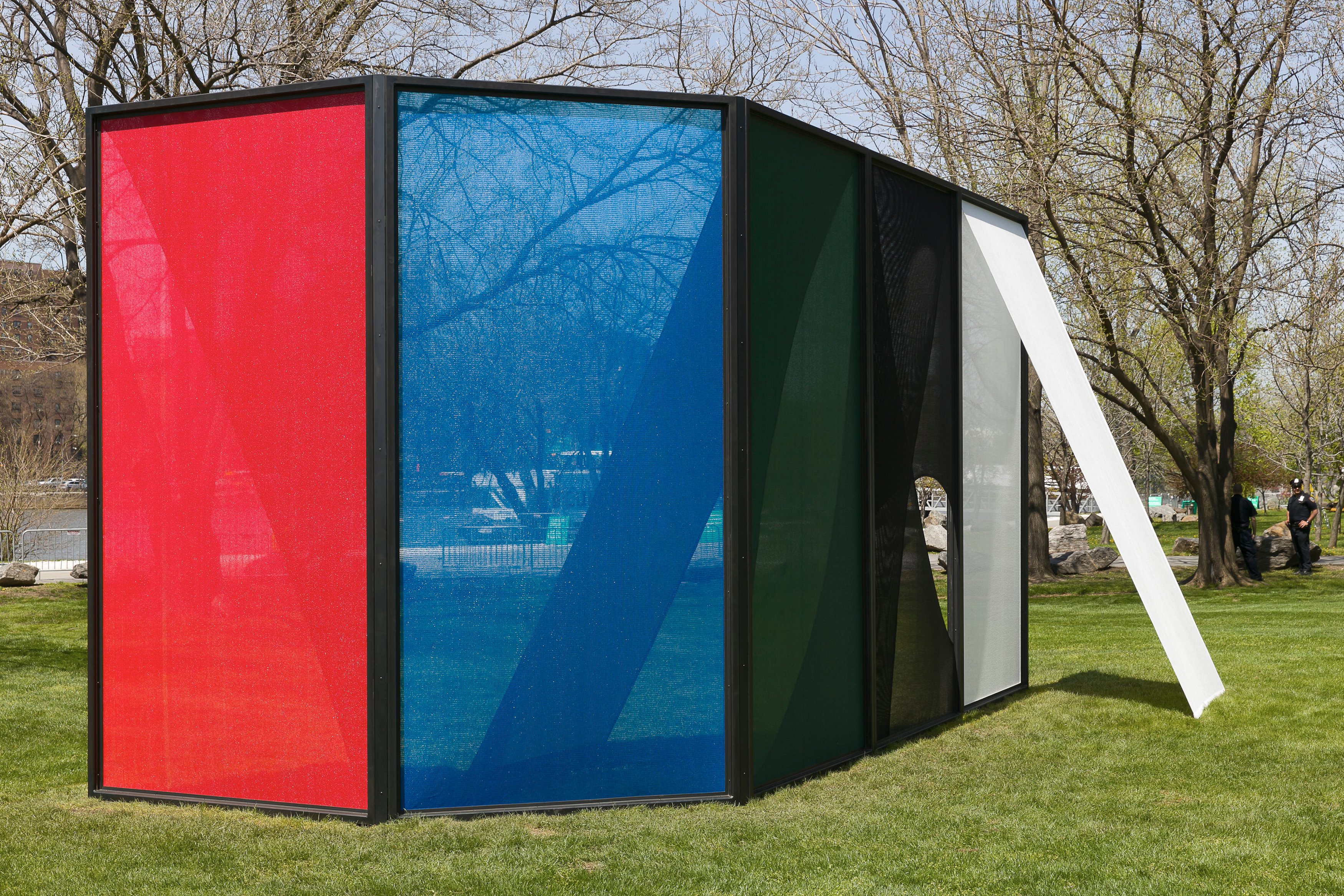
Shady, 2018
Shady is comprised of industrial metal and agricultural fabric, and then punctuated by holes and passageways. It is an imposing structure, both inviting and obstructing movement. Specifically, the fabric here is Shade Cloth, which has been used for large-scale farming on the African continent and beyond. The title of the work suggests its political undertones, scrutinizing the colonial appropriation of land from indigenous communities and the manipulation of the environment for economic gain.
Shady, 2018
Shady, 2018
Shady, 2018
Shady, 2018
Shady, 2018
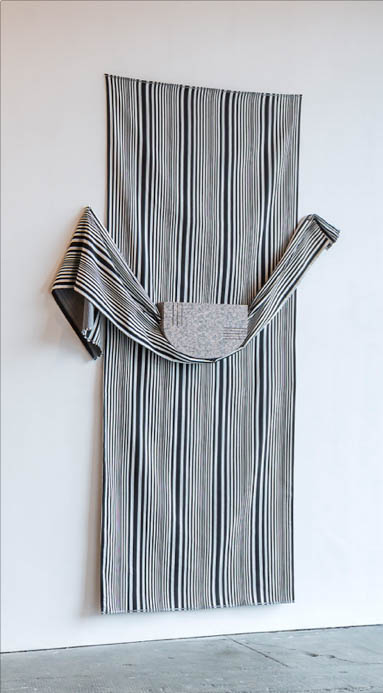
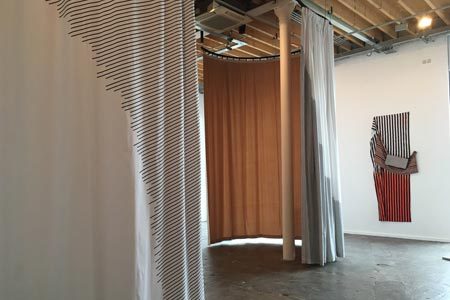
Soft Measures, 2018
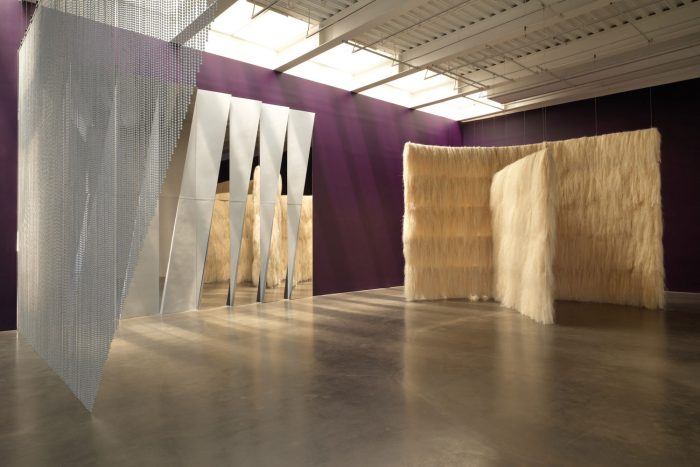
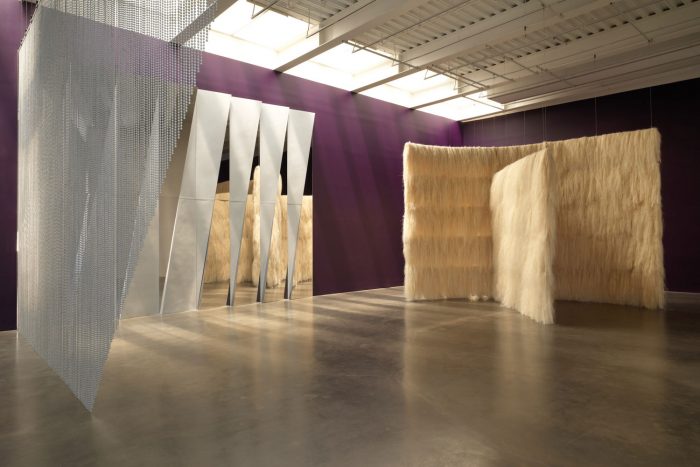
Kapwani Kiwanga takes the concept of Pangaea Ultima as a starting point for this multi-faceted installation entitled Soft Measures. Based off the fact that Europe is moving towards Africa at the rate of approximately 2 cm per year, scientist suggest that a supercontinent, so-called Pangaea Ultima, will form with Europe slipping underneath Africa. The installation imagines speculative fictions getting stretched thin through a perspective of deep geological time.
Monumental curtains meet, as tectonic planes might, whilst additional elements incorporating rocks and matter further probe the underlying thematic currents of the work. In this way the artworks become protagonists that operate as tectonic plates, independent but moving along one another – pushing closer or pulling away.
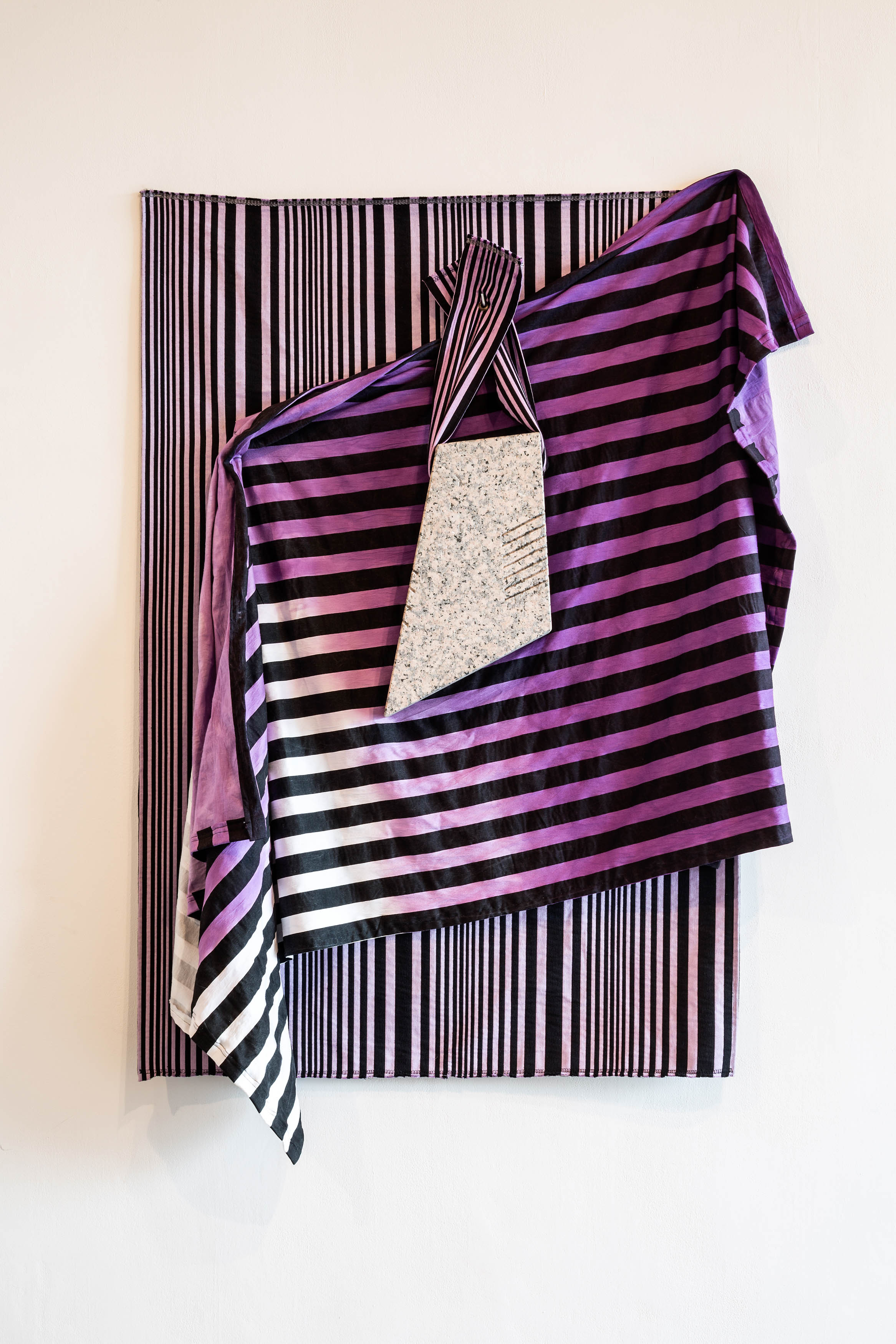
Soft Measures, 2018
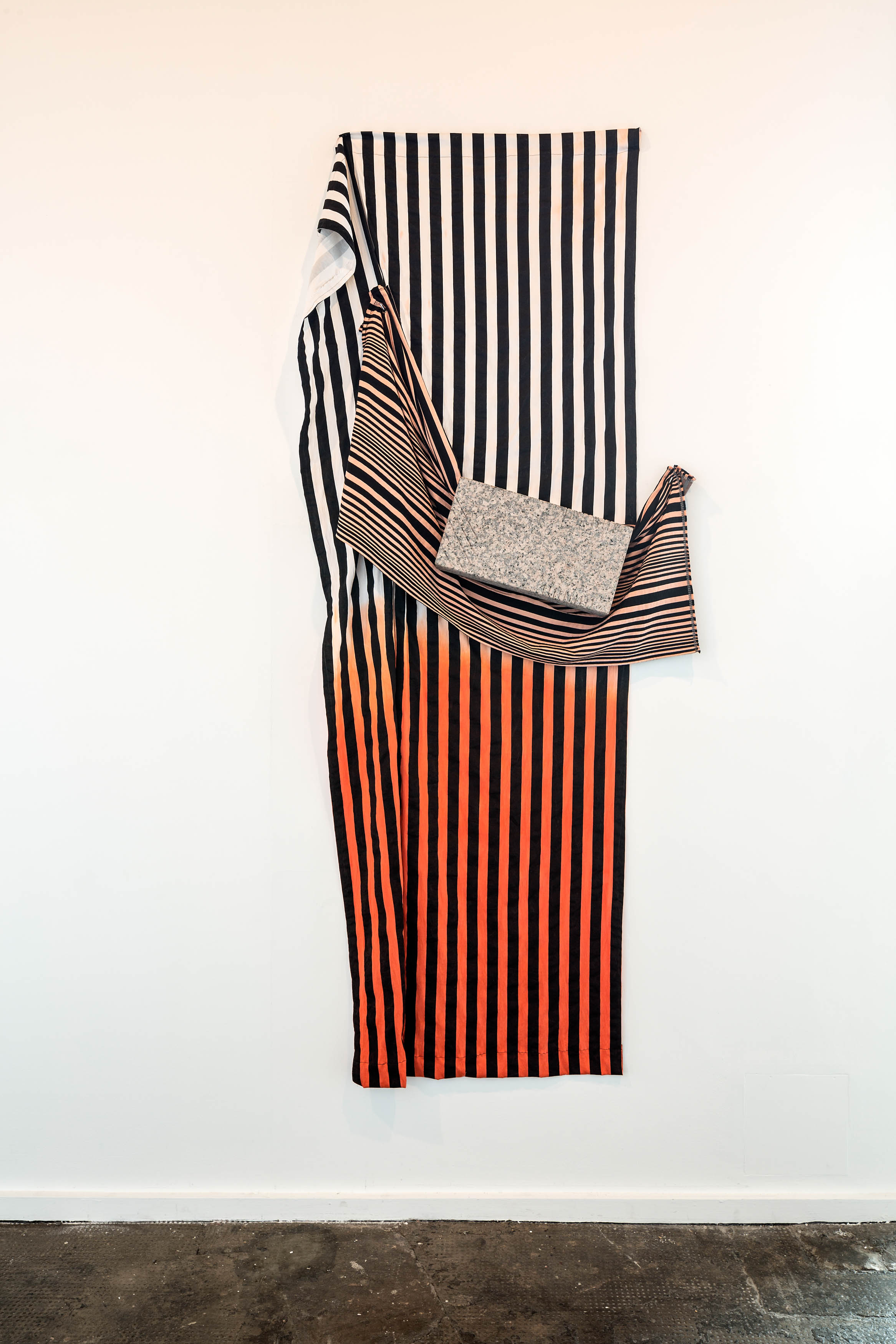
Soft Measures, 2018
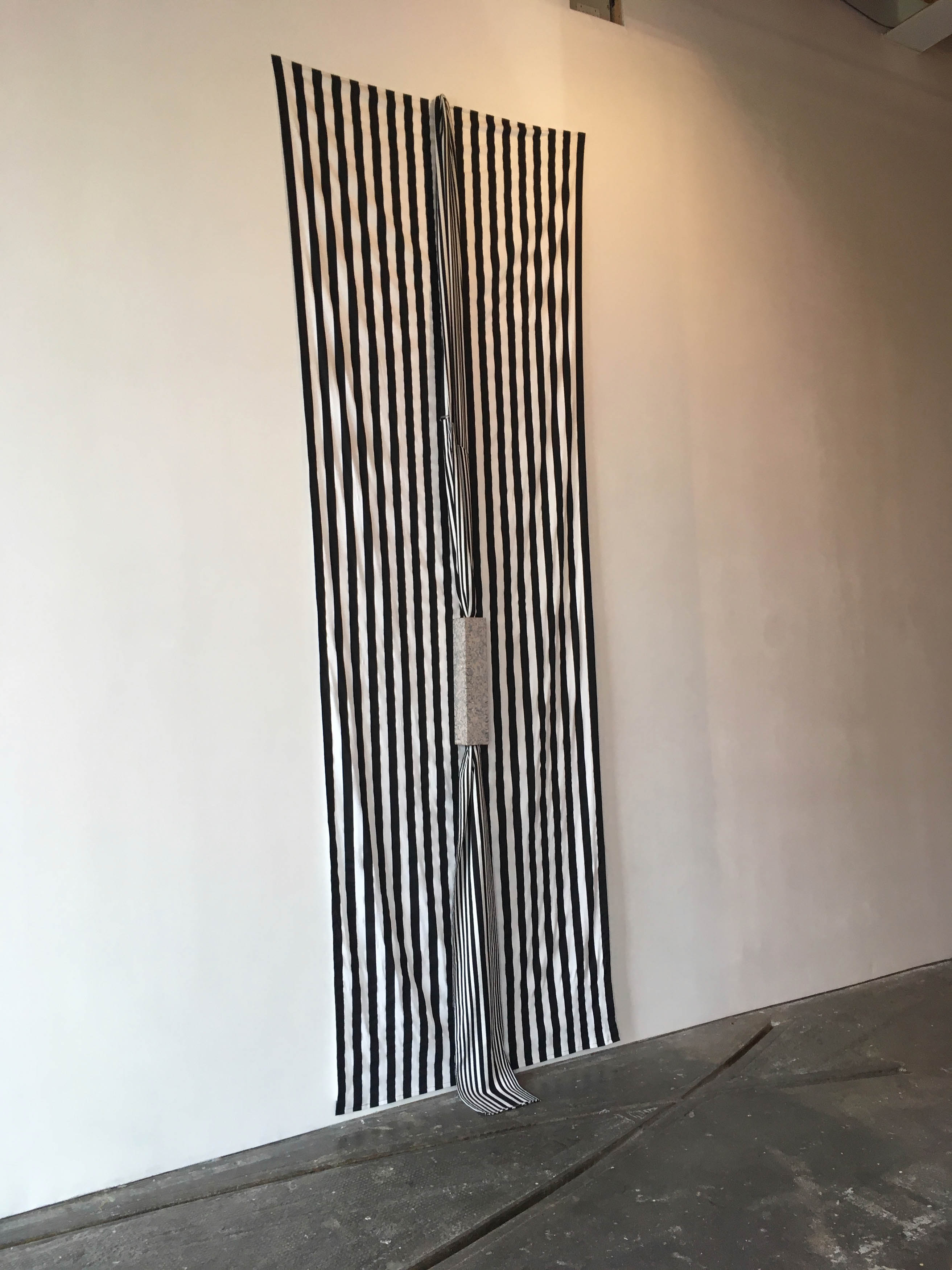
Soft Measures, 2018
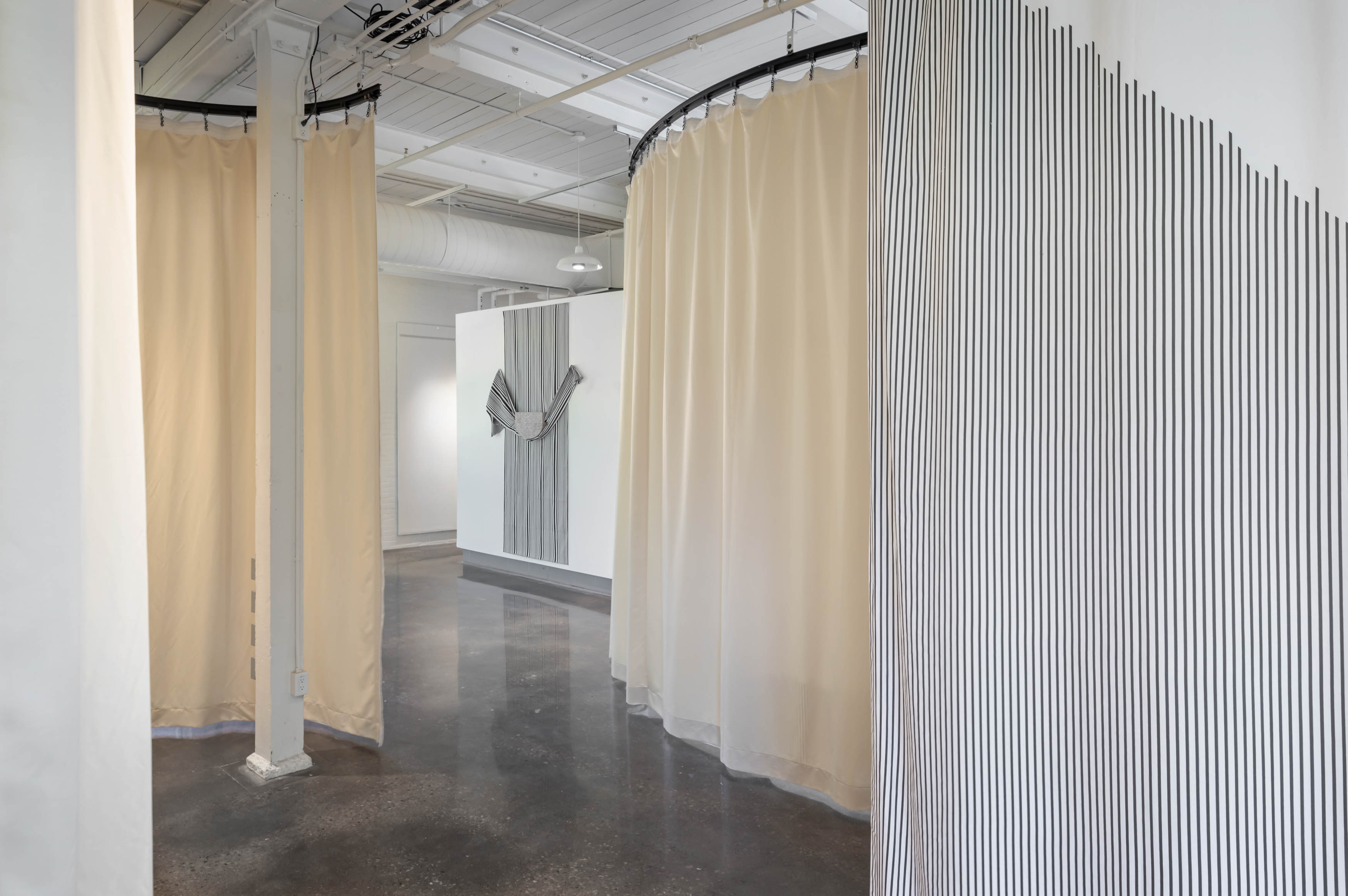
Soft Measures, 2018
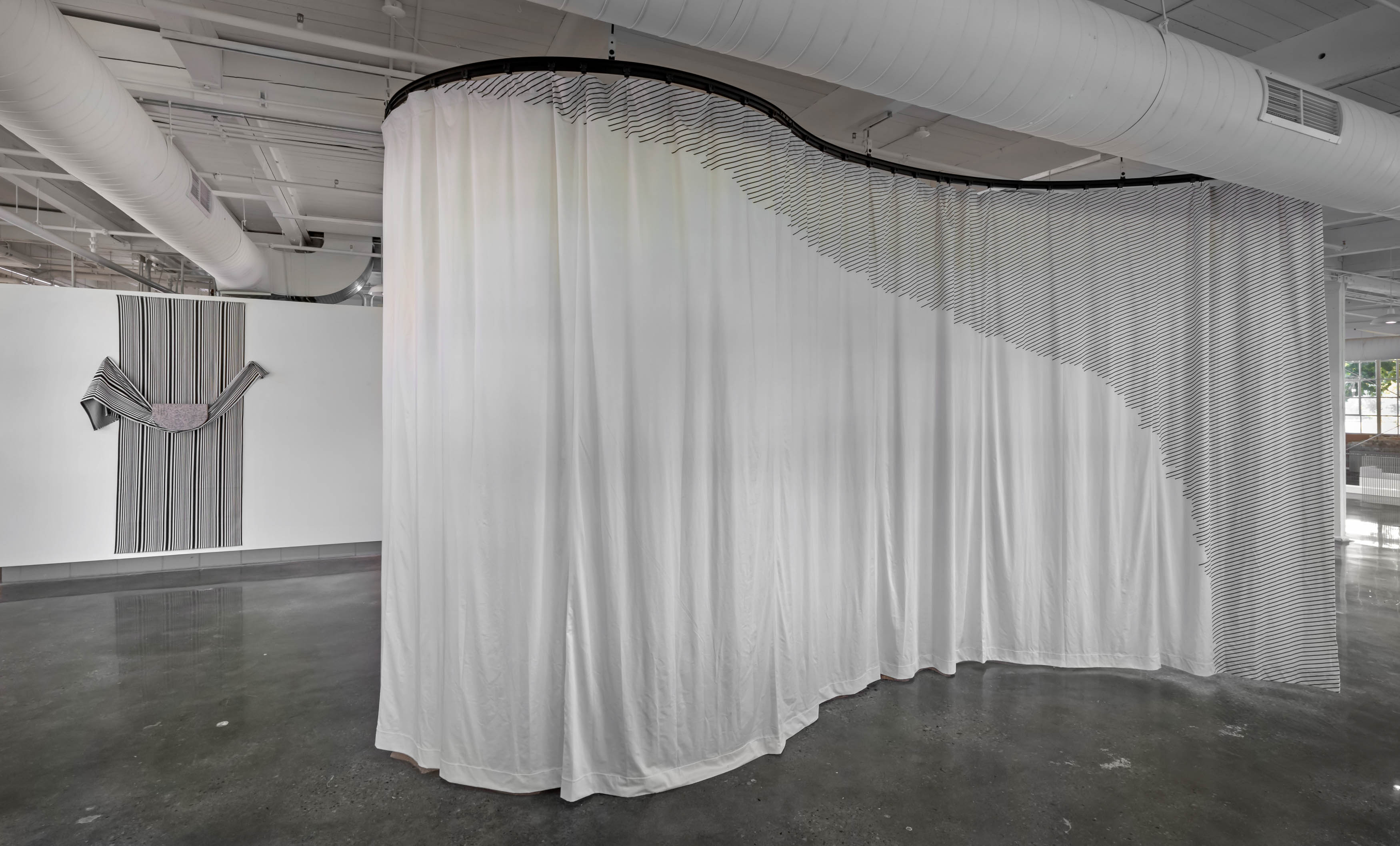
Soft Measures, 2018
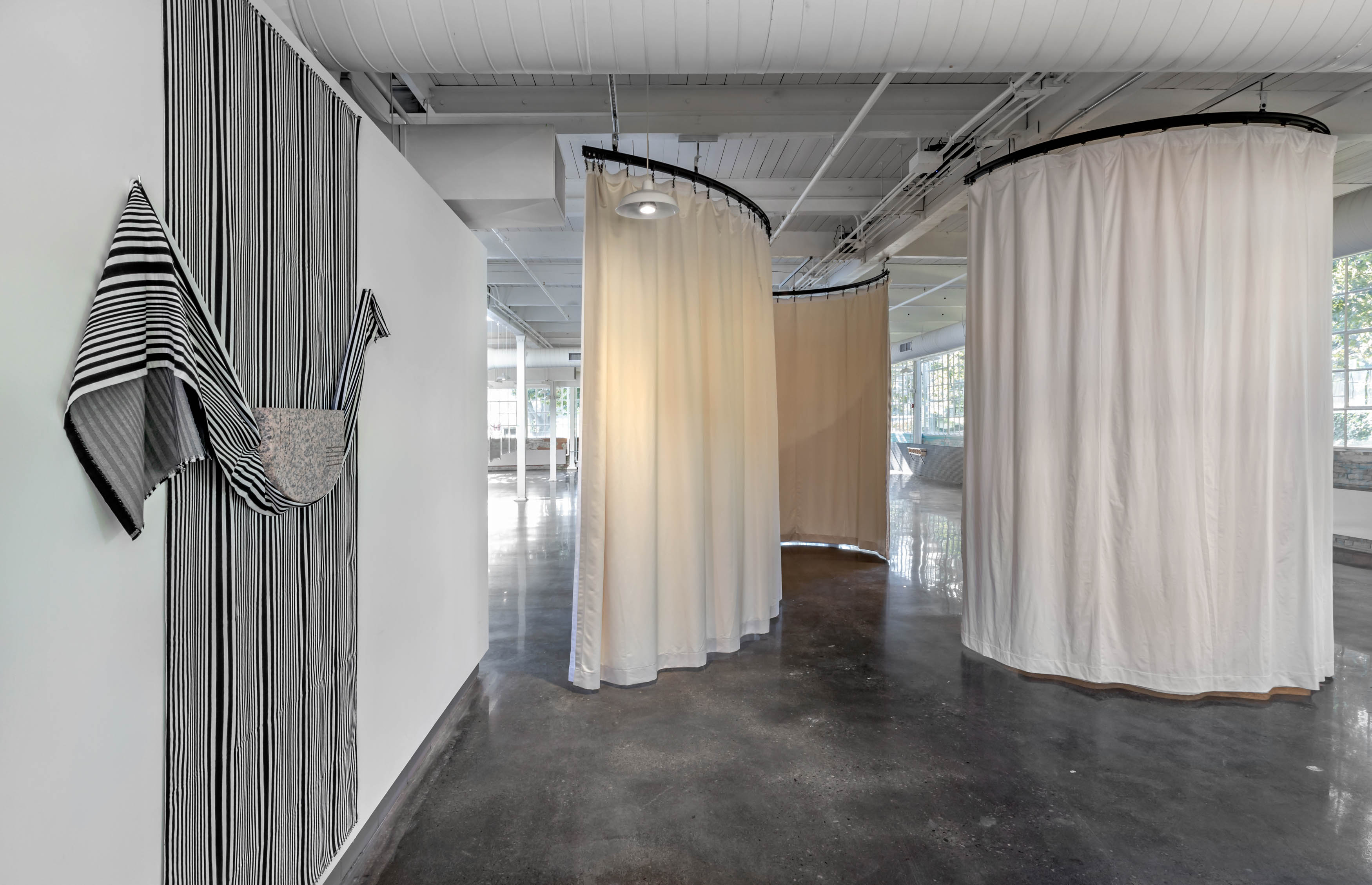
Soft Measures, 2018
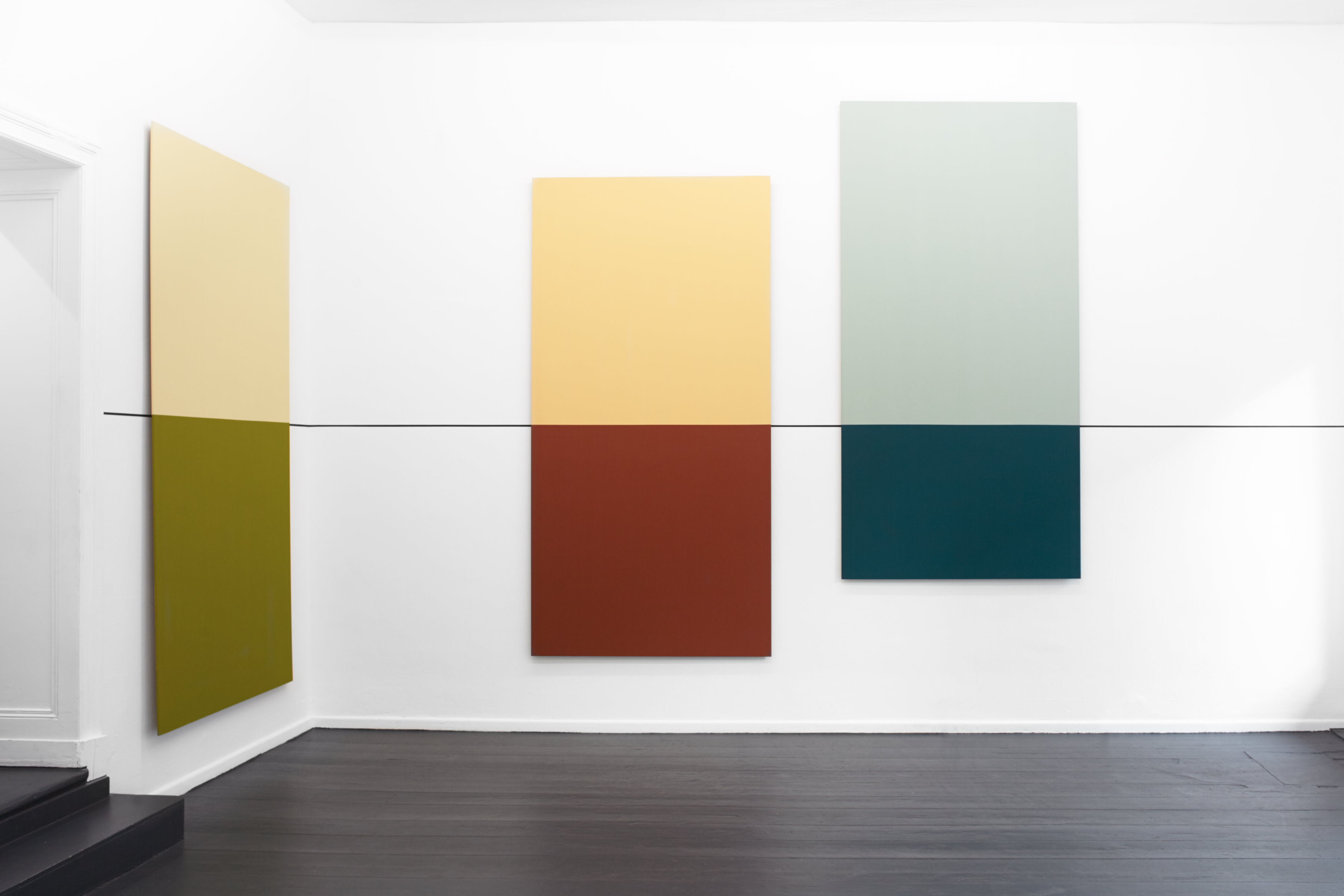
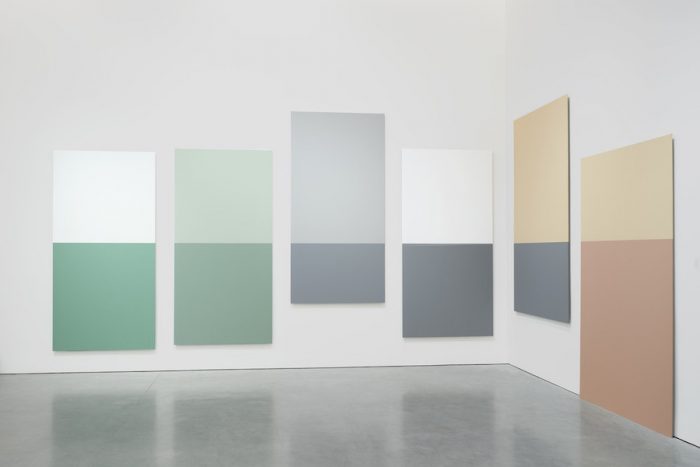
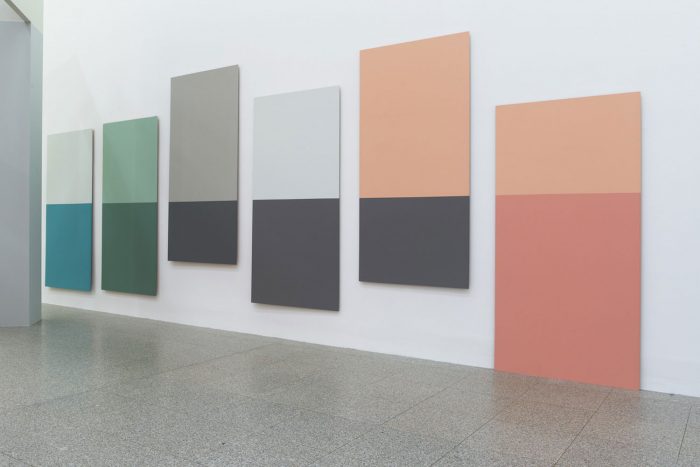
Linear Paintings, 2017
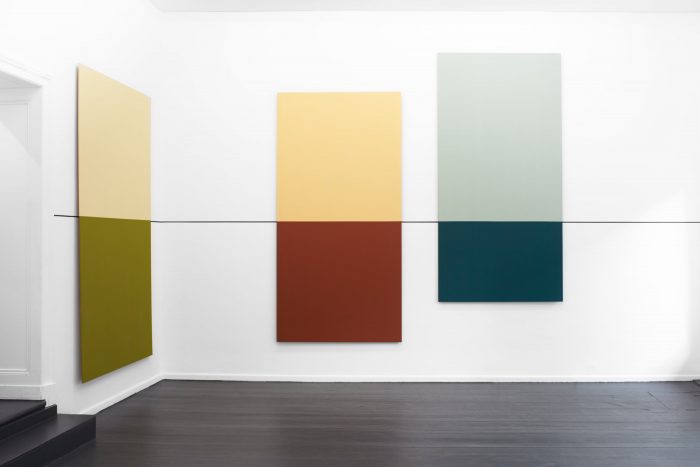
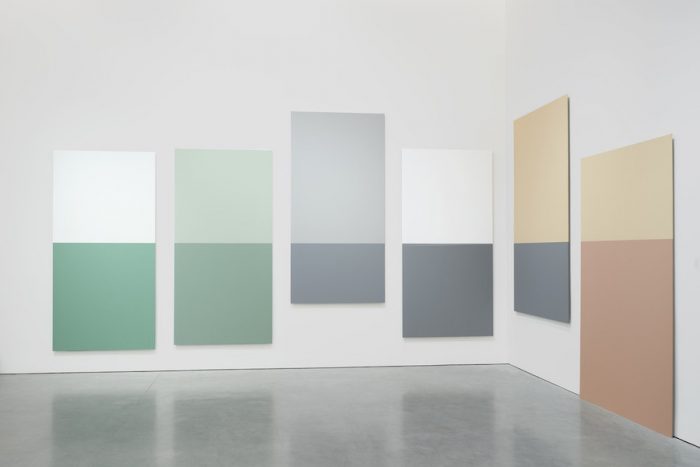
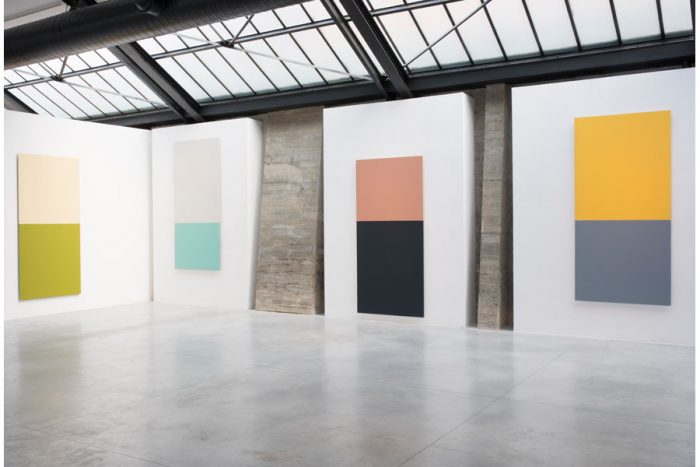
The Linear Paintings reflect Kapwani Kiwanga’s research into disciplinary architecture and the use of color to engender certain psychological effects within the interiors of institutions, such as schools, prisons, hospitals, and mental health facilities. Each painting in the series features a two-tone color palette on drywall. Kiwanga’s choice of color reflects social hygiene movements and hospital reforms at the turn of the 20th century as well as the work of Faber Birren. Birren developed a color theory which is applied to the conditions of work, learning, surveillance, healing, and care. The linear division of the paintings evokes the separation of social groups and societal hierarchies with direct reference to historic sites of institutional control – such as the prison walls of a French penal colony of Guyana, operating rooms in San Francisco, a Canadian psychological hospital, or the workplace to improve performance, as in Chicago’s printing company RR Donnelley and Sons.
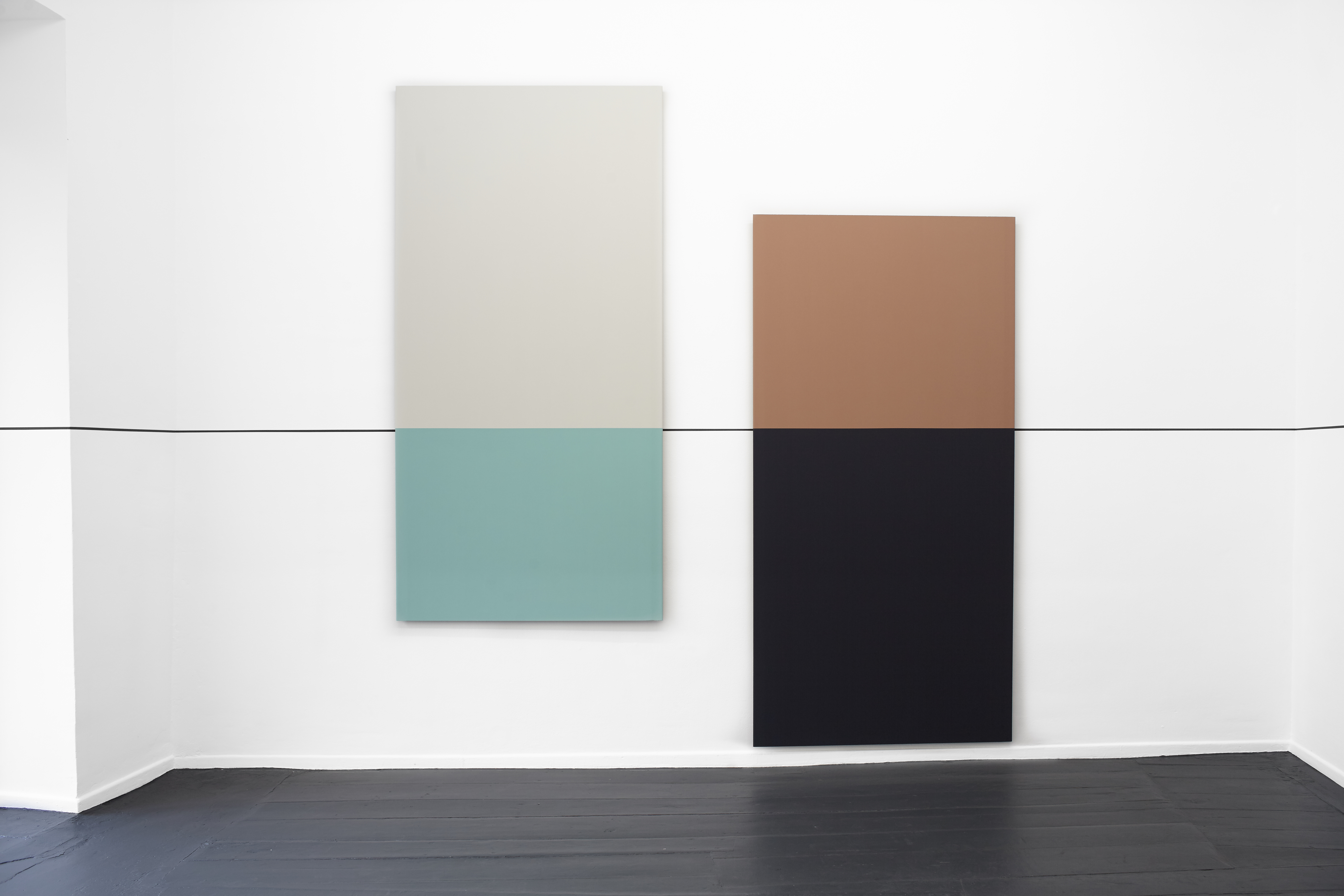
Linear Paintings, 2017
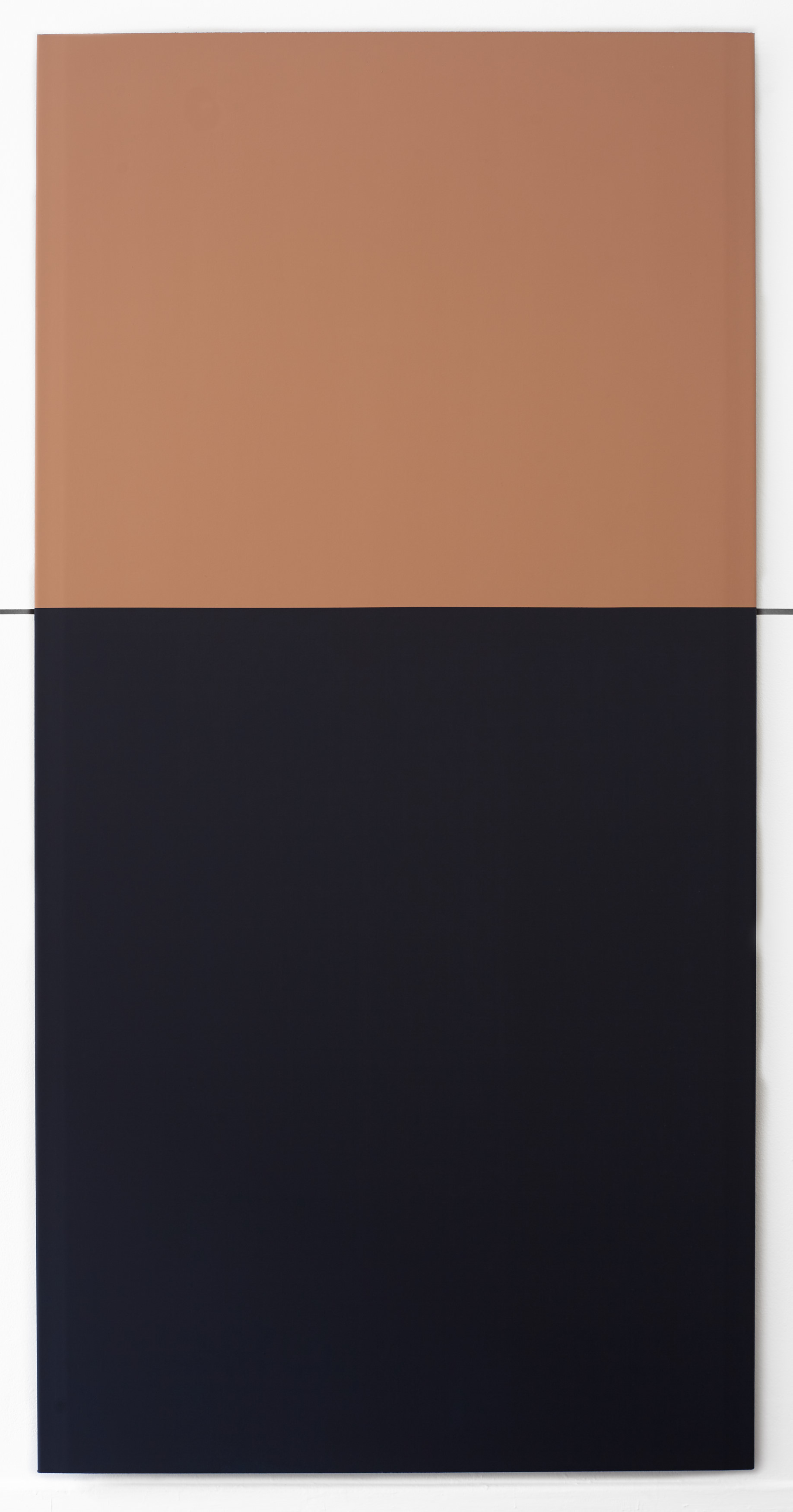
Linear Paintings, 2017
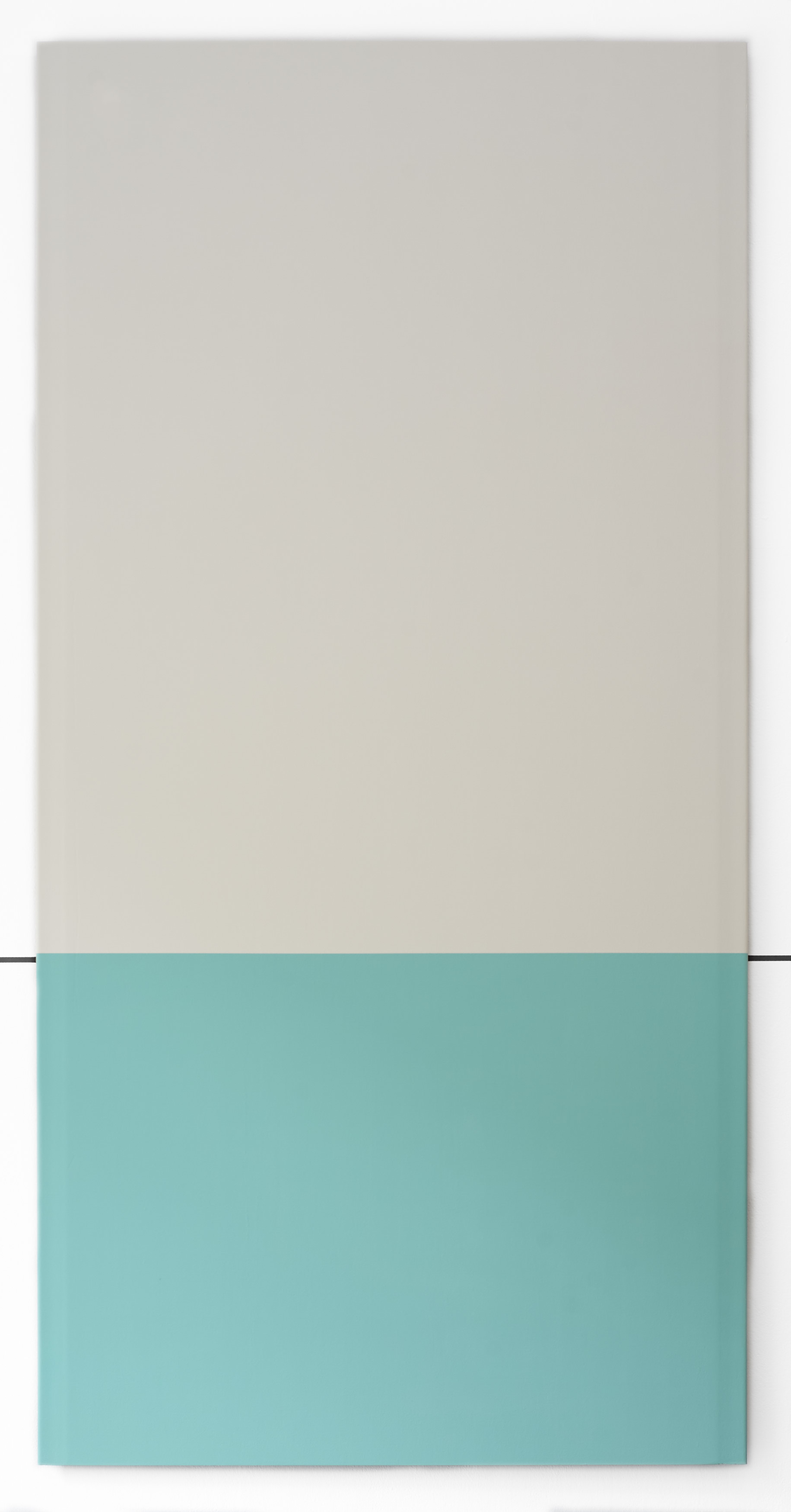
Linear Paintings, 2017
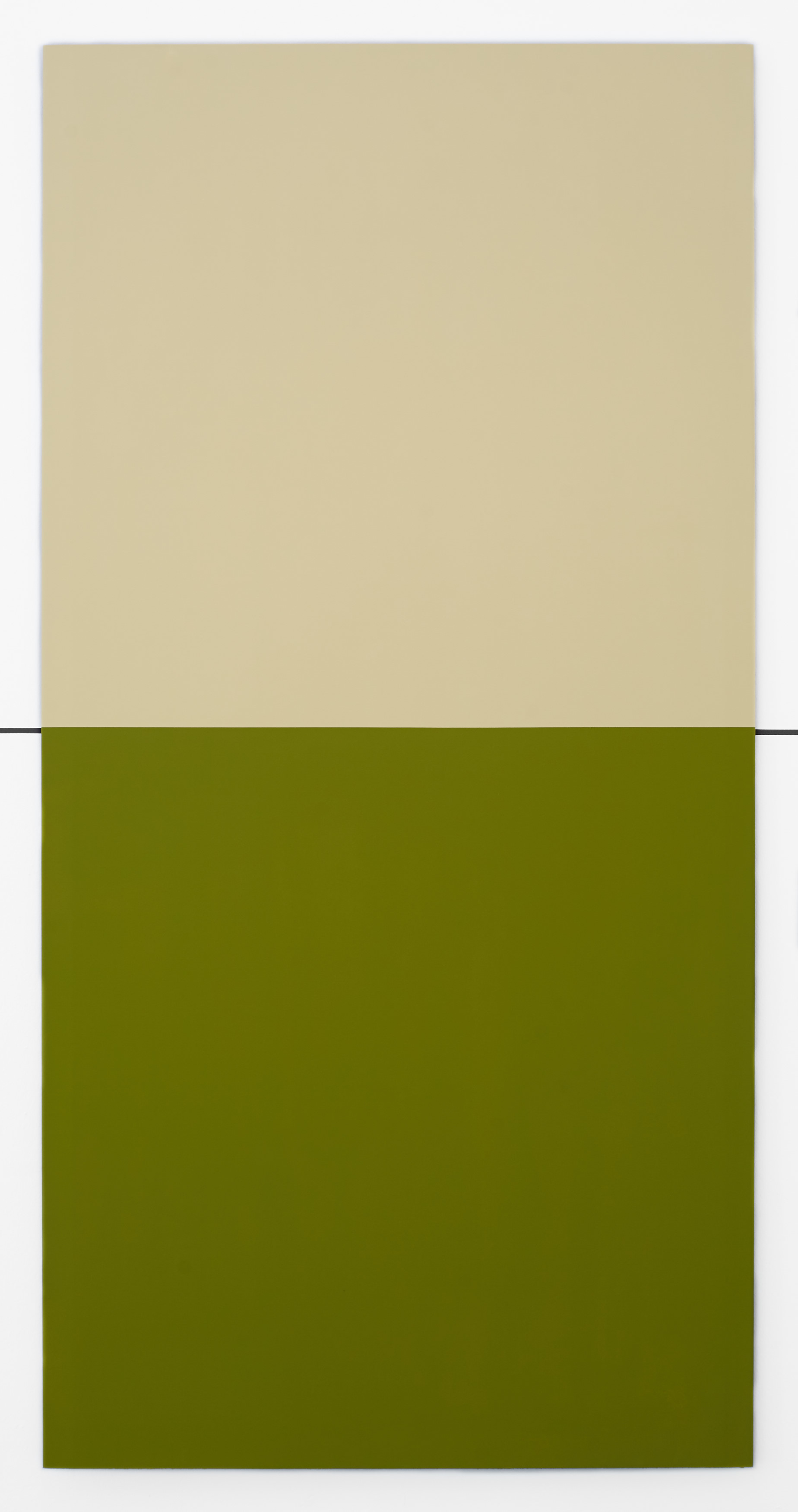
Linear Paintings, 2017
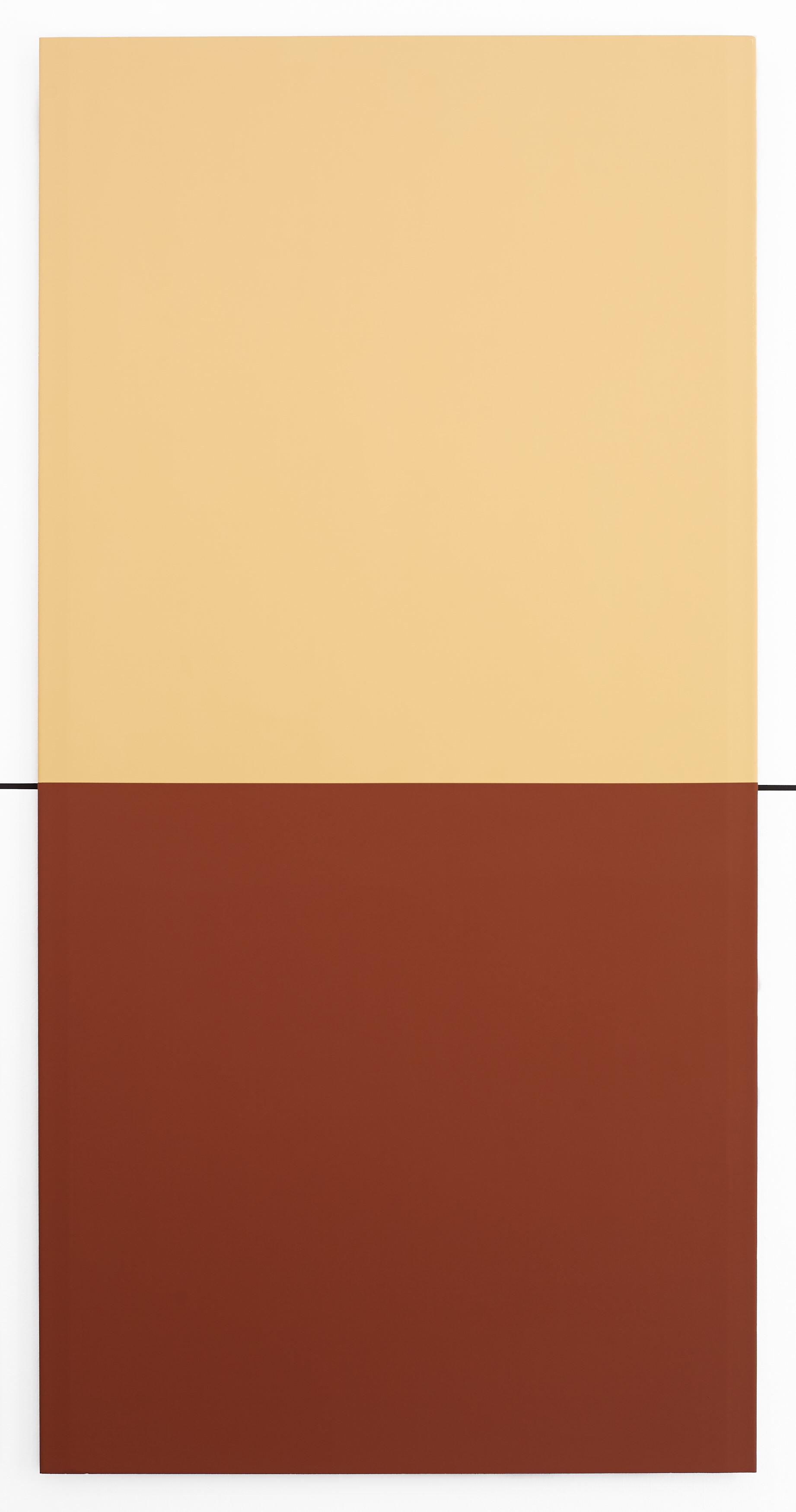
Linear Paintings, 2017
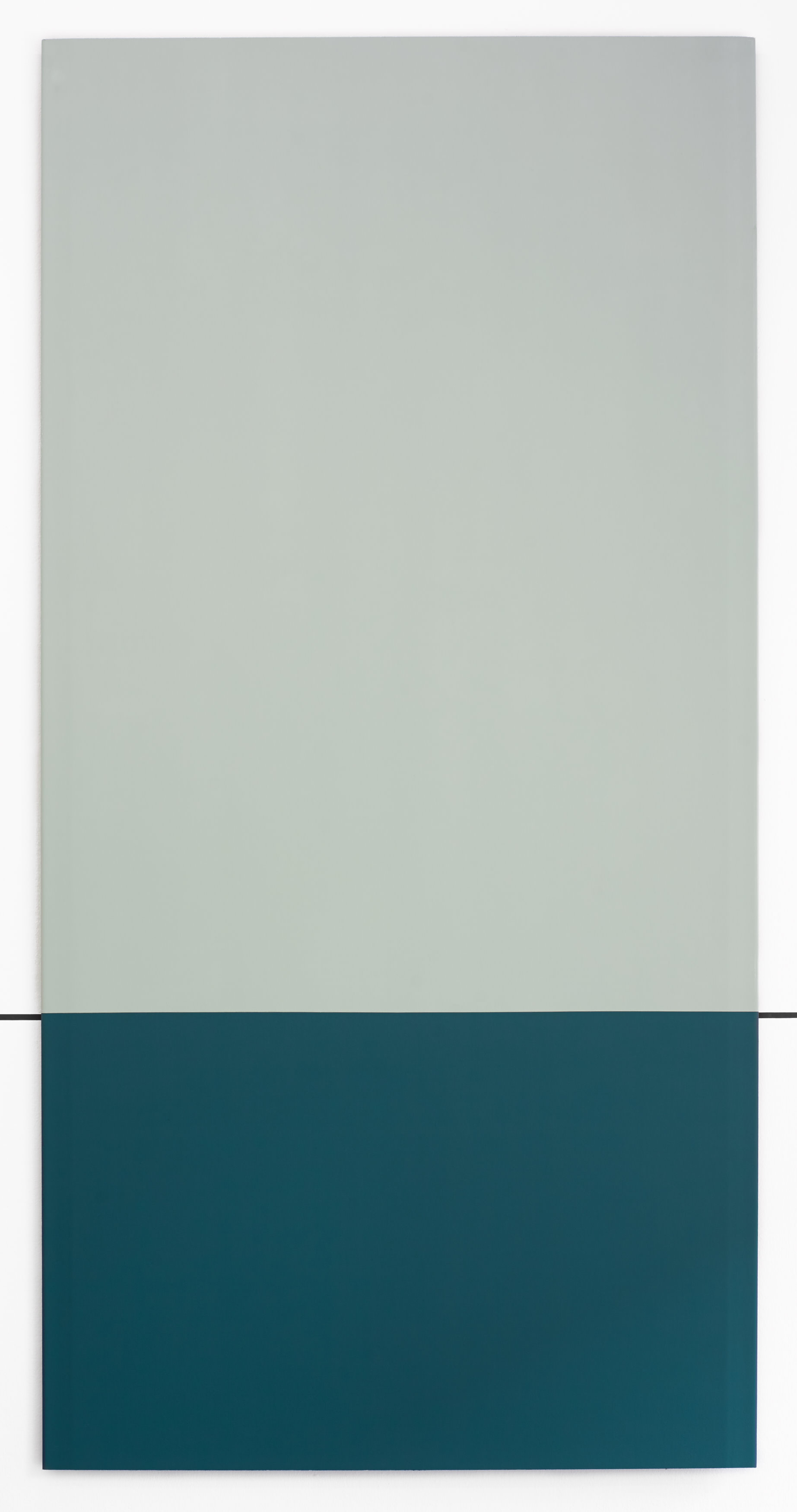
Linear Paintings, 2017
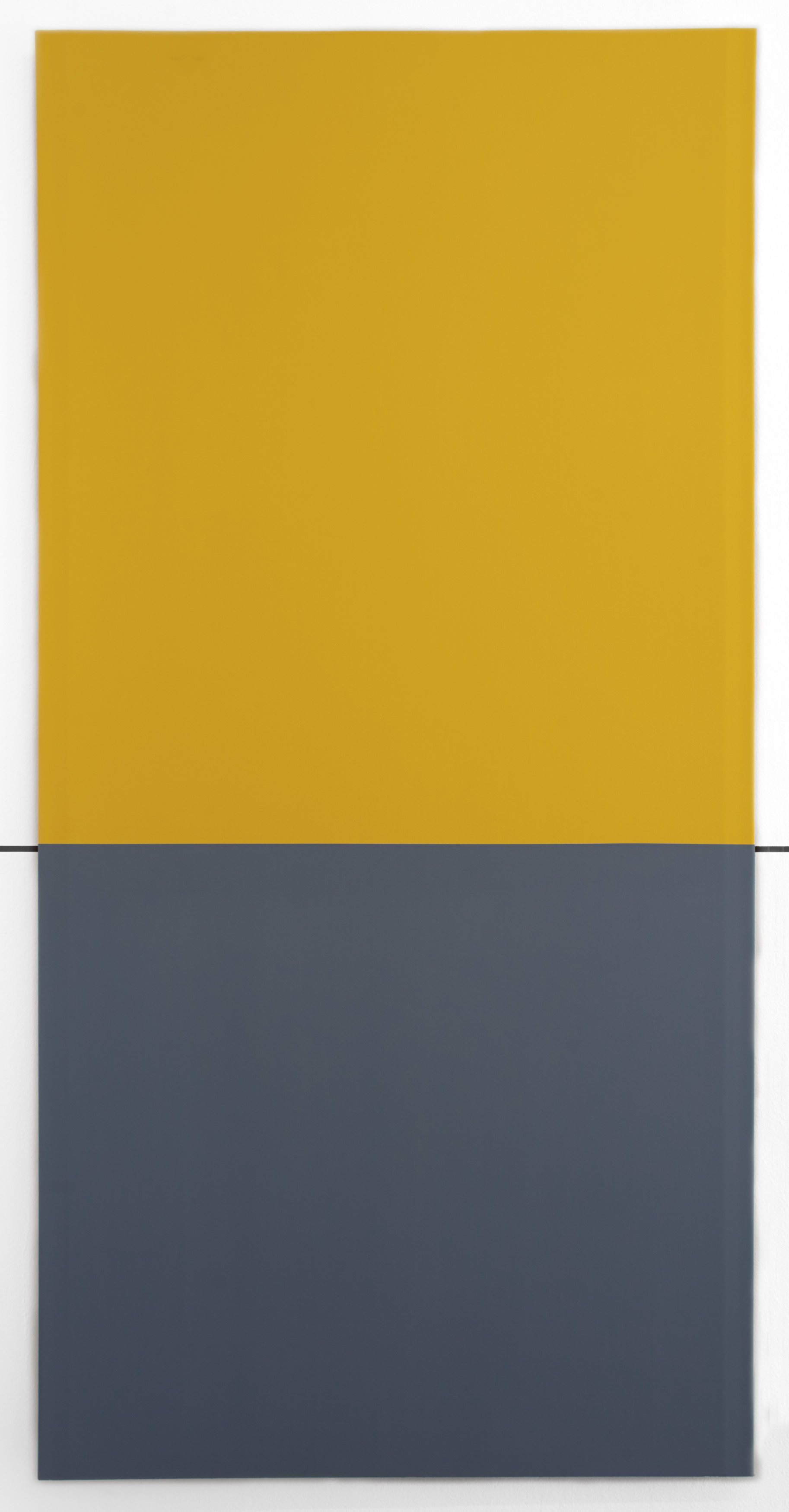
Linear Paintings, 2017
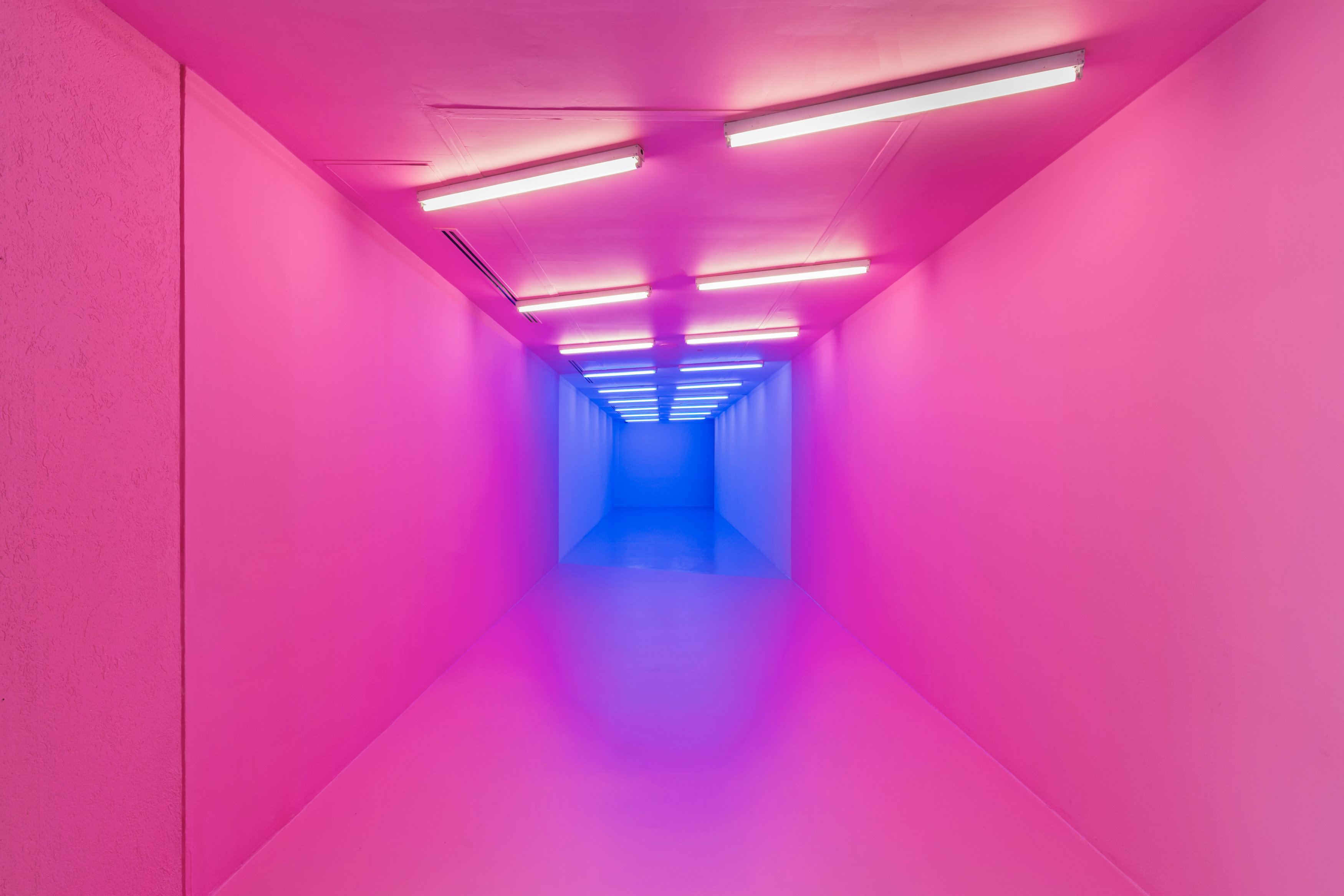
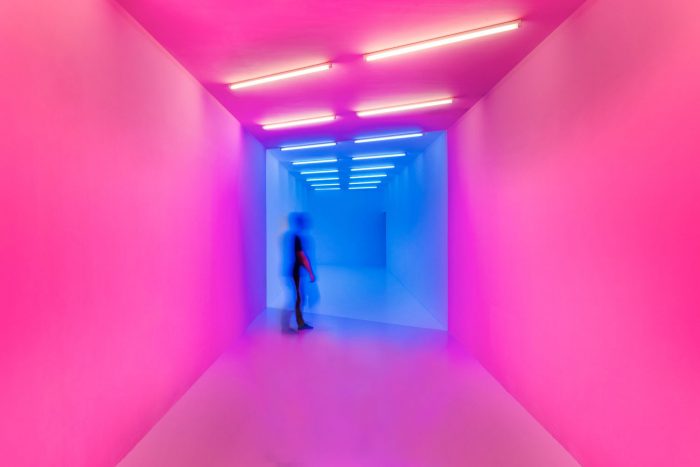
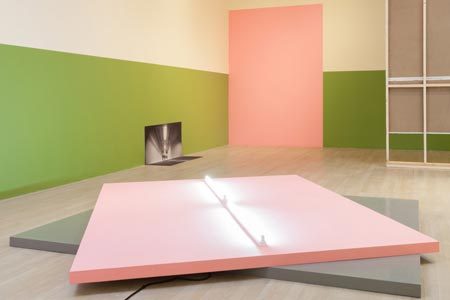
pink-blue, 2017
The installation pink-blue combines Baker-Miller pink paint and blue fluorescent light to create a spatial environment. It features a long corridor where visitors can walk through the materialization of light and color, reflecting on the applications of disciplinary architecture. This work draws inspiration from the research of Alexander Schauss, who, in the 1970s, claimed that Baker-Miller pink had tranquilizing psychological effects on humans. Paradoxically, detention centers painted in this color scheme sometimes exacerbated hostility among inmates (Hampton, 2018). Similarly, blue light has been used in public bathrooms to obscure veins, making it more difficult for individuals to inject drugs. Kapwani subverts these techniques by allowing us to experience their disorienting effects firsthand. pink-blue highlights color as a psychic primer that indirectly monitors spaces, critically examining these social experiments and their broader contexts.
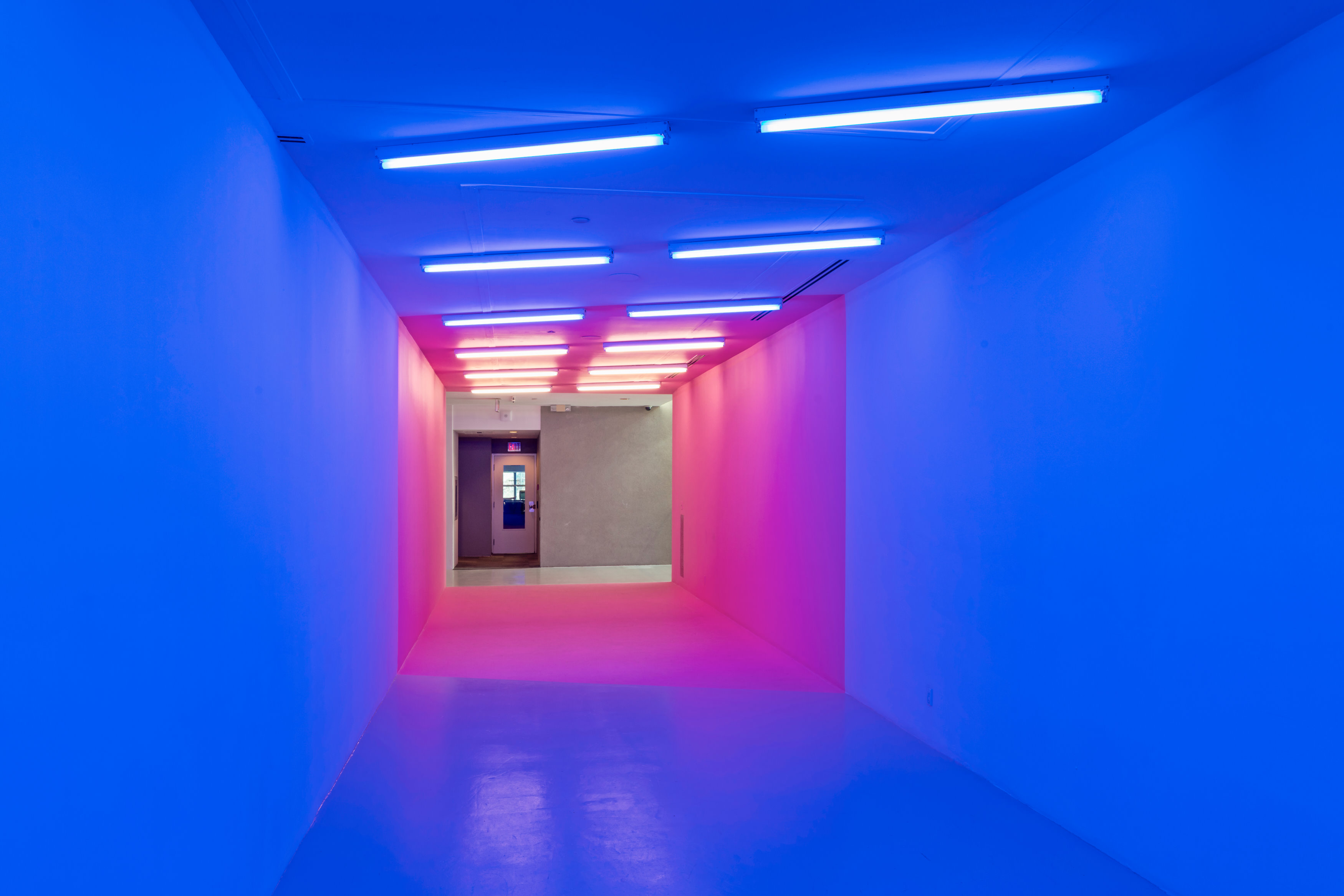
pink-blue, 2017
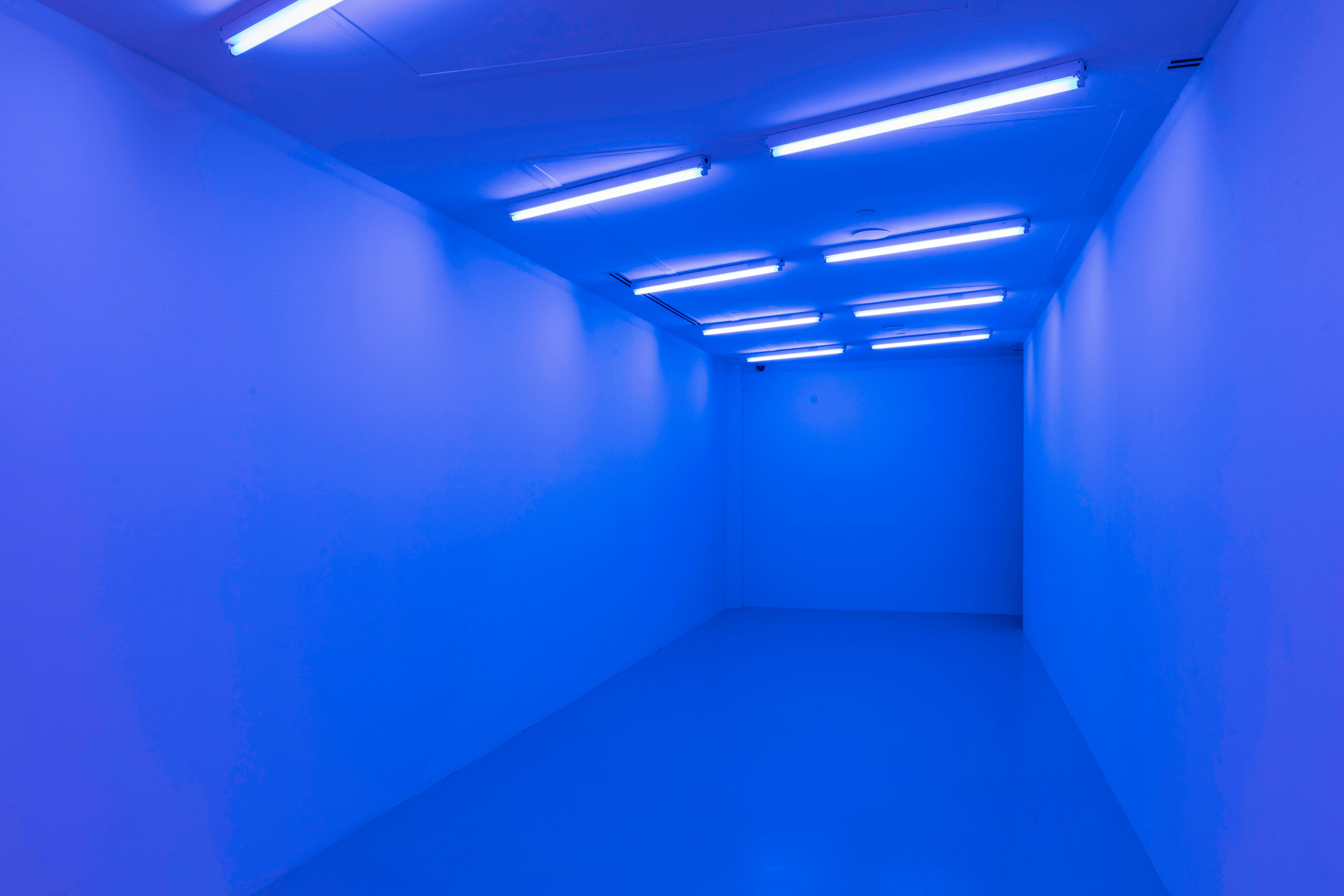
pink-blue, 2017
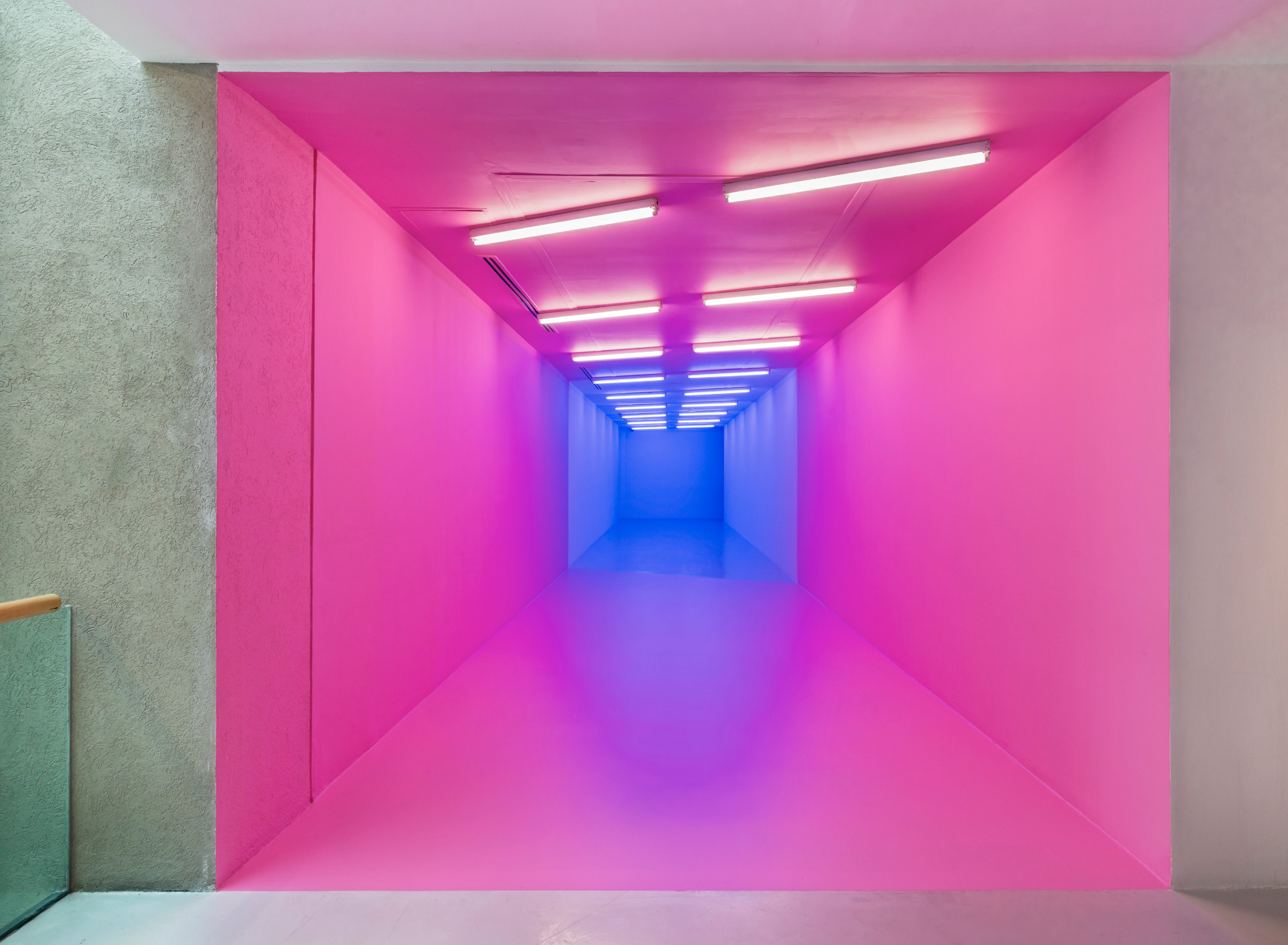
pink-blue, 2017
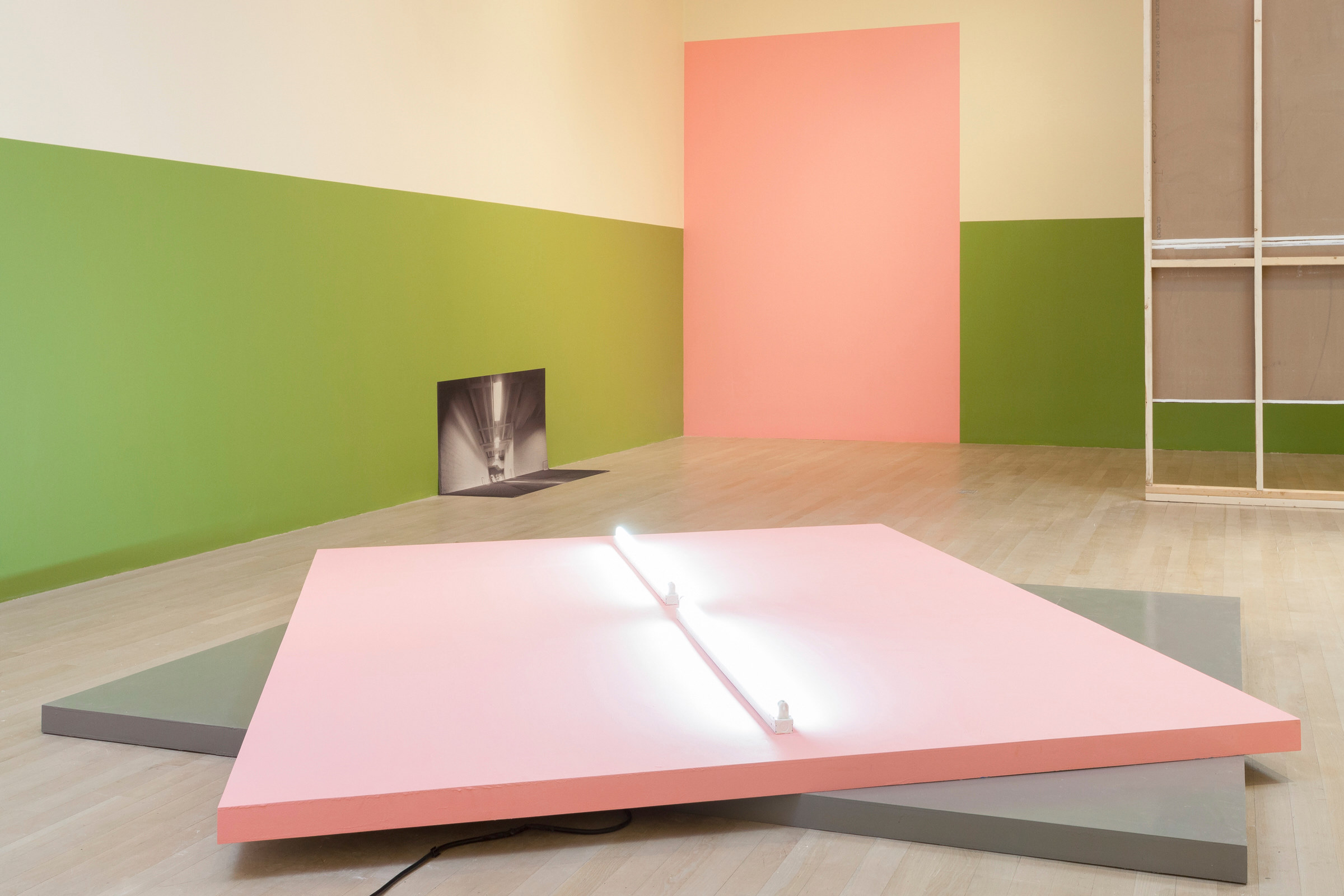
The sum and its parts, 2017
Kapwani Kiwanga’s first solo exhibition in the United States, The Sum and Its Parts, took place at the Logan Center in Chicago in 2017. The exhibition features a site-specific mixed-media installation that explores how design and color are used to shape social behaviors. Ceiling fragments with light fixtures lay on the floor, while photographic prints of institutional interiors appear to melt from the walls onto the ground, creating a spatial collage through its fragments. The use of a two-tone color palette mimics the interior designs of workhouses, reformatory schools, and hospitals, which were influenced by the social hygiene movements of the 20th century. Kiwanga consulted the University of Chicago’s Special Collections Library and the work of color design theorist Faber Birren, who pioneered a psychological theory of color that was later applied across a wide range of institutions (University of Chicago, 2017). She creates an environment that immerses viewers in the history of surveillance, where color and design have played central roles.
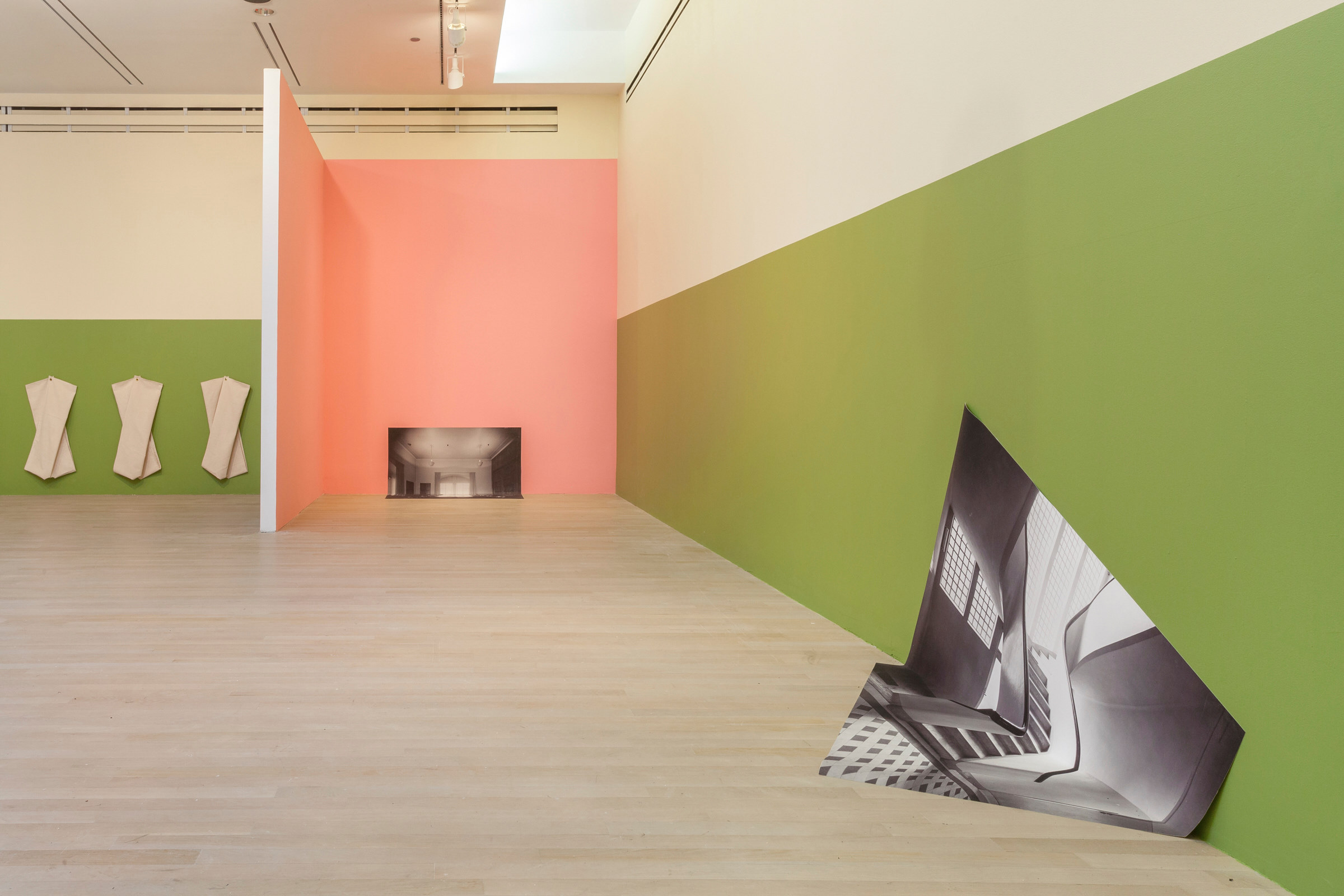
The sum and its parts, 2017
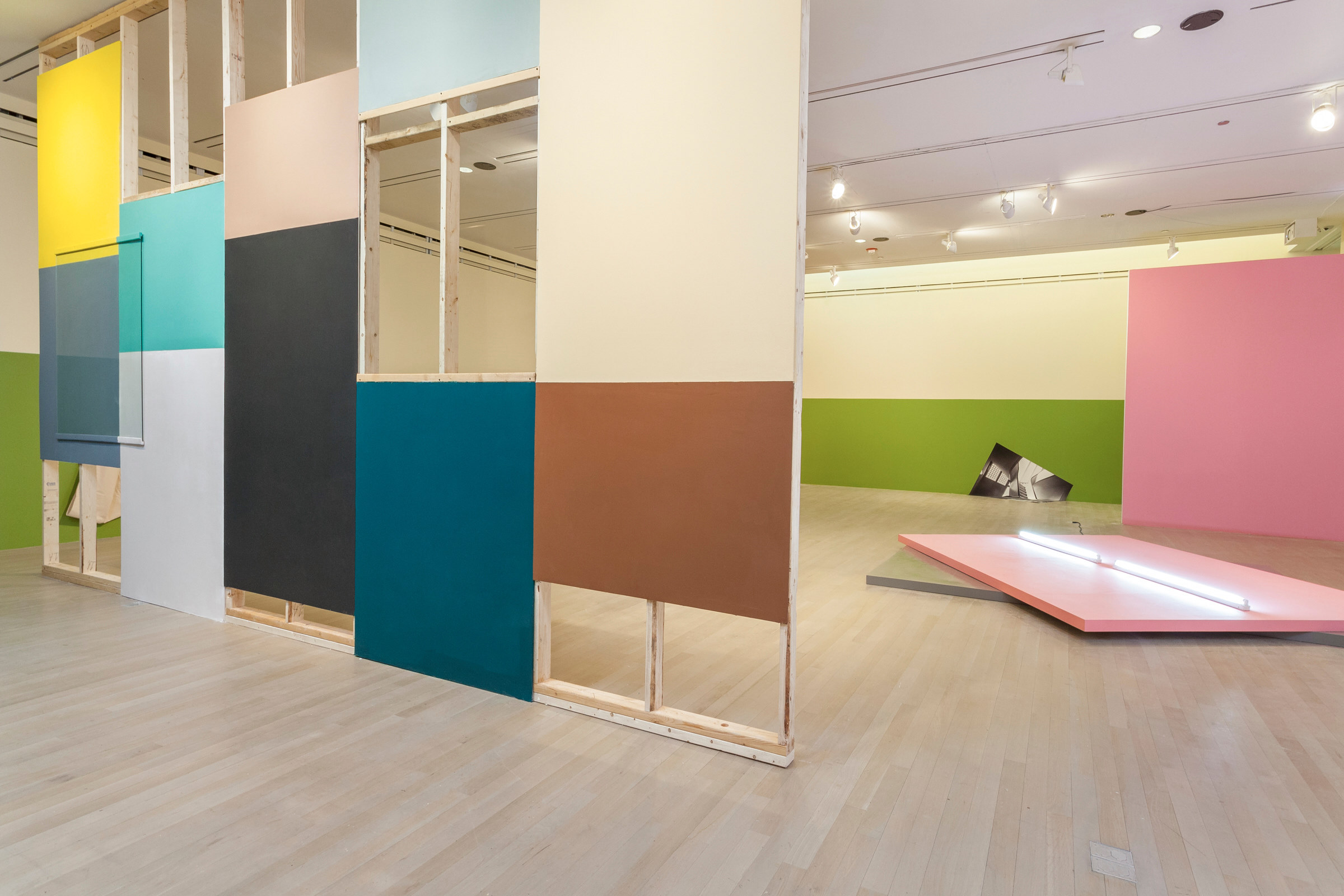
The sum and its parts, 2017

The sum and its parts, 2017
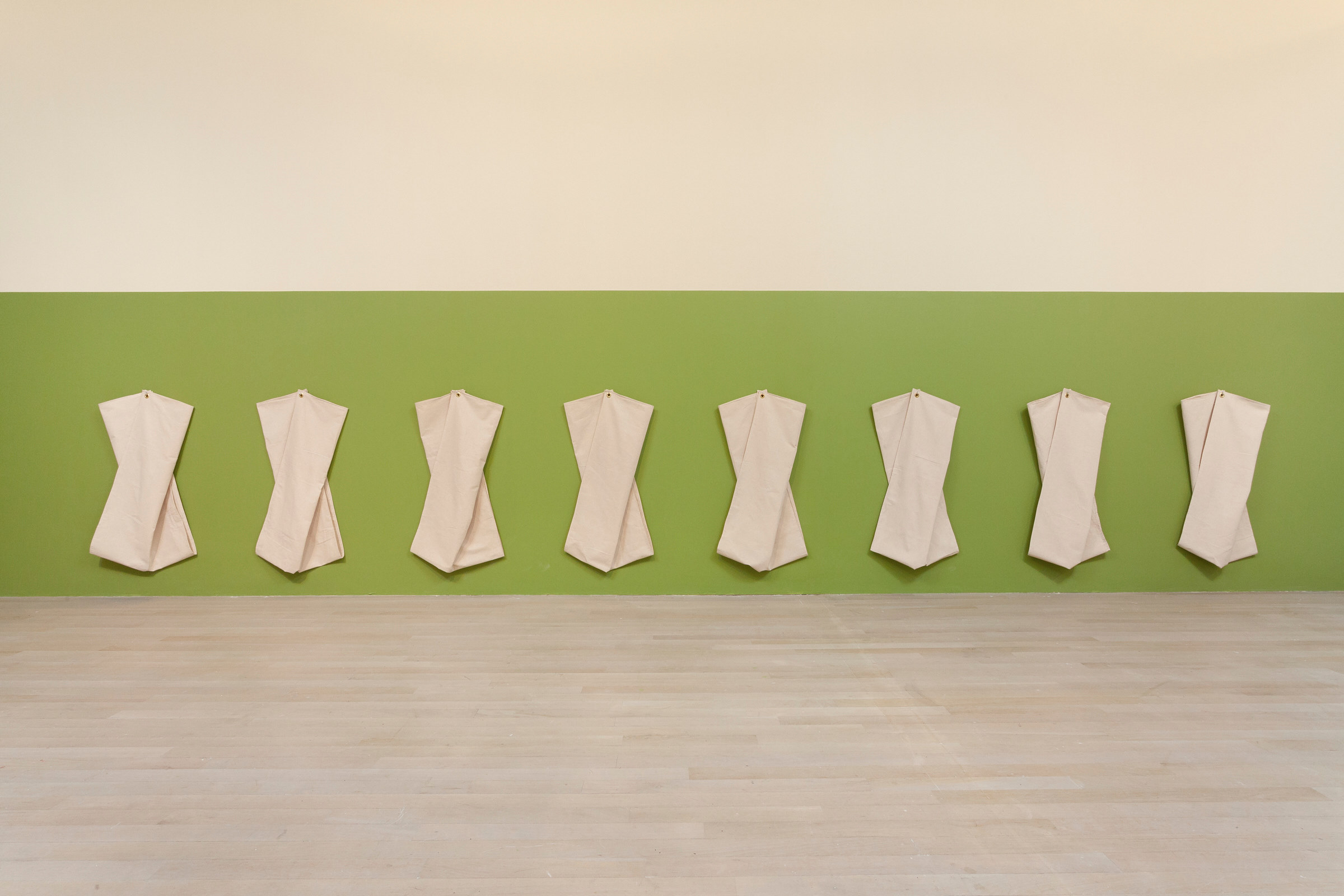
The sum and its parts, 2017
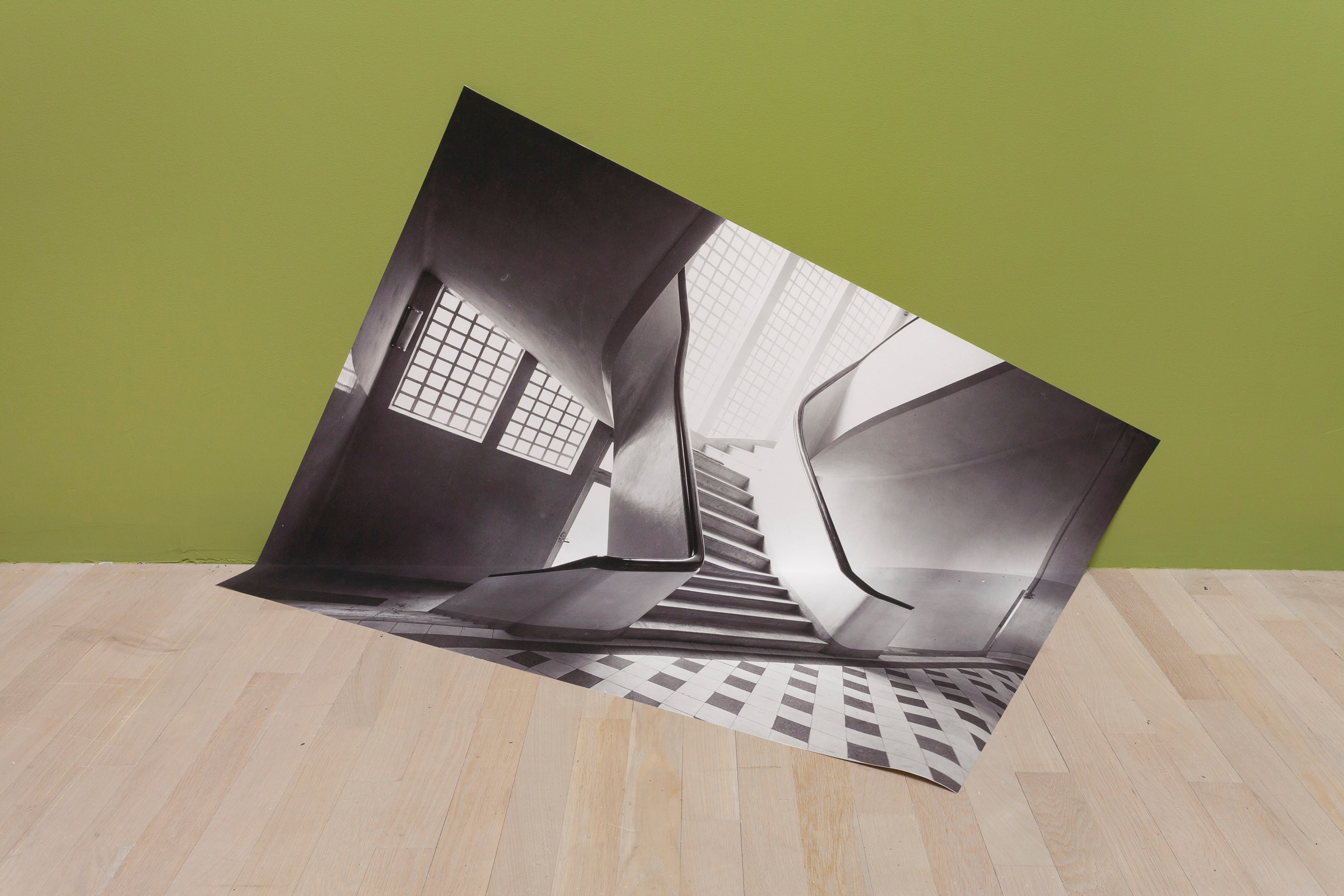
The sum and its parts, 2017
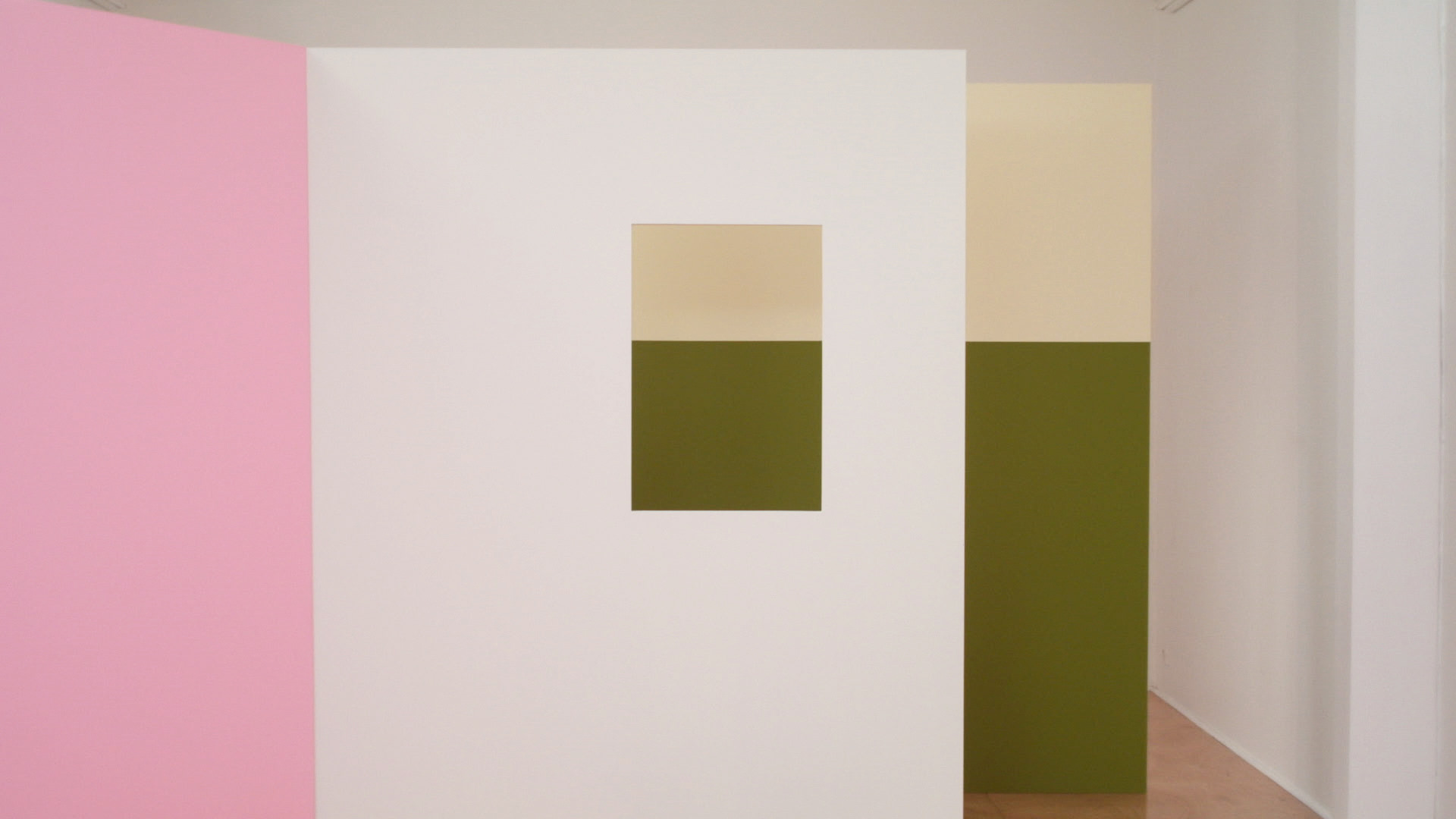
A Primer, 2017
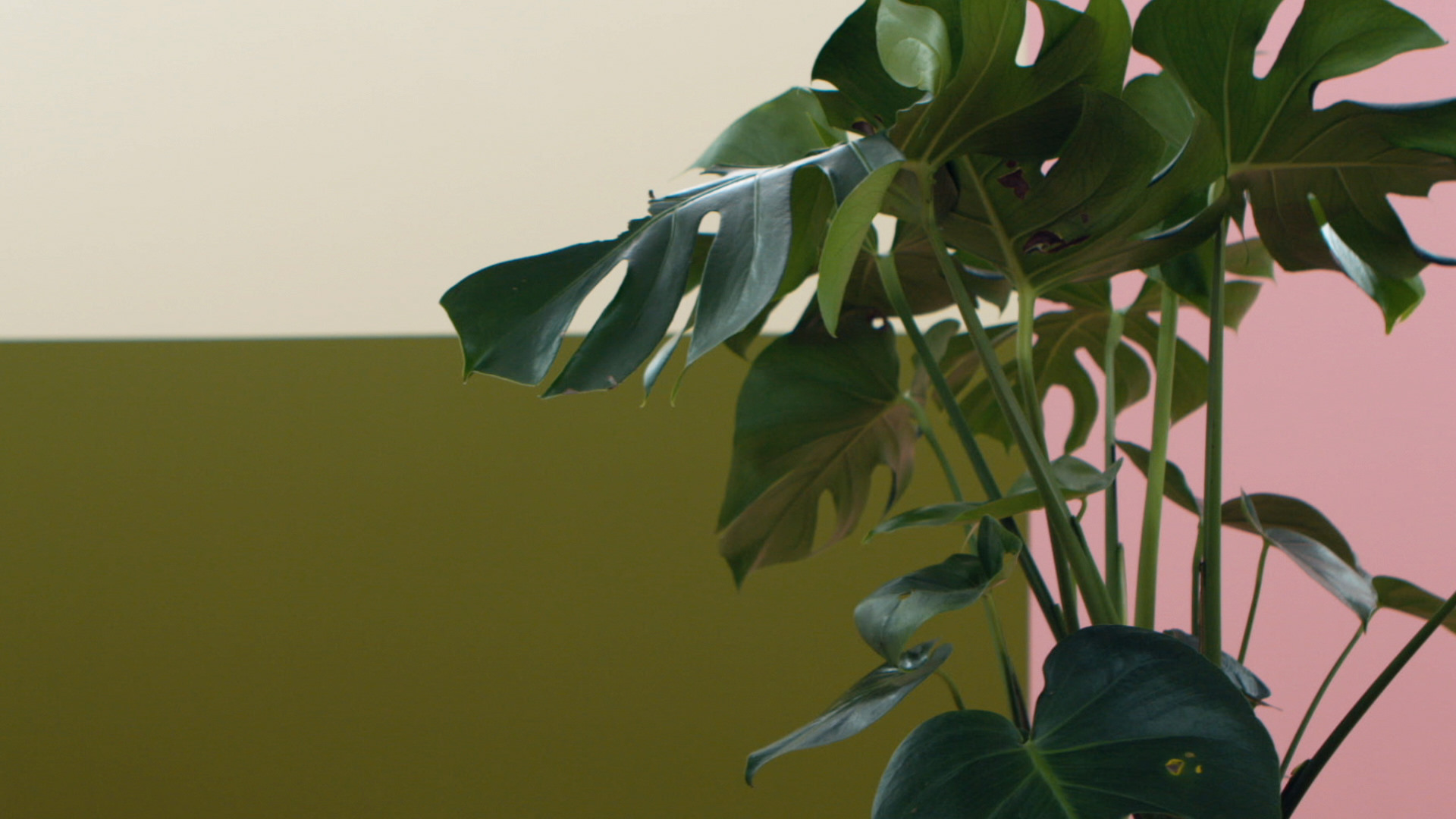
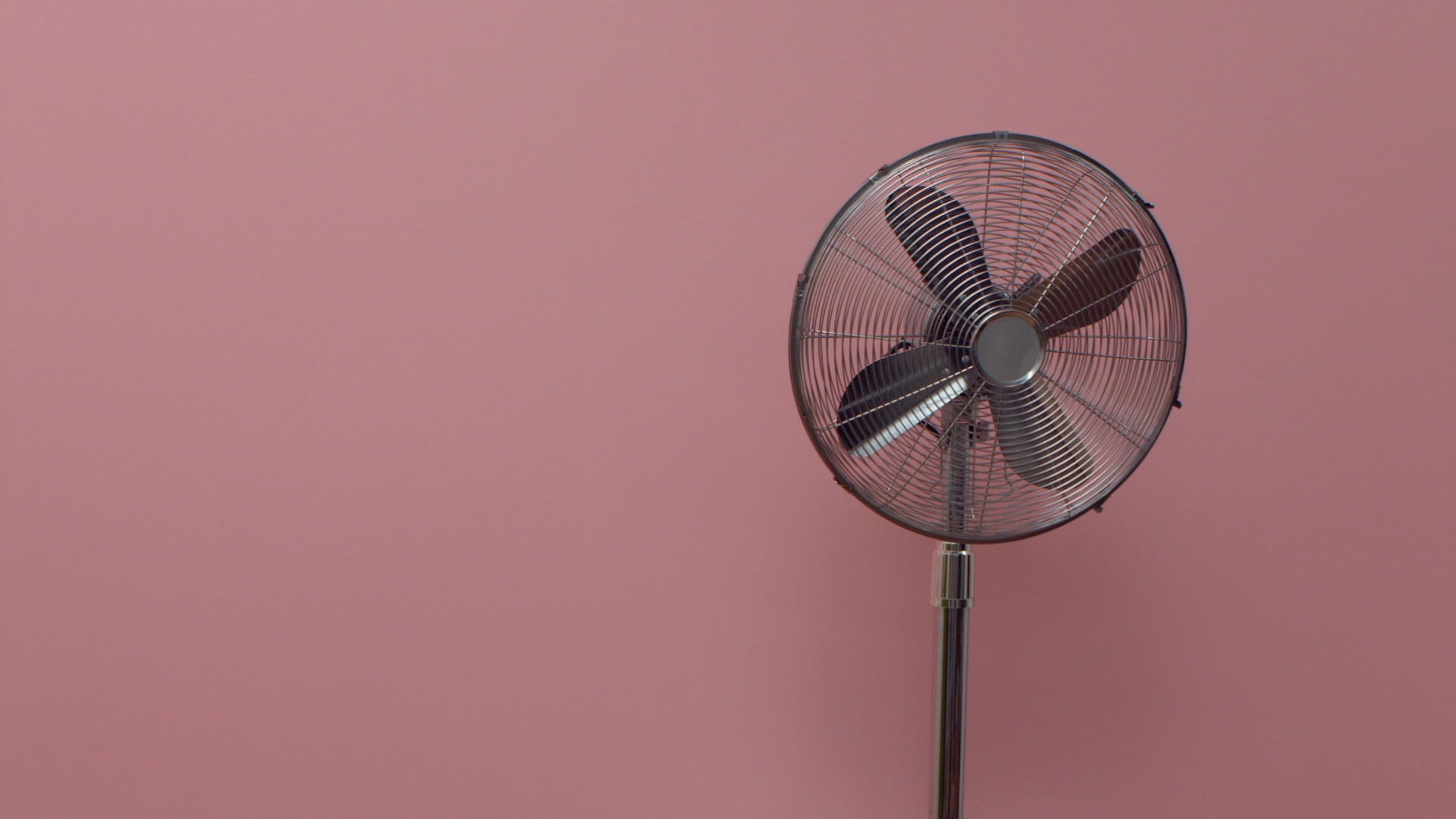
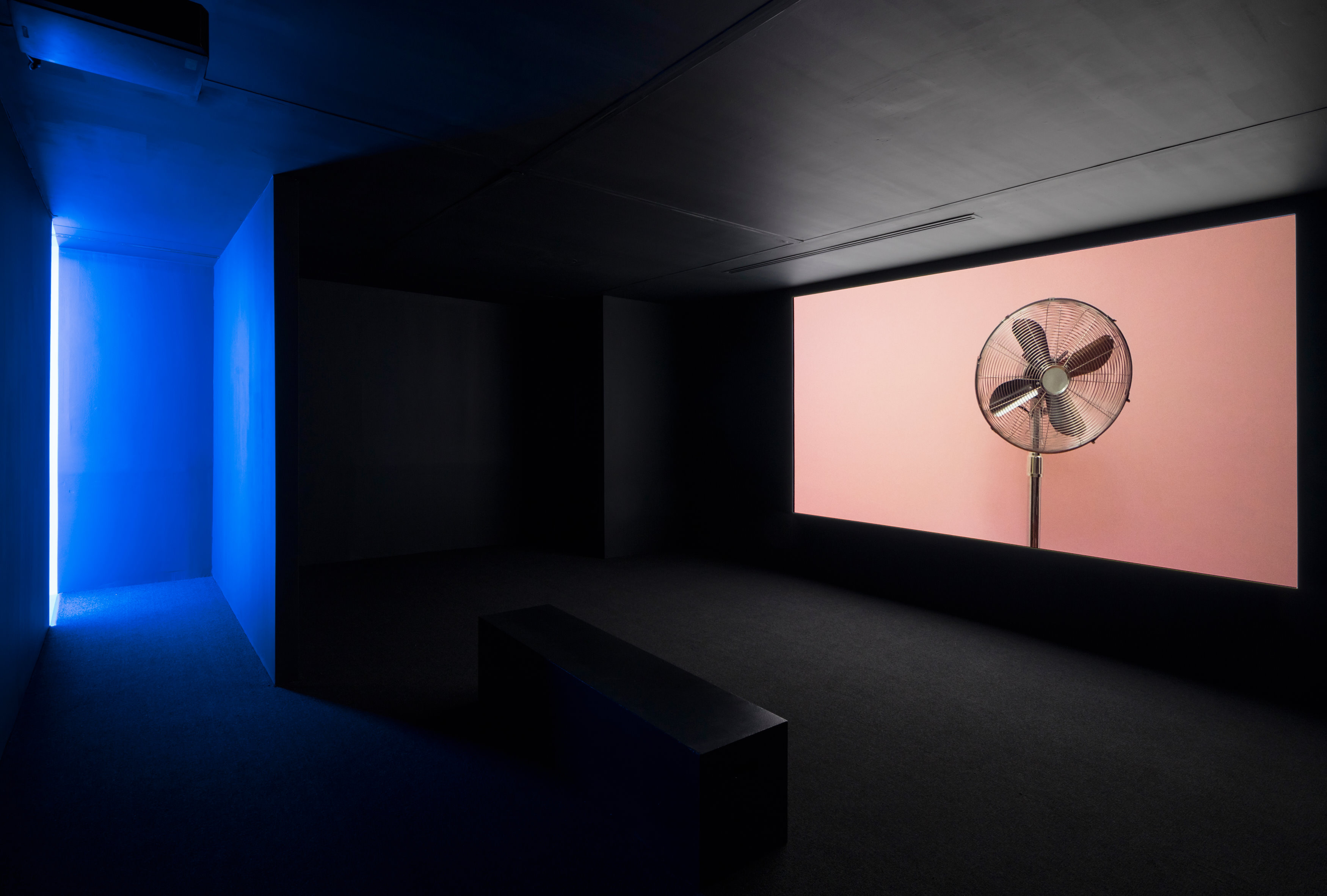
A Primer is a silent video depicting a series of vignettes from architectural assemblages and objects in space. The camera movement animates three structures, all of which are painted in reference to different environments and times: the white Ripolin of Le Corbusier and the international movement in architecture, the widespread use of green in hospital and therapeutic settings thought to invoke nature's healing powers, the so-called Baker-Miller pink which was believed to calm aggressive inmates in prisons during the late 1970s.

A Primer, 2017
A Primer, 2017
A Primer, 2017
A Primer, 2017
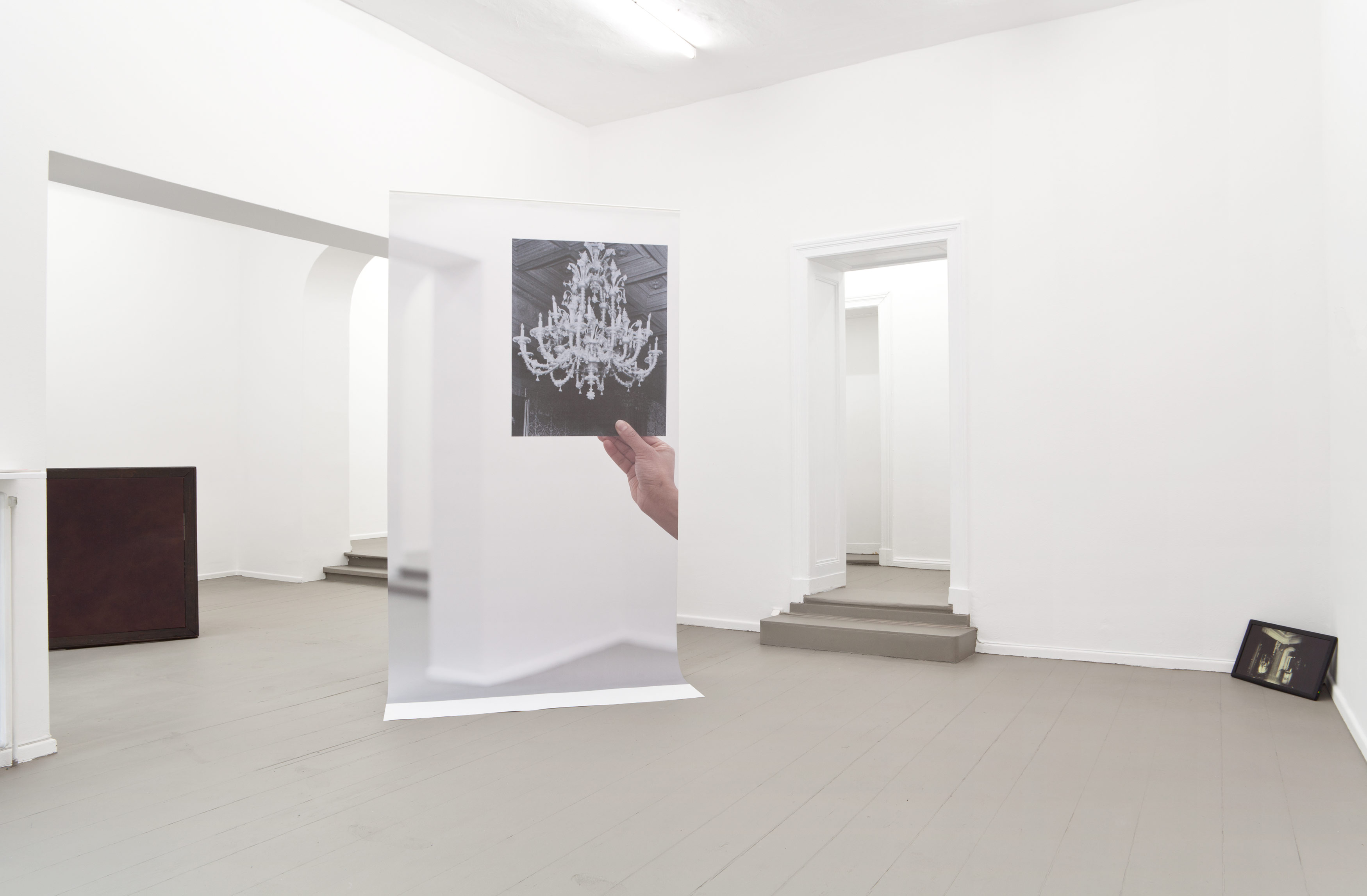
A Memory Palace, 2015
In this installation Kapwani Kiwanga uses image and sound to create a journey through time, constructed spaces, and assembled narratives. She references the now-disappeared physical edifice; Palais Radziwill. Between 1884-1885 this building hosted the historic Congo Conference, a series of diplomatic meetings where European and American representatives made decisions which would carve out spheres of influence on the African continent. Kapwani's investigations took her around, beside, beyond, and before the Congo Conference to unearth intriguing stories and to elaborate a technique of spacial visualisation to reactive the memory of forgotten histories.
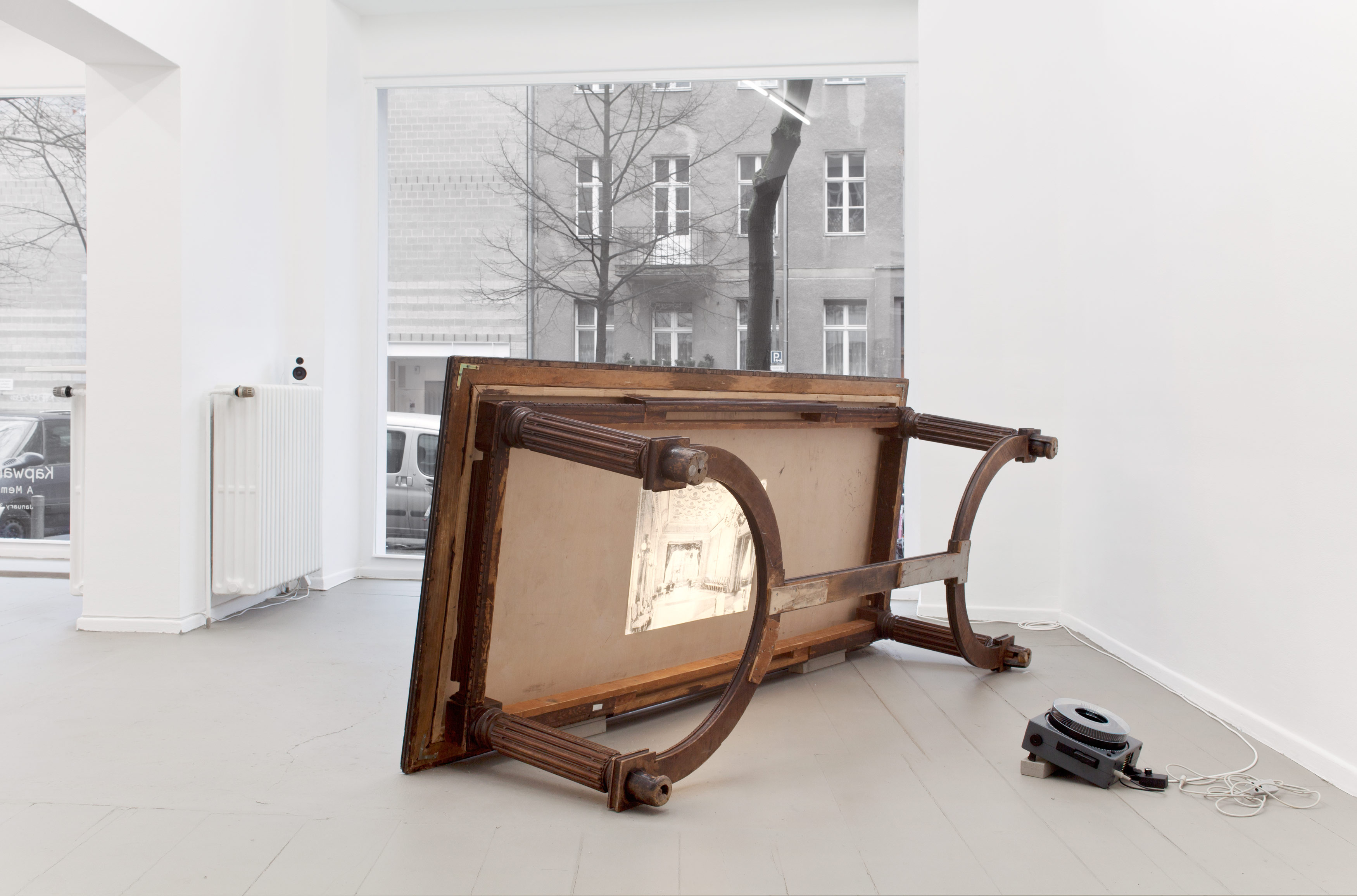
A Memory Palace, 2015
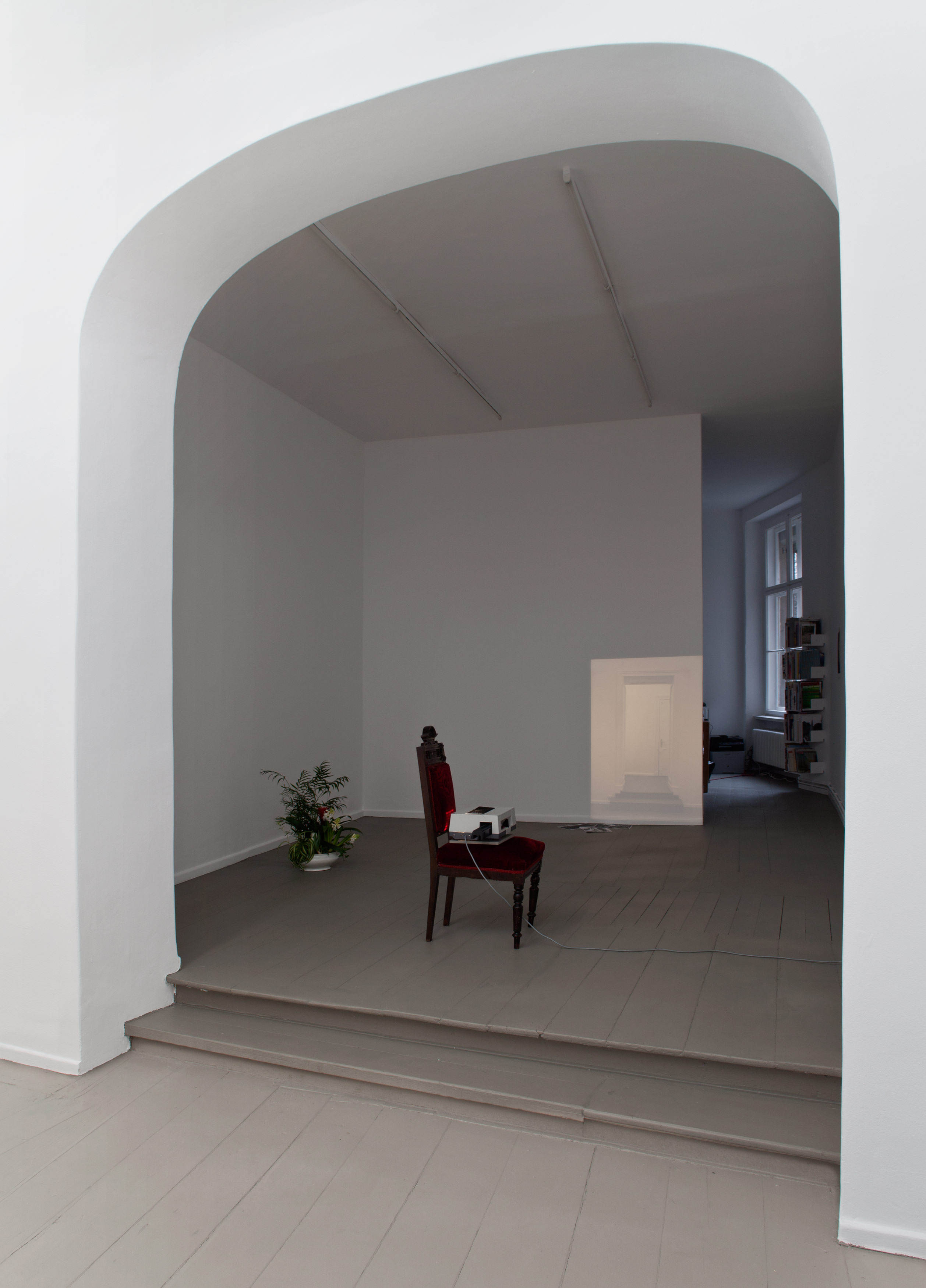
A Memory Palace, 2015
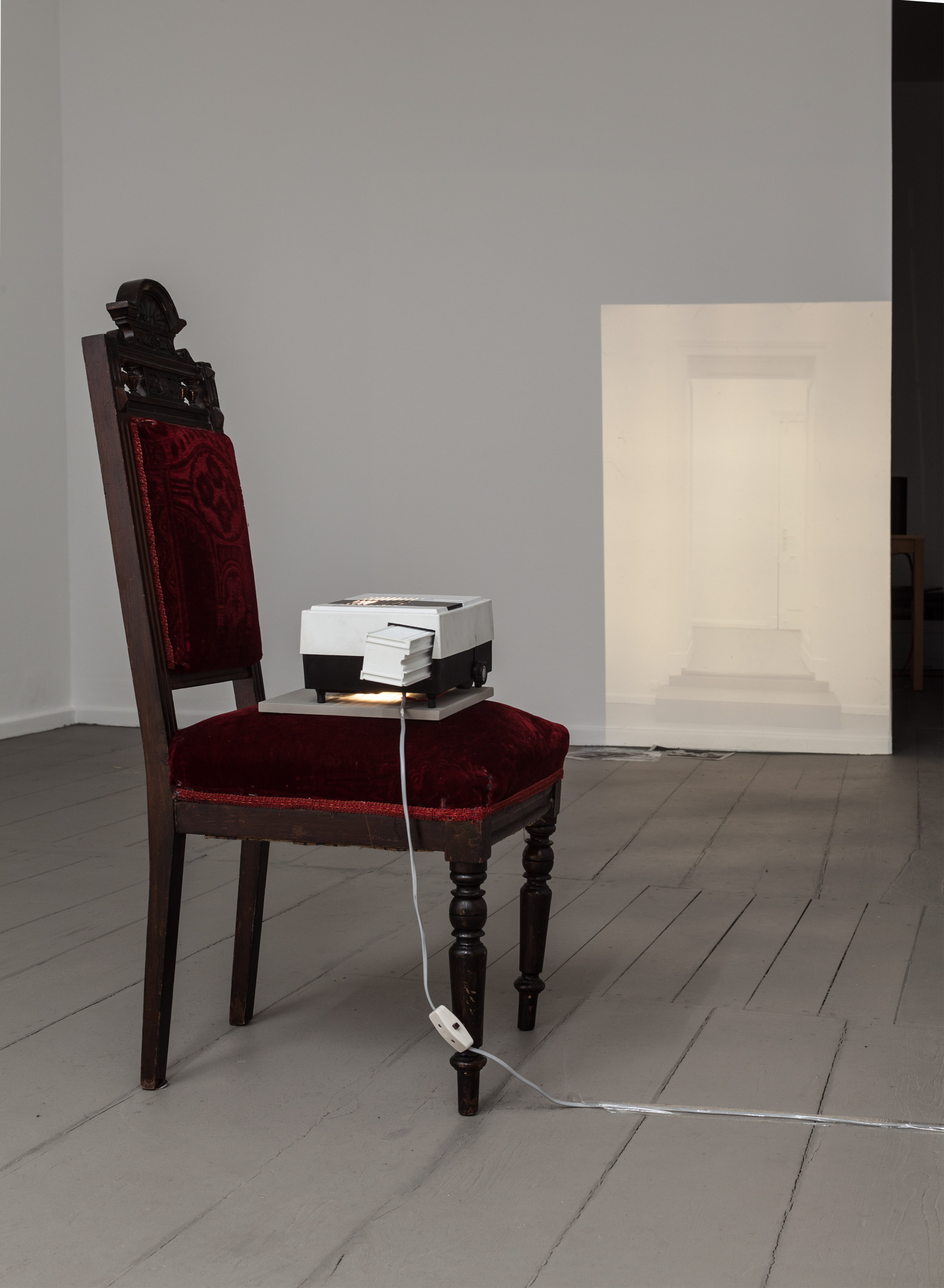
A Memory Palace, 2015

A Memory Palace, 2015

A Memory Palace, 2015
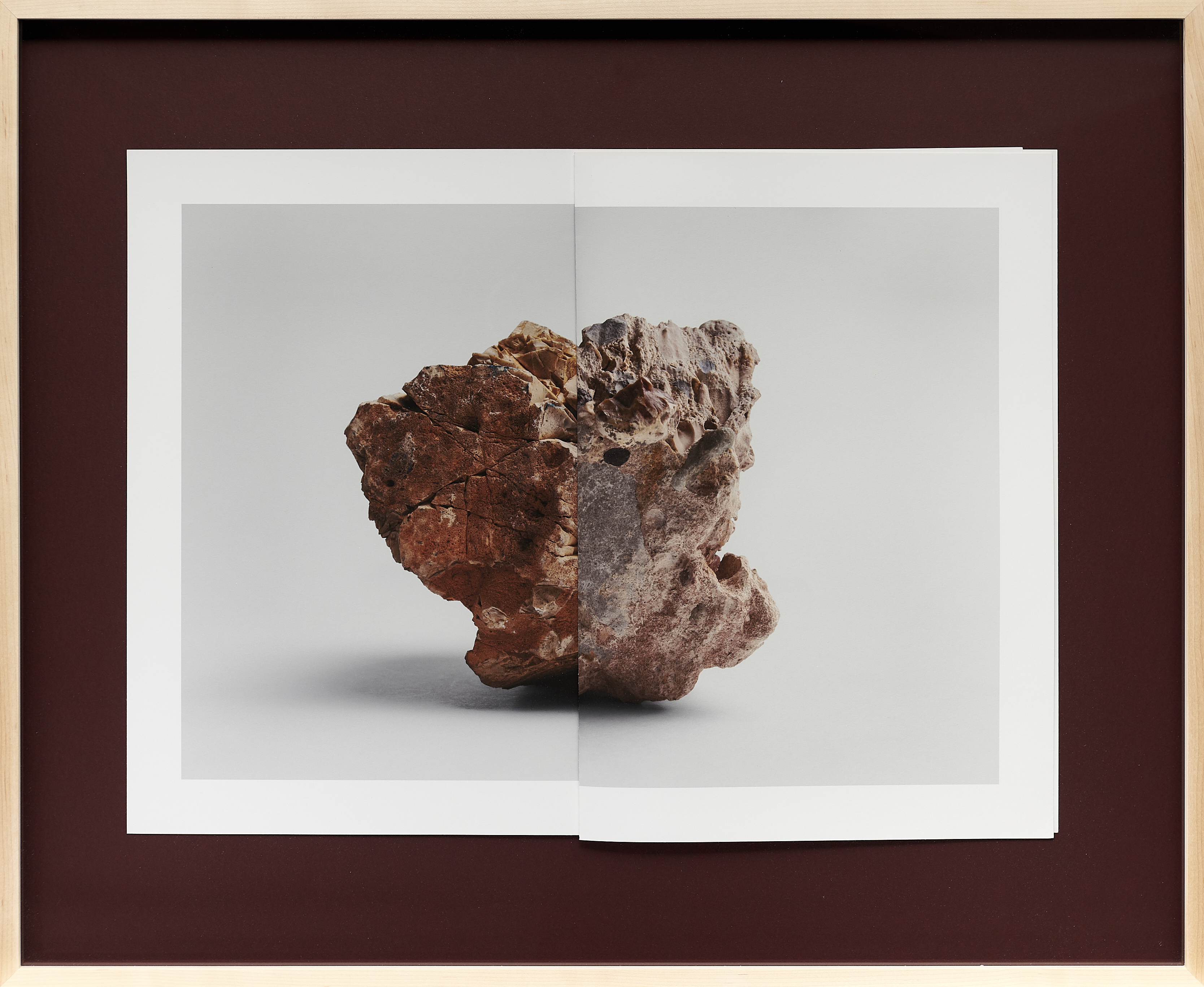
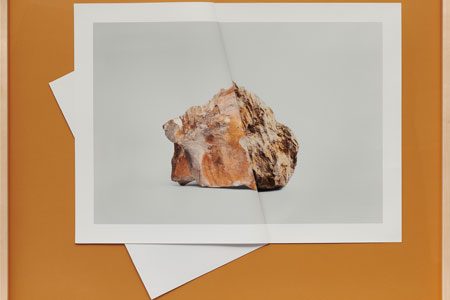
Subduction Studies, 2015-2017
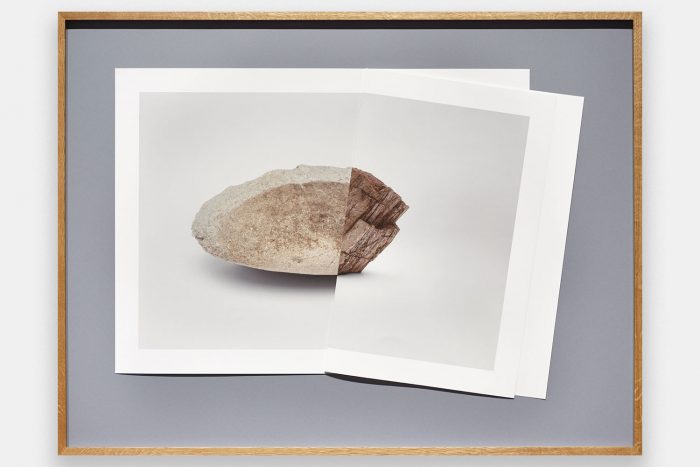
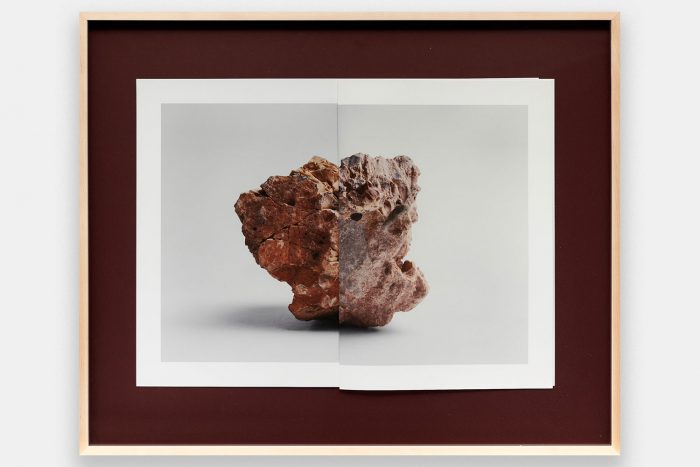
In the Subduction Studies series (2015-2017), Kiwanga observes the space between Earth's continents, specifically Africa and Europe. The speculation of Pangaea Ultima suggests a supercontinent occurring again, which will see Europe slipping underneath Africa. This theory inspired Kiwanga to go to the National Museum of Natural History in Paris and take photographs of the rock specimens from the Northern coast of Africa and Spain. By folding the photographs together, she not only demonstrates a new form, but also a new geopolitical perspective, where two continents and their migrants would be geographically connected.
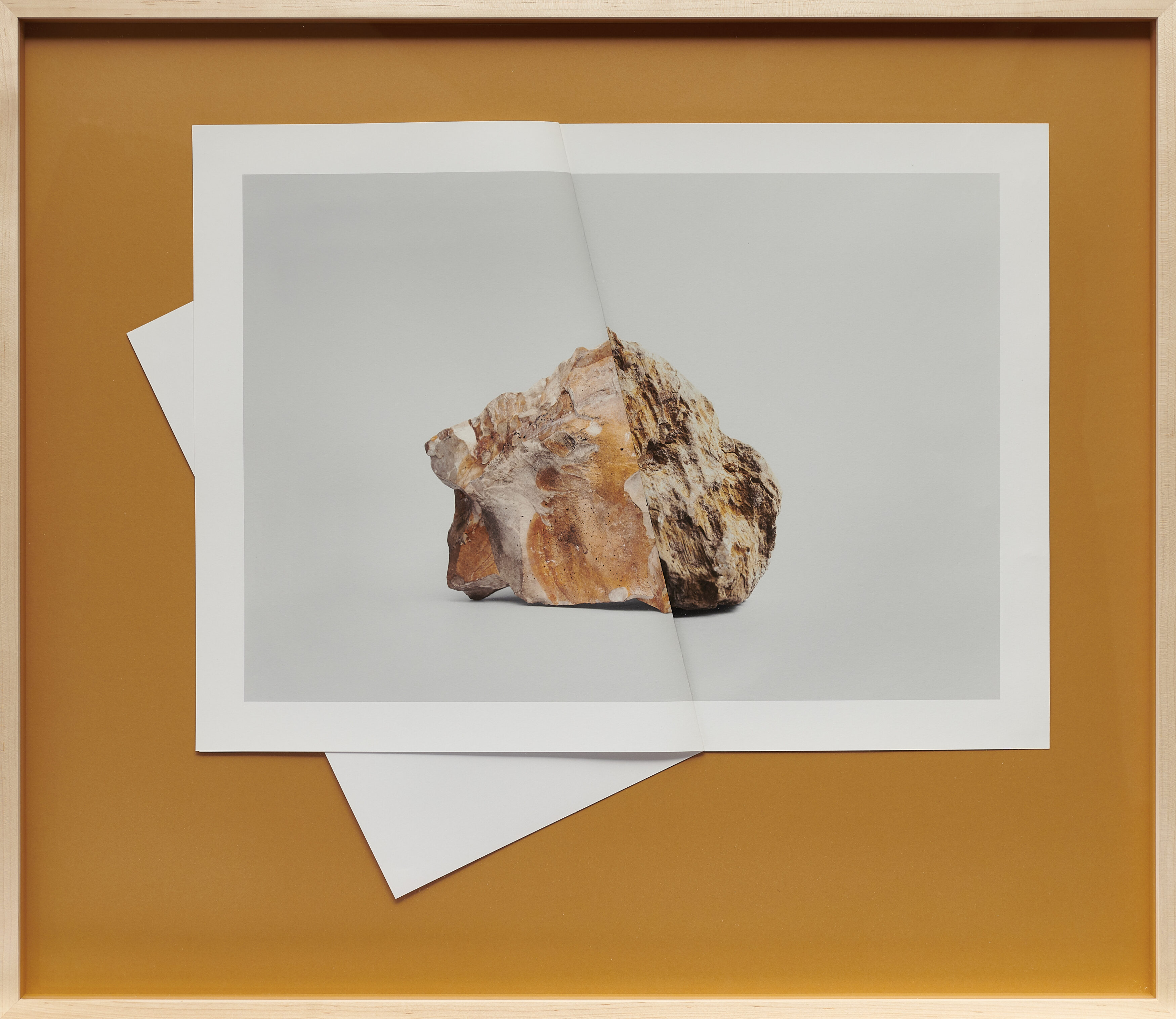
Subduction Studies, 2015-2017
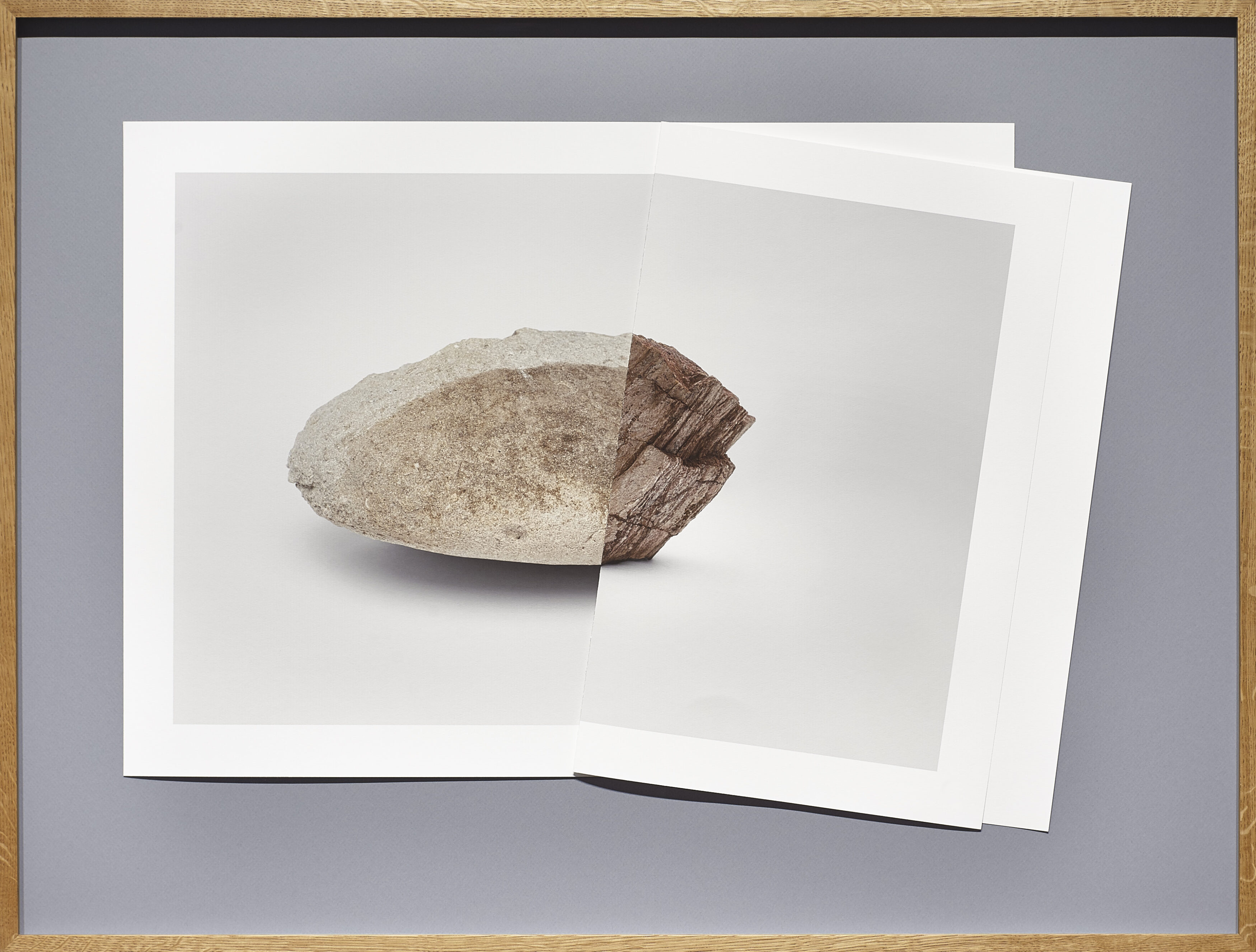
Subduction Studies, 2015-2017
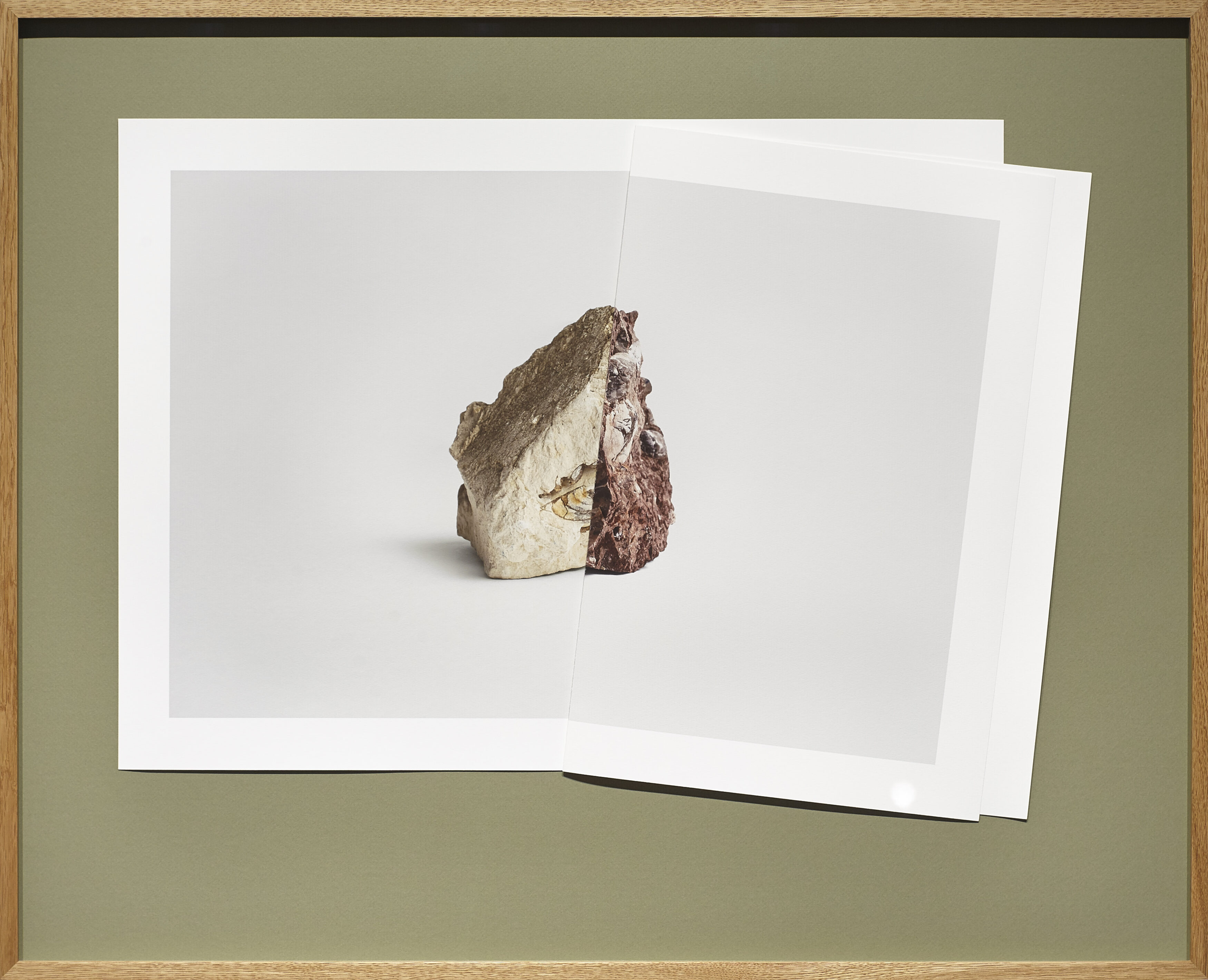
Subduction Studies, 2015-2017
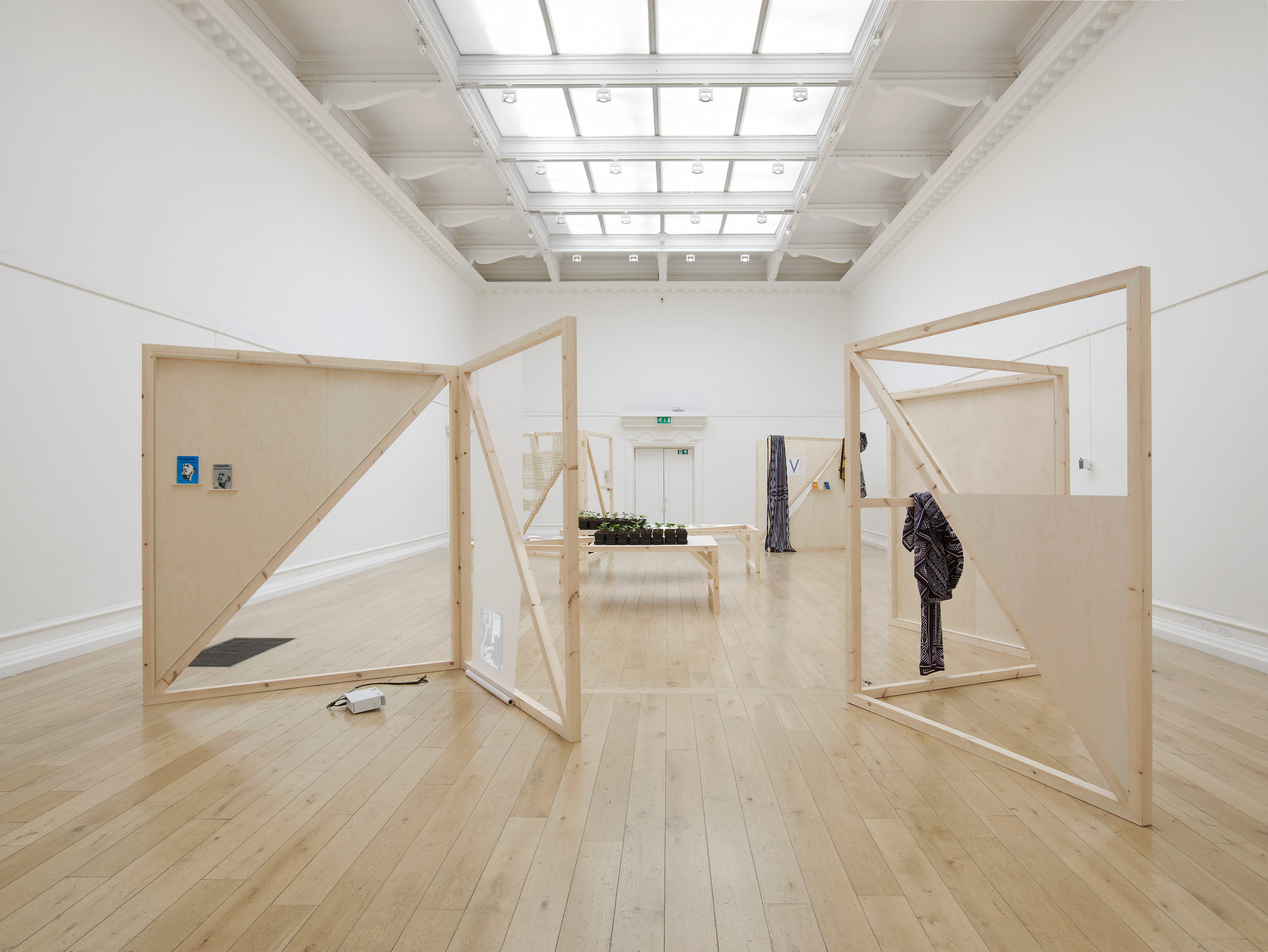
Kinjiketile Suite, 2015
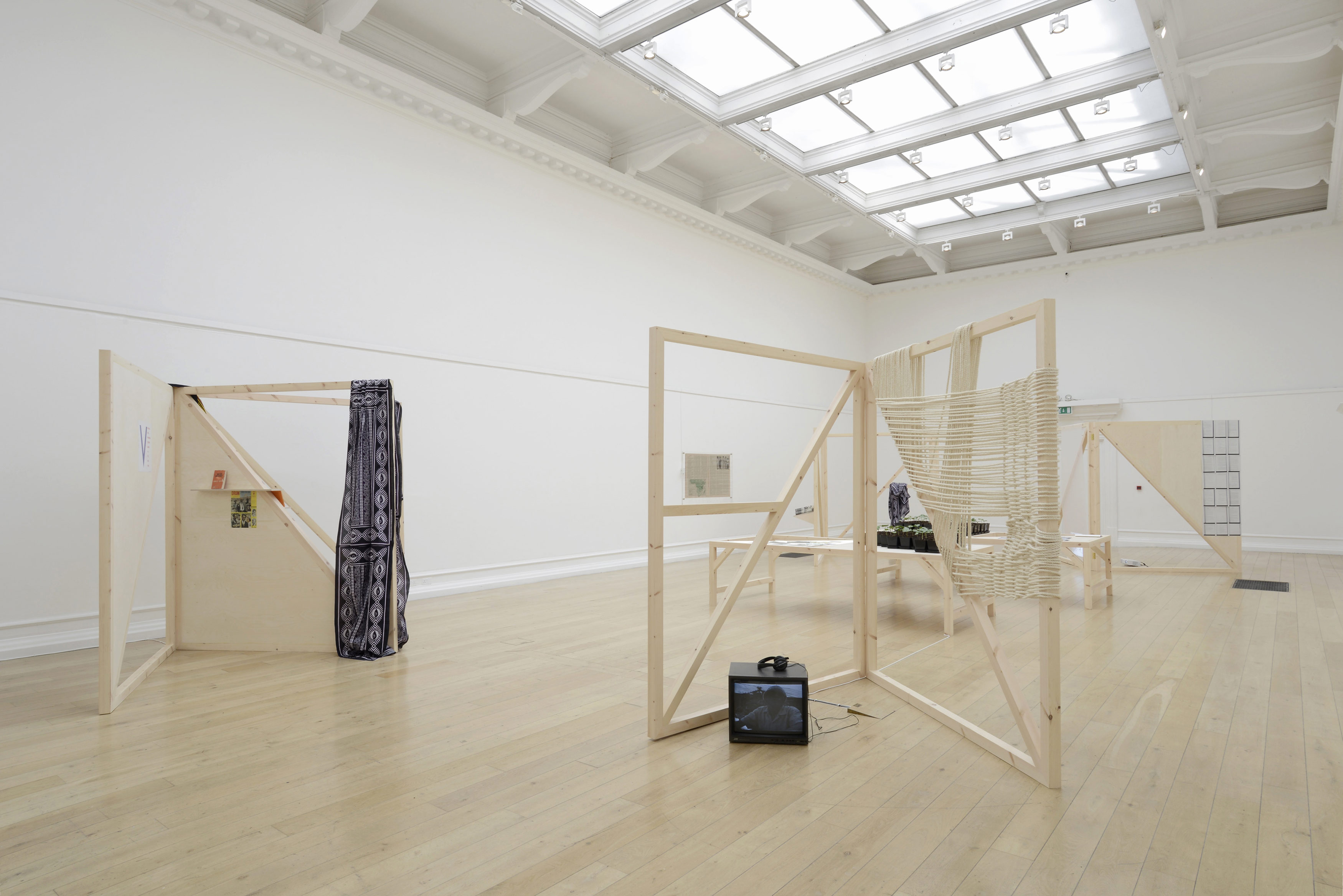
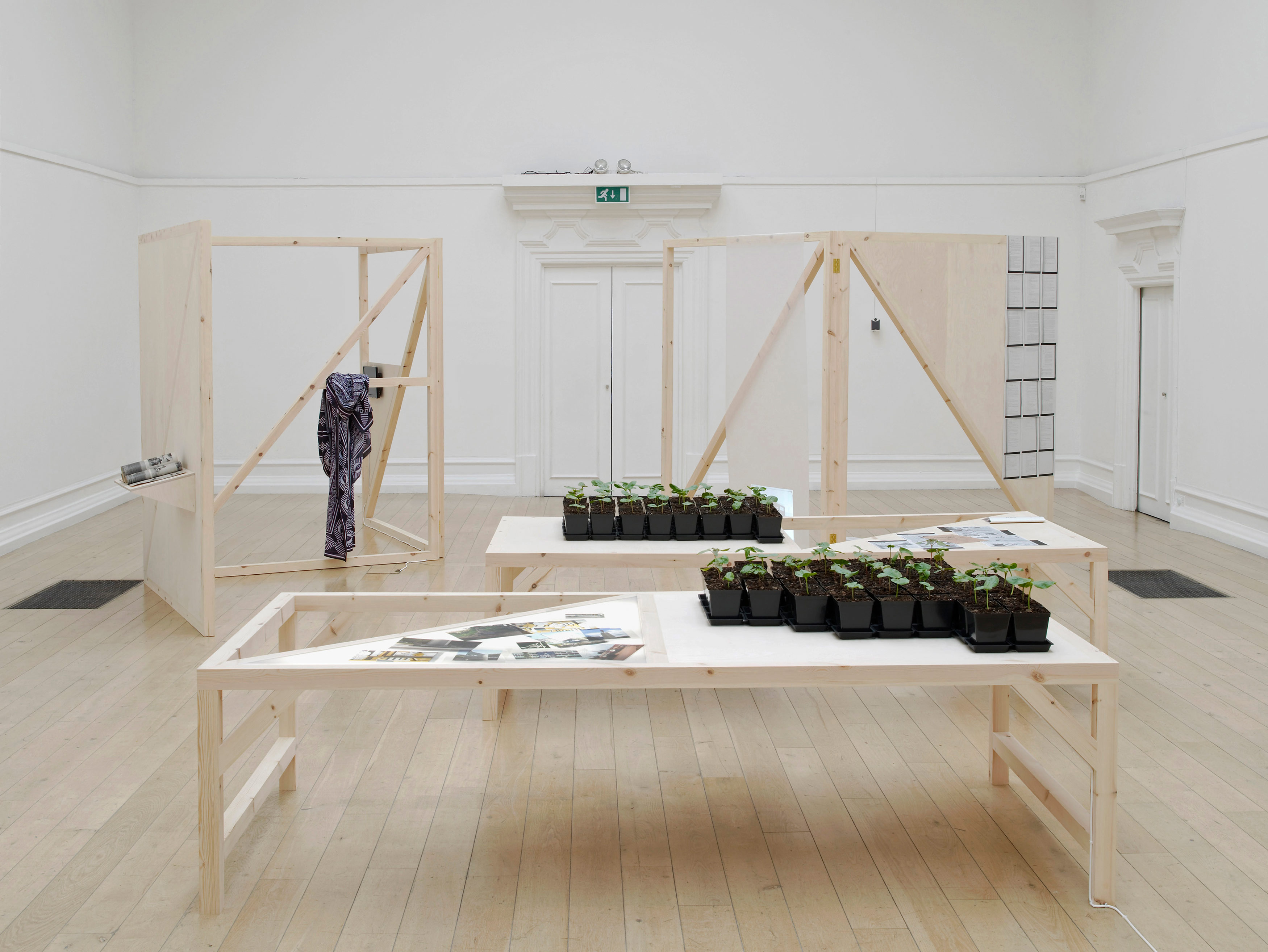
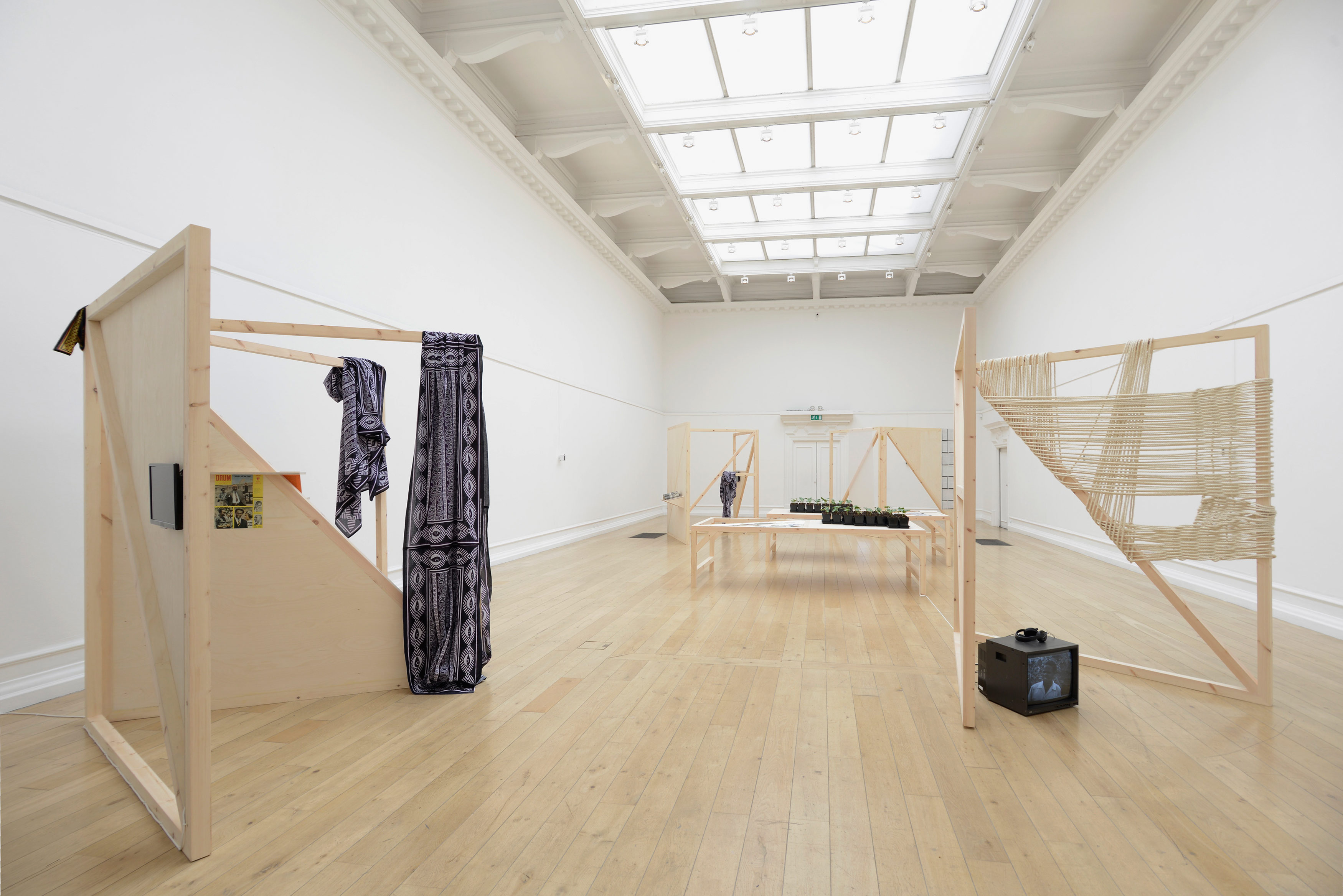
In this installation Kapwani Kiwanga continues her research into the legacy of the 1905-1907 Maji Maji uprising against German colonial rule in what was then Tanganyika, German East Africa.
The rebellion was fueled by the spiritual medium Kinjiketile, who galvanised the fighters with a sacred water, which would make one invincible to German bullets. She uses this event, and its adaptation in folklore and popular culture, as a starting point from which to trace how historical accounts weigh on a nation’s identity long after their occurrence. Source texts are represented as recordings and performances by actors, who interpret the transcripts both in English and Swahili in the exhibition space.
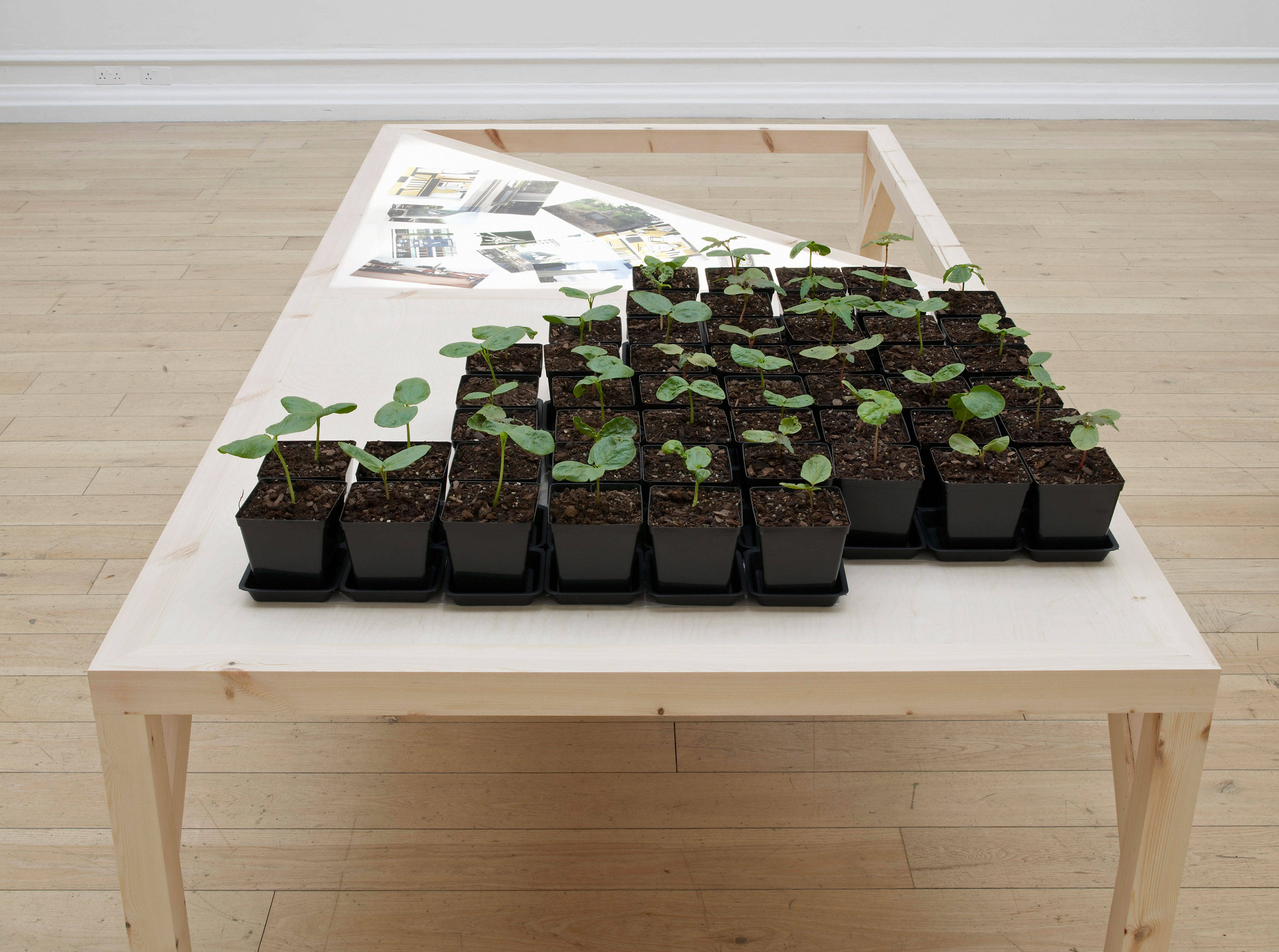
Archival material compiled in the course of her research, is housed in a custom- made exhibition architecture. The installation also features a collection of castor oil plants (Ricinus communis „Zanzibarensis“) which will grow throughout the duration of the exhibition. According to accounts, this fast-growing species, native to Tanzania was one of the ingredients in the water Kinjiketile distributed to his followers. Interspersed throughout the exhibition space is a sequence of short audio vignettes of Kiwanga’s voice. The narration offers a subjective and personal entry point to the story of the Maji Maji uprising, and functions as a fragmented guide through the show.
Kinjiketile Suite, 2015
Kinjiketile Suite, 2015
Kinjiketile Suite, 2015
Kinjiketile Suite, 2015
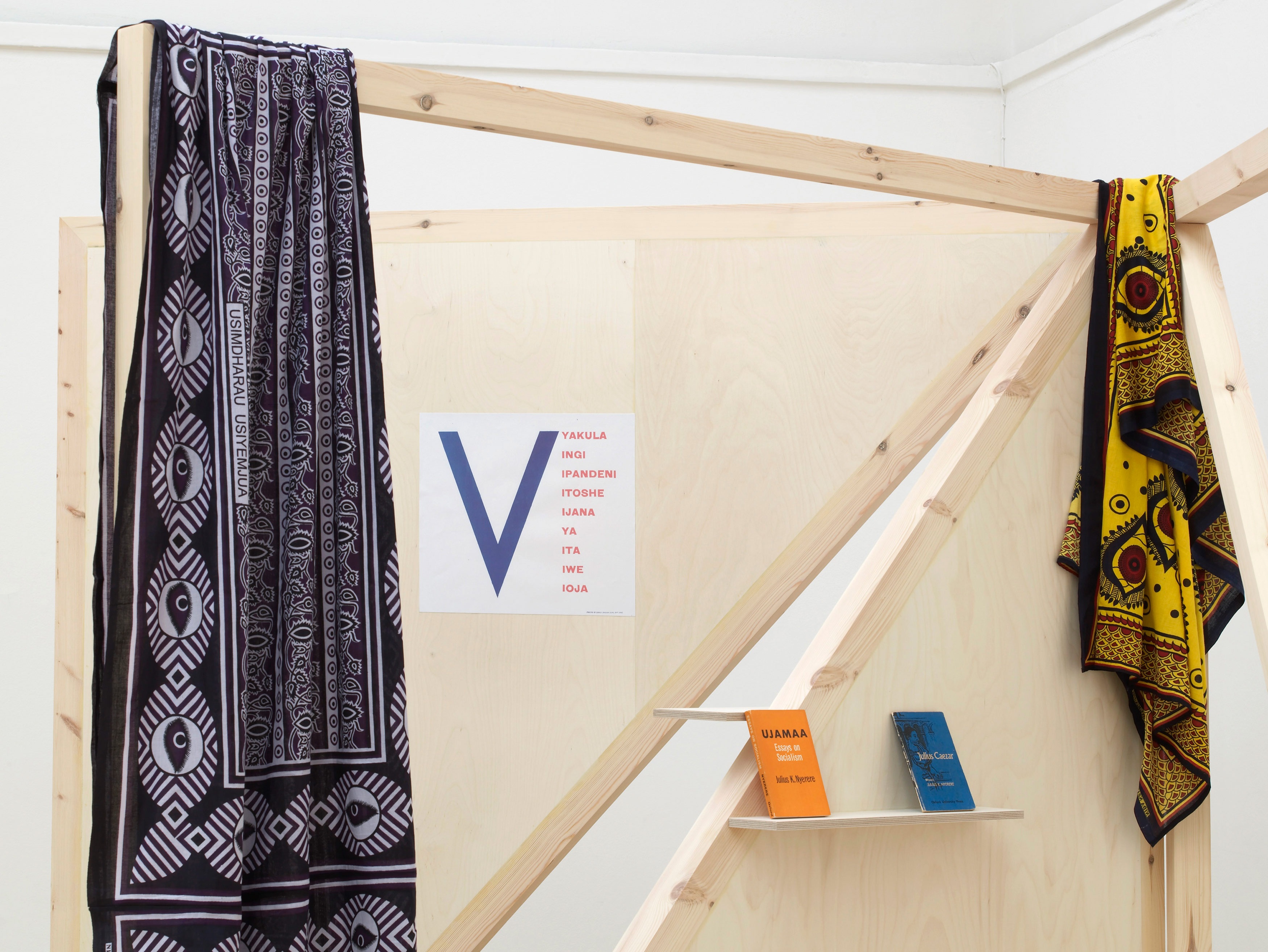
Kinjiketile Suite, 2015

Museum of the blind, 2014
The performance Museum of the Blind combines live reading, sound, and projected still and moving images without collapsing these elements into a conventional frame. In the performance, Kiwanga casts herself as a conservationist from the future who plays with the voice of authority. Embodying a museum specialist or an academic lecturer, she inhabits a position of power while simultaneously undermining it. The authority of stance, as well as the power of sight, plays a key role in this piece. The artist delivers her lecture while sitting at a desk, where the rigidity of her posture and the constrained movements she makes are deliberate choices that signify academic codes of conduct. The element of play that Kiwanga employs examines how academia perpetuates power dynamics by shaping narratives and performing them. Through this, she challenges the roles of speakers and listeners in contemporary knowledge systems.
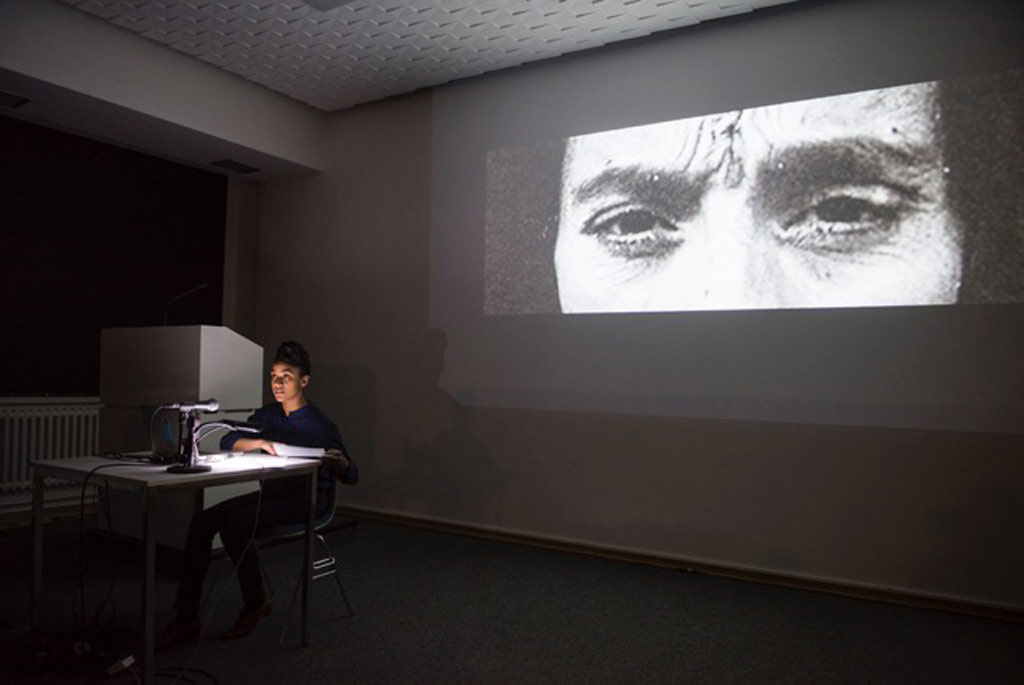
Museum of the blind, 2014

Rumours that Maji was a lie ..., 2014
In this installation Kiwanga treats the voids present in the living memory, as well as the material traces of the Maji Maji War; an anti-colonial uprising which took place between 1905 and 1907 in present-day Tanzania. The installation centers around a shelving system, which functions simultaneously as a storage unit, an exhibiting structure and a projection machine. It embodies storytelling in the form of a subjective archive through which she questions the act of organising and categorising, rejecting any illusion of totality or exhaustiveness when treating historic events.

Rumours that Maji was a lie ..., 2014
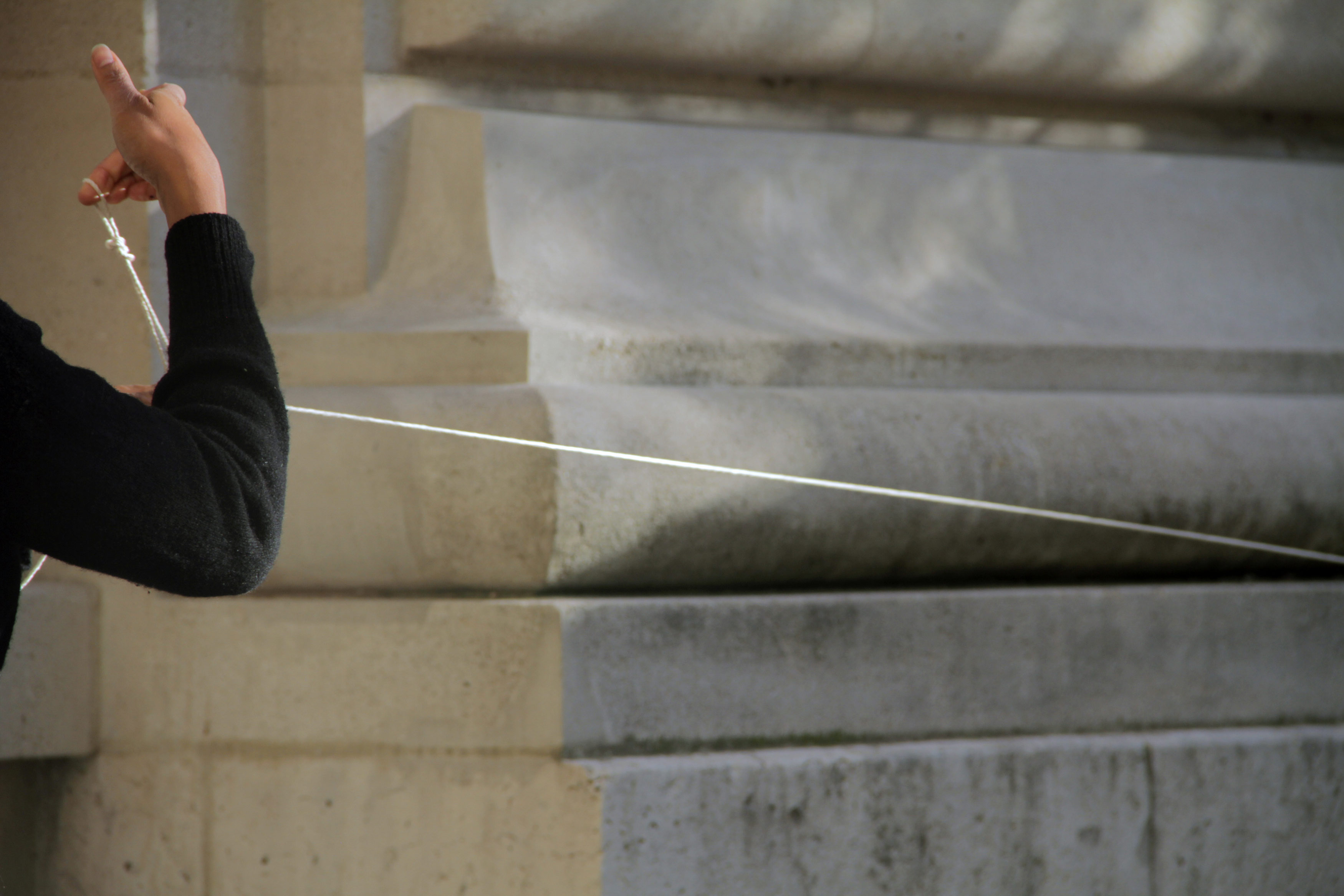
Binding Ties: Grand Palais, 2014
On October 14, 2014 Kapwani Kiwanga encircled the Grand Palais in Paris with approximately 1200 meters of string. While circumnavigating the building the artist would stop periodically to tie a knot. This act of tying a knot recalls transcultural magical practices which seek to contain energy or create a protective boundary in this fastening gesture.
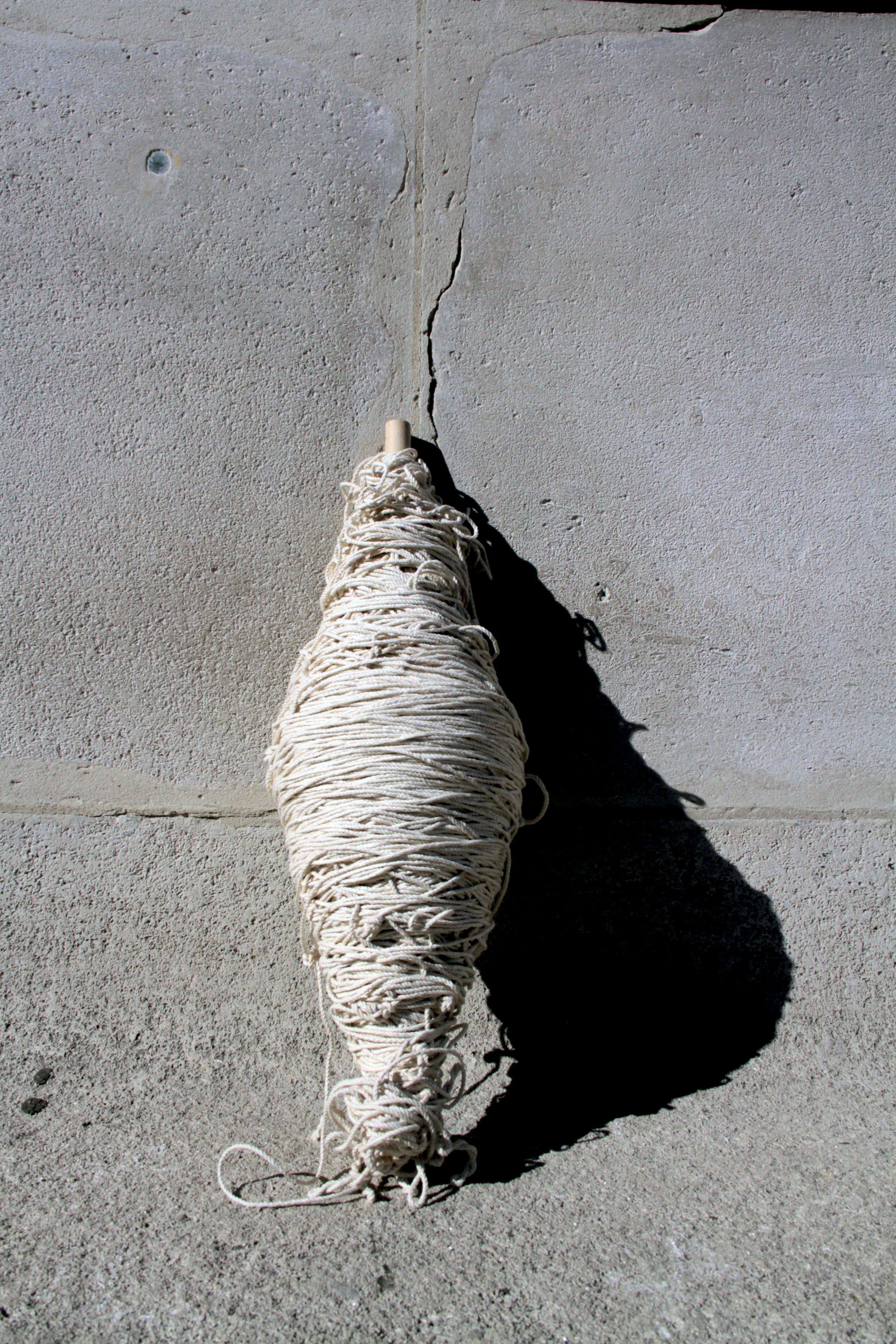
Binding Ties: Grand Palais, 2014

Ifa Organ, 2013
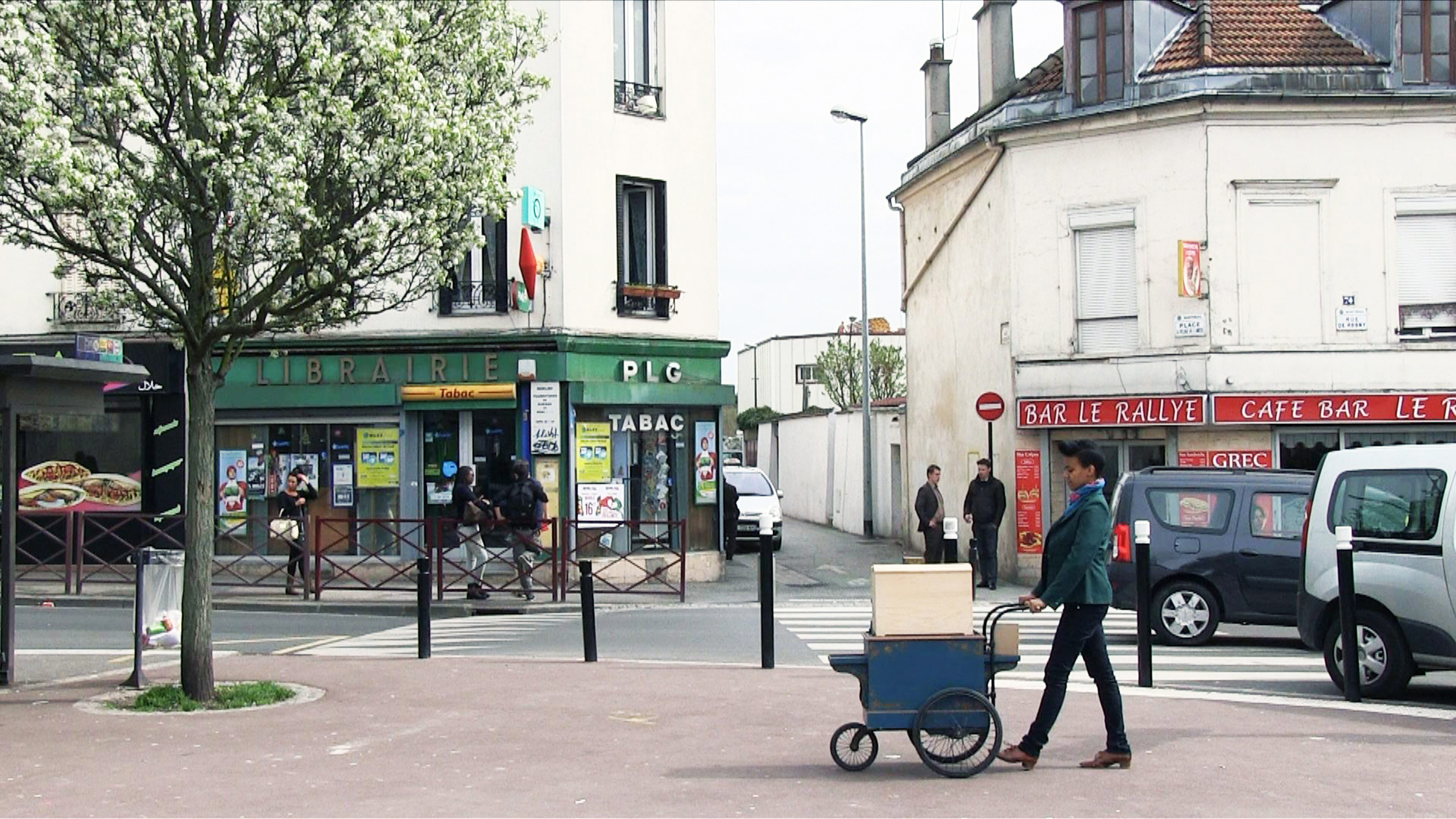
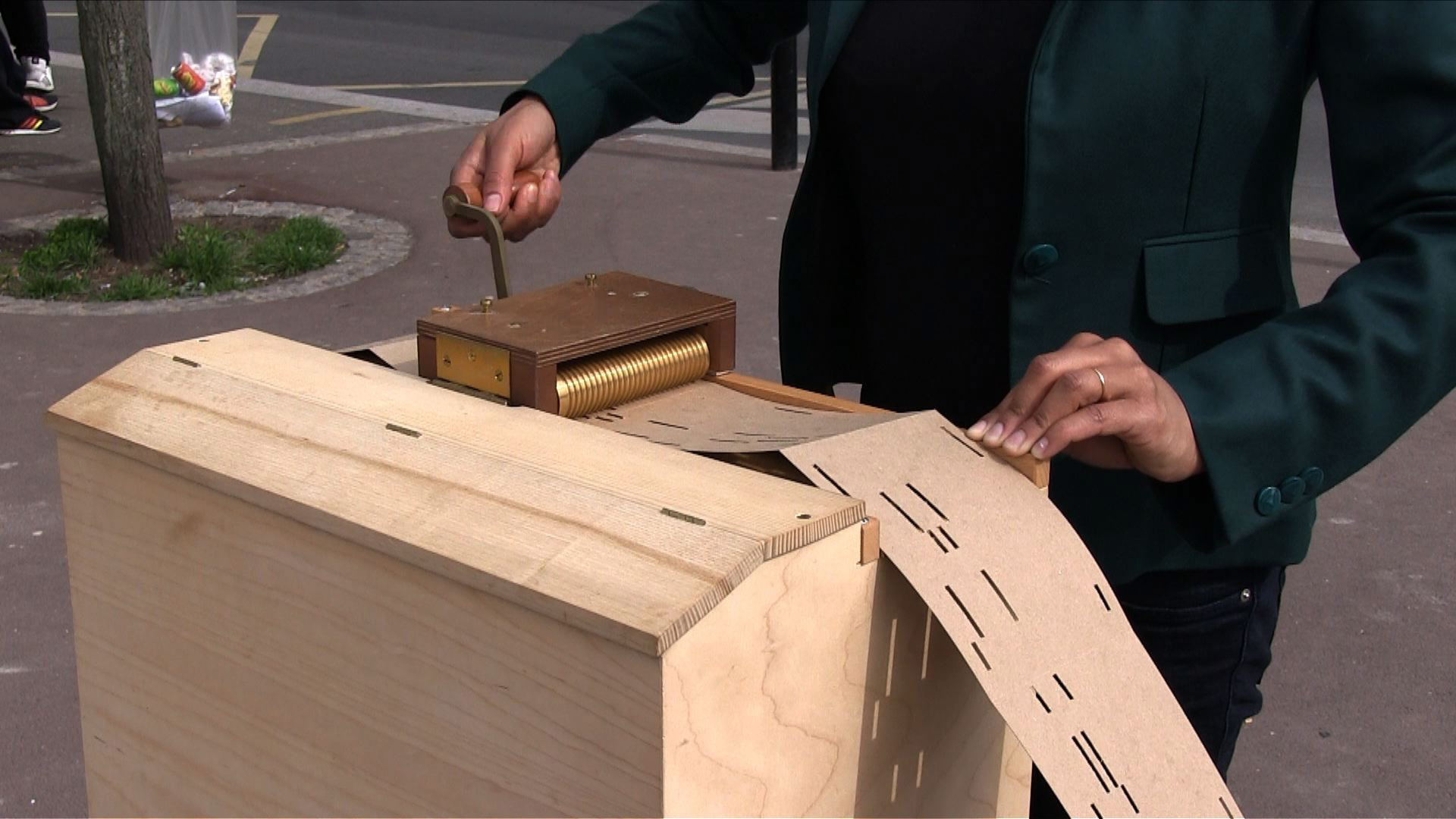
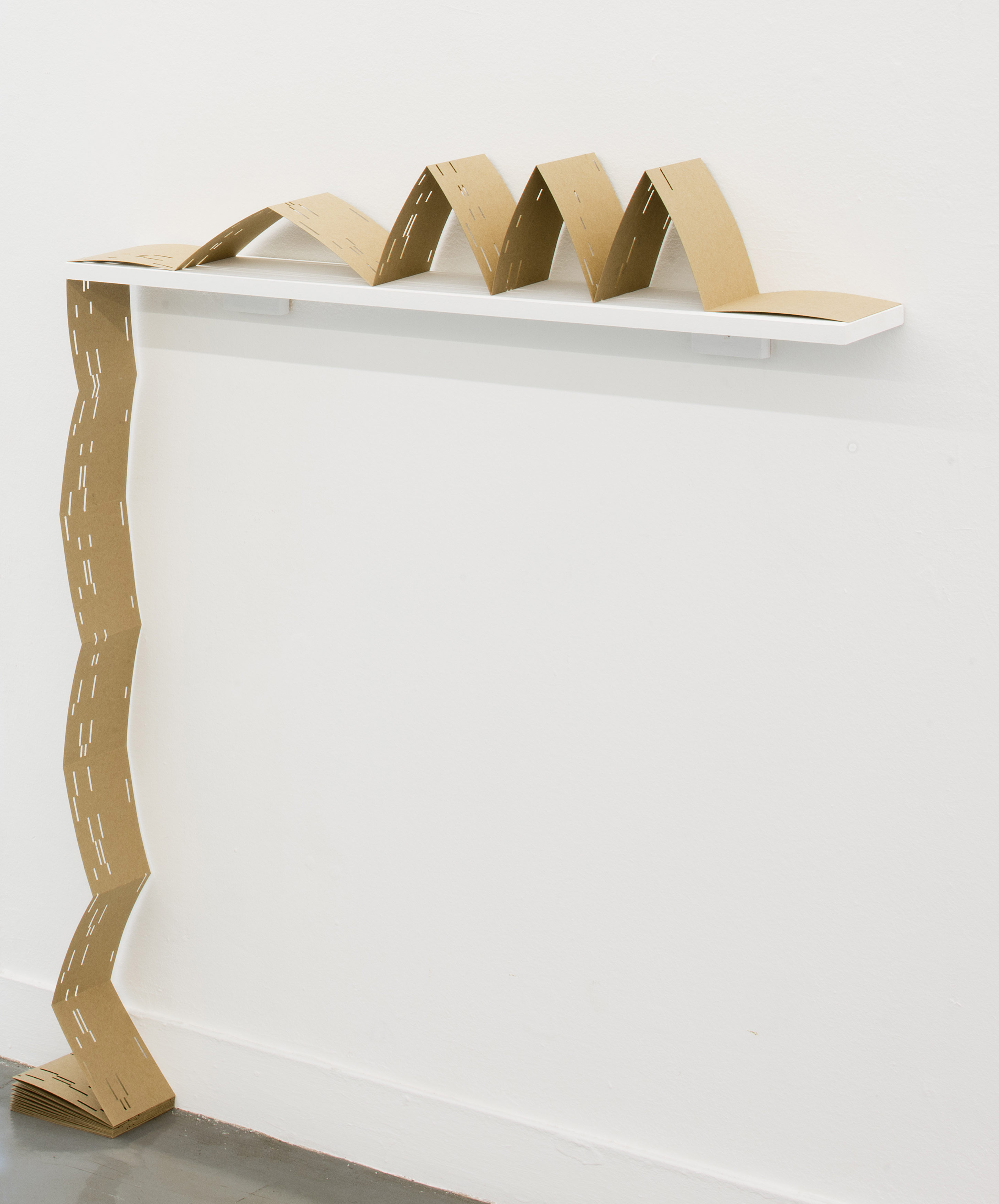
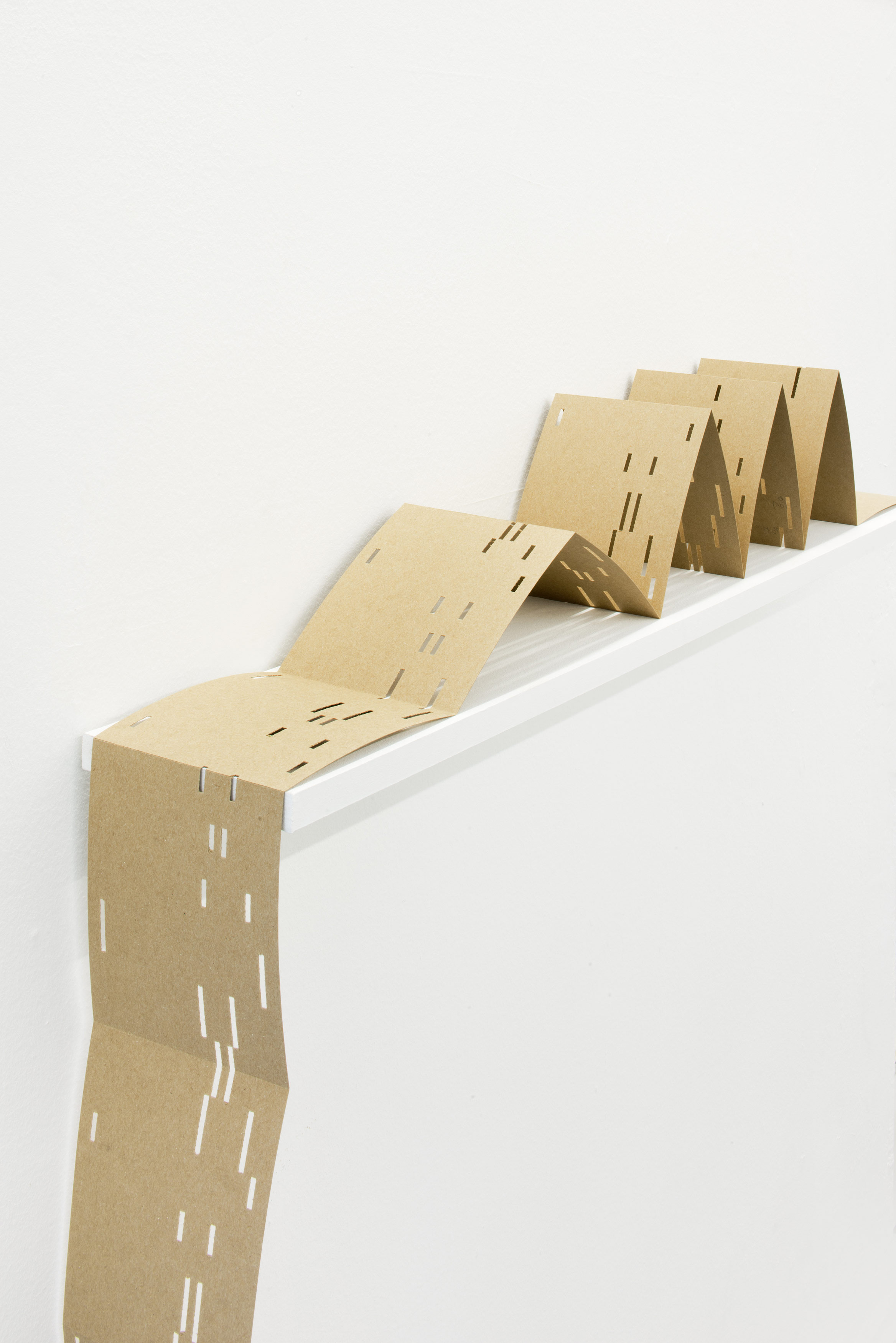
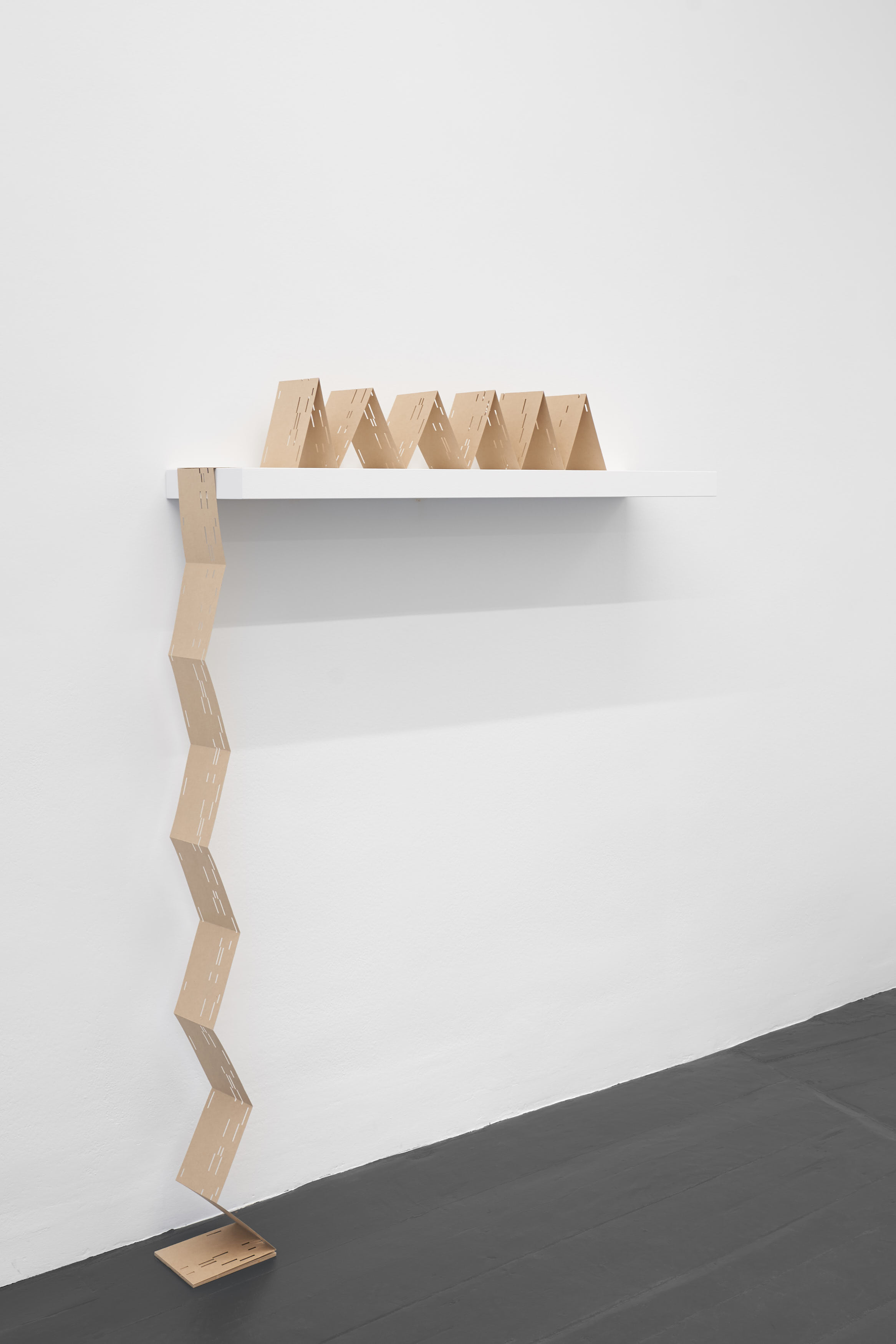
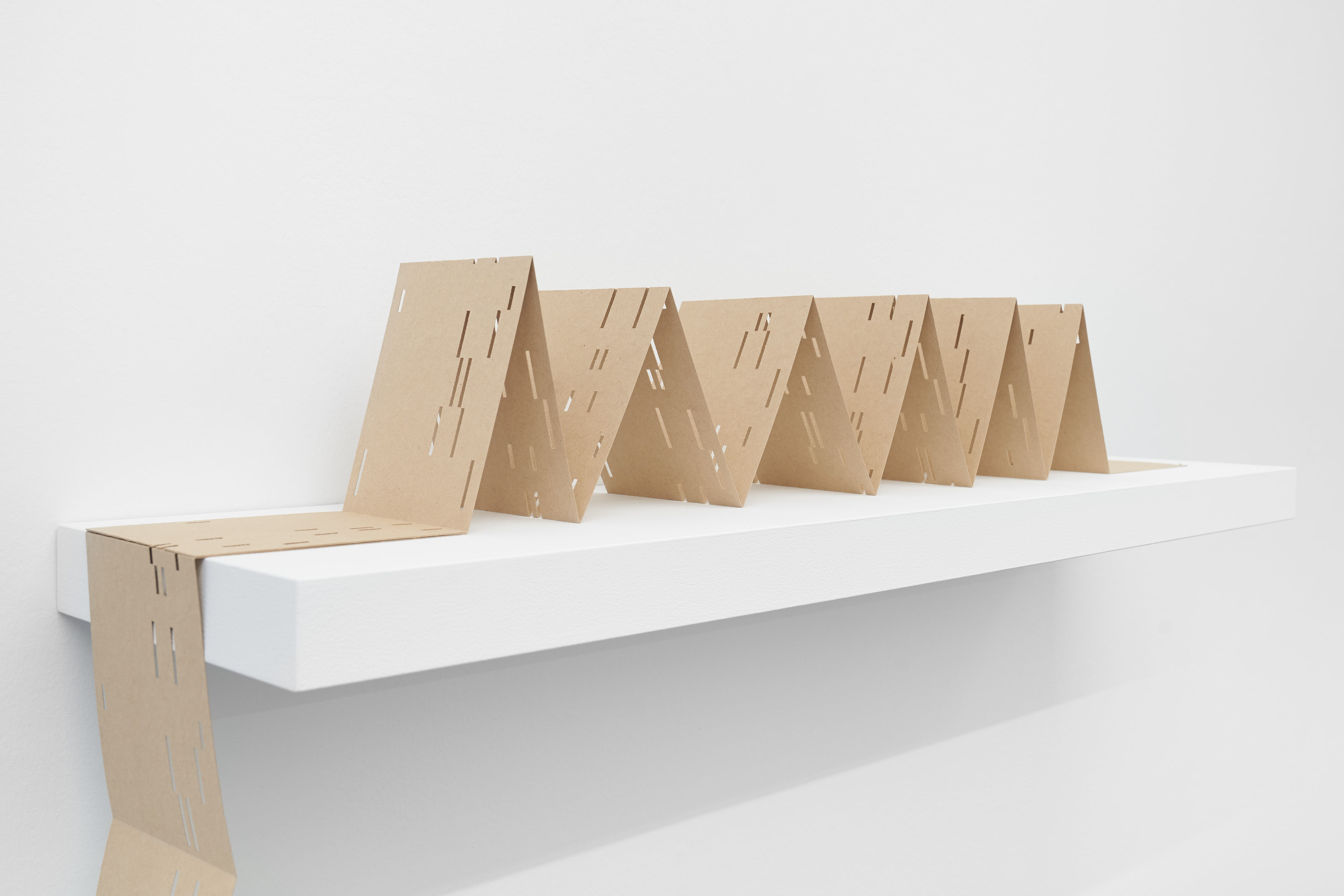
Ifa-Organ associates Ifa; a binary divination system practiced principally in Nigeria, Benin, and their diasporas; and the barrel organ originating in Eastern and Central Europe. An Ifa priest in Benin performed a remote consultation at Kapani Kiwanga’s request. This divination produced a series of signs that were then transposed onto a card for a barrel organ through perforations. When played, the card produces a repetitive music which broadcasts the oracle into public space. The perforated card is at once a sonic and visual object. When inactivated by the organ, the card is displayed in the exhibition space inviting the viewer to decipher the divination codes.
Ifa Organ, 2013
Ifa Organ, 2013
Ifa Organ, 2013
Ifa Organ, 2013
Ifa Organ, 2013
Ifa Organ, 2013
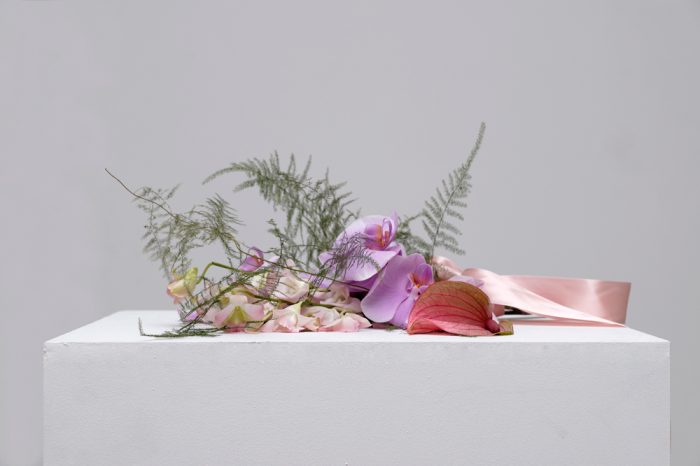
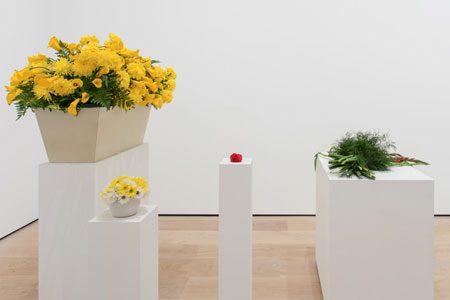
Flowers for Africa, 2012 - ongoing
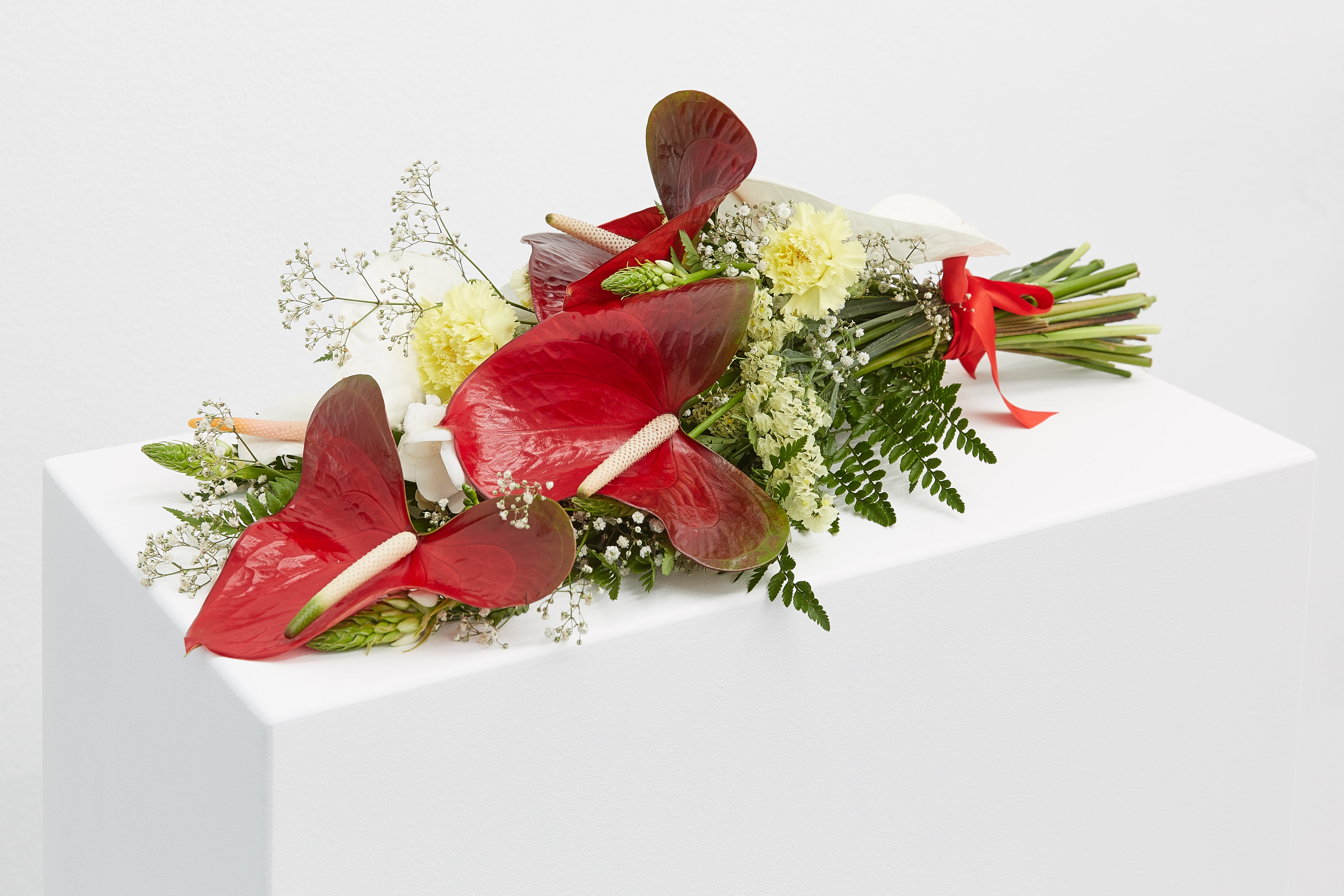
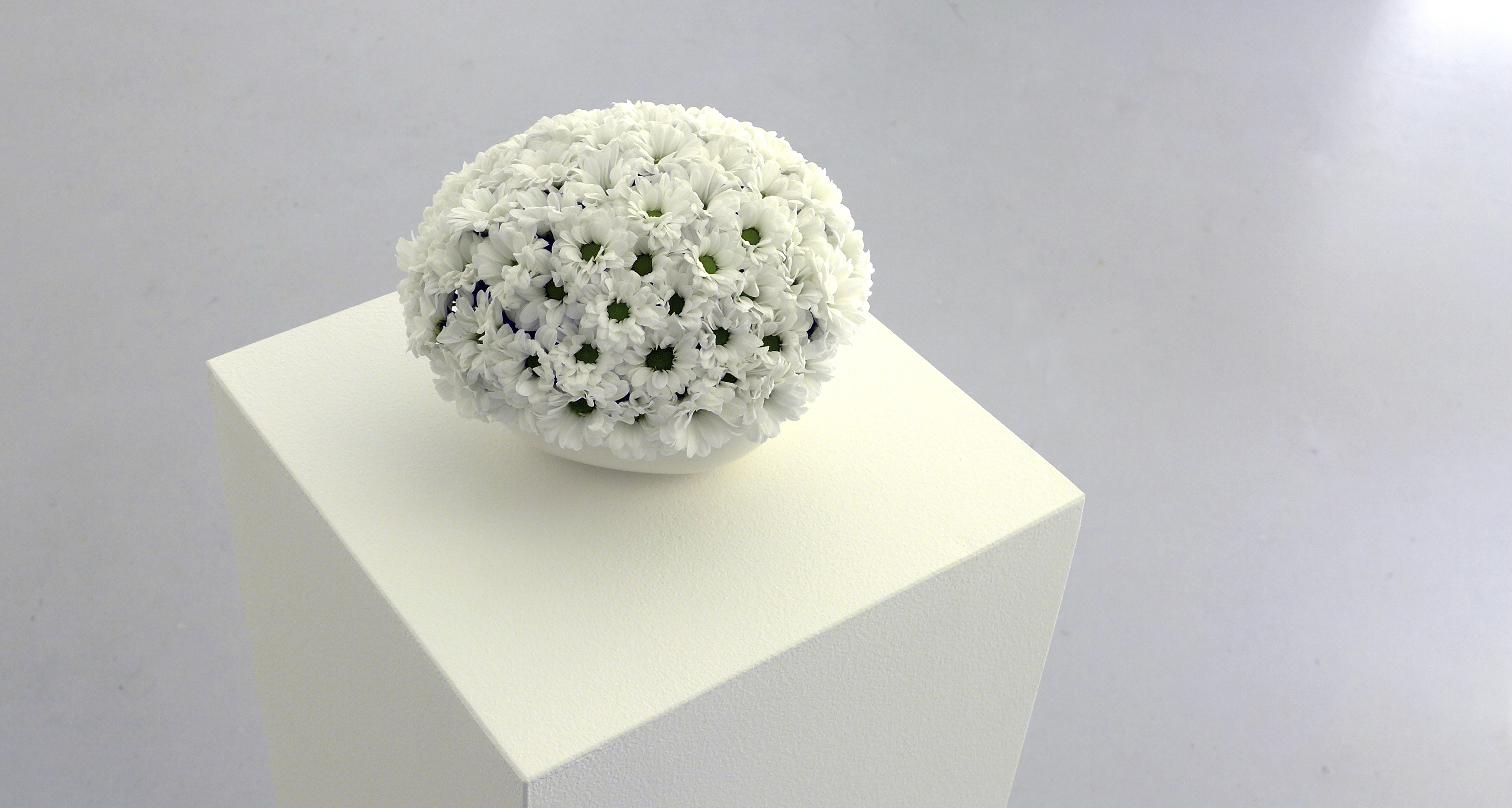
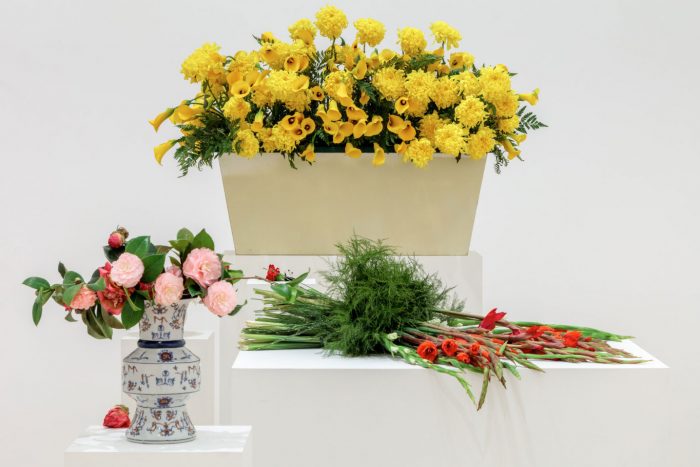
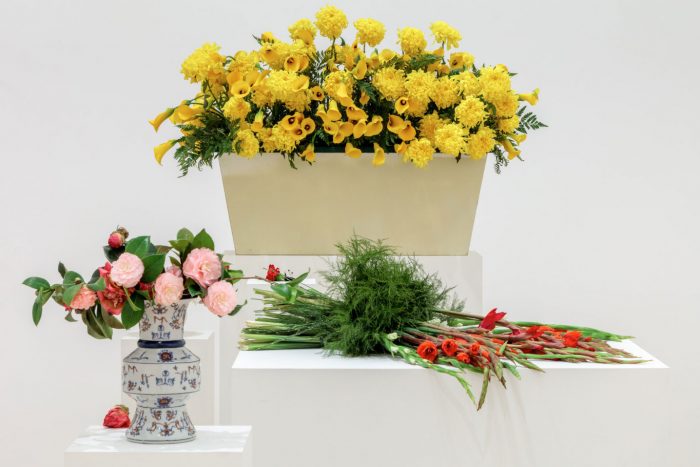
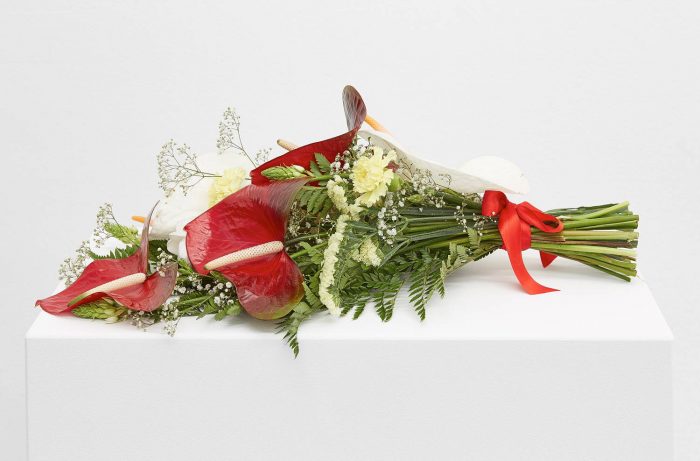
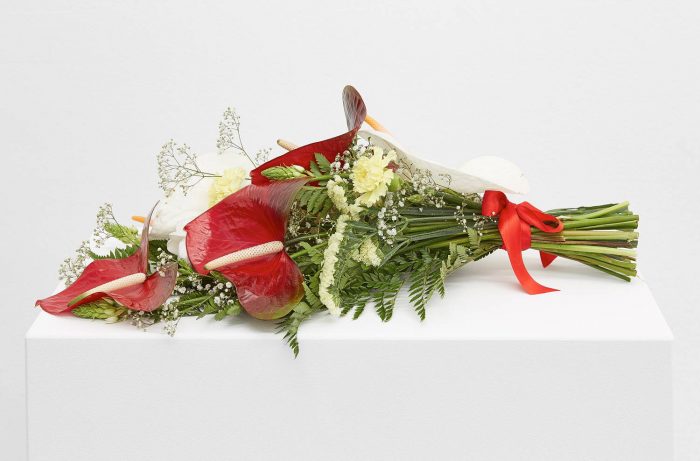
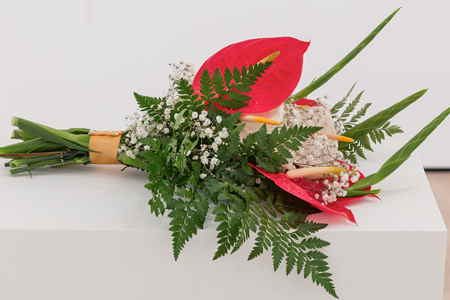
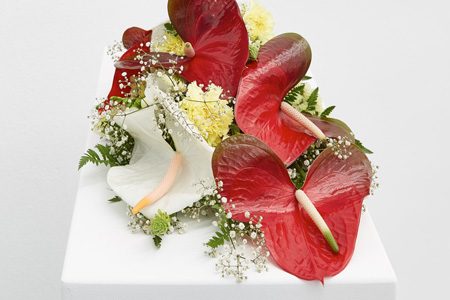
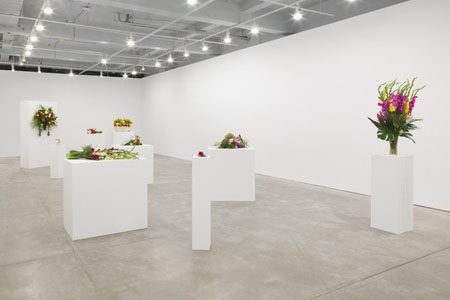
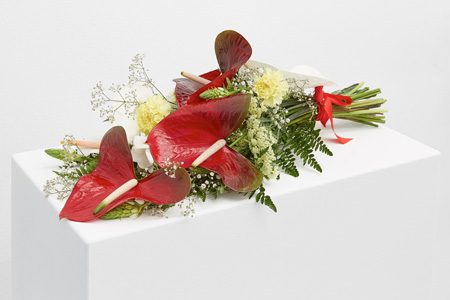
In the series Flowers for Africa, Kapwani Kiwanga collects images that officiate the independence of African States and the floral arrangements that were present. For this conceptual piece, Kiwanga recreates the floral compositions as ephemeral sculptures. For each exhibition the flowers are left to wilt throughout the entire duration of the show.

Flowers for Africa, 2012 - ongoing
Flowers for Africa, 2012 - ongoing
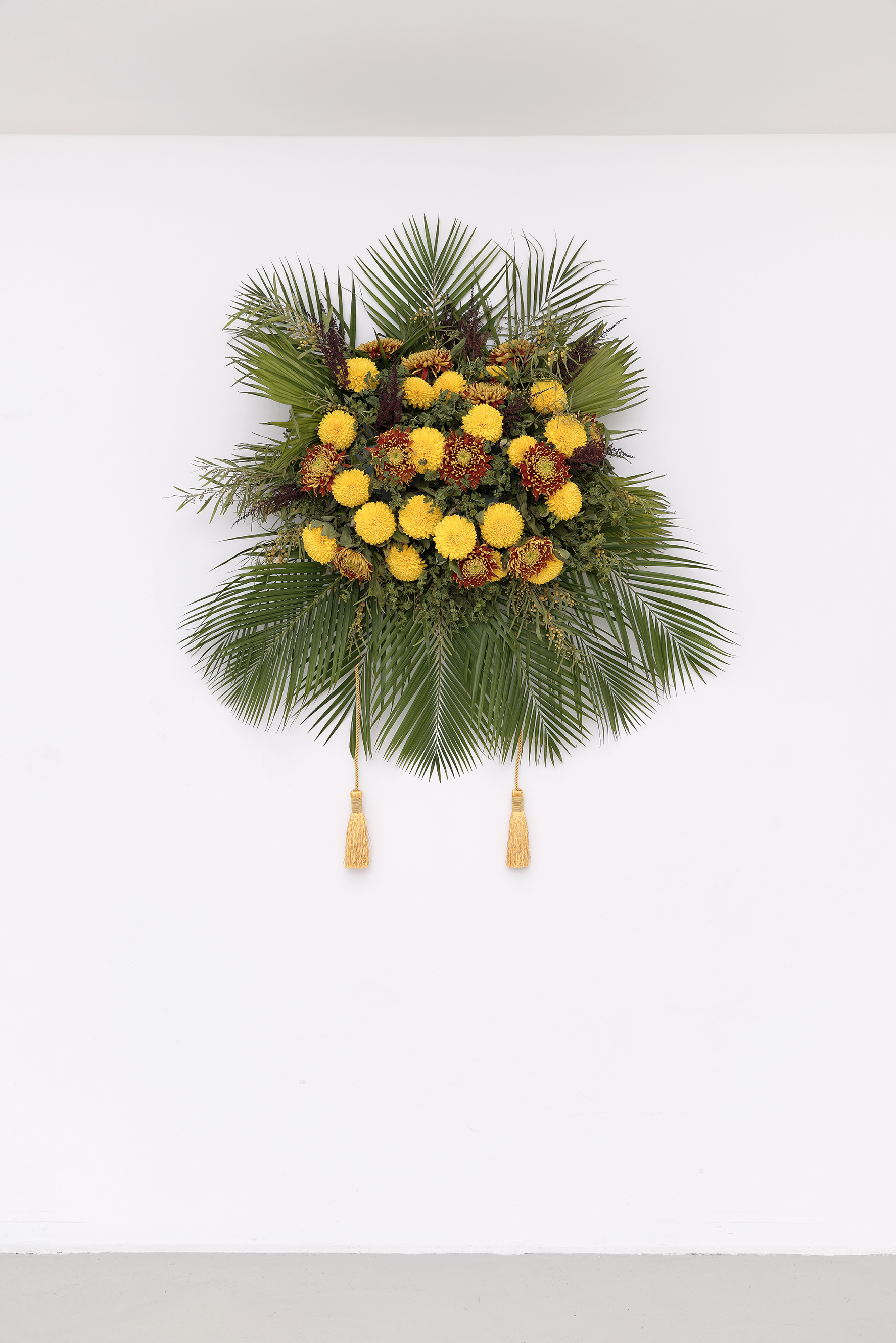
Flowers for Africa, 2012 - ongoing
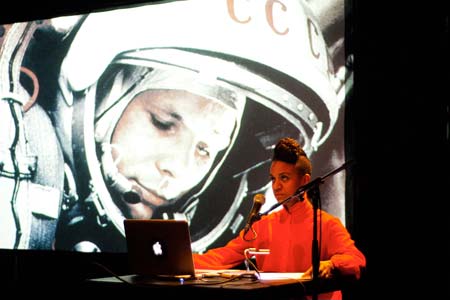
Afrogalactica, 2012 - ongoing
Posing as an anthropologist from the future, Kapwani Kiwanga reflects on some major themes in Afrofuturism and their role in the development of the United States of Africa Space Agency. Plunging into the past to retrieve archives of popular culture, she uses science fiction to make projections about the future.
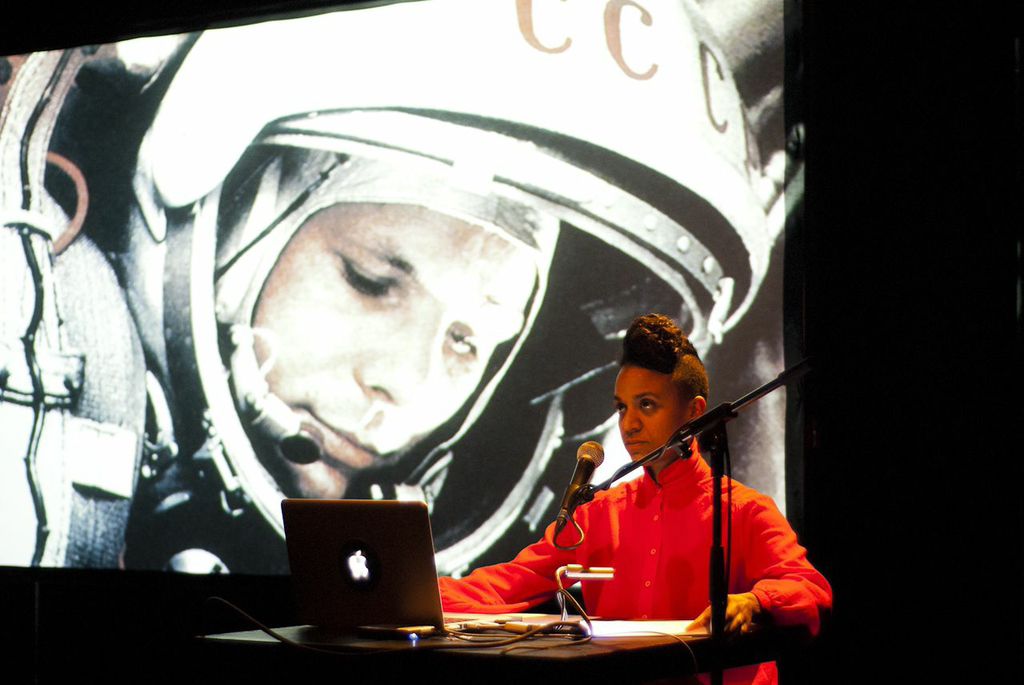
Afrogalactica, 2012 - ongoing
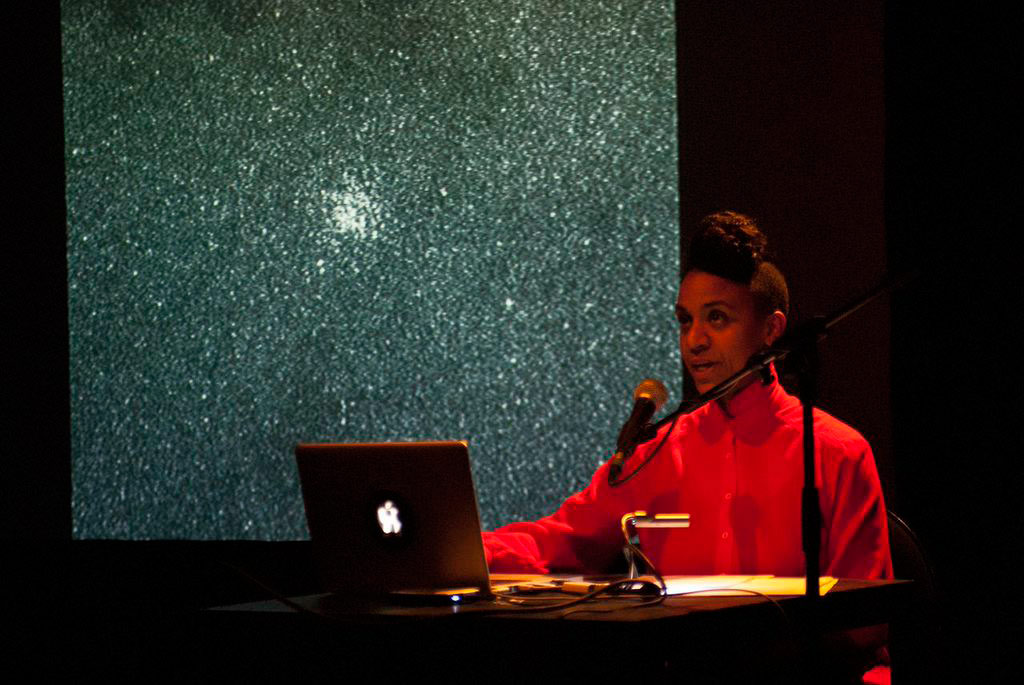
Afrogalactica, 2012 - ongoing
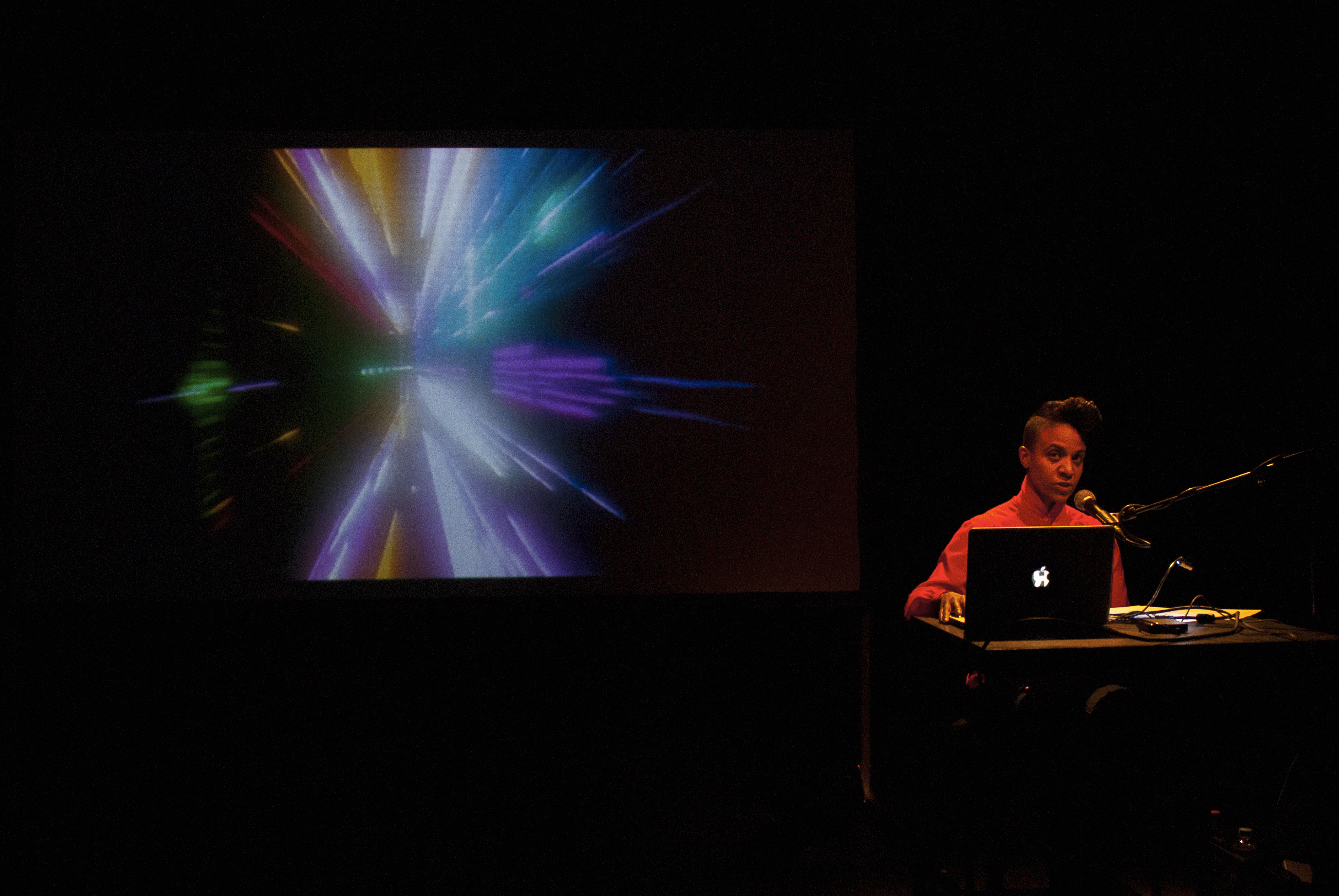
Afrogalactica, 2012 - ongoing
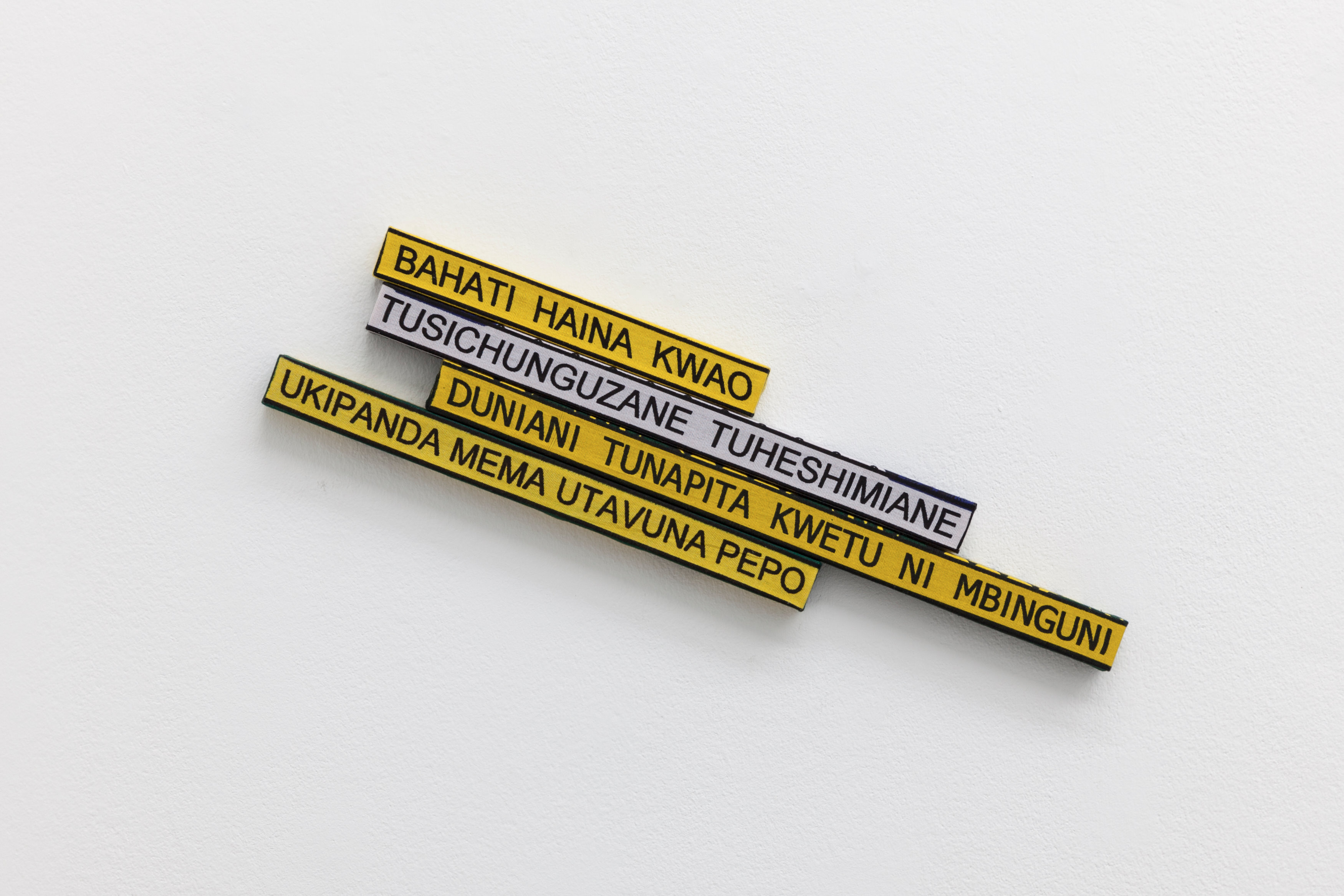
Turns of Phrase, 2012
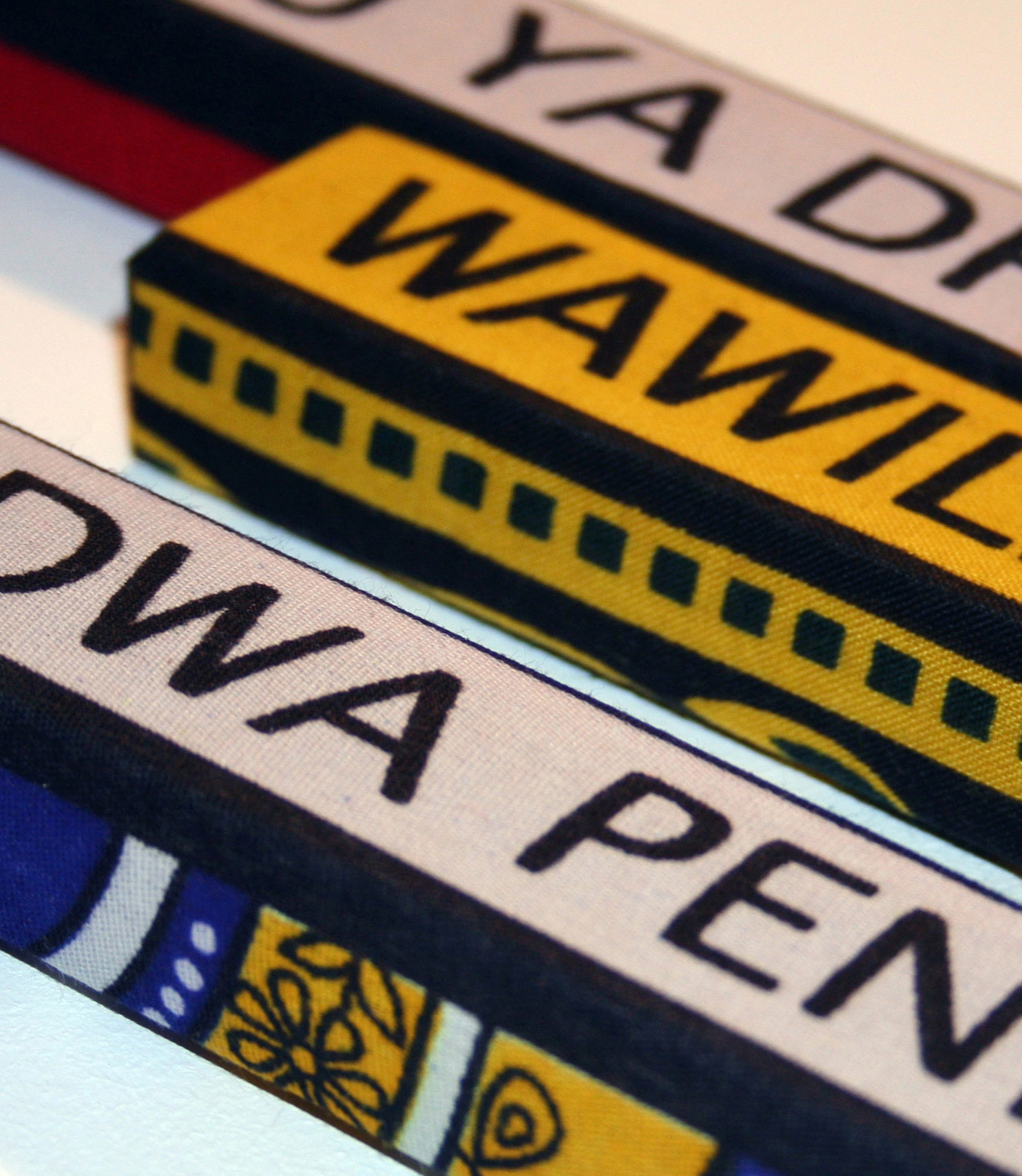
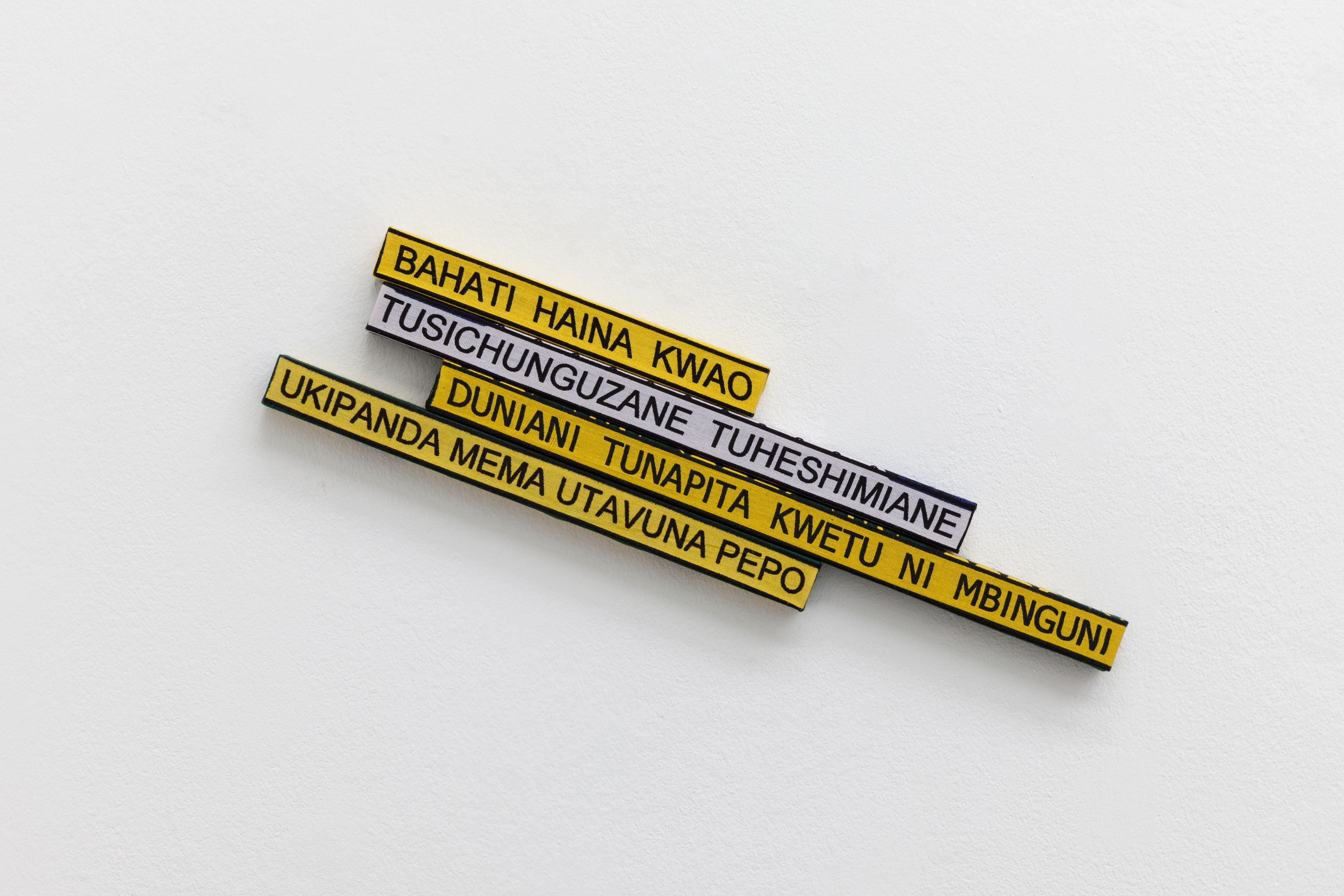
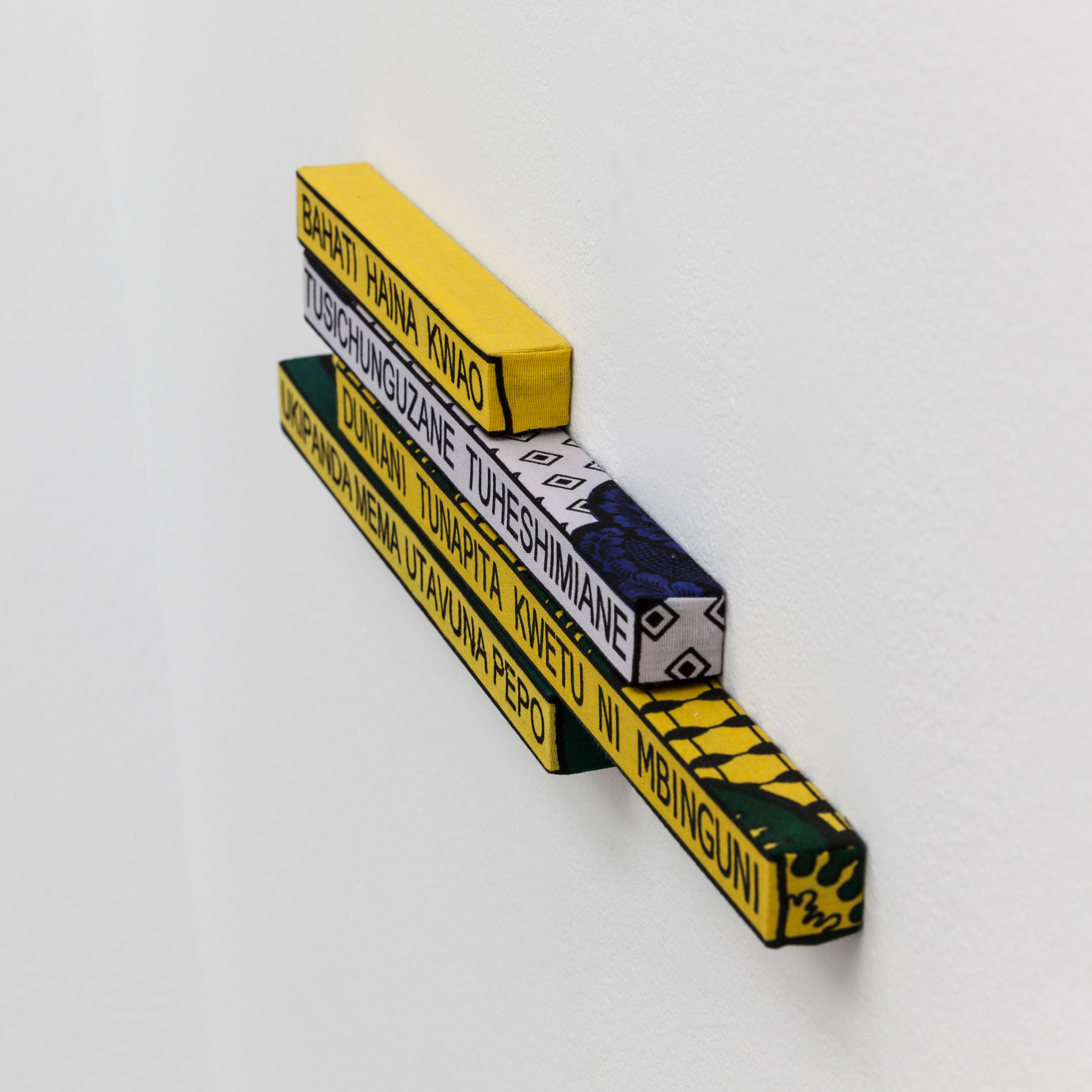
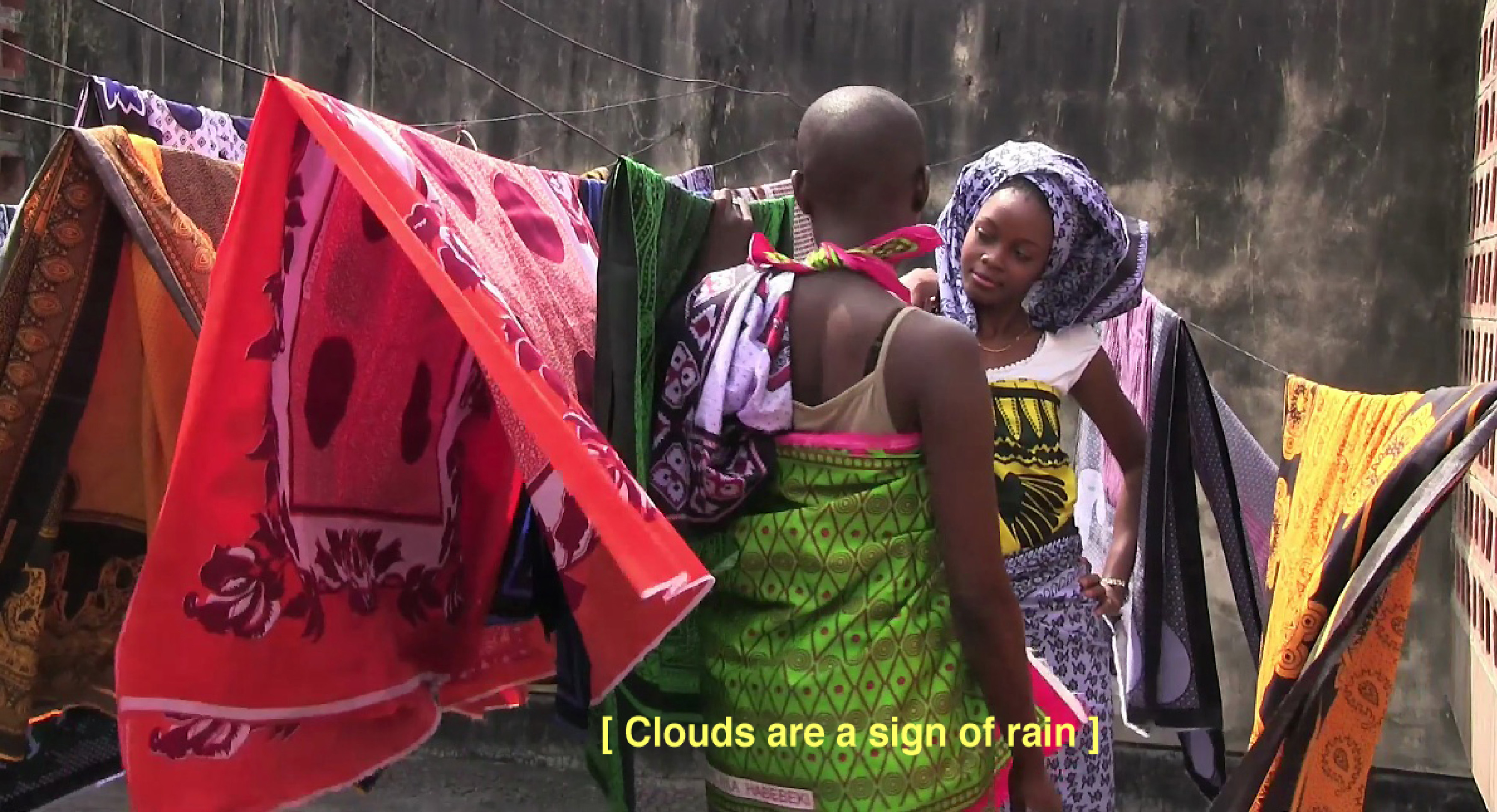
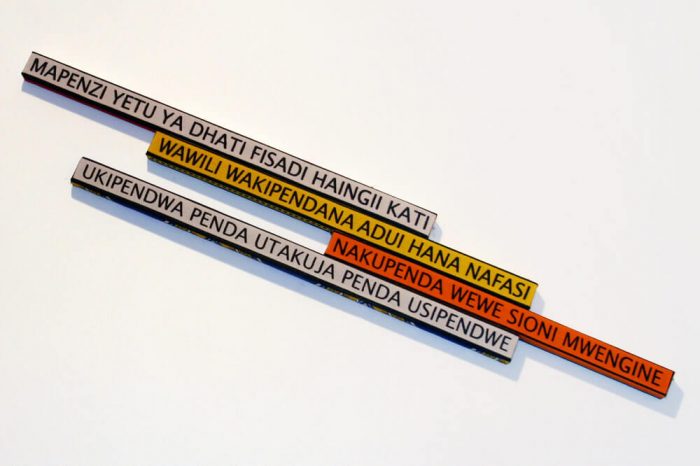
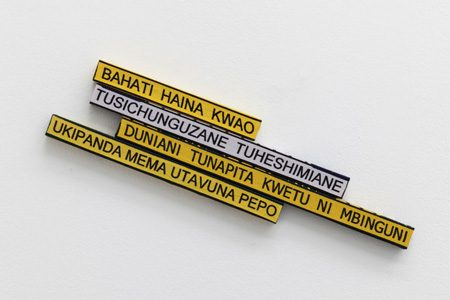
Kapwani Kiwanga’s series Turns of Phrase includes popular Tanzanian expressions printed on the fabrics of the traditional clothing of Kanga. Kiwanga isolates these expressions and organizes them in her objects by topics like love, wealth and jealousy. Translation: The world is made of differences Clouds are a sign of rain If someone is given something you can't take it away Blessed are the pure of heart.
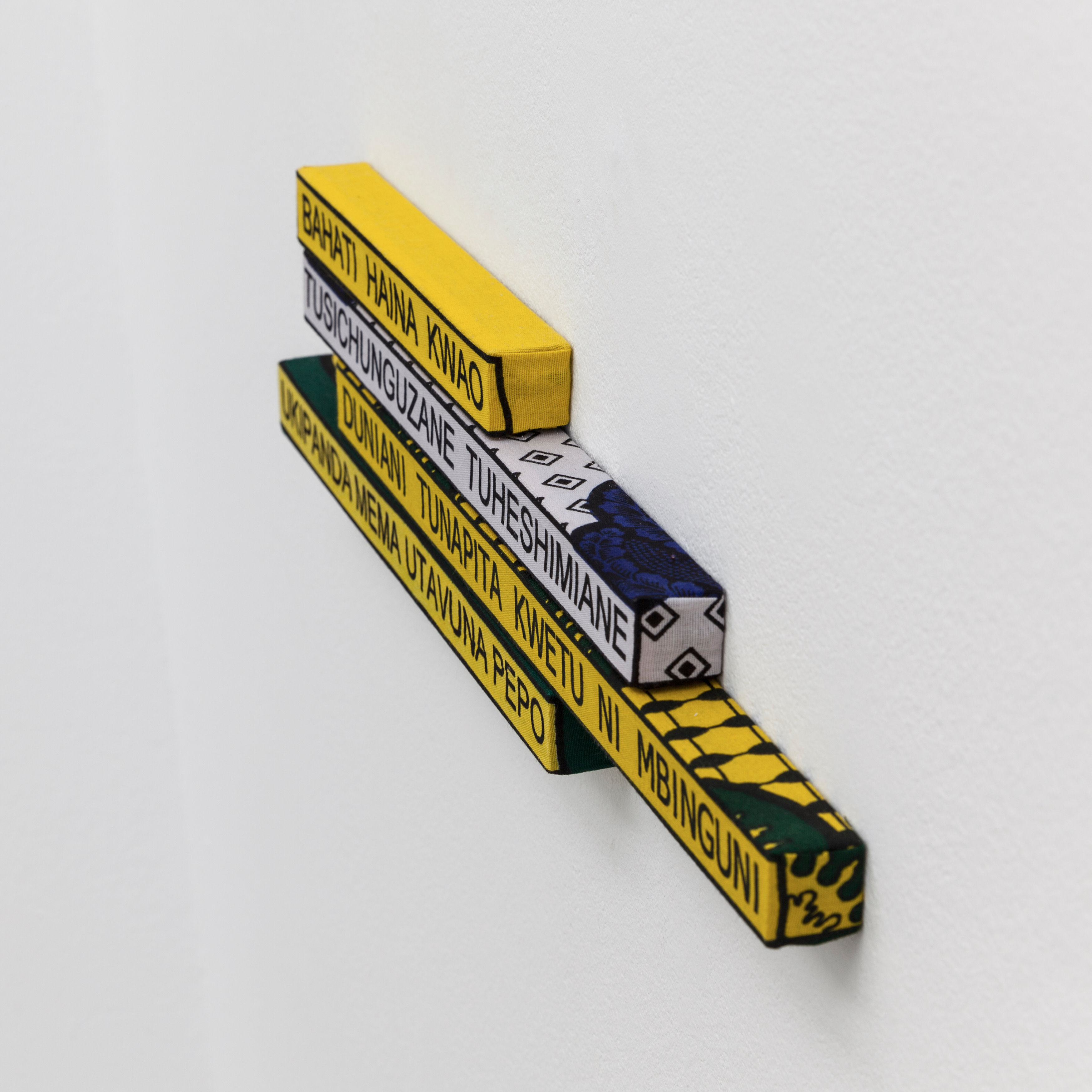
Turns of Phrase, 2012
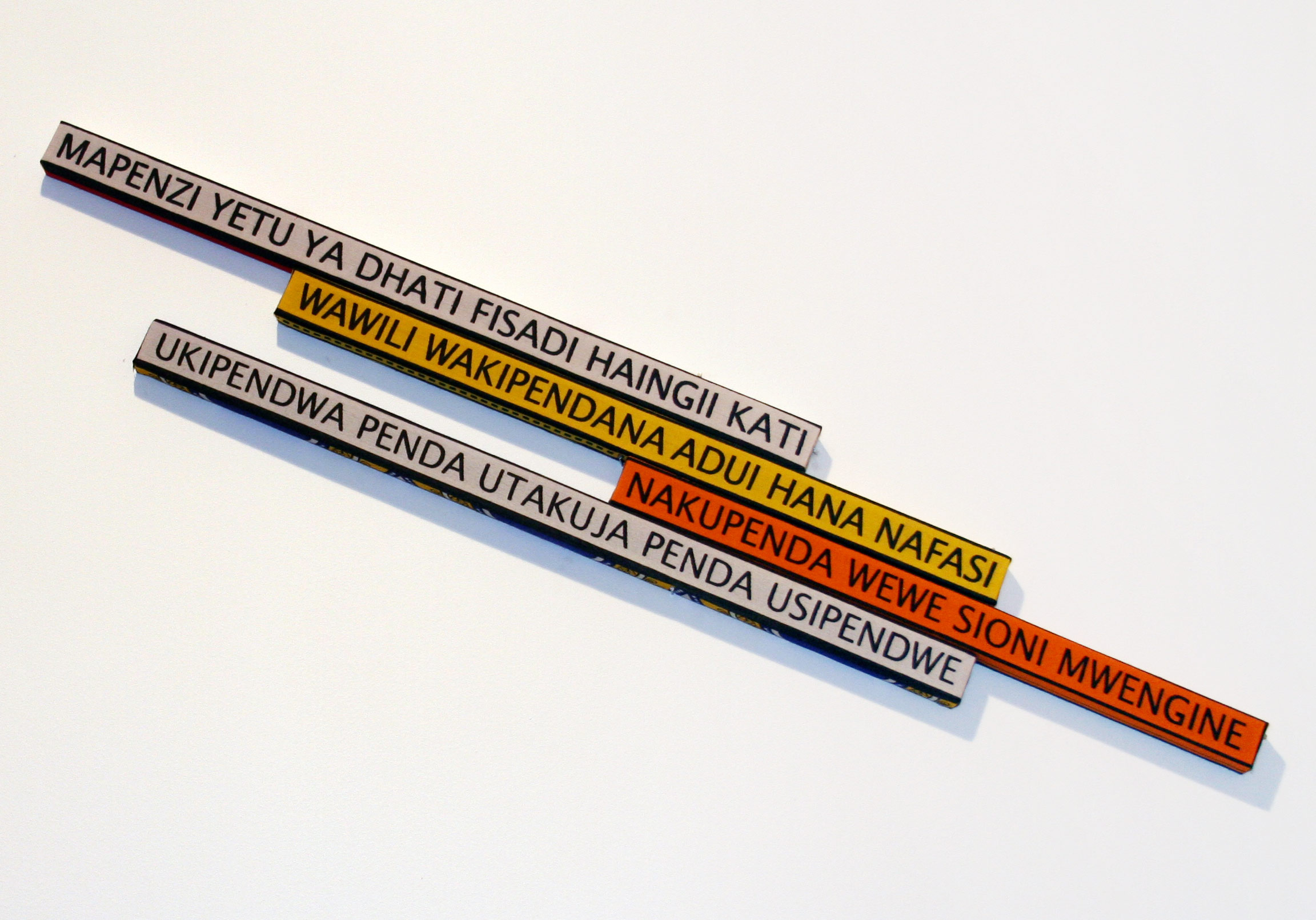
Turns of Phrase, 2012
Turns of Phrase, 2012
Turns of Phrase, 2012
Turns of Phrase, 2012

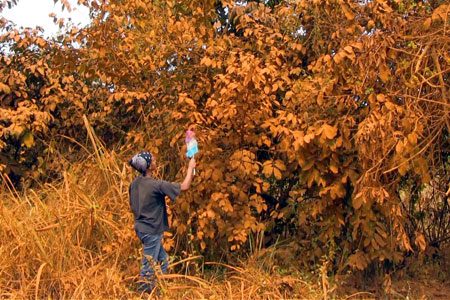
Vumbi, 2012
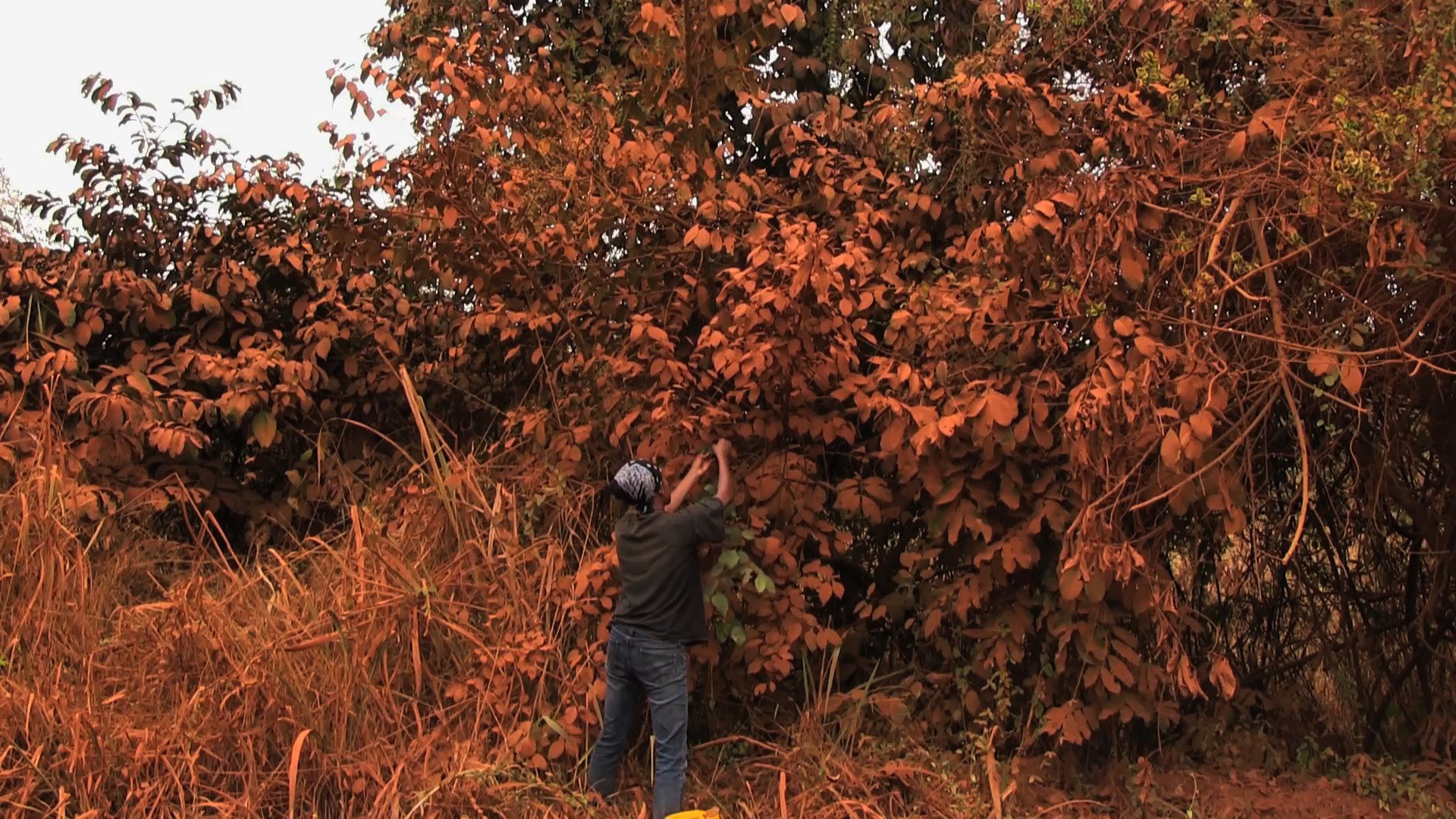
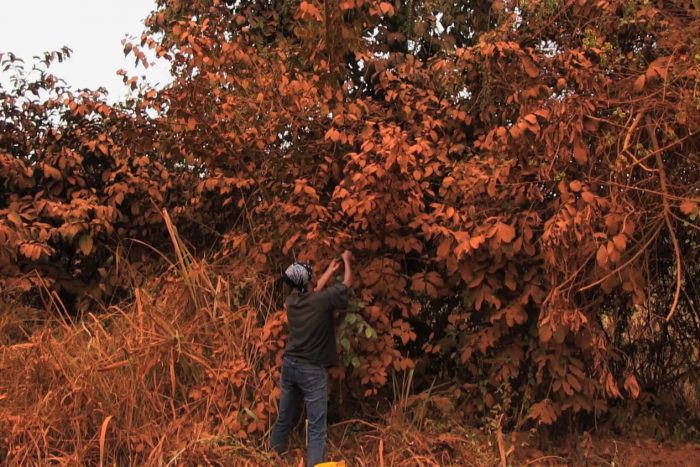
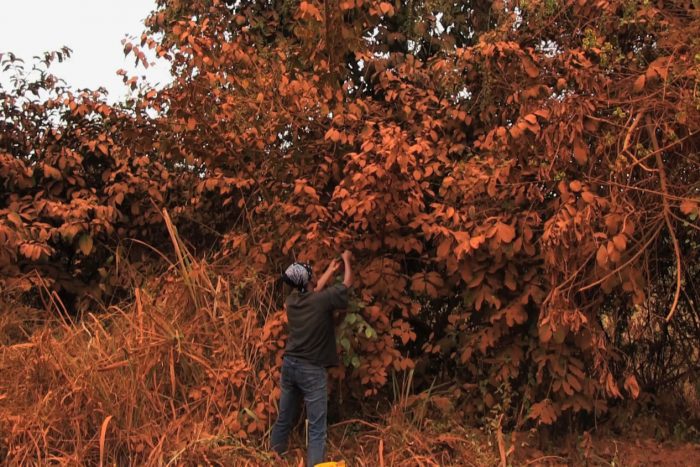
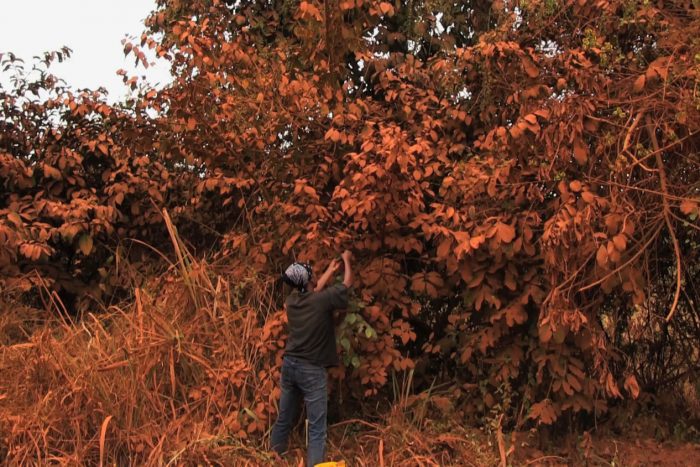
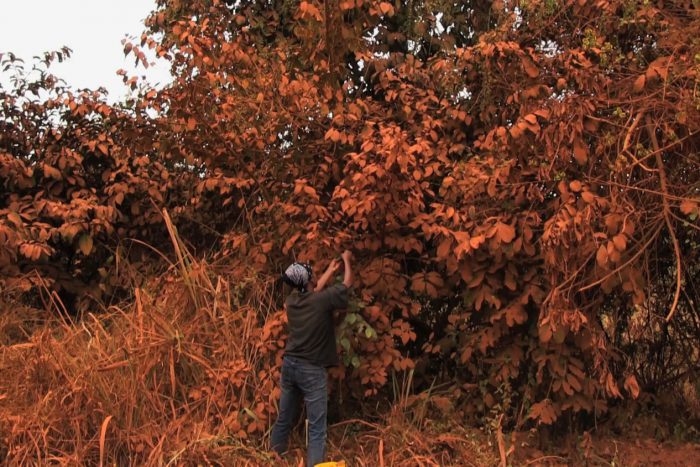
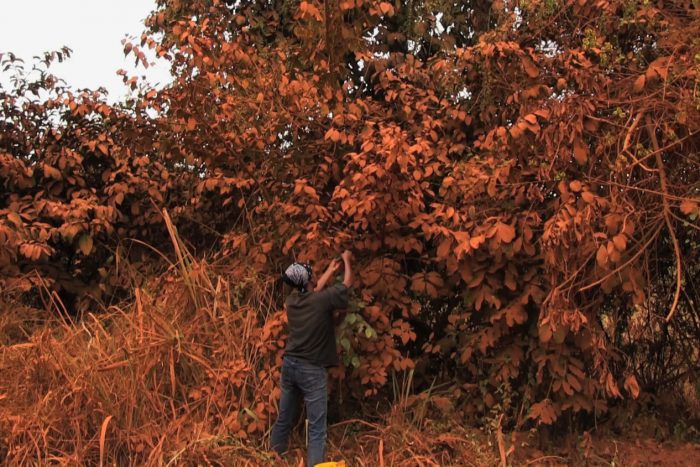
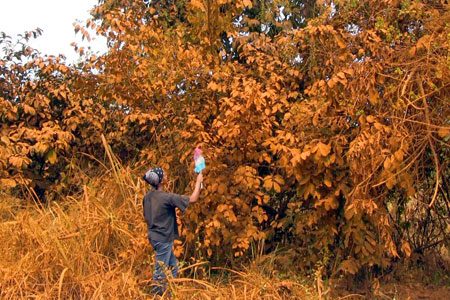
During the dry season, rural Tanzania is covered in a blanket of red dust which produces a myriad of monochromatic landscapes. For the video Vumbi, which means dust in kiswahili, Kapwani Kiwanga cleans away dust from foliage and engages in an act of subtractive painting. She transposes a simple task from the domestic sphere into the natural environment and engages in an absurd action, for the foliage will quickly be buried under a new layer of dust.
Vumbi, 2012
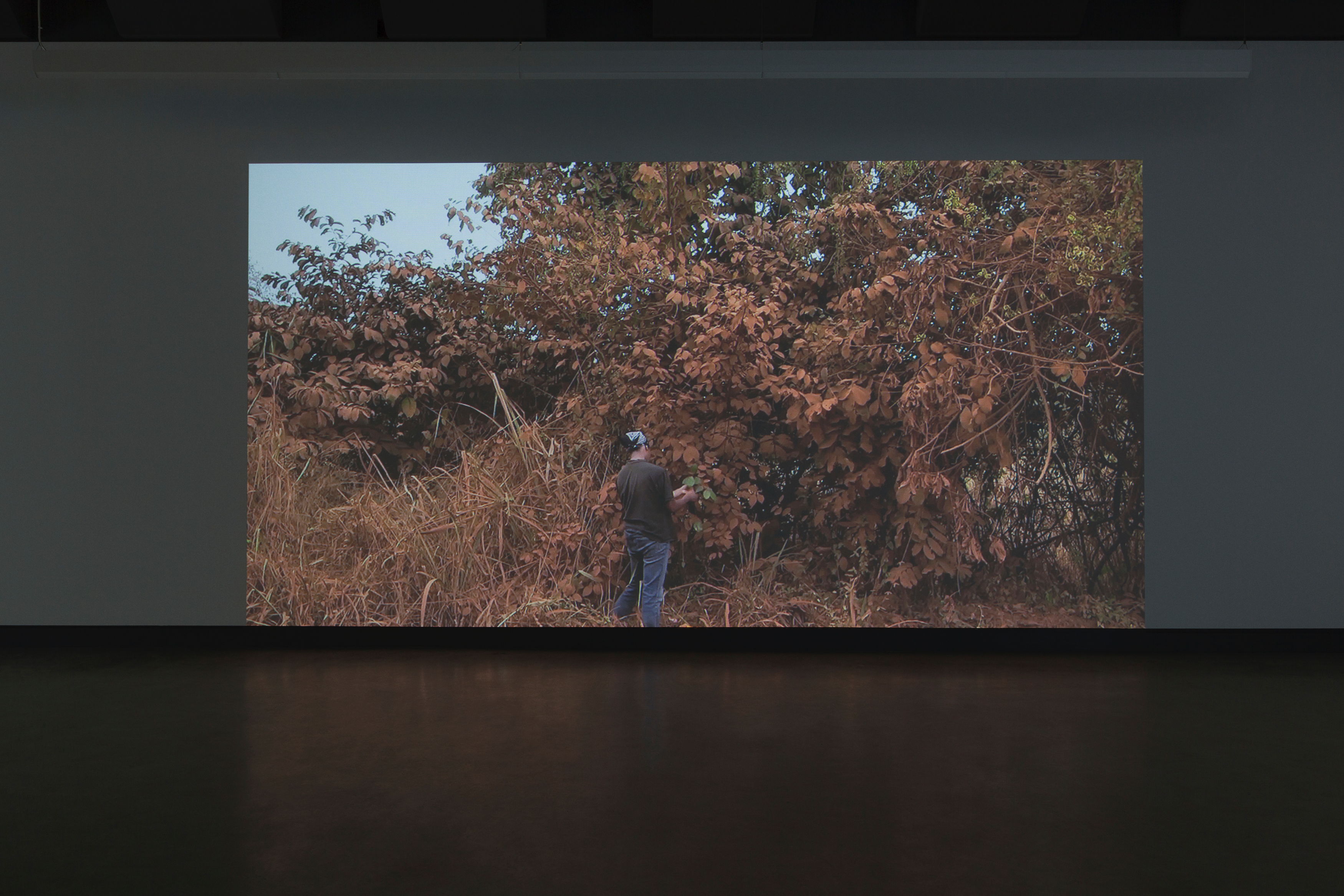
Vumbi, 2012
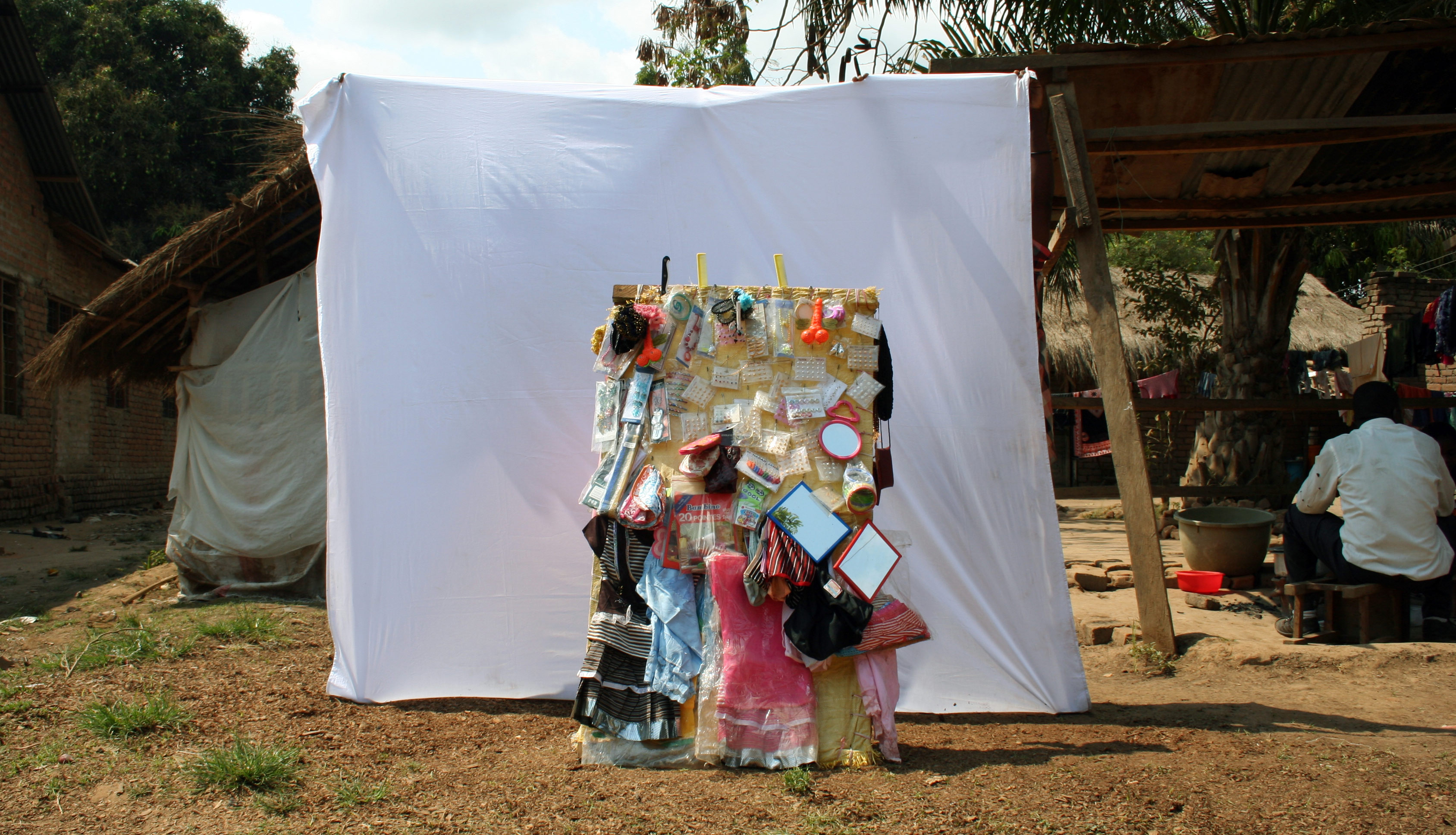
Road Signs, 2012
Small businesses are plenty in Tanzania, either as a means of supplementary or primary family income. In some cases the product or service being sold acts as both the merchandise and the sign advertising its sale. In this photographic series Kiwanga appropriates ethnographic mise-en- scene photography from the turn of the last century. Instead of placing human subjects in front of a fabricated backdrop she asks the small business owners to hold a white sheet behind their modest enterprise. In doing so the sheet shields their bodies from the photographic gaze. Furthermore, the white sheet functions to frame the objects of their trade. It functions both as a frame within a frame and as a neutral background against which to assess the tools and material of their trade. However, the frame value is always large enough so as to never de-contextualise the mise-en-scene.
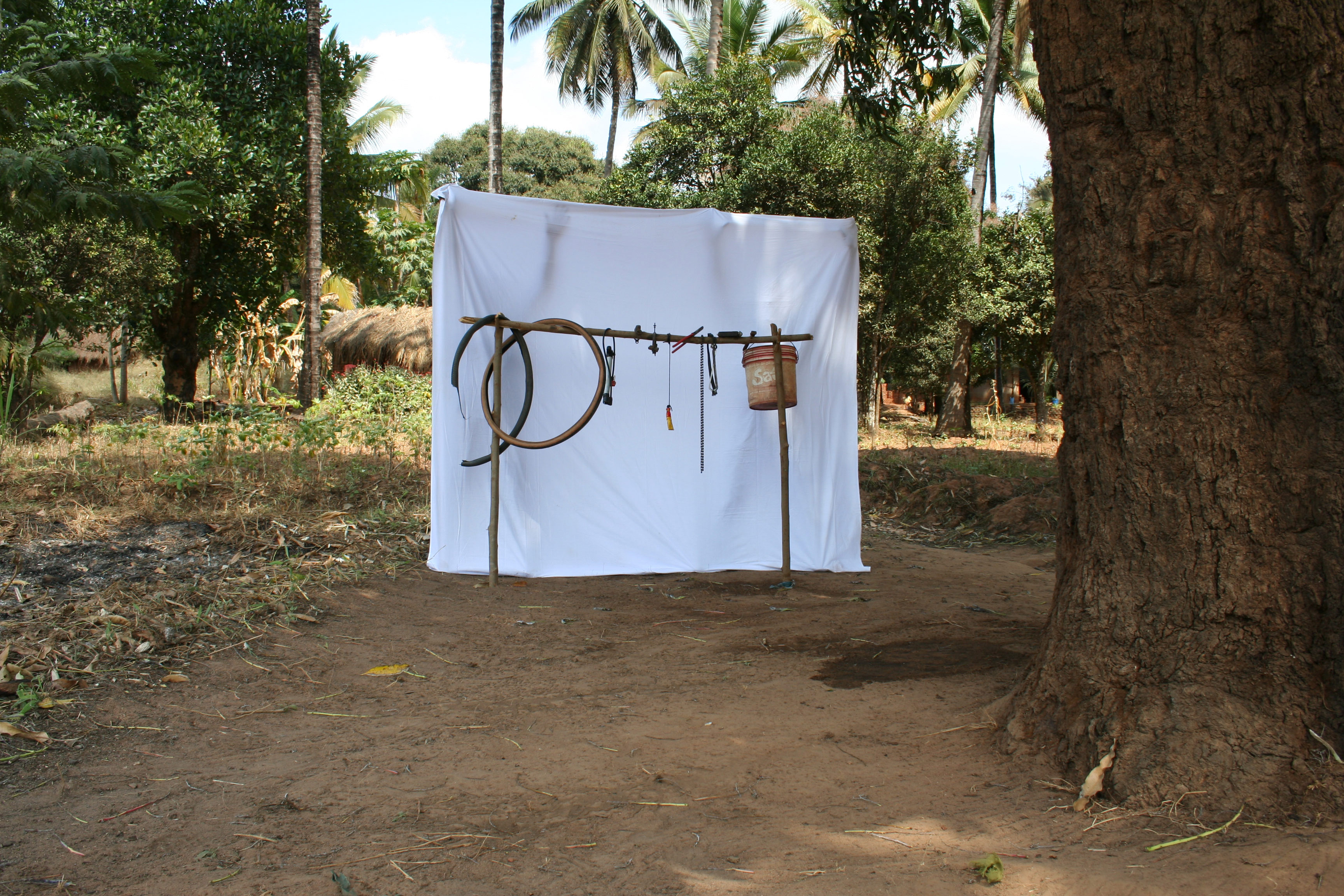
Road Signs, 2012
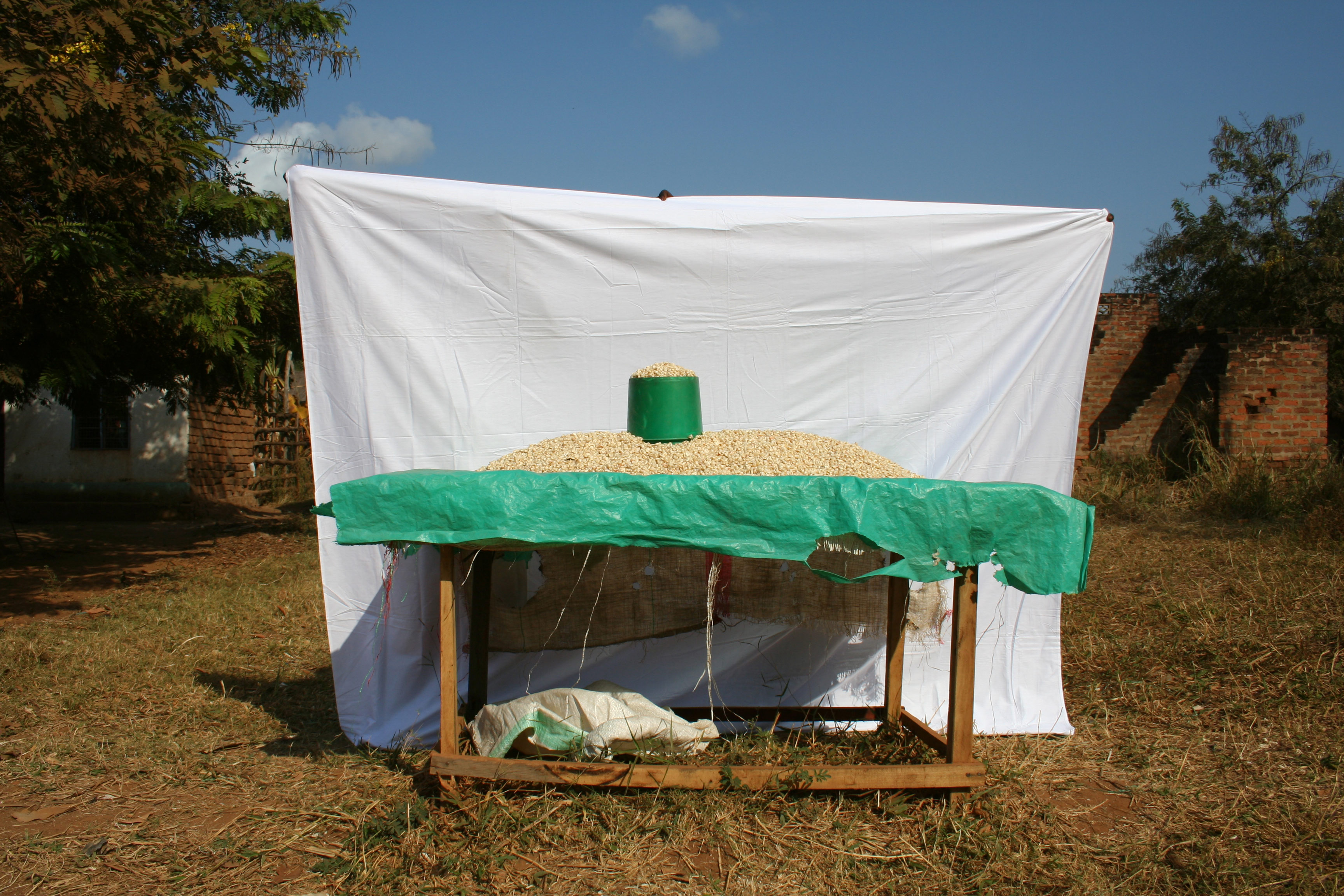
Road Signs, 2012
Mbale, 2012
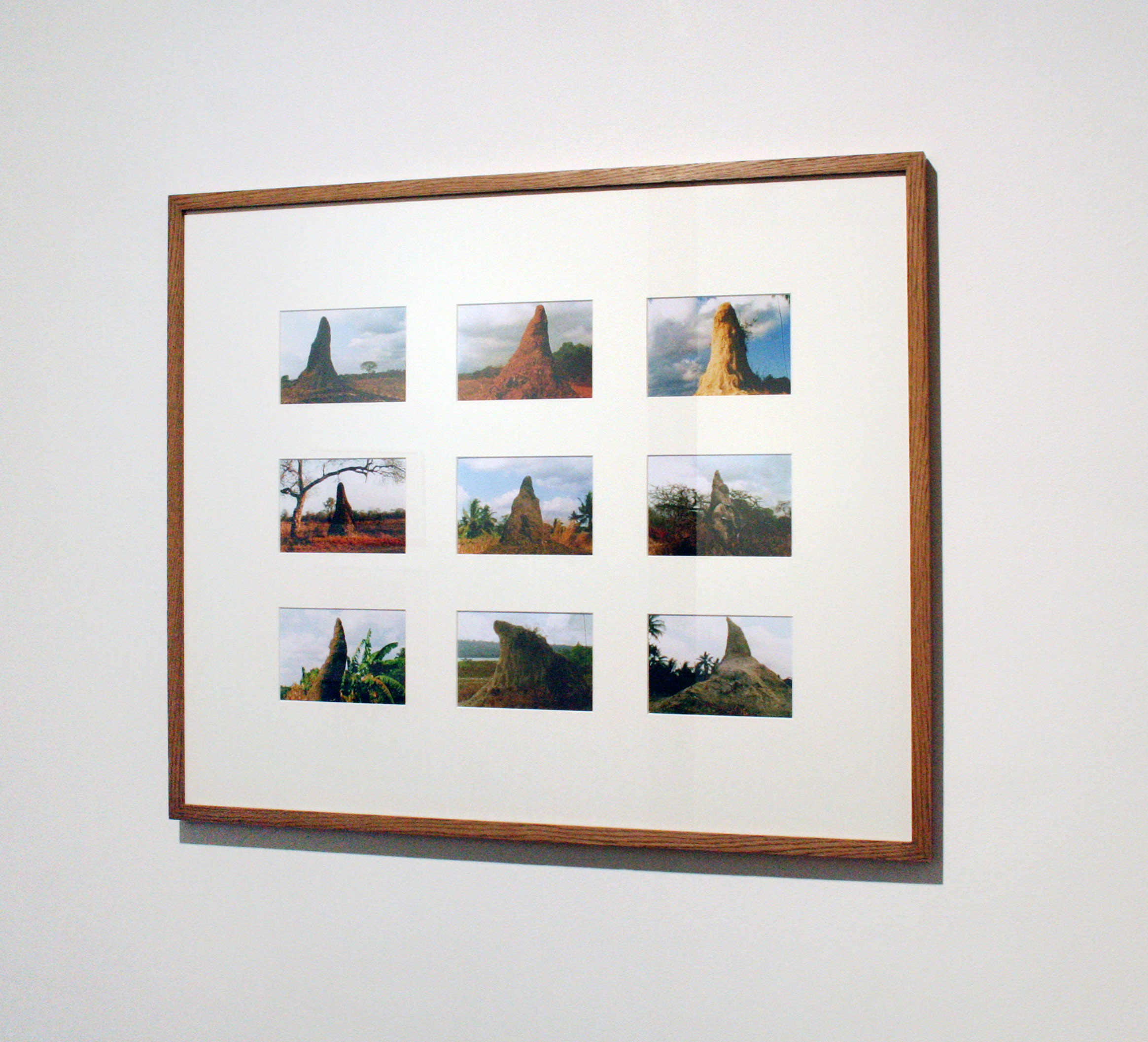
In rural Tanzania protective magic by the name of Mbale was made from pieces of sticks and placed at crossroads near villages. Would-be invaders passed by Mbale on their way to a village. When the trespassers arrived, they would see nothing but a termite mound; Mbale had rendered the settlement invisible. This series depicts imposing termite mounds photographed in the Lindi region of Tanzania.
Ground, 2012
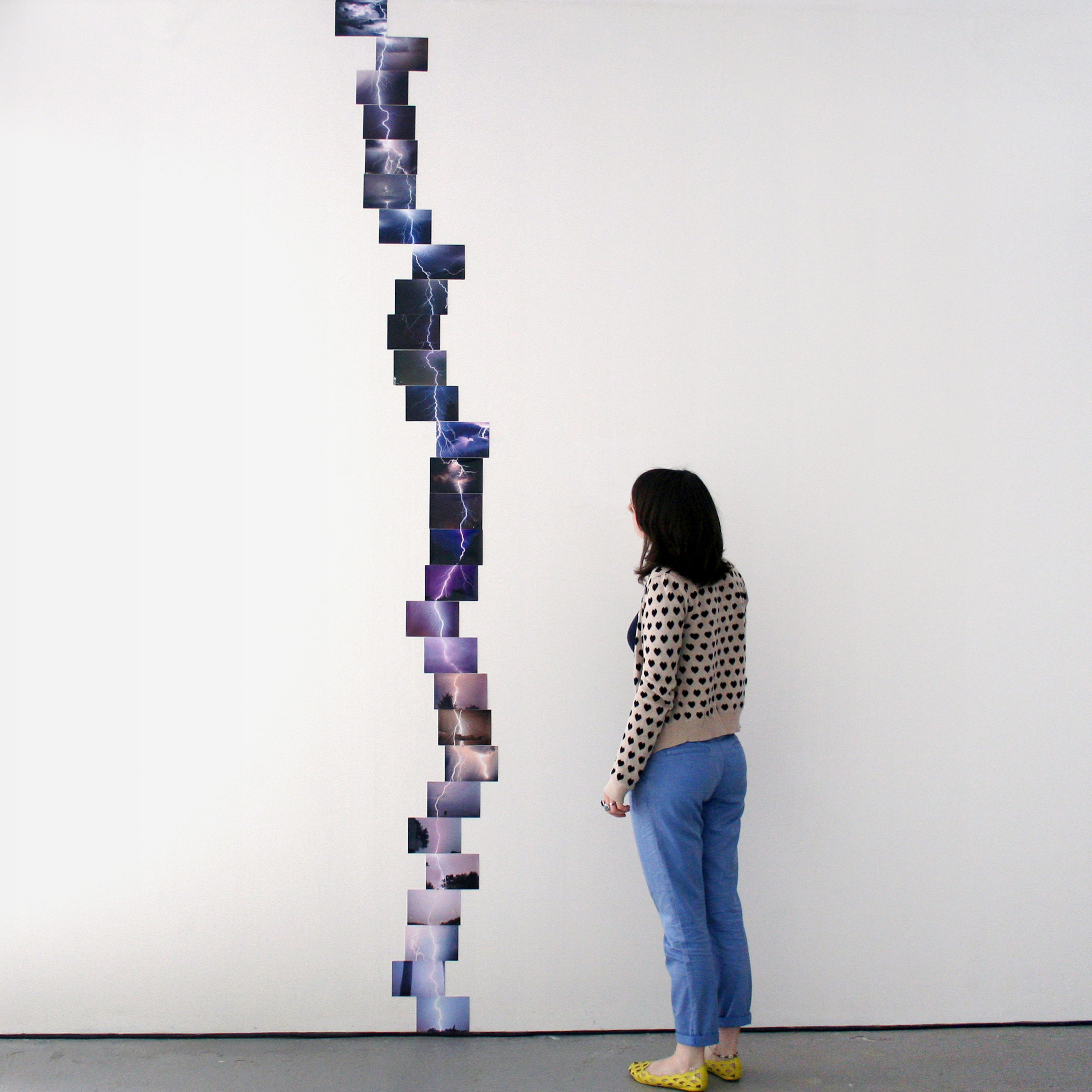
Amateur photos of lightning were downloaded from the Internet and printed on 10 x 15 cm photographic paper. The photos are then arranged and fixed to a wall, creating an uninterrupted strike of lightning from the ceiling to ground within the exhibition space.

Ground, 2012
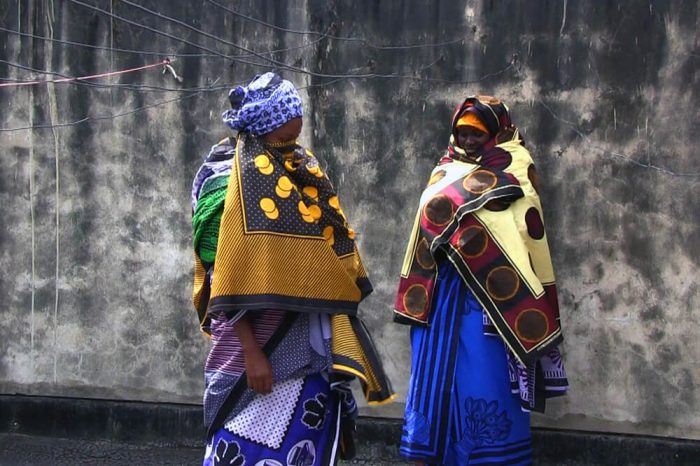
Praxes of a dialextical dialect, 2012
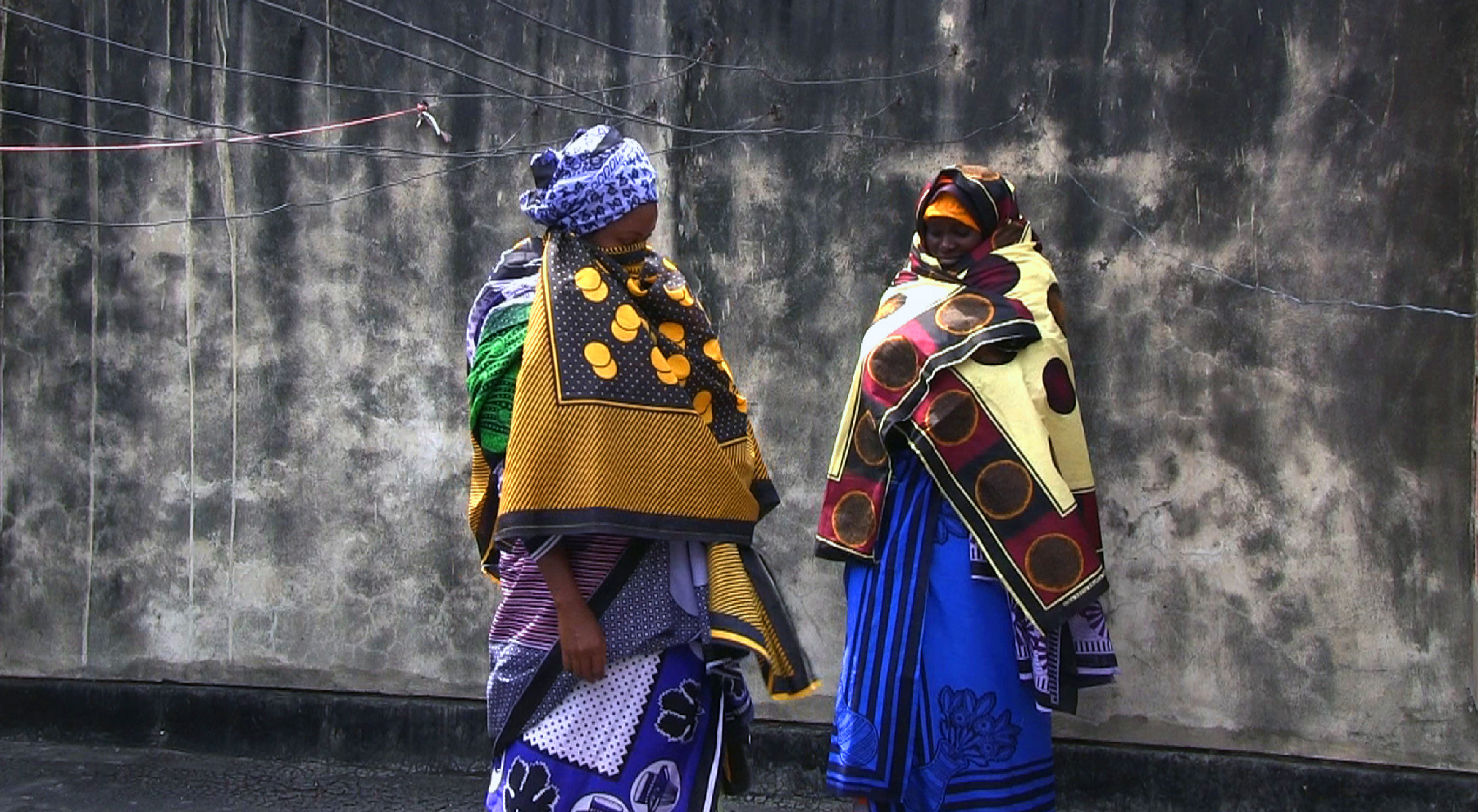
Kangas are a sarong-like fabric worn in East Africa. In addition to a general motif, each kanga is inscribed with an adage. In this video, two women engage in a silent duel, using kangas as a communicative device. The women are surrounded by suspended kangas. One of the women selects a kanga and wraps it around herself. A subtitle reproduces the kangas caption on screen. The other person retorts by selecting another kanga and wearing it. Each offers her rebuttal by adding a new layer of fabric onto her body and becomes increasingly voluminous until the last kanga is seized. Wrapped in layers of fabric and utterance the two have become forms of a linguistic jostle.
Praxes of a dialextical dialect, 2012

QSL, 2010
QSL is a code used to confirm that a radio transmission has been successfully received. In 1927, the first successful overseas short wave radio transmission was made by PCJ in Eindhoven, The Netherlands. The radio signal was received by the Republic of Indonesia which was, at the time of broadcast, a Dutch colony. The QSL project sends a radio signal from the Netherlands to this former colony using short wave radio in 2010. The transmission is received in Indonesia, recorded and sent back to the Netherlands. The message is repeatedly transmitted and retransmitted between Eindhoven and Indonesia until the signal becomes an abstraction.
Sun Ra Repatriation Project, 2009
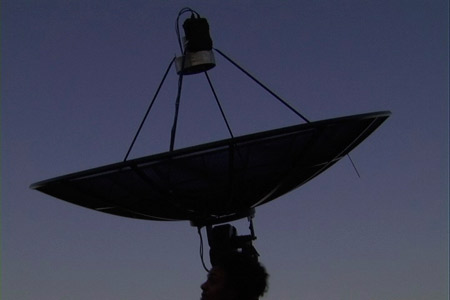
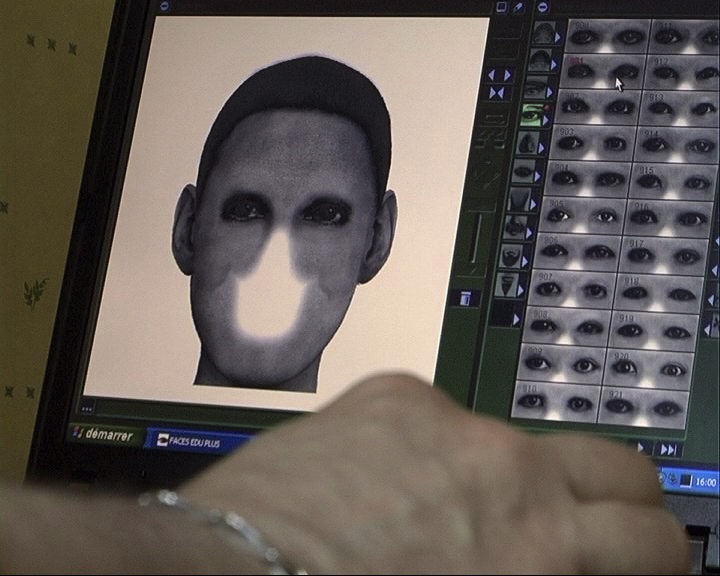
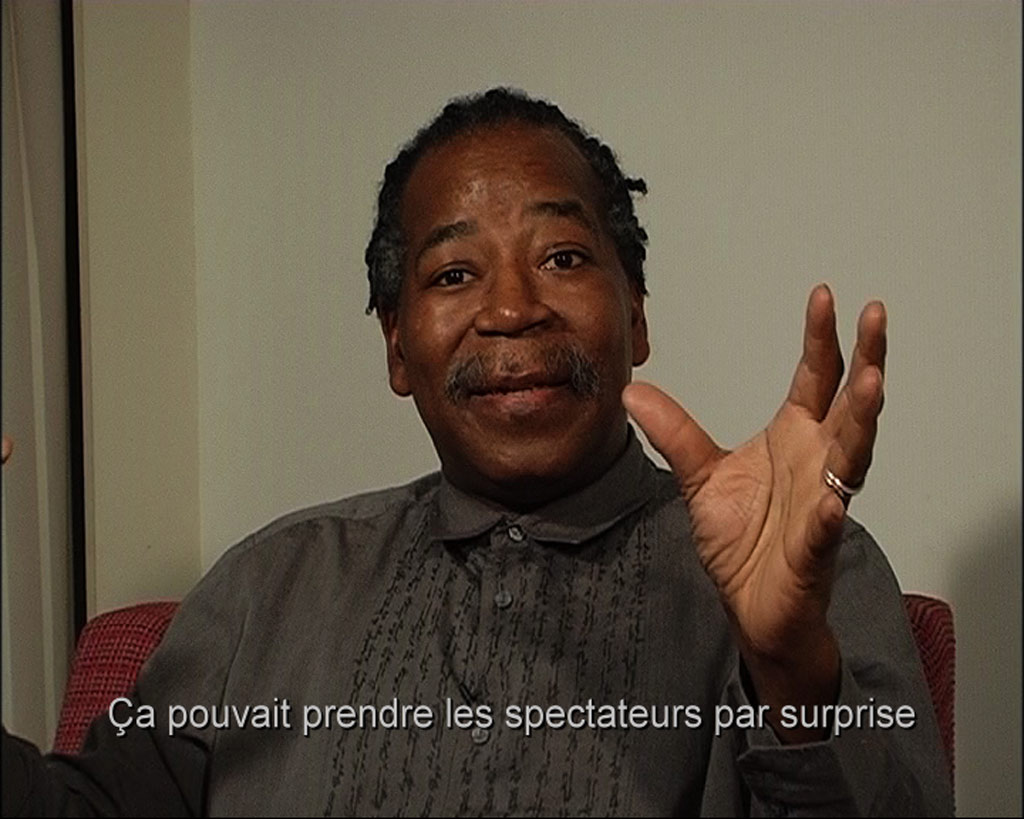
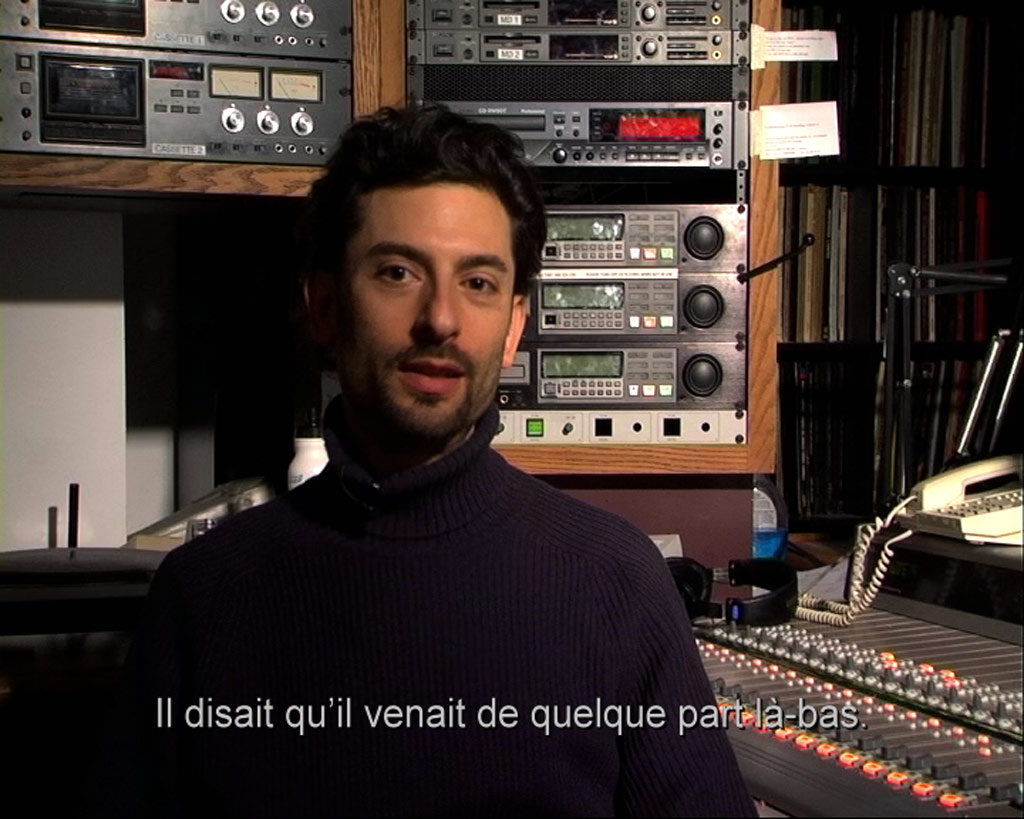
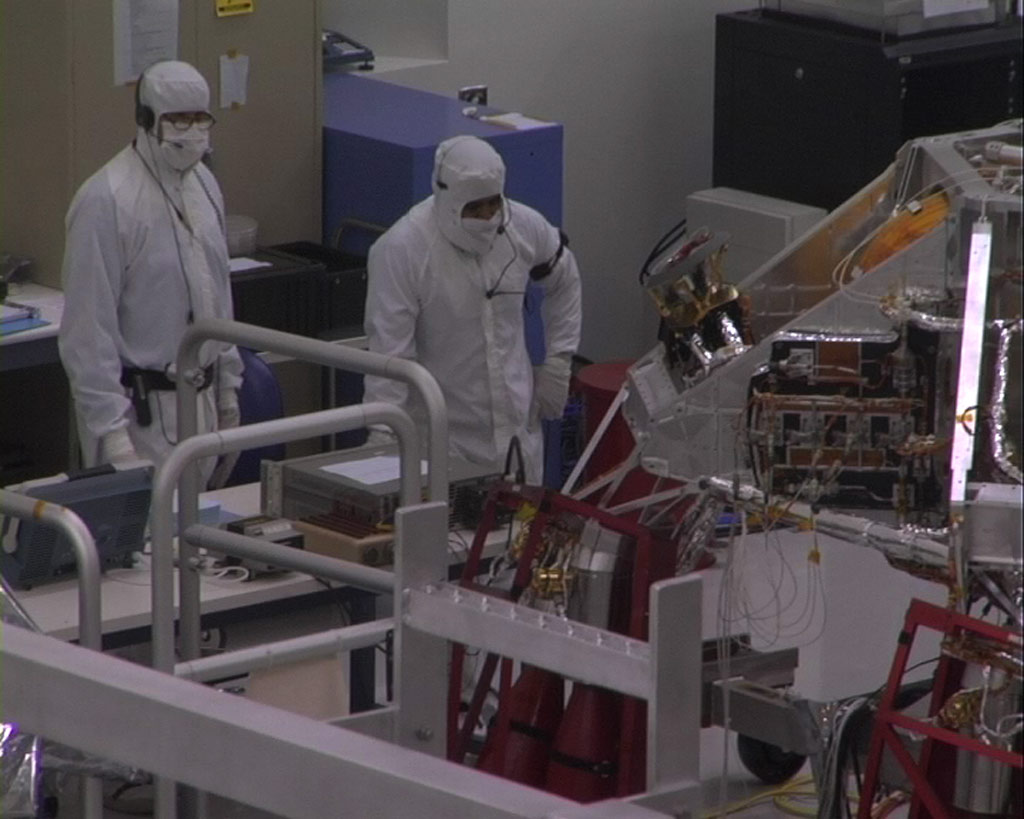
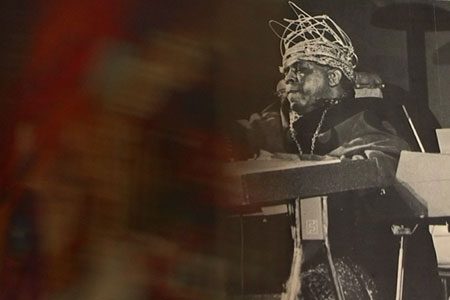
Sun Ra was an American musician who claimed to be an extraterrestrial from Saturn. The Sun Ra Repatriation Project was initiated in 2008 and fashions a system of interplanetary communication to ensure Sun Ras return home to Saturn. This video documents the projects activities. Kapwani Kiwanga travelled to the United States and France to meet experts and scientists to help in the endeavour. French national police create a composite portrait from video testimonies of those who knew Sun Ra. The composite sketch is then sent into deep space on May 16, 2009. A radio telescope in California observes Saturn for any possible extraterrestrial radio transmissions from Sun Ra. Meetings with experts at the Observatoire de Paris and the NASA-associated Jet Propulsion Lab articulate the astronomical aspects of the project.
Sun Ra Repatriation Project, 2009
Sun Ra Repatriation Project, 2009
Sun Ra Repatriation Project, 2009
Sun Ra Repatriation Project, 2009
Exhibitions
Carry Me / Carry On
Kapwani Kiwanga
Nov 20, 2026 – Jan 30, 2027

In Conversation with Carolin Köchling | "Performing Transformation"
Kapwani Kiwanga
Oct 9, 2025, 7 pm.
Raw
Kapwani Kiwanga
Mar 14 – May 27, 2023

Under the cover of darkness
Kapwani Kiwanga
Nov 22, 2019 – Jan 25, 2020
Linear
Kapwani Kiwanga
Apr 28 – Jul 19, 2017
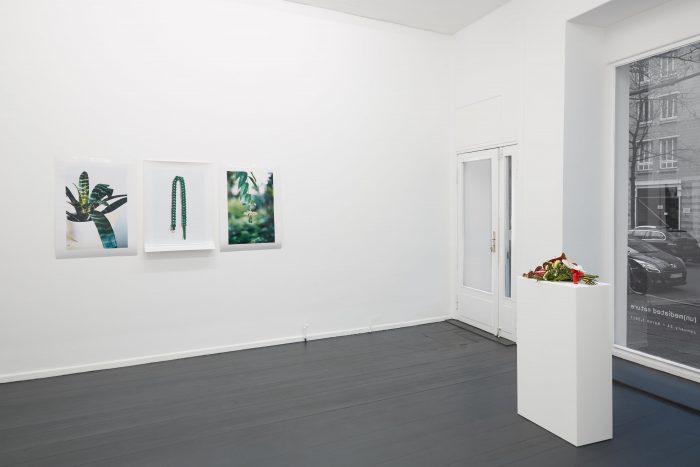
(un)mediated nature
Kapwani Kiwanga, Kathrin Sonntag, Conor Gilligan, Tim Reinecke, Annette Wehrmann, Mehraneh Atashi, Paula Doepfner
Jan 24 – Mar 3, 2017

A Memory Palace
Kapwani Kiwanga
Jan 30 – Apr 1, 2015

Why We Do What We Do
Šejla Kamerić, Ulf Aminde, Anna Witt, Anna Steinert, Annabel Daou, Angelika J. Trojnarski, Grit Richter, Kapwani Kiwanga, Laurel Nakadate, Elisa Giardina Papa, Radha May
Sep 11 – Nov 1, 2025
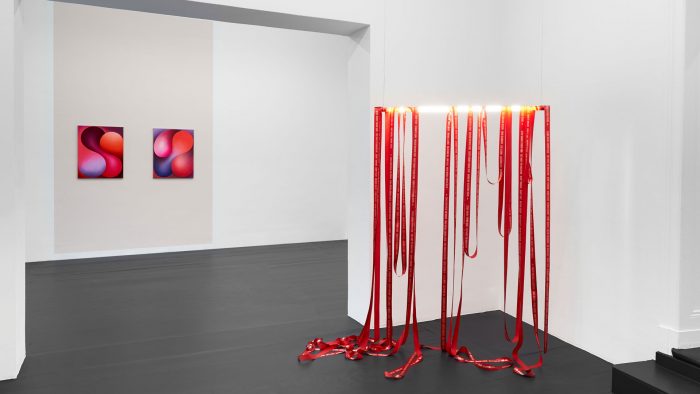
Entangled Threads
Kapwani Kiwanga, Šejla Kamerić, Grit Richter
Nov 23, 2024 – Feb 07
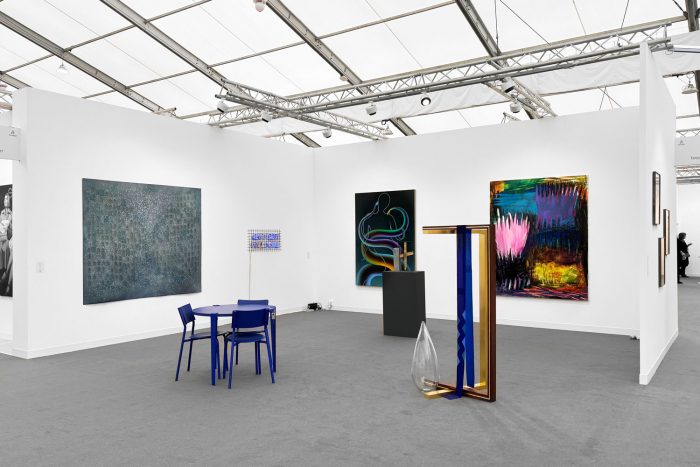
Frieze London
Anna Steinert, Angelika J. Trojnarski, Annabel Daou, Elisa Giardina Papa, Šejla Kamerić, Kapwani Kiwanga, Grit Richter
Oct 9 – 13, 2024
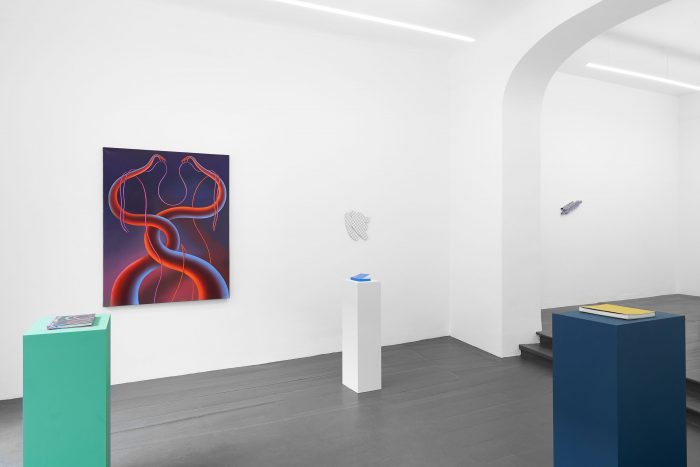
Between the Lines
Angelika J. Trojnarski, Anna Steinert, Elisa Giardina Papa, Grit Richter, Kapwani Kiwanga, Šejla Kamerić, Pınar Öğrenci
Nov 25, 2023 – Jan 13, 2024
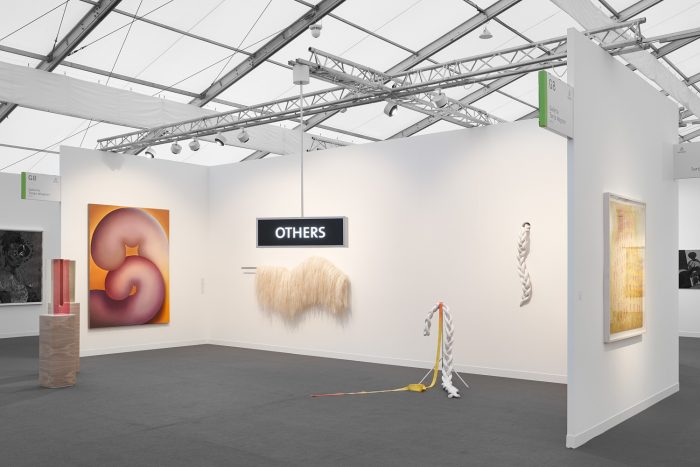
Frieze London
Annabel Daou, Elisa Giardina Papa, Šejla Kamerić, Kapwani Kiwanga, Grit Richter
Oct 11 – 15, 2023
Vidéothèque
Angelika J. Trojnarski, Annabel Daou, Anna Steinert, Anna Witt, Elisa Giardina Papa, Kapwani Kiwanga, Laurel Nakadate, Ulf Aminde, Šejla Kamerić, Pınar Öğrenci, Bárbara Wagner & Benjamin de Burca, Radha May, Melanie Jame Wolf
Feb 4 – Mar 4, 2023
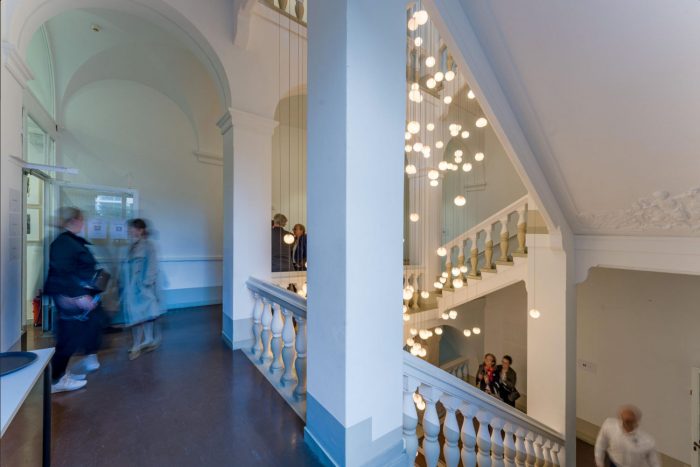
Amtsalon
Grit Richter, Anna Witt, Anna Steinert, Annabel Daou, Kapwani Kiwanga, Šejla Kamerić, Angelika J. Trojnarski
Dec 02 – 03, 2022

Works on Paper
Angelika J. Trojnarski, Annabel Daou, Anna Witt, Grit Richter, Kapwani Kiwanga, Šejla Kamerić, Rachel Garrard, Cathrin Hoffmann, Anna Steinert
Dec 04, 2021 – Feb 04, 2022
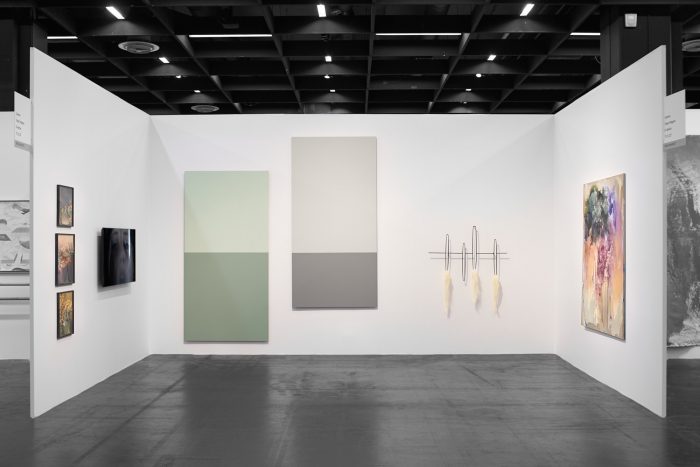
Art Cologne
Angelika J. Trojnarski, Anna Witt, Kapwani Kiwanga
Nov 17 – 21, 2021
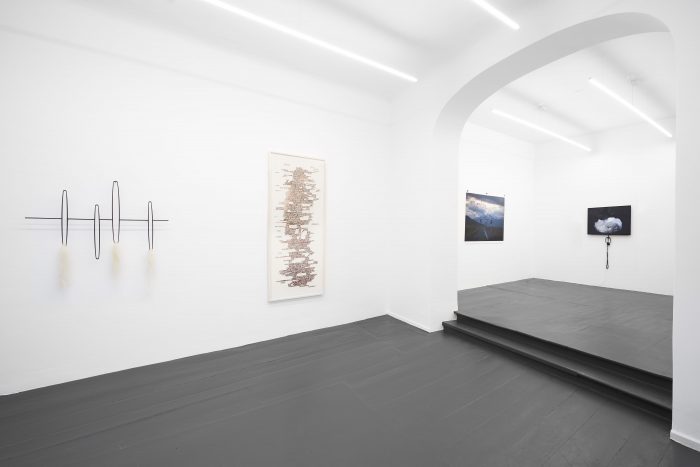
HOW TO HUMAN
Ulf Aminde, Annabel Daou, Šejla Kamerić, Kapwani Kiwanga, Laurel Nakadate, Grit Richter, Lina Scheynius, Angelika J. Trojnarski, Anna Witt
Nov 14, 2020 – Feb 13, 2021
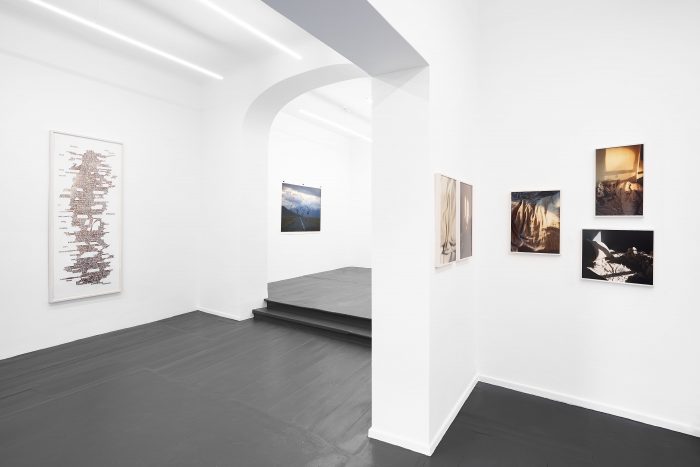
Frieze London
Šejla Kamerić, Kapwani Kiwanga, Grit Richter, Annabel Daou
Oct 9 – 16, 2020
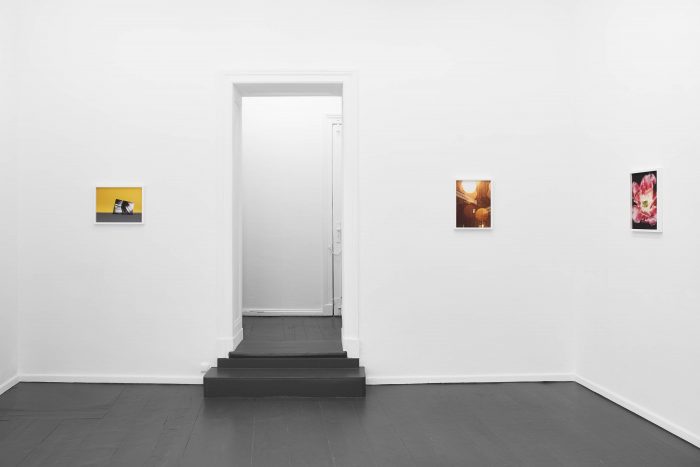
Spring of 2020
Ulf Aminde, Annabel Daou, Šejla Kamerić, Kapwani Kiwanga, Laurel Nakadate, Grit Richter, Lina Scheynius, Angelika J. Trojnarski, Anna Witt
Jun 18 – Aug 01, 2020
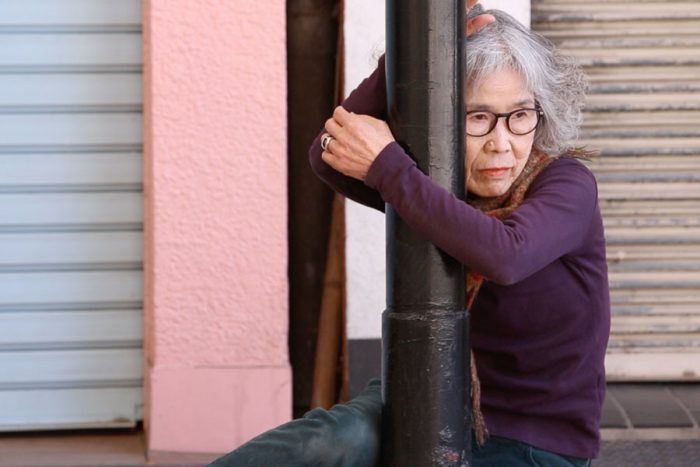
Art in Quarantine
Anna Witt, Šejla Kamerić, Annabel Daou, Lina Scheynius, Kapwani Kiwanga, Nilbar Güreş, Grit Richter, Ulf Aminde, Laurel Nakadate, Angelika J. Trojnarski
Mar 15 – May 23, 2020

Frieze Art Fair
Kapwani Kiwanga
Oct 3 – 6, 2019

Art Basel | Unlimited
Kapwani Kiwanga
Jun 13 – 16, 2019

art berlin
Šejla Kamerić, Kapwani Kiwanga, Anna Witt
Sep 27 – 30, 2018

LEARNING FROM BIG MISTAKES
Ulf Aminde, Annabel Daou, Šejla Kamerić, Kapwani Kiwanga, Laurel Nakadate, Grit Richter, Angelika J. Trojnarski, Anna Witt, Paula Doepfner, Nilbar Güreş
Mar 31 – Apr 9, 2017

Armory Show
Kapwani Kiwanga
Mar 3 – 6, 2016
The Big Other
Ulf Aminde, Annabel Daou, Šejla Kamerić, Kapwani Kiwanga, Anna Witt, Antje Engelmann, Mariechen Danz, Marinella Senatore, Thomas Helbig, Paula Doepfner, Kerstin Brätsch, Michael Müller
Jan 29 – Mar 2, 2016
News
Kapwani Kiwanga
10th Biennial of Painting
Group exhibition curated by Anne Pontegenie
Mudel and Roger Raveel Museum , 9831 Sint-Martens Latem
Jun 28 – Oct 18, 2026

Kapwani Kiwanga
The New Vision: Monet and the Contemporary Gaze
Group exhibition curated by Yoko Iwasaki, Kota Suzuki, Katsura Kunieda, Takuto Izawa
Pola Art Museum, Hakone
Jun 17, 2026 – Apr 7, 2027
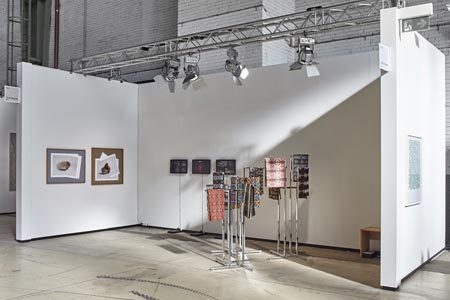
Kapwani Kiwanga
1,2,3: Me, We
Group exhibition curated by Daniel Malan & Dada Khanyisa
A4 Arts Foundation, Cape Town
May 30 – Aug 15, 2026
Kapwani Kiwanga
7th Mulhouse Photography Biennal SEDIMENTATION(S): Settled
Group exhibition curated by Ange-Frédéric Koffi
La Filature – Scène Nationale de Mulhouse
May 14 – Jul 12, 2026
Kapwani Kiwanga
On Nervous Grounds. Between Delusion and Reality
Kunstmuseum Wolfsburg
May 9 – Sep 27, 2026
Kapwani Kiwanga
Changing States
Solo exhibition
Fundació Joan Miró, Barcelona
Apr 29 – Sep 13, 2026
Kapwani Kiwanga
Is That All There Is?
Group exhibition curated by Frédéric de Goldschmidt and Grégory Lang
Cloud Seven, Brussels
Apr 18 – Jul 14, 2026
Kapwani Kiwanga
Seeds. Reclaiming Roots, Sowing Futures
Group exhibition curated by Sophie Haslinger
KunstHausWien, Vienna
Apr 10, 2026 – Feb 14, 2027

Kapwani Kiwanga
Seeds. Reclaiming Roots, Sowing Futures
Group exhibition curated by Sophie Haslinger
KunstHausWien, Vienna
Apr 10, 2026 – Feb 14, 2027

Kapwani Kiwanga
KABARIN-JAVAKANTO: a reading of Fondation H Collection
Fondation H, Madagaskar
Apr 3 – Oct 17, 2026

Kapwani Kiwanga
Triennale de l'ADIAF: La vie climatique. Histoires sensibles des collections privées
Group exhibition curated by Sandra Delacourt and Stéphanie Airaud
Musée d’Art Contemporain de Marseille
Apr 3 – Sep 20, 2026
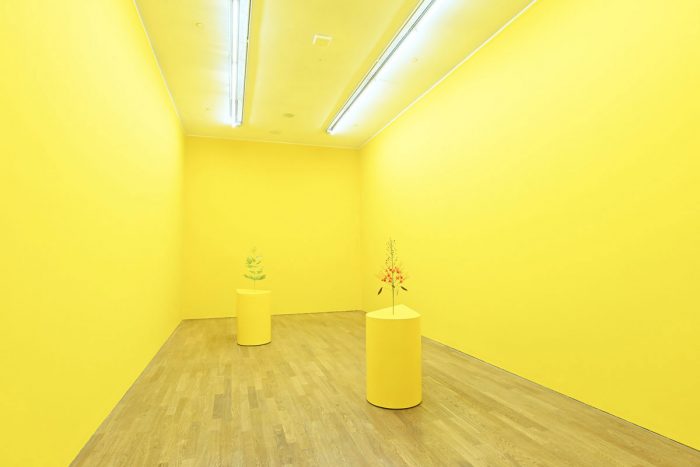
Kapwani Kiwanga
Flowers Forever (Touring Exhibition)
Group exhibition curated by Joris Westerink
Kunsthalle Rotterdam
Mar 27 – Aug 30, 2026
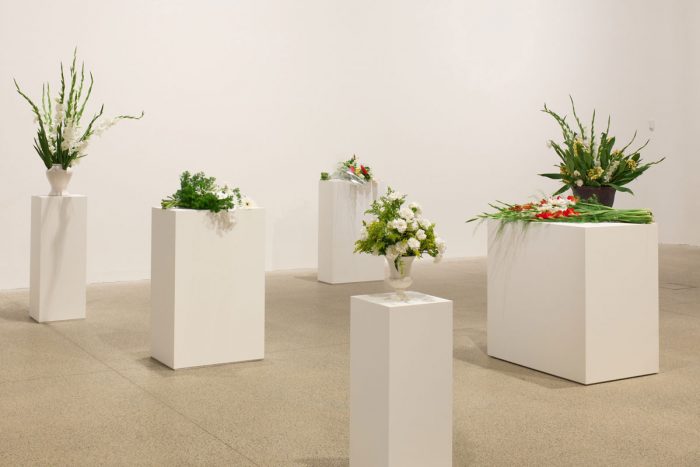
Kapwani Kiwanga
Rememory
Group exhibition
Biennale of Sydney
Mar 14 – Jun 14, 2026
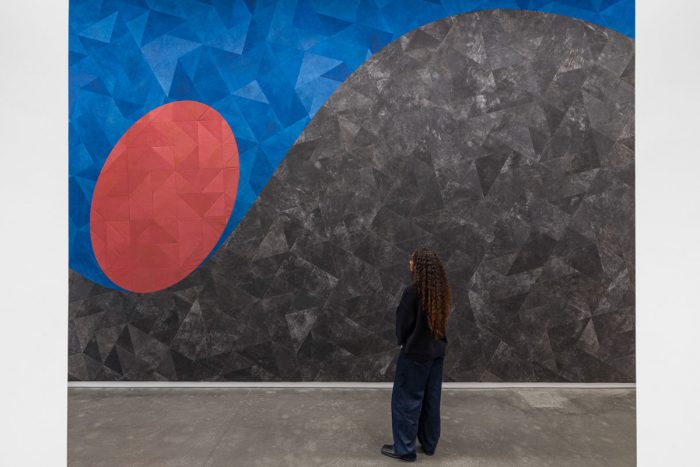
Kapwani Kiwanga
BLEED
Site-specific commission
Studio Museum in Harlem, New York
Mar 13, 2026 – Apr 1, 2027

Kapwani Kiwanga
Améfrica. Diasporic Connections in the Jorge M. Pérez Collection
Group exhibition
CAAC - Centro Andaluz de Arte Contemporáneo, Seville
Feb 27, 2026 – Jan 10, 2027

Kapwani Kiwanga
Making Their Mark: Works from the Shah Garg Collection
National Museum of Women in the Arts, Washington DC
Feb 27 – Jul 26, 2026
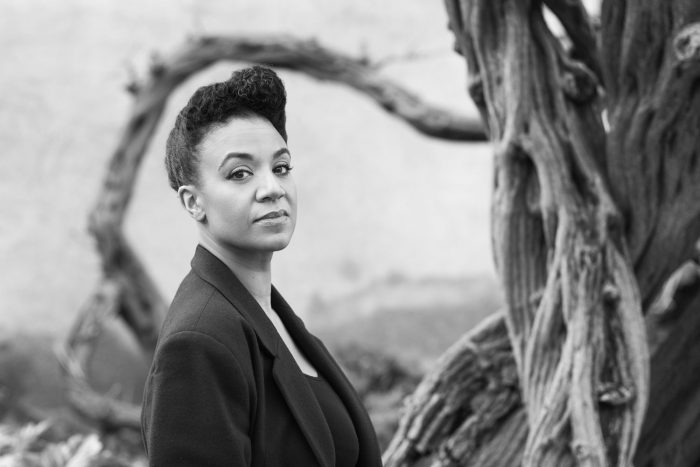
Kapwani Kiwanga
Gallery Weekend Berlin - The Art Podcast
Episode 11
Dec 27, 2025
Kapwani Kiwanga
Singapore Biennale - Pure Intention
Group exhibition
Fort Canning Park, Singapore
Oct 29, 2025 – Mar 31, 2026
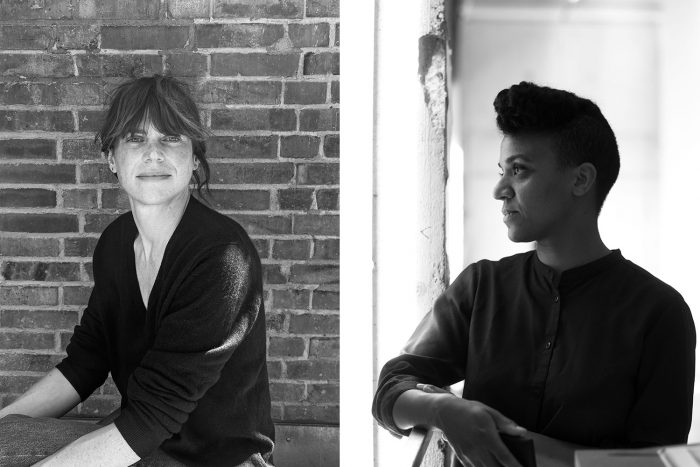
Kapwani Kiwanga in Conversation with Carolin Köchling
"Performing Transformation"
Galerie Tanja Wagner
Oct 09, 2025, 7 pm
Kapwani Kiwanga
Open-Hearted
Group exhibition curated by Katja Rivera
FAC Museum, Colorado Springs
Sep 26, 2025 – Jan 17, 2026
Kapwani Kiwanga
O Poder de Minhas Mãos
Group exhibition curated by Odile Burluraux
Sesc Pompeia, Sao Paulo
Aug 23, 2025 – Apr 26, 2026
Kapwani Kiwanga
TERRA DIASPORA – ACTIVE TERRAIN N°2
Group exhibition curated by Dr. Almut Hüfler and Stephan Klee
Altes Rathaus Göttingen
Jun 14 – Aug 24, 2025
Kapwani Kiwanga
Nature Sanctuary
De Cordova Park Sculpture, Lincoln
Jun 5, 2025 – Oct 4, 2026

Kapwani Kiwanga
Symposium festival: The Shape of a Circle in the Mind of a Fish
Co-curated by Lucia Pietroiusti and Filipa Ramos in collaboration with Schering Stiftung
E-WERK Luckenwalde
May 31, 2025
Kapwani Kiwanga
Art Encounters Biennial 2025
Group exhibition curated by Tevž Logar / Ana Janevski
Garrison Command, Timișoara
May 30 – Jul 13, 2025
Kapwani Kiwanga
Engagées
Group exhibition curated by Danièle Marcovici et Stéphane Baumet
Fondation Villa Datris, L’Ilse-sous-la-Sorgue
May 17 – Nov 2, 2025
Kapwani Kiwanga
Winner of the Joan Miró Prize 2025
Fundació Joan Miró
May 08, 2025

Kapwani Kiwanga
Becoming Ocean: A Social Conversation About the Ocean
Group exhibition curated by Chus Martínez, Marie-Ann Yemsi, Sébastien Ruiz and Hélene Guenin
Villa Arson, Nice
May 7 – Aug 24, 2025
Kapwani Kiwanga
Careful Crossings
Group exhibition curated by Abisola Oni
Art Museum — University of Toronto
Apr 30 – Jul 26, 2025

Kapwani Kiwanga
A Field Well-Found—Artistic Practices from the Marcel Duchamp Prize’s 25 Years
Group exhibition curated by Jan Elantkowski & Borbála Kálmán
Ludwig Museum—Museum of Contemporary Art, Budapest
Apr 8 – Aug 24, 2025
Kapwani Kiwanga
Odyssée contemporaine 2
Group exhibition
Frac Sud (Écomusée l’Olivier), Volx, France
Apr 7 – Sep 21, 2025
Kapwani Kiwanga
Pollen
Group exhibition curated by Cédric Fauq, Anne Cadenet, Alice Cavender, Stéphanie Cottin, Milena Páez-Barbat
CAPC - Musée d'art contemporain de Bordeaux
Mar 28, 2025 – Jan 1, 2027

Kapwani Kiwanga
The Gorgeous Nothings
Group exhibition curated by Allegra Pesenti
Chatsworth House, Derbyshire
Mar 15 – Oct 25, 2025

Kapwani Kiwanga
Partenaires Particuliers
Group exhibition curated by Hugo Vitrani
Saint-Paul de Vence
Mar 14 – Oct 31, 2025
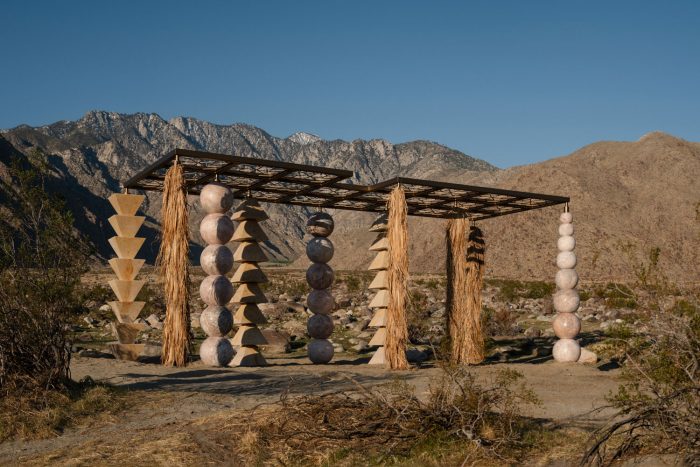
Kapwani Kiwanga
Desert X
Group exhibition curated by Neville Wakefield
DESERT BIENNIAL at Coachella Valley
Mar 8 – May 11, 2025
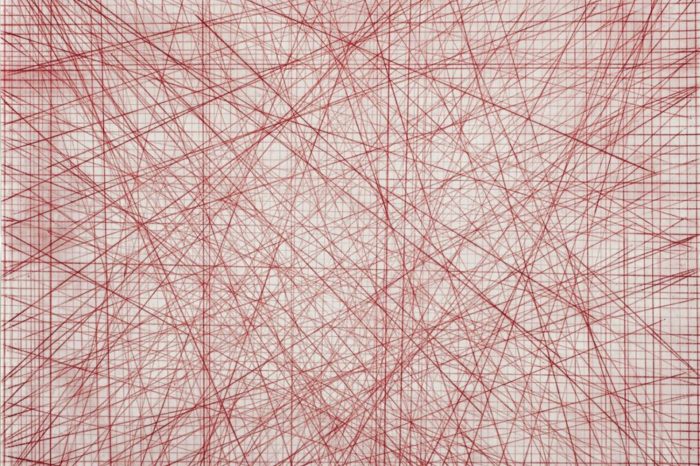
Kapwani Kiwanga
Les grattes-ciels par la racine: Regards sur le modernisme tardif
Group exhibition curated by François Letourneux
MAC - Musée d'art Contemporain de Montréal
Mar 6 – Aug 10, 2025

Kapwani Kiwanga
Seeds: Containers of a World to Come
Group exhibition curated by Meredith Malone & Svea Braeunert
Mildred Lane Kemper Art Museum, Saint-Louis
Feb 21 – Jul 28, 2025
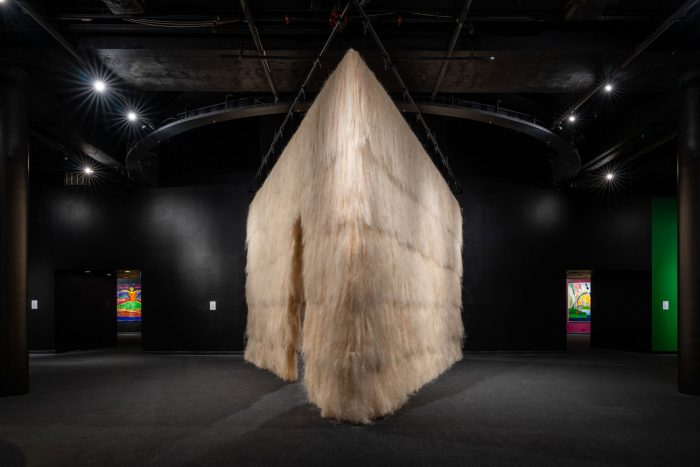
Kapwani Kiwanga
ALOHA NŌ
Group exhibition curated by Wassan Al-Khudhairi, Binna Choi
Hawai’i Triennial 2025, Hawaii
Feb 15 – May 4, 2025
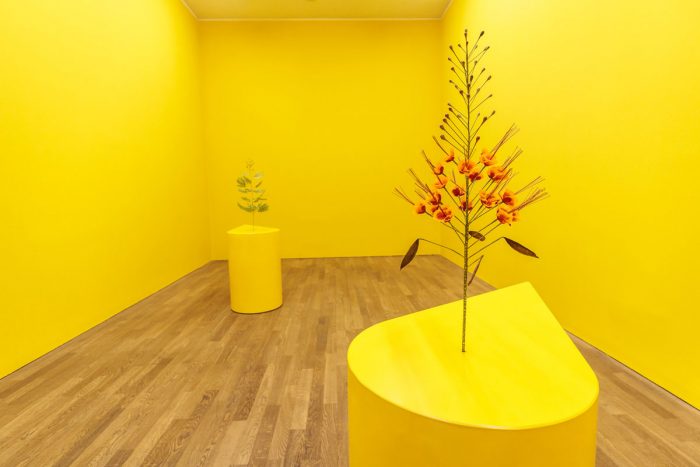
Kapwani Kiwanga
Flowers: Dal rinascimento all'intelligenza artificiale
Group exhibition curated by Franziska Stöhr & Suzanne Landau
Chiostro del Bramante, Rome
Feb 14 – Sep 14, 2025
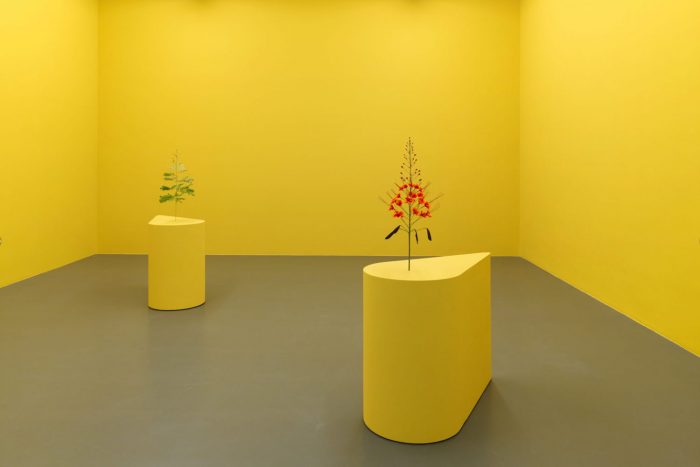
Kapwani Kiwanga
In the Hours Between Dawns
Group exhibition curated by Sarah Caillet
Institut d'art Contemporain Villeurabanne, Rhône-Alpes
Feb 7 – Apr 13, 2025

Kapwani Kiwanga
7 Contours, une collection
Group exhibition curated by Monrad Montazami und Madeleine de Colnet
MACAAL - Museum of African Contemporary Art Al Maaden, Marrakesh
Feb 1, 2025

Kapwani Kiwanga
After the End, Cartographies for Another Time
Group exhibition curated by Manuel Borja-Villel
Centre Pompidou Metz
Jan 25 – Sep 1, 2025
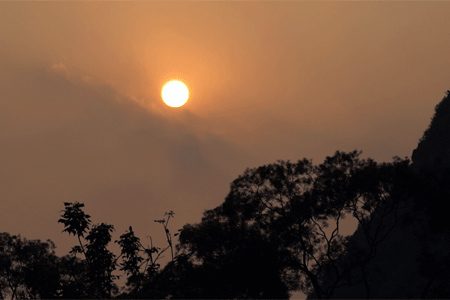
Kapwani Kiwanga
Sunrise - Sunset II
Group exhibition
Sommer Contemporary Art, Zurich
Jan 17 – Mar 19, 2025
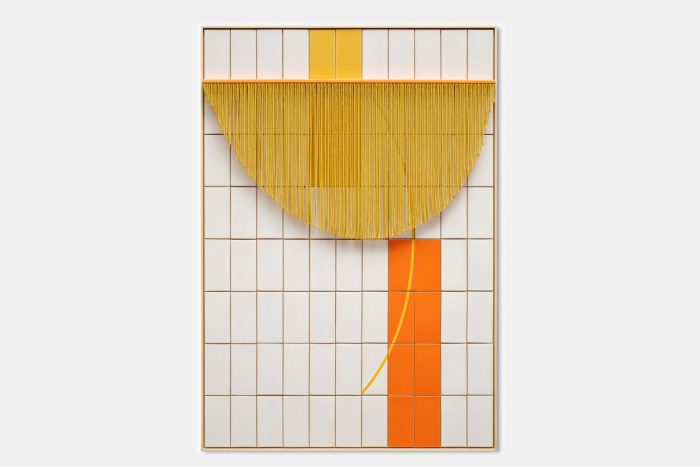
Kapwani Kiwanga
Inner Spirits and Outer Landscapes
Group exhibition curated by Mistura Allison
Hangar Center for Artistic Research, Lisbon
Nov 22, 2024 – Jan 11, 2025

Kapwani Kiwanga
BIO – The Biennial of Design in Ljubljana, Double Agent
Group exhibition curated by Alexandra Midal
Museum of Architecture and Design, Ljubljana
Nov 21, 2024 – Apr 6, 2025

Kapwani Kiwanga
DANCING WITH ALL: The Ecology of Empathy
Group exhibition curated by Yuko Hasegawa
21st Century Museum of Contemporary Art, Kanazawa
Nov 2, 2024 – Mar 16, 2025

Kapwani Kiwanga
Flowers Forever. Flowers in art and culture
Group exhibition curated by Kathrin Baumstark
Bucerius Kunst Forum, Hamburg
Oct 12, 2024 – Jan 19, 2025
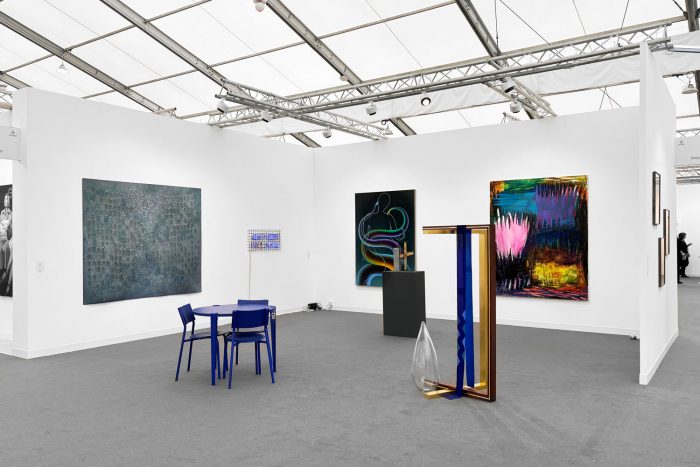
Frieze London 2024
With works by Annabel Daou, Elisa Giardina Papa, Šejla Kamerić, Kapwani Kiwanga, Grit Richter, Anna Steinert & Angelika J. Trojnarski
Booth: D22
The Regent's Park
Oct 9 – 13, 2024

Kapwani Kiwanga
Liberatory Living: Protective Interiors & Radical Black Joy
Group exhibition curated by Key Jo Lee
Museum of the African Diaspora (MoAD), San Francisco
Oct 2, 2024 – Mar 2, 2025
Kapwani Kiwanga
Dig Where You Stand — From Coast to Coast
Group exhibition curated by Delali Ayivi
Foundation Zinsou, Cotonou and Ouida & Les Ateliers Coffi Galerie, Cotonou, Republic of Benin, West Africa
Sep 27 – Dec 27, 2024
Kapwani Kiwanga
Mode d’emploi
Group exhibition curated by Anna Millers and Pihilippe Bettinelli
Musée d’art moderne et contemporain de Strasbourg, Strasbourge
Sep 27, 2024 – Jun 1, 2025

Kapwani Kiwanga
Correspondances. Lire Angela Davis, Audre Lorde et Toni Morrison
Group exhibition curated by Elvan Zabunyan & Claire le Restif
CRÉDAC, Ivry sur Seine Paris
Sep 21 – Dec 15, 2024
Kapwani Kiwanga
A Public Affair
Group exhibition curated by Bayo Hassan Bello
Cloud Seven, Brussels
Sep 12, 2024 – Mar 29, 2025
Kapwani Kiwanga
Dear Mazie
Group exhibition curated by Amber Esseiva
ICA - Institute of Contemporary Art, Virginia
Sep 6, 2024 – Mar 9, 2025
Kapwani Kiwanga
Future Is Now : 50 ans / 50 artistes
Group exhibition
Le Parvis, Ibos
Jun 15 – Oct 5, 2024

Kapwani Kiwanga
SYMPOSIUM: A COINCIDENCE OF WANTS, THE SHAPE OF VALUE
Hosted by National Gallery of Canada and the Wexner Center for the Arts
Ocean Space, Venice, Italy
Jun 13 – 14, 2024
Kapwani Kiwanga
Tia più voci
Group exhibition curated by Ilaria Gianni and Camille Coschieri with Giulia Gaibisso
Villa Médicis, Rome
Jun 8 – Sep 24, 2024
Kapwani Kiwanga
The Insubric Line
Group exhibition curated by Lucrezia Cippitelli & Simone Frangi
The Israel Museum , Jerusalem
Jun 01 – Oct 20, 2024
Kapwani Kiwanga
Stories Written
Group exhibition curated by Eliza Lips
Museum Haus Konstruktiv, Zurich
May 30 – Sep 8, 2024

Kapwani Kiwanga
With Millions of Glass Beads, the Canadian Pavilion at the Venice Biennale Creates the Monumental Out of the Minute
BY LISA WONG MACABASCO
Vogue
May 28, 2024
Kapwani Kiwanga
The Deep Roots of Plant Time
By Yota Batsaki
EDGE EFFECTS
May 23, 2024
Kapwani Kiwanga
Expodemic
Group exhibition curated by Lorenzo Benedetti
Palazzo delle Esposizioni,, Roma
May 5 – Aug 25, 2024
Kapwani Kiwanga
UTOPIA. Keep on Moving
Group exhibition
Akademie der Künste, Berlin
May 3 – 26, 2024
Kapwani Kiwanga
The View
Group exhibition curated by Nicholas Schafhausen
The Loft, Servais Family Collection exhibition space, Brussels
Apr 26, 2024 – Mar 7, 2025
Kapwani Kiwanga
10 Highlights From the Venice Biennale
By Jason Schmidt
The Ney York Times T-Magazine
Apr 24, 2024

Canada's entry at Venice Biennale shows how glass beads shaped the modern world
CBC NEWS
Megan Williams
Apr 20, 2024
Kapwani Kiwanga
Trinket
Canada Pavilion
60th International Art Exhibition – La Biennale di Venezia, Venice
Apr 20 – Nov 24, 2024

At Kapwani Kiwanga’s Pavilion in Venice, Tiny Glass Beads Carry the Weight of History
ARTNET
Kate Brown
Apr 17, 2024
For the Canadian Pavilion, Kapwani Kiwanga Considers the Hefty Historical Importance of the Tiny Venetian Seed Bead
ARTnews
BY MAXIMILÍANO DURÓN
Apr 17, 2024

Space explorer – an interview with Kapwani Kiwanga
Edward Behrens
APOLLO
Apr 17, 2024
A brush with.. Kapwani Kiwanga
Podcast from The Art Newspaper
hosted by Ben Luke
Apr 16, 2024

Kapwani Kiwanga considers value and commerce for the Canada Pavilion at the Venice Biennale 2024
Hannah Silver
Wallpaper*
Apr 16, 2024

What to See in Venice’s Giardini and Arsenale
BY FRIEZE IN CRITIC'S GUIDES
Frieze Magazine
Apr 9, 2024

Kapwani Kiwanga
Les forces du sommeil. Cohabitations des vivants
Group exhibition curated by Marie Muracciole
Manif d'art 11 - La biennale de Québec
Feb 23 – Apr 28, 2024

Kapwani Kiwanga
Sortir le travail de sa nuit
Group exhibition curated by Delphine Masson and Marine Rochard
CCC OD Tour, Tours
Feb 16 – Sep 1, 2024
Kapwani Kiwanga
Sarah Maldoror: Tricontinental Cinema
Group exhibition curated by François Piron
Wexner Center for the Arts, Columbus
Feb 3 – Apr 28, 2024

Kapwani Kiwanga
The Worlds We Tell: Nammu, Ki and An
Solo presentation in the garden
Louvre-Lens
Feb 2 – Sep 23, 2024
Kapwani Kiwanga
The Length of the Horizon
Solo exhibition
Copenhagen Contemporary
Jan 26 – Aug 25, 2024
Kapwani Kiwanga
Undoing Earthwriting
Group exhibition curated by Ella den Elzen
OPTICA, Montreal
Jan 20 – Mar 23, 2024
Kapwani Kiwanga
Fields of Forces
Group exhibition curated by Jessica Castex & Odile Burluraux
Serendipity Arts Festival, Goa
Dec 14 – 23, 2023

Kapwani Kiwanga
The World’s Library Conversation Piece | Part IX
Group exhibition curated by Marcello Smarrelli
Fondazione Memmo, Rome
Dec 13, 2023 – Apr 21, 2024
Kapwani Kiwanga
Fabric of Community
Group exhibition curated by Bärbel Vischer & Antje Prisker
Museum für angewandte Kunst (MAK), Vienna
Dec 13, 2023 – May 20, 2024

Kapwani Kiwanga
WHERE SALT AND FRESHWATER MEET AND CROOKED TREES FILTER THE SUN
Solo exhibition
Serralves Museum, Porto
Nov 24, 2023 – Jun 4, 2024
Kapwani Kiwanga
Rootwork
Solo exhibition
Bozar, Brussels
Nov 10, 2023 – Mar 10, 2024
Kapwani Kiwanga
On Growth
Solo Exhibition
High Line, New York
Nov 10, 2023 – Oct 11, 2024
Frieze London 2023
With works by Annabel Daou, Elisa Giardina Papa, Šejla Kamerić, Kapwani Kiwanga & Grit Richter
Booth No. G08
Frieze London 2023
Oct 11 – 15, 2023
Kapwani Kiwanga
REMEDIATION
Solo exhibition
Remai Modern, Saskatoon
Oct 6, 2023 – Feb 24, 2024

Kapwani Kiwanga
SIGHTLINES on Peace, Power, and Prestige: Metal Arts in Africa
Group exhibition curated by Drew Thompson
Bard Graduate Center, New York
Sep 29 – Dec 31, 2023
Kapwani Kiwanga
Fancy ! Pagnes africains, imprimer l’histoire
Group exhibition curated by Sarah Ligner
Musée du Quai Branly, Paris
Sep 26, 2023 – Jan 14, 2024
Kapwani Kiwanga
In Conversation with Carolin Köchling
Artist talk
Gropius Bau, Berlin
Sep 16, 2023, 3 pm
Kapwani Kiwanga
The Length of the Horizon
Survey exhibition
Kunstmuseum Wolfsburg
Sep 16, 2023 – Jan 7, 2024
Kapwani Kiwanga
Choreographies of the impossible
Group exhibition curated by Manuel Borja - Villel, Grada Kilomba, Diane Lima, Helio Menezes
35 Bienal de São Paulo
Sep 6 – Dec 10, 2023

Kapwani Kiwanga
Hort(us Concl)usus – Eine poetische Momentaufnahme am Abgrund
Group exhibition
Kunstverein Meißen, Meissen
Aug 12 – Sep 15, 2023
Kapwani Kiwanga
Soundshapes – In Between Frequencies
Group exhibition curated by Julia Grosse und Carolin Köchling
Gropius Bau, Berlin
Jul 31 – Oct 16, 2023
Kapwani Kiwanga
Retenue
Solo exhibition
CAPC, Bordeaux
Jun 30, 2023 – Jan 7, 2024
Kapwani Kiwanga
Entangled histories and recuperative futures
Shazia Hafiz Ramji
Galleries West
Jun 29, 2023

Kapwani Kiwanga
Solo exhibition
Museum Ostwall , Dortmund
May 26 – Aug 6, 2023

Kapwani Kiwanga
Public Matters. Contemporary Art in the Belvedere Garden
Group exhibition curated by Christiane Erharter, Sergey Harutoonian, Axel Köhne, Harald Krejci, Claudia Slanar, Luisa Ziaja
Contemporary Art in the Belvedere Garden, Vienna
May 13 – Oct 1, 2023
Kapwani Kiwanga
The Butterfly Affect
Group exhibition curated by Irene Calderoni
Fondazione Sandretto Re Rebaudengo, Turin
May 11 – Oct 15, 2023
Berlin Art:
What exhibitions are on now?
EXBERLINER
May 10, 2023

Gallery Weekend Berlin 2023
Kapwani Kiwanga | Raw
Apr 28 – 30, 2023
Kapwani Kiwanga
Gallery Weekend
Radioeins
Apr 27, 2023

Kapwani Kiwanga
Es ist Gallery Weekend, aber wo geht man hin?
by Annegret Erhard, Swantje Karich, Boris Pofalla, Marcus Woeller
Welt
Apr 26, 2023

Kapwani Kiwanga
10 Must-See Shows at Gallery Weekend Berlin 2023
Josie Thaddeus-Johns
Artsy
Apr 24, 2023
Kapwani Kiwanga
DIE BESTEN AUSSTELLUNGEN BEIM GALLERY WEEKEND
Weltkunst
Apr 24, 2023
Kapwani Kiwanga
Awarded the Guggenheim Fellowship
2023 Guggenheim Fellowships Go to Artists Kapwani Kiwanga, Martine Syms, Pamela Council, and More
ARTnews
Apr 7, 2023
Kapwani Kiwanga
Float
Group exhibition curated by Lorenza Kaib
Kunstmuseum Celle
Mar 26 – Sep 30, 2023
Kapwani Kiwanga
To See Oneself at a Distance
Group exhibition curated by Meghan Clare Considine
MASS MoCA, North Adams, USA
Mar 25, 2023 – Mar 24, 2024
Kapwani Kiwanga
Remediation
Solo exhibition
MOCA, Toronto
Feb 24 – Jul 23, 2023
Kapwani Kiwanga
FLOWERS FOREVER
Group exhibition curated by Franziska Stöhr
Kunsthalle der Hypo - Kulturstiftung (Kunsthalle München), Munich
Feb 3 – Aug 27, 2023

Kapwani Kiwanga
De leur temps (7) – Un regard sur les collections privées françaises
Group exhibition curated by Keren Detton
Frac Grand Large, Dunkerque
Jan 28 – Apr 23, 2023

Kapwani Kiwanga
Eye Evil. The parallel history of optics and ballistics
Group exhibition curated by Ana Teixeira Pinto and Oier Etxeberria
Tabakalera, San Sebastian
Jan 28 – Jun 4, 2023

Kapwani Kiwanga
Auf den Spuren der Familie Diek – Geschichten Schwarzer Menschen in Tempelhof-Schöneberg
Group exhibition curated by Bettina Klein
Museen Tempelhof - Schöneberg, Berlin
Jan 27 – Oct 1, 2023

Kapwani Kiwanga
Rising Star Kapwani Kiwanga to Represent Canada at 2024 Venice Biennale
ARTnews
Jan 26, 2023
4. Amtsalon
With works by Annabel Daou, Šejla Kamerić, Kapwani Kiwanga, Anna Steinert, Angelika J. Trojnarski, Grit Richter and Anna Witt
Gallery Pop Up
Amtsalon, Berlin
Dec 1 – 3, 2022
Kapwani Kiwanga
Becoming Flower - Cosmogonies II. Devenir fleur
Group exhibition curated by Hélène Guenin & Rebecca François
MAMAC, Nice
Nov 10, 2022 – Apr 30, 2023
Kapwani Kiwanga
Kapwani Kiwanga. Zurich Art Prize
Solo exhibition
Museum Haus Konstruktiv, Zurich
Oct 27, 2022 – Jan 15, 2023
Kapwani Kiwanga
in Conversation with Massimiliano Gioni
New Museum
Sep 29, 2022, 6:30 pm
Kapwani Kiwanga
Curated By 2022 - Peripheral Sun
Group exhibition curated by Kami Gahiga
Vin Vin Gallery, Vienna
Sep 11 – Oct 8, 2022
Kapwani Kiwanga
Radcliffe Fellowship
Radcliffe Institute for Advanced Study
Harvard University
2022 – 2023
Kapwani Kiwanga
The New York Times
'To Illuminate History, an Artist Turns Out the Lights'
By Aruna D’Souza
Jul 21, 2022
Kapwani Kiwanga
Off-Grid
Solo exhibition
New Museum, New York
Jun 28 – Sep 10, 2022
Kapwani Kiwanga
The Milk of Dreams
by Ann-Katrin Günzel
Kunstforum International
Jun 10, 2022
Kapwani Kiwanga
The Milk of Dreams
Group exhibition curated by Cécilia Alemani
59th International Art Exhibition of La Biennale di Venezia
Apr 23 – Nov 27, 2022

Kapwani Kiwanga
Color as program
Group exhibition
Bundeskunsthalle, Bonn
Apr 08 – Aug 07, 2022
Kapwani Kiwanga
Deposits
Solo exhibition curated by ILiana Fokianaki
State of Concept, Athens
Dec 10, 2021 – Feb 12, 2022

Kapwani Kiwanga
Zurich Art Prize geht an Künstlerin Kapwani Kiwanga
Monopol
Nov 29, 2021
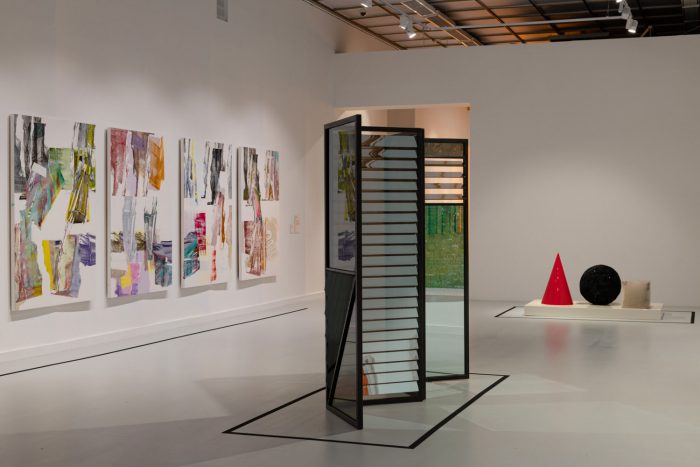
Kapwani Kiwanga
Diversity United
Group exhibition curated by Walter Smerling
New Tretyakov Gallery, Moscow
Nov 22, 2021 – Mar 13, 2022
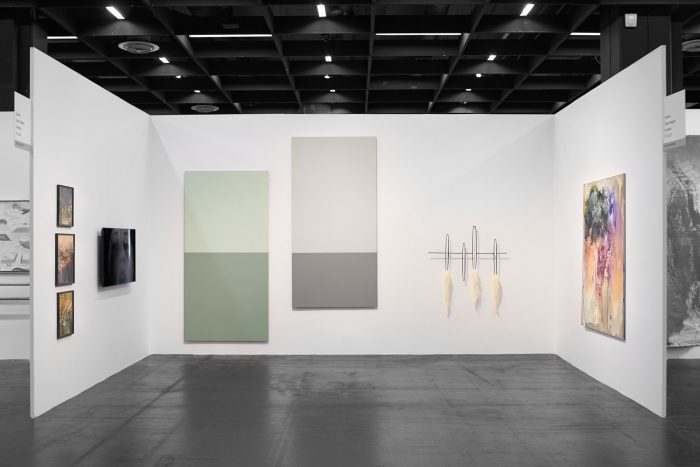
Art Cologne
With works by Kapwani Kiwanga, Angelika J. Trojnarski and Anna Witt
Nov 17 – 21, 2021
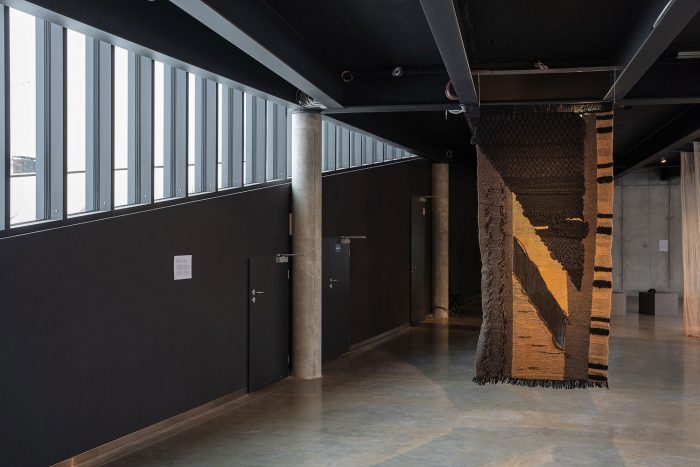
Kapwani Kiwanga
Once Upon Another Time… | 13th Kaunas Biennial
Group exhibition curated by Josée Drouin-Brisebois
Kaunas Biennial
Nov 12, 2021 – Feb 20, 2022
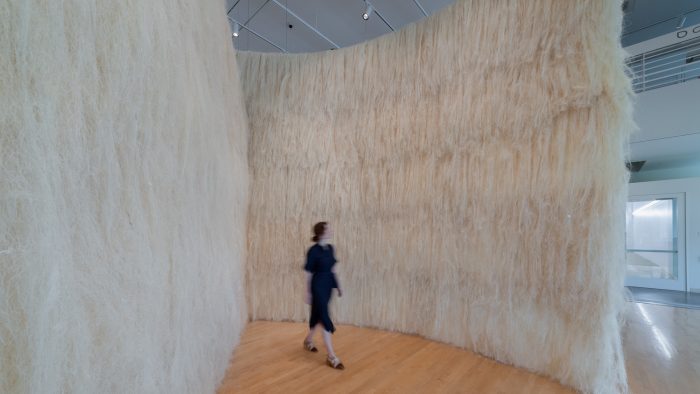
Kapwani Kiwanga
The Sand Recalls the Moon’s Shadow
Solo exhibition curated Ylinka Barotto
Moody Center for the Arts Rice University, Houston, TX
Sep 17 – Dec 19, 2021
Kapwani Kiwanga
Hiding in Plain Sight
Group exhibition curated by Andria Hickey
Pace Gallery, New York
Jul 14 – Aug 20, 2021

Kapwani Kiwanga
ROHKUNSTBAU XXVI
Group exhibition curated by Heike Fuhlbrügge
Rohkunstbau, Lübben
Jun 19 – Oct 3, 2021
Kapwani Kiwanga
Diversity United
Group exhibition curated by Walter Smerling
Flughafen Tempelhof, Berlin
Jun 9 – Oct 10, 2021
Kapwani Kiwanga
The Gate
Group exhibition
Imagine the city, Hamburg
Jun 04 – Nov 01, 2021
Kapwani Kiwanga
Congoville
Group exhibition curated by Sandrine Colard
Middelheim Museum, Antwerp
May 29 – Oct 03, 2021

Kapwani Kiwanga
Napoléon? Encore! Regards d’artistes contemporains
Group exhibition curated by Eric de Chassey et Julien Voinot
Musée de l’Armée - Hôtel national des Invalides, Paris
May 07, 2021 – Jan 30, 2022
Kapwani Kiwanga
Prélude
Group exhibition curated by Tom Eccles, Hans-Ulrich Obrist & Vassilis Oikonomopoulos
Luma Arles at the Mécanique Générale of the Parc des Ateliers, Arles
Apr 28 – Sep 30, 2021
Kapwani Kiwanga
Cima Cima
Solo exhibition curated by Claire Le Restif
Centre d'art contemporain d'Ivry - le Crédac, Ivry-sur-Seine
Apr 22 – Jul 11, 2021
Kapwani Kiwanga
UFA - L’Université des futurs Africains
Group exhibition curated by Oulimata Gueye
Lieu Unique, Nantes
Apr 10 – Aug 29, 2021

Palais Populaire eröffnet mit Spitzenwerken aus der Sammlung Deutsche Bank
Kapwani Kiwanga
by Irmgard Berner
Berliner Zeitung
Apr 06, 2021

Kapwani Kiwanga
A I S T I T / coming to our senses
Group exhibition curated by Hans Rosenström & Satu Herrala
Maison Louis Carré, Bazoches-sur-Guyonne
Mar 28, 2021 – Jan 20, 2022

Kapwani Kiwanga
This is Not Africa – Unlearn What You Have Learned
Group exhibition curated by Mavis Tetteh-Ocloo, Lotte Løvholm
ARoS Aarhus Kunstmuseum, Aarhus
Mar 27 – Oct 24, 2021

Kapwani Kiwanga
Ways of Seeing Abstraction - Works from the Deutsche Bank Collection
Group exhibition curated by Friedhelm Hütte
Palais Populaire, Berlin
Mar 27, 2021 – Mar 7, 2022
Kapwani Kiwanga
Structures of Radical Will
Solo exhibition curated by Béatrice Gross
Fondation CAB, Brussels
Mar 24 – Jul 24, 2021
Kapwani Kiwanga
SO WIE WIR SIND 3.0
Group exhibition curated by Janneke de Vries
Weserburg Museum für moderne Kunst, Bremen
Mar 20, 2021 – Jan 23, 2022
Kapwani Kiwanga
Angespannte Zustände - Tense conditions
Group exhibition curated by Katarina Schorb
Staatsgalerie Stuttgart, Stuttgart
Mar 16 – Dec 31, 2021

Kapwani Kiwanga
An apology, a pill, a ritual, a resistance
Group exhibition curated by Tarah Hogue
Remai Modern, Saskatoon
Mar 13 – Aug 22, 2021

Kapwani Kiwanga; Fleurs en Papier : Une Étude de la Résistance par la Botanique
Kapwani Kiwanga
Artskop3437
Feb 02, 2021
ZEHN JAHRESJUBILÄUM
Programmaufbau, Sammlerpflege, Künstlerförderung: So stellt eine Galeristin die Weichen für die Zukunft
by Christian Herchenröder
Handelsblatt
Jan 14, 2021

Kapwani Kiwanga
Vom Gang der Jahreszeiten. Kapwani Kiwanga in München
By Victor Sattler
Monopol
Dec 30, 2020
Dem Menschsein auf den Grund gehen
Ein Besuch in der Galerie Tanja Wagner
by Ferial Nadja Karrasch
art-in-berlin
Dec 18, 2020

Kapwani Kiwanga
Shortlist for the third and fourth High Line Plinth Commissions
12 proposals from an international array of artists
e-flux
Nov 18, 2020
Kapwani Kiwanga
Kipwani Kawanga wins Duchamp Prize with installation referencing African independence
By Anna Sansom
The Art Newspaper
Oct 20, 2020

Kapwani Kiwanga
Kapwani Kiwanga, Artist Who Centers African Histories, Wins France’s Top Art Prize
By Alex Greenberger
ARTnews
Oct 19, 2020
Kapwani Kiwanga
1 Million Roses for Angela Davis
Group exhibition
Kunsthalle im Lipsiusbau, Dresden
Oct 10, 2020 – Jan 24, 2021
Frieze London
Viewing Room – Šejla Kamerić, Kapwani Kiwanga and Grit Richter
Frieze Art Fair
Oct 9 – 16, 2020

Kapwani Kiwanga
DER ÖFFENTLICHKEIT - VON DEN FREUNDEN HAUS DER KUNST: Kapwani Kiwanga. Plot
Solo exhibition curated by Damian Lentini
Haus der Kunst, Munich
Oct 09, 2020 – Apr 25, 2021
Kapwani Kiwanga
Walk through the exhibition »Plot«
Haus der Kunst, Munich
Oct 09, 2020 – May 15, 2021
Kapwani Kiwanga
Vorhang auf
By Catrin Lorch
Süddeutsche Zeitung
Oct 9, 2020
Kapwani Kiwanga
Prix Marcel Duchamp
Group exhibition
Centre Georges Pompidou, Paris
Oct 07, 2020 – Jan 04, 2021
Kapwani Kiwanga
Solo exhibition
FKA Witte de With – Center for Contemporary Art, Rotterdam
Sep 20, 2020 – Jan 17, 2021
Kapwani Kiwanga
Nine Lives
Group exhibition curated by Karsten Lund and Caroline Picard
Renaissance Society, Chicago
Sep 12 – Nov 15, 2020

Kapwani Kiwanga
Things Entangling | A Collaboration between MOT and KADIST
Group exhibition
Museum of Contemporary Art Tokyo
Jun 09 – Sep 27, 2020
Kapwani Kiwanga
FRANK WALTER: A RETROSPECTIVE
Group exhibition
MUSEUM ᴹᴹᴷ FÜR MODERNE KUNST, Frankfurt
May 16 – Nov 15, 2020
Kapwani Kiwanga
Solo exhibition
Centre d'art contemporain d'Ivry - le Crédac, Ivry-sur-Seine
Apr 23 – Jun 28, 2020
Kapwani Kiwanga
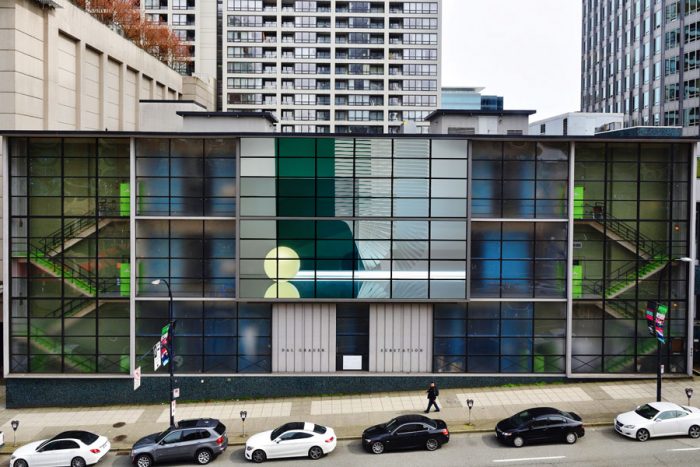
BC Hydro Dal Grauer Substation
Solo exhibition curated by Kate Henderson
outdoor art commission, Capture Photo Festival, Vancouver
Apr 02, 2020 – Mar 01, 2021

Kapwani Kiwanga
HAVE YOU SEEN A HORIZON LATELY?
Group exhibition curated by Marie-Ann Yemsi
Museum of African Contemporary Art Al Maaden (MACAAL), Marrakech
Feb 25 – Jul 19, 2020
Kapwani Kiwanga
So wie wir sind 2.0
Group exhibition curated by Janneke de Vries
Weserburg Museum für moderne Kunst, Bremen
Feb 14, 2020 – Jan 31, 2021
Kapwani Kiwanga
Seismic Movements
Group exhibition curated by Diana Campbell Betancourt
Dhaka Art Summit
Feb 07 – 15, 2020
Kapwani Kiwanga
Solo exhibition curated by Stefanie Gschwend
PASQUART - Kunsthaus Centre d’art, Biel
Feb 02 – Apr 05, 2020

Kapwani Kiwanga
Walls Turned Sideways: Artists Confront the Justice System
Group exhibition curated by Risa Puleo
School of the Museum of Fine Arts at Tufts University/Tufts University Art Galleries, Medford
Jan 23 – Apr 19, 2020

Kapwani Kiwanga
Powerful and elegant: Galerie Tanja Wagner's Under the Cover of Darkness
By Anna Larkin
EXBERLINER
Jan 17, 2020
Kapwani Kiwanga
2020 Marcel Duchamp Prize Nomination
ASSOCIATION FOR THE INTERNATIONAL DIFFUSION OF FRENCH ART, Paris
Dec 2019
Kapwani Kiwanga
Leave No Stone Unturned
Group exhibition curated by Clelia Coussonnet
Le Cube – independent art room, Rabat
Nov 14, 2019 – Jan 31, 2020

Kapwani Kiwanga
Monitoring – Exhibition for Time-Based Media Art
Group exhibition
36th Kassel Documentary Film and Video Festival, Kassel
Nov 12 – 17, 2019

Kapwani Kiwanga
The awardees of the 36th Kassel Documentary Film and Video Festival
36th Kassel Documentary Film and Video Festival, Kassel
Nov 12 – 17, 2019
Kapwani Kiwanga
Art Exchange
Group exhibition curated by Jessica Twyman
University of Essex, Colchester
Nov 08 – Dec 21, 2019

Kapwani Kiwanga
Trésors de l’islam en Afrique. De Tombouctou à Zanzibar
Group exhibition curated by Institut du monde arabe
Musée Mohammed VI d’art moderne et contemporain, Rabat
Oct 16, 2019 – Jan 25, 2020
Kapwani Kiwanga
Afrogalactica: A brief history of the future
Performance
Düsseldorfer Schauspielhaus, Düsseldorf
Oct 10, 2019, 8:30 pm
Frieze Art Fair
With a solo presentation by Kapwani Kiwanga
Frieze Art Fair
Oct 3 – 6, 2019

Kapwani Kiwanga
Kapwani Kiwanga Has More Questions
by Ginanne Brownell Mitic
The New York Times
Oct 2, 2019
Kapwani Kiwanga
Group exhibition curated by Candice Hopkins and Tairone Bastien
Toronto Biennial of Art
Sep 21 – Dec 01, 2019

Kapwani Kiwanga
The Sorcerer’s Burden: Contemporary Art and the Anthropological Turn
Group exhibition curated by Heather Pesanti
The Contemporary Austin
Sep 14, 2019 – Jan 19, 2020
Kapwani Kiwanga
Le fil d’alerte, Prix Ricard 2019
Group exhibition curated by Claire le Restif
Fondation d’Entreprise Ricard, Paris
Sep 09 – Oct 26, 2019
Kapwani Kiwanga
MOMENTA 2019 | The Life of Things
Group exhibition curated by María Wills Londoño
MOMENTA Biennale De L'Image, Montreal
Sep 05 – Oct 13, 2019
Kapwani Kiwanga
Material Tells
Group exhibition curated by Daisy Desrosiers
Oakville Galleries in Gairloch Gardens & at Centennial Square, Oakville
Jun 23 – Sep 8, 2019

Kapwani Kiwanga
Sunlight by Fireside: The Ash Annals
Solo exhibition curated by Anne-Marie St-Jean Aubre and Kristy Trinier
The Southern Alberta Art Gallery, Lethbridge
Jun 23 – Sep 8, 2019
Art Basel | Unlimited
with a solo presentation by Kapwani Kiwanga
Art Basel
Jun 13 – 16, 2019
Kapwani Kiwanga
9 Dinge, die Sie auf der Art Basel nicht verpassen sollten
by Elke Buhr und Saskia Trebing
Monopol
Jun 12, 2019

Kapwani Kiwanga
The 6 Best—and Riskiest—Artworks at Art Basel Unlimited, Where the Fair’s Supersized Artwork Shines
by Tim Schneider & Kate Brown
Artnet
Jun 11, 2019

Kapwani Kiwanga
Some of Us – an overview on the French Art Scene - NordArt 2019
Group exhibition curated by Jérôme Cotinet-Alphaize
Kunstwerk Carlshütte, Büdelsdorf
Jun 1 – Oct 13, 2019
Kapwani Kiwanga
Undefined Territories: Reflections on Postcolonialism
Group exhibition curated by Hiuwai Chu
MACBA - Museu d'Art Contemporani de Barcelona
May 17 – Nov 20, 2019

Kapwani Kiwanga
Afrogalactica: A brief history of the future Performance Black.Art.Empowerment: I see, I speak, I am movement
MAI (Montréal, arts interculturels), Montreal
Apr 19 & 20, 2019, 8 pm

Kapwani Kiwanga
Sculptures Confront the Brutal History of Racialized Surveillance in the US
by John Pyper
Hyperallergic
Mar 25, 2019

Kapwani Kiwanga
is the Winner of the Inaugural Étant Donnés Prize 2019
C&
Mar 11, 2019
Kapwani Kiwanga
Demonstrationsräume
Group exhibition curated Isabelle Busch & Kathleen Reinhardt
Albertinum - Staatliche Kunstsammlungen Dresden
Mar 2 – Jun 2, 2019
Kapwani Kiwanga
At MIT, Minimalism meets meaning
by Murray Whyte
Boston Globe
Feb 21, 2019
Kapwani Kiwanga
Is This Tomorrow?
Group exhibition by Lydia Yee
Whitechapel Gallery, London
Feb 14 – May 12, 2019
Kapwani Kiwanga
Safe passage
Solo exhibition curated by Yuri Stone
MIT List Visual Arts Center
Feb 8 – Apr 21, 2019

Kapwani Kiwanga
Selection of works from the collection
Group exhibition
Arsenal - Contemporary Art Contemporain, Montréal
Feb 6 – Aug 5, 2019

Kapwani Kiwanga
Grace Wales Bonner: A Time for New Dreams
Group exhibition
Serpentine Galleries, London
Jan 19 – Feb 16, 2019

Kapwani Kiwanga
KAPWANI KIWANGA en conversation avec GRÉGORIA LAGOURQUE
by Grégoria Lagourque
Klima Magazine
Nov 2018
Kapwani Kiwanga
Afrogalactica III: Deep Space Scrolls
Performance
Bienal de São Paulo
Nov 17, 2018
Kapwani Kiwanga
Kapwani Kiwanga wins 2018 Sobey Art Award
e-flux
Nov 16, 2018

Kapwani Kiwanga
Kapwani Kiwanga Winner of 2018 Sobey Art Award
National Gallery of Canada, Ottawa
Nov 14, 2018

Kapwani Kiwanga
Afrogalactica III: Deep Space Scrolls
Performance
Galeria Municipal do Porto, Rivoli - Auditório IAC
Nov 9, 2018, 5 pm
Kapwani Kiwanga
ENCLOSURE
Solo exhibition
LE PARVIS - Centre d'Art Contemporain, Ibos
Nov 7, 2018 – Jan 12, 2019

Kapwani Kiwanga
The Artist is Present
Group exhibition curated by Maurizio Cattelan
Yuz Museum Shanghai
Oct 10 – Dec 17, 2018
Kapwani Kiwanga
Sobey Art Award
Group exhibition
National Gallery of Canada, Ottawa
Oct 3, 2018 – Feb 10, 2019
art berlin
with works by Šejla Kamerić, Kapwani Kiwanga, Anna Witt
art berlin, Flughafen Tempelhof, Hangar 5 and 6
Sep 27 – 30, 2018
Kapwani Kiwanga
Extra States: Nations in Liquidation
Group exhibition curated by iLiana Fokianaki
Extra City Kunsthal, Antwerp
Sep 22 – Dec 16, 2018

Kapwani Kiwanga
Walls Turned Sideways: Artists Confront the American Justice System
Group exhibition curated by Risa Puleo
Contemporary Arts Museum, Houston
Aug 25 – Jan 6, 2019
Kapwani Kiwanga
Sunlight by Fireplace
Solo exhibition
Musee d'art de Joliette
Jun 9 – Sep 9, 2018
Kapwani Kiwanga
Au Coin Du Feu
Artist talk
Musee d'art de Joliette
Jun 2, 2018, 5 pm
Kapwani Kiwanga
The Landis Museum
Group exhibition
CCA - Centre for Contemporary Art, Derry~Londonderry
May 26 – Jul 26, 2018

Kapwani Kiwanga
Afrocyberfeminisms Afrogalactica II: The Black Star Chronicles
Performance
Gaîté Lyrique, Paris
May 23, 2018

Kapwani Kiwanga
Kapwani Kiwanga Named Winner of the Frieze Artist Award
artnews.com
May 4 – 6, 2018

Kapwani Kiwanga
Kapwani Kiwanga short-listed for 2018 Sobey Art Award
National Gallery of Canada, Ottawa
May 4 – 6, 2018
Kapwani Kiwanga
Kapwani Kiwanga: shades of Mondrian at Frieze
By Jan Dalley
Financial Times
May 3, 2018

Kapwani Kiwanga
Frieze New York: how this year's art fair got political
The Guardian
May 3, 2018

Kapwani Kiwanga
On the Hunt for Artistic Gems at Frieze
By Roberta Smith
The New York Times
May 3, 2018

Kapwani Kiwanga
Chapter 3: Variations on Time
Group exhibition
ACUD MACHT NEU, Berlin
Apr 27 – May 27, 2018
Kapwani Kiwanga
The Landis Museum
Group exhibition
Chapter Thirteen | Glasgow International 2018
Apr 20 – May 7, 2018
Kapwani Kiwanga
Soft Measures
Solo exhibition
Tramway | Glasgow International 2018
Apr 20 – Jun 17, 2018
Kapwani Kiwanga
The Blue Hour
Group exhibition
The Contemporary Art Gallery, Vancouver
Apr 6 – Jun 24, 2018
Kapwani Kiwanga
Do You See What I Hear?
Group exhibition
Dazibao, Montréal
Mar 29 – Jun 2, 2018

Kapwani Kiwanga
ring the bells that still can ring... there is a crack in everything
Group exhibition
artpace, San Antonio
Mar 22 – May 13, 2018
Kapwani Kiwanga
Throwing Shade: Kapwani Kiwanga on history and Donna Harraway
by Sophia Lawler
SLEEK Magazine
Mar 2018

Kapwani Kiwanga
A wall is just a wall (and nothing more at all)
Solo exhibition
Esker Foundation, Calgary
Feb 2 – May 6, 2018
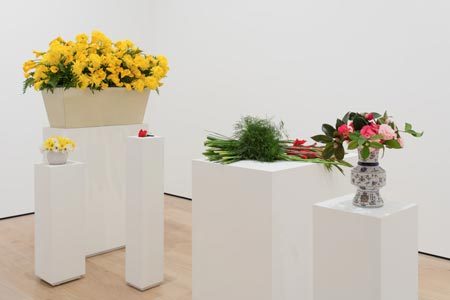
Kapwani Kiwanga
Stories of Almost Everyone
Group exhibition curated by Aram Moshayedi
Hammer Museum, Los Angeles
Jan 28 – May 6, 2018
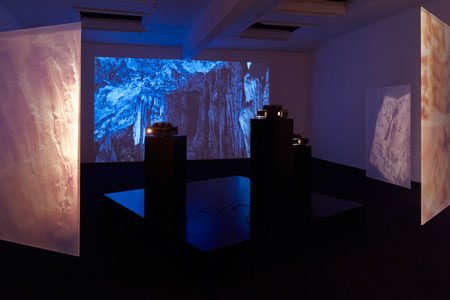
Kapwani Kiwanga
Strata
Solo exhibition
CLARK, Centre d'art et de diffusion, Montréal
Jan 11 – Feb 19, 2018
Kapwani Kiwanga
Clearing
Solo exhibition
Glenhyrst Art Gallery of Brant, Brantford, Ontario
Jan 10 – Mar 11, 2018

Kapwani Kiwanga
Inside the culturally loaded works of Kapwani Kiwanga
by Austen Tosone
Interview Magazine
Dec 8, 2017
Kapwani Kiwanga
Pattern
Group exhibition
Maison des Arts de Laval, Quebec
Nov 26, 2017 – Feb 4, 2018

Kapwani Kiwanga
In Search of Hidden Truths: Kapwani Kiwanga’s ‘The Sun Never Sets’
by Sipho Mdanda
ArtThrob - Contemporary Art in South Africa
Nov 15, 2017
Kapwani Kiwanga
DÉMASQUER: Arts et sciences en Afrique
Group exhibition
Association pour la Promotion Scientifique de l'Afrique (ASPA), Paris
Nov 8, 2017 – Jan 8, 2018

Kapwani Kiwanga
Afrogalactica: A brief history of the future
Performance
Hartware MedienKunstVerein (HMKV), Dortmund
Oct 26, 2017, 8 pm
Kapwani Kiwanga
The Sun Never Sets
Solo exhibition
Goodman Gallery, Johannesburg
Oct 21 – Nov 18, 2017

Kapwani Kiwanga
Afro-Tech and the Future of Re-Invention
Group exhibition curated by Inke Arns and Fabian Saavedra-Lara
Hartware MedienKunstVerein (HMKV), Dortmund
Oct 21, 2017 – Apr 22, 2018
Kapwani Kiwanga
Kapwani Kiwanga: Flowers For Africa
Galleries West Magazine
Sep 25, 2017
Kapwani Kiwanga
Kapwani Kiwanga: Flowers for Africa
Solo exhibition
Or Gallery, Vancouver
Sep 9 – Oct 14, 2017
Kapwani Kiwanga
LES GRANDS VOYAGEURS
Group exhibition curated by Ann Stouvenel
diagonale, Montréal
Sep 1 – Oct 7, 2017
Kapwani Kiwanga
botánica
Group exhibition curated by Todd von Ammon
Berggruen Gallery, San Francisco
Jul 13 – Aug 29, 2017
Kapwani Kiwanga
Review: Kapwani Kiwanga / Galerie Tanja Wagner, Berlin
by William Kherbek
Samizdat Magazine
Jul 10, 2017
Kapwani Kiwanga
by Jessica Karuhanga
BlackFlash
2017

Kapwani Kiwanga
Afrogalactica: A brief history of the future
Performance at HALLUCINATIONS (Live / Cinema / Festival) on the invitation by Ben Russell
at documenta 14, Athens
Jun 24, 2017

Kapwani Kiwanga
In Edenia, A City of the Future
Group exhibition curated by Yevgeniy Fiks
Yermilov Centre, Kharkiv, Ukraine
Jun 8 – Jul 31, 2017
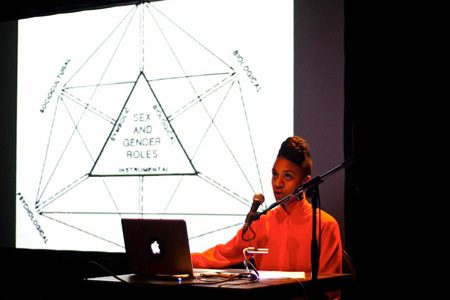
Kapwani Kiwanga
Afrogalactica II: The Black Star Chronicles
Performance at KIOSK, Ghent
Jun 1, 2017
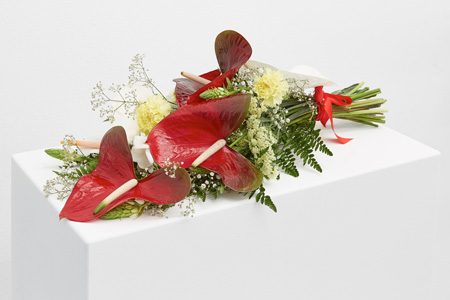
Kapwani Kiwanga
Flowers are Documents – Arrangement I & II
Group exhibition curated by Emanuele Guidi
ar/ge kunst, Bolzano, Italy
May 26 – Jul 29, 2017
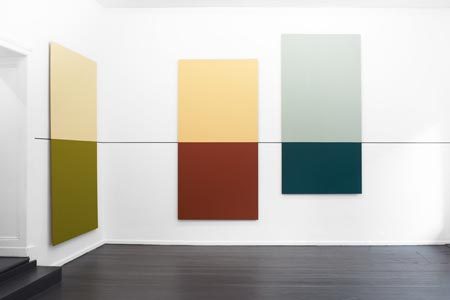
Kapwani Kiwanga
Critic's picks
by Kristian Vistrup Madsen
Artforum
May 2017

Kapwani Kiwanga
Afrogalactica: A brief history of the future
Performance at Media Library of the City of Geneva, Switzerland
May 11, 2017

Kapwani Kiwanga
Afrogalactica: A brief history of the future
Performativer Dialog »Das soziale Leben des Universums«
Performance at Akademie Schloss Solitude, Stuttgart
May 5, 2017

Kapwani Kiwanga
What is one to do with such a clairvoyant image?
Group exhibition
Trinity Square Video, Toronto, Canada
May 5 – Jun 3, 2017
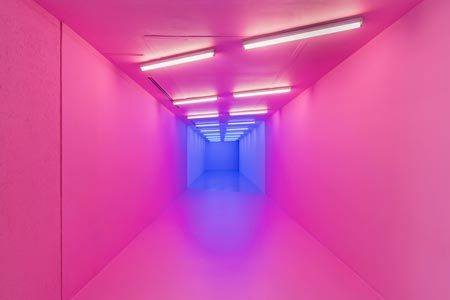
Kapwani Kiwanga
Die besten Kunst-Spaziergänge durch Berlin
by Lisa Zeitz, Christiane Meixner, Tim Ackermann u.a.
DIE ZEIT
Apr 29, 2017
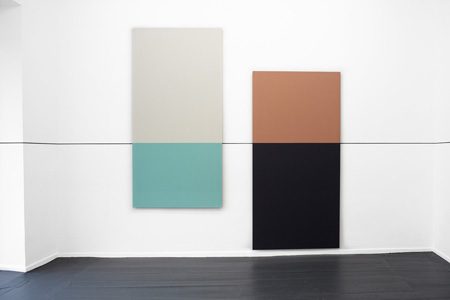
Kapwani Kiwanga
Gallery Weekend Berlin
by Sofia Lemos
art agenda
Apr 28 – 30, 2017

Kapwani Kiwanga
Show Me Your Archive and I Will Tell You Who Is In Power
Group exhibition
KIOSK, Ghent
Apr 28 – Jun 16, 2017
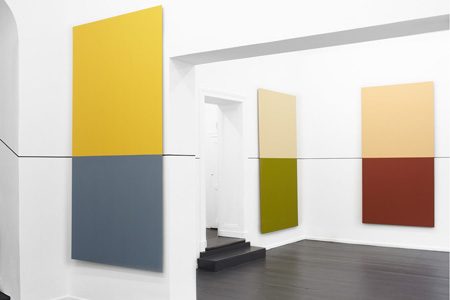
Kapwani Kiwanga
Berlin – Unterwegs zum Gallery Weekend
Weltkunst
Apr 26, 2017

Kapwani Kiwanga
Afrogalactica: A brief history of the future
Performance at The Power Plant, Toronto
Apr 21, 2017
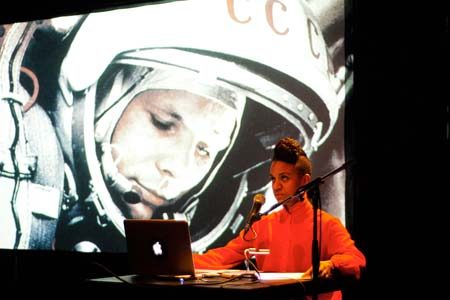
Kapwani Kiwanga
Afrogalactica
Solo exhibition
The Institute of Things to Come, Fondazione Sandretto Re Rebaudengo, Turin
Apr 13 – May 14, 2017

Kapwani Kiwanga
The Power Plant, Toronto – exhibition review
by Frances Loeffler
FRIEZE
Apr 6, 2017

Galerie Tanja Wagner – New York
LEARNING FROM BIG MISTAKES Ulf Aminde, Annabel Daou, Paula Doepfner, Nilbar Güreş, Šejla Kamerić, Kapwani Kiwanga, Laurel Nakadate, Grit Richter, Angelika J. Trojnarski
Mar 31 – Apr 9, 2017
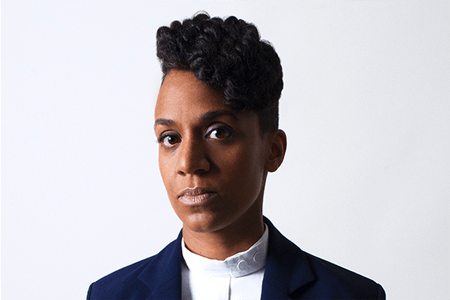
Kapwani Kiwanga
Conversations on Art
Artist talk
Fondation d'Entreprise Ricard, Paris
Mar 8, 2017

Kapwani Kiwanga
Almost There
Group exhibition
Jorge B. Vargas Museum and Filipiniana Research Center, Diliman, Quezon City, Philippines
Mar 2 – May 6, 2017
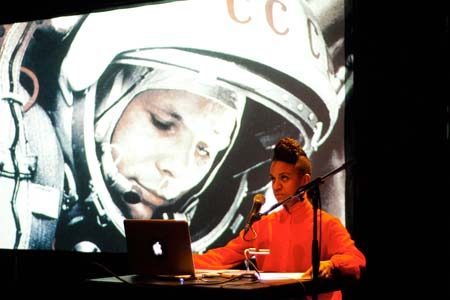
Kapwani Kiwanga
Horses on Rollerblades
Group exhibition
Konsthall C, Hökarängen, Sweden
Feb 25 – May 7, 2017

Kapwani Kiwanga
A wall is just a wall
Solo exhibition
The Power Plant, Toronto
Jan 28 – May 14, 2017
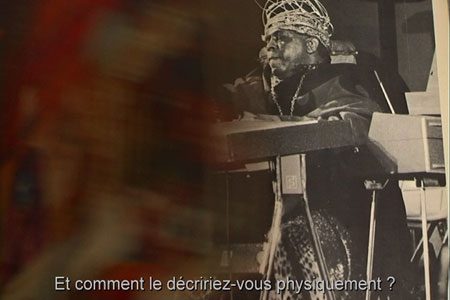
Kapwani Kiwanga
Unravelings
Group exhibition
meter, Copenhagen
Jan 23 – Apr 2, 2017
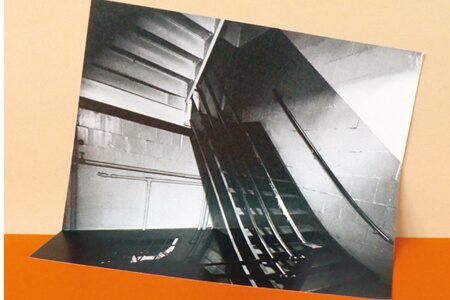
Kapwani Kiwanga
The sum and its parts
Solo exhibition
Logan Center for the Arts, Chicago
Jan 20 – Mar 12, 2017
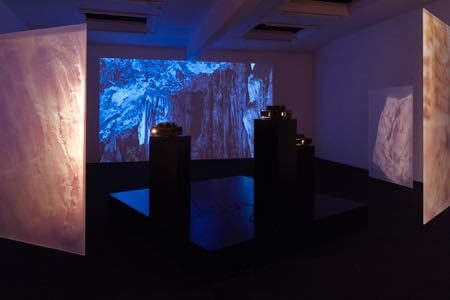
Kapwani Kiwanga
Strata
Group exhibition curated by Eva Wilson Kópavogur
Cycle Music and Art Festival, Iceland
Oct 27 – 30, 2016
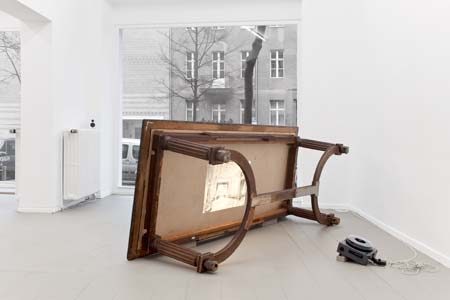
Kapwani Kiwanga
RUN RUN RUN
Group exhibition
Villa Arson, Nice
Oct 2 – Dec 30, 2016

Kapwani Kiwanga
Uriel Orlow: Mafavuke’s Trial and Other Plant Stories
Group exhibition
The Showroom, London
Sep 28 – Nov 19, 2016
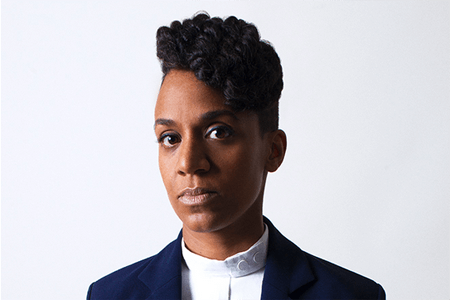
Kapwani Kiwanga
Meet 9 Canadian women changing the game
by ELLE Canada
Sep 15, 2016
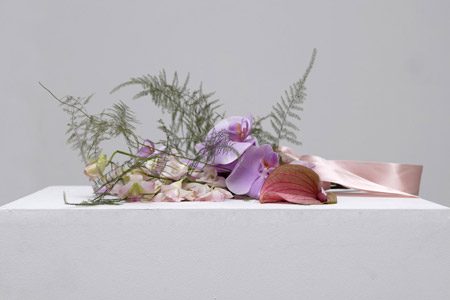
Kapwani Kiwanga
Botany under Influence
Group exhibition organized by Clelia Coussonnet
Apexart, New York
Sep 7 – Oct 22, 2016
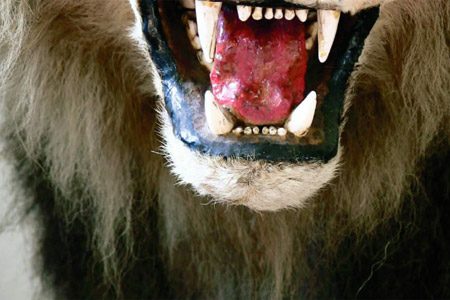
Kapwani Kiwanga
"Rumors that Maji was a lie…
Solo exhibition
Stiftelsen 3,14, Bergen, Norway
Aug 19 – Oct 16, 2016
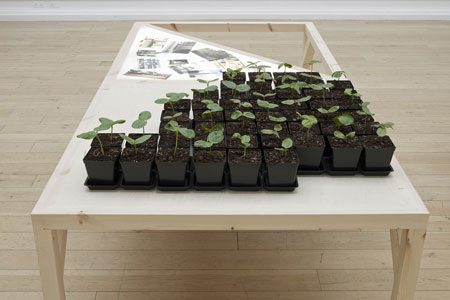
Kapwani Kiwanga
Solo Exhibition
La Ferme de Buisson, Noisiel
Apr 24 – Oct 9, 2016
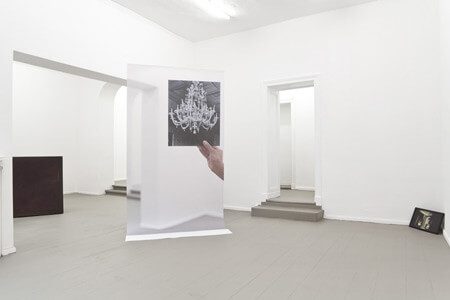
Kapwani Kiwanga
EVA Biennale: 2016 - Edition - Still (the) Barbarian
curated by Koyo Kouoh
Limerick City Gallery of Art
Apr 16 – Jul 17, 2016
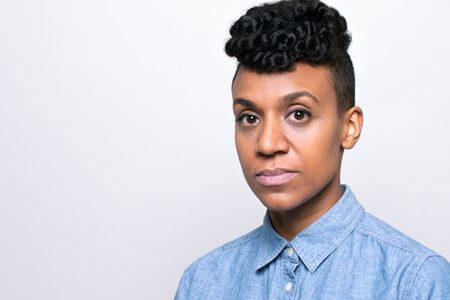
Kapwani Kiwanga
A conversation with the artist
OCULA
Mar 30, 2016
Kapwani Kiwanga
Subduction Zones
Solo exhibition
Le Granit, Belfort
Mar 5 – Apr 19, 2016
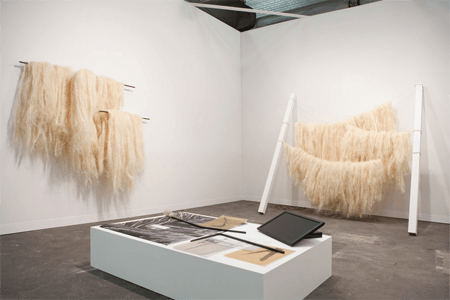
Kapwani Kiwanga
The Armory Show Review
by Jason Farago
The Guardian
Mar 4, 2016

Kapwani Kiwanga
Commissioned Artist Named for Armory Show 2016
by Robin Pogrebin
Armory Show 2016
Mar 3 – 6, 2016

Kapwani Kiwanga
Two Eerie Armory Installations, From One Buzzy Artist
by Julie Baumgardner
The New York Times
Mar 3, 2016
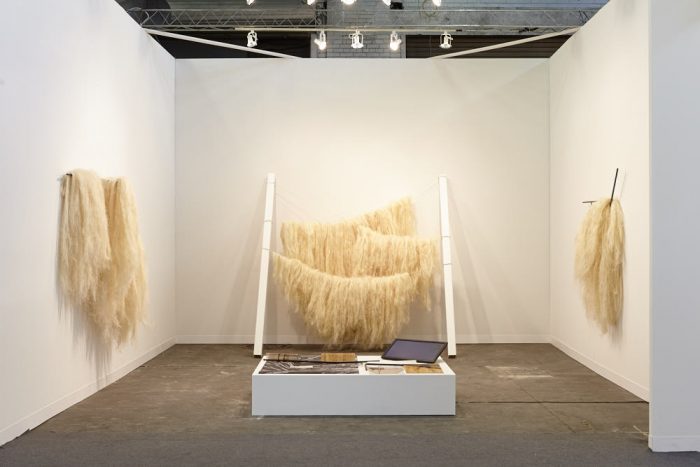
The Armory Show
with a solo presentation by Kapwani Kiwanga
The Armory Show, Piers 92 & 94, New York
Mar 3 – 6, 2016
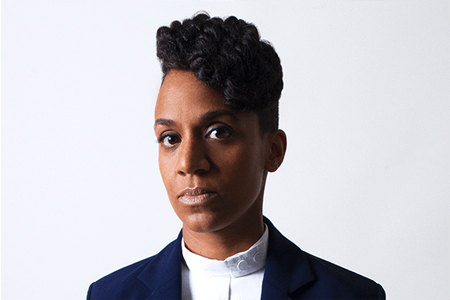
Kapwani Kiwanga
Kapwani Kiwanga's Archival Explorations
by Emily McDermott
Interview Magazine
Mar 2, 2016
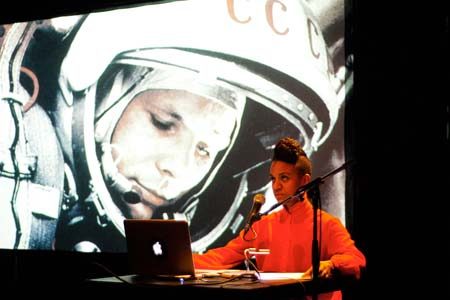
Kapwani Kiwanga
Parlons-en. Œuvres de la collection / Let's talk about Art
Group exhibition
Musée départemental d'art contemporain de Rochechouart, France
Feb 27 – Jun 12, 2016

Kapwani Kiwanga
Up and Coming: Armory Artist Kapwani Kiwanga
by Emily Nathan
Artsy
Feb 24, 2016
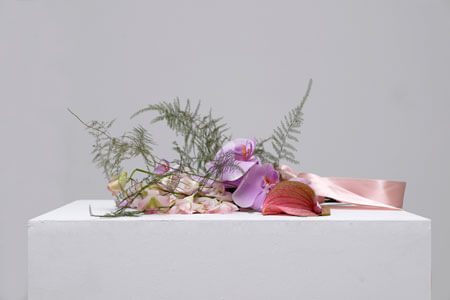
Kapwani Kiwanga
Hors Sol
FRAC Poitou-Charnetes
Feb 12 – May 14, 2016

Kapwani Kiwanga
Afrogalactica: A Brief History of the Future
Performance at
Lille métropole musée d'art moderne, d'art contemporain et d'art brut, Lille
Dec 17, 2015, 16:30 pm

Kapwani Kiwanga
Kontrollmodus Feedback Group exhibition curated by Elena Agudio & Michael Arzt
Halle 14, Leipzig September
Nov 8, 2015
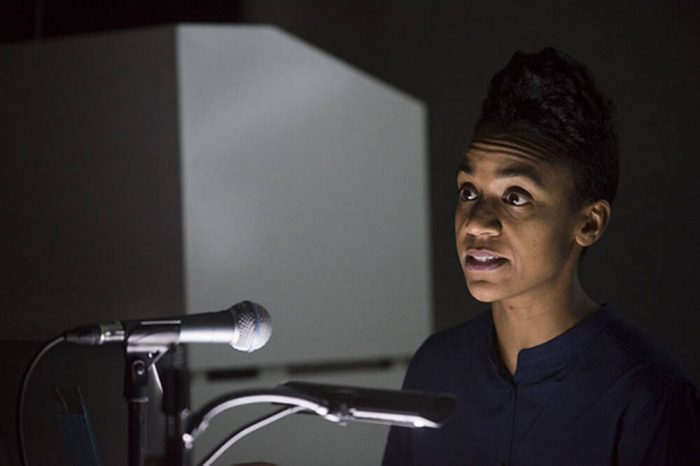
Kapwani Kiwanga
A Conservator’s Tale
Performance at FIAC, Paris
Oct 22, 2015
Kapwani Kiwanga
4th Biennale of Lubumbashi
Oct 20 – Nov 8, 2015
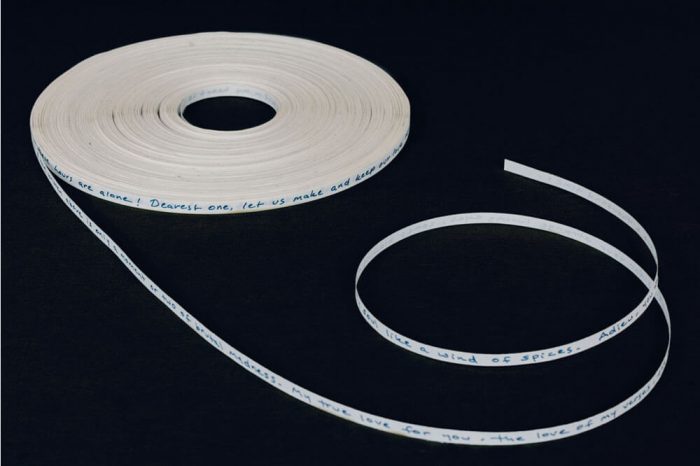
Annabel Daou and Kapwani Kiwanga
What We Call Love Group exhibition curated by Christine Macel
Irish Museum of Modern Art, Dublin
Sep 12, 2015 – Feb 14, 2016
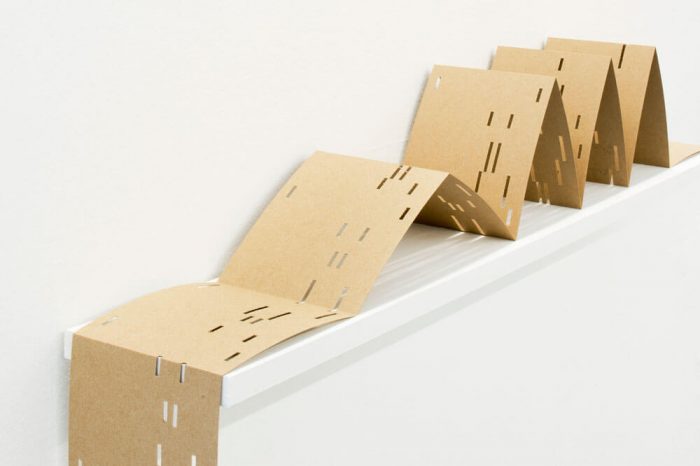
Kapwani Kiwanga
Edge of Silence Group exhibition
Goodman Gallery, Cape Town
Jul 23 – Aug 29, 2015

Kapwani Kiwanga
Afrogalactica: A Brief History of the Future
Performance at La Maison Rouge, Paris
Jul 9, 2015
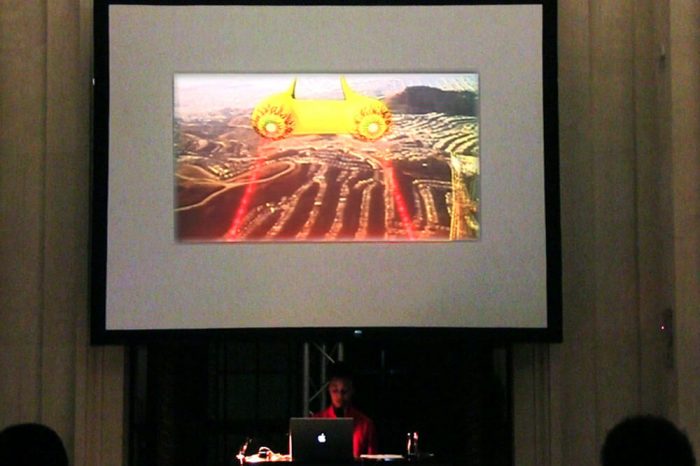
Kapwani Kiwanga
Story of a Conservator
Performance
Bétonsalon, Paris
Jun 25, 2015, 7 pm
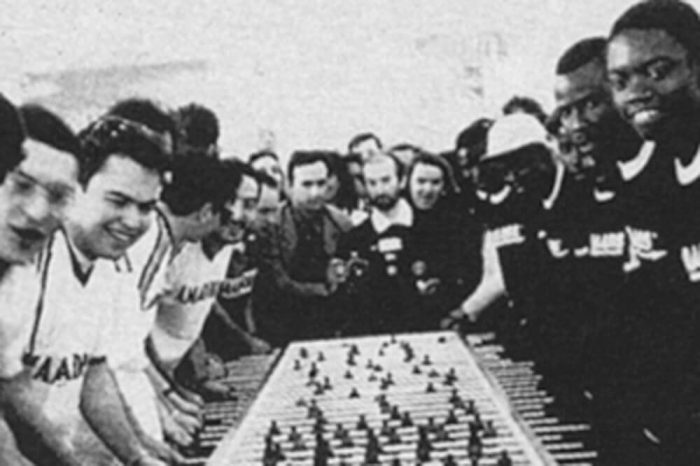
Kapwani Kiwanga
Mediated Measures
Solo exhibition curated by Simone Frangi
Viafarini, Milano
Jun 18 – Jul 16, 2015
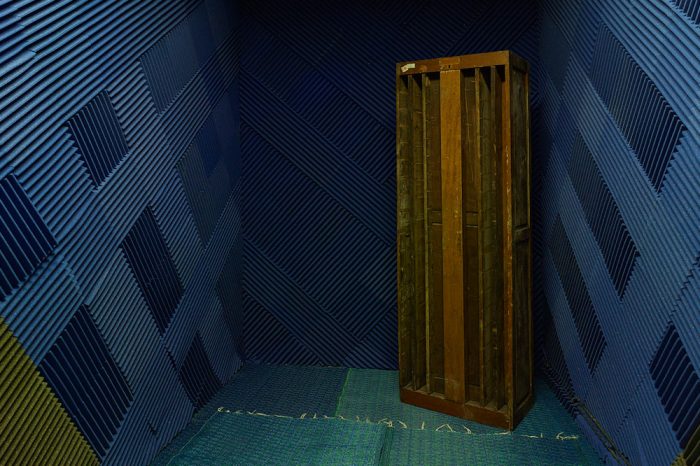
Kapwani Kiwanga
Atopolis
Group exhibition organized by Wiels in collaboration with Mons 2015
Manège de Sury, Mons in cooperation with WIELS Contemporary Art Center, Brussels
Jun 13 – Oct 18, 2015

Kapwani Kiwanga
To speak of things you have not seen
Lecture-performance at
South London Gallery, London
May 20, 2015, 7 pm
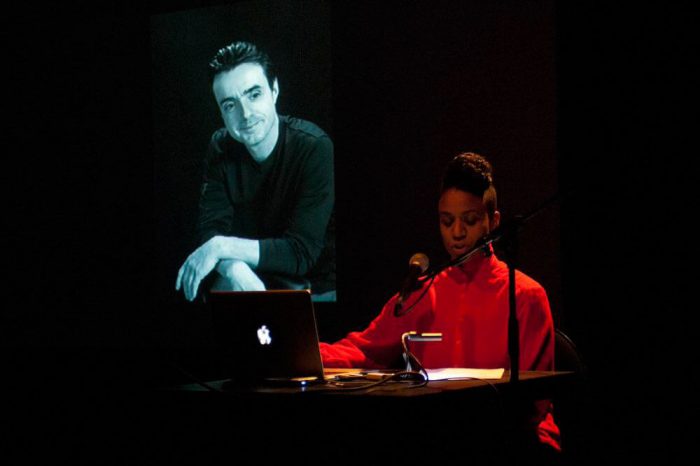
Kapwani Kiwanga
Afrogalactica II: The Black Star Chronicles
Performance at
ENSBA, Beaux-Arts de Paris
May 7, 2015, 4:30 pm
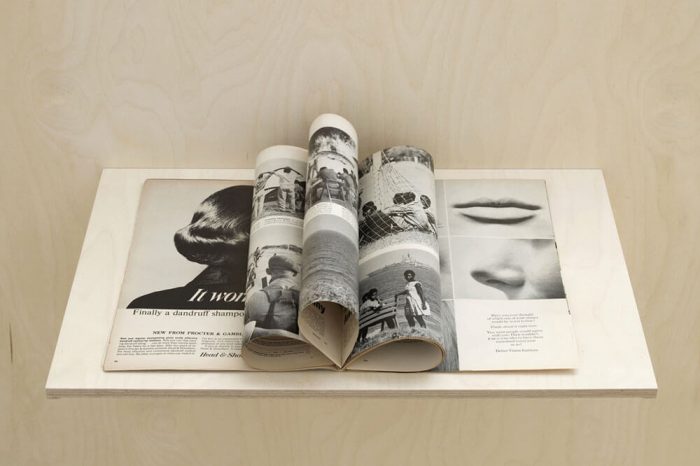
Kapwani Kiwanga
storytelling through art
by Giulia Franceschini
IAM AFRICA MAGAZINE
Apr 29, 2015

Kapwani Kiwanga
Afrogalactica: A Brief History of the Future
Performance at
Exodos International Festival of Contemporary Performing Arts, Ljubljana
Apr 20, 2015, 6 pm
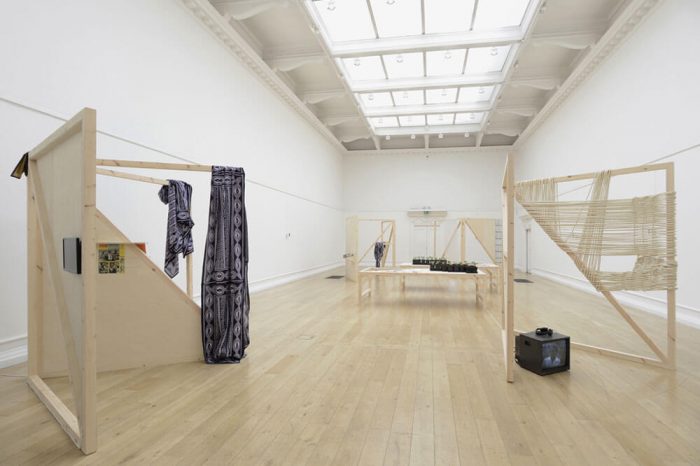
Kapwani Kiwanga
Kinjiketile Suite
Solo exhibition
South London Gallery, London
Apr 15 – Jun 7, 2015
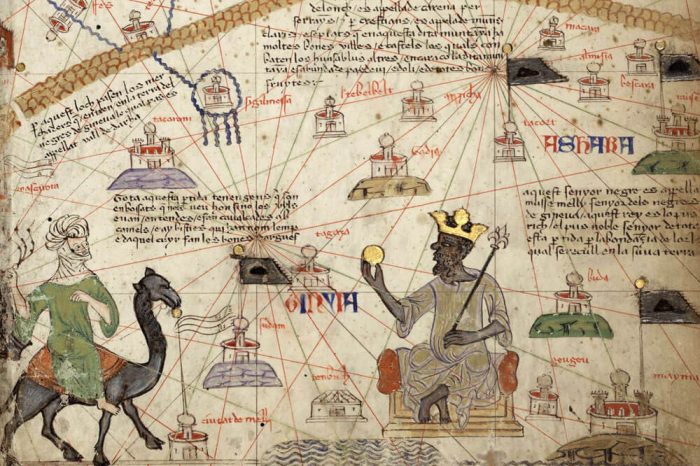
Kapwani Kiwanga
The deep space scrolls
Performance at
Fondation d'Entreprise Ricard, Paris
Mar 30, 2015, 7 pm
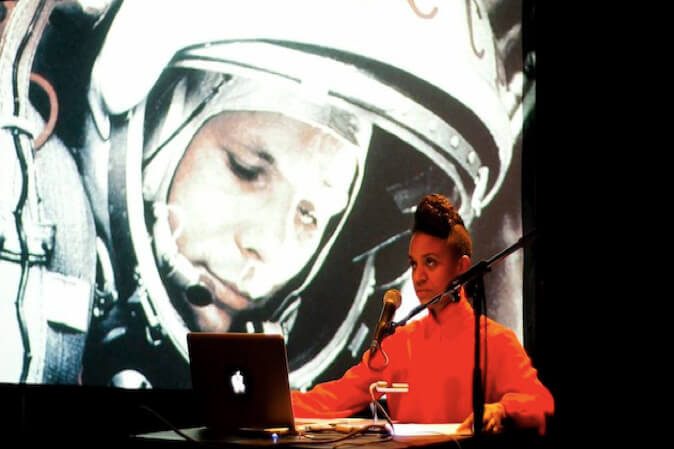
Kapwani Kiwanga
I am no longer a purist…
Magnus Rosengarten in conversation with Kapwani Kiwanga
Contemporary And
Mar 28, 2015
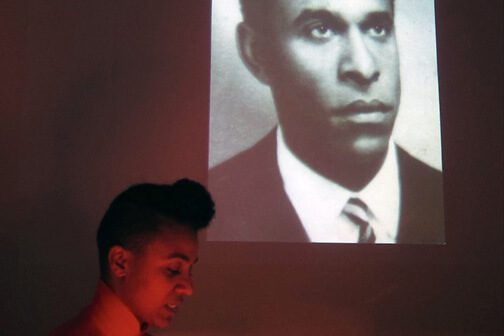
Kapwani Kiwanga
AFROGALACTICA : a brief history of the future
Performance at Kunstencentrum Vooruit, Ghent
Mar 14, 2015, 7 pm
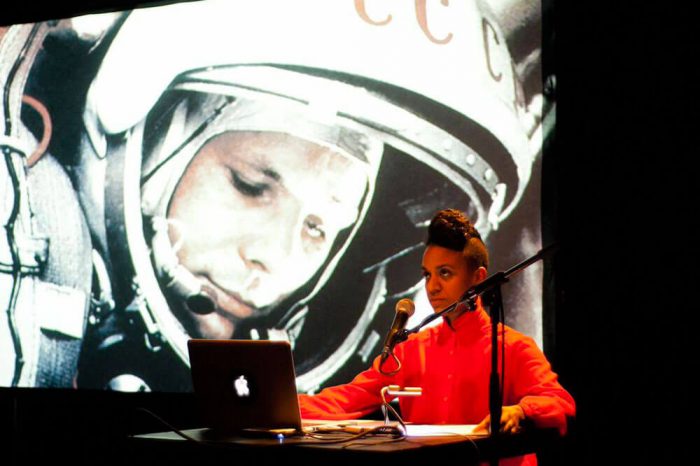
Kapwani Kiwanga
Does Not Equal
Group exhibition
W139
Mar 13 – Apr 12, 2015
Kapwani Kiwanga
Telepathic Relay
Performance
HAU Hebbel am Ufer, Berlin
Mar 12, 2015

Kapwani Kiwanga
AFROGALACTICA : a brief history of the future
Performance
Le Phénix - Scène National de Valenciennes
Mar 11, 2015
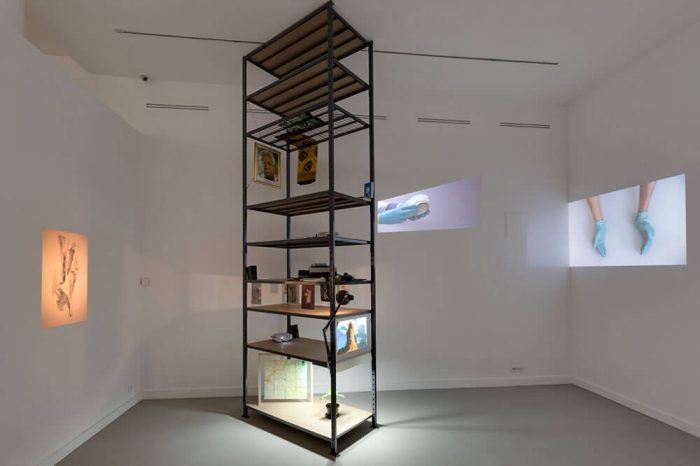
Kapwani Kiwanga
A Century of Centuries
Group exhibition
SALT BEYOĞLU, Istanbul
Mar 10 – May 24, 2015

Kapwani Kiwanga
Trace évidence
Solo exhibition
École Supérieure d’Art et Design, Valence
Mar 5 – 20, 2015
Biography
Kapwani Kiwanga
Born in Hamilton, Canada
Lives and works in Paris
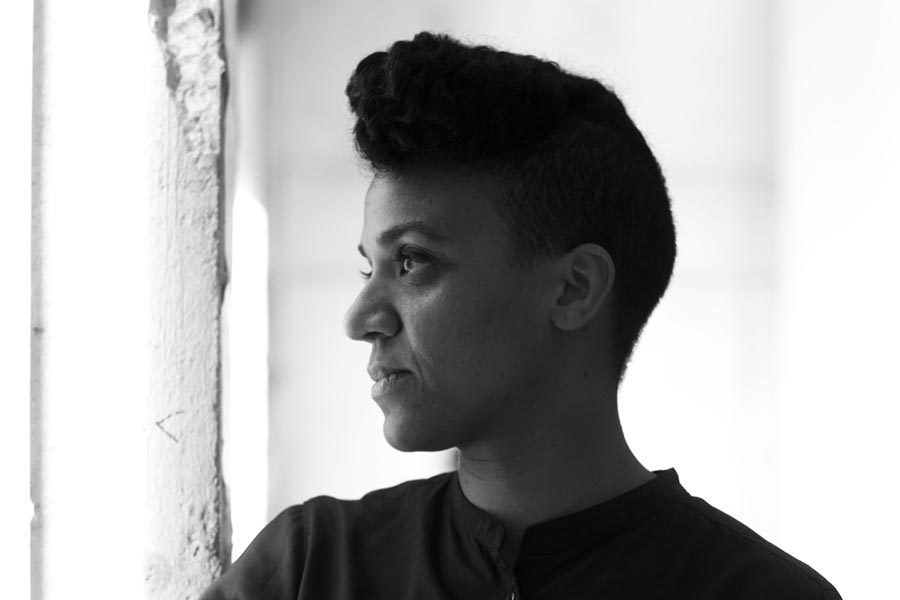
Education
2009
Le Fresnoy, Studio National des Arts Contemporains, France
2005–2007
Research program at L’Ecole Nationale des Beaux-Arts de Paris
1998–2002
Study of anthropology and religions at Université McGill, Montréal
Prizes / grants / residencies
2025
Joan Miro Prize
Fundació Joan Miró, Barcelona
2023
Guggenheim Fellowship
Resident at Académie de France à Rome – Villa Médicis, Italy
2022
Radcliffe Fellowship, Harvard University
Winner of the Zurich Art Prize
2020
Winner of Prix Marcel Duchamp 2020
2019
Winner of Inaugural Étant Donnés Prize
Winner of Golden Cube – 36. Kasseler Dokumentarfilm- und Videofest
2018
Winner of 2018 Sobey Art Award
Short-listed for 2018 Sobey Art Award
Frieze Artist Award, New York
Artpace residency San Antonio, Texas
2017
Prix Meurice 2017, Paris
Finis terrae Residency Sémaphore du Créac’h, Ouessant
2015
Research grant for the project Afrotunnel
Centre national des arts plastiques (Cnap)
2012
Louis Lumière grant: development grant for the documentary Maji Maji
Institut Français
2011
Writing grant for the documentary Maji Maji
Centre national du cinéma et de l’image animée (CNC)
2009
Special jury mention for the film Bon Voyage
CinéRail International Festival, Paris
2008
Project grant, Canada Council for the Arts
Production grant, Paris municipality
2006
Best Documentary prize for Bon Voyage
Filmets international short film festival, Badalona
2004
Two nominations for Rooted: Best first film and Best new director, British Academy of Film and Television Arts (BAFTA)
Professional development grant, Scottish Arts Council
Solo exhibitions (selected)
2026
Kapwani Kiwanga. Changing States
Fondation Joan Miró, Barcelona
Kapwani Kiwanga: BLEED
Studio Museum, Harlem, New York
2024
Screening
Pavillon de verre, Louvre-Lens
The Worlds We Tell: Nammu, Ki and An
Louvre-Lens Park
Canada Pavilion
60th International Art Exhibition – La Biennale di Venezia.
The Length of the Horizon
Copenhagen Contemporary
2023
KAPWANI KIWANGA: WHERE SALT AND FRESHWATER MEET AND CROOKED TREES FILTER THE SUN
Serralves Museum, Porto
Rootwork
Bozar, Brussels
Kapwani Kiwanga: REMEDIATION
Remai Modern, Saskatoon
The Length of the Horizon
Kunstmuseum Wolfsburg
Kapwani Kiwanga
Museum Ostwall, Dortmund
Kapwani Kiwanga
CAPC, Bordeaux Frankreich
Raw
Galerie Tanja Wagner, Berlin
Remediation
MOCA, Toronto
On Growth
High Line, New York
2022
Off-Grid
New Museum, New York
Kapwani Kiwanga. Zurich Art Prize
Museum Haus Konstruktiv, Zurich
2021
The sand recalls the moon's shadow
Moody Center for the Arts Rice University, Houston
Cache
Goodman Gallery, London
Cima-cima
Centre d’art contemporain d’Ivry – le Crédac, Ivry-sur-Seine
Deposits
State of Concept, Athens
Potomitans
Art Basel - Feature, Basel
2020
Plot
Haus der Kunst, Munich
Nations
Galerie Jérôme Poggi, Paris
Kapwani Kiwanga, new work
FKA Witte de With – Center for Contemporary Art, Rotterdam
Kapwani Kiwanga
Pasquart Kunsthaus Centre d’art, Biel
2019
Under the cover of darkness
Galerie Tanja Wagner, Berlin
Sunlight by Fireside: The Ash Annals
The Southern Alberta Art Gallery, Lethbridge
Safe passage
MIT List Visual Arts Center, Cambrigde, Massachusetts
Proximity
1-54 London, London
2018
ENCLOSURE
LE PARVIS – Centre d’Art Contemporain, Ibos
Surface Tensions
Galerie Jerome Poggi, Paris
Sunlight by Fireplace
Museé d’art de Joliette, Joliette
Shady
Frieze Artist Award, Frieze Art Fair, New York
ring the bells that still can ring…there is a crack in everything
Artpace, San Antonio
Soft Measures
Tramway | Glasgow International 2018
A wall is just a wall (and nothing more at all)
Esker Foundation, Calgary
Strata
CLARK, Centre d’art et de diffusion, Montreal
Clearing
Glenhyrst Art Gallery of Brant, Brantford, Ontario
2017
The Sun Never Sets
Goodman Gallery, Johannesburg
Kapwani Kiwanga: Flowers for Africa
Or Gallery, Vancouver
Linear
Galerie Tanja Wagner, Berlin
Afrogalactica
Fondazione Sandretto Re Rebaudengo, Turin
A wall is just a wall
Power Plant, Toronto
The sum and its parts
Logan Center for the Arts, Chicago
2016
Armory Show
New York, Commissioned artist 2016
Ujamaa
La Ferme du Buisson
Noisiel
Rumours Maji was a lie
Stiftelsen 3,14, Bergen
Subduction Zones
Le Granit
, Belfort
2015
Mediated Measures
Viafarini, Milan
Kijeketile Suite
South London Gallery, London
A Memory Palace
Galerie Tanja Wagner, Berlin
Trace Evidence
École Supérieure d’Art et Design de Valence
Continental Shift
Galerie Jerome Poggi, Paris
2014
Maji Maji
Jeu de Paume, Paris
Falible Witnesses
Galerie Karima Celestin, Marseille
Performances
(selected)
2019
Afrogalactica: A brief history of the future
Düsseldorfer Schauspielhaus, Düsseldorf
Afrogalactica: A brief history of the future
Black.Art.Empowerment: I see, I speak, I am movement, MAI (Montréal, arts interculturels), Montreal
2018
Afrogalactica III: The deep space scrolls
Galeria Municipal do Porto, Porto
Afrogalactica: A brief history of the future
EMPAC, Troy, New York
Afrogalactica III: Deep Space Scrolls
Bienal de São Paulo
Afrogalactica II: The Black Star Chronicles
TRANSFORM! festival, Marseille
Afrogalactica: A brief history of the future
The Illingworth Kerr Gallery, Calgary
Afrogalactica II: The Black Star Chronicles
Fonds d’art contemporain de la Ville de Genève - Médiathèque, Geneva
Afrogalactica III: The deep space scrolls
Fonds d’art contemporain de la Ville de Genève - Médiathèque, Geneva
Afrogalactica II: The Black Star Chronicles
Gaîté lyrique, Paris
2017
A Conservator’s Tale
La Ferme de Buisson, Noisiel, France
Afrogalactica II: The Black Stars Chronicles
MOMENTUM 9, Oslo
Afrogalactica II: The Black Stars Chronicles
KIOSK and KASK School of Arts
Afrogalactica: A brief history of the future
La Colonie, Paris
Afrogalactica: A brief history of the future
Fonds d’art contemporain de la Ville de Genève – Médiathèque, Genève
Afrogalactica: A brief history of the future
Konsthall C, Farsta
Afrogalactica: A brief history of the future
Images Festival, Toronto
Afrogalactica: A brief history of the future
Hartware MedienKunstVerein (HMKV)
Afrogalactica: A brief history of the future
Documenta 14, Athens
Afrogalactica: A brief history of the future
House of Commons, Portikus, Frankfurt
Afrogalactica: A brief history of the future
Momentum Nordic Biennial of Contemporary Art, Sweden
Afrogalactica: A brief history of the future
Akademie Schloss Solitude, Stuttgart
Afrogalactica: A brief history of the future
Fondazione Sandretto Re Rebaudengo, Turin
2016
Afrogalactica: A brief history of the future
Cycle Music and Art Festival
Kópavogur
Afrogalactica: A brief history of the future
Stiftelsen 3,14, Bergen
2015
A Memory Palace
Galerie Tanja Wagner, Berlin
A Conservator’s tale
Bétonsalon, Paris
To Speak of Things You Have
Not Seen
South London Gallery, London
Collecting the invisible
Laboratoire d’Aubervilliers
The deep space scrolls
African Futures, Goethe Institut, Johannesburg
Afrogalactica: A brief history of the future
Lille Metropolitan Museum of Modern Art
Afrogalactica: A brief history of the future
Maison Rouge, Paris
Afrogalactica: A brief history of the future
FRAC, Champagne-Ardenne
Afrogalactica: A brief history of the future
Le Phénix, National theatre of Valenciennes
The Black Star Chronicles
École Nationale Supérieure des Beaux-Arts de Paris
Afrogalactica: A brief history of the future
Kunstcentrum Gent
2014
Afrogalactica: A brief history of the future
Exodus International Festival of Contemporary Performing Arts, Lubijana
Afrogalactica: A brief history of the future
Tate Modern, London
Afrogalactica: A brief history of the future
Museu da República, Rio de Janeiro
Afrogalactica: A brief history of the future
Art 14, London
Afrogalactica: A brief history of the future
Tate in collaboration with Centre for Contemporary Art, Lagos
Afrogalactica: A brief history of the future
Centre Pompidou, Paris
Maji Maji: Fragments of a screenplay
Stadtmuseum, Karlsruhe
The Deep Space Scrolls
Maxim-Gorki-Theater, Berlin
The Deep Space Scrolls
Home Cinema, Lausanne
The Deep Space Scrolls
Fondation Ricard, Paris
The Black Star Chronicles
Fondation Ricard, Paris
The Black Star Chronicles
FRAC Loraine, Metz
The Black Star Chronicles
Belluard Bollwerk international, Fribourg
A Spell to Bound the Limitless
Grand Palais, Paris
Telepathic Relay
Hebel am Ufer, Berlin
Museum of the Blind
Ethnographic Museum, Berlin
A Conservator’s Tale
Jeu de Paume, Paris
2013
Afrogalactica: A brief history of the future
École Nationale Supérieure des Beaux-Arts de Paris
Afrogalactica: A brief history of the future
Centre Pompidou, Paris
Afrogalactica: A brief history of the future
Fondation Ricard, Nice
Afrogalactica: A brief history of the future
CRAC Alsace, Altkirch
2012
Afrogalactica: A brief history of the future
Arts Catalyst, London
Afrogalactica: A brief history of the future
Fondation Ricard, Paris
Afrogalactica: A brief history of the future
La Villa Arson, Nice
Afrogalactica: A brief history of the future
Savvy Contemporary, Berlin
Afrogalactica: A brief history of the future
Contrechamp, Nantes
Afrogalactica: A brief history of the future
Grand Palais, Paris
Group exhibitions (selected)
2026
Rememory
Biennale of Sydney
Seeds. Reclaiming Roots, Sowing Futures
KunstHausWien, Vienna
Améfrica. Diasporic Connections in the Jorge M. Pérez Collection
CAAC - Centro Andaluz de Arte Contemporáneo, Seville
10th Biennial of Painting
Mudel and Roger Raveel Museum , 9831 Sint-Martens Latem
Triennale de l'ADIAF: La vie climatique. Histoires sensibles des collections privées
Musée d’Art Contemporain de Marseille, Marseille
Flowers Forever
Kunsthalle Rotterdam
7th Mulhouse Photography Biennal SEDIMENTATION(S): Settled
La Filature – Scène Nationale de Mulhouse
O Poder de Minhas Mãos
Sesc Pompeia, Sao Paulo
2025
Open-Hearted
FAC Museum, Colorado Springs
Engagées
Fondation Villa Datris, L’Ilse-sous-la-Sorgue
Fold
Galerie Crone, Vienna
Why We Do What We Do
Galerie Tanja Wagner, Berlin
Nature Sanctuary
De Cordova Park, Sculpture Park and Museum, Lincoln
Odyssée contemporaine
Écomusée de l’Olivier de Volx, Luberon
Becoming Ocean: A Social Conversation About the Ocean
Villa Arson, Nice
TERRA DIASPORA – ACTIVE TERRAIN N°2
Altes Rathaus Göttingen
Careful Crossings
Art Museum — University of Toronto
Art Encounters Biennial 2025
Garrison Command, Timișoara
A Field Well-Found—Artistic Practices from the Marcel Duchamp Prize’s 25 Years
Ludwig Museum—Museum of Contemporary Art, Budapest
Pollen
CAPC - Musée d'art contemporain de Bordeaux
7 Contours, une collection
MACAAL - Museum of African Contemporary Art Al Maaden, Marrakesh
Flowers Forever. Flowers in art and culture
Chiostro del Bramante, Rome
Seeds: Containers of a World to Come
Mildred Lane Kemper Art Museum, Saint-Louis
ALOHA NŌ
Hawai’i Triennial 2025, Hawaii
Sunrise - Sunset II
Sommer Contemporary Art , Zurich
In the Hours Between Dawns
Institut d'art Contemporain Villeurabanne, Rhône-Alpes
Desert X
DESERT BIENNIAL 2025, Coachella Valley
Les grattes-ciels par la racine: Regards sur le modernisme tardif
MAC - Musée d'art Contemporain de Montréal
After the End, Cartographies for Another Time
Centre Pompidou Metz
Flowers: Dal rinascimento all'intelligenza artificiale
Chiostro del Bramante, Rome
The Gorgeous Nothings
Chatsworth House, Derbyshire
Partenaires Particuliers
Saint-Paul de Vence, Saint-Paul de Vence
2024
A Public Affair
Cloud Seven, Brussels
Liberatory Living: Protective Interiors & Radical Black Joy
Museum of the African Diaspora (MoAD), San Francisco
Inner Spirits and Outer Landscapes
Hangar Center for Artistic Research, Lisbon
Entangled Threads,
Galerie Tanja Wagner, Berlin
Dig Where You Stand — From Coast to Coast
Foundation Zinsou, Cotonou and Ouida & Les Ateliers Coffi Galerie, Cotonou, Republic of Benin, West Africa
BIO – The Biennial of Design in Ljubljana, Double Agent
Museum of Architecture and Design, Ljubljana
Correspondances. Lire Angela Davis, Audre Lorde et Toni Morrison
CRÉDAC, Ivry sur Seine Paris
DANCING WITH ALL: The Ecology of Empathy
21st Century Museum of Contemporary Art, Kanazawa
Mode d’emploi
Musée d’art moderne et contemporain de Strasbourg
Dear Mazie
ICA - Institute of Contemporary Art, Virginia
Flowers Forever. Flowers in art and culture
Bucerius Kunst Forum, Hamburg
Dig Where You Stand
Multiple locations in the Republic of Benin
Correspondances. Lire Angela Davis, Audre Lorde et Toni Morrison
CRÉDAC, Ivry sur Seine Paris
Future Is Now : 50 ans / 50 artistes
Le Parvis, Ibos
Tia più voci
Villa Médicis, Rome
Expodemic
Palazzo delle Esposizioni, Roma
The Insubric Line
Kunst Meran, Merano
Stories Written
Museum Haus Konstruktiv Zurich, Zurich
UTOPIA. Keep on Moving
Akademie der Künste, Berlin
Les forces du sommeil. Cohabitations des vivants
Manif d'art 11 - La biennale de Québec
Sortir le travail de sa nuit
CCC OD Tour
Undoing Earthwriting
OPTICA, Montreal
The View
The Loft, Servais Family Collection exhibition space, Brussels
2023
Sarah Maldoror: Tricontinental Cinema
Wexner Center for the Arts, Columbus
The Other. Re-Imagine the Future
Kunsthaus Graz, Space02, Graz
All That We Have in Common
Museum of Contemporary Art, Skopje
Between the Lines
Galerie Tanja Wagner
Fabric of Community
Museum für angewandte Kunst (MAK), Vienna
The World’s Library Conversation Piece | Part IX
Fondazione Memmo, Rome
Fancy ! Pagnes africains, imprimer l’histoire
Musée du Quai Branly, Paris
Choreographies of the impossible
35 Bienal de São Paulo , São Paulo
SIGHTLINES on Peace, Power, and Prestige: Metal Arts in Africa
Bard Graduate Center, New York
Histoire des Pierres
Académie de France à Rome – Villa Médicis, Rome
Soundshapes – In Between Frequencies
Gropius Bau, Berlin
Fields of Forces
Serendipity Arts Festival, Goa
Hort(us Concl)usus – Eine poetische Momentaufnahme am Abgrund
Kunstverein Meißen, Meissen
Chasm
McMaster Museum of Art, Hamilton, Canada
The Butterfly Affect
Fondazione Sandretto Re Rebaudengo, Turin
Rozdział 1: geografie współzależności / Chapter 1: geographies of interdependence
Goyki 3 Art Inkubator , Sopot
I've got a feeling
Musée des Beaux - Arts, Angers
The Power of My Hands
Museu Nacional de História Natural, Luanda
FLOWERS FOREVER
Fondation Claude Monet, Giverny
Public Matters
Contemporary Art in the Belvedere Garden, Vienna
Float
Kunstmuseum Celle, Celle
To See Oneself at a Distance
MASS MoCA, North Adams, USA
Un art en apesanteur
Galerie - Cité internationale des arts , Paris
Ecologies of Elsewhere
The Contemporary Arts Centre, Cincinnati
FLOWERS FOREVER
Kunsthalle der Hypo, Munich
Eye Evil. The parallel history of optics and ballistics
Tabakalera, San Sebastian
De leur temps (7) – Un regard sur les collections privées françaises
Frac Grand Large, Dunkerque
Auf den Spuren der Familie Diek – Geschichten Schwarzer Menschen in Tempelhof-Schöneberg
Museen Tempelhof - Schöneberg, Berlin
Vidéothèque
Galerie Tanja Wagner
2022
Curated By 2022 - Peripheral Sun
Vin Vin Gallery, Vienna
The Milk of Dreams
59th International Art Exhibition of La Biennale di Venezia
Farbe ist Programm
Kunst- und Ausstellungshalle der Bundesrepublik Deutschland, Bonn
Belonging
Hunt Museum, Limerick
À mains nues
MACVAL, Vitry-sur-Seine
fragilités
Galerie Rudolfinum, Prague
Cosmogonies II. Devenir fleur
MAMAC, Nice
The Power of My Hands
SOMETHING, Abidjan
The little bird must be caught
Latvian Centra for Contemporary Art - Survival Kit 13, Riga
Transmissions
Winnipeg Art Gallery, Winnipeg
Customs
A4 Arts Foundation, Cape Town
Jaimes
Friche la Belle de Mai, Marseille
Power Flower
Le 109, Nice
This We Believe
21c Museum Hotel, Durham
Incurables
Galerie Artemisia de l’ENS, Lyon
Pionnières
Zoo galerie, Nantes
Moving a Mountain in Six Acts
Trafó, Budapest
Belonging
Hunt Museum, Limerick
Did you ever think there would come a time?
Norval Foundation, Cape Town
Le fil du temps
Manifesta, Lyon
Goodman Gallery x Marianne Boesky Gallery: Fragile Crossings
Goodman Gallery, London
Ecce Homo
Hôtel Puyricard d’Agar, Cavaillon
Marianne Boesky Gallery x Goodman Gallery: Fragile Crossings
Marianne Boesky Gallery, New York
18 May 2022
3 + 1 Contemporary Art, Lisbon
Earth as a Bodily Matter
Galerie Poggi, Paris
2021
Works on Paper
Galerie Tanja Wagner, Berlin
Sarah Maldoror: cinéma tri continental
Palais de Tokyo, Paris
13th Kaunas Biennial
Kaunas Biennial, Kaunas City
Unseeable
Catriona Jeffries Gallery
Monitor: Surveillance, Data, and the New Panoptic
Institute of Contemporary Art at Maine College of Art, Portland
Diversity United. Contemporary European Art.
Moscow. Berlin. Paris.
New Tretyakov Gallery, Moscow
Monts Analogues
Fra Champagne-Ardenne, Reims
Flowers in Art
Arken, Ishøj
ROHKUNSTBAU XXVI - I am Nature_On Vulnerability. Survival in a society at risk
Schloss Lieberose, Lieberose
Un.e air.e de famille
Musée d’art et d’histoire Paul Eduard
Portals
NEON & the Hellenic Parliament, Athens
The Gate
Imagine the city, Hamburg
Hiding in Plain Sight
Pace Gallery, New York
ROYGBIV
Art Gallery of Alberta, Edmonton
Congoville
Middelheim Museum, Antwerp
The Secret Life of Plants
Casa da Cerca – Centro de Arte Contemporânea
Napoléon? Encore!
Musée de l’Armée - Hôtel national des Invalides, Paris
Liminal Identities in the Global South
JCAF – Joburg Contemporary Art Foundation
Prélude
Fondation LUMA, Arles
Diversity United. Contemporary European Art.
Moscow. Berlin. Paris.
Flughafen Tempelhof, Berlin
A I S T I T / coming to our senses
Maison Louis Carré, Bazoches-sur-Guyonne
Ways of Seeing Abstraction - Works from the Deutsche Bank Collection
Palais Populaire, Berlin
UFA - L’Université des futurs Africains
Lieu Unique
Angespannte Zustände - Tense condition
Staatsgalerie Stuttgart
Le Déracinement
Z33 Huis voor Actuele Kunst, Design en Architectuur, Hasselt
Structures of Radical Will
Fondation CAB, Brussels
An apology, a pill, a ritual, a resistance
Remai Modern, Saskatoon
This is Not Africa - You Must Unlearn What You Have Learned
ARoS Aarhus Art Museum, Aarhus
The Power of My Hand
MAMVP - Musée d'Art Moderne de la Ville de Paris
So wie wir sind 3.0
Weserburg Museum für moderne Kunst, Bremen
2020
HOW TO HUMAN
Galerie Tanja Wagner, Berlin
Soft Architectures
Goodman Gallery, Cape Town
Woven Songs
Luleå Art BIennial, Luleå
1 Million Roses for Angela Davis
Kunsthalle im Lipsiusbau, Dresden
Prix Marcel Duchamp
Centre Georges Pompidou, Paris
La vie des Tables
Centre d'art contemporain d'Ivry - le Crédac, Ivry-sur- Seine
Nine Lives
The Renaissance Society, Chicago
Spring of 2020
Galerie Tanja Wagner, Berlin
Women in Photography - Lay of the Land
Informality, Henley on Thames
Things Entangling
Museum of Contemporary Art Tokyo, Tokyo
Frank Walter: A retrospective
Museum für Moderne Kunst, Frankfurt
La vie des tables
Le Crédac, Ivry-sur-Seine
BC Hydro Dal Grauer Substation Public Art Project
outdoor art commission, Capture Photography Festival, Vancouver
Constelaciones
Museo de la Universidad Nacional de Tres de Febrero, Buenos Aires
HAVE YOU SEEN A HORIZON LATELY?
Museum of African Contemporary Art Al Maaden (MACAAL), Marrakech
So wie wir sind 2.0
Weserburg Museum für moderne Kunst, Bremen
Chronique d’une collection
FRAC Grand Large - Hauts de France, Dunkerque
Seismic Movements
Dhaka Art Summit, Dhak
Made of Honey, Gold, and Marigold
The Robert McLaughlin Gallery, Oshawa
Cinco itinerarios y un punto de vista
Museo de Arte Contemporáneo de Castilla y León, León
La Peur au Ventre
Galerie Jérôme Poggi, Paris
Shift Key
MOCA, Toronto
Kunsthaus Centre d’art Pasquart as a guest in Kunsthaus Baselland
Kunsthaus Baselland
Walls Turned Sideways: Artists Confront the Justice System
School of the Museum of Fine Arts at Tufts University/Tufts University Art Galleries, Medford
Did you ever think there could come a time?
Goodman Gallery, Cape Town
L’arc-en-ciel de la gravité
Galerie Poggi, Paris
RESTONS UNIS : Sous le soleil exactement
Perrotin, Paris
La Peur au Ventre
Galerie Poggi, Paris
2019
Leave No Stone Unturned
Le Cube – independent art room, Rabat
Monitoring
36. Kasseler Dokumentarfilm- und Videofest, Kassel
Open your eyes
Art Exchange, University of Essex, Colchester
Narcisse ou la floraison des mondes
Frac Nouvelle-Aquitaine Méca, Bordeaux
Trésors de l’islam en Afrique. De Tombouctou à Zanzibar
Musée Mohammed VI d’art moderne et contemporain, Rabat
Toronto Biennial of Art, Toronto
The Sorcerer’s Burden: Contemporary Art and the Anthropological Turn
The Contemporary, Austin
MOMENTA 2019 | The Life of Things
MOMENTA Biennale De L'Image, Montreal
Le fil d’alerte, Prix Ricard 2019
Fondation d’Entreprise Ricard, Paris
Material Tells
Oakville Galleries in Gairloch Gardens & at Centennial Square, Oakville
Some of Us – an overview on the French Art Scene - NordArt 2019
Kunstwerk Carlshütte, Büdelsdorf
Undefined Territories: Reflections on Colonial Legacies
MACBA - Museu d'Art Contemporani de Barcelona, Barcelona
Mosaïque des Lexiques #4: Traduire mais...
Les Laboratoires d’Aubervilliers, Aubervilliers
Demonstrationsräume
Albertinum - Staatliche Kunstsammlungen, Dresden
Is This Tomorrow?
Whitechapel Gallery, London
Selection of works from the collection
Arsenal - Contemporary Art Contemporain, Montreal
Grace Wales Bonner: A Time for New Dreams
Serpentine Galleries , London
De leur temps (6) Si une accumulation, reflète une vie...
Collection Lambert, Avignon
Oh les femmes!
Cité scolaire - Collège Joseph d’Arbaud & Lycée Stéphane Hessel, Vaison-la-Romaine
Icons and Mythologies: The Desire of Changes
Fotograf Festival, Prague
Soft Architectures
Goodman Gallery, Cape Town
Le Troisième Paradis - Nuit Blanche 2019
Cité des sciences et de I’industrie, Paris
Starting Something New: Recent Contemporary Art Acquisitions and Gifts
Mead Art Museum, Amherst
Traits libres, Présentation des acquisition récentes du Frac PACA
Montévidéo, Marseille
I’ve grown roses in this garden of mine
Goodman Gallery, London
Acts of Reading
Goodman Gallery, Cape Town
A Golden Spike
Goodman Gallery, Cape Town
2018
De fils ou de fibres
Centre d'art contemporain de Meymac
Soft Power
Transpalette - Centre d’art contemporain, Bourges
Extra states: Nations in Liquidation
Extra City Kunsthal, Antwerp
The Artist Is Present
Yuz Museum Shanghai
The Boarder is a State of Mind
Galerie Jérôme Poggi, Paris
Sobey Art Award
National Gallery of Canada, Ottawa
Zeitspuren - The Power of Now
Pasquart Kunsthaus - Centre d’Art, Biel
Absolu Incertain
Galerie Jérôme Poggi, Paris
Walls Turned Sideways: Artists Confront the American Justice System
Contemporary Arts Museum, Houston
Do You See What I Hear?
Dazibao, Montreal
Chapter 3: Variations on Time
ACUD Galerie, Berlin
Poussières d’etoiles
Laiterie du Domaine des Etangs, Massignac
Chapter Thirteen
The Landis Museum, Londonderry | Glasgow International 2018, Glasgow
The Blue Hour
The Contemporary Art Gallery, Vancouver
Stories for Almost Everyone
Hammer Museum, Los Angeles
Soft South / Between Land and Sea: I don’t understand what you’re talking about, but I know what you mean.
Goodman Gallery, Cape Town
2017
Ressources Humaines
Fonds régional d'art contemporain de Lorraine, Metz
Momentum
Nordic Biennial of Contemporary Art
House of Commons
Portikus, Frankfurt
Soundings: Protest|Politics|Dissent
Power Plant Gallery, Durham
Tous, des sangs-mêlés
Mac Val, Vitry-sur-Seine
Festival do Filme Documentário e Etnográfico
Fórum de Antropologia e Cinema, Belo Horizonte
SANS TAMBOUR NI TROMPETTE – Cents ans de guerres [Chap.4]
LE PARVIS – Centre d’art contemporain
Afro-Tech and the Future of Re-Invention
Hartware MedienKunstVerein (HMKV), Dortmund
Lucy’s Iris
Centro Atlántico de Arte Moderno - CAAM, Las Palmas de Gran Canaria
Pattern
Maison des arts de Laval, Quebec
Nouveau parcours et nouvelle présentation des collections contemporaines
Centre Pompidou, Paris
LES GRANDS VOYAGEURS
diagonale, Montreal
Faits Alternatifs
FRAC Poitou-Charentes, Angoulême
botánica
Berggruen Gallery, San Francisco
In Eyedenia, A City of the Future
Yermilov Center, Kharkiv
Flowers are Documents – Arrangement I & II
ar/ge kunst, Kunstverein di Bolzano
What is one to do with such a clairvoyant image?
Trinity Square Video, Toronto
Contact Photography Festival, Toronto
Show Me Your Archive and I Will Tell You Who Is In Power
KIOSK and KASK School of Arts, Gent
LEARNING FROM BIG MISTAKES
Galerie Tanja Wagner, New York
Horses on Rollerblades
Konsthall C, Hökarängen
Almost There
Jorge B. Vargas Museum and Filipiniana Research Center, Diliman, Quezon City, Philippines
Unravelings
Meter Art Space, Copenhagen
Témoin
Galerie Jérôme Poggi, Paris
(Un)mediated Nature
Galerie Tanja Wagner, Berlin
Memories of the Future
Tate, Liverpool
2016
Uriel Orlow: Mafavuke’s Trial and Other Plant Stories
The Showroom, London
Between One Time and Another
Temporary Gallery, Cologne
Social Fabric: African Textiles Today
Galerie William Morris, London
Parlons-en. Œuvres de la collection
Musée départemental d'art contemporain, Rochechouart
Still (the) Barbarians
EVA International Biennale, Limerick
Botany under the Influence
ApexArt, New York
Change of Heart
Hannah Hoffman Gallery, Los Angeles
Cycle Festival, Kopavagur
Run Run Run
Villa Arson, Nice
Hors Sol
FRAC Poitou-Chartenes, Angoulême
Lucy’s Iris
Museo de Arte Contemporáneo de Castilla y León, León
2015
The big Other
Galerie Tanja Wagner, Berlin
Lubumbashi Biennale, Lubumbashi
What we call love
IMMA Dublin
Atopolis
Manège de Sury, Mons
A Century of Centuries
SALT Galata, Istanbul
Post African Futures
Goodman Gallery, Johannesburg
Mythophoeia
Tiwani Contemporary, London
Kontrollmodus Feedback
Halle 14, Leipzig
Edge of Silence
Goodman Gallery, Cape Town
Does not Equal
W139, Amsterdam
La vérité des apparences - histoires de symboles, de motifs et de langage
La Tôlerie, Clermont-Ferrand
La vérité des apparences - histoires de symboles, de motifs et de langage
Galerie de Roussan, Paris
Cosmogonies
Galerie Arnaud Lebfevre, Paris
2014
Outside
The Swedish Contemporary Art Foundation, Stockholm
Appropriations
Ethnographic Museum, Berlin
Oracular Vernacular
MAMO, Marseille
Matérialisme Histérique
Galerie Jérôme Poggi, Paris
2013
Tamis et le sable
Maison Populaire, Montreuil
Cyclicités
Galerie Le Manège, Dakar
ChinAfrique
Galerie du Buisson, Paris
Backstory: Creative Ruminations
Paris College of Art
2012
Synchronicity II
Tiwani Contemporary, London
Houille Blanche, Terre Froide
Treignac Project, Treignac
2011
Synchronicity
Photoquai et Galerie Baudoin Lebon, Paris
Kaleidoscope Arena
4th Road to Contemporary Art, Rome
Carte Blanche AfricAmerica
Anis Gras, Arcueil
Filmer la Musique
Point Ephémère, Paris
2009
Panorama 11
Le Fresnoy, Tourcoing
Alt-W: New Directions in Scottish Digital Culture
Glasgow Centre of Contemporary Art, Glasgow
2008
Panorama 9-10
Le Fresnoy, Tourcoing
Double Take
Korean National University of the Arts, Seoul
2007
In the Centre Pompidou
Centre Pompidou, Paris
2006
DepART
Starhill Gallery, Kuala Lumpur
Kuala Lumpur Tour et Retour
Ecole Nationale Supérieure des Beaux-Arts de Paris
2005
Bienal Internacional de Arte Contemporáneo, Almería
Ricochet
Stills Gallery, Edinburgh
Monographs
Kapwani Kiwanga: Structural Adjustments, The Power Plant, Toronto 2018
Maji Maji. Livre d’artiste, Jeu de Paume (Ed.), Paris 2014
Catalogues
THE GAGARIN BOX – 2000-2016: Analog Shuffle, Kapwani Kiwanga, Gagarin, Antwerp 2017
PRŌTOCOLLUM: Global Perspectives on Visual Vocabulary, Safia Dickersbach, Dickersbach Kunstverlag, Berlin 2016
Le Chercheur et ses doubles, Sandra Delacourt, Katia Schneller, Vanessa Theodoropoulou, Paris 2016
WTNOTN – What’s The Name of This Nation, Le Cube, Rabat 2015
What We Call Love. From Surrealism to now, Christine Macel, Rachael Thomas (Eds.), Irish Museum of Modern Art, Dublin 2015
All Aliens, Catalogue d’exposition Cosmogonies, Galerie Arnaud Lefebvre, Paris 2015
Le Tamis et le sable, Maison populaire, Montreuil 2013
Panorama 11, Le Fresnoy Studio National des Arts Contemporains, Tourcoing 2009
Panorama 9-10, Le Fresnoy Studio National des Arts Contemporains, Tourcoing 2008
Double Take, La Seine en Corée, La Corée en Scène, Ecole Nationale Supérieure des Beaux-Arts de Paris, Paris 2007
Kuala Lumpur, tour et retour, Ecole Nationale Supérieure des Beaux-Arts de Paris, Paris 2006
In the Centre Pompidou, Centre Pompidou, Paris 2006
Albiac: Bienal Internacional de Arte Contemporáneo, Almería 2006
Articles
Sculptures confront the brutal history of radicalized surveillance in the US, by Hyperallergic, March 2019
At ‚MIT‘, Minimalism meets Meaning, Boston Globe, March 2019
Kapwani Kiwanga Wins 2018 Sobey Art Award, by Artforum, November 2018
Deconstructing in light and colour: Kapwani Kiwanga in the 2018 Sobey Art Award by National Gallery of Canada, September 2018
À l’heure de l’afrocyberféminisme by Maxime Delcourt, by Video Art, June 2018
Alien Nation by Ana Teixeira Pinto, by Mousse Magazine, June 2018
Frieze Artist Award winner Kapwani Kiwanga takes on colonialism, The Art Newspaper, May 2018
Kapwani Kiwanga: shades of Mondrian at Frieze, Financial Times, May 2018
On the Hunt for Artistic Gems at Frieze, New York Times, May 2018
Frieze New York: how this year’s art fair got political, The Guardian, May 20M1a8y 3, 2018
What To See at Frieze New York, L’Officiel, May 2018
Those Cracks Which Allow Things to Grow out of Them Are Interesting to Me, Frieze, May 2018
Throwing Shade, Sleek, March 2018
Kapwani Kiwanga Brings ’Shade’ to Frieze New York, Frieze, February 2018
Kapwani Kiwanga Wins Inaugural Frieze Artist Award, Artforum, February 2018
Kapwani Kiwanga Named Winner of the Frieze Artist Award, artnews, February 2018
Inside the culturally loaded works of Kapwani Kiwanga, Interview Magazine, December 2017
Kapwani Kiwanga, Artforum International Magazine, May 2017
Kapwani Kiwanga, Frieze, April 2017
Two Erie Installations, From One Buzzy Artist, New York Times, March 2016
Up and Coming: Armory Artist Kapwani Kiwanga, Artsy, February 2016
Commissioned Artist Named for Armory Show, The New York Times, October 2015
“I am no longer a purist…” Kapwani Kiwanga in conversation with Magnus Rosengarten, Contemporary And – Platform for International Art from African Perspectives, March 2015
Review: Kapwani Kiwanga, Maji Maji at Jeu de Paume, Paris by Vanessa Morisset, ESSE arts + opinions 2014
Maji-Maji de Kapwani Kiwanga. La relecture intime d’un chapitre de la lutte anticoloniale en Tanzanie by Erika Nimis, Africultures, July 28, 2014
Tour d’horizon des nouvelles expositions du Jeu de Paume: Oscar Muñoz, Kati Horna et Kapwani Kiwanga by Capucine Michelet, Actuphoto, June 3, 2014
Cyclicités by Cathryn Drake, ArtForum, Summer 2013
Kapwani Kiwanga: une artiste stellaire by Carole Diop, Afrikadaa, June 2013
A Quite Place in the Universe by Raphael Brunel, Volume Magazine №5, October 2012 – April 2013
Kapwani Kiwanga: Space is the Place by Caroline Hancock, Savvy Journal №4, Winter 2012
Kapwani Kiwanga: Sun Ra dans l’Espace, Afrofuturisme, et Afrogalactica by Juliette Soulez, Blouartinfo, December 27, 2012
Kapwani Kiwanga: Space is the Place by Caroline Hancock, Zerodeux Magazine №62, Summer 2012
We’re Spartacus! by Mitch Miller, Rough Cuts, August – September 2006
Profile: Kapwani Kiwanga, Scottish Arts Council, March 2005
City’s French film reigns in Spain, The Edinburgh News, November 14, 2005
Visual Arts Review, Ricochet Stills by Anne-Marie Watson, Edinburgh Issue 535, November 2005
Paris: Bon Voyage, Film Review by Amber Wilkinson, Eye For Film, October 3, 2004
Whatever happened to saving things because they are beautiful? by Ian Bell, The Herald, July 28, 2004